A premium building, attractive interiors and a prime highway frontage do not automatically make a hotel project financially viable. Before committing ₹15–₹80 crore to a 3-star hotel in India, the fundamental question every promoter must answer is whether projected demand, occupancy, room rates and revenue can actually support the capital investment and debt repayment over a 10–15 year horizon.
This article, written from my perspective as CA Manish Gugliya, walks you through what a 3 star hotel feasibility study involves, why it should precede major investment decisions, and how to evaluate whether your proposed hotel project deserves your capital – or needs to be resized, repositioned or reconsidered.
Key Takeaways
A 3 star hotel feasibility study is not a formality – it is the single most important analytical exercise before you invest in land, construction and interiors. India’s hospitality sector benefits from rising disposable income and tourism, but that alone does not make every hotel project viable.
- Feasibility for a 3-star hotel must combine market demand, location strength, realistic occupancy, ARR/ADR, RevPAR, project cost (typically ₹45–52 lakh per room excluding land), operating cost and bank loan repayment capacity.
- A realistic project viability analysis often leads to resizing – choosing between 30, 50 or 75 rooms – changing positioning, or even dropping the project if returns are weak.
- A feasibility study, business plan and detailed project report (DPR) are connected but different. Feasibility comes first; it tests whether the concept works. The DPR and bank loan proposal follow only after feasibility is established.
- Feasibility studies guide decisions on project approval or abandonment, helping promoters avoid multi-crore mistakes before they happen.
This article is written from the perspective of CA Manish Gugliya at ProjectReportBank.com, focusing on hotel feasibility studies in India, project finance and DPR preparation for bank loans.
Explore 3-Star Hotel Project Report Guides
Explore our complete 3-Star Hotel Project Report and DPR guides covering setup cost, equipment, project cost, revenue, financial projections, occupancy, feasibility, project finance and bank loan assessment.
What Is a 3-Star Hotel Feasibility Study?
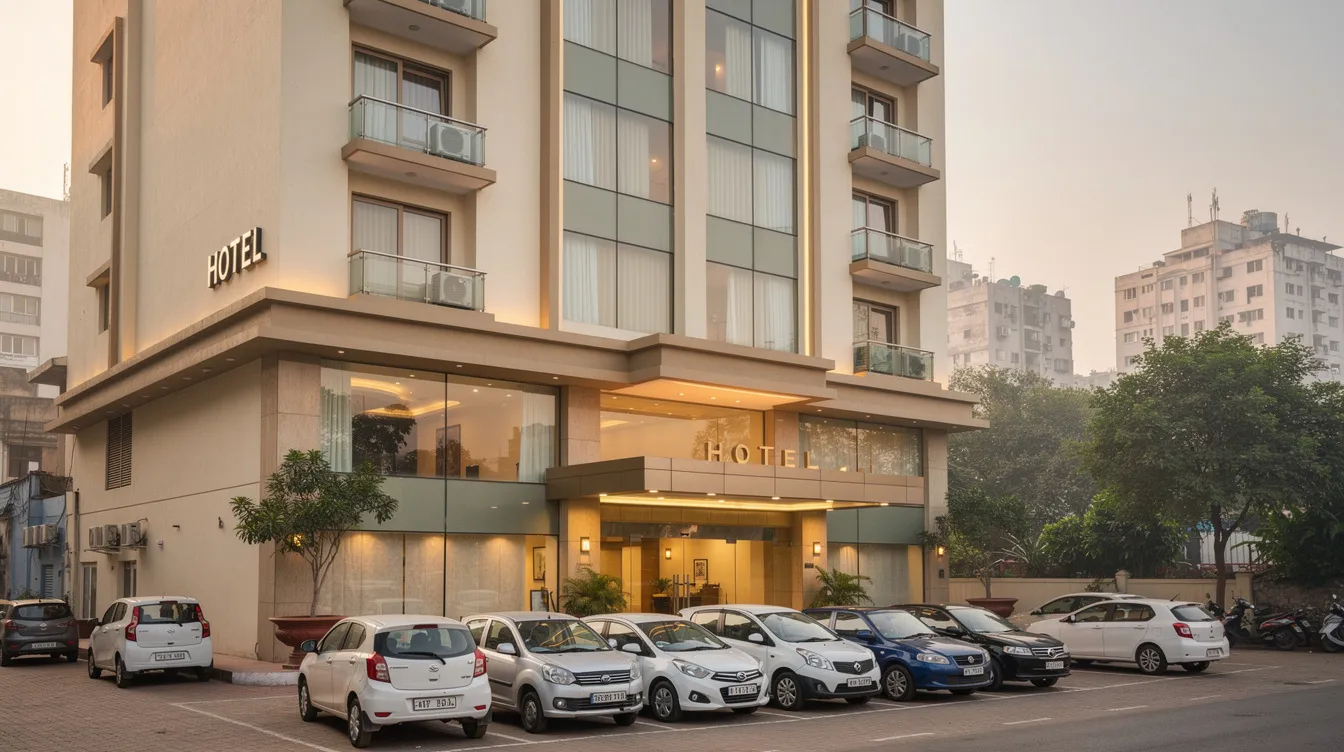
A 3 star hotel feasibility study evaluates whether a proposed hotel – say 40–80 rooms in a Tier-1, Tier-2 or tourist location – is commercially, technically and financially viable. At its core, the study must answer if a 3-star hotel can succeed at a specific location, given the investment required.
A hotel feasibility study evaluates project viability and potential success across five dimensions:
- Market feasibility – examines demand and supply dynamics, customer segments, competitor pricing and occupancy.
- Technical feasibility – evaluates site conditions, room configurations, fire safety and building norms required for star hotel classification. Site analysis examines soil conditions, topography, and accessibility.
- Operational feasibility – assesses staffing, supply chain, utility availability. Operational efficiency design is critical for profitability in 3-star hotels.
- Financial feasibility – projects revenue, costs, EBITDA, cash flow and investment returns. Financial feasibility assesses revenue against operational costs and debt servicing.
- Funding feasibility – tests whether the proposed capital structure (equity + debt) can support comfortable loan repayment.
Legal feasibility ensures compliance with applicable laws and regulations, including building approvals, environmental clearances and licensing. The study assesses market, location, costs, and financing viability – and typically involves specialists like market researchers and financial analysts.
A feasibility study differs from a business plan (which focuses more on strategy and narrative) and from a DPR for bank loan (which includes detailed financial statements, technical annexures and forms). Feasibility comes first. Many hotel feasibility studies in India are completed before land purchase so promoters avoid locking into an unviable concept. The comprehensive report presents findings and recommendations clearly, enabling informed decision-making.
Why Conduct a Feasibility Study Before Investing?
Consider this scenario: an entrepreneur planning a 60-room star hotel in Jaipur or Indore, with land costing ₹8–₹12 crore. Without a feasibility analysis, there is no reliable way to know whether the location can support 60 rooms, whether room rates will cover operating and financing costs, or whether the hotel business will generate adequate returns.
Risks of skipping or rushing the study:
- Over-sized room inventory that the local market cannot fill
- Weak cash flow leading to difficulty in bank loan servicing
- Lower-than-expected occupancy rates due to unaccounted competition
- Banquet or F&B capacity that does not match local demand
Decisions the feasibility study should inform include final room count (30 vs 50 vs 75 rooms), banquet hall sizing, restaurant capacity, parking requirements and positioning – pure business hotel versus mixed business-leisure. Hotel projects require multiple approvals from various authorities, and approval processes can take 12-18 months, which must factor into planning and project timelines.
In my experience, many hotel projects fail not due to poor construction but because demand analysis and financial projections were either skipped or prepared superficially. Feasibility studies also help in securing funding – banks take proposals far more seriously when promoters demonstrate rigorous, objective analysis rather than optimistic assumptions.
Location & Market Feasibility for a 3-Star Hotel in India
Location influences customer accessibility and demand potential more than any other single factor. A suitable location can improve hotel occupancy levels substantially, while a weak location can doom even a well-built property.
Market feasibility analysis examines demand and supply dynamics specific to the proposed site. Key demand generators to evaluate for a mid scale hotel include:
- Business districts, IT parks, industrial areas
- Tourism circuits, pilgrimage centres (think heritage hotels near the Taj Mahal or Jim Corbett)
- Educational hubs, medical clusters, government offices and courts
- Highway traffic, airport and railway connectivity
- Wedding and social event demand in the local catchment
Infrastructure evaluation assesses essential services like electricity and water supply. Location analysis also helps identify competition within a 5-10 kilometer radius.
| Factor | Location A: Near IT Park, Pune | Location B: Low-Traffic Highway, Small Town |
|---|---|---|
| Primary demand | Corporate weekday travel | Weekend/wedding traffic |
| Estimated weekday occupancy | 65-75% | 25-35% |
| Weekend occupancy | 40-50% | 55-70% (seasonal) |
| ADR potential | ₹4,000-₹5,500 | ₹2,500-₹3,500 |
| Competition intensity | Moderate-high | Low |
| Viability outlook | Strong with right positioning | Challenging without banquet focus |
A hotel feasibility study in India should also consider future demand from upcoming industrial corridors, new airports or metro lines that may shift market conditions over 3–5 years. Seasonality – hill stations versus business cities – and weekday versus weekend demand patterns require careful attention.
Hotel Demand Assessment & Competition Analysis
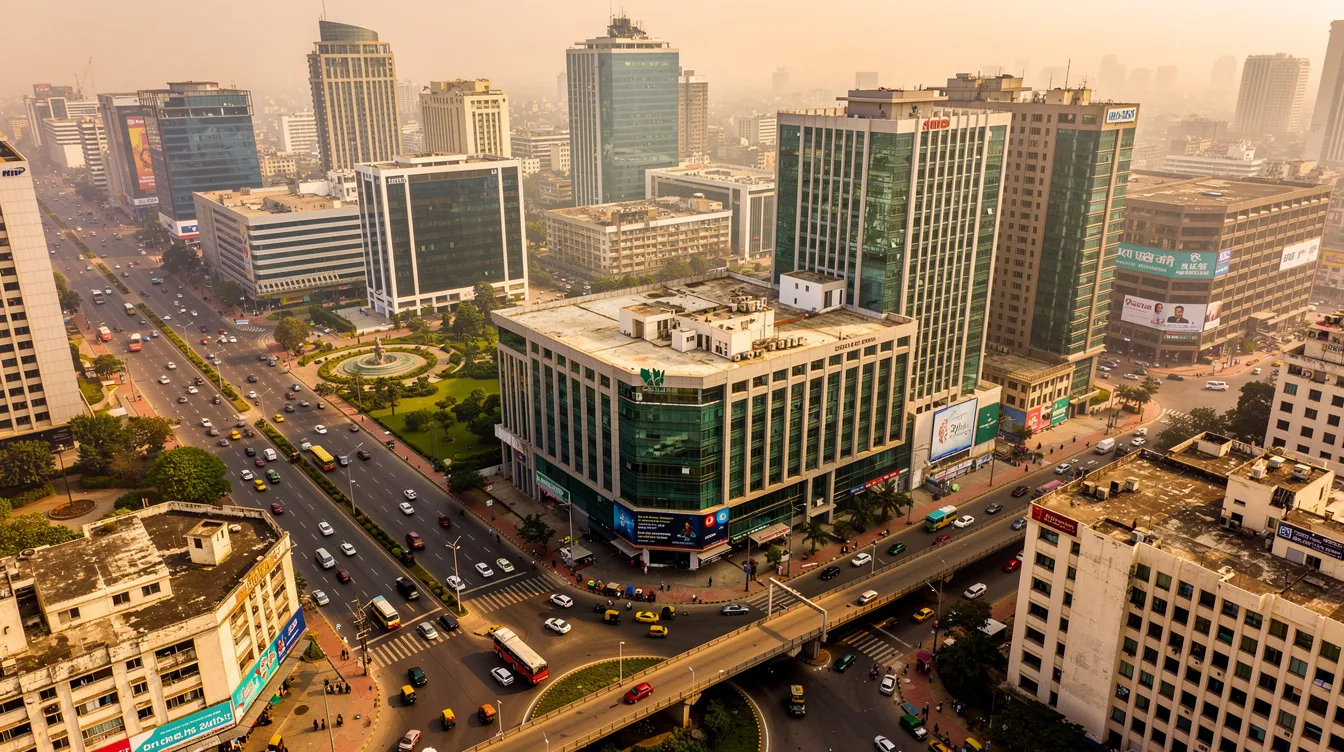
Demand analysis is the heart of any hotel feasibility study. National tourism growth statistics alone are insufficient – the analysis must be micro-market specific, typically within 5–10 km of the proposed hotel.
The study includes market analysis of the local area and competitive set evaluation. Target market segmentation identifies primary guest profiles like corporate travelers, families, leisure tourists, wedding guests, medical tourists and group tours. Demand analysis studies potential customers for hotel services across these segments, while supply analysis evaluates existing competition within a 5-10 kilometer radius.
India continues to see strong growth in domestic tourism and MICE (meetings, incentives, conferences, exhibitions), but consumer preferences vary sharply by location. Market research should map existing and upcoming hotel supply by category – budget, 3-star, 4-star, branded versus independent – and approximate room inventory.
Sample Competitor Comparison
| Hotel | Rooms | Category | Typical ARR (₹) | Est. Occupancy | Banquet | Online Rating |
|---|---|---|---|---|---|---|
| Hotel A (Branded) | 80 | 3-star | 4,800 | 68% | Yes (300 pax) | 4.1 |
| Hotel B (Independent) | 45 | 3-star | 3,500 | 55% | Small | 3.6 |
| Hotel C (Branded) | 120 | 4-star | 6,500 | 62% | Yes (500 pax) | 4.3 |
| Hotel D (Independent) | 30 | Budget | 2,200 | 60% | No | 3.2 |
| Hotel E (Independent) | 50 | 3-star | 3,800 | 58% | Yes (200 pax) | 3.8 |
This kind of detailed analysis helps set realistic occupancy and ARR assumptions, supports hotel profitability analysis, and reveals whether the proposed project should lean toward a banquet-heavy or corporate-room-focused model. Digital booking platforms are transforming the hospitality sector, making pricing strategies and OTA positioning critical for any new entrant.
Determining Room Count, Occupancy, ARR/ADR & RevPAR
Deciding whether to build 30, 50 or 75 rooms is a key output of the feasibility study. The relationship is direct:
Total rooms → annual room nights → occupancy (%) → ARR/ADR → RevPAR → room revenue → EBITDA → cash flow → DSCR → project’s viability
- Occupancy rate: A 50-room hotel has 18,250 available room nights per year. At 60% occupancy, 10,950 room nights are sold.
- Average daily rate (ADR): The average rate per occupied room. For 3-star hotels in India, FHRAI survey data shows ADR around ₹3,674 and occupancy around 62.6%.
- RevPAR: ADR × Occupancy. At ADR ₹4,000 and 60% occupancy, RevPAR = ₹2,400.
As a reference point, a 100-room hotel at 70% occupancy can earn approximately ₹10.22 crores annually from rooms alone, depending on ADR. Ramp-up is real – occupancy typically starts at 30–50% in Year 1 and reaches stabilized levels by Year 3–4. Assuming 70–80% occupancy from day one makes revenue projections unrealistic.
For deeper analysis on occupancy benchmarks, ARR and break-even occupancy, I recommend reading the dedicated guide on 3-star hotel occupancy, ARR, RevPAR and break-even analysis.
Revenue Feasibility & Operating Cost Structure
A hotel business should not be evaluated only on room tariff. Revenue sources for a 3-star hotel in India include rooms, restaurant and coffee shop, banquets and lawns (especially for weddings), bar (where permitted), laundry, transport and ancillary services. The 3-star hotel revenue model covers this in detail.
| Revenue Head | Indicative Share (50-Room Hotel) |
|---|---|
| Room revenue | 60–70% |
| F&B (restaurant, beverage facilities) | 20–25% |
| Banquets, events and other | 10–15% |
Operating expenses should forecast costs for staffing, utilities, and maintenance. Major categories include salaries and wages, F&B raw material, power and fuel, repairs, housekeeping, OTA commissions, sales and marketing, admin expenses, property taxes and insurance.
Cost analysis identifies fixed and variable expenses for hotel operations. Core staff salaries, property taxes and base utility loads are largely fixed. F&B raw material and some housekeeping costs are variable – they rise with occupancy. This distinction directly affects break-even occupancy and risk assessment. Operational costs must be projected conservatively, especially for a hospitality project in a Tier-2 or Tier-3 market where revenue upside may be limited.
Project Cost, FF&E & Means of Finance
Hotel financial feasibility depends heavily on total project cost per room. Even a well-located hotel can become unviable if capital expenditure is excessive. Capital expenditure includes land cost, construction, and furniture and equipment estimates.
According to recent industry data, economy and 3-star hotels cost approximately ₹45–52 lakh per room to build (excluding land). With land, interiors and pre-operative costs, total investment for a 50-room hotel may range from ₹30–₹50 crore depending on location. Construction cost inflation of 8–12% year-on-year makes contingency provisions essential. The detailed setup cost breakdown for 30, 50 and 75 room hotels provides further guidance.
FF&E planning – covered in the 3-star hotel equipment, furniture and FF&E guide – must match 3-star positioning. Overspending on luxury hotel-grade finishes for a mid-segment property erodes ROI without proportionate revenue gain. Equally, under-specification risks poor guest experience and weak online ratings.
Means of finance typically include promoter equity (30–40%), bank term loan (60–70%) and sometimes subordinated or unsecured funds. From a project finance perspective, excessive debt weakens DSCR and makes the proposed project vulnerable to even small demand shortfalls. The project cost and means of finance article covers structuring in detail. Feasibility studies help secure funding by demonstrating project viability to lenders.
Break-Even Analysis, Financial Projections, DSCR & Investment Returns
This is where all assumptions converge. Financial projections estimate operating expenses and projected return on investment. A DPR-level feasibility should include:
- Projected Profit & Loss, Cash Flow and Balance Sheet for 7–10 years
- EBITDA derived from realistic occupancy, ARR and cost assumptions – not reverse-engineered to meet a desired profit target
- Interest, depreciation, tax and cash accrual projections
Break-even illustration (50-room hotel): If annual fixed operating costs are approximately ₹3.5 crore and contribution per occupied room night (after variable costs) is around ₹3,200, the hotel needs roughly 10,900 occupied room nights – about 60% occupancy – to cover operating costs. Cash break-even, including debt service, will require higher occupancy.
DSCR connects occupancy and ARR directly to loan repayment capacity. Lenders typically require DSCR of 1.25–1.35 in the base case. ROI calculations include metrics like IRR, NPV, and DCF, with promoters in Tier-2 cities often targeting equity IRR of 15–20%. The financial projections for DPR article provides the detailed framework.
Sensitivity Analysis & Scenario Testing
A robust hotel project viability analysis must test how results change under adverse conditions. Common stress situations include a 6–12 month delay in opening, a new competing hotel entering the market, weaker banquet demand, rising electricity tariffs or wages, and economic downturns affecting business travel.
| Scenario | Occupancy Change | ARR Change | Cost Change | Impact on DSCR |
|---|---|---|---|---|
| Optimistic | +5% | +10% | Baseline | Strong (>1.5) |
| Base Case | Baseline | Baseline | Baseline | Adequate (1.25-1.35) |
| Moderate Stress | -5% | -10% | +10% | Thin (1.0-1.15) |
| Severe Stress | -10% | -15% | +20% | Below 1.0 – unsustainable |
Sensitivity analysis reveals whether a hotel project merely becomes less attractive under stress or actually turns cash-negative. Lenders reviewing hotel feasibility studies and DPRs for long-tenor term loans specifically examine downside cases. This is a time consuming process but absolutely essential for planning and mitigation strategies.
30, 50 & 75 Room 3-Star Hotel Viability Illustration
The following illustrative comparison assumes a Tier-2 Indian business city with moderate leisure and wedding demand. Figures are purely indicative – each real project requires its own data and detailed analysis.
| Parameter | 30-Room Hotel | 50-Room Hotel | 75-Room Hotel |
|---|---|---|---|
| Annual room inventory | 10,950 nights | 18,250 nights | 27,375 nights |
| Stabilized occupancy | 60% | 62% | 60% |
| ARR (₹) | 4,000 | 4,200 | 4,000 |
| Annual room revenue (₹ Cr) | ~2.63 | ~4.75 | ~6.57 |
| Other revenue (₹ Cr) | ~0.65 | ~1.20 | ~1.65 |
| Operating expenses (₹ Cr) | ~2.30 | ~3.60 | ~5.20 |
| EBITDA (₹ Cr) | ~0.98 | ~2.35 | ~3.02 |
| Est. annual debt service (₹ Cr) | ~0.75 | ~1.70 | ~2.40 |
| Viability note | Tight margins, limited scale | Balanced if demand supports | Needs strong demand pipeline |
Smaller hotels face higher per-room fixed costs and limited capacity to absorb overheads. Larger hotels need stronger market demand to avoid low occupancy levels and price cutting. Room count should be determined by demand analysis and financial viability – not by arbitrarily filling available land.
When Is a 3-Star Hotel Project Viable – And When Is It Weak?
A 3-star hotel project shows potential success when it demonstrates:
- Sustainable market demand from multiple segments (corporate, wedding, tourism)
- Occupancy rising to 55–65% by Year 3, with competitive ARR and adequate RevPAR
- Operating EBITDA margins sufficient to cover interest and principal comfortably
- DSCR consistently above 1.25 across the loan tenor
- Acceptable equity internal rate of return for the promoter’s risk profile
Red flags that signal weak viability:
- Cost per room exceeding ₹55–60 lakh in a non-premium market
- Assuming 75–80% occupancy from Year 1 without justification
- ARR projected significantly above comparable hotels – neither a five star hotel nor a luxury resort but priced like one
- Overdependence on banquet revenue without reliable local event demand
- DSCR hovering near 1.0 even in the base case
- No contingency provision for cost overruns or construction delays
Feasibility studies should guide objective decisions: proceed, modify (e.g., shift from luxury hotel positioning to efficient 3-star), downsize, restructure financing, or drop the project entirely. The property’s location, target market and financial aspects must all align.
Practical Feasibility Checklist & FAQs
Feasibility Checklist
Every hotel investment analysis should systematically cover:
- ✅ Location and market study – demand generators, accessibility, future development
- ✅ Demand and competition – supply mapping, competitor occupancy and room rates
- ✅ Room count and configuration – determined by demand, not land size
- ✅ Occupancy and ARR assumptions – conservative, with ramp-up
- ✅ Revenue mix – rooms, F&B, banquets, other revenue sources
- ✅ Project cost and FF&E – realistic, with contingency
- ✅ Operating costs – fixed vs variable, including plant economics
- ✅ Break-even occupancy – operating and cash break-even
- ✅ Financial projections – P&L, cash flow, balance sheet
- ✅ DSCR and ROI – debt serviceability and investment return
- ✅ Sensitivity analysis – stress testing across scenarios
- ✅ Regulatory compliance – hotel projects require adherence to labor laws and health standards; non-compliance can result in penalties or license cancellations
- ✅ Executive summary – clear, actionable conclusions in the feasibility report
FAQs
How long does a hotel feasibility study typically take in India?
A thorough feasibility study – including market research, competition analysis, financial modelling and sensitivity testing – typically takes 4–8 weeks, depending on data availability and project complexity. Rushing through it defeats its purpose.
Can an independent (unbranded) 3-star hotel be viable?
Yes, many independent hotels in India are viable, especially in Tier-2 and Tier-3 markets where brand premiums are limited. However, branded hotels may command higher ARR and stronger OTA visibility. The investment opportunities and trade-offs should be evaluated during the feasibility analysis itself.
Is a feasibility study mandatory before applying for a bank term loan?
While not formally “mandatory,” banks require a detailed project report that is built on feasibility assumptions. In practice, a promoter who presents a well-prepared feasibility report with realistic demand, revenue projections and sensitivity analysis has a significantly stronger loan application.
How often should feasibility assumptions be revisited after the hotel opens?
Market conditions, competition and costs change. I recommend revisiting key assumptions – occupancy, ARR, operating costs – annually for the first three years and adjusting the hotel operations strategy accordingly. The hotel industry rewards those who adapt early.
What is the role of sustainability requirements in hotel feasibility?
Sustainability requirements – including energy efficiency, water management and waste disposal – increasingly affect both regulatory compliance and guest preferences. While not yet a deal-breaker for most 3-star hotels in India, incorporating basic sustainability measures can reduce long-term operational costs and improve investment opportunities with environmentally conscious hotel consultants and investors.
Explore More 3-Star Hotel Project Report Guides
Continue exploring our 3-Star Hotel DPR guides covering setup cost, equipment, project cost, revenue, financial projections, occupancy, feasibility, project finance and bank loan assessment.
Hotel feasibility should not be judged by occupancy, room tariff or project cost in isolation. The final investment decision must consider market demand, location, occupancy, ARR, RevPAR, revenue mix, project cost, operating cost, cash flow, DSCR, sensitivity and investment return – working together. A properly prepared 3 star hotel feasibility study is not just a document for bankers; it is your clearest decision-making tool before committing substantial capital to a hospitality project.
At ProjectReportBank.com, we assist promoters and entrepreneurs with integrated feasibility studies, financial projections and DPR preparation for 3-star hotel projects across India. If you are evaluating a hotel project, getting the feasibility right is the first step worth taking.
- CA Manish Gugliya