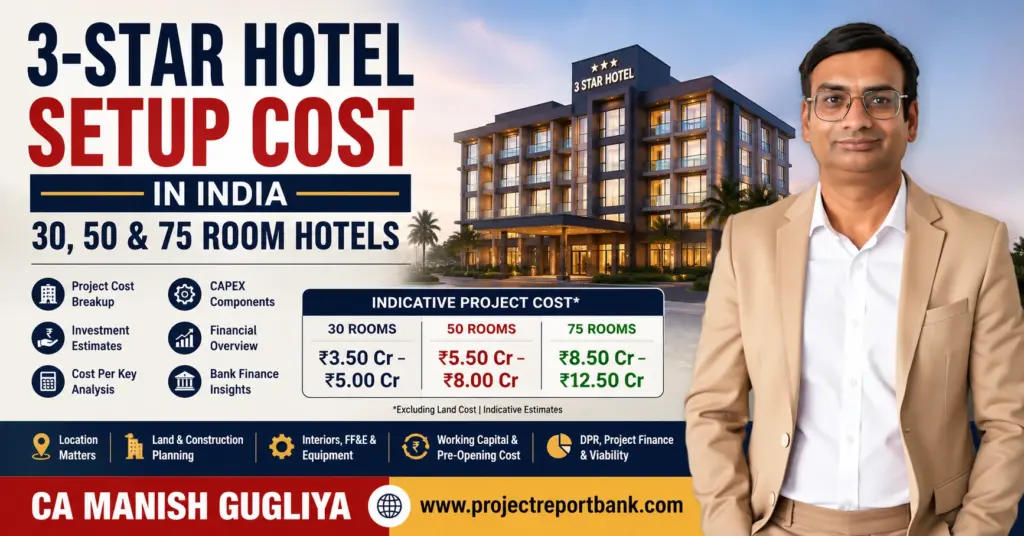
Establishing a mid-scale 3 star hotel in India requires substantial capital investment, and one of the most common questions I receive as a project finance consultant is: How much does it actually cost? The honest answer is that there is no single number. This article breaks down the real costs involved in setting up a 30, 50 or 75-room 3 star hotel, based on current 2025–26 benchmarks, so that you can plan your hotel project with clarity and confidence.
Key Takeaways
The 3 star hotel setup cost in India depends on a wide range of project-specific variables. Here are the core insights every promoter should understand before committing capital:
- Development costs for a 3 star hotel in India range between ₹35 lakh to ₹45 lakh per key (excluding land) for well-specified properties. Indicative total project cost (excluding land) falls roughly in the range of ₹12–18 crore for 30 rooms, ₹18–28 crore for 50 rooms and ₹26–38 crore for 75 rooms, depending on city, specifications and facilities.
- The 3 star hotel project cost in India is driven not only by room count but also by built-up area per key, construction quality, hotel positioning, F&B and banquet facilities, brand affiliation and local development regulations.
- Smaller hotels (30 keys) typically carry a higher cost per key because common infrastructure – lobby, kitchen, back-of-house, elevators, MEP systems – is spread across fewer saleable rooms.
- Total development cost includes civil construction, interiors, MEP and HVAC, elevators, hotel FF&E, OS&E, kitchen and laundry equipment, project management fees, professional fees, preliminary and pre-operative expenses, contingency and working capital margin.
- All figures in this article are illustrative planning estimates. Actual hotel construction cost must be firmed up through architectural drawings, BOQs, market quotations and a project-specific detailed project report.
Explore 3-Star Hotel Project Report Guides
Explore our complete 3-Star Hotel Project Report and DPR guides covering setup cost, equipment, project cost, revenue, financial projections, occupancy, feasibility, project finance and bank loan assessment.
Introduction – Why There Is No Single “Standard” 3-Star Hotel Setup Cost in India
As CA Manish Gugliya, I have prepared hotel DPRs across multiple city tiers and room inventories through ProjectReportBank.com. If there is one thing I can state with certainty, it is this: no two hotel projects carry the same cost structure. A 50-room hotel in Jaipur will cost materially differently from a 50-room hotel in Mumbai or a hill station in Uttarakhand – even if the room count, star classification and brand positioning appear identical on paper.
In India, the Ministry of Tourism administers a star classification system for hotels, and the 3 star hotel category generally implies moderate room sizes (typically 200–280 sq ft carpet area including bathrooms), decent but limited public areas, 24×7 reception, at least one restaurant, adequate safety standards and a reasonable level of guest service. These standards directly influence the built-up area, MEP intensity, interior quality and therefore the overall cost.
The concrete cost drivers include location (Tier-1 cities like Mumbai and Delhi versus Tier-2 cities like Indore and Coimbatore versus tourist or pilgrimage destinations), whether the land is already owned, leased or being purchased, the proposed room inventory (30, 50 or 75 keys), built-up area per key, civil construction specifications, level of interiors, restaurant and banquet plans and parking or basement requirements. India’s hotel market attracted ₹1,635.94 crore in investment in Q1 2026 alone, up 58% year over year – confirming that the hospitality industry continues to draw serious capital. Globally, hotel construction costs can range from $7 million to over $60 million depending on scale and positioning, and the Indian markets are no exception to wide variation.
This article focuses on 3 star hotel construction costs and the overall hotel development costs structure for 30, 50 and 75-room projects. Land cost is discussed separately because it varies dramatically between markets. Numbers used here are indicative ranges for 2025–26 conditions and should only be used for initial planning; a 3 star hotel DPR is required before finalising investment and approaching banks.
Indicative 30, 50 & 75 Room 3-Star Hotel Cost Comparison (Quick Answer)
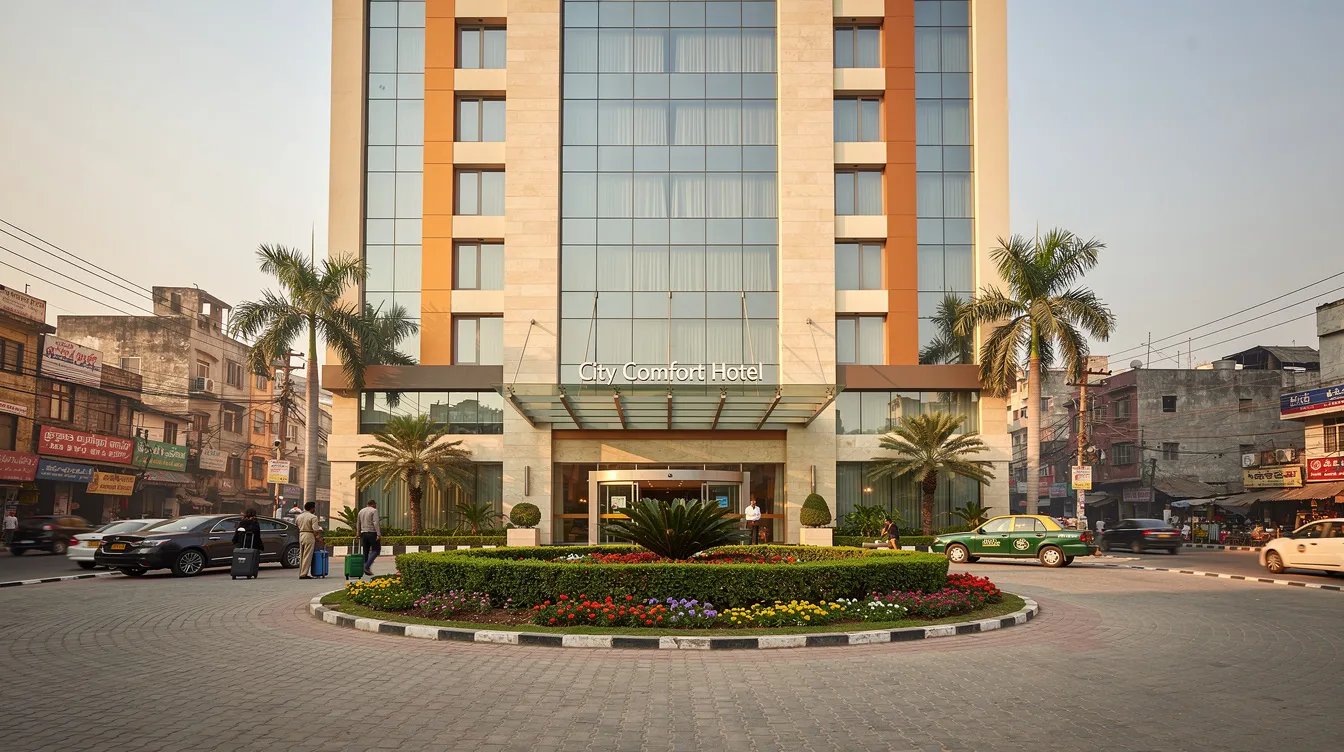
This section gives the fastest possible overview of 3 star hotel setup cost in India for 30, 50 and 75-room projects, excluding land.
| Particulars | 30-Room Hotel | 50-Room Hotel | 75-Room Hotel |
|---|---|---|---|
| Rooms / Keys | 30 | 50 | 75 |
| Indicative Built-up Area (sq ft) | 22,000–26,000 | 32,000–40,000 | 48,000–60,000 |
| Civil Construction & External Works | ₹5.5–7.5 Cr | ₹8.5–13.0 Cr | ₹13.0–19.0 Cr |
| Interior Fit-outs (Rooms + Public) | ₹1.5–2.5 Cr | ₹2.5–4.0 Cr | ₹3.5–5.5 Cr |
| Furniture & FF&E | ₹1.0–1.8 Cr | ₹1.5–2.8 Cr | ₹2.2–4.0 Cr |
| Plant, Equipment & Machinery | ₹0.8–1.2 Cr | ₹1.2–2.0 Cr | ₹1.8–3.0 Cr |
| Kitchen / Restaurant Setup | ₹0.5–0.8 Cr | ₹0.7–1.2 Cr | ₹1.0–1.8 Cr |
| MEP, HVAC & Utilities | ₹1.2–2.0 Cr | ₹2.0–3.5 Cr | ₹3.0–5.0 Cr |
| Preliminary / Pre-operative Expenses | ₹0.5–1.0 Cr | ₹0.8–1.5 Cr | ₹1.0–2.0 Cr |
| Contingency | ₹0.5–0.8 Cr | ₹0.8–1.2 Cr | ₹1.0–1.8 Cr |
| Working Capital Margin | ₹0.5–0.8 Cr | ₹0.6–1.0 Cr | ₹0.8–1.5 Cr |
| Indicative Total (Excl. Land) | ₹12–18 Cr | ₹18–28 Cr | ₹26–38 Cr |
| Approx. Cost Per Key | ₹35–45 Lakh | ₹32–42 Lakh | ₹30–40 Lakh |
Important notes:
- These values assume a genuine 3 star specification in a typical Tier-2 city (for example Jaipur, Nagpur or Coimbatore). Tier-1 metros or premium tourist destinations can be 20–40% higher for many cost heads.
- These totals represent total CAPEX and setup cost before opening. Operating losses in the initial months are separate from base project cost.
- Cost per key for the 30-room scenario is visibly higher than 50 or 75 rooms because common infrastructure like lobby, kitchen, back-of-house, MEP and elevators is spread over fewer saleable rooms, pushing up the upfront costs per room.
What Is Included in Total 3-Star Hotel Setup Cost?
Total project cost – or hotel CAPEX – for a 3 star hotel project in India covers far more than just bricks and cement. Total project costs for a hotel include land purchase, construction, MEP, FF&E, and professional fees. Promoters should account for every component below, not just hotel construction costs.
Major cost heads include:
- Land or lease premium and site development
- Civil structure and external works (compound walls, driveways, landscaping)
- Architectural, structural and MEP consultancy
- MEP systems – mechanical, electrical, plumbing – including HVAC, electrical distribution, plumbing and fire safety. MEP systems are critical for achieving a 3 star rating in hotels
- Elevators and vertical transportation
- Guestroom and public-area interiors
- Hotel FF&E (beds, wardrobes, desks, lighting, soft furnishings, in-room equipment)
- OS&E (crockery, cutlery, linen, uniforms, guest supplies)
- Kitchen, bar and restaurant setup
- Laundry and housekeeping equipment
- IT, PMS, Wi-Fi, CCTV and access control (technology systems)
- Signage, façade elements and landscaping
- Statutory fees, licences and approvals – statutory approvals and licensing can require up to 20–30 clearances during hotel development
- Preliminary and pre-operative expenses including design fees and interest during construction
- Contingency
- Initial working capital margin
The distinction between fixed project setup cost (CAPEX) and initial working capital requirement (OPEX cushion for 3–6 months of operations) is important. Both are normally included in the total project cost for DPR and bank-finance purposes. A 3 star hotel project report for bank loan must usually present a structured breakup of these items along with supporting quotations or rate assumptions.
Land Cost – How to Treat Land, Lease or Existing Building
Land acquisition is a significant variable in hotel development budgeting. It is often the most unpredictable element and is why hotel development costs are usually discussed “excluding land” first.
In certain prime urban areas of big cities like Mumbai, Delhi or Bengaluru, land costs can account for 50–60% of total hotel expenses. In smaller cities or remote tourist locations, the proportion could be significantly lower – sometimes under 10% of total investment. Location impacts land and construction costs significantly in hotel development, and in some international benchmarks, location can account for 9–14% of the total budget.
Three scenarios are common:
Scenario 1 – Promoter already owns land. The land value is typically included at book value or fair market value in the DPR. Even if no fresh cash outflow occurs, the economic cost of deploying that land for a hotel (versus selling it or using it otherwise) should be considered when evaluating returns.
Scenario 2 – Fresh land purchase. The full land purchase cost plus stamp duty, registration and any development charges become part of total CAPEX. This can dramatically change the total budget and debt-equity structure.
Scenario 3 – Leased land or building. Security deposits and leasehold improvement costs are capitalised in the project cost. Annual lease rentals flow into operating costs rather than CAPEX.
I strongly advise promoters to avoid relying on national “average” land cost figures. Use actual quotations, circle rates and recent transactions for your specific micro-location before finalising the 3 star hotel DPR.
Construction Cost Structure for a 3-Star Hotel
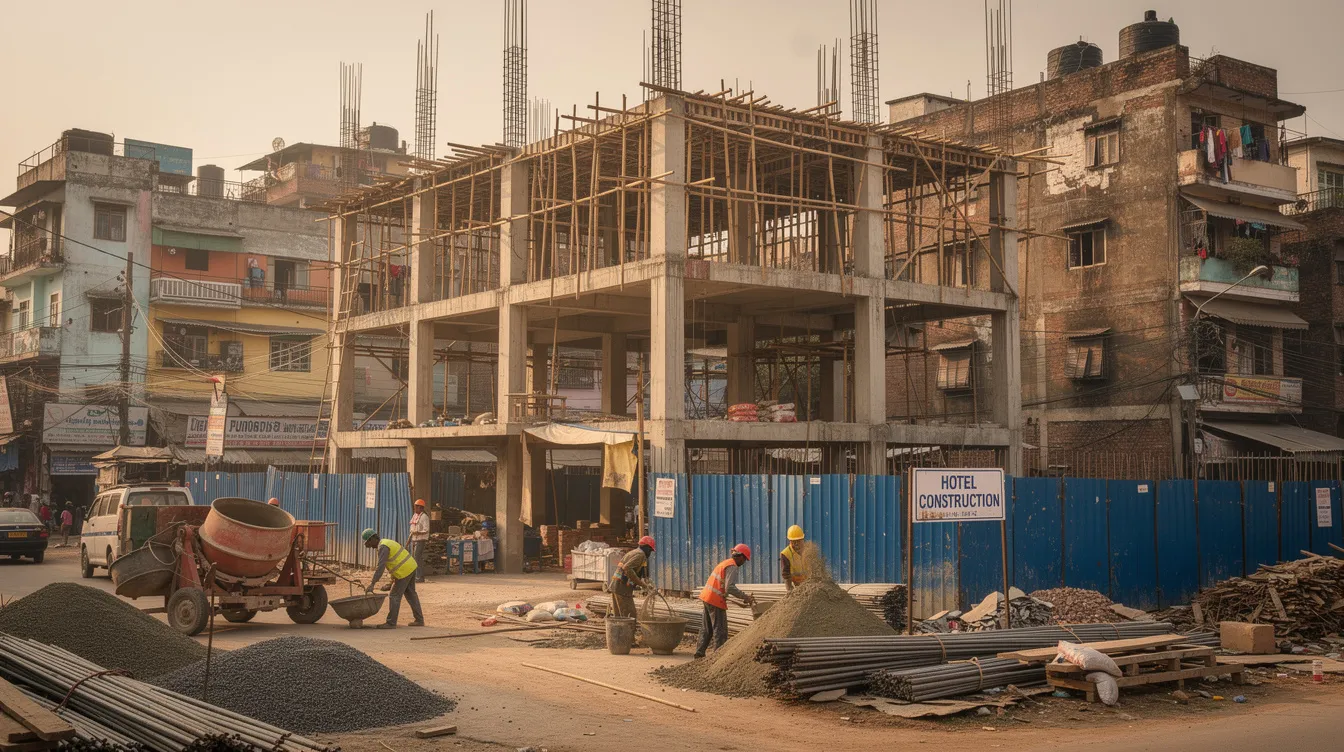
Civil construction covers the structural shell – RCC frame, walls, floors, roofing, basic external and internal finishes, and external development like driveways and compound walls. This is distinct from interiors and FF&E, which are addressed separately.
Construction costs for a 3 star hotel vary by location and amenities. The major drivers of construction cost per square foot include: structural system (RCC versus steel), number of floors and whether a basement is needed, seismic or flood-zone requirements, room size and corridor width, façade treatment, quality of tiles and sanitary fittings, local labor costs (which can vary from ₹400 to ₹1,500 per day in India) and contractor margins.
For 2025–26, realistic planning ranges for 3 star hotel construction cost per square foot are:
- ₹2,500 to ₹4,000 per square foot in many Tier-2 locations for civil construction alone
- ₹3,500 to ₹4,500+ per square foot depending on city tier and complexity in Tier-1 metros
- When fit-out, MEP, interiors and FF&E are included, hotel construction costs in India range approximately from ₹9,000 to ₹14,000 per square foot including taxes
In international terms, building a 3 star hotel costs $190 to $375 per square foot, broadly aligning with Indian mid-market ranges after currency adjustment.
Building construction and civil works represent 40% to 50% of direct hotel project costs. Direct costs typically represent 70–80% of total hotel construction budgets, with hard costs making up 60–70% of the overall cost. Within direct construction, material costs typically represent 40–50% of the total construction budget, while labor costs account for 25–35% of direct construction costs.
MEP-heavy elements within the civil scope include shaft provisions, waterproofing, fire-rated doors, fire-escape staircases, machine rooms and basement-level parking. These areas often carry per square foot costs well above the average for the building.
For DPR purposes, the civil-cost estimate should be derived from architectural drawings and a preliminary BOQ, then validated via a professional quantity surveyor or contractor quotation.
Hotel Interiors, FF&E and OS&E
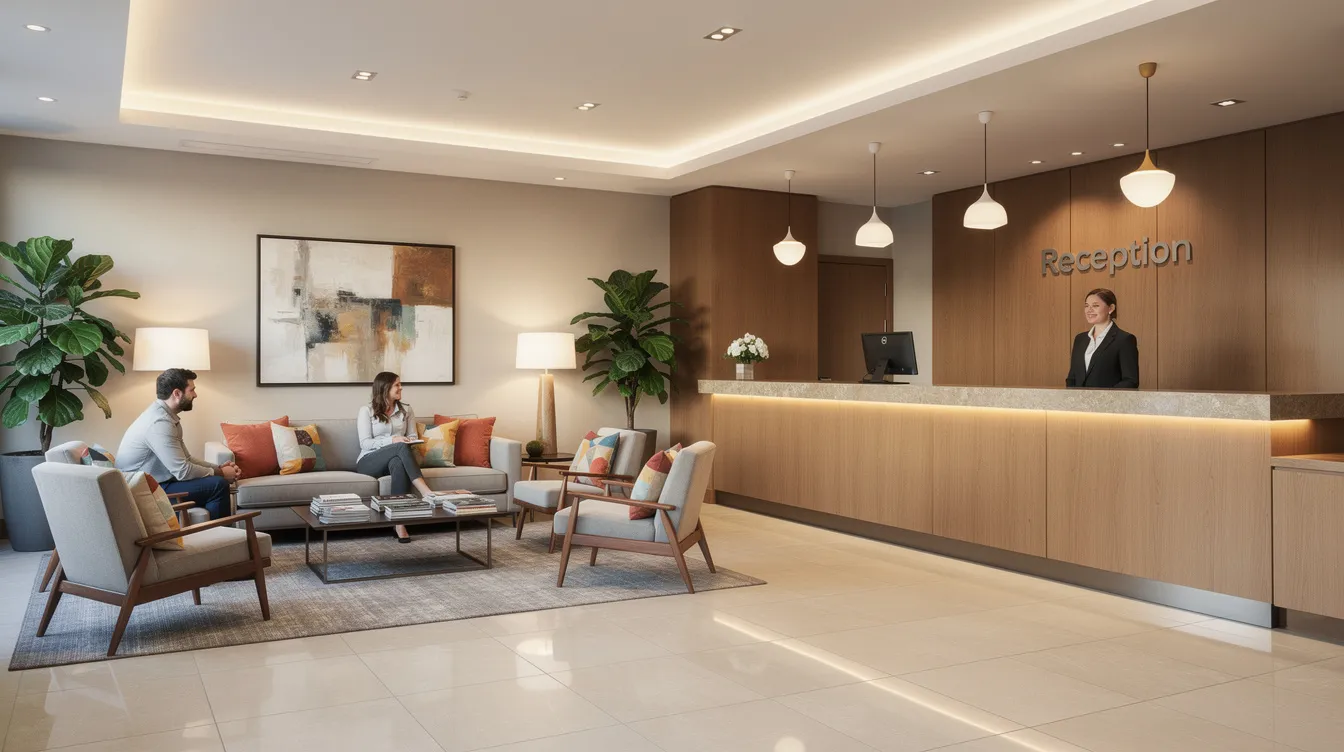
There is an important distinction between civil structure (the building shell), interior fit-outs (wall panelling, false ceilings, floor finishes, joinery), FF&E (furniture, fixtures and equipment like beds, wardrobes, desks, curtains, light fixtures, televisions, mini-fridges) and OS&E (operating supplies and equipment like linen, crockery, cutlery, glassware, uniforms). Each layer significantly influences guest perception in a 3 star hotel.
Key components include:
- Interior fit-out: wall panelling, false ceilings, floor finishes (tiles, wooden flooring, carpet), joinery, partitions and bathroom finishes
- FF&E: beds, mattresses, wardrobes, desks, sofas, curtains, light fixtures, televisions, mini-fridges, in-room safes, keycard locks and bedside panels
- OS&E: bed linen, bath towels, crockery, cutlery, glassware, staff uniforms, room accessories and toiletries
- Technology elements: PMS, Wi-Fi infrastructure, CCTV and access control
Interiors and FF&E costs for hotels typically range from ₹1.5 lakh to ₹3.5 lakh per room for guestroom FF&E alone. Combined with public-area interiors, the share of interiors plus FF&E in overall development cost is roughly 25–35% of total 3 star hotel CAPEX excluding land, varying by design quality and import content. According to Hotelivate’s Building Smarter report, FF&E and MEP together can constitute 30–40% of total development cost.
Public-area interiors – lobby, reception, coffee shop, corridors, banquet and meeting rooms – generally carry a higher per-square-foot cost than guestrooms, so design choices here strongly affect the total budget. For promoters who want a detailed checklist of what goes into equipping a hotel, the small hotel equipment, furniture and FF&E cost guide on ProjectReportBank.com offers a useful planning template, though a 3 star project will typically require higher specifications than a basic budget property.
30-Room 3-Star Hotel Setup Cost in India
A 30 room hotel project cost in India must be understood in the context of what the property can realistically include. For a typical Tier-2 city, consider the following illustrative scenario (excluding land):
The approximate built-up area would be 22,000–26,000 sq ft. Standard room size (including bathroom) of around 250–280 sq ft carpet area. The layout would include a compact lobby, an all-day restaurant of 40–50 covers, a basic commercial kitchen, minimal or no banquet space, limited staff and utility areas, and surface parking for 10–15 cars.
Indicative cost heads for a 30 room 3 star hotel setup cost:
- Civil construction: ₹5.5–7.5 crore
- Interiors (rooms + public areas): ₹1.5–2.5 crore
- FF&E and furniture: ₹1.0–1.8 crore
- MEP, HVAC and utilities: ₹1.2–2.0 crore
- Kitchen, laundry and restaurant equipment: ₹0.5–0.8 crore
- IT, security and technology systems: ₹0.3–0.5 crore
- Professional fees and statutory approvals: ₹0.3–0.5 crore
- Pre-operative expenses and contingency: ₹0.8–1.5 crore
- Working capital margin: ₹0.5–0.8 crore
- Total (excluding land): approximately ₹12–18 crore
The cost per key works out to approximately ₹35–45 lakh per room excluding land. This is comparatively high because many fixed elements – boiler, transformer, DG set, lifts, basic kitchen setup, back-of-house infrastructure, façade – do not scale down proportionately with fewer rooms. A 30-room 3 star hotel is usually more viable in strong niche locations such as popular tourist towns, highway junctions or pilgrimage centres, or where the promoter already owns land at a low historical cost.
50-Room 3-Star Hotel Setup Cost in India
Fifty keys is often the sweet spot for 3 star hotel projects in India. It balances economies of scale with a manageable investment size for many entrepreneurs. For a standard 50-room mid-scale hotel, development costs range from ₹17.5 crore to ₹22.5 crore in many Tier-2 contexts.
The expected built-up area is 32,000–40,000 sq ft, accommodating a slightly larger lobby, a 60–80 cover restaurant, back-of-house areas, administrative offices, staff facilities, a larger kitchen and laundry, and possibly a small banquet hall or meeting room. Additional costs arise from more amenities – a second elevator, expanded HVAC capacity and greater fire-safety infrastructure.
For a 50 room hotel project cost in India under the 3 star category, indicative ranges are:
- Civil construction: ₹8.5–13.0 crore
- Interior fit-outs: ₹2.5–4.0 crore
- FF&E: ₹1.5–2.8 crore
- Plant and machinery including HVAC, DG sets, water treatment: ₹1.2–2.0 crore
- Kitchen and laundry: ₹0.7–1.2 crore
- IT, PMS, signage: ₹0.4–0.7 crore
- Preliminary and pre-operative expenses: ₹0.8–1.5 crore
- Contingency: ₹0.8–1.2 crore
- Working capital margin: ₹0.6–1.0 crore
- Total (excluding land): approximately ₹18–28 crore
The per-key cost may reduce to ₹32–40 lakh per key (excluding land) due to shared infrastructure. Revenue potential also improves because a 50-room property can attract mid-sized corporate groups, small banquets and higher top line revenue from a more diversified guest mix. For a detailed understanding of how hotel project cost and means of finance work together, the small hotel project cost and means of finance guide provides useful background reading.
75-Room 3-Star Hotel Setup Cost in India
A 75-key 3 star hotel is typically positioned in strong business or tourist locations where larger inventory offers better ability to serve corporate, group and MICE segments. Modern hotels of this size can generate substantially better operational efficiency.
The indicative built-up area is 48,000–60,000 sq ft, including multiple floors, a larger lobby with lounge seating, an 80–120 cover restaurant, a dedicated bar or coffee shop, one or two banquet or conference halls, adequate staff facilities, a full-fledged kitchen and laundry, more elevators and perhaps a basement parking level in city locations.
For a 75 room hotel project cost in India:
- Civil construction: ₹13.0–19.0 crore (higher due to greater structural complexity)
- Interior fit-outs: ₹3.5–5.5 crore
- FF&E: ₹2.2–4.0 crore
- MEP, HVAC, electrical, plumbing and fire systems: ₹3.0–5.0 crore
- Kitchen and laundry: ₹1.0–1.8 crore
- IT, security and technology: ₹0.5–1.0 crore
- Professional fees: ₹0.5–0.8 crore
- Pre-operative and preliminary expenses: ₹1.0–2.0 crore
- Contingency: ₹1.0–1.8 crore
- Working capital: ₹0.8–1.5 crore
- Total (excluding land): approximately ₹26–38 crore
Although the 3 star hotel investment cost is much higher in absolute terms, the cost per key may be similar to or even slightly lower than a 50-key project because common infrastructure is shared across more rooms. Lenders and investors often prefer larger, well-planned hotels with robust demand data because fixed operating costs and project management bandwidth are better justified at 75 keys than at very small scales.
Cost Per Room / Cost Per Key – How to Use It and Its Limitations
Cost per key is the most widely used benchmarking metric in the hotel industry. The formula is straightforward:
Cost Per Key = Relevant Hotel Project Cost (usually excluding land) ÷ Number of Saleable Rooms
Practical uses include:
- Quick comparison of 30 vs 50 vs 75-room options for the same site
- Benchmarking against similar recent 3 star hotel projects in the city
- Evaluating whether a quoted turnkey construction price falls in a reasonable band
- Providing early input for investor and bank discussions
However, evaluating development costs per room should include both hard and soft costs. A project with large banquet halls, extensive public areas or premium facilities cannot be assessed purely by multiplying a generic cost per key benchmark. Two new hotel projects with identical room count can differ by 30–40% in cost per key based on public-area scope, interior finish and basement requirements alone.
Treat per-key benchmarks as a starting point for sanity checks. Rely on a project-specific detailed project report for final investment decisions.
Working Capital, Pre-Opening and Additional Costs
Many first-time hotel owners underestimate working capital and pre-opening costs, focusing only on bricks and interiors. This can create severe cash-flow stress at launch.
Major pre-opening costs include staff recruitment and training, pre-opening salaries, trial runs, soft opening costs, marketing and branding (pre-opening marketing costs are essential for hotel launches), website and OTA onboarding fees, licence fees and initial IT and PMS customisation. Operational costs cover hiring and training staff during the pre-opening phase. In many mid-scale projects, operational costs account for 1–5% of the total budget.
Key components of starting working capital include opening stock of linen and guest supplies, F&B inventory, housekeeping consumables, utility security deposits, initial insurance premiums and a cash buffer. Operational reserves should cover 6 to 12 months of running costs, though banks typically expect at least 3–6 months of working capital margin in the project report.
As a planning guideline, 8–15% of total non-land project cost should be allocated for preliminary, pre-operative and working capital combined. Banks often insist on an explicit working-capital margin in the 3 star hotel project report for bank loan. In DPRs, this block is recorded separately from fixed assets but remains part of the total project cost and must be financed through promoter contribution and bank working-capital limits.
Means of Finance for a 3-Star Hotel Project
Once the total hotel development cost is estimated, the promoter must decide a realistic means-of-finance pattern that balances equity and debt for sustainable repayment.
Typical sources include:
- Promoter’s equity and internal accruals (promoter contribution)
- Bank term loan secured against hotel assets and possibly additional collateral
- Unsecured or subordinated loans from group entities
- Strategic investors or partner contributions in select cases
Many banks in India are comfortable when debt is within a defined proportion of project cost and when promoter contribution is clearly visible, although specific norms vary by bank, credit profile and project risk. The small hotel project cost and means of finance article on ProjectReportBank.com explains how equity, term loan and working-capital limits are normally structured. Approaching lenders with a management contract or brand affiliation in place can sometimes strengthen the credit proposal.
Revenue Potential and Relationship with Investment
The 3 star hotel setup cost in India should never be evaluated in isolation. It must be seen in relation to expected revenues and profitability over the life of the hotel project.
Key revenue drivers include expected occupancy (year-round and seasonal patterns in high demand seasons), average room rates (ARR/ADR), RevPAR, F&B revenues from restaurant and room service, banquet and conference revenue and ancillary income from laundry, parking fees and similar accommodation options.
A higher-capex 3 star hotel may still be a more attractive hotel business if its location supports higher ARR and occupancy, generating stronger cash flows and better capacity to service debt. Fixed costs include mortgage, property tax and insurance, while variable costs fluctuate based on daily activity and demand – both must be covered by revenues before the project generates returns.
The small hotel revenue model on ProjectReportBank.com can be referenced for understanding how room, F&B and other income heads are structured, while a dedicated 3 star hotel model would involve category-specific revenue assumptions.
Occupancy, ARR and Break-Even for 3-Star Hotels
Occupancy (rooms sold ÷ rooms available), ARR/ADR (average realised room rate) and RevPAR (revenue per available room) are the core performance indicators for any star hotel. Two hotels with very different project costs – say ₹10 crore versus ₹20 crore excluding land – can both be viable or unviable depending on achievable occupancy and room rates relative to operating costs.
Break-even occupancy is the minimum occupancy at which total contribution covers fixed operating costs, interest and depreciation. For project success, this threshold must be meaningfully lower than realistic long-term occupancy expectations. The small hotel occupancy, ARR and break-even analysis on ProjectReportBank.com explains these relationships in detail.
For bankability, the projected DSCR (Debt Service Coverage Ratio) must be healthy. This depends directly on occupancy and ARR assumptions – not only on construction costs. Promoters should model multiple scenarios to make informed decisions before freezing cost and room inventory.
Financial Projections and Link with Detailed Project Report (DPR)
Hotel project cost estimates ultimately feed into detailed financial projections within a 3 star hotel DPR prepared for promoters and banks.
The main financial statements affected are:
- Projected profit and loss (revenue, operating expenses, interest and depreciation)
- Projected cash-flow statement (cash inflows, outflows and term-loan repayments)
- Projected balance sheet (fixed assets and means of finance)
Higher CAPEX implies higher depreciation and often higher interest outgo, which in turn influence profitability, DSCR and payback period. A robust DPR integrates the full chain: Project Cost → Means of Finance → Revenue Assumptions → Operating Costs → Profitability → Cash Flow → Term Loan Repayment → DSCR → Project Viability. Banks review this entire chain rather than only construction cost.
Readers seeking a step-by-step view of how projections are built can refer to the small hotel financial projections for DPR on ProjectReportBank.com.
Feasibility Study Before Freezing 3-Star Hotel Investment
Committing ₹15–30+ crore to a 3 star hotel project without an upfront feasibility study is risky, even if land is already owned. A feasibility model for hotel projects should consider at least 10 years of projections to evaluate long-term viability.
Key feasibility components include:
- Location analysis (traffic, visibility, access)
- Demand assessment (business travel, tourism sector trends, events)
- Competition mapping (existing and upcoming room supply in the micro-market)
- Achievable ARR benchmarks
- Likely occupancy ramp-up
- F&B and banquet potential
- Operating-cost structure including manpower and utility costs
The output of a feasibility study often leads to adjustments – picking 50 keys instead of 30 or 75, modifying banquet size, changing positioning from upper-budget to full 3 star, and reworking the cost structure accordingly. The small hotel feasibility and project viability guide provides a useful conceptual checklist. Feasibility should ideally be completed before final architectural drawings and hotel construction contracts are signed, so that changes are cheaper to implement.
Factors That Can Change 3-Star Hotel Project Cost Substantially
Two seemingly similar 50-room hotels can differ in project cost by several crores because of specific design and market choices. Industry trends confirm that cost considerations go well beyond room count.
Major cost-variation factors include:
- Tier-1 vs Tier-2 vs Tier-3 city (significantly lower construction rates in smaller cities)
- Central business district vs highway vs tourist periphery
- Presence of basement(s) and multi-level parking
- Room size and corridor width (built-up area per key)
- Inclusion of banquets, rooftop restaurants, swimming pool, spa or gym
- Selection of imported vs domestic building materials and fittings
- Adopting green building practices and renewable-energy features like solar panels
- Construction period length (affecting interest during construction)
- Escalation in material costs and labor costs over the build period
- Whether the project follows a branded chain’s specifications (including international brands with a base fee and management contract) or is fully independent
- Local development regulations, building permits, floor area ratio and parking requirements
Hotel classification standards imposed by brands or the tourism department can push specifications higher, affecting civil, MEP, interiors and FF&E budgets. Design efficiency – optimising built-up area per key, vertical circulation planning, back-of-house zoning – can reduce total construction costs without changing room count.
Promoters should build contingency provisions (typically 5–10% of hard costs plus soft costs) to accommodate these uncertainties.
Cost-Saving Strategies Without Damaging the 3-Star Product
Intelligent cost optimisation is about value engineering and cost effective design, not indiscriminate cost-cutting that compromises safety or guest experience.
Practical suggestions include:
- Optimise room layout to reduce wasted circulation area and keep the built-up area per key within disciplined bands
- Standardise room types to simplify FF&E procurement and reduce complexity
- Use durable, mid-range materials instead of ultra-premium finishes that do not significantly lift room rates or ARR
- Phase non-essential facilities (second banquet hall, spa) where market demand does not justify immediate construction methods or build-out
- Adopt energy efficiency measures – efficient HVAC, LED lighting, heat-pump hot-water systems. Investing in energy efficiency measures can reduce long-term operational costs for hotels
- Use competitive bidding for contractors and suppliers with clear technical specifications
Items that should never be compromised include structural quality, fire and life-safety systems, statutory compliance, core room comfort (sleep quality, noise insulation, air-conditioning) and IT and security infrastructure. Involving consultants early – architects, MEP engineers, cost consultants and a DPR specialist – helps identify cost-saving opportunities before tendering rather than during execution when changes are expensive. Some developers overbuild lobbies and public areas relative to room inventory; right-sizing non-revenue spaces keeps the cost per key under control while maintaining 3 star standards.
Common Mistakes in Estimating 3-Star Hotel Setup Cost
Many cost overruns in hotel projects are avoidable if promoters recognise typical estimation errors early.
Core mistakes include:
- Considering only civil construction cost and ignoring interiors, MEP and FF&E
- Underestimating the cost impact of banquet halls, basements and extensive common areas
- Missing out on OS&E, IT and PMS costs involved in a functional new hotel
- Ignoring statutory fees, approvals and professional consultancy charges
- Not budgeting adequately for pre-opening expenses and working capital
- Assuming another hotel’s cost structure can be copied without adjusting for location, year and specification
- Setting unrealistic occupancy or ARR in projections leading to overleveraging
- Underestimating construction duration, leading to higher-than-planned interest during construction and escalation in associated costs. Average costs quoted at project start can be outdated by project completion
- Failing to allocate contingency – contingency planning should include 10% to 15% of the total projected budget for unforeseen expenses, and contingency allowances should be 10–20% of total project costs depending on risk profile
This last point is widespread. Skipping contingency can force unplanned compromises near project completion – downgrading interiors, delaying MEP systems – which can hurt long-term positioning and initial costs recovery. A structured cost-template and DPR approach, preferably with professional assistance, helps avoid these pitfalls.
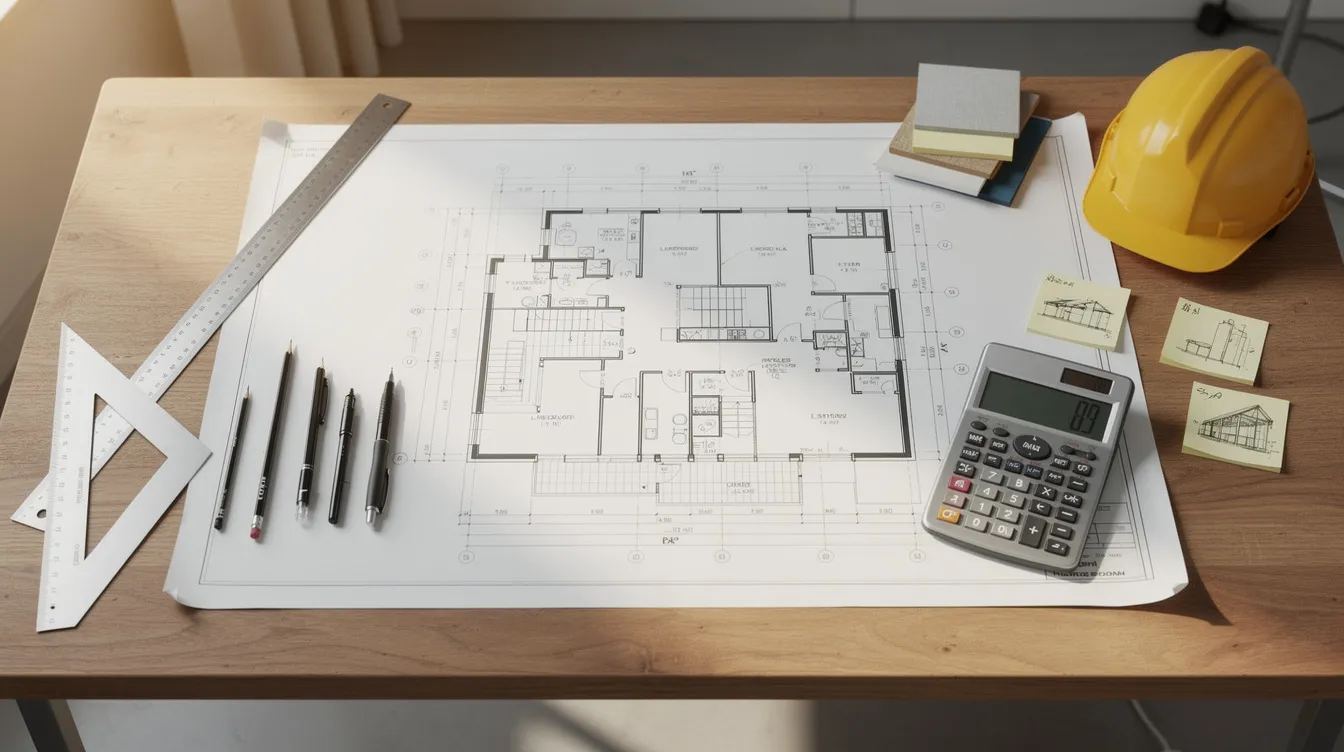
Illustrative Case Study – 50-Room 3-Star Hotel Project Cost (Illustrative Only)
This is an illustrative planning example, not a quotation. The scenario involves a hypothetical 50-room 3 star hotel in a representative Tier-2 city, with land already owned by the promoter and therefore excluded from the numeric total.
| Cost Head | Indicative Amount (₹ Crore) |
|---|---|
| Civil Construction & External Development | 10.0 |
| Interior Fit-outs (Rooms + Public Areas) | 3.0 |
| FF&E (Furniture, Fixtures, Equipment) | 2.0 |
| MEP / HVAC / Electrical / Plumbing / Fire Safety | 2.5 |
| Elevators (2 Nos.) | 0.5 |
| Kitchen & Laundry Equipment | 0.8 |
| IT, PMS, Security Systems | 0.5 |
| Professional Fees & Statutory Approvals | 0.6 |
| Preliminary & Pre-operative Expenses (incl. IDC) | 1.2 |
| Contingency (~8% of hard costs) | 1.0 |
| Working Capital Margin | 0.7 |
| Total Project Cost (Excl. Land) | ~₹22.8 Crore |
Assumed features: Typical room sizes of 260 sq ft, one mid-sized banquet hall (120 capacity), 80-cover restaurant, back-of-house areas, basic basement or stilt parking and an overall built-up area of approximately 36,000 sq ft.
A change in one parameter – for example, adding a second large banquet hall, opting for higher-end interiors, or building in a costlier metro city – could increase the total project cost by ₹3–8 crore and change the debt requirement, interest burden and DSCR profile materially. This kind of sensitivity analysis is why a customised 3 star hotel DPR is necessary for any real hotel project, and why generic per-key benchmarks or average costs alone cannot form the basis for an investment decision.
Bank Perspective on 3-Star Hotel Project Cost and DPR
Banks in India examine 3 star hotel projects on multiple parameters beyond the promoter’s stated cost or collateral. A well-structured project report is critical for project finance approval.
Key aspects lenders typically review:
- Total project cost and means of finance
- Evidence for construction, interiors and hotel equipment cost estimates (BOQs, quotations)
- Implementation schedule and phasing
- Market-feasibility assumptions (occupancy and ARR)
- Projected profitability and DSCR
- Security coverage (primary and collateral)
- Promoter track record and financial strength, including marketing strategies for ramp-up
If initial cost estimates are unrealistic – either too low (creating viability risk) or inflated (raising concern over diversion) – lenders may question the hotel depends on its projections and reduce the eligible loan amount. Serious cost-estimation work is important before submitting a 3 star hotel project report for bank finance.
The bank loan for small hotel guide and the small hotel term loan assessment resource on ProjectReportBank.com explain how banks evaluate such proposals. No article or consultant can guarantee sanction – final decisions rest with individual lenders based on their policies and risk assessment.
Frequently Asked Questions on 3-Star Hotel Setup Cost in India
These FAQs address common practical queries related to 3 star hotel project cost and cost structure that may not have been fully addressed in earlier sections.
What is the cost per room for a 3 star hotel in India in 2026?
Development costs for a 3 star hotel in India currently range between ₹35 lakh to ₹45 lakh per key, excluding land. This includes civil construction, interiors, FF&E, MEP, pre-opening expenses and contingency. However, this range assumes a mid-market specification in a Tier-2 city. In Tier-1 metros, premium tourist destinations or projects with extensive banquet and public-area facilities, the cost per key can exceed ₹50 lakh. These are valuable insights for initial planning but should be validated with site-specific drawings and quotations.
How much working capital should I plan for a 50-room 3 star hotel?
Working capital for a 50-room property should cover initial operating expenses for the first 3–6 months, including staff salaries, F&B inventory, utility payments, housekeeping supplies and a general manager’s operating budget. A reasonable planning estimate is ₹60 lakh to ₹1 crore. Banks may require this to be explicitly shown in the DPR. Operational reserves should ideally cover 6 to 12 months of running costs for a conservative plan.
Is renovation of an existing building cheaper than developing a new 3 star hotel?
Renovation or conversion of an existing building can sometimes be 20–30% cheaper than a greenfield build – but only if the existing structure is sound, the layout permits efficient room design and MEP systems can be upgraded without gutting the building entirely. In practice, many conversions end up costing nearly as much as new construction because of unforeseen structural reinforcement, compliance upgrades and layout inefficiencies. A professional assessment of the existing building is essential before assuming cost savings.
How detailed should my 3 star hotel DPR be for bank finance?
A bankable 3 star hotel DPR should include an itemised project cost with supporting BOQs and quotations, a clear means-of-finance plan, market feasibility analysis with demand and competition data, year-wise revenue projections based on realistic occupancy and ARR, detailed operating cost assumptions, projected financial statements (P&L, cash flow, balance sheet) for at least 10 years, DSCR computation and an implementation schedule. Missing any of these elements can delay or derail the appraisal process.
Can I upgrade from a small budget hotel to a 3 star category later, and what cost implications should I expect?
Upgrading is possible but typically involves significant additional costs – expanding public areas, upgrading room interiors and bathrooms, enhancing MEP and HVAC systems, adding fire-safety features and potentially restructuring the kitchen and laundry. The largest portion of upgrade costs usually falls on interiors and MEP rather than civil structure. Budget 40–60% of what a fresh 3 star build would cost per key, depending on the gap between current and target standards. Planning for future upgrade during initial construction methods and design can substantially reduce this cost later.
Conclusion and Professional Next Steps
The 3 star hotel setup cost in India cannot be determined by a single thumb-rule or by multiplying room count by a standard figure. It must be built from a structured cost breakdown: land or lease, civil construction, interiors, FF&E, MEP and HVAC, pre-opening expenses, contingency and working capital – each tailored to the specific location, design and room inventory (30, 50 or 75 rooms).
Equally important is evaluating investment together with realistic revenue potential, occupancy, ARR and operating-cost assumptions. The real costs of a hotel project extend far beyond construction. A hotel that cannot service its debt and deliver acceptable returns to promoters is not a viable hotel business, regardless of how well it is built.
A professionally prepared 3 star hotel DPR integrates the total project cost, means of finance, financial projections and feasibility analysis into one coherent document for internal decision-making and bank appraisal. For more context on how DPRs are structured for smaller properties, the small hotel project report and DPR guide on ProjectReportBank.com offers a useful reference framework.
If you are planning a 3 star hotel project – whether 30, 50 or 75 rooms – and need a customised project cost estimation, detailed project report, financial projections or CMA data aligned with bank requirements, feel free to reach out to me through ProjectReportBank.com. I work specifically on hotel DPRs and project-finance documentation, helping promoters move from initial concept to a bankable, investor-ready project report.
- CA Manish Gugliya | ProjectReportBank.com
Explore More 3-Star Hotel Project Report Guides
Continue exploring our 3-Star Hotel DPR guides covering setup cost, equipment, project cost, revenue, financial projections, occupancy, feasibility, project finance and bank loan assessment.