
Key Takeaways
- Small hotel project cost is not only hotel construction cost. A bankable estimate must also cover land or building, interiors, furniture fixtures and equipment, pre-operative expenses, contingency and initial working capital margin.
- Total investment for a 10 to 50 room budget or boutique hotel in India can range from roughly ₹35–60 lakh per key in Tier-2/3 locations to significantly higher in metro cities, depending on positioning, room size, facilities and land ownership – but these figures are only illustrative and must be estimated project-specifically.
- Total project cost and means of finance are two sides of the same DPR. One shows how much capital is needed; the other shows where that money will come from – promoter contribution, bank term loan, and any other eligible sources. Both must match exactly.
- Banks evaluate a small hotel project not just on “how much was spent” but on project cost reasonableness, cash-flow-based repayment capacity, DSCR, realistic occupancy and average room rate assumptions, and adequacy of promoter equity.
- Entrepreneurs can take professional support from CA Manish Gugliya at ProjectReportBank.com for preparing a bankable small hotel project report, DPR, financial projections and loan proposal.
Explore Small Hotel Project Report Guides
Explore our complete Small Hotel Project Report and DPR guides covering setup cost, equipment, project cost, revenue, financial projections, occupancy, feasibility, project finance and bank loan assessment.
Introduction: Understanding Small Hotel Project Cost & Finance in India
When most first-time entrepreneurs think about starting a small hotel in India, the first question is usually some version of “how much will it cost per room?” The answer, however, is far more layered than a single per-square-foot or per-key number. From a project-finance perspective, small hotel project cost must capture every rupee of capital expenditure – land, civil construction, interiors, furniture, equipment, technology, professional fees, statutory approvals, pre-opening expenses and contingency – plus the initial working capital margin needed to sustain the hotel business through its ramp-up months.
This article is written in the professional voice of CA Manish Gugliya, Chartered Accountant and hospitality project-finance consultant at ProjectReportBank.com, focusing on Indian conditions in 2026. The objective is to give serious entrepreneurs, existing hotel owners planning expansion, and consultants preparing hotel DPRs a practical, India-specific framework for both estimating realistic project cost and structuring the means of finance.
For the purposes of this article, a “small hotel” generally refers to a property of roughly 10 to 50 rooms – budget or boutique positioning, non-luxury, primarily in Tier-1, Tier-2 cities or tourist locations across India. Starting a small hotel project involves substantial capital investment across several phases, and the numbers differ materially depending on city, hotel classification, construction specifications, and whether property is owned, purchased or leased.
The core commercial questions this article will answer are: What is the realistic small hotel project cost in India? How should the total project cost be structured in a bankable DPR? And how can it be financed through promoter contribution, term loan and other sources? The structure moves from project-cost components to means of finance, and then covers DSCR, bank appraisal logic and common mistakes.
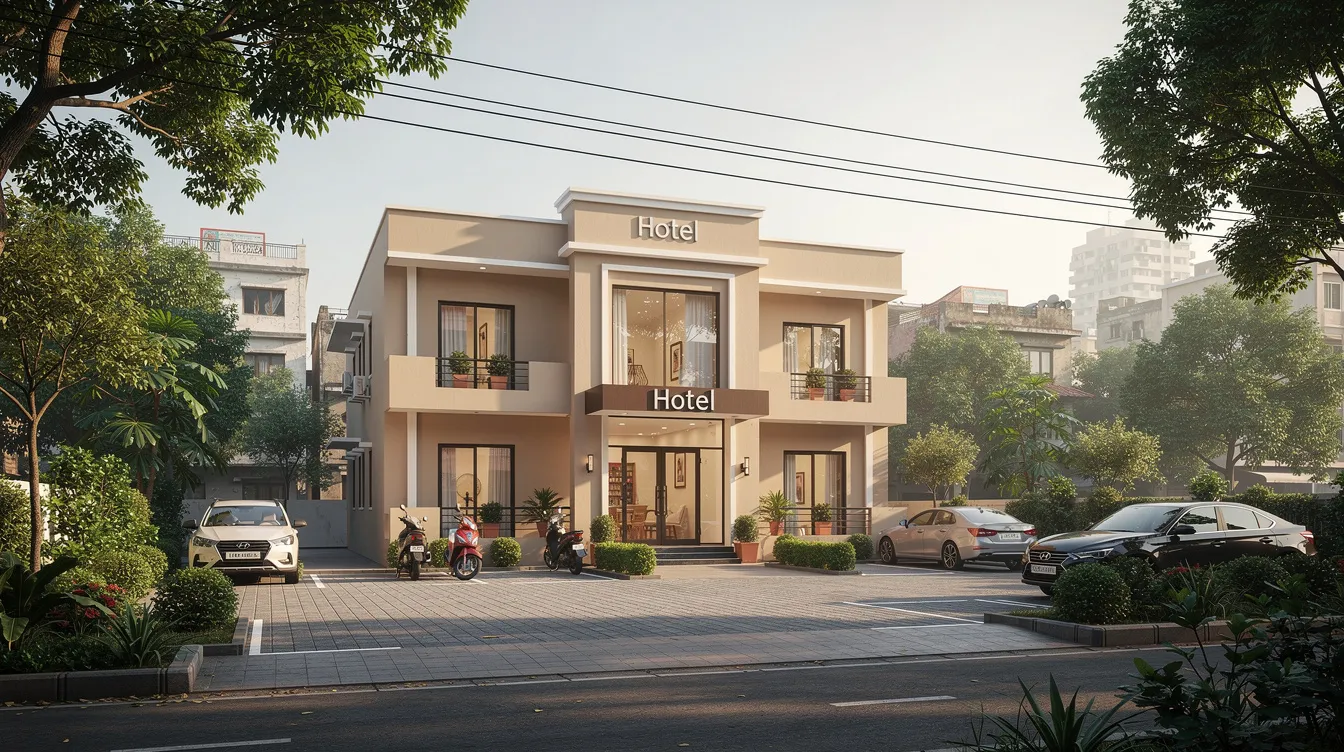
What Is Included in Small Hotel Project Cost?
From a project-finance and DPR perspective, total project cost is the sum of all fixed asset investment, preliminary and pre-operative expenses, interest during construction (if any), contingency, and margin for working capital. It represents the full capital requirement before the hotel becomes self-sustaining from its own revenues.
Here are the major cost components relevant to a small hotel project in India:
- Land cost or value of existing land; site development and compound wall
- Building and civil construction, or cost of purchasing an existing building
- Renovation and structural repairs where an existing structure is used
- Interior works – flooring, wall finishes, false ceiling, joinery, toilet fit-outs
- Furniture and fixtures for rooms, reception, lobby, restaurant and back-office
- Hotel equipment and FF&E – kitchen equipment, laundry, IT, CCTV, POS/PMS, lifts, genset
- Electrical installations, cabling, panels and distribution boards
- HVAC – split ACs, VRV/VRF systems, ductable units, ventilation and exhaust
- Plumbing and water-supply systems, STP where applicable
- Fire-fighting and fire-detection systems as per local norms
- Security systems including CCTV cameras, access control and public-address system
- IT/networking, Wi-Fi infrastructure, server, Property Management System and POS
- Elevators where the hotel is multi-storeyed
- Solar water heating or rooftop solar power, and power backup (DG set, UPS)
- Professional and consultancy charges – architect, structural engineer, legal, DPR consultant
- Statutory approvals, licence fees, conversion charges and impact fees
- Preliminary expenses – company/LLP formation, stamp duty, ROC fees where applicable
- Pre-operative expenses – pre-opening salaries, training, trial-run, initial marketing
- Interest during construction on bank term loan, where implementation exceeds a few months
- Contingency provision for unforeseen overruns
- Initial working capital or working-capital margin for at least 3–6 months of operations
It is important to clearly distinguish between fixed project cost (land, building, interiors, FF&E, equipment, professional fees, preliminary and pre-operative expenses, IDC, contingency) and working capital requirement (cash needed for day-to-day operations like salaries, power, F&B stock, OTA commissions). Most bankable DPRs show them separately but combine them into total project cost for means-of-finance planning.
Small Hotel Project Cost in India – Illustrative Cost Structure
Actual small hotel project cost in India varies widely. A 20-room budget hotel in Indore will cost very differently from a 30-room boutique hotel in Goa, or a 50-room property in a Mumbai suburb. Costs for small hotels vary based on location, scale and luxury tier – whether the building is new, renovated or leased, the extent of common areas and amenities, and the quality of interiors and finishes.
The figures below are illustrative for understanding project-finance structure and should not be treated as quotations, standard industry rates or guaranteed project costs.
To put the numbers in context: globally, building a budget motel costs around $7 million, while a luxury 5-star hotel can cost over $60 million to build – construction costs range from $7 million to over $60 million depending on positioning. In India, current industry benchmarks put hotel development costs around ₹9,000 to ₹14,000 per square foot for total development cost excluding land in Tier-1 cities, with Tier-2 cities somewhat lower. For a small hotel, average development costs excluding land pricing are around ₹47–53 lakh per key for budget hotels, while average hotel development costs excluding land can be approximately ₹1.36 crore per key across all categories in India.
Consider three illustrative scenarios:
| Scenario | Description | Indicative Total Cost per Key (excl. land) |
|---|---|---|
| A | 20-room budget hotel, Tier-2 city, promoter owns land | ₹40–55 lakh |
| B | 30-room boutique hotel, tourist town, land purchased | ₹55–80 lakh |
| C | 40–50 room budget hotel, leased property in Tier-1 suburb | ₹30–50 lakh (renovation, FF&E, deposit) |
Why does project cost per key differ so much? The answer lies in room size, extent of common areas (restaurant, banquet, lobby), specification of finishes, ratio of gross floor area per key, imported versus local furniture, quantum of MEP and HVAC work, and level of technology. For instance, a 6 square metre increase in room size can add ₹8–14 lakh per key in the upscale segment just from civil and fit-out expansion. Even in a standard hotel, more amenities, multiple restaurants, recreational facilities or extensive landscaping push costs upward.
Land and Building Cost
Land cost is often the single largest element of small hotel project cost in India. In some prime urban locations, land costs can account for 50–60% of total expenses. In more typical new developments, land typically accounts for 10% to 20% of the total development budget, and may represent 9–14% of the overall hotel budget in certain project structures. The way land and building appear in the DPR depends on whether the property is already owned, newly purchased, or on a long-term lease.
Banks and NBFCs treat land, building purchase and leasehold improvements differently during appraisal. Policies vary across lenders, and it would be misleading to offer generic promises about how any particular bank handles land financing.
Promoter Already Owns the Land
Where promoters already own the plot, the land can still be included in total project cost at a reasonable value – often based on a documented purchase price or independent valuation – subject to lender policy. Banks may treat existing land contribution as part of the promoter’s equity, sometimes with a cap on the value considered, and may still insist on a minimum fresh cash margin.
In bankable DPRs, good practice is to separately show the original cost of land (with year of purchase) and the current fair value as per an independent valuer, while clarifying which figure is taken for project cost and means of finance. Owning land reduces cash outflow during project implementation, but does not by itself guarantee higher loan sanction. Overall project viability, DSCR and security still drive bank decisions.
Land Is Being Purchased
Where land is to be purchased now, the proposed hotel project cost must include:
- Basic land price as per negotiated rate
- Stamp duty and registration charges (typically 5–7% in many Indian states)
- Conversion charges (e.g., agricultural to commercial use) where applicable
- External development, boundary wall, approach road and site-levelling expenses
Many banks restrict or limit financing for pure land purchase in hospitality projects, and may prefer higher promoter contribution for land while financing hotel construction and FF&E through the term loan. Promoters should verify each lender’s policy beforehand and build a realistic financing structure in the DPR – for example, show higher equity for land cost and more term loan for civil work and equipment.
Hotel Property Is Taken on Lease
In many small hotel and boutique hotel projects in India, promoters choose a long-term lease of a building instead of buying land and constructing a new property. In such models, land and building purchase cost may be zero in the project cost, but the following items become significant:
- Refundable security deposit to the owner
- Upfront non-refundable lease premium, if any
- Renovation and re-layout of existing structure to meet hotel requirements
- Interiors, furniture, fixtures, FF&E and equipment
- Initial working capital plus 3–6 months of lease rentals during ramp-up
Some lenders are comfortable financing leasehold improvements and equipment for such hotel projects, provided the lease tenure (often 9–15 years or more) is adequate, there is a registered lease agreement with clear title, and DSCR and security are acceptable. A leased-property model substantially changes the hotel project cost structure and can reduce initial cash investment, but increases fixed monthly running costs (rent).
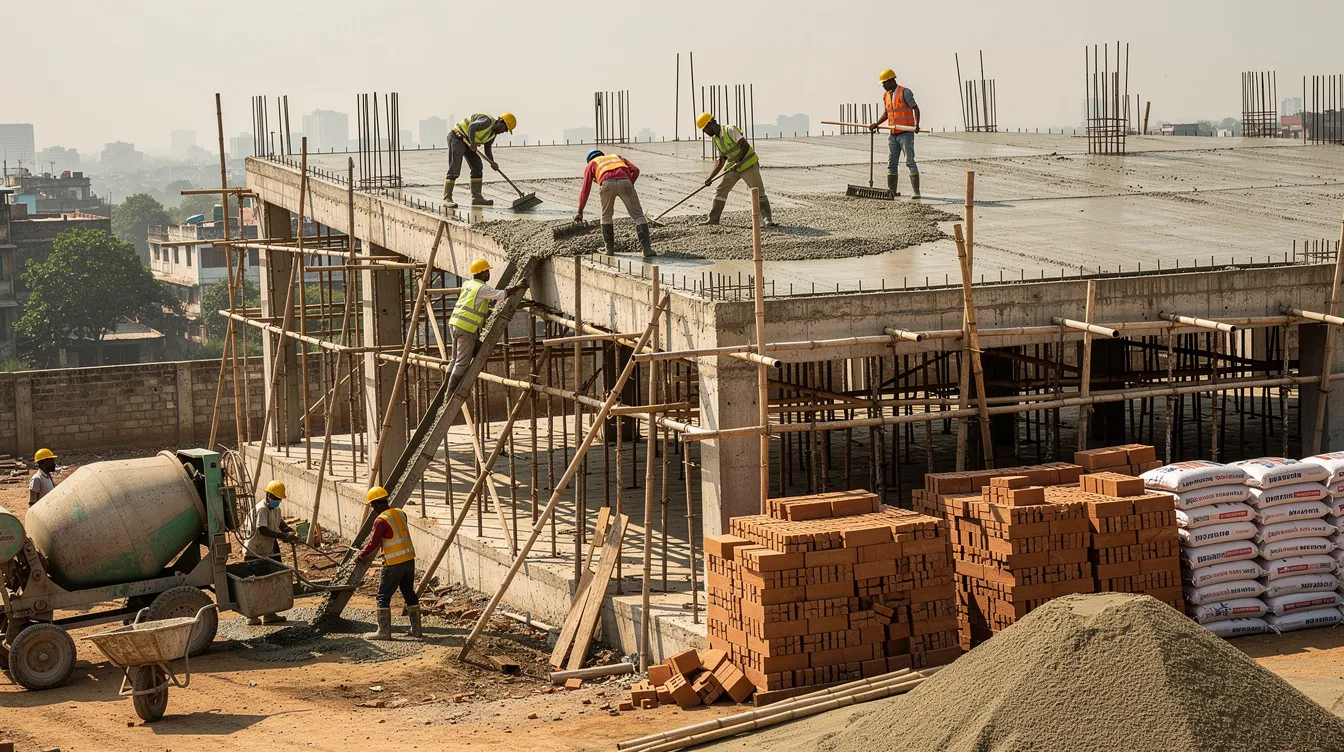
Hotel Construction and Civil Work Cost
Hotel construction cost in India depends heavily on built-up area, quality of structure, seismic and fire norms, and design choices. It is inaccurate to rely blindly on a single “₹ per square foot” number from informal market talk. Proper design elements include layout efficiency, guest experience and durability – and these all affect cost.
Main components under construction and civil work in a small hotel DPR include:
- Site development, excavation, foundations and plinth
- Super-structure – columns, beams, slabs, masonry
- Roofing, waterproofing and thermal treatment where required
- Internal and external plastering, painting and façade cladding
- Doors, windows, glazing and aluminium or UPVC systems
- Staircases, ramps and railings
- Parking area construction, paving and landscaping
- Structural provisions for future additional floors, if planned
Hard costs make up 60–70% of the hotel construction budget. Hard construction costs cover building structural work, roofing, plumbing, electrical and HVAC. In international terms, hard construction cost averages $200 to $400 per square foot for mid-scale commercial construction, while construction costs for a 4-star hotel range from $260 to $410 per square foot, and the cost to build a 3-star hotel ranges from $190 to $375 per square foot.
Construction cost varies with location (metro versus Tier-2 versus tourist hill station where logistics differ), number of floors and requirement of basements, average room size and ratio of built-up area per key, presence of restaurant or banquet hall, required electrical load, HVAC design (central versus split ACs), and fire-safety requirements including refuge areas and exit staircases. Building permits and local approvals add further to timelines and cost.
For a project-finance DPR, it is advisable to support civil-work estimates with an architect’s estimate or quantity survey, a contractor’s quotation, and benchmark comparisons with recently completed local hotel properties. Hiring an experienced project manager can control costs effectively during implementation.
Hotel Furniture, Equipment and FF&E Cost
In small hotel projects, furniture fixtures and equipment often become the second-largest cost head after civil work, especially where land is already owned. The quality of FF&E directly influences guest satisfaction and average room rates. FF&E costs usually represent around 10% of the budget in many hotel projects.
Major FF&E and equipment categories to be budgeted include:
- Guest-room furniture – beds, mattresses, headboards, side tables, study desks, wardrobes, luggage racks, chairs and mirrors
- Soft furnishings – curtains, sheers, blinds, cushions, bed linen, towels and upholstery
- Lighting – room light fixtures, bedside lamps, corridor and façade lighting
- In-room equipment – TVs, mini-fridges, kettles, safes, hair dryers where applicable
- Lobby and reception furniture – front desk, sofas, centre tables, décor items
- Restaurant furniture – dining tables, chairs, buffet counters, service stations
- Kitchen equipment – cooking ranges, exhaust hoods, ovens, refrigeration, preparation tables, dishwashers
- Laundry equipment (in-house or outsourced model planning)
- Housekeeping equipment – trolleys, vacuum cleaners, cleaning machinery
- IT and security – computers, printers, servers, PMS/POS systems, CCTV, access-control, Wi-Fi routers
- Electrical equipment – fans, split/ductable AC units, exhaust fans, geysers or solar heat-exchangers
- Power backup – diesel generator set, AMF panel, UPS, batteries
Furniture Fixtures and Equipment includes beds, desks, lighting and lobby seating, while Operating Supplies and Equipment includes linens, cutlery, uniforms and cleaning supplies – both must be budgeted separately in the DPR.
Technology and infrastructure costs typically add $15,000 to $50,000 upfront for hotel systems like PMS, POS, networking and security.
For detailed item-wise planning and realistic budgeting, promoters can refer to a detailed hotel equipment, furniture and FF&E list with cost on ProjectReportBank.com. In the DPR, FF&E should be grouped logically – guest-room FF&E, public-area FF&E, kitchen and back-of-house equipment, IT and security – with realistic estimates supported by vendor quotations wherever possible.
Preliminary and Pre-Operative Expenses
Promoters frequently underestimate preliminary and pre-operative expenses, yet banks and NBFCs expect them to be properly budgeted in a professional hotel project report. A small hotel project generally allocates 5% for design and architecture alone.
Key preliminary expenses include:
- Company or LLP formation expenses, partnership deed drafting, stamp duty and ROC fees
- Project report and DPR preparation fees paid to a CA or project-finance consultant
- Legal and documentation charges, due-diligence fees
- Loan processing fees, rating charges or technical-valuation fees demanded by lenders
Common pre-operative expenses include:
- Architect and engineering consultancy fees – architectural and engineering fees can range from 10% to 15% of total construction costs in many hotel projects
- Interior designer and MEP consultant charges, which together with architect fees form the bulk of project management fees and professional fees
- Statutory approval fees and liaison costs – F&B licence, fire NOC, local municipal permissions, tourism registration
- Recruitment and training of staff before opening – staff recruitment and training cost around 5% of the operational budget before opening
- Pre-opening salaries and wages for the core management team – general manager, chef, front office, housekeeping supervisors; initial payroll reserves typically cover staff wages for 3 months during hotel setup
- Trial-run and soft-launch costs including complimentary stays or discounted opening offers
- Pre-launch marketing, branding, website development and OTA onboarding charges – initial marketing and brand launch typically requires 3% to 5% of total project capital, and pre-opening marketing can cost up to 3% of total expenses
- Utility deposits for electricity, water, gas and internet
- Interest during construction on term-loan drawdowns until the hotel becomes operational
Soft costs include professional fees for architects, engineers and permits and account for 15% to 25% of the hard construction budget. Pre-opening expenses require cash for payroll, utilities, supplies, maintenance and commissions – all before a single paying guest walks in.
In a bankable DPR, these expenses should be shown separately from fixed assets in a dedicated schedule so that lenders can see the full implementation cost and adjust the repayment start date accordingly.
Contingency Provision in Hotel Project Cost
Even well-planned hotel projects in India face price changes, design modifications or new regulatory requirements, so a contingency provision is a standard element of professional project costing.
Typical reasons for cost escalation that contingency should cover:
- Variations in civil work quantities after excavation or structural review
- Changes in interior design, material specifications or imported items
- Increase in equipment or FF&E prices between quotation date and actual purchase
- Extra electrical or plumbing work not originally foreseen
- Delays due to approvals, labour issues or supply-chain problems leading to higher interest during construction
Contingency is usually expressed as a percentage of selected cost heads (often civil, interiors, FF&E and pre-operative), but the exact percentage should be project-specific and not treated as a universal rule. It should not be a hidden buffer to artificially inflate the loan requirement; it must be reasonable and defensible in front of lenders.
Working Capital Requirement for a Small Hotel
A common mistake is underestimating operational costs. Many promoters exhaust all funds on capital expenditure – land, building, fixed assets – and leave no buffer for day-to-day operations. Operating expenses after opening typically include payroll, utilities, food and beverage costs and marketing expenses, and operational costs can account for 60–70% of hotel budgets once the property is running.
Major operating expenses that need initial working capital include:
- Salaries and wages across all departments – payroll is a major recurring expense generally comprising 20% to 30% of revenue, and labour and payroll typically consume 30% to 35% of total operational costs in a hotel
- Electricity and fuel, including DG diesel, LPG, PNG – utilities and maintenance account for 12% to 15% of operational expenses in hotels, forming a significant portion of utility costs
- Food and beverage inventory and other consumables – food and beverage costs account for 20% to 25% of operating budgets in hotels
- Housekeeping consumables and guest supplies
- Laundry (in-house or outsourced) and dry-cleaning bills
- OTA and travel-agent commissions, channel manager and booking-engine fees – sales, marketing and distribution costs take 4% to 6% of operating budgets
- Routine repairs and maintenance, AMC payments
- Marketing, online advertising and local promotions
- Administrative overheads, software subscriptions and internet bills
In many bankable DPRs, working-capital margin is calculated based on projected current assets minus current liabilities and lenders’ margin norms. For small hotels with mostly cash or online receipts, the main focus is typically on inventory and operating buffer. Operational costs typically require 1–5% of the total budget as an initial provision in some project structures, but the more prudent approach is to maintain 6 to 12 months of operating reserves before opening. At minimum, plan for 3–6 months of fixed operating expenses as a working-capital buffer, especially when occupancy ramp-up is expected to be gradual in the early stages.
What Is Means of Finance for a Small Hotel Project?
While “project cost” answers “how much money is required?”, “means of finance” answers “from where will that money come?” In a bankable DPR, both must match exactly.
Typical components of means of finance for small hotel projects in India:
- Promoter contribution – own capital and eligible existing investment
- Equity or share capital (in case of a company structure)
- Unsecured loans from promoters, directors or relatives, subject to lender acceptance and statutory norms
- Bank term loan for hotel project – for civil work, interiors, FF&E, pre-operative expenses and sometimes working-capital margin
- Separate working-capital limits (CC/OD) if considered at the same time
- Institutional finance or NBFC funding where applicable
- Capital subsidy or interest-subvention schemes notified by government or tourism departments, only where the project actually qualifies
Debt financing allows ownership retention without decision-making power loss, which makes it the most common route for hotel financing. Equity financing involves offering ownership stakes to investors, and is sometimes considered for larger projects. Mezzanine financing combines elements of both debt and equity and may occasionally be relevant in mid-market or larger hospitality projects.
The DPR should include a clear means-of-finance table that reconciles total project cost with promoter’s equity, term loan and any other accepted funding sources. Each lender has its own policy on eligible sources of promoter contribution, and unaccounted cash or unexplained funds weakens the proposal.

Promoter Contribution for Hotel Project
Promoter contribution represents the promoter’s own “skin in the game” and is a key factor in credit appraisal of any hotel project finance proposal.
Common forms of promoter contribution:
- Cash brought in from savings, business profits or asset sales, supported by bank statements and IT returns
- Value of land or building already owned and brought into the project
- Expenditure already incurred on construction, interiors and equipment before loan sanction, subject to verification
- Share capital in the project company
- Permissible unsecured loans from promoters or directors, where lenders treat part of it as quasi-equity depending on their norms
Different banks prescribe different minimum promoter contributions. In many hotel and resort projects, banks expect the promoter to bring in equity in the range of 30–40% of project cost. For smaller projects under ₹5 crore, a lower promoter contribution of 20–25% may be acceptable. The appropriate margin depends on risk profile, collateral and scheme, so no single percentage is a universal rule.
In a bankable DPR, it is important to clearly show the timing of promoter contribution (e.g., land already paid, further cash to be infused before each loan disbursement), ensure a documentary trail for all promoter funds, and avoid over-reliance on unsecured loans that lenders may not accept as equity.
Bank Term Loan for Small Hotel Project
A bank term loan for a small hotel is a medium- to long-term facility used primarily to finance capital expenditure – building, plant and machinery, FF&E, pre-operative expenses and working-capital margin in some cases.
Typical cost components that may be eligible for term-loan financing, subject to lender policy:
- Construction of building and civil works
- Purchase of ready building for hotel use (where permitted)
- Interiors and fit-outs for rooms, lobby, restaurant and back-of-house
- Furniture, fixtures, equipment and FF&E
- Electrical installations, HVAC and plumbing systems
- Professional fees and statutory project-related expenses
- Preliminary and pre-operative expenses and IDC up to commercial operation date
- Margin for working capital where the proposal is structured accordingly
Banks typically finance 60 to 75% of total hotel project costs. Interest rates for hotel project finance from banks are roughly 9.5–11.5%, while NBFCs tend to charge 11–14% p.a. Loan tenure for hotel projects commonly ranges 10–15 years, with some banks allowing a moratorium period until operations stabilise.
Sanction amount and proportion depend on promoter contribution and net worth, risk assessment (location, competition, brand positioning), projected cash flows and DSCR, available collateral, and the lender’s internal exposure norms for the hospitality sector. Banks rarely fund 100% of total project cost; promoters must be prepared to contribute a reasonable share and provide acceptable security.
Example of Small Hotel Project Cost & Means of Finance
Below is a fully illustrative example for a 24-room budget hotel in a Tier-2 city (say Indore or Jaipur), where the promoter already owns the land. All figures are assumptions for demonstrating how project cost and means of finance tie together.
Illustrative Project Cost
| Particulars | Amount (₹ Lakh) |
|---|---|
| Building / Civil Work | 400 |
| Interiors | 120 |
| Furniture & Fixtures | 80 |
| Equipment & FF&E | 100 |
| Electrical / HVAC | 70 |
| Preliminary & Pre-Operative Expenses | 50 |
| Contingency | 40 |
| Working Capital Margin | 40 |
| Total Project Cost | 900 |
Illustrative Means of Finance
| Means of Finance | Amount (₹ Lakh) |
|---|---|
| Promoter Contribution (including land value) | 315 |
| Bank Term Loan | 585 |
| Total Means of Finance | 900 |
In this illustration, total cost works out to approximately ₹37.5 lakh per room (excluding separate land value consideration). Promoter contribution is about 35% of total project cost, and the bank term loan covers about 65%. The debt-equity ratio is roughly 1.86:1.
These numbers are not commitments from any bank but examples to show how entrepreneurs should think about the overall cost and hotel financing structure. In practice, the appropriate structure depends on individual lender policy, project specifics and the promoter’s financial strength.
Debt-Equity Ratio in Hotel Project Finance
In project finance, the debt-equity ratio reflects the balance between borrowed funds and the promoter’s own equity in the small hotel project.
The basic formula:
Debt-Equity Ratio = Total Term Debt ÷ Promoter’s Equity
For example: if the term loan is ₹7 crore and the promoter’s equity is ₹3 crore, the debt-equity ratio is 2.33:1.
Why lenders care about this ratio:
- Higher debt means higher fixed interest payments and principal obligations, increasing the hotel’s risk in lean months
- Reasonable equity indicates commitment and risk-sharing by the promoter
- Lower leverage generally makes DSCR stronger and the project more resilient to occupancy or ARR fluctuations
Acceptable debt-equity norms differ between banks, schemes and risk categories. In hotel and hospitality projects, acceptable leverage tends to be not more than 2:1, and often lower (1.5:1) for new promoters or riskier locations. A comfortable DSCR can sometimes justify moderately higher leverage, but extreme leverage is usually discouraged.
How Banks Assess Small Hotel Project Cost
From a project-finance appraisal perspective, banks go well beyond checking only “how much was spent” to assess whether the hotel project cost is reasonable and the proposed hotel project is viable.
Key aspects banks commonly scrutinise:
- Reasonableness of land and building values versus independent valuation
- Civil-work estimates versus architect’s certificate and local market benchmarks
- FF&E and equipment quotations from credible vendors
- Pre-operative expenses and contingency – ensuring neither understated nor inflated
Lenders also look at:
- Promoter background, financial strength and hospitality experience – the management team’s ability and track record matter
- Location, catchment area and demand drivers (business travel, tourism, highway, institutional)
- Competing hotels, star category and pricing in the vicinity – how many more hotels operate nearby and what services are offered
- The hotel’s performance potential in both stable and stressed scenarios
From the financial-projection angle, banks examine:
- Proposed room tariff (average room rates) and occupancy rates
- Food and beverage revenue potential and cost ratios – food and beverage costs typically make up 25% to 40% of food and beverage revenue
- Operating costs and EBITDA margins compared with industry norms
- Projected DSCR and cumulative cash accrual over the loan tenure
- Sensitivity analysis – what happens if occupancy or ARR is lower than projected, or costs run higher due to external factors
Lenders assess occupancy and revenue for hotel financing decisions. A high project cost alone does not justify a high loan; the funding must be supported by sustainable future cash flows and acceptable DSCR, reflecting the hotel’s ability to service senior debt comfortably.
DSCR and Loan Repayment Capacity
DSCR (Debt Service Coverage Ratio) measures how comfortably the hotel’s annual cash accrual can cover its annual debt servicing – both interest and principal repayment.
The generic formula:
DSCR = (Profit After Tax + Depreciation + Interest on Term Loan) ÷ (Interest on Term Loan + Principal Repayment during the year)
For illustration: if a small hotel generates a cash accrual (PAT + Depreciation + Interest) of ₹48 lakh in a year, and annual debt service (interest + principal) is ₹36 lakh, the DSCR is 1.33. From RBI-guided banking norms, the hospitality sector requires an average DSCR of at least 1.20 over loan tenure.
Why DSCR is critical in hotel project finance:
- Hotels typically take 1–2 years to stabilise occupancy and ARR
- Lenders prefer to see DSCR above their internal threshold not just in one year but on average over the loan tenure
- A realistic repayment schedule is designed based on the projected DSCR pattern and loan repayments over the tenure
Over-optimistic occupancy or ARR assumptions may artificially show a high DSCR, but lenders cross-check with market data. Thoughtful DPRs may factor a partial moratorium or lower instalments in initial years to align with the ramp-up period, subject to bank policy. Financial analysis and sensitivity scenarios strengthen a DPR’s credibility.
Revenue Assumptions Behind Hotel Project Finance
Project cost and means of finance must be supported by realistic earning capacity. Without credible revenue projections, cost and loan discussions remain incomplete from a lender’s perspective. A business plan with disconnected numbers does not serve anyone well.
Main revenue drivers for a small hotel:
- Number of rooms (keys)
- Available Room Nights = Rooms × 365 days (or adjusted operating days)
- Occupancy rate (%) leading to Occupied Room Nights
- Average Room Rate (ARR) across seasons and channels
- F&B revenue from restaurant, room service, banquets where applicable – a hotel with fine dining or multiple restaurants will have a higher F&B share
- Ancillary revenues – laundry, conference, events, parking
The conceptual calculations:
- Occupied Room Nights = Available Room Nights × Occupancy %
- Room Revenue = Occupied Room Nights × ARR
- Total Operating Revenue = Room Revenue + F&B + Other Income
For example, consider a 30-room budget hotel. Available Room Nights = 30 × 365 = 10,950 nights. At a stabilised occupancy of 60%, Occupied Room Nights = 6,570. At an illustrative ARR of ₹2,300, annual room revenue would be roughly ₹1.51 crore. Adding F&B and ancillary income (which could constitute more than half of a hotel’s total revenue in food-heavy concepts, or 25–40% in typical budget operations), total operating revenue might be ₹1.90–2.20 crore in stabilised year. These are illustrative figures only.
Banks and experienced DPR consultants cross-check whether proposed occupancy is realistic for the location and category, ARR is consistent with expected brand positioning and competition, and the F&B share is in reasonable proportion. Unrealistic assumptions weaken a DPR and erode lender confidence in the hotel’s performance projections.
Owned Property vs Leased Property – Impact on Project Cost
The choice between owning and leasing property fundamentally changes the small hotel project cost structure, means of finance and long-term risk profile.
| Parameter | Owned Land & Building | Long-Term Lease |
|---|---|---|
| Initial investment | Higher – land purchase + full construction | Lower – mainly FF&E, interiors, deposit |
| Land cost | Appears as capex and asset | Normally zero |
| Security deposit / advance rent | Negligible | Substantial (often several months) |
| Civil construction vs renovation | Full new construction cost | Primarily refurbishment and fit-outs |
| Monthly fixed obligations | EMI + routine O&M | EMI (if any) + rent |
| Collateral and bankability | Owned property offers mortgageable security | Relies more on business cash flows and additional collateral |
| Long-term value | Capital appreciation available | Limited in pure lease model |
| Suitable for | Promoters with higher capital, long-term value creation | Promoters seeking lower entry cost, faster time to market |
Neither model is universally better. The right choice depends on how much capital the promoter has, risk appetite, city-level property dynamics, and availability of good lease opportunities. Both models can work well for a new hotel if structured correctly.
Common Mistakes While Estimating Small Hotel Project Cost
Many hospitality entrepreneurs underestimate overall project costs, leading to a cash crunch mid-implementation or shortly after opening. This can affect both bank relations and guest experience. From practice, here are the most frequent mistakes:
- Assuming civil-work estimates without detailed drawings or quantities – relying on hearsay per-square-foot rates
- Underestimating cost of interiors, joinery and finishes relative to the structural shell
- Ignoring or grossly under-budgeting FF&E, linen, operating supplies and technology
- Forgetting compliance-related costs – fire-fighting, lifts, ramps, signage and accessibility norms
- Not providing a proper line in project cost for preliminary and pre-operative expenses
- Leaving out contingency, or using an unreasonably low figure
- Neglecting initial working capital and operating reserves, leading to inability to sustain losses during ramp-up – a common mistake is underestimating operational costs
- Expecting the bank to fund 100% of project cost without adequate promoter equity
- Building revenue projections on unrealistic occupancy (e.g., 85–90% throughout the year) and ARR without market justification
- Ignoring OTA commissions and discounting required to generate occupancy
- Not preparing or reviewing DSCR and repayment schedule before approaching the bank
- Poor documentation of promoter contribution, making it difficult for lenders to verify sources of funds
- Overlooking that franchise fees can significantly impact hotel profitability if a branded operation is planned
- Mixing project cost with ongoing operating expenditure in the DPR, confusing lenders
Promoters should work with an experienced CA or project-finance consultant early to avoid these pitfalls and to prepare a realistic, bankable hotel project report. Bonded development and construction costs should consider pre-opening working capital separately from fixed-asset investment.
Documents Required for Hotel Project Finance
Exact requirements vary by bank, NBFC and loan scheme, but most lenders will typically seek the following categories of documents.
Promoter and entity documents:
- KYC of promoters (PAN, Aadhaar, address proof)
- Constitution documents – Partnership deed, LLP Agreement, Memorandum and Articles in case of a company
- Photographs, brief profile and experience details of key promoters
Financial documents:
- Income-tax returns of promoters and existing entities for last 2–3 years
- Audited or unaudited financial statements of any existing hotel or business where applicable
- Bank statements for the last 6–12 months
Property and project documents:
- Land title documents, sale deed, allotment letter, 7/12 extract or equivalent local records
- Approved building plans and layout drawings
- Sanctioned building permissions and commencing certificates where applicable
- Lease agreement in case of a leased-property hotel
Cost and quotation support:
- Detailed civil-work estimates from architect or contractor
- Vendor quotations for major equipment, FF&E and interiors
- Valuation reports for land and building if required
Project-finance documentation:
- Detailed Project Report (DPR) or small hotel project report for bank loan
- Projected Profit and Loss account, Balance Sheet and Cash-Flow statements for at least 5–7 years
- DSCR workings and proposed repayment schedule
- Means-of-finance statement and implementation schedule
Statutory and compliance:
- Relevant NOCs and licences or application receipts – fire, pollution, tourism, F&B licences
- MSME registration, GST registration proposals where relevant
A feasibility study or market-assessment note accompanying the DPR strengthens the proposal, especially for lenders unfamiliar with the local hotel industry dynamics.
Role of a Bankable DPR in Hotel Project Finance
A bankable Detailed Project Report in the small hotel context is a document that logically connects project cost, means of finance, technical details, market assessment, revenue projections and repayment capacity – rather than a disconnected set of spreadsheets.
A strong DPR should link:
- Project Cost → Means of Finance → Asset Schedule → Depreciation
- Revenue Projections → Operating Expenses → Profitability
- Profit and Cash Accrual → DSCR → Loan Repayment Capacity
Key contents of a high-quality hotel DPR include:
- Executive summary of the hotel project – location, concept, room mix
- Market and competition analysis with indicative ARR and occupancy benchmarking across the Indian hotel industry and local hospitality industry
- A detailed breakdown of project cost with component-wise figures showing all major cost components
- Means of finance structure with promoter contribution and proposed term loan
- Implementation schedule and key milestones
- Year-wise revenue, expense, P&L, Balance Sheet and Cash-Flow projections
- DSCR analysis, sensitivity scenarios and brief risk-mitigation measures
Assumptions used in the DPR must be internally consistent (e.g., occupancy levels and staffing aligned), documented and defensible based on local reality, and transparent to the lender. The team’s ability to deliver on a credible financial plan is what separates a strong proposal from a weak one in the hospitality sector.
Professional Assistance for Small Hotel DPR & Project Finance
Given the complexity of hotel project costing and bank appraisal, many entrepreneurs prefer to work with a CA and project-finance specialist at the planning stage itself.
CA Manish Gugliya at ProjectReportBank.com assists promoters in:
- Preparing detailed project reports (DPRs) for small and budget hotels
- Structuring total project cost and means of finance in line with lender expectations
- Building realistic financial projections, including Profit and Loss, Balance Sheet and Cash-Flow statements
- Assessing term-loan eligibility, working-capital requirements and proposed repayment schedule
- Conducting DSCR analysis and basic sensitivity checks on occupancy and ARR
- Preparing CMA data and other formats where required by banks
These services aim to improve the quality and bankability of documentation. No assurance or guarantee of loan sanction is given, as approval depends on lender policies and independent appraisal. Projected financial information and CMA data are prepared for planning and appraisal purposes, not as “certified future performance.”
Serious entrepreneurs should approach professionals early – before approaching banks or NBFCs – so that project cost, hotel financing structure, overall cost assumptions and documentation are aligned from the outset.
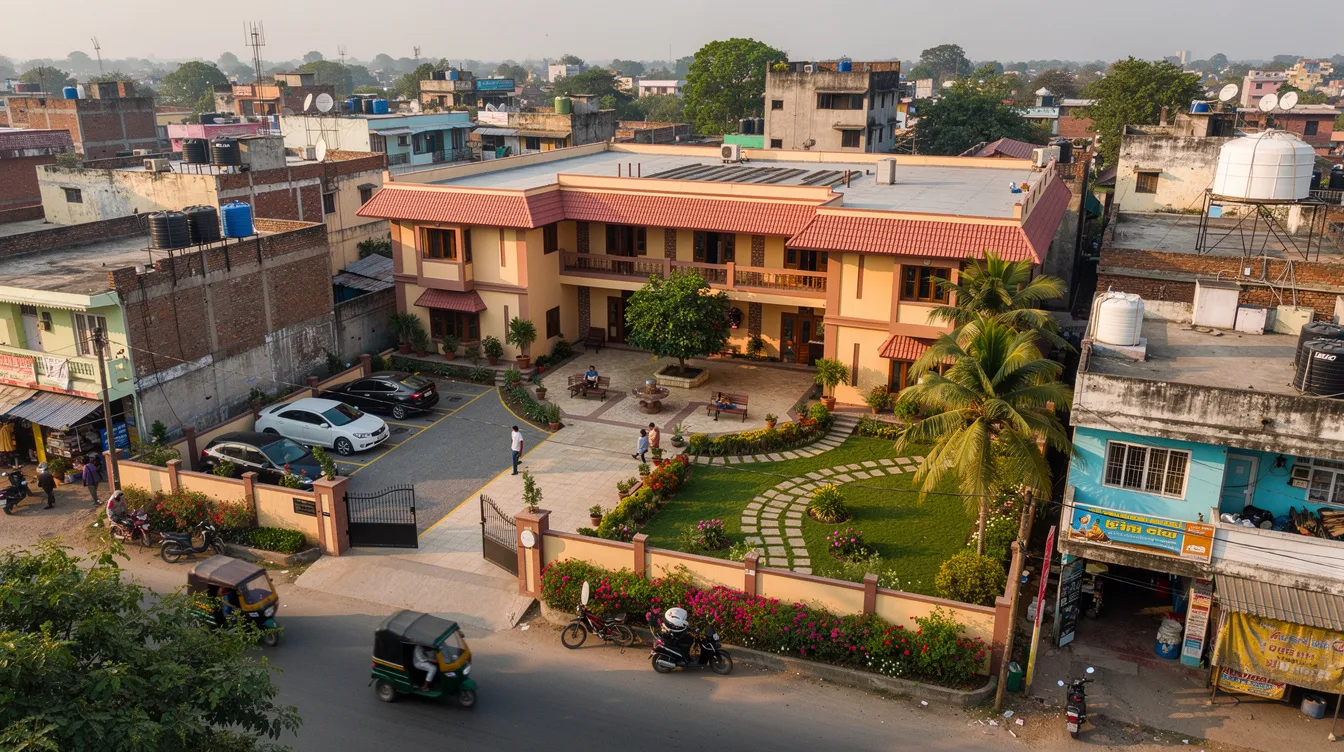
Conclusion: From Project Cost to Bankable Finance Structure
Successful small hotel projects in India require more than estimating “per room” construction cost or browsing hotel properties listed online. Promoters must capture the complete total cost – land or building, civil work, interiors, FF&E, preliminary and pre-operative expenses, contingency and working capital – in a structured, defensible manner that withstands bank scrutiny.
The logical chain that every hotel DPR must establish is:
Realistic Project Cost → Appropriate Means of Finance → Adequate Promoter Contribution → Sustainable Revenue Assumptions → Cash Flow → DSCR → Repayment Capacity → Bankable DPR
Errors at the project-cost stage – such as ignoring working capital, under-budgeting interiors, or inflating occupancy assumptions – cascade into funding gaps, stressed cash flows and difficulty in servicing term loans once the hotel starts operations. This can undermine long term value creation in what should otherwise be a rewarding investment in the Indian hospitality sector.
Entrepreneurs who need support with small hotel project reports, DPR preparation, financial projections, CMA data or bank-loan proposals can consider engaging an experienced CA and project-finance consultant such as CA Manish Gugliya through ProjectReportBank.com.
FAQ – Small Hotel Project Cost & Finance in India
These questions address additional practical doubts that many small hotel promoters raise beyond the topics covered in detail above.
How much does it cost to start a small hotel in India?
For a 10 to 50 room budget or boutique hotel, total investment excluding land can range broadly from ₹35–60 lakh per key in Tier-2 and Tier-3 cities to ₹70 lakh or more per key in metro locations with higher interiors and MEP specifications. With land included, the figure rises substantially depending on city and micro-location. These are broad illustrations only – real cost must be estimated through a project-specific DPR considering room size, facilities, number of floors, and positioning within the Indian hotel industry.
What is included in small hotel project cost from a bank’s perspective?
From a bankable DPR viewpoint, small hotel project cost includes land or building value (where considered), civil works, interiors, FF&E, equipment, professional fees, statutory approvals, preliminary and pre-operative expenses, interest during construction, contingency and margin for working capital. Banks expect each component to be supported by estimates, quotations or reasonable benchmarks rather than unsupported lump sums.
Can I get bank finance for a small hotel on leased property?
Many lenders do consider term loans for leasehold hotel projects, primarily for renovation, interiors, furniture and equipment, provided there is a clear, long-term registered lease (typically 9 years or more), acceptable promoter contribution, adequate security – which may include additional collateral beyond the leasehold interest – and satisfactory DSCR. Policies differ by bank, so proposals must be structured carefully with proper documentation.
Is working capital also financed as part of hotel project cost?
Initial working-capital margin is often included within total project cost and may be partly financed through the term loan. Separate working-capital limits (like CC/OD) are assessed based on projected current-asset needs. Promoters should not ignore this component while estimating total investment – insufficient working capital during the ramp-up period is one of the most common causes of stress in new developments in the hospitality industry.
Is a Detailed Project Report (DPR) compulsory for a small hotel bank loan?
For meaningful term-loan proposals, especially beyond modest ticket sizes, banks usually expect a structured project report or DPR showing project cost, means of finance, financial projections and DSCR. While not always mandated by law, a professional DPR significantly improves clarity, appraisal efficiency and credibility with lenders. It also helps promoters themselves understand how much capital they actually need and whether their proposed development cost and revenue assumptions hold together in a coherent financial model.
Explore More Small Hotel Project Report Guides
Continue exploring our Small Hotel DPR guides covering setup cost, equipment, project cost, revenue, financial projections, occupancy, feasibility, project finance and bank loan assessment.