Key Takeaways
- A small hotel project report (DPR) is a banker-oriented document that converts your idea for a 10–30 room hotel into verifiable numbers: project cost, revenue, profitability, cash flow, DSCR and loan repayment capacity.
- Banks in India sanction hotel term loans only after reviewing a bankable DPR covering realistic occupancy, Average Room Rate (ARR), total project cost, means of finance and sensitivity analysis – a professional project report is essential for loan approval.
- Small hotel setup cost in India varies widely. A 20-room budget hotel may need ₹3–5 crore including land, building, renovation, interiors, FF&E and working capital margin. All figures must be treated as illustrative only.
- A small hotel DPR must connect location feasibility and market demand with operational assumptions (occupancy, ARR, RevPAR) and financial projections (P&L, cash flow, balance sheet, DSCR over 7–10 years).
- ProjectReportBank.com specialises in preparing customised, bank-ready small hotel project reports and DPRs for bank loan applications in India, while loan sanction always depends on the lender’s own appraisal and policies.
Explore Small Hotel Project Report Guides
Explore our complete Small Hotel Project Report and DPR guides covering setup cost, equipment, project cost, revenue, financial projections, occupancy, feasibility, project finance and bank loan assessment.
Introduction: Why a Small Hotel Project Report Matters for Bank Loans
Consider this scenario: an entrepreneur in a Tier-II city plans a 20-room hotel near a busy pilgrimage centre, expecting to open in 2026. The land is identified, the architect has sketched a floor plan, and the construction estimate is ready. Yet when the promoter approaches a bank for a term loan, the branch asks for a structured small hotel project report for bank loan – not just a cost estimate.
A small hotel project report brings together multiple dimensions that banks need to evaluate before committing finance: location analysis, market demand, room inventory (whether 10, 20 or 30 rooms), positioning as a budget, business or tourist hotel, detailed project cost, occupancy and ARR/ADR assumptions, RevPAR, operating costs, break-even occupancy and – critically – repayment capacity supported by DSCR analysis.
The difference between a generic hotel business idea and a bankable small hotel DPR is substantial. The latter is built around realistic financial projections, sensitivity analysis and compliance with Indian banking norms. This article, written from the professional perspective of a practising Chartered Accountant involved in hotel project finance, serves as a hub. Each major topic is covered here and linked to detailed supporting guides on ProjectReportBank.com. All examples – investment, occupancy, ARR, DSCR – are illustrative. Actual figures depend on location, specification, brand positioning and negotiated bank terms.
What Is a Small Hotel Project Report / DPR?
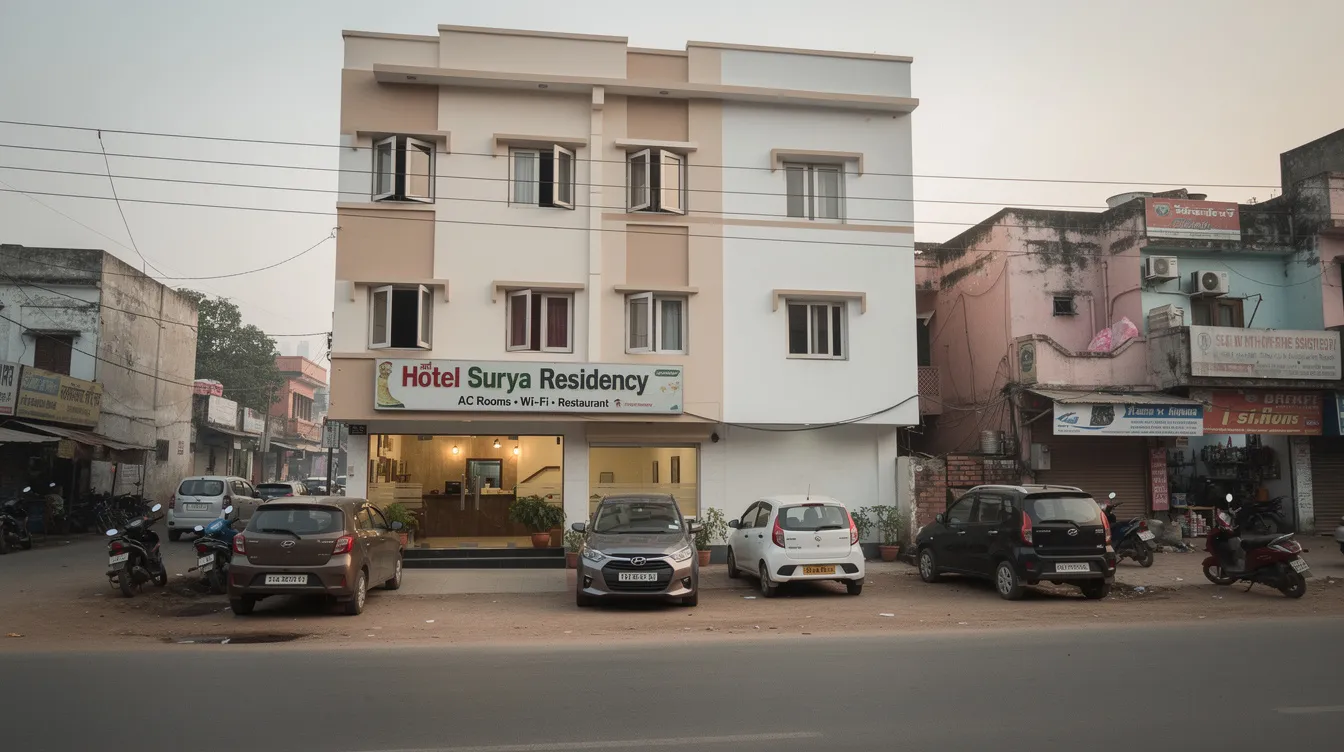
A small hotel project report is a structured document – typically 40 to 80 pages – containing the project profile, promoter profile, detailed project cost, means of finance, hotel market analysis, operating assumptions, multi-year financial projections and risk analysis, all prepared specifically for bank evaluation. Key sections in a hotel project report are the executive summary and market analysis, supported by financial models.
A Detailed Project Report (DPR) is a more exhaustive version that includes technical details such as building layout, room mix, FF&E list, implementation schedule, statutory approvals and financial models aligned with the proposed term loan tenure – commonly 7 to 10 years.
How does this differ from a basic business plan? A business plan typically describes the vision, target customers and marketing ideas at a high level. A bankable hotel DPR, by contrast, contains verifiable assumptions, linked financial statements (P&L, cash flow, balance sheet), DSCR calculations and clear justification for the requested bank finance. A credible feasibility analysis should distinguish between evidence and assumptions.
Hotel categories that commonly require a small hotel DPR in India include:
- 10–30 room independent budget hotels
- Small business hotels near industrial areas
- Tourist hotels near hill stations or heritage sites
- Roadside or transit hotels on national highways
- Small boutique properties in heritage locations
- A hotel cum restaurant project combining rooms with a dining establishment
Banks use the small hotel DPR to assess project viability, promoter contribution, project cost reasonableness, expected occupancy and ARR, cash flow adequacy, DSCR and overall risk before sanctioning a hotel term loan.
Who Needs a Small Hotel DPR and When?
A small hotel DPR is relevant for a wide range of promoter profiles:
- First-time entrepreneurs starting a 10–20 room budget hotel
- Existing hoteliers adding capacity to an operating property
- Property owners converting a commercial building into a 25-room hotel
- Buyers of distressed hotel assets seeking renovation finance
A DPR is generally required whenever bank term loan or project finance is involved – for example, a term loan above ₹25–30 lakh from public or private sector banks, or when applying under MSME schemes or a PMEGP loan that requests a project report. PMEGP offers loans up to ₹50 lakh with 25–35% subsidy for eligible projects, and MUDRA loans up to ₹10 lakh require no collateral.
Even when land and building are already owned and only renovation is planned, banks prefer a full hotel project report for bank loan to evaluate incremental investment, projected revenue growth and repayment capacity. Businesses seeking top-up term loans, refinance of existing hotel loans or expansion of F&B and banquet facilities may also need an updated DPR reflecting revised cost, revenue model and DSCR.
Promoters should ideally begin DPR preparation at least 2–3 months before approaching banks, allowing time to refine assumptions, collect quotations and align the document with lender formats.
Small Hotel Business Opportunity and Market Outlook in India
The Indian hospitality industry has recovered strongly since COVID-19. In FY 2025, India’s hotel industry achieved overall occupancy in the 63–65% range, with Average Daily Rate around ₹8,500–₹8,700 and RevPAR of ₹5,400–₹5,600. Domestic tourism visits rose by approximately 17.5% in 2024 over the previous year, and tourism’s contribution to GDP was about 5.22% in FY 2024–25.
India’s hotel industry includes over 7.5 million establishments, and the hotel sector is among the largest employment generators in the country. The travel and tourism sector provided 41.6 million jobs in 2017, and tourism contributed to 8% of total employment in India in 2017. Foreign tourist arrivals in India reached 10.56 million in 2018. India’s tourism industry is projected to grow by 2 percent annually, and international hotel chains aim for 50% market share by 2022 – a trend that has accelerated services development in the organised segment.
Key demand drivers for small hotels include religious and pilgrimage tourism, leisure travel, medical tourism near multi-speciality hospitals, educational hubs, industrial clusters and highway traffic. Budget hotels are emerging to cater to affordable stays for value-conscious domestic travellers. Online travel agencies (OTAs) and aggregators channel significant demand to small independent hotels through their external website platforms, though they also add cost through commissions of 15–25% of room revenue.
However, a positive national hotel industry outlook does not automatically make every small hotel project viable. A bankable small hotel DPR must focus on local demand, competition and pricing realities in the chosen location rather than relying on macro-level growth statistics alone.
Location and Market Assessment for a Small Hotel Project
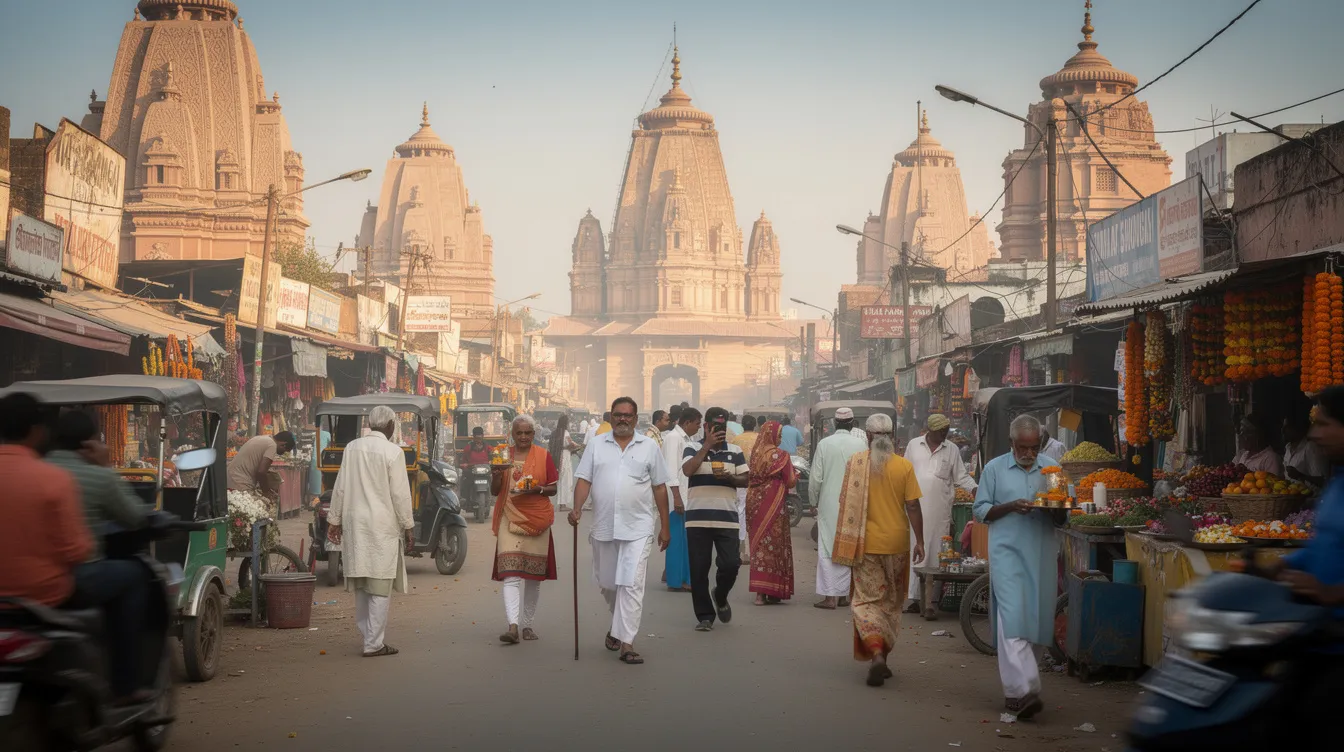
Location is often the single most important factor in hotel project viability. Market and demand analysis is crucial for connecting hotel proposals with potential returns.
Key locational factors to evaluate:
- Distance from railway station, bus stand and airport
- Visibility from main road or highway
- Ease of access and parking availability
- Proximity to major employers, industrial zones, offices, colleges and hospitals
- Nearby tourist attractions, pilgrimage sites or event venues
To assess local hotel demand, promoters should review tourism statistics, footfall at religious sites, corporate visitor frequency, wedding and event volumes, and seasonal patterns. Hotel feasibility studies often analyze local tourism and business travel to understand room-night demand. Market analysis identifies customer segments and demand drivers for hotels specific to the catchment area.
The competitive landscape should compare nearby hotels in terms of amenities and pricing. Map existing hotels and lodges within 2–3 km: their room inventory, typical ARR, positioning, online ratings and observed occupancy. Some new hotels may not have online ratings yet but can still be assessed through field visits. Audience research into what travellers expect – whether business amenities, personalized content in room services, or privacy preferences regarding guest data – can differentiate your property.
The small hotel project report should include a brief location feasibility subsection summarising why the selected site is suitable and how it influences achievable occupancy and ARR.
Small Hotel Feasibility Study and Project Viability
Before preparing detailed projections, the promoter should conduct a structured feasibility study covering five dimensions:
- Market feasibility: Is there enough room-night demand at the targeted price point to support the planned room inventory without driving occupancy assumptions unrealistically high?
- Technical feasibility: Can the land or building accommodate the required number of rooms, parking, circulation and compliance with building bye-laws and fire safety norms?
- Financial feasibility: Do projected EBITDA and cash accrual provide adequate DSCR after considering realistic occupancy, ARR and operating costs?
- Operational feasibility: Can the promoter recruit staff, manage operations and maintain customer satisfaction in the chosen market?
- Debt-servicing feasibility: Under the proposed term loan structure and interest rate, can the hotel consistently service debt across the repayment period?
A project report for a small hotel includes market viability and cost estimates as foundational elements. For a step-by-step framework, see the detailed guide on Small Hotel Feasibility Study & Project Viability.
Small Hotel Project Cost – Land, Construction, Interiors and Setup
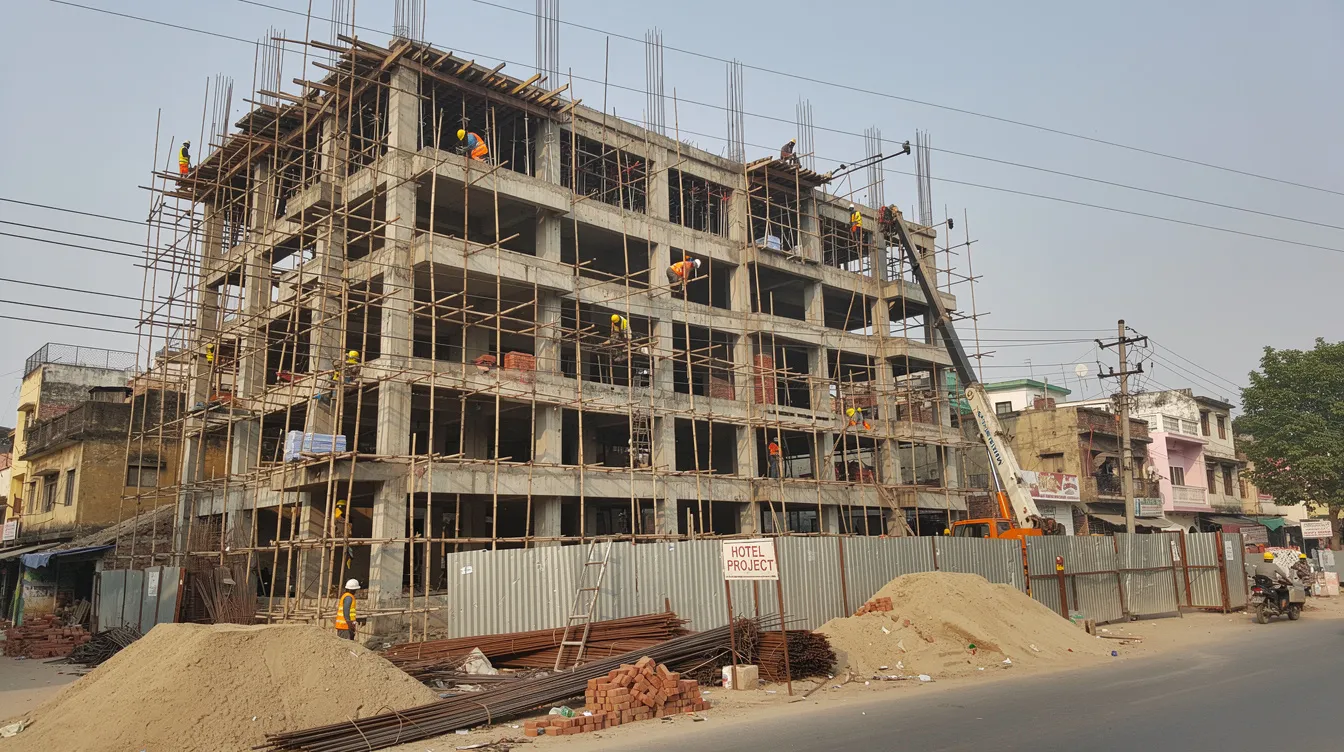
Capital expenditure should detail land acquisition and construction costs as primary components. The major cost heads for a small hotel project in India include:
- Land cost (if being purchased)
- Building construction or civil renovation
- Interiors and finishes
- Guest-room furniture, beds and furnishings
- Bathrooms, reception and lobby
- Lifts (where required)
- Kitchen and restaurant fittings
- Electrical works, HVAC, plumbing
- Fire safety, CCTV, IT/PMS, laundry equipment
- Signage and external development
The hotel project cost must also include professional fees (architect, structural engineer, consultants), statutory approval costs, pre-operative expenses (interest during construction, salaries and marketing before opening), contingency (typically 5–10%) and working capital margin for initial months.
Starting a hotel requires ₹5 lakh to ₹2 crore at the very basic level, but realistic project cost analysis for a properly built small hotel runs significantly higher. Illustrative ranges (examples only):
| Hotel Scale | Approximate Project Cost |
|---|---|
| 10-room budget hotel (converted building) | ₹1.5–3 crore |
| 20-room budget hotel (new construction, Tier-II city) | ₹3–5 crore |
| 30-room hotel (better specification) | ₹5–8 crore+ |
Total development cost and projected revenue must be highlighted in project reports. For room-wise cost benchmarks and detailed breakup, refer to Small Hotel Setup Cost in India – 10, 20 & 30 Room Hotels.
Hotel Equipment, Furniture, FF&E and OS&E
FF&E stands for Furniture, Fixtures and Equipment – beds, wardrobes, desks, lights, TVs, ACs, lifts and similar items. OS&E stands for Operating Supplies and Equipment – linen, crockery, cutlery, utensils and housekeeping tools.
Guest-room FF&E typically includes beds and mattresses, headboards, side tables, wardrobes, study tables and chairs, soft furnishings (curtains, cushions), lighting, air-conditioners, TVs, mini-fridges and bathroom fittings. Per-room FF&E cost for budget hotels in India runs approximately ₹40,000–₹80,000.
Reception and back office equipment covers the reception desk, seating, computers, printers, POS systems, property management software (PMS) with appropriate default settings configured for the property, CCTV, networking hardware and store room shelving.
Kitchen and F&B equipment (where a small restaurant or breakfast area is planned) includes commercial gas ranges, tandoor or ovens, refrigerators and deep freezers, exhaust systems, work tables, dishwashing equipment, storage racks and basic crockery inventory.
For indicative FF&E budgets per room and comprehensive checklists, see Small Hotel Equipment, Furniture & FF&E List with Cost.
Project Cost and Means of Finance
Every bankable small hotel project report must reconcile total project cost with clearly defined means of finance:
Total Project Cost = Promoter’s Contribution + Term Loan + Other Eligible Sources
Banks in India typically expect a minimum promoter margin of 20–35% of project cost, depending on scheme, risk profile and collateral. The following table is illustrative only:
| Component | Amount (₹ Lakh) |
|---|---|
| Project Cost | |
| Civil Works & Interiors | 250 |
| FF&E & Equipment | 80 |
| Pre-operative Expenses | 30 |
| Working Capital Margin | 40 |
| Total Project Cost | 400 |
| Means of Finance | |
| Promoter’s Equity | 140 (35%) |
| Bank Term Loan | 260 (65%) |
| Total | 400 |
Investor presentations should clearly state the total capital required for hotel projects. Lenders also examine debt-equity ratio, interest during construction, moratorium assumptions and whether working capital assessment needs post-commissioning are included. For detailed bank-style formats, see Small Hotel Project Cost & Means of Finance.
Small Hotel Revenue Model – Rooms, F&B and Other Income
For most small hotels in India, room revenue is the primary income source, supplemented by F&B and a few ancillary streams. Digital marketing and social media are essential for hotel marketing strategies that drive bookings and revenue.
Room Revenue
The basic formula:
Room Revenue = Number of Available Rooms × Occupancy (%) × Average Room Rate (ARR) × Operating Days
Example for a 20-room hotel: 20 rooms × 60% occupancy × ₹2,000 ARR × 365 days = approximately ₹87.6 lakh annual room revenue. This is illustrative – actual figures depend on market conditions.
Food & Beverage Revenue
F&B revenue can be estimated based on average spend per occupied room on breakfast and dining, expected local walk-in customers, or revenue per cover if a small restaurant is attached. For a cum restaurant project report format, conservative assumptions are advisable for smaller markets.
Other Income
Typical ancillary revenue lines include laundry income, banquet or meeting hall receipts, travel desk commissions, parking fees and minor miscellaneous income. Not every small hotel will have all these streams.
For a comprehensive revenue planning framework, refer to Small Hotel Revenue Model – Rooms, F&B & Other Income.
Occupancy, ARR/ADR and RevPAR in a Small Hotel DPR
Occupancy rates and average daily rates are key hotel metrics in financial models. Occupancy rate is the percentage of available rooms actually sold. ARR (Average Room Rate) or ADR (Average Daily Rate) is the average realised tariff per occupied room. Occupancy rates and revenue per available room (RevPAR) are fundamental operating indicators for hotels:
RevPAR = ARR × Occupancy% = Total Room Revenue ÷ Available Rooms
For a new 20-room hotel, realistic projections typically show:
| Year | Occupancy | ARR (₹) | RevPAR (₹) |
|---|---|---|---|
| Year 1 | 35–40% | 1,800 | 630–720 |
| Year 2 | 50–55% | 1,900 | 950–1,045 |
| Year 3 | 55–60% | 2,000 | 1,100–1,200 |
| Year 4+ | 60–65% | 2,100+ | 1,260–1,365 |
ARR should be benchmarked against comparable local hotels, adjusted for room size, amenities and OTA discounting. Banks reject non essential padding of tariff assumptions that cannot be justified by competitor data. A robust small hotel project report for bank loan should present at least annual average occupancy and ARR assumptions – and ideally off-season versus peak-season splits – so that bankers can judge whether revenue projections are grounded.
Break-Even Analysis and Break-Even Occupancy
Break-even analysis identifies the occupancy required to cover fixed costs and total operating expenses. It answers a fundamental question: at what occupancy level does the hotel stop losing money?
Components needed:
- Fixed costs: Core salaries, minimum electricity, rent/lease, property tax, insurance, licences
- Variable costs: F&B materials, laundry, extra utilities, OTA commissions
Conceptual formula:
Break-even Occupancy (%) ≈ Total Fixed Costs ÷ (Contribution per Available Room-Night)
Where contribution = room revenue minus variable cost per occupied room.
For a 20-room hotel with annual fixed costs of ₹30 lakh and contribution per occupied room of ₹1,200, break-even occupancy would be approximately:
₹30,00,000 ÷ (20 rooms × 365 days × ₹1,200) = about 34%
This is a simplified illustration. In practice, F&B revenue and costs, seasonality and semi-variable expenses make the calculation more layered. For detailed formulas and sensitivity examples, see Small Hotel Occupancy, ARR & Break-Even Analysis.
Explore the Complete Small Hotel Project Report Guide
Each planning area of a small hotel project is covered in a dedicated guide. Use the following table for quick navigation:
| Planning Area | Detailed Guide |
|---|---|
| Setup & Investment | Small Hotel Setup Cost in India |
| Equipment & FF&E | Small Hotel Equipment, Furniture & FF&E List with Cost |
| Cost & Funding | Small Hotel Project Cost & Means of Finance |
| Revenue Planning | Small Hotel Revenue Model – Rooms, F&B & Other Income |
| Occupancy & Break-Even | Small Hotel Occupancy, ARR & Break-Even Analysis |
| Financial Modelling | Small Hotel Financial Projections for DPR |
| Feasibility | Small Hotel Feasibility Study & Project Viability |
| Project Finance | Bank Loan for Small Hotel – Project Finance Guide |
| Bank Appraisal | How Banks Assess a Small Hotel Term Loan Proposal |
Small Hotel Operating Expenses and Cost Structure
Accurate estimation of operating expenses is crucial in a small hotel DPR. Understated costs can lead to cash flow stress and DSCR shortfall during operations.
Major expense heads include:
- Staff salaries and wages (front office, housekeeping, kitchen, security, management)
- Power and fuel
- Water
- Housekeeping consumables
- Laundry (in-house or outsourced)
- F&B raw material cost
- OTA commissions (typically 15–25% of room revenue booked through platforms)
- Marketing, advertising and online listing fees
- Repairs and maintenance
- Administration, communication (internet, telephone)
- Insurance
- Licence renewals and property-related taxes
- FF&E replacement reserve
Fixed costs (core salaries, minimum power, rent, property tax, insurance) remain relatively constant regardless of occupancy. Variable costs (F&B cost, laundry, extra power, OTA commissions) scale with room sales. This distinction directly affects break-even occupancy. Staff cost alone can form 20–30% of total revenue in budget hotels.
The DPR should present at least annual projected operating expenses for 5–7 years, linked logically to occupancy and revenue assumptions.
Financial Projections Required in a Small Hotel DPR
A bankable small hotel project report must include integrated financial projections for the entire loan tenure – commonly 7 to 10 years – demonstrating sufficient cash generation to service term loan instalments. Cash flow projections should cover at least five years for hotel feasibility, and many lenders expect projections matching the full repayment period.
Core projected statements include:
- Projected Profit & Loss Account: Room, F&B and other revenue; operating expenses; EBITDA; interest; depreciation; net profit
- Projected Balance Sheet: Fixed assets, working capital, term loan outstanding, promoter equity
- Projected Cash Flow Statement: Operating, investing and financing cash flows
Supporting analyses should include year-wise DSCR calculations, break-even analysis, EBITDA margin, net profit margin, interest coverage ratio and debt-equity ratio – all based on the same underlying assumptions.
Projections must reflect realistic ramp-up (lower occupancy in initial years), expected tariff escalation, inflation in operating costs and the exact term loan repayment schedule. A project report overview should make the assumption base transparent.
For detailed formats and banker-oriented presentation guidance, see Small Hotel Financial Projections for DPR.
DSCR and Loan Repayment Capacity for a Hotel Project
DSCR (Debt Service Coverage Ratio) measures whether the hotel generates enough cash to comfortably service its debt. In simple terms:
DSCR = Cash Available for Debt Service ÷ Total Debt Service (Interest + Principal)
Cash available for debt service is typically net profit plus depreciation (and other non-cash charges), adjusted for tax and working capital changes.
Illustrative example (numbers are for understanding only):
| Item | Amount (₹ Lakh) |
|---|---|
| Net Profit after Tax | 35 |
| Add: Depreciation | 18 |
| Add: Interest on Term Loan | 22 |
| Cash Available for Debt Service | 75 |
| Annual Debt Service (Interest + Principal) | 50 |
| DSCR | 1.50 |
DSCR must be ≥ 1.25 for public sector bank loan approval in many cases, though the exact requirement depends on the bank’s internal policy, collateral, promoter profile and risk assessment. Banks assess both average DSCR over the loan tenure and year-wise DSCR. Initial low-occupancy years can significantly pull down early-year DSCR, which is why moratorium on principal during construction and ramp-up is important to factor in.
A strong small hotel project report for bank loan clearly demonstrates repayment capacity under realistic operating conditions rather than depending on only essential optimistic scenarios.
Sensitivity Analysis – Testing the Strength of the Hotel DPR
Sensitivity analysis tests how variations in assumptions affect investment viability. Instead of presenting a single-scenario DPR, a robust report shows bankers how the project performs under adverse but plausible conditions.
Scenarios to model:
- Occupancy 10% lower than projected
- ARR 10–15% lower due to competitive pricing pressure
- Total project cost escalation of 10–20% before completion
- Higher-than-expected interest rate (e.g., 1–2% above base case)
- 6–12 month delay in commissioning
Each scenario should be reflected through revised revenue, recalculated EBITDA, updated cash flows and reworked DSCR. A risk analysis must identify potential pitfalls and mitigation strategies – for instance, if a 10% drop in occupancy pushes DSCR below 1.0 in Year 2, the DPR should discuss how promoter support or cost reduction can bridge the gap.
A project that appears viable only under very optimistic assumptions – say, 80% occupancy in a saturated market – will face scrutiny from credit officers. A DPR that remains bankable under moderate stress inspires significantly more confidence during bank appraisal. ProjectReportBank.com’s professional assignments typically incorporate multiple sensitivity runs to support serious bank appraisals.
Bank Loan for Small Hotel Project – Structure and Key Terms
Most small hotel projects in India are financed through a combination of promoter’s funds and bank term loans, sometimes supplemented by working capital limits. Hotel projects can access lower interest loans due to RBI guidelines applicable to priority sector or MSME lending in certain cases.
Common features of a hotel term loan:
- Quantum: Based on eligible project cost minus promoter margin
- Interest rate: Linked to MCLR/RLLR plus spread (often 9–12% for small hotels)
- Tenure: Typically 7–12 years including construction and moratorium period
- Repayment: Monthly or quarterly instalments
- Security: Mortgage of property plus additional collateral where required by the bank
- Working capital: Separate cash credit or overdraft facility based on projected turnover
Loan eligibility depends on viability of projections, promoter net worth, credit history (including CIBIL score), security value and internal bank guidelines – not merely on having a project report. A request for finance must be backed by substance.
For step-by-step coverage, see Bank Loan for Small Hotel – Project Finance Guide.
How Banks Assess a Small Hotel Term Loan Proposal
From a banker’s perspective, the small hotel DPR is one input in an overall appraisal. Credit officers evaluate:
- Promoter background: Experience in the hospitality or related industry, management capability
- Credit history: CIBIL score, bank statement conduct, identification documents
- Net worth: Ability to bring in required margin and absorb initial losses
- Location merits: Demand potential, accessibility, competition
- Project cost reasonableness: Comparison with market benchmarks, verified by quotations
- Revenue assumptions: Whether target occupancy and ARR are justified by local data
- Cash flow and DSCR: Year-wise repayment comfort
- Security: Adequacy of collateral and mortgage value
- Statutory approvals: Building permission status, fire NOC, regulatory requirements for hotels vary by location and include building permits
Lenders review the implementation schedule and whether the government approvals and clearances are in order. They also informally compare your hotel with similar hotels in their lending portfolio.
For a deeper explanation, see How Banks Assess a Small Hotel Term Loan Proposal.

Documents Generally Required for Small Hotel Project Finance
Documentation varies by lender, loan size and constitution (proprietorship, partnership, LLP, company), but a comprehensive document set typically includes:
Promoter documents: KYC (PAN, Aadhaar, address proof), constitution documents (partnership deed, MOA/AOA, LLP agreement), photographs, promoter profile, net-worth statement, existing loan details
Financial documents: Last 3 years income-tax returns, audited or CA-certified financial statements, latest bank statements (6–12 months), details of existing CC/OD limits
Project documents: Land ownership or lease documents, approved building plans, architect’s estimates, quotations for FF&E and equipment, civil or renovation quotes, statutory approval status and the detailed small hotel DPR or CMA data as required
Banks may also ask for projected financial statements in their own formats, property valuation from approved valuers, legal opinion on title and, for subsidy schemes, additional declarations. The process of compiling documents should begin well before the formal loan application.
Statutory Approvals and Licences for a Small Hotel
This is a high-level checklist only – actual requirements vary by state, municipal corporation and project specifics. Promoters must verify current regulations with local authorities.
Typical approvals for a small hotel with F&B operations:
- Building plan sanction and completion/occupancy certificate
- Fire safety NOC
- Local trade licence / shops and establishment registration
- FSSAI registration or licence for food service
- Pollution control consent (where applicable)
- Tourism or hotel industry registration with the state tourism department
Additional registrations may include GST registration, professional tax in certain states, EPF and ESIC for staff beyond specified limits, and liquor licence where applicable. Ignoring statutory approvals can delay disbursements, affect insurance cover and cause operational disruption. The small hotel DPR should reflect realistic timelines and estimated fees for obtaining licences. A window opens for many approvals only after construction reaches a certain stage, so planning the sequence is important.
Common Mistakes in Small Hotel Project Reports
Based on practical experience with bank appraisals, the following errors are commonly observed:
Planning mistakes:
- Projecting 80–90% occupancy from Year 1 without market justification
- Assuming ARR significantly above competing hotels
- Ignoring seasonality and expecting flat demand across 12 months
- Omitting a realistic stabilisation period
Costing mistakes:
- Underestimating project cost by omitting statutory approval fees, interior enhancements, contingency and working capital margin
- Using outdated FF&E rates that do not reflect 2025–2026 market prices
- Not budgeting for pre-operative expenses or interest during construction
Financial model errors:
- Inconsistent assumptions between P&L, cash flow and balance sheet
- Not linking loan repayment schedule to actual amortisation
- Calculating DSCR on accounting profit instead of cash accrual
- Confusing profit with cash flow
Operational gaps:
- Ignoring OTA commissions and discounts in revenue calculations
- Overestimating F&B income without clear seating capacity and covers analysis
- Inadequate provision for staff salaries, especially in smaller towns
- Failing to differentiate between fixed and variable costs in break-even analysis
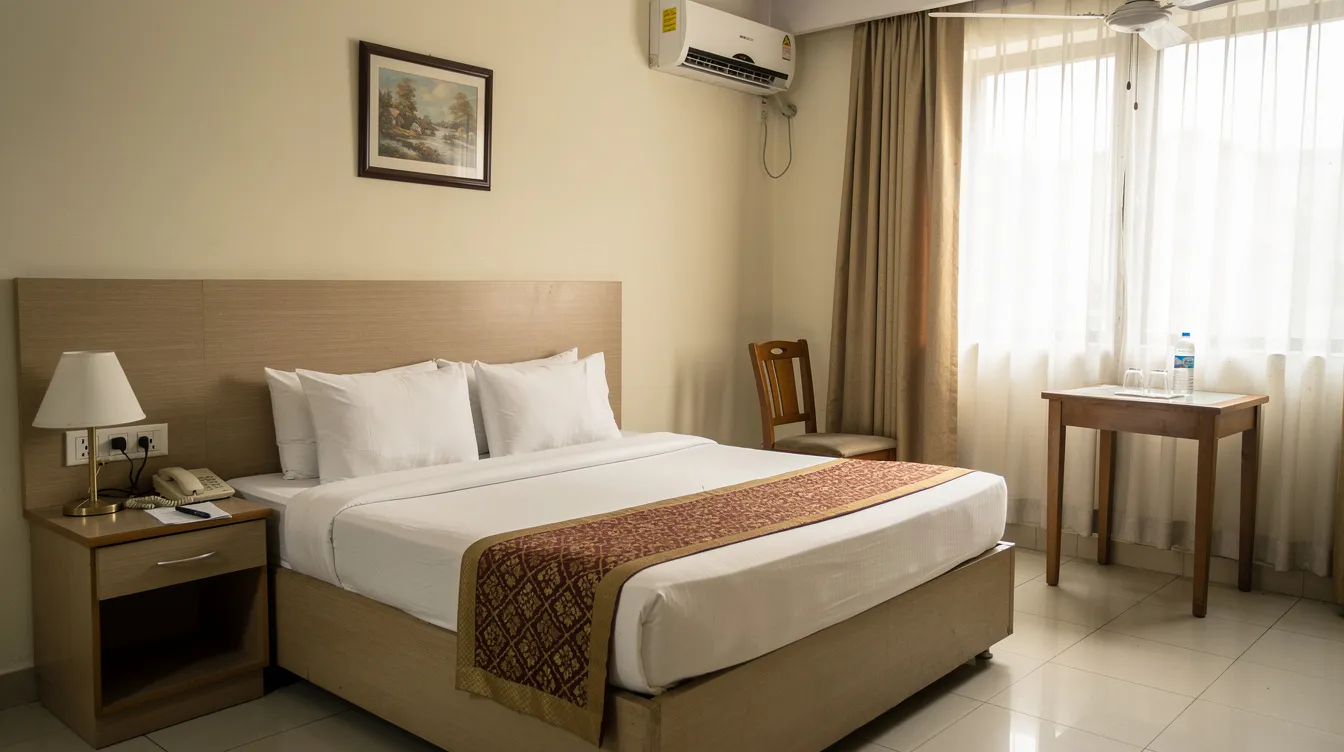
Illustrative Small Hotel Project Example (20-Room Budget Hotel)
The following example walks through a simplified 20-room budget hotel in a Tier-II Indian city. All numbers are illustrative only – for understanding DPR structure, not as universal benchmarks.
Assumptions:
- 20 rooms, average size 220–250 sq. ft.
- ARR stabilising at ₹2,000 by Year 3
- Occupancy ramp-up: 40% (Year 1) → 50% (Year 2) → 60% (Year 3 onwards)
- Modest F&B through breakfast and limited in-house dining
- Limited ancillary income
Project Cost and Funding:
| Head | Amount (₹ Lakh) |
|---|---|
| Civil Works & Interiors | 250 |
| FF&E & Equipment | 80 |
| Pre-operative Expenses | 30 |
| Working Capital Margin | 40 |
| Total Project Cost | 400 |
| Promoter’s Contribution (35%) | 140 |
| Bank Term Loan (65%) | 260 |
Indicative Revenue (Year 3 – Stabilised): 20 rooms × 60% × ₹2,000 × 365 = ₹87.6 lakh room revenue F&B and other income (estimated): ₹15 lakh Total Revenue: ~₹103 lakh
Operating Expenses and EBITDA: Total operating costs (salaries, power, F&B cost, OTA commissions, maintenance, administration): ~₹72 lakh EBITDA: ~₹31 lakh (about 30% margin)
Indicative DSCR (Year 3): Cash available for debt service (EBITDA adjusted): ~₹31 lakh Annual debt service (assuming 10-year repayment at ~10%): ~₹22 lakh DSCR: ~1.40
This shows how even moderate changes in occupancy or ARR can materially affect DSCR. If occupancy drops to 50%, room revenue falls to ₹73 lakh, squeezing EBITDA and potentially pushing DSCR below comfort levels. This reinforces the need for careful, evidence-based assumption-setting in every small hotel DPR.
What Makes a Small Hotel Project Bankable?
Bankability is not determined by property quality alone. It depends on the entire combination of:
- Credible promoter: Financially sound, with relevant experience and clean credit history
- Commercially attractive location: Proven demand, accessible, manageable competition
- Realistic project cost: Adequate contingency, verified through quotations, not underestimated
- Balanced room inventory: 10–30 rooms suited to actual demand
- Conservative yet viable assumptions: Occupancy and ARR supported by local benchmarks
Financial strength factors include healthy projected EBITDA and cash accrual, satisfactory average and year-wise DSCR, acceptable debt-equity ratio, manageable break-even occupancy and adequate security coverage.
Execution aspects matter too: a clear implementation schedule, vetted contractor and architect, timely statutory approvals and a basic staffing and operating plan. A well-prepared small hotel project report for bank loan brings these elements together so both promoter and banker can see the project’s strengths and risks on a single canvas. Neither a grand five star hotel project nor a star hotel project report for a five star hotel project demands more rigour in assumption-setting than a budget property does – the scale differs, but the analytical discipline is the same.
When to Seek a Professionally Prepared Small Hotel DPR
Very micro projects funded entirely from personal savings may work with a basic internal plan. But where term loan, project finance, collateral-free MSME loans or institutional investment is involved, a professionally structured DPR adds significant value.
Expert help is particularly advisable when:
- Converting a large or multi-use building into a hotel
- Projects above ₹1–2 crore in total investment
- Complex revenue models (rooms + restaurant + banquet)
- Multiple lenders or subsidy schemes are involved
- Bank appraisal requires CMA data, sensitivity analysis and financial modelling
Professional DPR preparation helps align projections with how banks read financial statements. The objective is not to massage numbers for approval but to build a realistic, bank-focused small hotel project report that allows both promoter and lender to accept informed decisions.
Professional Assistance from ProjectReportBank.com
ProjectReportBank.com helps serious hotel promoters and MSME borrowers prepare customised small hotel project reports and DPRs for bank loans across India, drawing on hands-on experience with project finance proposals, CMA data and bank appraisal requirements.
Typical inclusions in a professional assignment:
- Project and promoter profile
- Detailed project cost estimate and means of finance
- Concise market and feasibility note
- Operating and pricing assumptions
- Revenue model with room, F&B and ancillary income
- Projected P&L, balance sheet and cash flow
- DSCR and repayment analysis
- Break-even calculation and sensitivity analysis
- CMA data where required by the bank
Services can be tailored to specific bank formats, loan schemes and city-specific conditions. No promise or implication of guaranteed loan approval or subsidy sanction is made – final sanction depends entirely on the concerned lender’s policies, appraisal and discretion.
If you are actively planning a 10–30 room hotel and preparing to approach banks in the coming months, you can reach out to ProjectReportBank.com with basic project details for an initial discussion.
Conclusion – Using a Small Hotel Project Report as a Decision Tool
A successful small hotel cannot be judged purely by construction cost or expected room tariff. The real test is whether the project can generate sustained occupancy, adequate ARR and stable cash flows to cover all expenses and repay bank borrowings comfortably.
A well-prepared small hotel project report or DPR for bank loan should logically connect:
Market Demand → Location → Project Cost → Room Inventory → Occupancy → ARR → Revenue → Operating Cost → Profitability → Cash Flow → DSCR → Loan Repayment Capacity
Treat the DPR as your own decision-making tool. If the project does not appear bankable under realistic assumptions, it is safer to revise the concept, scale or location before committing large capital. The supporting articles linked from this hub provide deeper guidance on setup cost, equipment, revenue model, occupancy, break-even, financial projections and bank appraisal. If you found this document useful as a project report overview, the detailed guides will help refine each part of your plan.
Serious promoters in the hotel industry who require structured financial modelling and bank-oriented documentation for their upcoming small hotel project may consider engaging ProjectReportBank.com for a customised, professionally prepared DPR. The country’s growing tourism sector and the rise of budget accommodation present genuine opportunity – but only a disciplined, numbers-driven approach separates viable hotel projects from expensive mistakes.
FAQs – Small Hotel Project Report and Bank Loan
How is a Small Hotel Project Report different from a simple hotel business plan?
A business plan is typically qualitative – concept, target customers, marketing ideas. A small hotel project report or DPR is quantitative and bank-oriented. It contains detailed project cost, means of finance, multi-year financial projections, DSCR analysis and clear evidence of repayment capacity. Banks need the latter for appraisal; a business plan alone is usually insufficient for loan sanction.
What occupancy should I assume in my Small Hotel DPR for India?
Assumptions must be location-specific, but many small hotels plan for ramp-up: 35–45% occupancy in Year 1, stabilising at 55–65% by Year 3–4, subject to local demand and competition. Assuming 80–90% occupancy without strong market evidence is a common reason for DPR rejection during bank appraisal.
Does a strong Small Hotel DPR guarantee bank loan approval?
No DPR, however well-prepared, can guarantee sanction. Banks also consider promoter profile, credit history, collateral, internal exposure limits, sector guidelines and the link between projected cash flows and security. The final decision rests entirely with the lender.
How many years of projections should a Small Hotel DPR normally include?
Projections are typically prepared for the full term loan tenure – often 7 to 10 years for small hotels – so bankers can evaluate year-wise DSCR and cash flows across the entire repayment period. Some lenders may accept shorter horizons for smaller loans.
Can I prepare my own Small Hotel Project Report for a bank loan?
Promoters can draft basic project details and collect estimates themselves. However, for larger investments or complex proposals involving multiple revenue streams and bank-specific formats, it is often advisable to have a professional structure the projections, DSCR and sensitivity analysis in a manner consistent with bank appraisal practices. This ensures that the balance sheet, P&L, cash flow and repayment schedule are internally consistent and robust.
Explore More Small Hotel Project Report Guides
Continue exploring our Small Hotel DPR guides covering setup cost, equipment, project cost, revenue, financial projections, occupancy, feasibility, project finance and bank loan assessment.