
Setting up a small hotel in India requires capital across dozens of heads: land, civil construction, interiors, furniture, kitchen equipment, air conditioning, lifts, fire safety and initial working capital. Few promoters can fund the entire investment from their own resources. This guide, written from the perspective of CA Manish Gugliya (ProjectReportBank.com), explains how bank finance for a small hotel project works, what banks examine before sanction, and how to structure a credible loan proposal.
Key Takeaways
- A bank loan for a small hotel in India typically finances eligible fixed-asset costs (building, interiors, FF&E, equipment) through a term loan, while a separate working capital facility covers day-to-day operations after the hotel opens. The promoter must arrange a reasonable share of total project cost as own contribution.
- Banks approve hotel project finance based on commercial viability, projected cash flows, DSCR and repayment capacity, not merely the value of the property or construction bills.
- A professionally prepared project report with realistic occupancy, ARR and cost assumptions, supported by financial projections and CMA Data, improves the credibility of a small hotel loan proposal before a credit committee.
- Hospitality is a capital-intensive sector with specific operating cycles; lenders evaluate seasonality, location risk, promoter profile and sensitivity to occupancy drops before sanction.
- This article covers practical guidance for financing a 10 to 30 room hotel, from project cost structuring to DSCR analysis, based on Indian banking norms and real scheme examples.
Explore Small Hotel Project Report Guides
Explore our complete Small Hotel Project Report and DPR guides covering setup cost, equipment, project cost, revenue, financial projections, occupancy, feasibility, project finance and bank loan assessment.
Why Bank Finance Matters for a Small Hotel Project in India
Even a 10 to 30 room budget hotel in India can require ₹1.5 crore to ₹6 crore or more of total investment, depending on city tier, land cost, construction scope and interiors. Typical cost heads include land or building purchase, civil construction or renovation, guest-room furniture and beds, kitchen and restaurant setup, HVAC, lifts, fire-fighting systems, CCTV, hotel equipment, pre-operative expenses and initial working capital.
Promoters therefore explore a combination of own contribution, bank term loan and working capital facilities as the primary financing options. Construction finance is a prevalent route for hotel financing in India, and debt financing retains full ownership for the promoter but requires repayment with interest over the loan tenure. By contrast, equity financing involves ownership dilution for capital investment, and equity investors expect returns through business appreciation rather than fixed payments.
Sanction of a bank loan for a small hotel is not determined by property value alone. Banks examine the hotel project on parameters such as project cost versus means of finance, market demand, occupancy and ARR assumptions, projected cash flows, DSCR, security and promoter profile. This guide focuses on Indian conditions, scheduled commercial banks and MSME-oriented schemes relevant for small hotel and resort projects.
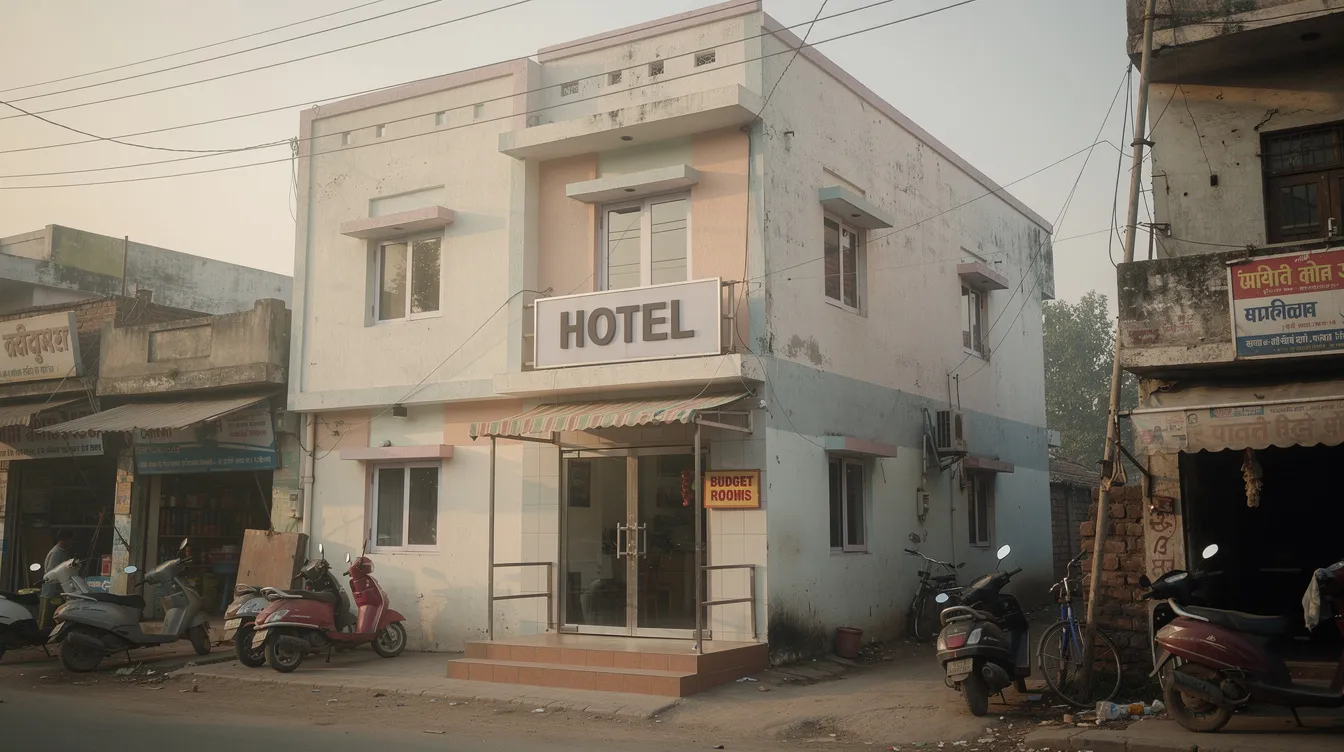
What Does Small Hotel Project Finance Mean?
Small hotel project finance in the Indian context refers to bank funding of eligible fixed-asset costs of a hotel project (typically 10 to 40 rooms) through a term loan, assessed based on the project’s future cash flows rather than only current balance sheet strength. This differs from a simple unsecured business loan or overdraft: project finance involves longer tenure, larger ticket size and a detailed DPR requirement.
Hotel financing options for small units revolve around term loans, working-capital facilities, sometimes government-backed MSME schemes that provide collateral-free or subsidized capital for hotels, and in limited cases, specific hospitality schemes from banks. Globally, funding packages for hotel projects can range from $7 million to $500 million for large developments, but Indian small hotel finance operates at a fraction of that scale, with scheme-level caps often in the ₹5 to ₹10 crore range.
From a bank appraisal perspective, the goal is to verify that future operating income from rooms, F&B and other services will comfortably meet interest and principal instalments over the entire loan tenure.
Term Loan vs Working Capital Finance for a Small Hotel
A hotel project normally requires both: a term loan for long-term assets and a separate working capital limit once operations begin. Equipment financing targets specific hotel assets (kitchen machinery, laundry units, HVAC) and these assets are often used as collateral for that portion of the loan.
A term loan for hotel project finances building construction or major renovation, interiors, furniture and fixtures, air conditioning, lifts, kitchen equipment, IT and PMS systems, and other capital expenditure. Hotel working capital finance covers staff salaries, electricity bills, consumables, food inventory, linen, OTA commissions, marketing expenses and routine operating costs.
Banks sometimes structure a working capital term loan (WCTL) for initial operating losses or a cash credit facility against current assets for ongoing needs.
| Particular | Term Loan | Working Capital |
|---|---|---|
| Purpose | Capital expenditure (building, FF&E, equipment) | Day-to-day operating expenses |
| Example | Lift purchase, kitchen equipment, interior fit-out | Monthly electricity bill, staff salary, food inventory |
| Repayment | Fixed instalments over 7-12 years | Revolving limit, renewed annually |
| Security | Mortgage of property, hypothecation of assets | Charge on current assets, receivables |
| Disbursement | Staged, linked to construction progress | Available as limit after hotel opening |
Types of Small Hotel and Hospitality Projects That Seek Bank Finance
Banks handle a wide range of small hospitality projects: new greenfield budget hotels on owned land, conversion of commercial buildings into hotels, leasehold properties with interior fit-out, acquisition plus renovation of an old lodge or guest house, and expansion by adding rooms or floors. Asset-backed term loans are necessary for large-scale structural renovations. Resort projects in tourist locations (Goa, Manali, Udaipur) also seek similar financing, but lenders examine seasonality and location-specific risk carefully.
Eligible components differ across lenders. Some banks may not finance pure land cost but will fund building and fixed improvements. Bank of Maharashtra’s hospitality scheme, for instance, caps land purchase financing at 25% of total project cost. Policy on financing restaurants, banquet halls and allied hospitality projects linked with the hotel varies and should be explained in the DPR. Green financing is also available for hotels focusing on sustainability, supporting projects with positive environmental benefits such as solar installations or water recycling systems.
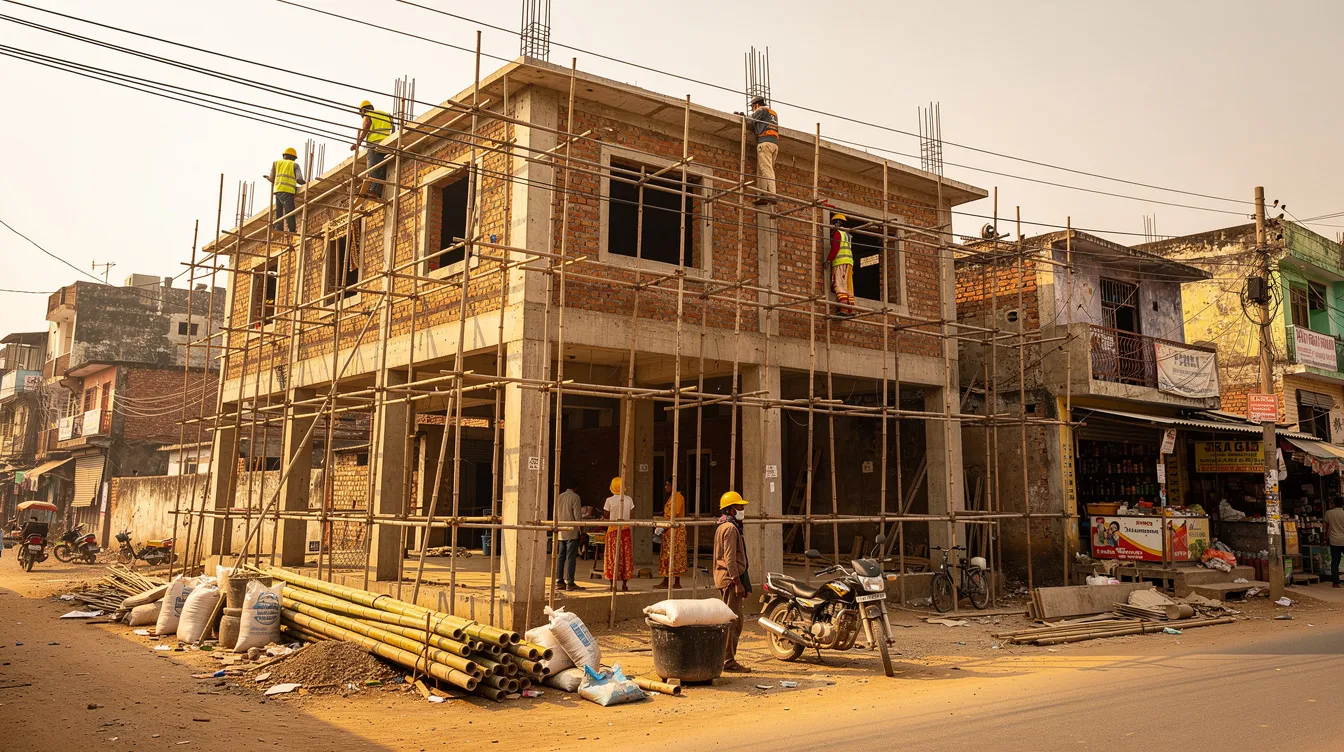
Bank Loan for 10-Room, 20-Room and 30-Room Hotels
Many promoters search for a bank loan for a 10 room hotel or a 20 room hotel, but loan quantum depends on total project cost, promoter contribution and bank norms, not only room count.
A 10-room hotel in a Tier-III town or highway location generates limited room revenue, which restricts debt-servicing ability. Banks may expect higher promoter contribution or additional collateral to offset the lower revenue base. A 20-room hotel is more common in budget business or tourist locations and achieves better economies of scale; banks will examine occupancy and ARR assumptions closely to justify the requested term loan. A 30-room hotel with lift, banquet facility and full F&B can push project cost well above ₹5 crore, making DSCR, security coverage and promoter net worth more important in the bank’s assessment.
Actual sanction limits vary across cities, brands, land ownership patterns and hotel category. Any figures in this article are illustrative only, not eligibility guarantees.
Project Cost of a Small Hotel; What Can Be Included?
Project cost for a hotel loan in India must be estimated accurately for both the promoter and the banker. Major cost heads include land and site development, building or civil construction, structural renovation, interiors, furniture and fixtures, hotel equipment, kitchen and bar equipment, HVAC, electrical and DG systems, lifts, fire-fighting and safety equipment, CCTV and access control, IT and PMS, signage, and landscaping.
Non-tangible heads matter too: architect and consultant fees, statutory approval costs, preliminary and pre-operative expenses (salaries during pre-opening, marketing launch, training), interest during construction, contingency and margin for working capital. Not all components are fully financeable by banks; land cost, GST and professional fees may have lender-specific caps or exclusions.
For a detailed breakdown, refer to the guide on small hotel setup cost in India. Accurate estimation of assets is equally important; the small hotel equipment, furniture and FF&E cost article covers why correct asset listing is vital for a bankable DPR.
Structuring Project Cost & Means of Finance
The basic identity in hotel project finance is: Total Project Cost = Promoter Contribution + Bank Term Loan + Other Permitted Sources (unsecured promoter loans, subsidies where genuinely applicable). Banks look for a balanced structure, not maximum leverage.
Promoter contribution includes own capital, brought-in funds, unsecured loans from promoters or directors where accepted, and the value of land or building already owned and offered for the project, subject to valuation. Hotel financing options also include equity partnerships and construction finance. Mezzanine financing, which combines elements of debt and equity, is often used for hotel projects needing additional capital beyond what a term loan covers.
The means of finance schedule in the project report should show timing: when equity is infused, when the term loan is disbursed, and how construction payments align with disbursement. Subsidies or incentives under state tourism or industrial policy should be shown realistically; banks do not treat uncertain subsidies as a primary source for debt servicing. For deeper analysis of funding structures, see the dedicated guide on small hotel project cost and means of finance.
How Much Bank Loan Can a Small Hotel Get?
There is no single fixed percentage or amount for all hotel financing. Each bank decides loan quantum based on eligible project cost, promoter contribution, DSCR, security and internal policies. Hotel project loans can be obtained at lower interest rates; banks typically quote 9.5% to 11.5% for strong profiles, while NBFCs charge 11% to 14%. Hotel projects can also qualify for lower interest loans under RBI guidelines for the hospitality sector. Comparing multiple lenders helps to find competitive interest rates and terms.
Key factors banks examine: total project cost excluding ineligible heads, borrower’s net worth, quality of primary security, viability of the revenue model, projected cash accruals, average DSCR, hotel location, and availability of additional collateral or guarantees. Dedicated bank hospitality schemes finance specific needs like land purchase and interior decorations within their scheme limits.
Illustrative Only: A hypothetical 20-room hotel with ₹4.00 crore project cost might see promoter contribution of ₹1.40 crore and a proposed term loan of ₹2.60 crore. If base-case occupancy reaches 55-60% by Year 3 at an ARR of ₹2,800, DSCR may stabilize around 1.40 to 1.60. These numbers are for concept illustration; actual figures depend on location, design, lender policy and individual circumstances.
Lenders may also apply scheme-specific caps. Pradhan Mantri Mudra Yojana (PMMY) offers tiered microloans for small hospitality setups, while CGTMSE provides credit guarantee cover for collateral-free loans up to ₹5 crore for micro and small enterprises. Stronger equity participation usually improves the proposal’s standing in the bank’s internal risk rating.
Hotel Revenue Model, Occupancy & ARR; What Banks Look At
For bank finance, repayment comes from operating cash flows, not from selling rooms or furniture. A good hotel loan application typically involves demonstrable demand for the hotel in the proposed location. Data on occupancy rates and revenues can strengthen loan applications, especially for existing hotels seeking expansion.
Main revenue streams for a DPR include room revenue, restaurant and F&B sales, banquet or event income, laundry, travel desk commissions and other operating income tied to the hotel’s concept. The core formula: Room Revenue = Available Rooms x Occupancy % x ARR x Operating Days.
Break-even occupancy is the level at which the hotel covers all operating expenses plus interest and instalments. Banks review this calculation carefully. For detailed revenue modelling, refer to the small hotel revenue model guide. Sensitivity to occupancy and pricing assumptions is covered in the small hotel occupancy, ARR and break-even analysis article.

Financial Projections, DSCR & Repayment Capacity
Any serious bank loan for a small hotel requires structured financial projections: projected P&L, Balance Sheet, Cash Flow, term-loan amortization schedule and DSCR analysis for 7 to 10 years. Lenders prefer financial projections showing cash flow and profitability for loans. Interest expenses from debt financing are often tax-deductible, and projections should reflect this in the tax computation.
Key elements include room inventory and occupancy by year, ARR trend, F&B ratios, detailed operating expenses (payroll, power, repairs, OTA commissions, administration), depreciation, interest on term loan and working capital, and replacement capital expenditure.
DSCR (Cash Available for Debt Service / Total Debt Service) tells the lender whether operating cash flows cover interest plus principal each year. Banks focus on both year-wise DSCR and average DSCR over the loan tenure; RBI sector norms suggest average DSCR of at least 1.20, though many banks prefer 1.50 or above for hotel projects. Repayment schedules should match projected cash-flow patterns, with reasonable moratorium during construction and early stabilization years.
For building integrated projections, see the guide on small hotel financial projections for DPR.
Working Capital Requirement After Hotel Opening
Many promoters focus on construction and FF&E funding but underestimate working capital needed in the first 12 to 24 months. Monthly salaries, electricity, fuel, food inventory, linen, housekeeping supplies, OTA commissions, marketing and statutory dues all create cash-flow pressure before occupancy stabilizes.
Banks assess working capital by examining the operating cycle, expected receivables (particularly from corporates and travel agents), and minimum cash cushion required to sustain operations at lower-than-steady occupancy. Unsecured business loans are available for quick renovations or working capital needs, but structured working capital limits from the lending bank offer better terms. The difference between “margin for working capital” built into project cost and actual working capital limits sanctioned (cash credit, overdraft) after operations begin should be clearly understood and explained in the DPR.
Bankable DPR / Project Report for Small Hotel Loan
Detailed project reports are essential to secure financing for new hotels. A strong business plan detailing costs and revenue projections is critical for loan approval. The business plan must demonstrate the hotel’s sustainable cash flow to service debt throughout the tenure.
A bankable project report for a hotel includes: executive summary, promoter profile, project concept and positioning, location and competition analysis, proposed facilities, project cost estimate, means of finance, implementation schedule, revenue model, occupancy and ARR assumptions, operating cost estimates, projected P&L, Balance Sheet, Cash Flow, repayment schedule, DSCR, break-even analysis and sensitivity scenarios.
Consistency across the report is non-negotiable. Room revenue must reconcile with room count and occupancy. Loan interest must reconcile with the loan schedule. Project cost must match quotations and civil estimates attached with the proposal.
Documents Commonly Required for a Small Hotel Project Loan
Licenses and permits are needed for compliance in the hospitality industry, and banks will verify these as part of the documentation process. Exact requirements differ between lenders and schemes.
| Document Category | Examples |
|---|---|
| Promoter KYC | PAN, Aadhaar, photographs, address proof |
| Constitution Documents | Partnership Deed, MOA/AOA, LLP Agreement, GST and MSME registration |
| Financial Documents | Last 3 years ITRs, audited financials, bank statements, CIBIL/credit reports |
| Property Papers | Title documents, sale/lease deed, approved building plans, municipal permissions |
| Project Attachments | DPR/project report, CMA Data, quotations for equipment and FF&E, management agreements |
| Approvals | Fire NOC, environmental clearance, hospitality licences applied or obtained |
How Banks Assess a Small Hotel Loan Proposal
From a bank appraisal perspective, credit committees view small hotel projects as specialized commercial real-estate-cum-service businesses. Experience in hospitality or small business is important for loan applications; strong personal and business credit scores are preferred by traditional lenders for loans.
Banks scrutinize project cost reasonableness against market benchmarks, whether contingency is adequate for overruns, and whether the promoter can absorb cost escalation without compromising completion. Lenders examine micro-location, demand drivers (tourism, industrial, corporate), competition, connectivity and whether projected occupancy and ARR appear commercially justifiable.
| Parameter | Why Bank Examines It | Possible Concern |
|---|---|---|
| Promoter contribution | Skin in the game, risk sharing | Below 25-30% raises leverage risk |
| DSCR | Repayment comfort | Average below 1.20 signals debt stress |
| Occupancy assumption | Revenue credibility | Above 70% in Year 1 for a new hotel is rarely credible |
| Security coverage | Recovery in case of default | Unclear title or low property valuation |
| Sensitivity to occupancy drop | Downside resilience | DSCR falling below 1.0 under 10% occupancy drop |
Sensitivity Analysis and Risk Factors in Hotel Project Finance
Good DPRs do not rely on a single best-case scenario. Typical sensitivity tests include: occupancy 10-15% lower than projected, ARR growing slower than planned, construction cost overrun by 5-10%, delay of 3-6 months in opening, and increase in salary or power costs.
Banks stress-test projections internally to check whether DSCR remains acceptable under adverse but plausible conditions, especially in the first three years. Key operational risks for small hotels include dependence on OTA bookings, seasonality in tourist locations, and reliance on a single large corporate client. These risks should be addressed in the DPR narrative with clear mitigation strategies.
Performing basic sensitivity analysis before submitting the proposal helps promoters refine project scope, choose realistic loan tenure and avoid over-leverage.
Security, Collateral and Guarantees for Hotel Loans
Primary security in a hotel project loan typically involves mortgage of the hotel land and building (where owned), hypothecation of financed FF&E and equipment, and charge over project-related receivables. Collateral includes tangible assets to secure loans against default. Debt financing can lead to asset seizure if payments are missed, so promoters should understand the security implications clearly.
Banks may seek additional collateral (other property, liquid securities) and personal or corporate guarantees from promoters. Commercial property loans are offered against existing real estate or hotel property where additional security is needed. The CGTMSE scheme provides credit guarantees for collateral-free loans to micro and small enterprises, which can reduce tangible collateral requirements for smaller hotel projects under scheme limits.
Clear and marketable title of the hotel property is crucial; any title dispute or unapproved construction can delay or derail sanction. Property valuation alone does not guarantee loan approval; banks require comfort on viability, DSCR and promoter credentials alongside security value.
Loan Tenure, Moratorium and Repayment Structure
Term-loan tenure and repayment profile must align with the construction period, stabilization phase and long-term cash-flow pattern. Structured term loans include a moratorium period for heavy capital expenditure projects; for hotel projects, this moratorium (during which only interest is serviced) typically covers 12 to 18 months. Nainital Bank’s Hotel Nirman Scheme, for example, allows tenure up to 120 months with a moratorium of up to 18 months on principal.
Hotels often need a moderate tenure of 7 to 12 years so that annual debt-service obligation remains within DSCR thresholds. Banks may offer EMI-based repayment or structured instalments that start lower and increase as occupancy stabilizes. Promoters should avoid requesting aggressive repayment schedules merely to reduce interest cost on paper; sustainable schedules that keep DSCR comfortable over the loan’s life are preferred.
Common Weaknesses in Small Hotel Loan Proposals
Many otherwise viable hotel concepts face difficulty in securing finance because of avoidable deficiencies in DPRs and financial presentations.
| Weakness | Why It Matters | Possible Corrective Action |
|---|---|---|
| Over-optimistic occupancy (e.g., 80% in Year 1) | Banks will reject unrealistic revenue assumptions | Use local market data, start at 40-50% for new hotels |
| Missing contingency in project cost | No buffer for cost overruns | Add 5-10% contingency on civil and FF&E |
| Inconsistent numbers across schedules | Destroys DPR credibility | Cross-check project cost, means of finance and projections |
| No sensitivity analysis | Bank cannot assess downside risk | Include at least 2-3 adverse scenarios |
| Insufficient promoter contribution | High leverage, weak risk-sharing | Arrange at least 25-30% of project cost as own funds |
| Ignoring pre-opening expenses | Cash shortfall at launch | Budget for 3-6 months of staff, marketing and training costs |
Illustrative Example; 20-Room Small Hotel Project Finance
This is an illustrative example only; actual figures vary based on city, land ownership, design and bank policy.
A 20-room budget hotel in a Tier-II city. Project cost: building renovation and interiors ₹2.20 crore, FF&E ₹0.70 crore, equipment ₹0.40 crore, pre-operative and contingency ₹0.35 crore, working capital margin ₹0.35 crore. Total: approximately ₹4.00 crore. Promoter contribution: ₹1.40 crore (35%). Proposed term loan: ₹2.60 crore.
Assumed occupancy ramp: 40% in Year 1, 55% in Year 2, 62% by Year 3. ARR: ₹2,500 to ₹3,200. Room revenue in Year 3: approximately ₹1.30 crore. F&B and other income: ₹0.40 crore. Total revenue Year 3: ₹1.70 crore. Operating expenses: ₹1.05 crore. EBITDA: ₹0.65 crore. Debt service (interest + principal): approximately ₹0.45 crore. DSCR Year 3: approximately 1.44.
DSCR in Year 1 may fall below 1.20 due to lower occupancy, which is typical for a new property. Banks evaluate whether average DSCR across the tenure remains above their threshold and whether the trend is improving.
Professional Role of CA Manish Gugliya & ProjectReportBank.com
CA Manish Gugliya is a practising Chartered Accountant experienced in hotel project finance, DPR preparation, CMA Data and DSCR analysis for MSME and hospitality projects in India. Through ProjectReportBank.com, assistance is available for: preparation of small hotel project reports for bank loan, structuring project cost and means of finance, developing realistic revenue models and financial projections, DSCR and break-even analysis, working-capital assessment, and presenting proposals in a bank-friendly format.
The role is advisory and analytical. No guarantee is given regarding bank sanction, interest rate, subsidy or loan amount. Final decisions rest with individual banks and financial institutions based on their policies and risk assessment.
Promoters planning new small hotels, expansions or substantial renovations can explore professional assistance with hotel DPRs, CMA Data and loan proposals through ProjectReportBank.com.
FAQs; Bank Loan for Small Hotel in India
Can I get a bank loan to start a small hotel if I have no prior hotel experience?
Prior hospitality experience is helpful but not mandatory. Banks may consider first-time promoters who demonstrate strong financials, credible project partners (such as an experienced hotel manager or franchise brand), a robust DPR and satisfactory collateral. Private equity firms and institutional investors rarely participate in small hotel projects, so bank finance remains the primary route, and lender comfort with the promoter’s overall business track record matters.
Does a bank finance hotel furniture, equipment and FF&E?
Most term loans for hotel projects in India cover eligible FF&E and major equipment (beds, furniture, AC units, kitchen and laundry equipment, lifts, CCTV, IT systems) as part of sanctioned project cost. Banks require proper quotations and vendor invoices, and the financed assets are typically hypothecated to the lender.
Is collateral always required for a small hotel project loan?
Many hotel loans are secured by mortgage of the hotel property and hypothecation of financed assets. Smaller loans under CGTMSE or certain MSME schemes may allow reduced or no collateral, depending on scheme limits and bank policy. Fast food centers and very small hospitality setups may qualify under Mudra or similar micro-loan programmes with lighter security requirements.
How long does it typically take for a bank to sanction a small hotel project loan?
Timelines vary. With complete documentation and a bankable DPR, appraisal for a standard MSME-sized hotel project might take a few weeks to a couple of months. Larger or more complex projects require additional time for legal, technical and valuation checks. A feasibility study and clear property title documentation speed up the process.
Can working capital for my hotel be sanctioned along with the term loan?
Banks often appraise and sanction both term loan and working-capital facilities as part of the same hotel project finance package. Working-capital limits typically become operational closer to or after hotel opening, based on assessment of operating-cycle requirements, expected receivables and minimum cash needs.
Explore More Small Hotel Project Report Guides
Continue exploring our Small Hotel DPR guides covering setup cost, equipment, project cost, revenue, financial projections, occupancy, feasibility, project finance and bank loan assessment.