Serious investors do not respond to vague funding requests. Before agreeing to explore any business proposal, they require clear, concise and credible information about the project, the promoter and the capital requirement. A professionally written investor introduction email and a focused one-page investor teaser can help a prospective investor quickly understand the opportunity and decide whether a further conversation is worthwhile.
This article explains how Indian business promoters can prepare effective first-contact documents for equity fundraising, with practical samples, formats and checklists relevant to manufacturing, agro-processing and industrial projects.
Key Takeaways
- In India, a clear investor introduction email plus a focused one-page investor teaser are usually sufficient for first contact. Detailed DPRs and full financial models come later.
- Promoters should state the project type, location, sector, total project cost, promoter contribution and specific equity requirement directly in the first email for stronger credibility.
- The one-page investment teaser must align with the business model, financial model and investor-ready DPR. Inconsistent numbers between documents create red flags during due diligence.
- Protect confidential information at first contact. Share deeper details only after the investor is qualified and NDAs or other safeguards are in place.
- Project Report Bank, led by CA Manish Gugliya, can professionally prepare investor-ready DPRs, financial projections, business valuation and investor pitch decks for Indian manufacturing and project-finance proposals.
Why the First Investor Contact Matters
For Indian angel investors, family offices and sector-focused funds, the first impression often determines whether they will read further or move on. Many investors and their management teams have reviewed hundreds of proposals. A poorly structured email or an unclear teaser document typically results in no response.
A professional investor introduction email in India is fundamentally different from a general request for financial help. It must communicate a defined project, a viable business model, the total project cost and a specific equity funding requirement. Indian investors appreciate direct communication and clear value propositions rather than lengthy narratives about market potential without supporting numbers.
Investors quickly scan for promoter background, sector relevance, ticket size, project stage and clarity of the ask before deciding to respond. For manufacturing, agro-processing and industrial projects, most investors expect the promoter to have completed basic feasibility work, financial projections and means-of-finance planning before sending any material. Cold emails have a low response rate in India’s startup ecosystem, which makes the quality of that first email even more important.
More detailed guidance on prospecting strategy is available in the cold email to investors in India resource. Similarly, promoters seeking referral-based approaches can explore guidance on warm introductions to investors.
What Is an Investor Introduction Email?
An investor introduction email is the first structured written communication sent to a potential investor, typically via email or LinkedIn, to present a specific investment opportunity. Writing an effective investor introduction email requires brevity and clarity.
The core objectives are straightforward:
- Introduce the promoter, company and sector
- Present the investment opportunity at a high level
- Specify the capital requirement in clear rupee terms
- Suggest a next step such as a short call or meeting
The ideal structure includes a precise subject line, a concise promoter and company introduction, a brief business description covering the business model and project status, the funding requirement and intended use of funds, and a proposed next action. The email body should be 150–300 words. Avoid attachments heavier than a one-page investor teaser or a short executive summary at this stage.
How to Write an Investor Introduction Email in India
Before drafting the email, clarify three things: what your funding requirement is, who the right investor is, and what supporting documents you have ready.
Research the investor’s focus. Many investors specialise in specific sectors, ticket sizes or stages. A fund focused on early stage technology companies is unlikely to respond to a ₹15 crore equity ask for a food-processing plant. Personalize emails based on investor preferences and tailor the message to the investor’s specific focus or recent investments.
Subject lines should be concise, professional and context-driven. A subject line such as “[Company Name] – ₹5 Crore Equity – Food Processing Plant, Maharashtra” immediately communicates sector, ticket size and geography. Use a strong subject line to capture investor attention rather than vague phrases like “Investment Opportunity” or “Seeking Funds.”

Highlight key metrics early in the email. State the total project cost, promoter contribution, and the investment amount you are seeking. Include a clear call-to-action. Investors prefer a low-friction call to action for initial meetings, such as requesting a 20-minute call rather than asking them to review a 50-page report. Keep paragraphs short and easy to read on mobile devices.
Key rules for Indian context:
- Refer to specific geography: state, city, industrial area where the plant or unit will operate
- Mention regulatory status if relevant (for example, pollution clearance obtained or in process)
- State promoter contribution as amount and percentage of project cost
- Avoid over-promising returns or making unrealistic claims
- Investors value a team with relevant experience and domain expertise, so mention your industry background
Include clear fundraising requirements in your email so the investor can immediately assess whether the opportunity fits their investment thesis.
Sample 1 – New Manufacturing Project
Subject: XYZ Polymers – ₹5 Crore Equity for Greenfield Plastic Packaging Unit, Gujarat
Dear Mr Sharma,
I am [Name], promoter of XYZ Polymers Private Limited. We are setting up a plastic packaging manufacturing unit in Sanand Industrial Estate, Gujarat, with a total project cost of ₹20 crore. The project involves a plant with installed capacity of 3,000 tonnes per annum, serving FMCG and pharma packaging customers in western India.
Our means of finance: promoter contribution of ₹7 crore (35%), proposed bank term loan of ₹8 crore (40%), and external equity requirement of ₹5 crore (25%). I have 14 years of experience in the packaging industry, including six years managing a similar unit.
Land has been acquired and environmental clearance is in process. We project stabilised annual revenue of approximately ₹28 crore by Year 3 at 75% capacity utilisation, with an estimated EBITDA margin of 18–20%.
Would you be available for a 20-minute call next week? I have attached a one-page teaser for quick reference.
Regards, [Name, Contact]
Sample 2 – Existing Company Seeking Expansion Equity
Subject: ABC Foods – ₹7 Crore Equity for Capacity Expansion, Madhya Pradesh
Dear Ms Mehta,
I am the Managing Director of ABC Foods Private Limited, an existing spice-processing company operating in Indore since 2014. Our current annual turnover is approximately ₹18 crore with an operating margin of 15%.
We are planning a capacity expansion costing ₹22 crore, including new processing lines and cold-storage infrastructure. Our means of finance includes ₹8 crore from internal accruals and promoter funds, ₹7 crore proposed bank term loan, and ₹7 crore external equity.
We are seeking a strategic partner with interest in food processing or agro-processing. The expansion is expected to increase capacity by 60% and projected stabilised revenue to approximately ₹32 crore.
I would welcome the opportunity to discuss this further at your convenience. A brief investor teaser is attached.
Regards, [Name, Contact]
Sample 3 – HNI / Family Office Email
Subject: Confidential – ₹4 Crore Equity Partnership – Engineering Components, Tamil Nadu
Dear Mr Rajan,
I write with reference to our brief conversation at the CII manufacturing summit last month. I am exploring a long-term equity partnership for a precision engineering components unit we are establishing in Coimbatore.
Total project cost is approximately ₹14 crore, with promoter contribution of ₹5 crore and proposed bank finance of ₹5 crore. We are looking for an investor contributing ₹4 crore for a meaningful minority stake, ideally someone with interest in the auto-components value chain.
I have 18 years of experience in precision machining and have managed two similar facilities. A one-page teaser is attached for your review.
Could we schedule a 30-minute conversation this fortnight?
Warm regards, [Name, Contact]
More detailed guidance on approaching HNIs and family offices for equity funding is available separately.
While these templates provide a useful starting point, the underlying numbers and capital planning should come from a proper financial model and project report rather than guesswork.
What Is a One-Page Investor Teaser?
An investment teaser is a one-page summary for investors. It is a concise, visually structured teaser document summarising the business and funding ask on a single A4 page or slide. The investment teaser should be one page long and designed so that interested investors can forward it internally without concern.
Unlike the investor introduction email, which is text-based and conversational, the one-page investor teaser is a formatted snapshot with structured sections. A well-crafted teaser generates interest and initiates further discussions without requiring the investor to read through a lengthy document.
It differs from a pitch deck, which is a 10–20 slide presentation for investors covering problem, solution, market, competition, team and financials in narrative form. It also differs from an executive summary or an investment memo, which provide deeper analysis, and from a full investor-ready Detailed Project Report, which contains complete technical, financial and operational feasibility. Investment teasers should be concise and protect sensitive information. The teaser is often sent before the pitch deck to potential investors.
Typical use cases include email attachments with the introduction email, WhatsApp sharing with known investors, internal screening by investment committees, and reference for quick recall after investor meetings.
One-Page Investor Teaser Format for Indian Businesses
This section provides a practical investor teaser format India-focused promoters can follow for both greenfield and expansion projects. Teasers should include the company name, problem, solution and market opportunity alongside the financial ask.
Recommended headings for the one-page investor teaser:
- Project or company name and location
- Sector and product summary
- Promoter profile (brief relevant experience)
- Business model and target customers
- Project implementation status
- Total project cost and means of finance
- Equity requirement and proposed structure
- Key financial highlights: projected turnover, EBITDA margin, DSCR or project IRR
- Use of funds
- Investment proposition and contact details
What to exclude from the teaser: detailed machine-by-machine cost lists, sensitive customer names, complete financial model, detailed process know-how and any confidential pricing arrangements. These should be reserved for NDA-backed discussions and the investor-ready DPR or offering memorandum, which provides detailed information for investors at a later stage.
Design-wise, the teaser should be readable in two to three minutes, formatted as a single-page PDF with clean sections and consistent rupee formatting (for example, ₹12.00 crore rather than mixing lakh and crore styles). For larger ticket sizes of ₹10–25 crore equity, institutional investors may also request a slightly extended two-page version plus a short financial model. Consistency between teaser, executive summary and CMA data remains essential.
Sample One-Page Investor Teaser for a Manufacturing Project (Illustrative)
The following is a hypothetical example of a one-page investment teaser for a manufacturing project in India. All figures are illustrative and do not represent any actual project or promise of returns.
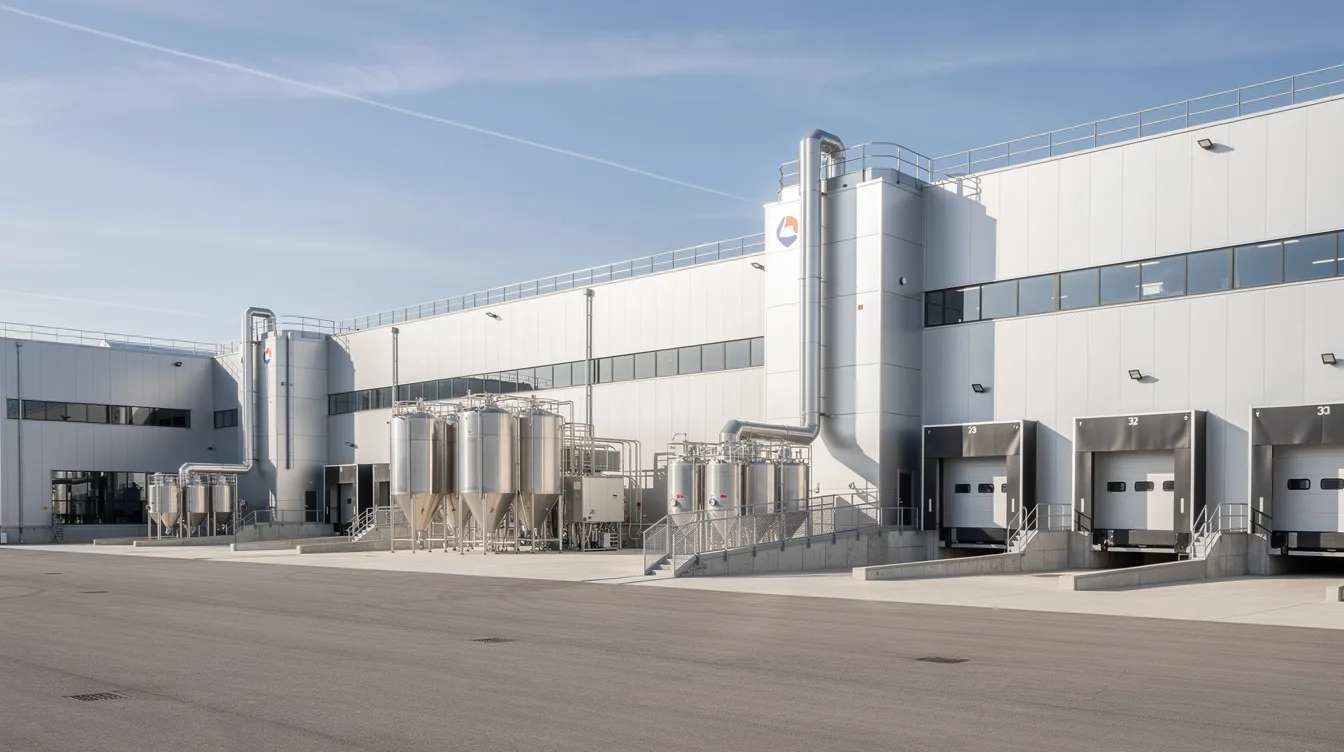
- Project Name & Location: GreenPack Industries Private Limited – Proposed flexible packaging unit, Chittoor District, Andhra Pradesh
- Sector & Product: Flexible packaging for food, pharma and personal care industries; installed capacity of 2,400 tonnes per annum
- Promoter Profile: Mr A. Rao, 16 years in the packaging industry, previously managed a 1,500 TPA unit in Hyderabad
- Business Model: B2B supply to regional FMCG and pharma manufacturers; order-backed production model with 45-day receivable cycle
- Project Status: Land acquired; building design finalised; machinery quotations received; environmental clearance under application
Total Project Cost: ₹12.00 Crore (Illustrative)
| Component | ₹ Crore |
|---|---|
| Land & Site Development | 1.50 |
| Building & Civil Works | 2.20 |
| Plant & Machinery | 5.80 |
| Utilities & Electricals | 0.80 |
| Pre-operative & Contingency | 0.70 |
| Working Capital Margin | 1.00 |
| Total | 12.00 |
Means of Finance:
| Source | ₹ Crore | % |
|---|---|---|
| Promoter Contribution | 3.00 | 25% |
| Proposed Bank Term Loan | 5.00 | 42% |
| External Equity Requirement | 4.00 | 33% |
| Total | 12.00 | 100% |
Key Operating Assumptions (Estimates):
- Capacity utilisation: 40% in Year 1, 65% in Year 2, 80% from Year 3
- Projected annual revenue at stabilised capacity: approximately ₹16–18 crore
- Indicative EBITDA margin: 16–19%
- Estimated project IRR: 20–24% (project-level, not investor-return specific)
- Simple payback: approximately 4.5–5 years
Investor Proposition:
- Equity stake of approximately 25–30% for ₹4 crore investment
- Seeking a strategic or financial partner with interest in manufacturing or packaging
- Exit possibilities include secondary sale, strategic buyout or promoter buyback after Year 5
Disclaimer: All figures are estimates based on certain assumptions. Actual results may vary. Numbers are subject to change after detailed feasibility analysis and due diligence.
Serious investors will expect a detailed investor-ready DPR and financial model supporting all teaser numbers before committing capital. A Chartered Accountant-led feasibility and project viability assessment is advisable before circulating the teaser widely.
Documents to Send Investors During First Contact
Promoters often either send too little information or too much at first contact. A vague email without any attachment fails to generate interest. Conversely, emailing a 60-page DPR to an unverified recipient is both a confidentiality risk and a practical barrier.
What is appropriate at first outreach:
- Investor introduction email (150–300 words)
- One-page investor teaser (PDF)
- Optionally, a one- to two-page company profile
Pitch decks, detailed financial projections and full DPRs should be shared after the investor responds with interest or schedules a call. Founders typically need nine core investor documents across the entire fundraising process, but not all are required at first contact.
Label attachments clearly with the company name, project name and date (for example, “ABC Foods – Investor Teaser – Apr 2026”). Keep file sizes small and use PDF format rather than raw Excel files.
Promoters should review the investor-ready DPR checklist and the equity funding readiness checklist to ensure their document preparation is thorough before beginning outreach.
Investor Documentation at Different Fundraising Stages
A structured approach to document sharing improves both credibility and confidentiality management. The following three-stage framework is practical for most Indian manufacturing and industrial equity proposals.
Stage 1 – Initial Contact:
- Investor introduction email focused on the Indian market context
- One-page investor teaser with non-confidential overview
- Basic promoter profile and project summary
- Total project cost and means of finance stated clearly
- Full financial model and confidential details are not required yet
Stage 2 – Investor Expresses Interest:
- Concise pitch deck covering market opportunity, competitive landscape, team and financial projections
- Three- to five-page executive summary or investment memo
- High-level financial projections covering turnover, EBITDA, break-even and financial performance trends
- Short note on valuation expectations and proposed shareholding pattern
- A cap table that records every security issued by the company, if applicable
- A data room that organizes files for investor due diligence should be structured at this stage
Stage 3 – Detailed Evaluation and Due Diligence:
- Full investor-ready DPR with technical, market and financial feasibility
- Detailed financial model with sensitivity analysis
- Business valuation analysis for equity funding amount and capital planning
- Historical financial statements, legal documents, regulatory approvals
- A term sheet outlines key terms of a funding round at this stage, followed by a shareholders agreement and investment agreement
Document preparation is iterative. The teaser, deck and DPR must align on key assumptions like project cost, capacity, revenue projections, DSCR and project IRR. Contradictions between documents damage credibility during due diligence.
How to Present Financial Information in an Investor Teaser
Investors do not expect an entire financial model in a teaser. They expect a logical snapshot of project economics grounded in realistic assumptions.
Minimum financial data points to include:
- Total project cost with means of finance split (promoter equity, bank term loan, external equity)
- Revenue potential at stabilised capacity
- Indicative EBITDA margin range
- Simple payback period or project IRR, clearly labelled as project-level
Mention high-level assumptions: capacity utilisation ramp-up over years one to three, key price and volume drivers, working capital cycle, and any government incentives such as interest subsidy or capital subsidy. Traction metrics should be relevant to the Indian market context rather than borrowed from international benchmarks.
All teaser figures must match the numbers used later in the financial model, CMA data and DPR. Revising the financial model is better than casually changing teaser numbers after new investors have already seen them.
Add a short disclaimer stating that numbers are estimates based on stated assumptions and are subject to change after detailed feasibility and due diligence.
Common Mistakes in Investor Introduction Documents
Many otherwise viable Indian projects fail to secure interest because of avoidable issues in the investor introduction email, investment teaser or early documentation. Prospective investors reviewing these documents form a rapid assessment, and common mistakes can disqualify the opportunity before the promoter gets a chance to explain.
- Excessively long first email: Limit to 200–300 words. Investors will not read a 1,000-word email from an unknown promoter.
- Vague project description: State the sector, product, location and project status clearly in the opening lines.
- Missing funding requirement: Always specify the exact equity requirement in rupees and as a percentage of total project cost.
- Unrealistic financial projections: Assuming 95% capacity utilisation in Year 1 without supporting evidence destroys credibility. Use a realistic ramp-up.
- Unsupported valuation claims: Avoid stating a valuation without comparable data or a financial model to support it.
- Inconsistent numbers: Ensure the teaser, pitch deck and DPR all reflect the same project cost, revenue projections and means of finance.
- No mention of promoter contribution: Investors need to see that promoters have money committed. Banks typically expect promoter contribution of 20–30% of project cost.
- Sending full DPR to unverified contacts: Share non-confidential summaries first. Reserve detailed documents for qualified investors.
- Generic mass cold outreach: Personalise each outreach based on the investor’s sector focus and ticket size.
- Unprofessional formatting: Spelling errors, inconsistent rupee formatting and poorly labelled attachments signal lack of seriousness.
- Overemphasis on subsidies without core viability: Government incentives can improve returns, but the project must be viable on its own merits.
Have an experienced Chartered Accountant review key investor documents before wide circulation. Correcting errors in front of investors is far more damaging than investing time in review beforehand.
How to Protect Confidential Business Information
While teasers and introduction emails are intentionally high level, promoters still need basic precautions before sharing any sensitive data with potential investors.
- Verify the identity and credibility of the investor through their firm’s website, LinkedIn profile and references
- Share only non-confidential overviews at first contact
- Avoid including detailed pricing, customer names, proprietary formulations or process details in the teaser or initial email
- Proprietary information and confidential information should be withheld until the relationship warrants disclosure
It is reasonable to request a non disclosure agreement after an investor shows genuine interest and wants to review the detailed DPR, financial model, customer list or technology-related material. However, NDAs are useful but not absolute protection. Promoters should remain selective about what they share, maintain version control of documents and watermark sensitive files where possible.
Keep a simple log of what was shared with which investor and when, especially once the process progresses to sharing detailed financials or operational documentation during due diligence.
Investor Introduction Email vs One-Page Teaser vs Pitch Deck vs DPR
These four investor documents serve different purposes and should deepen the information level step by step as investor interest grows.
| Document | Purpose | Detail Level | Stage of Use |
|---|---|---|---|
| Investor Introduction Email | First impression and call to action | 150–300 words, key facts only | Initial cold outreach or warm introduction |
| One-Page Investor Teaser | Structured snapshot with financial highlights | Single page, shareable | Attached with first email or shared via WhatsApp |
| Pitch Deck | Narrative covering market, business model, competition, team, projections | 10–20 slides | After investor expresses interest |
| Investor-Ready DPR / Investment Memo | Full project feasibility with detailed financial model | 30–80+ pages | Due diligence and investment committee review |
Clarity and consistency across all four documents matter more than graphic design. Conflicting project cost, revenue or IRR figures create immediate concern. Promoters should plan all four deliverables together as part of their investor documentation strategy, preferably with professional financial modelling and project-report support.
Investor First-Contact Documentation Checklist
Before sending your first investor introduction email, review the following checklist to ensure key basics are in place.

- Total project cost estimated and means of finance table prepared
- Equity funding requirement defined with intended use of funds
- High-level financial projections prepared and internally consistent
- Working capital needs considered and included in project cost
- Investor introduction email drafted within 200–300 words
- One-page investor teaser ready and consistent with financial model numbers
- Promoter profile summarised with relevant experience highlighted
- Sector, product and value proposition clearly articulated
- Plant location identified with basic infrastructure status noted
- Regulatory considerations understood at a high level (land status, clearances)
- Basic business valuation logic considered for shareholding discussions
- Data room or document folder structured for future due diligence sharing
- Confidentiality plan in place for sensitive documents
- Target list of angel investors, HNIs, private equity firms, family offices or venture capital funds researched
- Calendar and contact details ready for scheduling investor meetings
Run through this checklist before each new round of outreach to ensure updated numbers and documents are being used consistently. Cross-reference with the investor-ready DPR checklist for a more detailed preparation process.
How Project Report Bank Can Help With Investor-Ready Documentation
Project Report Bank is a Chartered Accountant-led project finance and investor documentation advisory under the guidance of CA Manish Gugliya, FCA, DISA (ICAI), with more than 20 years of experience in DPRs, financial modelling, feasibility studies and fundraising support for Indian manufacturing, processing and MSME projects. The focus is on preparing documentation that private companies and promoters can present to lead investors, banks and investment committees with confidence.
Core investor-focused services include:
- Preparation of investor-ready DPRs for equity funding and bank finance
- Detailed financial projections and financial modelling aligned with teasers and pitch decks
- Investor pitch deck creation for manufacturing and processing businesses
- Business valuation services for equity dilution planning
- Fundraising advisory including investor documentation strategy and outreach planning
Promoters planning equity funding in the ₹5–15 crore range for new plants, capacity expansion or diversification can share their project cost, location, sector and current documentation via the website’s WhatsApp option for an initial professional review.
While Project Report Bank cannot guarantee that any particular investor will fund the project, professionally prepared documentation materially improves the quality of investor discussions and due diligence readiness.
Frequently Asked Questions
What should I write in my first email to an investor?
Your first email should clearly state who you are, what the project is, where it is located, the total project cost, how much equity you are seeking and what the money will be used for. End with a specific call to action such as requesting a 20-minute call. An elevator pitch style of concise communication works better than a lengthy narrative. Avoid attaching heavy documents at this stage.
What is a one-page investor teaser and when should I send it?
An investment teaser is a one-page summary of your startup or project, formatted as a single-page PDF covering the business overview, promoter profile, project cost, funding ask and key financial highlights. It is typically attached to the investor introduction email or shared via WhatsApp after an initial conversation to gauge interest. It helps investors quickly assess whether the opportunity fits their investment thesis.
Should I attach my DPR or financial model to the first investor email?
No. Attach only a one-page investor teaser or a short company profile at first contact. Share the detailed DPR, financial model and direct competitors analysis only after verifying investor interest and, where appropriate, after a non disclosure agreement is in place. Pre-seed founders need a pitch deck and a SAFE before formal fundraising; similarly, project promoters need a professional presentation strategy that controls what information goes out and when.
How do I follow up if I do not receive a reply?
Follow-up etiquette includes sending a polite message after approximately seven to ten days. Add a meaningful update if possible, such as a new milestone, a regulatory clearance obtained or market research completed. Avoid repeated empty reminders. If there is still no response after two follow-ups, move on to other prospective investors. Many investors receive high volumes of proposals and may not respond to every opportunity.
How much financial information should I disclose in the teaser?
Include total project cost, means of finance, broad revenue potential, indicative EBITDA margin and simple payback or project IRR. These are sufficient to generate interest without exposing detailed information. Avoid sharing share class structures, detailed customer contracts, pricing formulae or a full financial model at this stage. A SAFE converts to equity at the next priced round and is relevant for startup funding structures, but for manufacturing projects, the focus should be on clear means of finance and realistic capital structure.
Should I mention the proposed company valuation in the first email?
Mentioning a specific valuation in the first email can be risky unless you have credible support from comparable transactions or a formal valuation exercise. It is often more practical to mention the equity stake being offered for the investment amount and discuss valuation in detail during subsequent conversations. Many investors form their own view based on project economics, growth potential and market opportunity.
What minimum documents do investors expect before moving to due diligence?
Beyond the teaser and email, investors typically expect a pitch deck, an executive summary or investment memo, high-level financial projections and a brief on valuation and proposed shareholding. For due diligence itself, an offering memorandum or investor-ready DPR, a cap table that records every security issued by the company, historical financials, legal and regulatory documentation, and employment agreements for key personnel are commonly requested. Having a well-organised data room saves considerable time.
How can a Chartered Accountant-led advisory help with investor documentation?
A professional advisory such as Project Report Bank ensures that your financial model, DPR, pitch deck and teaser are internally consistent and based on defensible assumptions. This includes realistic capacity utilisation ramps, working capital assessment, DSCR analysis, and startup funding structure planning. Rather than preparing documents in isolation, a CA-led practice builds all deliverables from one integrated set of assumptions, which is what venture capitalists, private equity firms and serious HNI investors expect to see. An investment banker or lead investor will scrutinise these numbers, and having professional preparation reduces the risk of credibility loss during evaluation.
About the Author – CA Manish Gugliya
CA Manish Gugliya, FCA, DISA (ICAI), is a practising Chartered Accountant since 2006, specialising in Detailed Project Reports, financial modelling, project finance, feasibility studies, business valuation, investor-ready documentation and fundraising advisory. Through ProjectReportBank.com, he provides professional financial and project advisory services to businesses across India.