Key Takeaways
- Equity investors turn down the majority of business proposals – over 99% of startups face rejection by investors, and manufacturing projects fare little better. Rejection does not always mean the idea is bad; it often reflects gaps in documentation, projections, valuation or investor fit.
- Investor rejection is fundamentally different from a bank loan refusal. Banks focus on collateral, repayment capacity and DSCR. Investors evaluate growth potential, risk-adjusted returns, governance, scalability and exit opportunities.
- Manufacturing and industrial projects in India face additional scrutiny around project cost accuracy, capacity utilisation assumptions, working capital intensity and statutory approvals – problems that a professionally prepared, investor-ready DPR can address.
- Promoters can materially improve their chances of securing funding by preparing realistic financial projections, defensible valuations, strong compliance records and approaching the right type of equity investor or angel investor whose mandate matches their business.
Introduction: Why Profitable-Looking Businesses Still Get Rejected
Imagine a technically sound manufacturing project with a viable product, reasonable demand and an experienced promoter. The financials look profitable. Yet dozens of investors pass on it. This is not unusual – it happens across India every week to entrepreneurs at the early stages of fundraising and to established businesses seeking expansion capital alike.
Why do equity investors reject business proposals that appear commercially promising?
The answer lies in how investors evaluate risk differently from banks. A bank loan proposal may succeed on collateral and DSCR. An equity investor, however, is buying ownership. They evaluate growth trajectory, market opportunity, management capability, business valuation, capital structure, exit routes and downside scenarios – all before writing a cheque.
This article examines the common reasons for investment rejection in India, with particular attention to manufacturing projects, MSMEs and growth businesses – not only technology startups. It draws on practical experience in project finance advisory and investor documentation to explain what goes wrong and how promoters can fix it.
Why Do Equity Investors Reject Business Proposals?
Investors reject proposals primarily because of unrealistic financial projections, lack of market validation, excessive valuation, poor capital structure, incomplete documentation, weak management teams, low scalability, compliance gaps and investor–business mismatch. A weak value proposition, absence of traction or unclear exit strategy can each independently trigger a rejection.
Investors assess proposals from multiple angles:
- Commercial: Is the market size adequate? Is there pricing power and competitive advantage? Investors seek credible market research to validate business proposals.
- Financial: Are cash flows realistic? What is the project IRR and equity IRR? Are downside cases modelled?
- Strategic: Does the business fit the investor’s focus area, ticket size and return expectations?
- Risk: Is the founding team credible? Are compliance records clean? Can the business survive adverse conditions?
Critically, rejection often reflects misalignment with a specific investor’s mandate rather than a fundamentally flawed business. Many successful companies faced multiple rejections before funding. Founders should treat investor feedback as a diagnostic tool, not a final verdict. Understanding what equity investors look for before investing and how investors evaluate businesses provides essential context.

15 Common Reasons Equity Investors Reject Business Proposals
Most equity funding rejection reasons in India fall into 15 recurring categories. These apply equally to startups, MSMEs and capital-intensive manufacturing projects. Each section below explains the problem, why investors consider it a red flag, and how promoters can address it.
1. Unrealistic Financial Projections
Unrealistic financial projections can result in proposal rejection faster than almost any other factor. Common problems include hockey-stick revenue curves, sudden jumps to 80–90% capacity utilisation in Year 1, EBITDA margins inconsistent with industry benchmarks, and complete absence of sensitivity analysis. Unrealistic financial projections can signal inexperience to investors who review dozens of proposals monthly.
Hypothetical example: A food processing startup projects ₹50 crore turnover by Year 3 with 30% net profit margin, minimal marketing spend and no distribution agreements. No market validation supports these numbers.
Financial projections must align with realistic market data. Show a clear, credible financial plan built on bottom-up assumptions – capacity, operating days, yield, verified selling prices. Prepare base, optimistic and conservative scenarios. Include detailed financial projections with unit economics, CMA-style cash flow and written assumptions. Failure to provide trustworthy financial information can lead to rejection regardless of how attractive the product appears.
2. Weak Business Model and Unclear Revenue Visibility
Investors assess whether the proposed business model is clear and viable before examining detailed numbers. If it is unclear who the customer is, how they pay, or why they would return, the proposal lacks revenue visibility. A weak or poorly defined business plan can lead to rejection at the first screening itself.
A B2B engineering services firm stating “we will figure out pricing later” instead of defining hourly, project-based or retainer models gives investors no confidence in revenue sustainability. Investors prefer startups that can demonstrate traction – purchase orders, LOIs, pilot revenue or at minimum, documented conversations with potential customers. Lack of evidence demonstrating business progress can reduce investor confidence significantly.
Present tangible evidence of traction to investors: signed contracts, repeat orders, growing customer base or measurable pipeline. Clarify customer segments, pricing tiers and recurring revenue potential.
3. Excessive Business Valuation
Investors often reject pitches due to unfavorable deal terms or valuations. Consider a simple example: if a promoter claims ₹40 crore pre-money valuation for a manufacturing company with ₹3 crore revenue and limited profitability, the mismatch between risk and return becomes unacceptable.
How valuation works: If pre-money valuation is ₹20 crore and an investor brings ₹5 crore, post-money valuation becomes ₹25 crore. The investor owns 20%. If the pre-money is inflated to ₹40 crore, the same ₹5 crore buys only 11% – offering inadequate upside for the risk taken.
Benchmark valuations against comparable companies using DCF and multiples. Understand how shareholding pattern, valuation and equity dilution interact. A practical, defensible valuation matters more than squeezing for the highest number in the first round.
4. Inadequate Promoter Contribution and Poor Capital Structure
When a ₹20 crore project is funded with only ₹1 crore promoter equity and the rest through debt, investors see excessive financial risk. The promoter has minimal skin in the deal, DSCR comes under pressure, and the business has no buffer for downturns.
Investors expect promoters to share meaningful risk. Strengthen capital structure by contributing cash, land or building as equity. Structure the means of finance so that equity, bank debt and promoter contribution are balanced and credible. A clear means-of-finance table in the DPR addresses this concern directly.
5. Weak Management Team and Promoter Credibility
Weak management teams often lead to rejection of business proposals even when the project economics appear sound. Investors invest in people as much as in financial models. A chemical plant proposed by first-time promoters without process engineering experience and no technical partner raises serious execution concerns.
Highlight your team’s strengths and relevant experience. Highlight your team’s strengths to build investor confidence – onboard domain experts, appoint experienced plant heads or technical co-founders, and ensure the founding team has the right talent to execute the plan. Clean background verification, transparent shareholding and consistent statutory filings reduce due diligence friction.
6. Incomplete or Poorly Prepared Investor-Ready DPR
A thorough business plan is essential for gaining investor confidence. An investor-ready DPR should contain technical feasibility, project cost breakdown, implementation schedule, market study, financial projections, risk analysis, IRR calculations and clear use of funds. A clear business plan outlines your mission and strategy in a way investors can evaluate systematically.
Common problems include copy-paste industry reports, missing machinery quotations, no working capital assessment, and no linkage between assumptions and projections. Your pitch deck should clearly communicate your value proposition, while the DPR provides the analytical depth behind it. A strong business plan outlines market validation strategies and shows investors that groundwork has been done.
Start pitches with a clear, relatable problem. Keep your pitch deck visually clean and well-structured. Use the investor-ready DPR checklist to ensure nothing material is missing.
7. Insufficient Market Demand and Competitive Advantage
Insufficient market demand can cause investors to reject proposals outright. Investors need proof of customer demand before funding – not just a large TAM figure from a generic industry report. Limited total addressable market can result in proposal rejection, and lack of a defensible market position makes proposals less attractive.
Competition without a clear competitive advantage can result in rejection. Strong competition heightens the scrutiny proposals receive from investors. Starting another generic packaging unit in a saturated industrial cluster without differentiation in product, technology or service level will not pass screening.
Lack of real-world validation raises doubts about market fit. Investors need proof of customer demand for your product through primary research, existing orders, MOUs or documented pilot results. Investors often reject proposals due to lack of market validation – address this with credible, verifiable demand evidence.
8. Weak Cash Flow and Working Capital Planning
Even profitable businesses can fail due to cash flow gaps. An auto-components MSME offering 60-day credit to customers while paying suppliers within 15 days, without adequate working capital arrangements, will face constant cash strain. High customer acquisition costs can undermine investor interest, and high operational costs relative to expected income increase rejection likelihood.
Prepare monthly cash flow projections, realistic working capital assessment and properly structured CMA data. Align assumptions with bank funding norms and show sanctioned working capital limits where available.
9. Poor Project Feasibility and Implementation Planning
Unclear land title, non-finalised machinery vendors, no statutory approvals roadmap and underestimated utilities costs indicate poor project preparation. A dairy processing project assuming 12-month implementation without factoring FSSAI, pollution control and municipal clearances will face investor scepticism.
Investors need proof of concept to consider funding a proposal. Conduct a project feasibility study covering technical, market and financial dimensions before approaching investors.
10. Unattractive Project IRR and Equity IRR
Investors often reject proposals due to a lack of expected returns. The difference between project IRR and equity IRR is critical: a project IRR of 16% can translate to equity IRR of only 11% after debt service and dilution, which may not compensate for risk.
There is no universal “good IRR” – different investors have different thresholds. PE investors in Indian manufacturing have historically achieved median IRRs of 18–33% depending on vintage. Poor financial performance can lead to a proposal being rejected when returns do not justify the risk appetite of the investor.
11. Legal, Compliance and Due Diligence Problems
Regulatory issues can expose investors to unacceptable risks during assessments. Key areas checked include ROC filings, GST and income-tax compliance, IP ownership, land titles, pending litigation and related-party transactions. Gaps discovered during due diligence – unresolved tax notices, missing board minutes, undocumented related-party dealings – frequently lead to rejection.
Rectify filings, formalise key contracts and prepare a digital data room using the investor due diligence checklist as guidance.
12. Unclear Use of Funds and Excessive Funding Requirements
Asking ₹25 crore when the immediate plant and machinery requirement is ₹10 crore, with no deployment plan for the balance, raises concerns about capital discipline. Over-raising dilutes promoters unnecessarily and signals poor planning.
Prepare a detailed cost and means-of-finance table. Map each component – land, building, plant and machinery, pre-operative expenses, working capital margin, contingency – to its funding source. Understand how much equity funding you should raise relative to milestones.
13. Lack of Scalability and Limited Growth Potential
Investors seek startups that solve scalable problems. A small job-work unit that can never exceed ₹1–2 crore annual turnover due to machine limitations and localised demand may be a viable family business but is unsuitable for institutional equity. Investors look for startups with a clear path to growth – whether through additional production lines, automation, export markets or downstream integration.
This does not make the business bad. It may simply be better funded through debt or internal accruals. Highlight realistic scale-up options and explore equity funding for manufacturing expansion where growth potential exists.
14. No Credible Investor Exit Strategy
Investors prefer proposals with clear and achievable exit strategies. Without exit thinking – strategic sale, secondary sale, promoter buyback where permitted, or future listing – investors may fear being locked in indefinitely.
Realistic exit paths for Indian manufacturing include acquisition by a larger industry player, buyout from a strategic partner, or SME IPO after reaching sufficient scale. Include high-level exit scenarios in the pitch deck aligned with growth milestones. Exit timelines are indicative and subject to actual performance and market conditions.
15. Investor–Business Mismatch
Poor fit with an investor’s objectives may lead to proposal rejection even when the business is sound. Approaching a PE fund with a ₹50 crore minimum cheque for an ₹8 crore equity requirement, or pitching a manufacturing project to an angel investor who only invests in SaaS, will result in rejection regardless of quality.
Research target investors carefully. Shortlist those aligned with your industry, scale and stage. Explore whether an angel investor, family office, strategic investor or VC fund matches your risk appetite and ticket size. This mismatch does not reflect the quality of the business – investor fit is as important as project quality.
Common Investor Rejection Reasons and Practical Solutions
The following table summarises key rejection reasons, what concerns investors, practical solutions and supporting documentation.
| Rejection Reason | Investor Concern | Recommended Solution | Supporting Document |
|---|---|---|---|
| Unrealistic financial projections | Overstated revenue, margins, utilisation | Bottom-up projections with industry benchmarks and sensitivity analysis | Financial model, sensitivity report |
| Weak business model | Unclear revenue streams, no repeat business | Define pricing, customer segments, recurring revenue | Revenue model, LOIs, pilot data |
| Excessive valuation | Ownership percentage too low for risk | Benchmark using DCF and comparable multiples | Valuation report, cap table |
| Low promoter contribution | Promoter has minimal skin in the deal | Increase equity contribution (cash, land, assets) | Means-of-finance statement |
| Weak management team | Execution risk, no domain expertise | Onboard experienced team, technical partners | Team profiles, advisory board |
| Incomplete DPR | Missing costs, machinery specs, approvals | Prepare comprehensive investor-ready DPR | Customised DPR with quotations |
| Insufficient market demand | No evidence of customer willingness to pay | Primary research, orders, MOUs, pilot sales | Market feasibility study |
| Cash flow gaps | Working capital mismatch, debt servicing risk | Monthly cash flow projections, WC assessment | CMA data, cash flow model |
| Poor project feasibility | Technical, regulatory or implementation risks | Full feasibility study covering all three pillars | Project feasibility report |
| Unattractive IRR | Returns do not justify risk | Recalculate with conservative assumptions, show upside | IRR analysis with scenarios |
| Compliance gaps | Statutory defaults, unresolved disputes | Rectify filings, formalise contracts, clear disputes | Due diligence data room |
| No exit strategy | Investor fears permanent lock-in | Define realistic exit paths aligned with milestones | Exit strategy in pitch deck |
Why Do Investors Reject Manufacturing and Industrial Project Proposals?
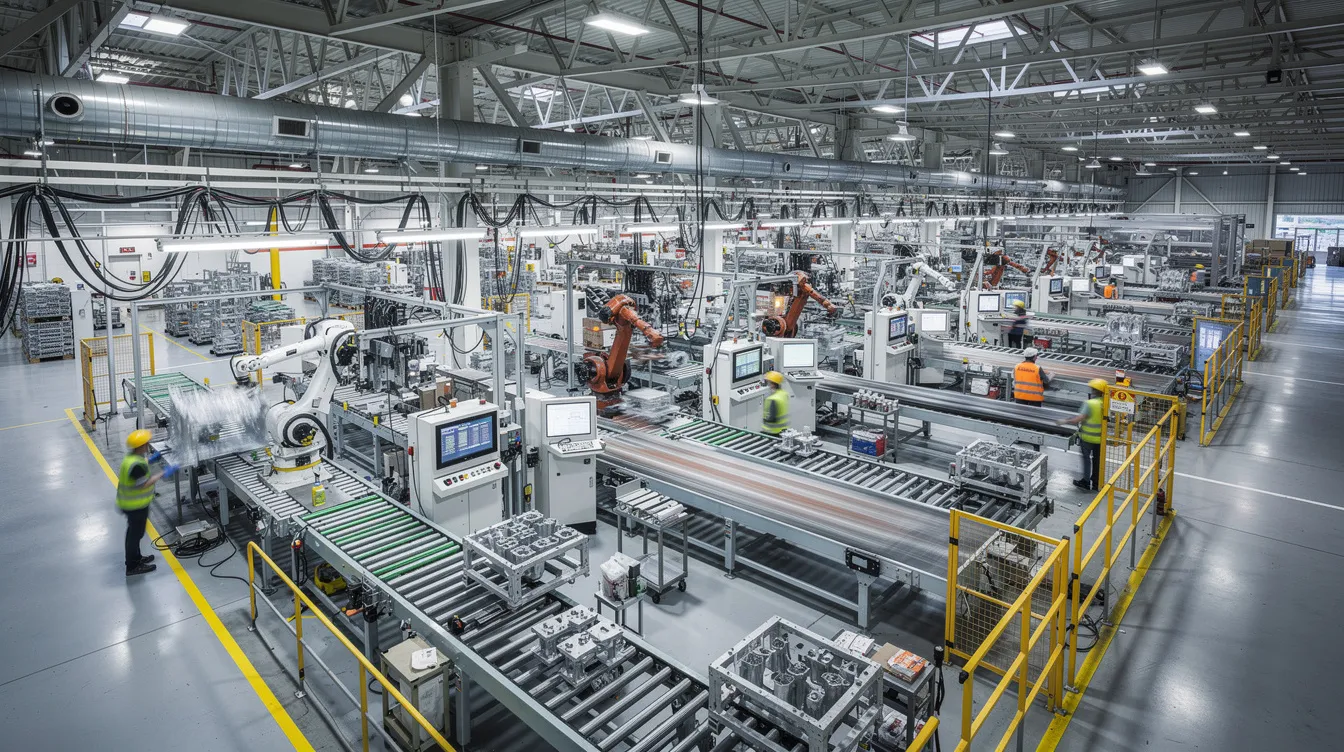
Manufacturing projects carry unique risks that investors scrutinise closely: high capex, longer gestation periods, regulatory approvals, raw material dependencies and working capital intensity. Even when the product idea has merit, these factors can trigger rejection if not addressed with precision.
Key manufacturing-specific red flags include:
- Underestimated factory setup cost without verified machinery quotations
- Market demand not aligned with proposed plant capacity
- Overestimated capacity utilisation – PE investors typically expect utilisation above 70% before expansion funding
- EBITDA margins below 10–12% without a credible improvement plan
- Raw material supply uncertainty, especially seasonal or import-dependent inputs
- Under-budgeted power, fuel and maintenance costs
- Missing or delayed statutory approvals (pollution control, factory licence, FSSAI)
- No sensitivity analysis on raw material prices, selling prices and volumes
For debt-funded components, weak DSCR projections compound these concerns. An integrated analysis of project IRR and equity IRR with realistic assumptions is essential. Explore detailed guidance on equity funding for new manufacturing projects in India.
Illustrative Example: Strengthening a Weak Manufacturing Investment Proposal
All figures below are hypothetical and illustrative.
Initial proposal (weak version): An edible oil mill with ₹25 crore total project cost. Machinery estimates are vague (no vendor quotations). The promoter assumes 90% capacity utilisation from Year 2, projects 30% EBITDA margin, provides no working capital assessment, and shows no sensitivity analysis. Equity–debt split is unclear.
Revised proposal after professional review:
- Project cost refined to ₹22 crore based on verified quotations: land ₹3 crore, building ₹4 crore, plant and machinery ₹12 crore, pre-operative expenses ₹1.5 crore, contingency ₹1.5 crore
- Capacity utilisation: 50% in Year 1, 65% in Year 2, 75% from Year 3
- EBITDA margin: 14–16% (aligned with industry benchmarks for branded edible oils)
- Working capital: ₹3.5 crore assessed based on 45-day inventory, 30-day receivables and 15-day payables
- Promoter contribution: ₹7 crore (land + cash equity), term loan ₹11 crore, equity sought ₹4 crore
- Project IRR: 19% under base case; equity IRR: 24%
- Sensitivity analysis: project remains viable with 10% revenue decline and 8% raw material cost increase
This structured approach transforms the proposal from one that would face immediate rejection into a credible investment case.
How Financial Projections and Valuation Influence Investor Decisions
Investors rely heavily on forward-looking financial projections and valuation to judge risk and return, especially when historical data is limited. Projections must cover revenue build-up, cost of goods sold, operating expenses, EBITDA margins, interest, depreciation, tax, free cash flows, break-even point, working capital needs and capex schedule.
Valuation example (illustrative): A manufacturing company has pre-money valuation of ₹16 crore. A new investor brings ₹4 crore. Post-money valuation becomes ₹20 crore. The investor owns 20% (₹4 crore ÷ ₹20 crore). If the company grows to ₹60 crore value at exit in 5 years, the investor’s 20% stake is worth ₹12 crore – a 3× return on ₹4 crore invested.
Now imagine the promoter insists on ₹40 crore pre-money. The same ₹4 crore buys only 9.1%. At ₹60 crore exit, the investor’s stake is worth ₹5.5 crore – barely 1.4× return. For the risk involved, most investors would walk away. Investors often reject pitches due to unfavorable deal terms or valuations structured differently from what the risk warrants.
Sensitivity analysis on key drivers – volumes, selling prices, raw material costs, interest rates – allows investors to see downside scenarios and build confidence in the projection framework.
How to Fix a Rejected Equity Funding Proposal
Investor rejection often indicates a need for more traction, better documentation or adjusted expectations. Many founders take rejection personally, but feedback from investors can help refine your business model and strengthen subsequent pitches. Many successful entrepreneurs have faced dozens of rejections before eventually succeeding.
A stepwise approach:
- Identify the real rejection reason – was it valuation, documentation, market risk, team or mismatch?
- Seek specific investor feedback politely. Even brief comments create valuable data.
- Revise financial projections with realistic demand, pricing and margins
- Reassess valuation using peer benchmarks and professional analysis
- Strengthen promoter contribution and funding structure
- Update or prepare an investor-ready DPR with complete feasibility, market study and financial model
- Validate commercial demand through new pilots, customer interviews or LOIs
- Address compliance and due diligence gaps – rectify filings, formalise contracts
- Improve pitch deck – problem, solution, market, team, initial traction, numbers
- Approach investors whose mandates match your industry, stage and ticket size
None of these steps guarantee external funding, but they materially improve preparedness and the first impression your proposal makes.
Investor Readiness Checklist for Indian Businesses
Before approaching equity investors – whether angel investor networks, family offices or PE funds – review this checklist:
- [ ] Updated business plan and executive summary
- [ ] Investor-ready DPR with technical, market and financial sections
- [ ] 5–7 year financial projections with written assumptions
- [ ] Project cost and means-of-finance table
- [ ] Market feasibility and demand assessment with evidence
- [ ] Business valuation with methodology documented
- [ ] Shareholding pattern and cap table
- [ ] Promoter contribution evidence (bank statements, land documents)
- [ ] Last 3–5 years audited financials (where available)
- [ ] GST returns, income-tax returns and ROC filings up to date
- [ ] Relevant licences, approvals and certifications
- [ ] Investor pitch deck (concise, visual, data-backed)
- [ ] Use-of-funds statement with milestone linkage
- [ ] High-level exit strategy
- [ ] Preliminary data room for due diligence
Consider getting a professional gap assessment before starting serious investor outreach. Explore new opportunities with the right preparation rather than approaching investors prematurely.
Need an Investor-Ready DPR or Financial Model for Equity Funding?
Many otherwise viable projects fail to attract equity capital because their documentation, projections and funding structure are not presented in investor-ready format. The story the numbers tell matters as much as the numbers themselves.
At Project Report Bank, CA Manish Gugliya and team provide professional support including:
- Customised investor-ready detailed project reports
- Technical and financial feasibility analysis
- Integrated financial projections and financial modelling
- Project cost and means-of-finance planning
- Business valuation support
- Project IRR and equity IRR analysis
- Investor pitch deck preparation
- Due diligence documentation assistance
We are a professional advisory and documentation partner – not a direct investor. We do not guarantee funding or investment outcomes.
Explore Investor-Ready DPR & Fundraising Assistance →
For direct enquiries:

Frequently Asked Questions
Can a loss-making company still attract equity investors?
Yes. Pre-revenue or loss-making companies can raise equity if they demonstrate strong market opportunity, growing traction, sound unit economics and a credible path to profitability. Investors look at forward potential and execution quality, not just current profit. However, losses without clear reasoning or a plan to reach break-even will create doubt. Companies at early stages with measurable progress can explore equity funding options even without current profitability, provided the investment thesis is compelling.
How is equity investor rejection different from a bank loan refusal?
Banks assess collateral, historical financials, DSCR and regulatory ratios. Equity investors focus on growth potential, valuation, governance, exit options and strategic fit. A project with strong DSCR may be bankable but unattractive for equity if growth and IRR are modest. Conversely, a startup with no collateral and limited income history can attract equity if its market opportunity, team and business model are compelling enough to justify the risk.
What should I do immediately after an investor says “no”?
Respond calmly, thank the investor, and politely ask whether they can share two or three key reasons for the decision. Document the feedback and compare it with past responses to identify patterns. Systematically revise projections, valuation or documentation based on this input rather than sending argumentative messages. Investors talk to each other – maintaining professionalism protects your reputation and keeps the door open for future conversations.
Are angel investors suitable for capital-intensive manufacturing projects?
Some angel investors and angel networks do invest in smaller manufacturing or D2C supply-chain ventures. However, large capex projects with significant land, building and machinery requirements usually suit strategic investors, family offices or PE funds better. Consider structuring manufacturing investment in phases so that smaller cheques from angel investors fund early validation – technology proof, pilot production, initial traction – with larger rounds from institutional investors once feasibility is proven.
How can I quickly check if my proposal is likely to be rejected?
Run a quick self-audit: Are projections realistic and backed by market data? Is your valuation defensible against comparable companies? Has the promoter contributed meaningful capital? Is the DPR complete with quotations, feasibility and sensitivity analysis? Are compliance records current? Does the targeted investor actually invest in your sector, stage and ticket size? Use the investor readiness checklist in this article as a practical screening tool, and where gaps exist, address them before your next pitch.