Key Takeaways
- A soybean crushing plant feasibility study must rigorously analyse capital expenditure, raw material procurement economics, crushing margins, projected cash flows and downside risk before any investment commitment is made.
- Integrated plants earning from both soybean oil and soybean meal depend heavily on oil and meal recovery efficiency, meal quality, capacity utilisation and commodity price spreads for their returns.
- Integrated soybean crushing plant ROI, project IRR and equity IRR should be calculated on realistic, scenario-tested projections rather than optimistic price assumptions that may not hold through commodity cycles.
- A structured soybean crushing plant sensitivity analysis covering procurement prices, product realisations, yields, utilisation, capex and interest rates is essential for judging financial viability and bankability.
- Project Report Bank, led by CA Manish Gugliya, prepares customised, bankable feasibility studies, Detailed Project Reports, financial models and CMA Data for large soybean processing projects across India.
Introduction – Why a Soybean Crushing Plant Feasibility Study Matters
A soybean crushing plant involves substantial capital investment, operates on thin and volatile margins, and is fully exposed to commodity-price cycles. A feasibility study evaluates the technical, economic and operational viability of such a project before the promoter commits funds that cannot easily be recovered. For integrated commercial plants in the 500–5,000 TPD range, the financial consequences of incorrect assumptions are large enough to warrant careful, independent analysis.
Project success depends on synchronising capex with raw material availability, oil extraction efficiency, oil and meal realisations, meal quality parameters and working capital financing. The global soybean market was valued at USD 167 billion in 2025 and soybean market demand is expected to reach USD 286.73 billion by 2034, reflecting rising demand across food products, animal feed and biodiesel production. However, market growth alone does not make every crushing project viable.
This article examines integrated soybean crushing plant ROI, soybean processing plant IRR analysis, soybean crushing plant sensitivity analysis and soybean crushing plant financial viability from the perspective of a practising Chartered Accountant. The emphasis throughout is on realistic assumptions, DSCR-focused projections and lender-ready documentation.
Understanding an Integrated Soybean Crushing Plant
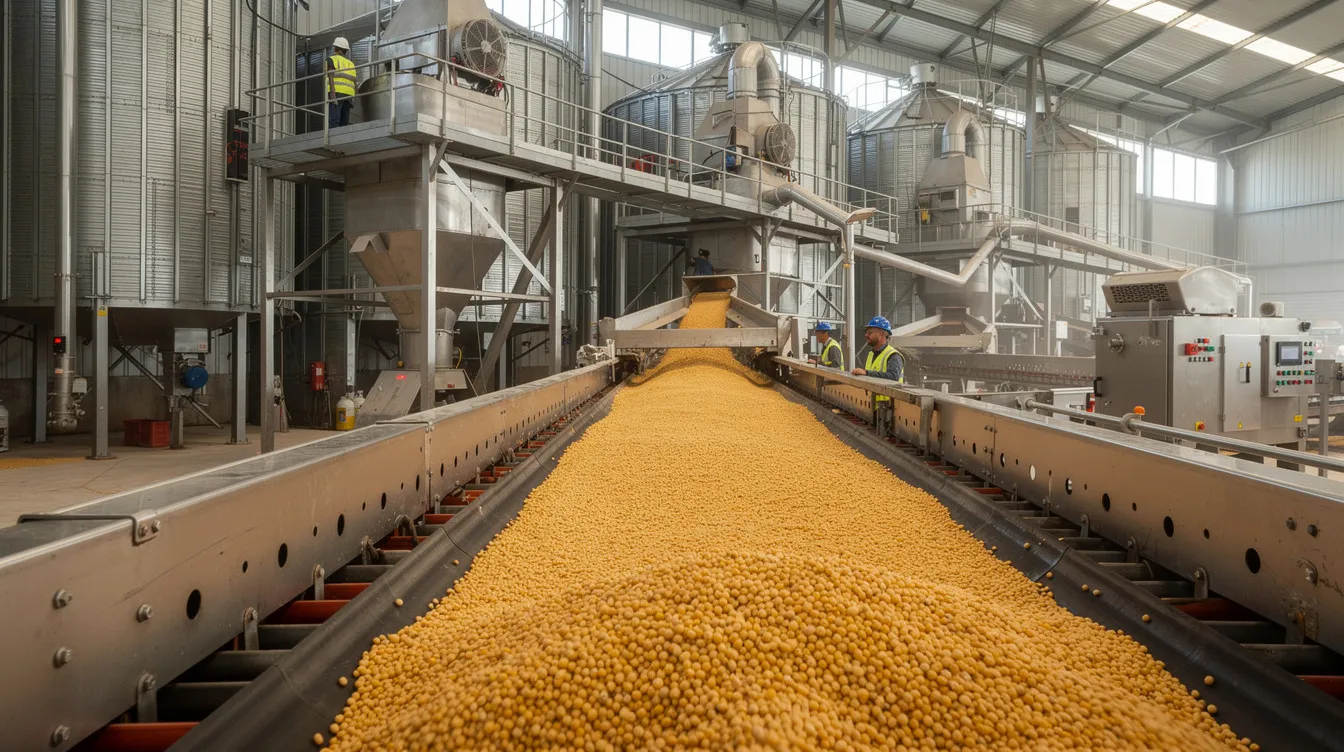
An integrated soybean crushing plant is a soybean processing facility that combines seed preparation, cracking, dehulling (where relevant), flaking, solvent extraction, desolventising-toasting, meal cooling and crude soybean oil handling, with optional refining and packaging under one operational umbrella.
Principal process stages include:
- Seed receiving, seed cleaning and drying
- Storage in silos under controlled storage conditions to prevent quality deterioration
- Preparation: cracking, dehulling (for Hi-Pro meal with high content of protein) and flaking
- Solvent extraction using hexane for oil separation from flaked soybeans
- Desolventiser-toaster, meal cooling and finished meal handling
- Solvent recovery and crude oil storage
- Optional refining: neutralisation, bleaching, deodorisation and packaging
Soybeans typically contain 18–20% oil and 36–40% protein. Product yield ratios from a well-operated plant typically yield approximately 79% meal and 18% oil, with soybean hulls and process losses accounting for the balance. Soybean oil is used in food processing, cooking oil and biodiesel production, and is rich in polyunsaturated fatty acids like linoleic acid. Soybean meal is primarily used for animal feed – particularly poultry feed and cattle feed – and constitutes the majority of crushing output by weight and value. Soybean meal accounts for approximately 80% of the soybean seed’s value.
The chosen product mix – whether crude soybean oil and DOC only, or refined oil with lecithin and special meal grades – influences capex, process design, utilities and operational complexity. For deeper technical detail on equipment selection, readers may refer to the page on soybean processing plant machinery, equipment and technology selection.
Technical and Commercial Feasibility Framework
Technical and commercial feasibility must be evaluated together. The plant must be buildable, operable and profitable at realistic utilisation and margins under prevailing market conditions.
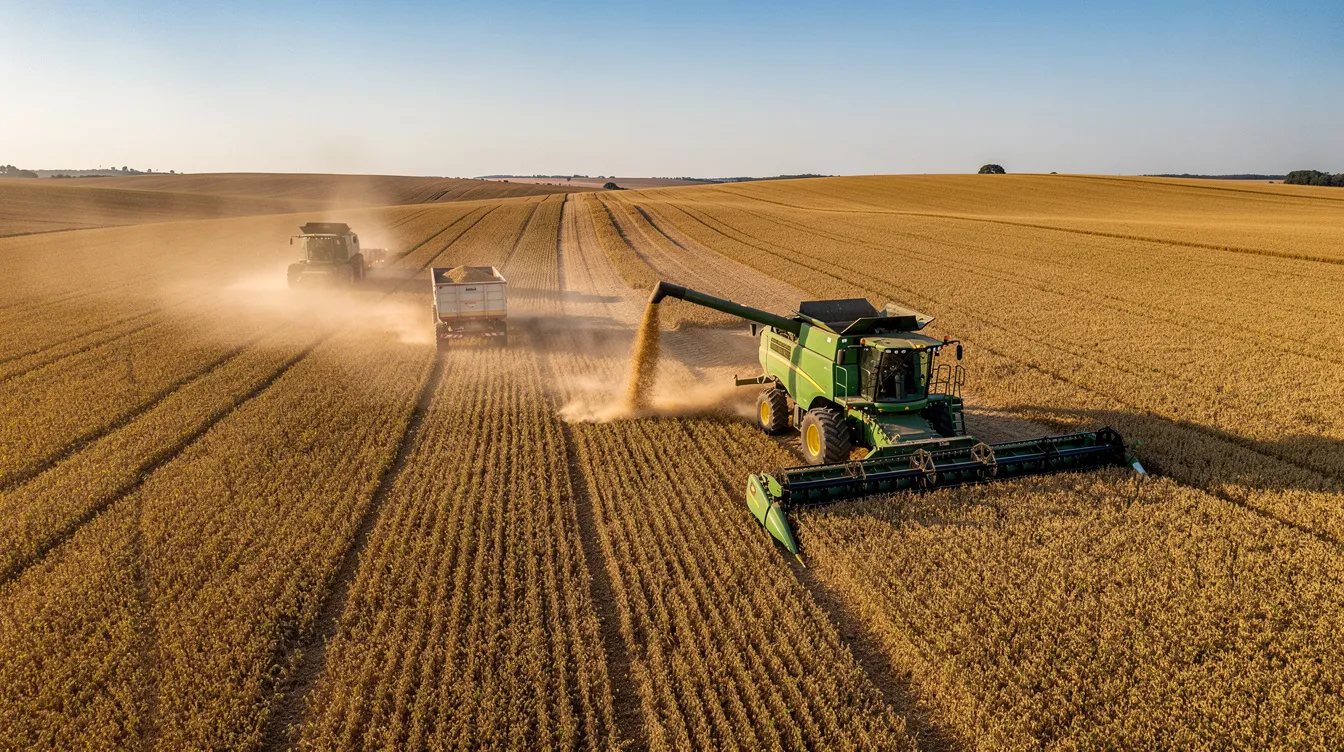
Raw material assessment requires mapping the procurement catchment radius across India’s major soybean-growing belts – Madhya Pradesh, Maharashtra and Rajasthan – and evaluating logistics cost, quality variability and competition from other processors for farmers’ produce. Raw material quality significantly impacts soybean oil and meal quality, and processing methods influence the final product specifications. Industry standards govern the quality of both soybean oil and meal.
Capacity selection from 500 to 5,000 TPD depends on raw material availability, promoter funding strength, target markets and risk appetite. A soybean processing plant can produce 100,000–500,000 MT annually depending on capacity and operating days.
Technology selection – solvent extraction versus pre-press plus extraction, dehulling for Hi-Pro meal, automation level – directly affects oil and meal recovery and energy consumption. Efficient plants operate with residual oil below 0.7% in meal. Utilities including power demand (typically 15–25 kWh per tonne), steam generation, cooling water, compressed air and effluent treatment must be sized consistently with capacity.
Market analysis should cover regional demand and export opportunities for soybean oil and meal, competition from other edible oils such as palm and sunflower, and market segmentation for various meal grades. In the United States, 66% of soybean oil is consumed by the food industry alone. Economic viability analysis requires evaluating feedstock availability and end-product demand together.
Regulatory and environmental compliance – including emissions control, safety norms for hexane storage and waste treatment – is essential for operating a soybean crushing plant. A comprehensive feasibility study should cover market demand, supply dynamics and competition analysis, and should summarise all technical and commercial factors into a clear recommendation.
Project Cost, Capital Investment and Working Capital
Capital expenditure estimation for a soybean processing plant must be based on supplier quotations, civil drawings and realistic contingencies. Capital expenditure includes all costs needed to construct, equip and commission the plant. A complete soybean processing plant includes cleaning, crushing and oil extraction systems.
Key capital cost components include:
- Land purchase and site development
- Factory buildings, foundations and construction
- Core plant and machinery (including solvent extraction and desolventising systems)
- Storage silos, tanks and handling equipment
- Boilers, power systems and cooling water infrastructure
- Effluent treatment plant, laboratories and QC facilities
- Pre-operative expenses, interest during construction and contingencies
For reference on scale: a 5 ton/day soybean processing line costs about $7,000–$8,000, a 20–30 ton/day soybean processing plant costs around $40,000, and large-scale soybean processing plants can exceed $100,000 in costs. At commercial scale, machinery cost for a 500 TPD solvent extraction plant is roughly ₹14–22 crore, while total soybean crushing plant setup cost and investment for a 500 TPD integrated plant ranges ₹41–70 crore excluding refinery. For 1,000 TPD capacity, total project outlay is typically ₹80–120 crore. Land, building and layout planning should follow the guidance on soybean crushing plant land, building, utilities and factory layout requirements.
Initial working capital covers seasonal raw material stocking, inventory of oil and meal, debtors and cash requirements, less supplier credit. Its share of total project funding can be significant – sometimes 20–35% of the total outlay.
Means of finance typically involve:
- Term loan to equity ratios of approximately 65:35 to 75:25
- Working capital limits (CC/OD, WCTL) backed by current asset security
- Promoter contribution of 25–35% as equity
- Security expectations including fixed-asset collateral and personal guarantees
A professionally prepared DPR must reconcile capex, working capital and means of finance, demonstrating sufficient DSCR and cash flow coverage to lenders.
Soybean Crushing Plant Revenue Model, Margins and Profitability
Revenue in a soybean processing industry project arises from multiple products: crude soybean oil and soybean meal as primary streams, with soybean hulls, lecithin and soapstock as secondary.
Revenue calculation follows this logic:
- Tonnes of soybeans processed × recovery percentage for oil and meal × selling prices
- Adjusted for moisture, transport, quality discounts and packaging costs
Operating expenditure includes costs for raw materials, utilities, labour and maintenance. Raw materials account for 85–90% of operating expenses, making soybean procurement cost the dominant variable. Other costs include power, steam, water, hexane and consumables, manpower, repairs, freight, insurance and overheads.
The crush margin – the difference between revenue from meal and oil and the cost of soybeans – is the most watched indicator. Recent Indian market data illustrates the volatility: in mid-2026, crush margins swung from approximately ₹590/MT to −₹790/MT within weeks as meal prices dropped faster than seed prices. Gross profit margins for soybean processing typically range between 10–20% under normal conditions, but can turn negative when commodity spreads compress.
For detailed yield analysis, refer to the page on soybean oil and meal recovery, yield losses and profitability. The profitability model must integrate interest, depreciation, tax and loan repayment to determine net profit, cash accruals and DSCR.
Return on Investment (ROI) Analysis for Soybean Crushing Projects
The integrated soybean crushing plant ROI measures annual accounting profit relative to capital employed. A commonly used formula:
ROI = Average Annual Profit After Tax ÷ Average Capital Employed × 100%
For a hypothetical 1,000 TPD plant with total investment of ₹100 crore and average annual profit after tax of ₹12 crore (illustrative only), the accounting ROI would be approximately 12%. Financial projections assess capital investment, operating costs and demand outlook to arrive at such estimates.
ROI is a simple, non-discounted measure. It does not capture the timing of cash flows or the value of money over the plant’s 12–15 year life. It must therefore be supplemented by IRR and NPV in any serious soybean crushing plant feasibility study. Banks and investors compare ROI with alternative uses of funds, but for long-life industrial projects, IRR and DSCR carry greater weight.
Project IRR and Equity IRR Analysis for a Soybean Processing Plant
Project IRR is the discount rate at which the NPV of unlevered project cash flows (before interest and principal, after tax) equals zero. Equity IRR applies the same logic to cash flows available to equity after servicing debt.
Building the cash flow streams involves:
- Starting with projected EBITDA
- Adjusting for taxes (considering depreciation benefits)
- Subtracting working capital movements and replacement capex
- Separating project-level (pre-debt) and equity-level (post-debt) cash flows
A soybean processing plant IRR analysis must consider realistic ramp-up – Indian solvent extraction plants historically average 30–40% utilisation outside harvest season – rather than assuming full utilisation from year one. The same plant financed at 70:30 debt-equity will show a higher equity IRR than at 50:50, because leverage amplifies returns (and risk).
Financial models should include key metrics such as NPV, IRR and payback period to assess viability. A detailed project report provides the structured analysis needed for external financing and investment decisions. Neither project IRR nor equity IRR should be treated as guaranteed returns.
NPV, Payback Period and Investment Appraisal
NPV is the sum of discounted free cash flows over the project life minus initial investment. A positive NPV at the appropriate discount rate indicates value creation. Simple payback period counts the years needed for cumulative cash inflow to recover the initial outlay; discounted payback uses present-value cash flows and is more conservative.
The choice of discount rate – typically derived from borrowing cost plus a risk premium – directly influences whether a marginal soybean processing project appears viable. Investors should not rely merely on nominal payback without considering the cash flow volatility and commodity-price exposure inherent in the soybean processing industry.
Break-Even Analysis and Capacity Utilisation
Break-even analysis identifies the minimum throughput at which total revenue equals total fixed and variable operating costs.
Break-even Output (MT) = Total Fixed Costs ÷ Contribution per MT
Where contribution per MT equals the combined oil and meal selling value per MT of soybeans minus variable costs (primarily soybean procurement and variable utilities).
Large soybean crushing plants often face multi-year ramp-up: 60–70% utilisation in year one, rising to 80–90% in later years. First-year operational costs are projected to be substantial while revenue remains constrained by lower throughput. This means early years may operate below break-even even if long-term projections look attractive. Soybean processing plants can achieve significant profitability under normal operating conditions once stabilised, but lenders pay careful attention to the gap between break-even utilisation and realistically achievable utilisation.
Soybean Crushing Plant Sensitivity Analysis
A soybean crushing plant sensitivity analysis is central to understanding risk. Small movements in soybean procurement prices or oil and meal realisations can dramatically alter EBITDA, IRR and DSCR. Market prices and demand for meal and oil heavily influence the economic viability of crushing plants.
Key variables to stress-test individually and in combination:
- Raw soybean purchase price (±5%, ±10%)
- Crude and refined soybean oil selling prices
- Soybean meal realisations
- Oil and meal recovery percentages
- Utilities, hexane and energy costs
- Labour and maintenance costs
- Capacity utilisation
- Capex overrun
- Interest rate changes
Sensitivity scenarios should include changes in soybean prices and production yields. Sensitivity analysis should test financial viability under varying commodity prices and operational costs. Feasibility studies should evaluate project risks including supply chain disruptions and price volatility.
Illustrative sensitivity impact (hypothetical 1,000 TPD plant, base-case EBITDA ₹25 crore):
| Variable Change | EBITDA Impact | IRR Direction |
|---|---|---|
| Seed cost +10% | −₹10–12 crore | Significant decline |
| Meal price −15% | −₹8–10 crore | Material decline |
| Oil price −10% | −₹4–5 crore | Moderate decline |
| Utilisation 70% vs 90% | −₹6–8 crore | Decline |
| Recovery −1% oil | −₹3–4 crore | Moderate decline |
All figures illustrative and project-specific.
Changes in procurement strategy and stocking directly affect working capital requirements and interest costs, as discussed in the guide on soybean procurement, seasonal inventory and working capital management. Lenders review downside sensitivity to verify that the project can still service debt under weaker crushing margins.
Base-Case, Optimistic and Downside Scenarios
Beyond single-variable sensitivities, a robust model should build three coherent scenarios with internally consistent assumptions.
- Base case: Moderate soybean prices (~₹65,000/MT), conservative oil (~₹140,000/MT) and meal (~₹50,000/MT) realisations, 18% oil and 78% meal recovery, step-wise ramp-up reaching 90% utilisation by year three.
- Optimistic case: Stronger oil price (+10%), better meal price (+15%), seed cost −5%, faster stabilisation, no major capex overrun.
- Downside case: Weaker commodity spreads, slower ramp-up (50–60% year one), slightly lower recoveries, 10% capex overrun, interest rate increase of 1–2%, demonstrating how these factors combine to compress IRR and DSCR.
The project should be robust enough that even the downside scenario remains within acceptable DSCR and liquidity parameters. A business venture of this scale should not be appraised only on optimistic oil and meal prices.
DSCR, Bank Finance Feasibility and CMA Data
In India, term loans and working capital facilities for large soybean processing plants are sanctioned largely on the basis of projected DSCR, security and promoter credentials.
DSCR = Cash Accruals Available for Debt Service ÷ (Annual Principal Repayment + Interest)
Acceptable DSCR generally needs to exceed 1.25–1.35 in stable operating years, though early ramp-up years may show lower coverage. Loan tenor, moratorium period, repayment schedule and interest rate assumptions materially affect annual DSCR profiles.
Preparing detailed soybean processing plant financial projections, CMA Data and DSCR statements aligned with bank formats is critical. Lenders also review working capital assessment including inventory holding norms for soybeans, oil and meal, debtor cycles and drawing power calculations. Professional advisory should focus on customised financial analysis rather than templates. A well-prepared DPR and CMA Data package significantly improves the credibility of the soybean crushing plant financial viability assessment.
Major Financial and Operational Risks in Soybean Crushing Projects
Even technically sound plants face material risks that must be openly identified in any feasibility study.
Financial risks: Volatile crushing margins, adverse basis risk between soybean and oil/meal prices, interest rate increases, counterparty credit risk. The demand for soybean oil is partly driven by health-conscious consumers, but shifts in consumer preference, growth of biofuels and biodiesel demand, and import parity of refined oils create complex pricing dynamics across the soybean processing industry globally – including competition from South America.
Operational risks: Lower-than-expected oil and meal recovery, unplanned shutdowns, environmental impact compliance challenges, quality control failures, safety incidents and higher maintenance costs. Quality control protocols are essential throughout soybean processing stages.
Procurement and logistics risks: Poor harvests in catchment areas, intense competition for raw soybeans, transportation bottlenecks and storage losses due to moisture or infestation.
Practical mitigations include: Conservative price assumptions, diversified procurement from multiple markets and farmers, stepwise capacity utilisation ramp-up, strong preventive maintenance programmes, adequate working capital buffers and, where feasible, hedging strategies.
Role of Professional Feasibility Assessment by CA Manish Gugliya
Project Report Bank, led by CA Manish Gugliya, is a Chartered Accountant-driven advisory practice specialising in customised Detailed Project Reports and feasibility studies for agro-processing and industrial projects.
Key professional contributions to a soybean crushing plant feasibility study include:
- Independent validation of capex and working capital estimates
- Robust financial modelling covering ROI, IRR, NPV and DSCR
- Stress-tested base, optimistic and downside scenarios
- Alignment with bank appraisal formats, CMA Data requirements and lender expectations
- Structuring means of finance, promoter contribution planning and term loan repayment schedules
Each project is modelled with project-specific assumptions on plant capacity, product mix, procurement strategy and target markets. The objective is to help promoters determine whether the project is commercially sensible and to present a credible, bankable case – without promising guaranteed sanctions or returns.
Frequently Asked Questions
The following questions address common investor queries on soybean crushing plant feasibility not fully covered above.
What capacity is suitable for a first-time soybean processor?
Capacity choice depends on raw material availability, promoter experience, funding strength and target markets. Mid-scale plants of 500–1,000 TPD are generally more manageable for first-time promoters than very large 3,000–5,000 TPD units. Phased expansion – starting at a manageable capacity and designing the layout for future additions – is generally preferable to over-sizing from day one.
Should the plant refine soybean oil on-site or sell crude oil?
Refining adds value and margin but increases soybean processing plant cost, operational complexity and working capital requirements. Selling crude oil reduces capex and risk but limits margin capture. The feasibility study should compare both options considering local refinery availability, regional demand for refined cooking oil, margarine and pharmaceutical-grade products, and the promoter’s risk appetite.
How long does it typically take for a soybean crushing plant to reach stable utilisation?
For large greenfield plants, 18–24 months from commercial operation date is a reasonable planning horizon to reach 85–90% utilisation, subject to market and procurement conditions. The financial model must capture ramp-up years with lower throughput, higher specific operating costs and lower DSCR rather than assuming immediate full capacity.
What level of working capital is usually required relative to project cost?
Working capital can be substantial due to seasonal stocking of soybeans and inventory of oil and meal. It can sometimes approach 25–35% of total project cost, though the exact ratio is project-specific. Promoters should assess working capital under different stocking strategies using professional financial modelling linked to realistic operating cycle assumptions.
Can a feasibility study help in negotiating better terms with banks and investors?
A well-prepared, data-backed feasibility study with clear ROI, IRR, DSCR and sensitivity analysis improves the quality of lender and investor discussions and can support negotiations on loan tenure, moratorium, covenants and security structures. While it cannot guarantee sanctions, it demonstrates the promoter’s preparedness and understanding of project risks and sustainability.
CA Manish Gugliya FCA, DISA (ICAI) More than 20 years of professional experience in Detailed Project Reports, financial projections, CMA Data, project finance and business advisory.
For customised soybean crushing plant feasibility studies, Detailed Project Reports, financial modelling and CMA Data preparation, reach out via WhatsApp through www.projectreportbank.com.