
Key Takeaways
- Soybean crushing plant working capital for 500 to 5,000 TPD operations in India runs into tens to hundreds of crores, driven primarily by raw soybean inventory (60-80% of current assets), finished goods (soybean oil and meal), and trade receivables.
- Seasonal procurement decisions during the October to January harvest window directly determine bank limit utilisation, cash-flow stress, and the plant’s ability to operate continuously through non-harvest months.
- Many soybean processing projects above ₹5 crore face operational difficulty not because of weak crushing margins, but because of underestimated seasonal inventory financing needs and inadequate CMA Data preparation for bank working capital appraisal.
- This article is written from the practical project finance perspective of CA Manish Gugliya, FCA, DISA (ICAI), for Indian entrepreneurs, soybean processors and banking professionals evaluating large crushing plant investments.
- Sections ahead include capacity-wise procurement tables, an illustrative 1,000 TPD working capital calculation, a seasonal vs staggered procurement financial comparison, and FAQs addressing common banker and promoter queries.
Introduction: Why Soybean Crushing Plant Working Capital Is Critical
A soybean facility purchases and processes soybeans into saleable products like meal and oil. For large crushing plants operating at 500 to 5,000 tonnes per day (TPD), raw materials account for 85-90% of operating expenses. This single fact makes soybean crushing one of the most working-capital-intensive agro-processing operations in India.
The difference between projected profitability on paper and the actual cash tied up in procurement, seasonal inventory, oil extraction outputs, and receivables is where many projects come under strain. A financial model may show healthy EBITDA, but the promoter’s bank account may be under pressure because ₹30 to ₹200 crore is locked in raw soybeans, crude oil storage tanks, meal in warehouses, and unpaid invoices from buyers.
Soybean crushing plant working capital planning begins long before the first tonne of seed enters the plant. It starts when the promoter decides the plant capacity, procurement strategy, inventory policy, and bank finance structure during the project’s plant setup and term loan proposal stage. The process involves mechanical pressing or solvent extraction of oil, oil refining to remove impurities and enhance stability, and the production and distribution of soybean meal for animal feed and food industries. At each stage, capital gets locked before sales revenue arrives. The focus of this article is on the Indian context: APMC mandis, bank cash credit, working capital demand loans (WCDL), and warehouse receipt finance for large-scale operations.
Understanding Soybean Procurement for Large Crushing Plants
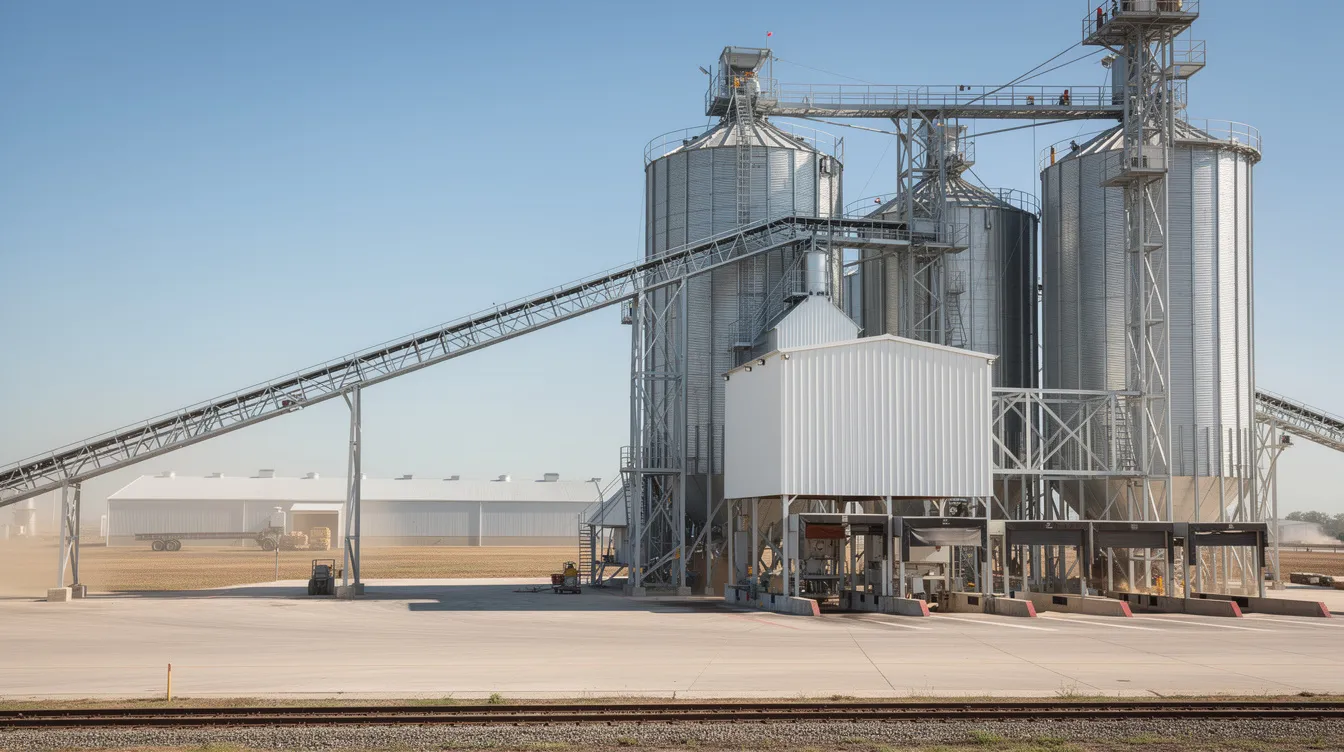
India’s soybean production is concentrated in Madhya Pradesh, Maharashtra, Rajasthan, Telangana, and parts of Karnataka. A plant’s location relative to these belts determines freight cost, procurement lead time, and the working capital needed to maintain a steady supply of raw soybeans. A 5,000 TPD plant in Indore can source directly from nearby mandis at lower logistics cost than a similar plant 400 km away.
Seasonal arrivals peak during October to January. For a 500 TPD plant, the procurement window is manageable with local mandi purchases. A 5,000 TPD plant consuming over 3,500 MT daily needs institutional-scale procurement across multiple mandis and states, often through aggregators, FPOs, and large traders alongside direct APMC mandi auctions. Crushing plants typically purchase raw soybeans on short payment terms (often 3 to 10 days) and sell meal and oil on varying credit terms that may extend to 15 to 45 days.
Quality parameters directly affect landed cost and working capital:
- Moisture content above 14-15% triggers drying cost or price deductions.
- Foreign matter, damaged and immature grains attract weight-loss deductions of 1-3%.
- Cleaning and preparation stages at the plant remove impurities from soybeans before processing.
The landed procurement cost per MT is not the mandi rate alone. It includes market cess, weighing and hamali charges, quality-based deductions, freight (₹800 to ₹1,500/MT for 200-300 km), transit insurance, and unloading and handling at the plant. Procurement decisions must be taken in the context of expected crushing margins (combined realisation from soybean oil, DOC/meal, and hulls minus soybean cost, processing expense, and finance cost), not merely to keep the plant running at capacity.
Seasonal Soybean Availability and Inventory Planning
Harvest-period procurement during October to January provides the bulk of annual supply. Soybeans are harvested during specific windows, requiring substantial capital for procurement. Plants targeting 300 or more operating days per year must carry stocks through 8 to 10 non-harvest months for production continuity.
Inventory layers in a well-managed crushing plant typically include:
- Minimum buffer stock: 15 to 20 days to avoid shutdown from supply disruption.
- Strategic seasonal stock: 30 to 90 days or more, accumulated during harvest when prices may be relatively lower.
- Pipeline inventory: soybeans in transit from mandis or at broker yards awaiting dispatch.
Storage capacity, whether own warehouses, hired godowns, or silos, is a binding constraint. Maintaining extensive silo storage ties up substantial capital during inventory holding. The infrastructure aspects of storage space, building layout, and warehouse design are discussed in detail in the article on Soybean Crushing Plant Land, Building, Utilities & Factory Layout Requirements.
Inventory holding costs extend well beyond the purchase price. They include godown rent, fumigation and pest control, insurance, labour, quality deterioration, moisture gain or loss, and normal quantity losses. An ICAR-CIPHET study estimated soybean storage losses at roughly 10% across supply chain channels, including farm-level operations. These losses must be built into project feasibility and working capital estimates.
Procurement diversification through sourcing from multiple states and mandis, staggering purchases, and developing backward linkages with farmers or FPOs reduces concentration risk. A conservative stocking policy (30-day inventory, staggered buying) preserves liquidity but risks price spikes and procurement gaps. An aggressive policy (60-90-day inventory at harvest) locks in harvest prices but raises interest cost, storage expense, and commodity price exposure. The right balance depends on the plant’s financial resources, banking arrangements, and risk appetite.
Procurement Planning for 500-5,000 TPD Soybean Crushing Plants
Installed plant capacity is different from actual throughput. A soybean crushing plant processes 5 to 1,000 tons daily depending on scale; small scale plants process 5 to 20 tons daily, medium scale plants process 50 to 100 tons daily, and large scale plants process 200 to over 1,000 tons daily. Procurement plans must reflect realistic utilisation, not nameplate capacity. For initial years, 70-80% utilisation is a reasonable assumption. Annual production capacity for large operations ranges from 100,000 to 500,000 MT.
The table below uses illustrative assumptions: 330 operating days per year, 75% capacity utilisation, and a hypothetical soybean purchase price of ₹45,000 per MT. These are not current market quotations.
| Parameter | 500 TPD | 1,000 TPD | 2,000 TPD | 5,000 TPD |
|---|---|---|---|---|
| Daily consumption at 75% utilisation (MT) | 375 | 750 | 1,500 | 3,750 |
| Monthly requirement (MT, ~27.5 operating days) | 10,313 | 20,625 | 41,250 | 103,125 |
| Annual soybean procurement (MT) | 123,750 | 247,500 | 495,000 | 1,237,500 |
| Inventory for 30 days (MT) | 11,250 | 22,500 | 45,000 | 112,500 |
| Inventory value at ₹45,000/MT (₹ crore) | 50.6 | 101.3 | 202.5 | 506.3 |
| Inventory for 60 days (MT) | 22,500 | 45,000 | 90,000 | 225,000 |
| Inventory value at ₹45,000/MT (₹ crore) | 101.3 | 202.5 | 405.0 | 1,012.5 |
| Inventory for 90 days (MT) | 33,750 | 67,500 | 135,000 | 337,500 |
| Inventory value at ₹45,000/MT (₹ crore) | 151.9 | 303.8 | 607.5 | 1,518.8 |
For a deeper analysis of how plant capacity, equipment configuration, and throughput interact, refer to Soybean Crushing Plant Capacity Planning: 500-5,000 TPD. Larger plants face non-linear increases in procurement and working capital needs; a 5,000 TPD plant’s 90-day inventory at the illustrative price exceeds ₹1,500 crore in raw soybeans alone.
Soybean Procurement Cost and Inventory Carrying Cost
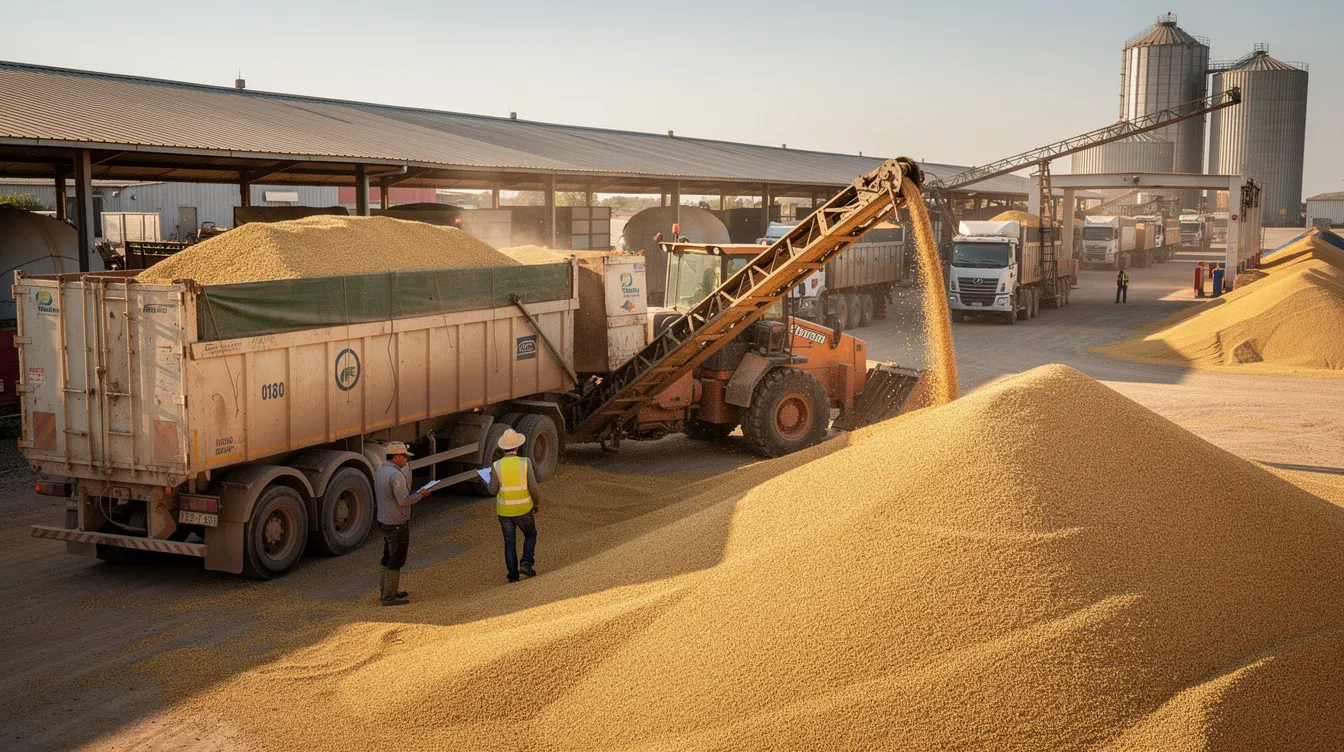
For a soybean crushing plant, even a ₹500/MT error in landed cost assumptions can change project IRR by 1-2 percentage points across a 10-year projection. The total cost of procurement includes far more than the basic mandi rate.
Key components of landed procurement cost per MT:
- Basic mandi modal rate (e.g., ₹45,000 to ₹66,000/MT depending on season and quality)
- Market cess and weighing charges
- Quality deductions for moisture, foreign matter, damaged grains
- Hamali, loading, and handling at mandi (₹200-400/MT)
- Freight to plant (₹800-1,500/MT for medium distances)
- Transit insurance and unloading at plant
Inventory Purchase Value = Quantity of Soybeans (MT) x Landed Procurement Cost per MT
Average Financed Inventory = (Opening Stock Value + Closing Stock Value) / 2
Annualised Inventory Finance Cost = Average Financed Inventory Value x Annual Interest Rate
The effective annual cost is higher once bank processing fees, inspection charges, and collateral management costs are included. Non-interest carrying costs add further: godown rent, pest control, weighbridge charges, quality testing, labour, normal shortage or evaporation, and potential re-bagging. Land costs typically account for 10% to 20% of investment, and machinery costs represent the largest portion of capital expenditure, but in ongoing operations, it is the inventory finance cost that drives daily cash pressure.
The Gross Processing Margin measures the combined sales value of outputs (soybean oil and meal) relative to the cost of raw soybeans. When this margin is thin, high working capital interest plus storage losses can convert an apparently profitable operation into a cash-negative one. Refining costs add to total investment for oil processing, further compressing margins when oil refining is done in-house.
Working Capital Requirements for Large Soybean Crushing Plants
Gross working capital is the total of all current assets. Net working capital is current assets minus current liabilities. Bank-financed working capital is the portion funded through cash credit, WCDL, or other sanctioned limits after deducting the promoter’s margin money.
Major current asset components for soybean plants:
- Raw soybean inventory (by far the largest; raw material inventory typically accounts for 60% to 80% of total current assets)
- Work-in-process (flakes, conditioned beans on the line)
- Crude soybean oil and refined soybean oil (if in-house oil refining)
- Soybean meal and DOC inventory; soybean meal typically accounts for roughly 80% of the output volume
- Hulls, by-products, and packaging material
- Consumables and utilities, including ongoing funds required for hexane, electricity, steam, and boiler fuel
- Advances paid to suppliers and trade receivables (accounts receivable credit periods range from 15 to 45 days)
- Cash and bank balances for operating expenses
Current liabilities include trade creditors for soybeans and consumables, wages and statutory dues payable, expenses payable, and short-term borrowings.
The cash conversion cycle measures the operating cash cycle: from the date of soybean purchase and payment, through processing (1-3 days), to finished goods holding (10-20 days for oil and meal), to sale and realisation from buyers. Working capital is essential for daily operations before sales revenue arrives. Running a soybean crushing plant requires heavy short-term liquidity, and many new businesses fail due to insufficient working capital. Longer raw material stocking, longer finished goods holding, and extended credit to buyers all stretch the operating cycle and increase the working capital requirement. Bank assessment benchmarks operating cycle days as captured formally in CMA Data.
Illustrative Working Capital Assessment for a 1,000 TPD Soybean Crushing Plant
This is a purely hypothetical, assumption-based example for conceptual understanding. Actual bank assessments differ based on lender policy, borrower profile, and project specifics.
Assumptions:
- Installed capacity: 1,000 TPD; capacity utilisation: 75% (750 MT/day)
- Operating days: 330 per year
- Soybean purchase price: ₹50,000/MT (illustrative)
- Raw material stocking: 45 days
- Finished goods holding: 15 days (oil and meal combined)
- Receivable days: 20 days average
- Supplier credit: 10 days
- Interest rate for illustration: 10.5% p.a.
| Working Capital Component | Basis | Illustrative Value (₹ crore) |
|---|---|---|
| Raw soybean inventory | 750 MT/day x 45 days x ₹50,000/MT | 168.75 |
| WIP (flakes, conditioned beans) | ~2 days production cost | 8.50 |
| Finished soybean oil inventory | 15 days of oil output value | 12.00 |
| Soybean meal/DOC inventory | 15 days of meal output value | 18.00 |
| Trade receivables | 20 days of sales | 26.00 |
| Other current assets (consumables, cash, advances) | Estimate | 5.00 |
| Gross Working Capital (A) | 238.25 | |
| Less: Trade creditors (soybeans, consumables) | 10 days | (35.00) |
| Less: Expenses payable | Estimate | (4.00) |
| Net Working Capital (B) | 199.25 | |
| Bank finance (CC/WCDL) at ~75% of eligible stock + 60% of receivables | Illustrative | ~155.00 |
| Promoter margin money required | Balance | ~44.00 |
Working capital should be set aside from total investment budgets. Maintaining two to three months of raw material cost is essential for production continuity. Gross profit margins in soybean crushing typically range between 10-20%, which means that operating costs account for 85-90% of total expenses, leaving very little room for inventory or pricing miscalculation.
If the stocking period increases from 45 to 75 days, raw soybean inventory alone rises by ₹75 crore. If soybean price increases by ₹5,000/MT, the 45-day stock value jumps by ₹16.9 crore. These sensitivities demonstrate why financial projections must assess capital investment, operating costs, and inventory financing together. Project-specific financial modelling is essential before approaching banks or investors.
Cash Credit, Working Capital Demand Loan and Inventory Finance
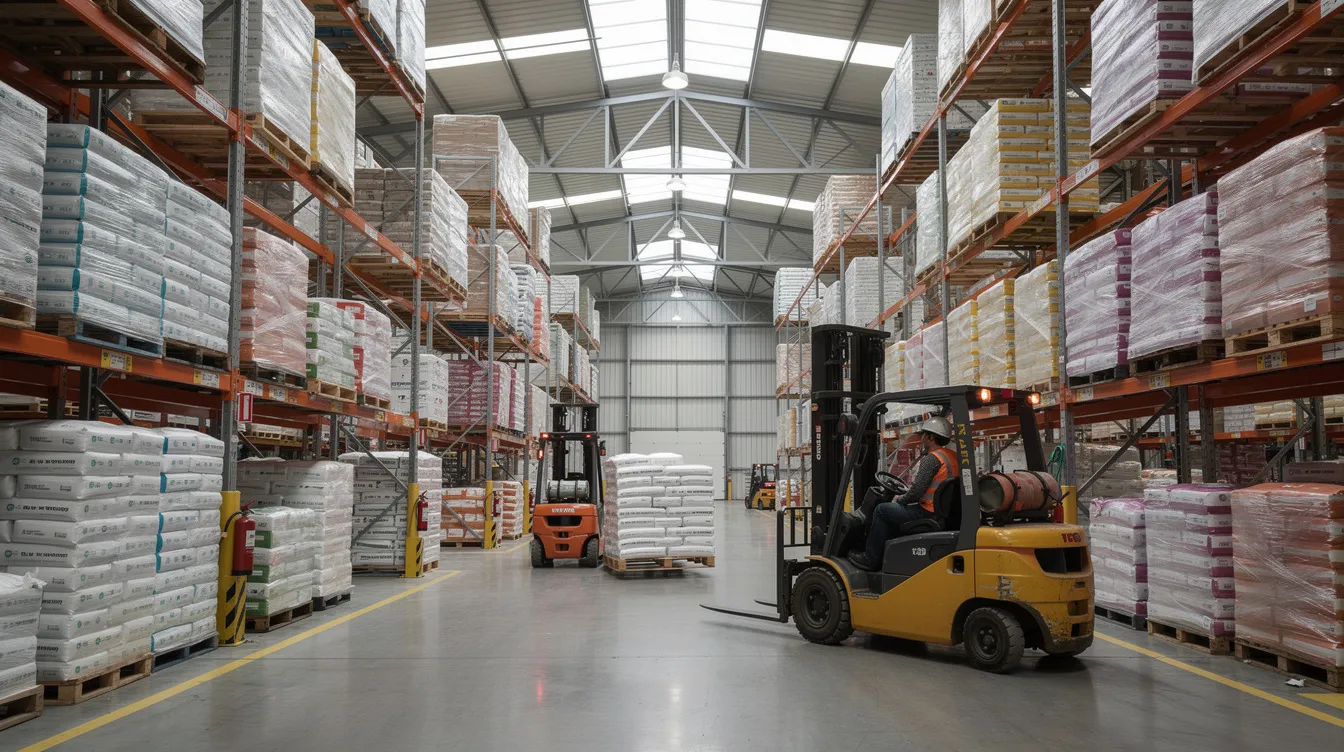
Common banking structures for soybean processing plants include cash credit (CC), working capital demand loan (WCDL), seasonal peak finance, and bill or receivable discounting. Each serves a different part of the operating cycle.
Drawing power (DP) is calculated based on eligible current assets (acceptable stock and receivables) minus stipulated bank margins. This governs how much of the sanctioned CC limit the borrower can actually use on any given day. Banks accept stocks only within defined age limits and quality parameters; older or high-moisture stocks may be excluded from eligible inventory.
During harvest season (October to January), plants need seasonal procurement finance through temporary CC limit enhancement, short-tenor WCDL tranches, or separate seasonal limits. SBI’s Warehouse Receipt Financing scheme, for example, offers up to 75% loan-to-value on commodity stored in accredited warehouses, with tenure up to 12 months.
The distinction between hypothecation (plant-held stock, borrower retains possession) and pledge (stock in bank-controlled or accredited warehouse) affects control, margin requirements, and documentation. Pledge-based warehouse receipt financing generally allows tighter margins because the lender controls the collateral. Supplier credit reduces the immediate cash requirements for soybean procurement, but the extent of credit actually available from farmers and traders is often shorter than what promoters assume in their DPRs.
Eligibility, quantum, interest rate (typically 9-12% p.a. for processors), margins, and covenants depend on bank policy, regulator guidelines, and borrower credit profile. These should be negotiated with full understanding of the seasonal operating cycle.
CMA Data and Working Capital Assessment for Soybean Processing Plants
CMA Data (Credit Monitoring Arrangement) is the standardised financial format that Indian banks use for appraising cash credit, WCDL, and term loan proposals. For soybean crushing plants with large seasonal swings in inventory and receivables, CMA Data is the foundation of working capital appraisal.
Key CMA Data components include projected balance sheets, profit and loss statements, fund flow statements, working capital assessment (Tandon/Nayak method), holding level statements for stocks and receivables, and term loan repayment schedules. Each of these must reflect realistic estimation of raw material inventory (in MT and ₹ value), finished goods by product (oil, meal, DOC), receivables by customer category, and creditor days.
The operating cycle in days (raw material holding, WIP, finished goods, receivables minus creditors) must be shown clearly to support the requested CC and WCDL limits. Banks expect the cycle to be internally consistent with the projected P&L and balance sheet. Including sensitivity analysis in CMA Data, showing bankers how soybean price volatility, utilisation changes, and market fluctuations in meal price affect working capital needs, adds credibility.
As a Chartered Accountant, one assists in preparing projections and analysis, but does not certify that future projections will occur. Projections are management’s estimates supported by reasonable assumptions, not guarantees of outcomes.
Managing Soybean Price Volatility and Crushing Margins
Soybean seed, soybean oil, and soybean meal prices are all volatile and often move in different directions, creating basis risk. Overall profitability of a soybean crushing facility depends on managing the relationship between input and output prices. Soybean oil extraction can use mechanical pressing or solvent extraction; dehulling improves extraction efficiency and product quality. These process choices affect yield, which directly influences margin sensitivity.
For a detailed understanding of yield, protein content in meal, by-product values, and margin structure, refer to Soybean Oil & Meal Recovery, Yield, Losses and Profitability.
A FarMart market report illustrates the margin sensitivity well: with seed at ₹66,000/MT, net crush margin was approximately ₹590/MT. When seed dropped to ₹60,000/MT but meal prices fell faster, the margin turned negative at approximately minus ₹790/MT. For a 1,000 TPD plant processing 750 MT daily, a ₹1,000/MT swing in margin translates to ₹7.5 lakh per operating day, or over ₹24 crore annually.
Inventory valuation risk is real: buying heavily at harvest at one price and facing lower output prices later can erode margins. High inventory funded by bank limits magnifies this risk when prices fall, because drawing power shrinks with stock value while the loan balance remains. Regulation-compliant risk management tools such as commodity exchange hedging and pre-sold meal or oil contracts can help, but must be aligned with the physical procurement and inventory position.
Buying maximum soybeans at harvest is not automatically profitable. The decision should be based on margin outlook, financing cost, storage loss expectations, and risk appetite.
Seasonal Procurement vs Regular Procurement: Financial Comparison
Two illustrative strategies for the same 1,000 TPD plant (75% utilisation, 330 operating days):
| Parameter | Scenario A: Aggressive Seasonal Stocking | Scenario B: Staggered Procurement |
|---|---|---|
| Average soybean purchase price (illustrative) | ₹46,000/MT (harvest advantage) | ₹49,000/MT (year-round buying) |
| Average raw material inventory (MT) | 60,000 (80 days) | 25,000 (33 days) |
| Average inventory value (₹ crore) | 276.0 | 122.5 |
| Annual interest cost at 10.5% (₹ crore) | 29.0 | 12.9 |
| Annual storage and handling cost (₹ crore) | 4.8 | 2.0 |
| Peak bank limit utilisation | Very high | Moderate |
| Exposure to price decline risk | High (large stock at risk) | Lower |
| Risk of procurement shortage | Low | Moderate to High |
Scenario A locks in lower harvest-season prices but demands a peak bank limit of ₹250 crore or more, plus storage for 60,000 MT. Interest and storage costs are ₹16 crore higher annually. If meal prices fall 10% post-harvest, the value of held stock drops by ₹20-25 crore. Having ready liquidity during peak harvest allows purchasing raw soybeans at lower market rates, but the financing cost partially offsets this advantage.
Scenario B avoids the liquidity strain and interest burden but exposes the plant to in-season price spikes and potential procurement shortages if arrivals are delayed by weather or crop damage. Adequate working capital allows for maintaining sufficient soybean stocks to avoid unnecessary shut down. Fluid working capital provides management the holding power to store finished meal or oil for better selling prices.
The right procurement policy should be finalised jointly by commercial, operations, and finance teams, supported by scenario-based financial modelling rather than intuition alone. A company’s balance sheet strength, cost of money, and reliable market intelligence determine which approach is appropriate.
Working Capital Optimisation Strategies for Soybean Crushing Plants
Practical levers for promoters, plant CFOs, and bankers:
- Set minimum and maximum stock norms for raw soybeans, crude and refined soybean oil, and soybean meal, reviewed monthly against actual consumption and sales.
- Implement inventory ageing review; stocks beyond 60-90 days should trigger disposal or markdown evaluation.
- Invest in scientific warehouse management, including moisture control, fumigation, and quality control checks to reduce quantity and quality losses during storage.
- Design a credit policy for buyers: limit open credit to weaker accounts, use LC or bank-backed instruments for large sales, and expect discipline in receivable collections to shorten the cash cycle.
- Negotiate payment terms with key soybean suppliers and logistics providers; timely clearance of payables secures priority access to quality grade seeds and reliable freight logistics.
- Build weekly cash flow forecasting into operations; monitor bank limit utilisation, drawing power, and covenant compliance to manage liquidity proactively.
- Pursue continuous improvement in production efficiency and processing efficiency; higher oil yield from better equipment maintenance and cleaning reduces per-MT raw material need.
- Coordinate procurement scheduling with sales commitments; avoid accumulating finished goods beyond what demand supports.
- Stress-test crushing margins and the operating cycle in the financial model before expanding plant capacity or committing to higher seasonal inventory.
- Align the automation level with working capital capability; automation increases initial setup costs but reduces long-term labor expenses and improves operational efficiency.
Common Financial Mistakes in Soybean Crushing Projects
From reviewing DPRs for soybean crushing projects, the most recurring issue is detailed attention to machinery selection and construction cost but weak planning for procurement finance and working capital. Insufficient working capital can prevent plants from purchasing enough raw material for operation.
Common mistakes include:
- Underestimating harvest-season procurement finance by using 30-day inventory assumptions when 60-90 days are operationally needed.
- Assuming 90-95% capacity utilisation from year one without accounting for ramp-up, learning curve, or market development.
- Excluding storage and finance cost from per-MT processing cost, which makes gross margins look better than actual cash margins.
- Overestimating supplier credit; many farmers and traders demand 3-7 day payment, not the 30 days assumed in some project reports.
- Relying on optimistic commodity price trends without sensitivity analysis for adverse market fluctuations.
- Not planning adequate margin money for working capital; banks expect 25-35% promoter contribution on inventory finance.
- Treating projected profits as freely available cash, ignoring that profit is locked in inventory, receivables, and machinery until the business generates actual collections.
- Misaligning plant technology choices (solvent extraction vs mechanical pressing, automation level) with available working capital, leading to underutilised equipment and idle resources.
Early involvement of a project-finance-focused Chartered Accountant can help identify these gaps before capital is committed and construction begins.
Importance of DPR, Financial Modelling and CMA Data for Soybean Crushing Projects
A well-structured Detailed Project Report integrates plant setup, machinery selection, land and utilities, the production process from cleaning through extraction and packaging, and working capital into one coherent financial framework. Fixed capital aspects, including Large-Scale Soybean Crushing Plant Setup Cost and Investment, must be analysed alongside seasonal procurement funding and working capital planning, because the two interact directly.
Dynamic financial models project revenue from soybean oil, meal, and by-products used in animal feed and food industries under different capacity utilisation and margin scenarios. They compute DSCR, IRR, payback, and breakeven, giving the promoter a solid foundation for investment decisions. The global soya bean market is projected to reach USD 286.73 billion by 2034, and healthy profitability potential exists under normal operating conditions; but individual project success depends on the quality of assumptions, not industry-level forecasts.
DPR and CMA Data together answer bank questions about project cost, means of finance, promoter contribution, term loan repayment capacity, and working capital structure. Strong documentation improves bankability, but viability, promoter profile, and collateral remain the basis of any sanction decision. Project Report Bank, under CA Manish Gugliya, provides customised, assumption-driven DPRs and financial analysis, not generic templates.
Frequently Asked Questions
How much working capital is typically required for a 1,000 TPD soybean crushing plant?
Under reasonable illustrative assumptions (75% utilisation, ₹50,000/MT soybean price, 45-day raw material stocking), gross working capital for a 1,000 TPD plant can range from ₹200 to ₹250 crore, with net working capital after creditors at ₹160 to ₹200 crore. The actual figure shifts with soybean price levels, stocking duration, and credit terms. Project-specific calculations are essential because a ₹5,000/MT change in seed price alone can alter the requirement by ₹15-20 crore.
How is seasonal soybean inventory financed in India?
Plants typically use a combination of enhanced cash credit limits during October to January, short-tenor working capital demand loans (WCDL), and warehouse receipt-based financing against stocks stored in accredited warehouses. Banks insist on promoter margin (25-35%) and CMA Data-backed justification showing the seasonal peak requirement, expected liquidation timeline, and projected drawing power through the year.
What is a practical soybean inventory holding period for large crushing plants?
Most plants target 30 to 60 days of working stock during non-harvest months. Immediately after harvest, holdings may rise to 60 to 90 days if finance and storage permit. The “ideal” period is a function of soybean price outlook, available storage space, plant reliability, and cost of money. There is no universal rule; each plant should determine its norm based on its financial model and banking arrangements.
How does soybean price volatility affect working capital and bank limits?
When soybean prices rise, the same physical quantity of stock requires more capital. If the increase exceeds sanctioned limits or margin coverage, the borrower faces a shortfall. Drawing power shrinks when stock value falls, potentially triggering margin calls or forcing stock liquidation at unfavourable prices. Proactive limit planning with banks before each harvest season, backed by updated stock statements and CMA Data, helps manage this risk.
Why is CMA Data important for soybean processing plant finance?
CMA Data provides bankers a standardised view of projected current assets, current liabilities, operating cycle, and fund flow. For soybean processing plants with large seasonal swings, CMA Data demonstrates the promoter’s understanding of procurement cycles, working capital peaks, and debt-servicing capacity. Without well-prepared CMA Data, banks lack the basis to assess and sanction CC/WCDL limits appropriately, and the borrower may receive inadequate facilities.
Conclusion: Financially Sustainable Soybean Procurement and Working Capital Planning
The long run viability of large soybean crushing plants in India depends as much on disciplined procurement, seasonal inventory management, and working capital planning as on technology, plant capacity, and market access. A plant with the right equipment and sufficient demand can still face liquidity crises if it enters the harvest season without adequate finance or exits it holding overvalued stock.
Promoters must integrate soybean procurement strategy, seasonal inventory policies, crushing margin outlook, and bank finance structure into one coherent financial model before committing capital. Soybeans are harvested seasonally, meaning plants often need heavy working capital injections during harvest; this is a structural reality, not an exception to plan around.
Treating soybean crushing plant working capital as a strategic function requiring continuous monitoring, rather than a one-time bank-sanction number, is what separates operationally resilient plants from those that struggle through every commodity cycle. Professional DPRs, CMA Data, and financial projections prepared on realistic, project-specific assumptions are essential inputs for both investment decisions and lender discussions.
Professional Advisory Services: CA Manish Gugliya
Manish Gugliya & Company, Chartered Accountants provides professional assistance in financial planning and documentation for large soybean processing and agro-processing projects. CA Manish Gugliya, FCA, DISA (ICAI), brings over 20 years of professional experience in project reports, financial modelling, and bank finance advisory.
Core services relevant to soybean crushing plant promoters:
- Customised Detailed Project Reports (DPR) for soybean processing projects of all scales
- Bankable project reports and loan proposal preparation for term loan and working capital
- CMA Data preparation and working capital assessment
- Cash-flow-based financial modelling with sensitivity and scenario analysis
- DSCR, IRR, breakeven, and viability analysis
- Investor-ready documentation and fundraising advisory
Serious project promoters, existing processors, and investors are invited to reach out through the contact options available on www.projectreportbank.com. WhatsApp enquiries are preferred for initial discussions.