A pea protein isolate manufacturing plant is a capital-intensive, technology-driven project that requires careful feasibility analysis before capital is committed. This article examines the manufacturing process, investment structure, plant cost, production economics, market opportunity and financial modelling considerations relevant for Indian entrepreneurs and project promoters evaluating this sector.
Key Takeaways
- A pea protein isolate manufacturing plant project report should cover technical feasibility, raw material economics, production technology, investment cost, profitability analysis, DSCR, working capital and sensitivity analysis before approaching banks or investors.
- Pea protein isolate (85–90%+ protein) is manufactured through wet fractionation – a process involving alkaline extraction, isoelectric precipitation and spray drying – and serves the fast-growing plant based proteins, sports nutrition, and meat alternatives markets.
- Project economics depend strongly on raw yellow pea prices (currently ~₹38,000/tonne in India), protein yield (indicatively ~20% mass yield from raw peas), capacity utilisation and secure B2B offtake contracts.
- Investment scale varies significantly: a small 3–5 TPD isolate line differs substantially from a 15–25 TPD integrated complex in terms of capex, utility load, ETP requirements and operational complexity.
- Project Report Bank, led by CA Manish Gugliya, FCA, DISA (ICAI), prepares customised, bankable DPRs, CMA Data and financial models for pea protein isolate plant projects across India.
Introduction and Investment Opportunity in Pea Protein Isolate
Pea protein isolate is a high-purity plant protein ingredient typically containing over 90% protein content on a dry basis, extracted from yellow peas (Pisum sativum) through wet fractionation and purification. It differs substantially from pea flour, which contains only about 21–28% protein alongside starch and fiber, and from pea protein concentrate, which generally achieves 50–70% protein through dry fractionation or simpler processing. The higher the purity, the greater the capex, process complexity and product value.
Current trends show a global shift toward plant-based proteins driven by consumer demand for sustainable protein sources, allergen avoidance (particularly soy and dairy), and clean-label functional foods. Pea protein provides a balanced amino acid profile and covers approximately 95% of daily essential amino acids needs, making it suitable for applications ranging from sports nutrition powders and dairy alternatives to clinical nutrition products suitable for infant and pregnant women’s nutrition. The amino acid leucine, important for muscle protein synthesis, is present in meaningful quantities. These nutritional attributes contribute to growing B2B demand from food manufacturers globally.
India is strategically positioned for pea protein isolate production. The country has significant pulse cultivation, competitive labour costs and proximity to fast-growing Asia–Pacific markets. Pea protein production requires fewer resources than animal protein – the water footprint for beef is six times larger than for peas, and pea cultivation uses fewer fertilizers compared to other proteins. The environmental impact of pea protein is lower than whey and soy proteins, which resonates with sustainability-conscious buyers. However, the specialised manufacturing process, significant initial operating costs, strict buyer qualifications and high water consumption in wet fractionation mean that a structured Detailed Project Report and feasibility study are essential before committing capital.
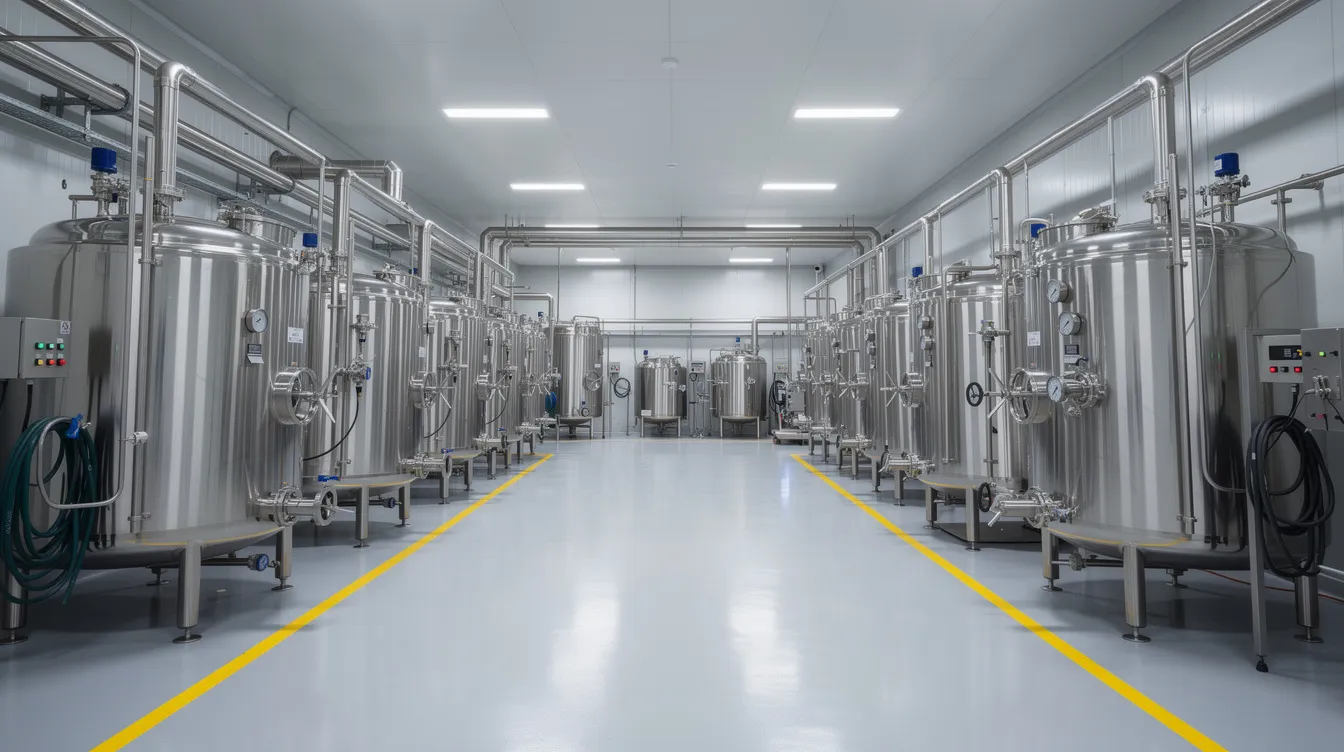
Pea Protein Isolate Manufacturing Plant – Project Overview
This section summarises a typical stand-alone pea protein isolate manufacturing project in India using illustrative assumptions. Actual parameters must be validated through project-specific technical and commercial due diligence.
| Parameter | Illustrative Details |
|---|---|
| Product | Food-grade pea protein isolate (85–90%+ protein, low microbiological load) |
| Principal raw materials | Yellow field peas, food-grade NaOH and HCl/citric acid for pH adjustment, process water, packaging materials meeting food-grade requirements |
| Illustrative plant capacity | 6,000–7,500 TPA raw peas → approximately 1,500–1,800 TPA pea protein isolate (sample capacity) |
| Manufacturing process | Wet fractionation: alkaline extraction, isoelectric precipitation, washing, neutralisation, spray drying |
| Typical applications | Meat alternatives, dairy alternatives, functional beverages, baked goods, sports nutrition, nutraceuticals |
| Major machinery groups | Cleaning line, dehulling/milling, extraction tanks, decanters/centrifuges, filtration systems, precipitation tanks, evaporator, spray dryer, CIP systems, QC lab |
| Key utilities | Electrical power, steam/hot water, chilled water, compressed air, water treatment, ETP |
| By-products | Pea starch, fibre-rich fractions – potential sale for snacks, noodles, bakery, pet food |
| Certifications | FSSAI, FSSC 22000/ISO 22000, HACCP, GMP; Halal/Kosher where required |
| Implementation timeline | Approximately 12–18 months from land acquisition to commercial production |
All numbers in this article are indicative and must be validated for each project through fresh quotations, pilot trials and consultant assessments.
Market Potential and Business Opportunities for Pea Protein Isolate
The global pea protein isolate market was valued at approximately USD 2.97 billion in 2025, projected to grow to ~USD 7.48 billion by 2034 at a CAGR of about 10.8%. Asia–Pacific is the fastest-growing region. Market potential for pea protein includes applications in nutrition, meat alternatives, and dairy substitutes – all segments experiencing strong consumer demand.
Domestic Indian demand is being driven by large food and beverage players incorporating plant protein into dairy and meat substitutes, nutraceutical and sports nutrition brands launching pea-based formulations, and MSME food manufacturers adding protein to bakery mixes, snacks and health food products. Direct-to-consumer brands targeting lactose-intolerant or vegan consumers represent another growing segment.
Export opportunities to North America, Europe and Asia–Pacific exist but require stringent quality compliance – microbiological safety, heavy metals testing, pesticide residue limits and functional property consistency. B2B customers typically demand application trials with their R&D teams, sample approvals, plant audits and formal vendor registration before placing bulk orders. Market positioning should therefore consider customer specifications and competitive pricing strategies, not merely production capability.
Competition comes from imported pea protein from established global suppliers (Roquette, Axiom Foods), from other proteins such as whey, soy, rice and faba bean, and from animal protein incumbents. Differentiation through functional performance, environmental impact communication and reliable delivery is important. Promoters should also evaluate whether an integrated pulse protein, starch and fibre processing plant may offer better economics than a stand-alone pea protein isolate unit.
Pea Protein Isolate Manufacturing Process and Production Technology
Modern pea protein isolate production uses organised unit operations with strict process controls to achieve high protein content, solubility and microbiological safety. Wet fractionation processes are commonly used for protein extraction, while dry fractionation separates protein-rich fragments using air classification – these represent the two methods available, though only wet fractionation typically achieves isolate-grade purity.
Yellow pea procurement and inspection: Raw material quality assessment covers moisture, protein content, foreign matter, pesticide residues and mycotoxins. The soaking time for peas is typically between 12–48 hours to prepare for extraction.
Cleaning, dehulling and milling: Stones, dust, metals and undersized peas are removed. Dehulling separates the outer shell (insoluble fibre), and dry milling produces flour or grits.
Protein extraction: Milled peas are dispersed in water and the pH for pea protein extraction is adjusted to approximately 8.0–9.0 for standard conditions, with the wet fractionation method using alkaline pH between 9.5–10.5 in more aggressive industrial protocols. This solubilises proteins while starch and fibre remain largely insoluble. Process efficiency is influenced by factors like extraction pH, temperature, and residence time. Jet cooking may be employed at 120–150°C for 40–80 seconds to improve functionality; jet cooking improves pea protein solubility to 88.11%.
Solid–liquid separation: Pea protein is separated from starch using wet filtration and centrifugation – decanter centrifuges or similar equipment remove starch- and fibre-rich fractions. The protein-rich liquor proceeds to precipitation.
Isoelectric precipitation: The extract is adjusted to its isoelectric point at approximately pH 4.0–5.0, causing protein to precipitate as a curd. This isoelectric precipitation step is central to achieving high purity. Alkaline treatment enhances protein yield to 84.83%, while pea protein isolate purity reaches 92.07% under optimised conditions.
Washing, neutralisation and standardisation: The curd is washed to remove residual carbohydrates, off-flavours and anti-nutritional factors, then neutralised to near-neutral pH. Pea protein improves water retention capacity to 410 mL/g, a valuable functional property for food applications.
Concentration and spray drying: The slurry may be concentrated via evaporation before spray drying, which produces the final product as a free-flowing dry protein powder at high temperature inlet conditions. Post-drying steps include cooling, sieving, metal detection, QC testing and hygienic packaging.
Achieving high protein purity without compromising functionality – particularly solubility, emulsification and gelation – is a key challenge. Pea protein processing can generate significant quantities of co-products like starch and fiber, which can be sold separately to improve project economics. The importance of technology selection and process validation, including pilot plant trials before freezing the DPR process design, cannot be overstated.
Process Flowchart:
Raw yellow peas → Cleaning & de-stoning → Dehulling & milling → Aqueous alkaline extraction → Centrifugation / solid–liquid separation → Protein-rich liquor → Isoelectric precipitation → Protein curd washing → Neutralisation & standardisation → Concentration (if applicable) → Spray drying → Sieving & packing → Finished pea protein isolate
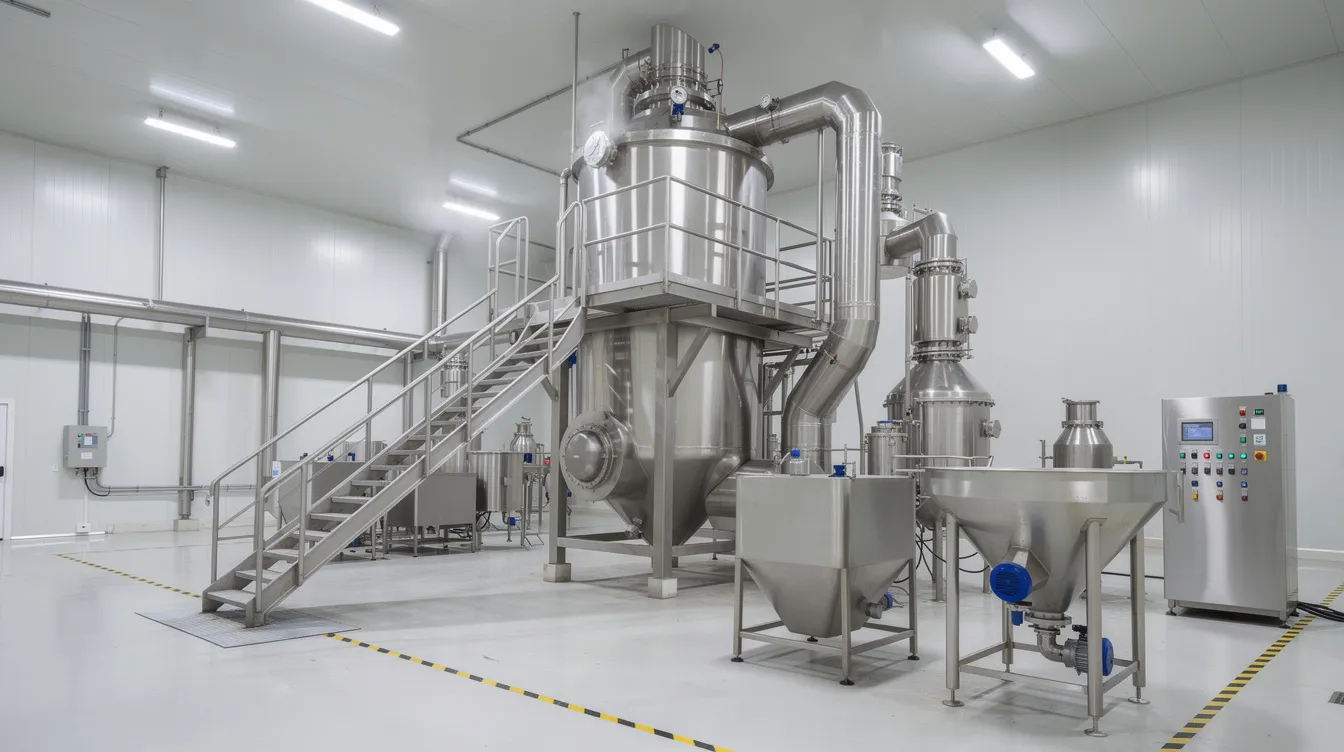
Plant Machinery and Equipment for Pea Protein Isolate Production
Machinery selection must align with targeted capacity, quality specifications, energy footprint and degree of automation. Food safety is non-negotiable – all equipment must be designed for hygienic food production.
| Equipment / Section | Key Function | Selection Criteria |
|---|---|---|
| Cleaning, de-stoning, magnetic separator | Remove foreign matter from raw peas | Throughput capacity, stone removal efficiency |
| Dehulling machines, dry mills | Separate hulls, produce flour/grits | Particle size control, minimal heat generation |
| Extraction tanks with agitators | Dissolve protein at alkaline pH | SS construction, pH/temperature control, residence time |
| Decanter centrifuges / separators | Solid–liquid separation of starch/fibre from protein liquor | G-force, throughput, cleanability |
| Precipitation and neutralisation tanks | pH-controlled protein precipitation and neutralisation | Mixing efficiency, acid/alkali dosing accuracy |
| Membrane filtration systems (UF/MF) | Optional purification and concentration | Pore size, flux rate, cleaning regime |
| Evaporator (multi-effect) | Concentrate protein slurry before drying | Energy efficiency, fouling resistance |
| Spray dryer | Convert liquid to powder | Evaporation rate, atomiser type, powder recovery |
| Powder handling & packing | Sifting, metal detection, bagging | Hygiene, accuracy, bag sizes (20–25 kg, big bags) |
| CIP system | Automated cleaning | Chemical compatibility, coverage, cycle time |
| Boiler, chillers, compressors | Steam, chilled water, compressed air | Capacity matched to process demand |
| ETP | Treat high-organic-load wastewater | Discharge norms, capacity (KLD), ZLD if mandated |
| QC laboratory | Protein analysis, micro testing, functionality | Kjeldahl/Dumas, moisture, particle size, solubility tests |
Functional properties of pea protein – including solubility, emulsification capacity and gelation – must be tested using appropriate lab equipment. Higher automation increases capex but improves consistency and reduces operational manpower. Promoters should also decide whether the plant will be a dedicated pea protein isolate line or part of an integrated pulse complex, as this materially affects machinery configuration.
Plant Capacity, Land and Infrastructure Planning
Capacity planning must align with raw-material availability, market offtake potential and the promoter’s capital and risk appetite.
- Processing capacity should be defined based on raw yellow pea input (TPD) and target operating days (~300 days/year). Translate throughput into isolate, starch and fibre outputs based on realistic yield assumptions validated with the chosen technology provider.
- Phased expansion is often prudent: start with 5–7 TPD isolate output, plan to scale to 10–15 TPD as markets develop and processes stabilise.
- Land requirements vary: smaller, semi-automated plants may need less than 1 acre; fully integrated complexes may require 3–5+ acres. Layout zoning should cover raw-material yard, process block (with adequate spray dryer height), utility block, warehousing, QC lab, ETP/STP, roads and green belt.
- Utilities: reliable power supply (grid + DG backup), water sourcing and pre-treatment, steam and hot water systems for extraction and CIP, compressed air for instrumentation and bagging, and chilled water for temperature control.
High water consumption and wastewater treatment are major challenges in pea protein processing. Investing in effluent treatment plants is critical for wet fractionation plants given the high organic load, variable pH and suspended solids in wastewater. A professional DPR should include a detailed plant layout drawing, material flow pattern and utility routing plan.
Pea Protein Isolate Plant Cost and Investment Structure
This section presents an illustrative investment structure for a greenfield pea protein isolate manufacturing plant. Actual project cost must be estimated project-wise with updated quotations and civil cost assessments.
| Cost Head | Remarks |
|---|---|
| Land & site development | Varies sharply by state and industrial area |
| Building & civil construction | Production block, utility block, warehouses, admin, lab, ETP structures |
| Plant & machinery (imported + indigenous) | Process equipment, spray dryer, material handling, CIP, instrumentation |
| Utilities equipment | Boilers, chillers, compressors, water treatment, ETP, power distribution |
| Electricals & instrumentation | Wiring, panels, automation, PLC/SCADA |
| Laboratory & QC equipment | Protein analysers, micro testing, functionality testing |
| Installation, commissioning & training | Erection, trial runs, operator training |
| Pre-operative expenses | Design, consultancy, approvals, interest during construction |
| Contingencies | Reasonable provision on fixed capital |
| Working capital margin | Initial inventories, receivables financing |
Capital investment includes machinery and land development costs as major components. For a medium-scale plant (~3,000–5,000 TPA isolate output), total project cost could range from tens to over one hundred crore rupees depending on capacity, automation level, imported versus indigenous equipment and location. The choice between a dedicated isolate line and an integrated pulse complex significantly affects total investment. State-level incentives, logistics costs and the prevailing import duty on yellow peas (currently ~30%) also affect the economic structure.
Production Cost per Kg and Profitability Analysis
The cost of production per kg of pea protein isolate forms the basis for pricing decisions and profitability projections. Initial operating costs for a pea protein plant are significant, and understanding the cost structure is essential for realistic financial modelling.
Illustrative cost build-up (assumptions-based):
| Cost Component | Illustrative Cost per Kg of Isolate |
|---|---|
| Raw yellow peas (at ₹38,000/tonne, ~5 kg peas per kg isolate) | ~₹190 |
| Less: by-product credits (starch, fibre @ ~15% offset) | (~₹28) |
| Net raw material cost | ~₹162 |
| Chemicals, process aids, packaging materials | ~₹20–25 |
| Utilities (power, steam, water, effluent treatment) | ~₹35–45 |
| Manpower (production, QC, maintenance, admin) | ~₹15–20 |
| Repairs, maintenance, factory overheads | ~₹10–15 |
| Approximate manufacturing cost | ~₹250–270 |
Capacity utilisation materially affects per-unit fixed-cost absorption. At 50% utilisation, fixed costs per kg roughly double compared to 85% utilisation. Selling prices for bulk B2B pea protein isolate may range from ₹320–₹500/kg depending on protein purity, functional performance, certifications and application. Similar financial discipline applies to projects in related sectors such as whey protein isolate manufacturing.
These are illustrative calculations, not forecasts. A structured financial model is essential for preparing bank or investor documentation.
Financial Projections, CMA Data and Bank Finance for Pea Protein Isolate Plants
Indian banks financing capital-intensive food ingredient projects expect a robust DPR, CMA Data package and financial projections before sanctioning term loans.
A lender-ready projection set should contain:
- Projected P&L for 7–10 years with detailed revenue build-up, cost of goods sold and overhead assumptions linked to capacity utilisation ramp-up
- Projected Balance Sheets capturing fixed assets, working capital movements, term loan balances, equity and reserves
- Projected Cash Flow statements showing operating, investing and financing flows with loan drawdown and repayment timing
- Working capital assessment: raw-material inventory norms (considering seasonal availability of peas), finished-goods holding, receivable and payable cycles
- DSCR analysis: yearly and average Debt Service Coverage Ratio – lenders typically expect comfortable coverage throughout the repayment period
- Break-even analysis: the capacity utilisation or sales volume at which the project covers fixed costs
- ROI and IRR: based on projected free cash flows under stated assumptions
- Sensitivity analysis: showing effects of changes in pea price, yield, selling price, capacity utilisation and interest rate
CMA Data in the Indian banking context includes projected performance statements, fund flow, ratio analysis and maximum permissible bank finance. For expansion projects, historical financials are also required. Project Report Bank, under CA Manish Gugliya, prepares customised DPRs and CMA Data aligned with bank formats and supports discussions during appraisal.
Technical, Commercial and Financial Feasibility & Project Viability
Pea protein isolate projects must be evaluated on technical capability, long-term market fit and financial resilience. A Detailed Project Report should cover technical feasibility, market viability, and financial profitability as interconnected assessments.
- Technical feasibility: availability and reliability of wet fractionation technology at commercial scale, scalability from pilot to production, skilled operator availability, and integration of utilities and effluent treatment
- Commercial feasibility: realistic demand assessment, competitor positioning, achievable price bands and strength of offtake relationships
- Financial feasibility: ability to generate adequate returns after accounting for capex, operating costs, taxes and financing costs
A comprehensive project analysis includes investment risks such as raw material consumption and yield uncertainty. Key sensitivity variables include:
- Impact of 5–10% increase in raw pea price on DSCR
- Consequences of protein extraction yield falling below design assumptions
- Effect of slower capacity utilisation ramp-up (e.g., 40% in year 1) on cash flow
- Lower product selling prices due to import competition
- Increases in power, fuel or water-treatment costs beyond estimates
- Foreign-exchange exposure where raw material pricing is linked to global markets
Feasibility findings should guide final plant sizing, debt–equity mix and risk mitigation planning – not simply justify a predetermined investment decision. This approach parallels the feasibility methodology applied to protein-intensive dairy processing projects.
Licences, Certifications and Quality Requirements in India
Specific legal requirements depend on state, industrial zone and scale. Typical requirements for a pea protein isolate plant include:
- Entity and tax registrations: PAN, TAN, GST, Udyam (MSME) where applicable
- FSSAI licence for food manufacturing, including product and facility registration
- Factory Act registrations and labour-law compliance as per state requirements
- Consent to Establish and Consent to Operate from the State Pollution Control Board – covering air emissions, wastewater discharge and waste management
- Fire-safety NOC and mandated fire-fighting systems
- Food safety systems: HACCP-based management, ISO 22000 or FSSC 22000 certification for organised and export markets; Halal/Kosher certification where commercially justified
- Product testing: microbiological parameters, heavy metals, pesticide residues, and functional properties via NABL-accredited labs
Regulatory compliance involves obtaining environmental clearances and food safety certifications specific to the project location and target markets. Export-oriented units require additional documentation including RCMC and compliance with importing-country standards.
Major Project Risks and Mitigation Strategies
Pea protein isolate projects face multiple technical, market, financial and environmental risks that must be addressed in the DPR.
| Risk Category | Key Risk | Mitigation Approach |
|---|---|---|
| Raw material | Price volatility, quality variation, seasonal availability | Diversified sourcing, contract farming, buffer stocks |
| Technology & yield | Underperformance of protein recovery | Proven suppliers, performance guarantees, pilot trials |
| Product quality | Inconsistent solubility, taste, colour, microbiology | Robust QA/QC, SOPs, process automation |
| Market & offtake | Slower customer acquisition, price pressure | Early customer engagement, segment diversification, flexible grades |
| Environmental | High-load wastewater from wet fractionation | Well-designed ETP, water reuse, compliance monitoring |
| Financial | Cost overruns, lower cash flows | Conservative projections, adequate contingency, balanced debt–equity |
| Operational | Manpower turnover, breakdowns, safety incidents | Training, preventive maintenance, insurance |
The DPR should clearly document identified risks, their likelihood and impact, and proposed mitigation measures.
Role of a Professional DPR, Financial Modelling and Advisory
A well-crafted Detailed Project Report serves as the central document aligning promoters, technologists, lenders and potential investors on project assumptions and outcomes. In my professional practice, the DPR for a pea protein isolate plant typically covers detailed technical description, project cost estimation, five- to ten-year financial projections (P&L, Balance Sheet, Cash Flow), working capital assessment, DSCR analysis, break-even point, ROI, IRR and payback period calculations.
Our advisory approach at Project Report Bank includes customised financial modelling that allows changing key assumptions to observe impact on viability, CMA Data preparation aligned with Indian bank formats, loan proposal structuring, and support in answering bank queries during appraisal. Projections and CMA Data are professional estimates based on agreed assumptions – not guarantees of future performance. The focus is on realistic, bankable scenarios.
Serious entrepreneurs and companies evaluating pea protein isolate projects are welcome to engage Project Report Bank for project-specific DPR and advisory support.
Frequently Asked Questions
How much raw yellow pea is typically required to produce 1 kg of pea protein isolate?
Approximately 4–6 kg of raw yellow peas are typically required per kg of isolate, depending on pea protein content and extraction yield. With peas containing 21–28% protein and mass yield of around 15–25%, the exact ratio varies by technology and process conditions. These figures must be validated with pilot trials or vendor process guarantees before inclusion in a DPR.
Can Indian banks finance a pea protein isolate manufacturing project?
Banks do finance such projects subject to promoter credentials, adequate collateral, demonstrated project viability, and submission of a bankable DPR with detailed financial projections and CMA Data. The bank will evaluate DSCR, promoter contribution, working capital adequacy and sensitivity to key risk variables before sanctioning a term loan.
Should I consider an integrated pulse protein, starch and fibre plant instead of a stand-alone pea protein isolate plant?
An integrated plant offers better by-product value recovery and diversified revenue streams from starch and fiber, but requires higher capex and greater operational complexity. A stand-alone isolate unit may be simpler to commission but may not fully exploit the economics of raw material consumption. This decision should follow a comparative feasibility study examining both configurations under realistic assumptions. Eggs, fish, milk and other animal protein alternatives compete in the broader nutrition space, but pea protein’s suitability as a sustainable, allergen-friendly ingredient provides distinct positioning.
What is the difference between pea protein isolate and pea protein concentrate?
Pea protein isolate typically contains over 90% protein and is produced through wet fractionation. Pea protein concentrate contains roughly 50–70% protein and is often produced via dry fractionation (air classification and milling). The isolate commands higher prices and serves applications demanding high purity, neutral taste and superior functional properties like emulsification and gelation. Concentrates retain more starch, fat content and other nutrients, and are suitable for less sensitive food products.
Why is a feasibility study important before investing in a pea protein isolate plant?
A feasibility study examines whether the project is technically achievable, commercially viable and financially sustainable under realistic assumptions. Given the specialised manufacturing process, high water consumption, significant capital investment and sensitivity to raw material prices and protein yield, determining viability before committing funds is essential. Without proper analysis, promoters risk cost overruns, inadequate cash flow and inability to service debt – problems that a well-structured feasibility study and DPR can help prevent.
Conclusion and Professional Advisory
Pea protein isolate represents a commercially significant plant-based functional ingredient with strong demand across food, nutrition and industrial applications. However, the quality of the investment decision depends more on disciplined financial planning, technology validation and raw-material economics than on attractive market headlines alone.
Serious project promoters should undertake a detailed feasibility study, obtain a customised DPR and engage early with prospective customers and technology partners. For professional DPR preparation, CMA Data, financial modelling and project finance advisory for pea protein isolate manufacturing projects, promoters and investors are welcome to contact CA Manish Gugliya & Company through WhatsApp for a project-specific consultation.