
Key Takeaways
- A small commercial besan plant in India (2025-2026, semi-automatic, using purchased chana dal) typically needs an overall investment of ₹25-40 lakh including working capital, while 1 TPH and 2 TPH units can cross ₹1 crore and ₹2 crore respectively depending on scope and automation.
- Total besan manufacturing plant setup cost in India must account for land or building, plant machinery, electrical infrastructure, dust collection, installation, pre-operative expenses and working capital; the besan grinding machine alone is only one component.
- Investment varies with manufacturing route (purchased chana dal vs whole gram processing), automation grade (semi-automatic vs fully automatic besan plant) and whether the unit sells in bulk or branded retail packs.
- The article is written from the perspective of CA Manish Gugliya (Project Report Bank) and includes an illustrative 1 TPH besan plant project cost, working capital calculation and bank-finance-friendly project structuring.
Introduction: Understanding Besan Manufacturing Plant Setup Cost in India
Besan manufacturing plant setup cost in India is not a single number you can look up on a machinery portal. It is a project investment that includes fixed assets (land, building, machinery, electricals, dust control, installation) and working capital (raw materials, packaging, receivables, operating expenses). The price of an automatic besan mill plant or besan making machine is only one line item within that total.
Besan, or gram flour, is a staple ingredient across Indian food industries and households. India’s besan market is estimated at roughly ₹32,000 crore, with branded packaged besan growing at 12-15% per annum while about 70% of consumption still comes from unorganised mills. This gap is prompting dal mill owners, flour mill operators and new MSMEs to evaluate besan plant projects seriously in 2025-2026.
The primary raw material for besan production is chana dal or whole Bengal gram. All costs and prices discussed in this article are indicative planning ranges for 2025-2026, not supplier quotations; actual besan plant machinery prices must always be confirmed from current vendor quotes.
I am CA Manish Gugliya, FCA, DISA (ICAI), practising since 2006 from Ratlam, Madhya Pradesh. This article reflects a Chartered Accountant’s perspective on project planning, cost estimation, feasibility and bank finance for besan manufacturing projects. The article covers capacity-wise investment ranges, machinery cost breakdowns, land and building requirements, the automation decision, working capital estimation, an illustrative 1 TPH project cost example, bank finance and DPR preparation, and a closing investment checklist.
Quick Answer: How Much Does a Besan Manufacturing Plant Cost in India?
Establishing a besan manufacturing facility in India often requires capital investments ranging from ₹1.5 lakh to ₹50+ lakh for fixed assets alone, depending on capacity and automation grade. Production capacity for besan plants ranges from 100 kg/hr to 2000 kg/hr. The estimated total project cost for a small commercial besan plant can range around ₹21.5 lakh to ₹38 lakh when working capital is included. A fully automatic besan plant costs approximately ₹30,00,000 for the machinery line alone, before civil works, electricals and working capital.
The following table provides illustrative 2025-2026 planning ranges. All capacities refer to besan output per hour unless stated otherwise, assuming 8 or 16-hour shifts and 300 working days per year.
| Plant Type | Besan Output Capacity | Indicative Total Project Cost (incl. WC margin) | Key Assumptions |
|---|---|---|---|
| Small commercial chana dal grinding unit | 100-250 kg/hr | ₹10-25 lakh | Rented premises, semi-automatic, bulk packing |
| 500 kg/hr besan processing unit | 500 kg/hr | ₹35-65 lakh | Own or leased shed, semi-automatic to automatic |
| 1 TPH (1000 kg/hr) besan plant | 1000 kg/hr | ₹1.0-1.8 crore | Purchased chana dal route, automatic, owned premises |
| 2 TPH besan plant | 2000 kg/hr | ₹2.0-3.5 crore | Automatic, multi-shift, own premises |
| Integrated whole-gram processing and besan plant | 500-1000 kg/hr besan output | ₹2.5-5.0+ crore | Includes dal mill, dehusking, higher power, larger land |
Investment for a 500 kg/hour besan mill plant is approximately ₹2.10 lakh for the machinery unit itself, but the total project cost including building, electricals, installation and working capital is several times higher. Besan making plants can range from 100 kg/hr to 1500 kg/hr in common commercial configurations.
When I evaluate a besan manufacturing project, I prefer to separate besan manufacturing machinery cost (supplier-driven) from total project investment (bank-finance-driven) to avoid underestimating funding needs.
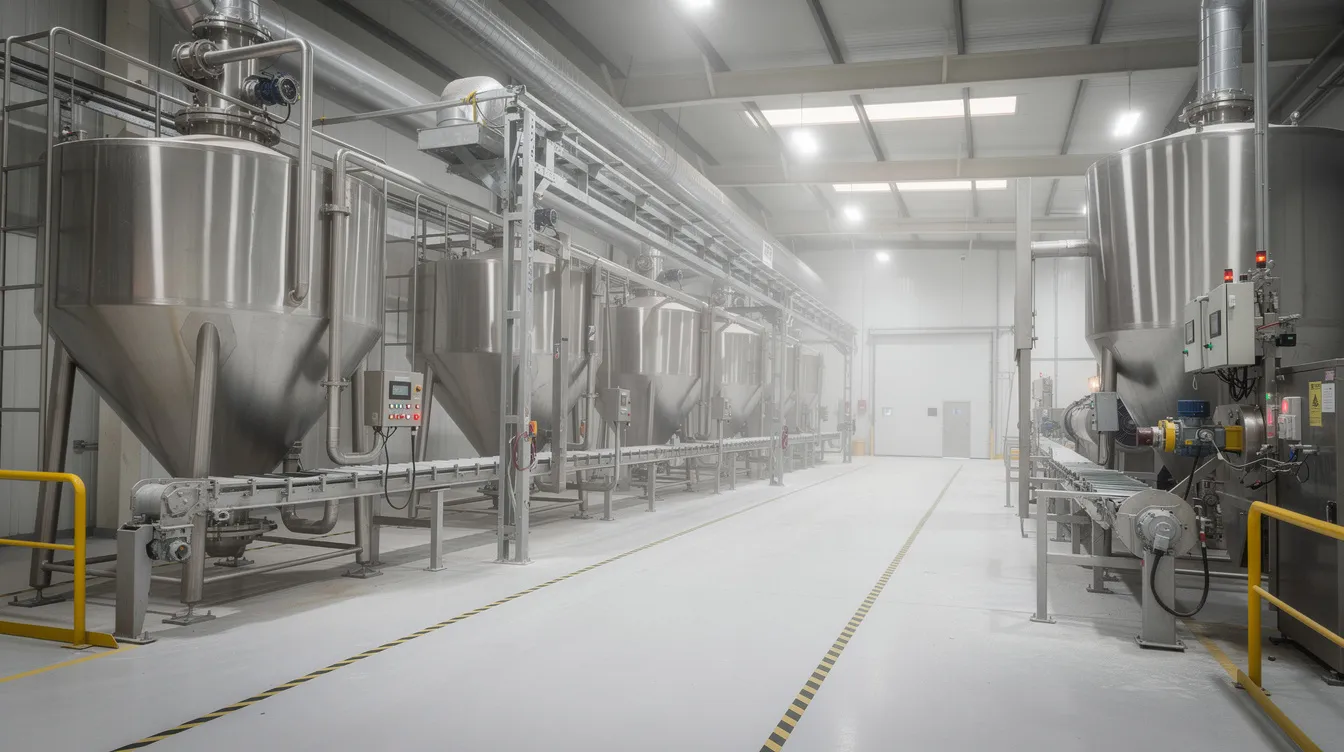
Select the Manufacturing Route Before Estimating Cost
The most consequential technical decision before budgeting is whether the besan plant uses purchased chana dal or processes whole gram from scratch.
Route 1: Purchased chana dal passes through cleaning, grading, a besan grinding machine (impact pulveriser or pin mill), centrifugal or vibro sieving, optional blending and then packing. This is the simpler route with lower capital outlay and faster implementation. A detailed explanation of this process is available in the besan manufacturing from chana dal article.
Route 2: Whole gram goes through cleaning, destoning, magnetic separation, conditioning, dehusking and splitting (requiring a dal mill), grading, grinding, sieving and packing. The integrated gram processing and besan plant project report covers this route in detail.
Key differences between the two routes:
- Machinery: Route 2 requires emery rollers, aspirators, graders and a dal mill section; Route 1 does not.
- Space and power: The integrated route needs 40-60% more covered area and higher motor power for additional processing stages.
- Yield and by-products: Route 2 generates husk and bran (saleable as cattle feed); Route 1 starts with ready dal, so recovery from dal to besan is more direct.
- Working capital: Route 2 ties up more capital in raw material since whole gram costs less per kg than split dal, but procurement volumes are larger.
The chana dal vs whole gram for besan: cost and viability comparison explains how Route 2, despite higher capital investment, can improve raw material flexibility and long-term margins for certain locations.
Detailed Besan Plant Setup Cost Breakdown
A bankable besan plant DPR splits project cost into clear heads matching what banks expect in term loan appraisals.
| Cost Component | What It Includes | Main Cost Drivers |
|---|---|---|
| Land purchase or lease deposit | Plot acquisition or refundable security deposit | State, city, industrial area vs rural |
| Factory building or shed | RCC/PEB structure, production hall, loading dock | Built-up area, construction type |
| Internal civil works | Food-grade flooring, washable walls, drainage, platforms | FSSAI compliance level |
| Storage godowns | Raw material and finished goods covered storage | Inventory policy (1-month vs 3-month stock) |
| Plant machinery and equipment | Cleaning, grinding, sieving, conveyors, packaging line | Capacity, automation grade, material of construction |
| Dust extraction and pollution control | Cyclone collectors, bag filters, ducting | Grinding capacity, local PCB norms |
| Electrical infrastructure | Panels, cabling, transformer, DG set, earthing | Sanctioned load, local utility charges |
| Installation, erection and commissioning | Foundation bolts, alignment, trial runs, operator training | Complexity, vendor support terms |
| QC lab equipment | Moisture meter, sieve analyser, weighing balances | Product quality targets, buyer requirements |
| Office, furniture, IT | Desks, computers, billing software | Scale of operations |
| Statutory approvals and registrations | FSSAI, trade licence, factory licence, MSME Udyam, pollution NOC | Licensing costs may range ₹30,000 to ₹75,000 |
| Preliminary and pre-operative expenses | Staff salaries during setup, trial losses, consultancy | Implementation period |
| Interest during construction | Interest on term loan disbursed before commercial production | Relevant for larger plants with 6-12 month implementation |
| Contingency | 5-10% on select cost heads | Buffer for cost overruns |
| Margin for working capital | Promoter’s share of working capital, shown in project cost | Typically 25% of assessed working capital requirement |
To avoid double-counting, verify whether machinery vendor quotations include erection, basic electrical panels or a small dust collector. If they do, do not budget these items separately. Banks expect a clear split between fixed asset cost and margin for working capital in the project cost presentation.
Besan Manufacturing Machinery Cost and Configuration
Besan plant machinery is usually the single largest fixed-asset component. Quotations must specify capacity in kg/hr or TPH, automation grade, operation mode and material of construction (mild steel body vs stainless steel contact parts). A commercial besan making machine can cost between ₹36,000 to ₹3.6 lakh depending on capacity and features. A mini besan mill pulverizer starts at around ₹40,000. An automatic besan making machine is priced at approximately ₹2,25,000 for mid-range capacities.
Typical machinery for a besan plant includes cleaning, grinding, sifting, and packaging equipment. For a purchased-chana-dal automatic besan plant, the list includes:
- Cleaning machine and destoner (essential): removes stones, dust and foreign matter
- Magnetic separator (essential): removes metal contaminants
- Bucket elevators and screw/pneumatic conveyors (essential): material handling between stages
- Besan grinding machine / impact pulveriser / pin mill (essential): the core milling unit; an impact pulverizer for besan has a capacity of around 150 kg/hr per unit, and multiple units are installed for higher throughput
- Centrifugal or vibro sieving machine (essential): grades fine besan from coarser particles
- Storage bins and blending hopper (optional for small units, essential for larger plants)
- Automatic weighing, filling, sealing machine and coding unit (optional for early-stage; essential for branded retail)
- Emery roll dehusker, grader, aspirator (route-dependent; only for whole-gram integrated plants)
Besan plant machinery can process 300-400 kg/hr of besan in commonly available mid-range configurations. Machinery-only quotations often exclude GST, packing and forwarding, transport to site, on-site erection, foundation civil works, first-fill spares and operator training. These exclusions can add 15-25% to the quoted machine price.
Semi-automatic besan plant machinery (manual bagging, basic conveyors, more labour per shift) has lower initial cost. A semi-automatic besan setup is priced around ₹2,50,000 for smaller capacities. Higher automation grade increases initial cost but can reduce ongoing labour cost, handling losses and dust exposure in the production area. The machines offered in fully automatic configurations typically include PLC-based controls, automatic feed regulation and integrated packing.
Land, Building and Layout Requirements for a Besan Plant
Layout and built-up area depend on plant capacity, whether a dal mill is integrated, and whether the promoter reserves space for future expansion to 1000 kg/hr or 2 TPH capacity.
Indicative space ranges (planning norms, subject to actual machinery layout from suppliers):
- Sub-500 kg/hr: 2,000-4,000 sq ft covered area; 3,000-6,000 sq ft total land
- 500 kg/hr: 4,000-6,000 sq ft covered; 6,000-10,000 sq ft total
- 1 TPH: 6,000-10,000 sq ft covered; 10,000-15,000 sq ft total
- 2 TPH: 10,000-15,000 sq ft covered; 15,000-25,000 sq ft total
Key area components: (a) covered production block, (b) raw material and finished goods godown, (c) utility block (electrical room, compressor, dust collection system), (d) office, laboratory and worker amenities, and (e) open circulation and loading area.
Land and building costs for a small-to-medium unit typically range from ₹2 lakh to ₹5 lakh for setup modifications when premises are rented. Owned land is capitalised; rented premises involve a refundable lease deposit (capitalised) plus recurring rent in the P&L. Electric connection requirements for a commercial setup usually range from 15 HP to 50 HP depending on capacity and route. Food-grade flooring, washable walls and proper drainage around machinery areas should be budgeted separately rather than ignored in early costing.
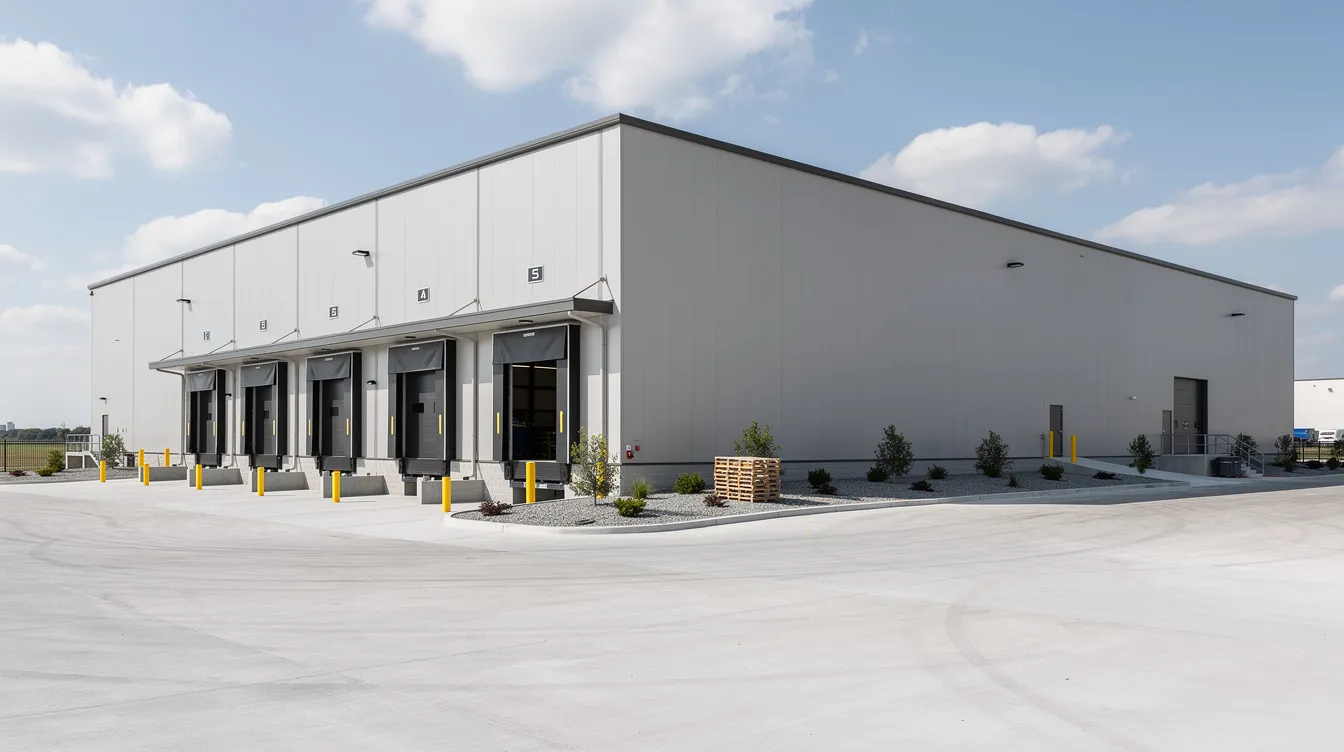
Automatic Versus Semi-Automatic Besan Plant: Impact on Cost
Automation grade in besan plant machinery quotations directly affects both capital expenditure and operating cost. Besan plant machinery includes automatic and semi-automatic options, and the choice should be driven by operating scale and local labour conditions.
- Initial machinery cost: A semi-automatic material handling setup for a 500 kg/hr unit may cost ₹8-15 lakh; a fully automatic besan plant at similar or higher capacity costs around ₹30,00,000 for an integrated line
- Labour per shift: Semi-automatic units need 8-12 workers per shift; automatic lines may need 4-6
- Handling losses and dust: Manual transfer between stages increases product loss and dust exposure; automated conveying with enclosed systems reduces both
- Consistency of output: Automatic besan plant lines produce more consistent quality besan with uniform particle size distribution
- Pack-size flexibility: Automatic packing lines handle multiple formats (500 g, 1 kg, 5 kg, 25 kg) with changeover; manual bagging is limited
- Operator skill: Automatic lines need trained maintenance staff; semi-automatic lines need more general labour
Automatic besan plants can produce 100 kg/hr to 2000 kg/hr. Semi-automatic besan plants typically operate at 50-70 kg/hr at the lower end. Fully automatic besan plants are available for 250 kg/hr production and upward. Setup expenses can vary greatly based on production capacity and level of automation.
For capacities up to 500 kg/hr, semi-automatic solutions with manual bagging may be economically preferred. For 1 TPH and above, more automation in conveying, milling control and packing becomes financially justified. Promoters should obtain separate quotations for semi-automatic and fully automatic configurations, then compare cash flow and DSCR under both options before finalising.
Working Capital Requirement for a Besan Plant
Many entrepreneurs underestimate working capital while focusing on besan plant setup cost. This leads to cash flow stress in the first year. Working capital is critical for ongoing operations and includes costs for raw materials and wages. Initial working capital often requires at least one month of operating costs as a minimum baseline.
Main working capital components for a besan plant:
- Stock of chana dal or whole gram (typically 15-30 days of consumption)
- Packaging material inventory (15-30 days)
- Work-in-progress and finished besan stock (7-15 days)
- Trade receivables / credit to distributors and bulk buyers (15-45 days)
- Less: supplier credit received (7-15 days)
- Buffer for wages, power bills, repairs and admin expenses
Illustrative working capital calculation for a 1 TPH besan gram flour plant (16-hour operation, 300 days, ~60% Year 1 utilisation, chana dal at ₹55/kg, besan selling price ₹72/kg):
| Working Capital Component | Days | Approx. Amount (₹ lakh) |
|---|---|---|
| Raw material (chana dal) stock | 20 days | ~35 |
| Packaging material | 15 days | ~3 |
| Finished goods stock | 10 days | ~15 |
| Receivables (debtors) | 25 days | ~28 |
| Less: Creditors | 10 days | ~(18) |
| Operating expense buffer | 15 days | ~7 |
| Total working capital requirement | ~₹70 lakh | |
| Margin for working capital (25%) | ~₹18 lakh |
The distinction matters: total working capital requirement is funded through a combination of promoter funds and bank cash credit or overdraft limit. Margin for working capital (typically 25%) is the promoter’s share, and it is included in the project cost for term loan appraisal. The remaining 75% is the bank’s working capital facility, shown and sanctioned separately.
Illustrative Project Cost and Means of Finance: 1 TPH Besan Plant Example
This section provides an illustrative example for a 1 TPH besan plant in India grinding purchased chana dal. All numbers are approximate 2025-2026 planning figures, not quotations or any assurance of bank sanction.
Technical assumptions: 1 TPH refers to 1,000 kg/hr of besan output. The unit runs 16 hours/day, 300 days/year at mature capacity. Assumed recovery from chana dal to besan is 92-95% (purchased clean dal). Semi-automatic packing line handles 1 kg, 5 kg and 25 kg packs. Premises are owned. Three phase power supply with approximately 75 HP connected load.
| Cost Head | ₹ Lakh (Approx.) |
|---|---|
| Land (0.5 acre, tier-2/3 location) | 15.00 |
| Building and civil works (8,000 sq ft) | 28.00 |
| Plant machinery with installation | 42.00 |
| Electrical infrastructure and DG set | 8.00 |
| QC lab, office, furniture | 3.00 |
| Preliminary and pre-operative expenses | 4.00 |
| Contingency (5% on above) | 5.00 |
| Margin for working capital | 18.00 |
| Total project cost | ₹123.00 lakh |
Means of Finance:
- Promoter’s contribution (25-30% of project cost): ~₹31-37 lakh
- Term loan (70-75%): ~₹86-92 lakh
- Separate working capital bank limit (CC/OD): ~₹52 lakh (75% of ₹70 lakh requirement)
Project financing often includes promoter contributions, term loans, and working capital facilities. The ratios used must align with the promoter’s financial profile and specific bank policy. All figures above are illustrative and not a supplier quotation or bank sanction commitment.
Factors That Change Total Besan Manufacturing Plant Investment
Two promoters can receive very different project cost estimates for the “same” capacity because their underlying assumptions differ.
- Capacity: A 50 kg/hr cottage unit vs a 1000 kg/hr or 2 TPH commercial plant
- Manufacturing route: Purchased chana dal vs whole gram integrated processing
- Automation grade: Phase material handling (manual vs pneumatic), semi-automatic vs fully automatic packing
- Location: Land cost in Madhya Pradesh vs Maharashtra industrial zones; power consumption tariffs differ by state, with electricity consumption leading to monthly bills ranging from ₹25,000 to ₹1,00,000 depending on capacity and tariff
- Storage policy: Holding 1 month vs 3 months of raw material can add or reduce several lakh of working capital
- Sales model: Bulk supply in 25-50 kg bags vs branded retail pouches. Moving from bulk to branded retail besan increases investment in form-fill-seal machines, brand development and distribution
Commonly Overlooked Costs in Besan Plant Setup
In my experience, many preliminary plant cost sheets omit 5-10% of actual costs, which surface during project execution:
- Electrical upgrades, higher sanctioned load and transformer charges from the local utility
- Full dust collection and air filtration for grinding and sieving areas (not just a small cyclone)
- Foundations, platforms and structural supports for heavy plant machinery
- Internal material handling (hand pallets, trolleys, platform scales)
- Freight, unloading and installation expenses beyond what the machinery supplier covers
- Initial set of spares and consumable screens
- Laboratory equipment and third-party product testing for buyers
- Factory insurance, pest control setup, food safety audit costs; FSSAI registration is mandatory for food manufacturing in India
- Pre-commercial marketing expenses and sample production costs
- Salaries paid during the implementation and trial production period
I recommend budgeting a contingency of 5-10% on select cost heads to handle moderate overruns, and clarifying in the DPR which heads the contingency covers.
Operating Cost and Profitability: Brief Overview
This article focuses on setup cost, but a realistic investment decision also requires understanding operating cost per kg and achievable selling prices. Operational expenses must account for utility bills, labor, and materials costs. Monthly operating costs largely depend on raw material prices, since chana dal typically forms 65-75% of cost of goods sold.
Major production cost components: chana dal or whole gram cost, power consumption for grinding machine and auxiliaries, labour (skilled and unskilled), packaging material, repairs, factory overheads, and selling and distribution expenses. Energy consumption for mid-scale plants is a recurring cost that must be modelled at actual tariff rates.
Promoters should distinguish gross margin, operating profit and net profit. Payback period and IRR must be calculated on a realistic capacity utilisation ramp-up (e.g., 40-50% in Year 1), not on theoretical full utilisation from day one. Project Report Bank can prepare project-specific financial projections including DSCR, break-even analysis, ROI and IRR using the promoter’s own assumptions.
Bank Finance, DPR and CMA Data for a Besan Plant
Any bank term loan or working capital limit for a besan plant in India requires a structured Detailed Project Report (DPR) and CMA Data in formats accepted by banks. Financial projections are essential for evaluating project viability.
A good besan plant DPR should include:
- Promoter background and project concept
- Capacity, manufacturing route and product specifications
- Detailed cost estimates with supporting supplier quotations
- Implementation schedule
- Projected profit and loss, balance sheets and cash flows for 5-7 years
- DSCR calculations and sensitivity scenarios
CMA Data for bank loans is prepared or compiled, not “certified”, by the Chartered Accountant. Realistic assumptions about utilisation (40-50% in Year 1, ramping up gradually), credit terms and interest rates are critical for bank acceptance. Government schemes can provide capital investment support and credit-linked subsidies for food processing units; government initiatives aim to support the micro food processing sector with financial assistance. Promoters should verify current scheme applicability on official portals before including subsidy in their project cost.
Investment Planning Checklist for a Besan Manufacturing Plant
- Decide manufacturing route: purchased chana dal or whole gram
- Freeze target capacity: e.g., 500 kg/hr, 1 TPH or 2 TPH
- Choose between semi-automatic and automatic besan plant based on labour availability, market and budget
- Confirm land/premises status: owned, to be purchased, or rented
- Obtain multiple machinery quotations specifying capacity, automation level, material of construction contact parts, country of origin, motor power, phase power consumption and whether erection is included
- Estimate building and civil works cost from local contractors
- Verify power availability, required sanctioned load and electricity connection process
- Prepare an initial layout drawing with the machinery supplier
- Plan for dust extraction and food safety compliance
- Estimate working capital requirement considering stock levels and customer credit
- Cross-check all numbers with your CA or financial adviser before approaching banks
- Consider medium-term diversification into other pulse flours; review the multiproduct pulse flour plant project report and design the layout for future expansion
- Once technical and cost parameters are fixed, get a customised besan plant DPR and CMA Data prepared to avoid repeated queries during bank appraisal
FAQs on Besan Manufacturing Plant Setup Cost in India
What is the minimum viable investment for a small commercial besan unit?
A small commercial unit with a semi-automatic besan making machine processing purchased chana dal at 100-250 kg/hr can be set up for ₹10-25 lakh including modest civil works, electricals and initial working capital. If premises are already available, the fixed investment drops to ₹8-15 lakh. This assumes bulk packing, not branded retail pouches.
Can a besan plant operate from rented premises?
Yes. Many small and mid-scale besan plants operate from rented industrial sheds. The lease deposit (refundable) and interior modifications (food-grade flooring, electrical wiring, drainage) are capitalised. Recurring rent is an operating expense. Banks can finance such projects, though the security structure may differ from owned-premises projects.
How do I choose between 500 kg/hr and 1 TPH capacity for a first-time unit?
The decision depends on projected sales volume, available capital, and local raw material supply. A 500 kg/hr unit running 16 hours produces roughly 2,400 tonnes of besan per year at full utilisation. If the promoter’s realistic Year 1 sales estimate is below 1,000 tonnes, a 500 kg/hr unit may be more appropriate. Financial modelling under both scenarios, comparing DSCR and payback, is the most reliable way to decide.
Which expenses are commonly excluded from machinery quotations?
Most vendor quotations for besan plant machinery exclude GST, packing and forwarding, transport to site, civil foundations, on-site erection and commissioning, electrical panels and wiring beyond the machine terminal box, dust collection ducting, first-fill spares and tools, and operator training. These can add 15-25% to the quoted price.
Can a unit start with semi-automatic packing and upgrade later?
Yes, and many first-time promoters do this. Starting with manual or semi-automatic bagging (for 25 kg and 50 kg bags) keeps initial machinery cost lower. Adding an automatic weighing-filling-sealing machine for retail packs (500 g, 1 kg) can be planned for Year 2 or Year 3 once sales volumes and distribution channels are established. The factory layout should reserve space for this addition from the start.
Are government subsidies available for besan plant projects?
Schemes such as PMEGP and state-level MSME incentives may offer capital investment support or credit-linked subsidies. However, scheme applicability, eligibility criteria and subsidy amounts change periodically. Promoters should verify current status on official government portals at the time of application. Total project cost should be planned on a stand-alone basis without depending on subsidy for viability.
Conclusion and Professional Advisory
Besan manufacturing plant setup cost in India is a function of capacity, manufacturing route, automation grade, premises status, packaging strategy and working capital policy. Treating the investment as only a machinery purchase leads to funding gaps, delayed commissioning and cash flow stress. Disciplined planning with realistic assumptions across all cost heads is essential before committing capital.
I assist entrepreneurs and MSMEs with customised besan plant DPRs, CMA Data preparation, financial projections, project cost assessment and bank loan proposal support through my practice at Project Report Bank. Clients are guided on promoter contribution planning, loan structuring and sensitivity analysis based on their specific project parameters.
If you are evaluating a besan manufacturing project, I encourage you to reach out preferably via WhatsApp or online enquiry. Please share your proposed capacity (e.g., 500 kg/hr or 1 TPH), location, manufacturing route (chana dal or whole gram), status of land or premises, and any machinery quotations you have received. A structured feasibility review, including sensitivity analysis on raw material prices and utilisation levels, will help you make a well-informed investment decision.
CA Manish Gugliya FCA, DISA (ICAI) Practising since 2006 | Manish Gugliya & Company, Ratlam, Madhya Pradesh Project Report Bank