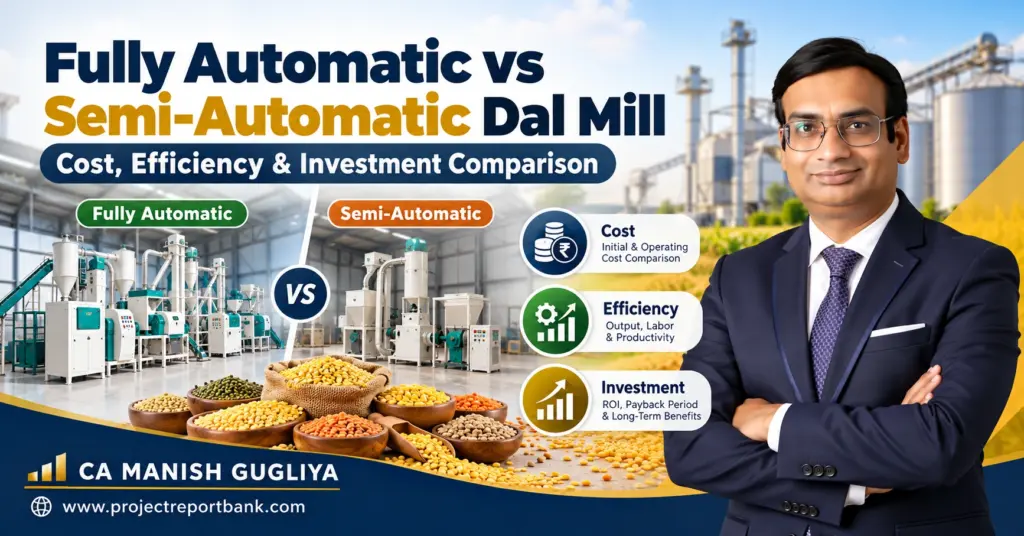
Key Takeaways
- Semi-automatic dal mill plants generally suit 5–10 TPD capacities and tighter budgets, offering lower financial risk and flexible batch processing for various pulse types.
- Fully automatic dal mill plants become financially attractive from about 20–50 TPD and above, provided capacity utilisation reaches 70–80% or higher.
- Automation typically requires 25–50% (or more) higher machinery investment than a comparable semi-automatic configuration, but reduces labour per tonne and delivers more consistent performance across shifts.
- The better option depends on raw material availability, planned capacity utilisation, local labour cost, finance cost and long-term expansion plans – not just on machine price.
- For a customised dal mill DPR, automation comparison, financial projections and bank loan support, contact Project Report Bank via WhatsApp or send your enquiry through the website.
Introduction – Choosing the Right Automation Level for a Dal Mill
The decision between a fully automatic and semi-automatic dal mill is fundamentally an investment decision. It determines not only the machinery you install, but also your project cost, operating cost per tonne, labour structure, production capacity, product quality, scalability and long-term financial returns. For dal mill projects ranging from 5 TPD to 50 TPD – processing chana dal, toor, moong dal, urad dal, masoor and multiple pulses – the automation level shapes almost every financial metric a lender or investor will examine.
A semi-automatic dal mill mechanises core processing stages but relies on manual feeding, transfers and sometimes bagging. A fully automatic dal mill integrates cleaning, conditioning, dehusking, splitting, grading, polishing and material movement through conveyors, elevators and automated controls, with minimal manual intervention. The difference is not just operational; it directly affects project economics.
All cost examples and financial comparisons in this article are illustrative. Investors should obtain updated quotations from reputed machinery suppliers and commission a customised project report before committing capital. ProjectReportBank.com, led by CA Manish Gugliya (FCA, DISA), specialises in providing customised Detailed Project Reports for entrepreneurs and MSME owners across India, with emphasis on customized analysis and practical financial assessment for dal processing and pulse milling projects.
If you are evaluating a dal mill business at any scale, reach out via WhatsApp or the enquiry form for a project-specific feasibility study, financial projections, CMA data preparation and bank loan proposal assistance.
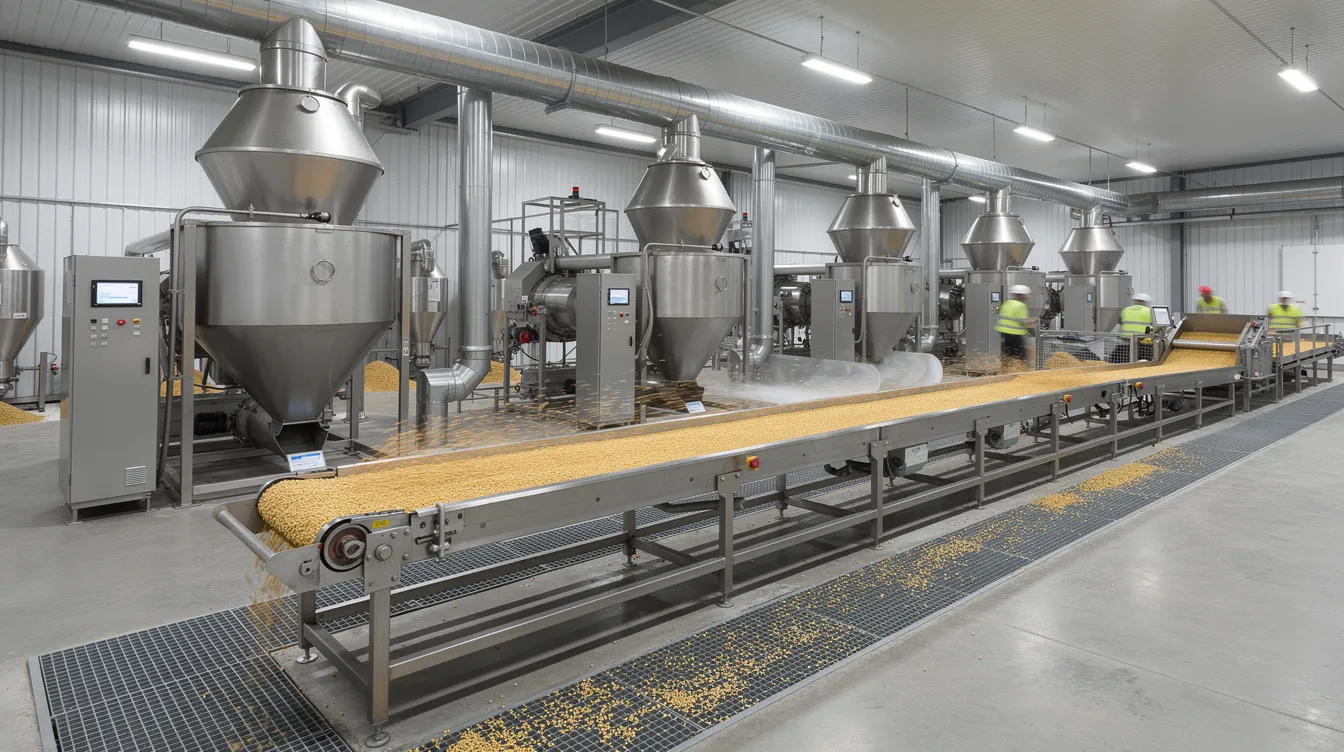
What Is a Semi-Automatic Dal Mill?
A semi-automatic dal mill uses mechanised machines for core operations – cleaning, destoning, dehusking, splitting, grading and polishing – but requires manual intervention during processing stages such as feeding raw pulses into machines, transferring material between equipment, adjusting machine settings and bagging finished dal. Semi-automatic dal mills require some manual handling during operation, making labour a significant ongoing cost.
A typical semi-automatic dal mill plant layout for 5–20 TPD includes:
- Raw material bucket elevators
- Pre-cleaner and destoner
- Pitting machine or emery roll sheller
- Aspirators for husk separation
- Multi-deck graders for size separation
- Polishers (oil or water polish)
- Manual or semi-mechanised bagging
At the smaller end, a 2HP dal mill machine processes 40–50 kg per hour, while a 3HP dal mill machine can process 80–100 kg hr of pulses. The 3HP dal mill features a high-speed 2880 RPM motor, suitable for entry-level processing. For a 5–10 TPD plant, you may need 8–15 workers per shift for feeding, machine operation, bag shifting and quality checking.
Semi-automatic mills are more affordable and offer flexible batch processing for various pulse types. Changeover between chana type, toor type and moong is simpler in smaller lots. Maintenance is straightforward and repairs can often be handled locally. However, the operation mode relies heavily on human coordination. Labour cost per tonne remains higher, output consistency depends on operator skill, and scaling beyond 15–20 TPD with extensive manual handling becomes impractical.
Semi-automatic mills are suitable for small-scale production due to lower financial risk and are a sensible starting point for many first-time entrepreneurs.
What Is a Fully Automatic Dal Mill?
A fully automatic dal mill integrates the entire process – from raw pulse intake to finished dal output – through automated feeding, conveyors, elevators and process controls. Automatic systems integrate cleaning, dehusking, grading and separation in one continuous process, with the material flowing from silos or hoppers through each stage with minimum manual lifting.
In a typical fully automatic dal mill plant, bulk raw pulses are received into storage hoppers, then move through automated pre-cleaning, destoning, conditioning, dehusking and splitting, husk and broken separation, multi-stage grading, polishing and finally packing. Automatic dal mills process pulses with minimal manual intervention, though operators, electricians, fitters and quality staff are still required.
Fully automatic dal mill plants can process all types of pulses – chana dal, toor, moong, urad, masoor and black gram. Production capacity for automatic dal mill plants ranges from 500 kg hr to 2,000 kg hr depending on plant configuration. The 2 TPH dal mill plant is designed for high efficiency at medium scale, while the 5 TPH pulses mill plant is suitable for large-scale processing operations.
Automation tools in larger plants may include control panels, interlocks, level sensors, flow control valves and sometimes PLC or SCADA systems. Material of construction for conveyors and hoppers is typically MS (mild steel), with motor power specifications matched to each stage. Three phase power supply is standard for all industrial dal mill plants.
The flipside: fully automatic dal mills typically have a higher initial capital investment compared to semi-automatic mills. Maintenance requires trained technicians, spare parts may have longer delivery time, and stable electricity connection is essential. Automation levels differ significantly between dal mill plant manufacturer offerings, so detailed technical scope, body material specifications and performance guarantees must be confirmed before finalising any order.
Fully Automatic vs Semi-Automatic Dal Mill – Detailed Comparison
A systematic side-by-side comparison is essential before committing capital. The table below summarises key differences. Note that some parameters are equipment-specific and will vary by supplier and pulse type.
| Parameter | Semi-Automatic Dal Mill | Fully Automatic Dal Mill |
|---|---|---|
| Initial machinery investment | Lower (₹25 lakh–₹5.50 crore depending on capacity) | 25–50%+ higher than comparable semi-automatic |
| Total project cost | Lower overall | Significantly higher due to conveyors, automation, controls |
| Labour per shift (10–20 TPD) | 10–25 workers | 6–15 workers (more skilled roles) |
| Electricity load | Lower connected load | Higher installed capacity but often better kWh/tonne |
| Production capacity per hour | Semi-automatic machines typically have lower output capacities | Can reach 500–2,000 kg/hr |
| Dal recovery | ~71–75% for chana/tur | ~75–82% with better process control |
| Quality consistency | Operator-dependent | More uniform across shifts |
| Material handling | Manual transfers, bag shifting | Conveyors, automated feeders |
| Maintenance complexity | Simpler, local repairs | More complex, may need OEM support |
| Downtime risk | Lower per incident, more frequent | Higher per incident if automation fails |
| Scalability | Constrained beyond 15–20 TPD | Designed for scaling |
| Long-term profitability | Sensitive to labour cost escalation | Better positioned for volume growth |
For a visual understanding of how material moves through various stages in dal processing, refer to the detailed dal milling process and flow chart.
Higher automation supports longer effective operating hours (18–20 hours per day across shifts) compared to heavily manual setups. However, working capital requirements can also be higher in larger automated plants due to greater raw material inventory and receivable volumes.
Investors should not assume fully automatic is always better. The right choice depends on plant capacity, utilisation, capital budget, technical management capability and market requirements.
Machinery Investment Comparison for 5, 10, 20 and 50 TPD Dal Mills
Indicative cost ranges help in planning, but actual budgets must be based on live quotations from reputed dal mill plant manufacturers. A leading manufacturer’s product range includes machines from mini dal mill units to large integrated plants, and prices vary by automation scope, capacity and accessories. For a detailed breakdown of individual machines, see the guide on dal mill machinery, equipment and cost. For capacity-specific planning, refer to dal mill capacity planning for 5, 10, 20 and 50 TPD.
5 TPD Semi-Automatic vs Fully Automatic Dal Mill
At 5 TPD, most investors prefer semi-automatic or mechanised plants. A mini dal plant at this scale focuses on one or two pulse types for local markets. Mini dal mill machines are available for around ₹1,24,900 for basic configurations, while a semi-automatic 3HP dal mill machine costs approximately ₹1,61,900.
A near-automatic 5 TPD option might add automatic feeding from a raw pulse hopper, integrated dust collection and a small packing machine, but the per-TPD automation premium is steep at this scale. For a 5 TPD dal mill business, the better focus is usually on consistent raw material quality, local chana dal and toor demand, and working capital discipline rather than maximum automation.
10 TPD Semi-Automatic vs Fully Automatic Dal Mill
At 10 TPD, the automation decision becomes more balanced. Semi-automatic plants use higher-capacity cleaners, twin emery rollers, multiple graders and basic dust control with manual or semi-mechanised bagging. Pulses mill plants can achieve production capacities of 500 kg hr at this range, and a 500 kg hr pulses mill plant costs approximately ₹40,85,000 as a reference for key components.
A fully automatic 10 TPD configuration adds integrated feeding between dehusking, splitting and grading stages, more conveyors and elevators, better husk separation and optional auto bagging. The incremental machinery cost is noticeable but not prohibitive. Investors planning expansion to 15–20 TPD should consider an automated base line for smoother scaling.
20 TPD Semi-Automatic vs Fully Automatic Dal Mill
At 20 TPD, full or high automation often becomes financially justified if capacity utilisation of 70–80% is achievable. A semi-automatic 20 TPD plant requires more parallel machines, larger emery rollers, multiple staff for feeding and bag movement, and presents higher coordination challenges.
A fully automatic 20 TPD dal mill plant features a well-engineered process flow, central control panel, robust material handling and possibly PLC-based interlocks. A fully automatic 2 TPH dal mill plant is priced at approximately ₹1,46,55,000 for higher-end configurations, while a 2TPH fully automatic dal mill plant can cost up to ₹50,00,000 for simpler integrated setups – illustrating the wide range depending on scope and supplier. The machines are manufactured with MS construction, three phase body material specifications and motor power ratings matched to throughput.
For 20 TPD projects, serious investors should commission a detailed project report with plant-wise financial projections and sensitivity analysis.
50 TPD Semi-Automatic vs Fully Automatic Dal Mill
For 30–50 TPD and above, extensive manual handling becomes impractical. A 50 TPD fully automatic pulse processing plant includes multi-line cleaning and grading, sophisticated aspiration, robust bulk handling through silos and chain conveyors, automated conditioning and integrated packaging lines. An automatic dal mill plant at this scale costs around ₹1,63,10,000 or significantly more depending on scope, and total project investment can reach ₹18–₹30 crore.
Such plants typically serve regional or national markets, process different types of pulses and grains, and must meet modern food-safety and traceability requirements. A wide range of dal mill plants at this scale are made in India by established industries. For multi-pulse configurations, refer to the integrated multi-pulse processing plant project report.
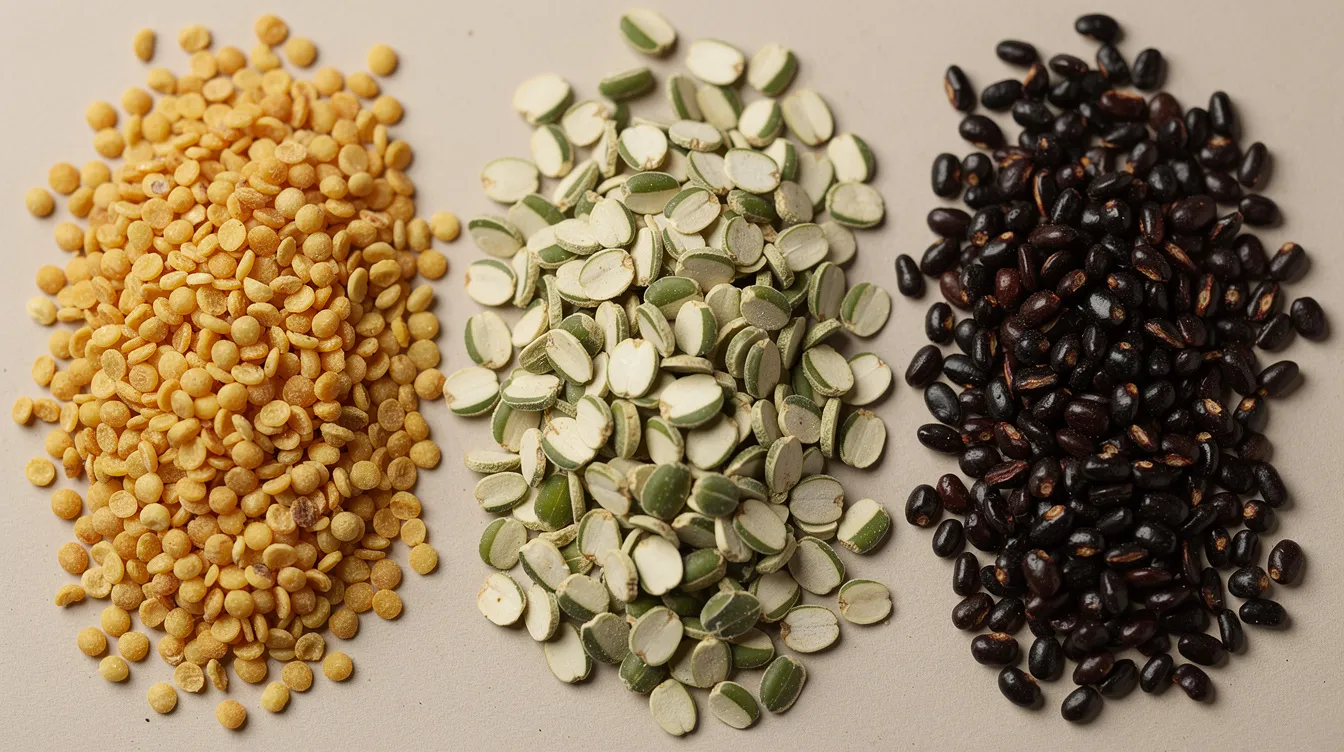
Total Project Cost and Investment Requirements
Machinery cost is only one component of total dal mill investment. Banks and investors evaluate the complete project cost including working capital.
Major cost components include:
- Land purchase or lease and site development
- Factory building and civil construction (dal mill plants require sufficient factory space for installation and material movement)
- Plant and machinery (semi-automatic or fully automatic)
- Electrical installations and cabling (three phase connection, transformer, DG set)
- Automation and control systems
- Material handling equipment
- Utilities (water, compressed air, power backup)
- Installation and commissioning
- Pre-operative expenses (interest during construction, consultancy, approvals)
- Contingency provision
- Working capital margin (raw pulse inventory, finished dal stock, packing material, receivables)
Total project cost translates into means of finance: promoter contribution (equity), term loan and working capital limits. For a comprehensive breakdown, see the detailed dal mill setup cost analysis in India.
Labour Cost and Manpower Efficiency Comparison
Labour is one of the largest controllable costs in dal processing and a primary reason investors consider automatic dal mill plants. Semi-automatic mills have higher labour dependency due to manual operations – feeding, bag shifting, stitching, spillage cleaning and machine adjustments.
For a 10–20 TPD semi-automatic plant, expect 15–25 workers per shift. A comparable fully automatic plant may operate with 8–15 workers, shifting the composition toward skilled operators and maintenance technicians rather than manual loaders.
However, in low-wage rural areas, the labour savings of full automation may be modest compared to the additional interest and depreciation cost on higher machinery investment. Local wage conditions must be factored into the DPR. Indirect factors – absenteeism risk, training requirements, safety compliance – also increase with large manual workforces and should be part of the financial assessment.
Electricity Consumption and Operating Cost per Tonne
The electric load for dal mill plants ranges from 21.75 kW to 75.75 kW for smaller to medium configurations. Larger fully automatic plants may require 120–350 kW or more. However, connected load is not the same as actual energy consumption per tonne. Fully automatic plants often achieve lower or similar kWh per tonne due to smoother operation, fewer idle periods and better motor utilisation. The pulses electricity connection must be planned for adequate three phase power supply with proper voltage stability.
Key elements of dal mill operating cost per tonne include:
- Electricity and power backup
- Labour
- Repairs and maintenance
- Consumables (emery stones, polishing agents, spares)
- Packing material
- Processing losses
- Factory overheads
- Finance cost (interest on term loan and working capital)
A semi-automatic 20 TPD plant may have lower electricity cost but higher labour and processing loss per tonne, while a fully automatic plant inverts this relationship. Stable power supply is critical – in areas with unreliable grids, DG sets add significantly to running costs. Operating cost per tonne, not just the electricity bill, is what determines financial feasibility.
Dal Recovery, Processing Efficiency and Product Quality
Dal recovery depends on raw material quality, moisture conditioning, machine design and operator skill, not solely on automation level. Dal mill plants can process pulses like moong and urad with typical recovery ranging from 68–76% depending on pulse variety and storage duration. For chana dal, total outturn recovery averages about 75%, while tur dal yields approximately 72–73% under standard conditions.
Well-designed automatic dal mill plants support more uniform conditioning, controlled feeding and better separation of husk and broken grains, which can reduce losses. Research shows that advanced process control and AI interventions can improve recovery from approximately 71.4% to 78.6% – a difference worth crores at scale.
However, not every fully automatic plant delivers higher recovery. Durability and quality of machinery, process design and after-sales technical support from the manufacturer are critical. Investors should obtain written performance guarantees on plant capacity and indicative dal recovery ranges, backed by references of existing installations.
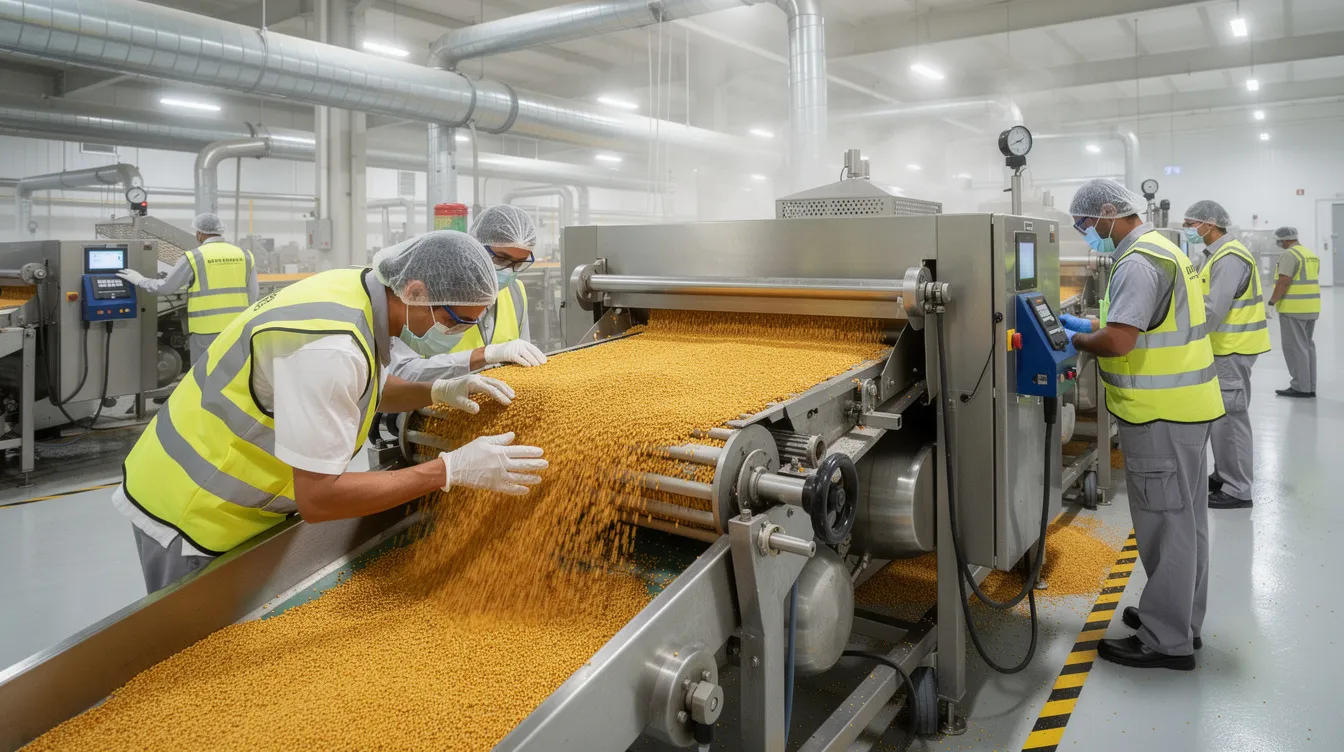
Profitability Comparison – Which Dal Mill Generates Better Returns?
Profitability comparison should use the same raw material cost, selling prices and realistic capacity utilisation for both configurations. Based on the Bharuch district study of tur dal mills, average processing cost is about ₹291.56 per quintal (variable plus fixed), with gross return around ₹5,754.50 per quintal – leaving a net margin that is highly sensitive to recovery percentage and selling price.
A fully automatic 20 TPD plant may show higher EBITDA margin per tonne due to lower labour cost and better operating efficiency, but also carries higher depreciation and interest because of the larger capital investment. Profitability is more sensitive to dal selling price, raw pulse procurement cost, dal recovery and capacity utilisation than to the automation level alone.
Use professional financial modelling and scenario analysis rather than simple per-kg margin calculations when planning a dal mill business. Common financial assessments include cash flow analysis, profitability analysis and working capital assessment – all of which should be prepared as part of a comprehensive DPR.
ROI, Payback Period, IRR and Incremental Investment Analysis
The key question is not which plant is cheaper, but whether the additional cost of a fully automatic dal mill is justified by additional cash flows.
- Return on Investment (ROI) measures annual net profit relative to total investment.
- Payback period indicates how long it takes to recover the initial capital from net cash flows.
- Internal Rate of Return (IRR) shows the annualised return considering the time value of money.
- DSCR evaluates whether net cash flow can comfortably service term loan obligations.
To compare two alternatives, calculate the incremental investment (automatic minus semi-automatic) and the incremental annual cash profit. If a fully automatic 20 TPD plant costs ₹2.50 crore more but generates ₹40–50 lakh additional annual cash flow through labour savings and better recovery, the incremental payback may be 5–6 years – acceptable for many investors.
Sensitivity analysis is essential: what happens if labour cost rises 10–15%, if dal recovery improves by 0.5–1%, or if capacity utilisation is only 50% instead of 80% in the first two years? A more capital-intensive plant must still generate sufficient net cash flow to service term loans comfortably, particularly in the first 5–7 years.
Project Report Bank specialises in conducting project feasibility studies and financial modelling for dal mill projects. Contact us for a customised automation comparison with IRR and DSCR analysis.
Which Automation Level Is Suitable for Different Investors?
Small entrepreneurs (5–10 TPD): A semi-automatic dal mill usually makes sense. Focus on chana dal, toor and one or two other pulses, with strong attention to marketing and working capital. Semi-automatic mills are suitable for small-scale production due to lower financial risk.
Medium-scale owners (10–20 TPD): Partial or full automation becomes viable if utilisation exceeds 60–70%. This scale can support contract manufacturing or regional brands where quality consistency matters.
Large integrated plants (30–50 TPD): A fully automatic, professionally managed dal processing plant is almost essential for quality, compliance and scalability. The product range includes multiple pulses type processing for wholesale, institutional and export markets.
Existing semi-automatic owners: Gradual upgrades – automated feeding, better grading, mechanised bagging – can improve efficiency without replacing the entire plant. Discuss upgrade paths with your dal mill plant manufacturer in advance.
Bank-financed investors: Consistent cash flow projections, realistic assumptions and clear technology rationale matter more to lenders than automation labels. A well-justified DPR is the foundation of any successful loan application.
Bank Loan and DPR Considerations for Dal Mill Automation
Banks evaluate dal mill projects based on project cost, promoter background, technology selection, market assessment, financial viability and collateral. A bankable DPR for semi-automatic or fully automatic dal mill plants must include realistic capacity planning, credible machinery quotations from the country of origin, justified automation scope and detailed financial projections.
Lenders specifically look for: clear description of automation level, MS motor power and phase type specifications for machinery, means of finance, working capital assessment and DSCR calculations. Suitable documentation for project financing includes investor-ready DPR and CMA data preparation.
The DPR should transparently compare the chosen automation level with at least one alternative, demonstrating that the selected configuration is commercially sensible. For professional bank finance DPR and loan proposal assistance for dal mill projects, Project Report Bank provides comprehensive support under the guidance of CA Manish Gugliya. You can also explore the dal mill project report guide for detailed planning steps.
Frequently Asked Questions
The following questions address practical concerns that entrepreneurs commonly raise when comparing fully automatic and semi-automatic dal mill plants. Answers are based on typical Indian MSME conditions.
Is it possible to start with a semi-automatic dal mill and upgrade to full automation later?
In many cases, investors can phase automation by initially installing core machines – cleaner, destoner, dehusker, grader, polisher – and later adding automated feeding, conveyors, automatic bagging and better control panels. The key is to plan the building layout, electrical infrastructure and floor space with future automation in mind, so modifications are not prohibitively expensive later. Discuss upgrade paths with your chosen supplier and capture these options in the DPR.
Which configuration is better for a job-work based dal mill business?
A job-work model involves processing third-party pulses on a per tonne or per kg rate. For smaller capacities and varied lots, a flexible semi-automatic plant is often more suitable because changeovers between pulse types are quicker and less complex. High-volume contract processors handling bulk throughput with strict quality requirements may benefit from fully automatic plants. Analyse expected job-work volume, rate per tonne and client expectations before finalising automation level.
How does seasonal availability of raw pulses affect the automation choice?
Many pulses in India have seasonal harvests, limiting annual capacity utilisation. If raw material is available only for a short window, a higher-capacity fully automatic plant can process more volume quickly – but only if the promoter can finance and store sufficient stock. Conversely, a smaller semi-automatic plant running steadily throughout the year on multiple pulses may represent a more balanced and less risky strategy, especially for a new dal mill business.
Can both configurations handle different types of pulses without major changes?
Most modern dal mill plants operate on multiple pulses including chana, toor, moong, urad, masoor and black gram, but changeovers require cleaning, screen adjustments and sometimes different settings for conditioning or grinding. Fully automatic plants may offer more controlled changeovers, but batch planning is important to utilise the automated systems efficiently. Confirm with machinery suppliers how long changeovers take and what additional attachments are required for each type of pulses.
How can Project Report Bank support my decision?
Project Report Bank, led by CA Manish Gugliya, prepares customised dal mill DPRs comparing alternative automation levels with capacity-wise financial projections, sensitivity analysis, working capital and DSCR calculations. Services include project cost estimation, machinery configuration comparison, CMA data preparation and bank loan proposal drafting. The target audience for ProjectReportBank.com includes MSME owners and project promoters in India planning new projects or expansion. Share your proposed capacity, preferred pulse types and location via WhatsApp or request callback for additional information to receive tailored professional guidance. You can also get best quote approx estimates and quote explore options through our advisory process – or quote approx comparisons for best quote approx machinery budgets before finalising with suppliers.
Conclusion – Selecting the Right Dal Mill Investment
The choice between a fully automatic and semi-automatic dal mill plant is not about which is universally better. It is about which configuration aligns with your specific capacity, investment budget, utilisation expectations, technical capability and market requirements. Semi-automatic plants remain a sound choice for 5–10 TPD ventures and budget-constrained or job-work focused businesses. Fully automatic plants tend to suit 20–50 TPD operations targeting consistent quality, brand positioning and long-term volume growth.
No investment decision of this scale should rest on generic online comparisons or isolated machine prices. A project-specific feasibility study, realistic financial projections and a professionally prepared DPR – covering project cost, means of finance, working capital, DSCR, ROI, IRR and sensitivity analysis – provide the foundation for a confident investment.
If you are planning a dal mill project at any scale, contact Project Report Bank for a customised DPR, detailed automation comparison, financial modelling and bank loan assistance. WhatsApp is the fastest way to initiate discussion. Send your enquiry today to begin your project evaluation with CA Manish Gugliya and the Project Report Bank team.