India’s flour processing industry is moving beyond commodity atta production. Rising consumer demand for multigrain, fortified, high-fibre and organic flour products has created a distinct segment where formulation expertise, quality compliance and brand positioning matter as much as milling capacity. For entrepreneurs and existing flour mill promoters evaluating this opportunity, a specialty flour manufacturing project report is the starting point for structured decision-making and project finance.
Creating a project report for a specialty flour manufacturing business requires structured analysis that goes well beyond what a conventional flour mill DPR covers. The formulation design, blending technology, regulatory requirements, packaging formats and financial modelling are fundamentally different when the product is a value-added flour rather than generic atta or maida.
This article provides a complete roadmap for planning a specialty flour manufacturing plant in India. It covers product categories, manufacturing process, machinery and raw materials, industry trends, plant setup, project cost, feasibility study, investment opportunities cost and revenue, business plan preparation and bankable DPR structure. A comprehensive project report serves as a blueprint for business viability, and this guide explains what that blueprint should contain.
Key Takeaways
- Specialty flour manufacturing covers multigrain atta, fortified wheat flour, high-fibre atta, organic atta and customised blended flour products, each requiring distinct formulations, raw materials, regulatory compliance and plant configurations.
- A detailed project report for specialty flour must address formulation design, blending technology, food safety standards, machinery and technology requirements, project cost, means of finance, financial projections and sensitivity analysis, unlike a generic flour mill project report.
- Plant models range from small blending-only units (5–10 TPD) to integrated milling-and-blending plants (50–100+ TPD), and the choice determines capital costs, operational complexity, risk factors and expected returns.
- Project Report Bank, led by CA Manish Gugliya, FCA, DISA (ICAI), prepares customised specialty flour manufacturing project reports, CMA Data, financial projections and feasibility studies for bank loans and investors.
- This guide is designed for Indian entrepreneurs, MSME owners and existing flour mill promoters evaluating specialty flour manufacturing plant projects.
Introduction to Specialty Flour Manufacturing Project Reports
Wheat flour is produced by grinding wheat grains through a controlled milling process. A conventional flour mill project report focuses primarily on milling capacity, extraction rates and basic product economics for atta, maida or suji. A specialty flour manufacturing project report, by contrast, addresses the additional complexity of value-added products – multigrain atta, fortified wheat flour, high-fibre atta, organic atta and blended functional flours – where formulation design, regulatory compliance and brand positioning are central to the business proposition.
A DPR for specialty flour covers industry trends, a comprehensive market overview, manufacturing plant design, machinery raw materials, plant layout, manufacturing process, food safety and quality systems, project cost, means of finance, financial modelling and risk analysis. Detailed project reports assess raw material and utility requirements specific to the chosen product category, and wheat flour project reports cover machinery and technology requirements tailored to the selected configuration.
Compared with a standard flour mill DPR, a specialty flour DPR pays more attention to formulation and blending technology, regulatory compliance such as FSSAI fortification norms and organic certification, packaging requirements and market segmentation. The rest of this article acts as a practical guide and a complete roadmap for the detailed project report structure that an entrepreneur should expect before committing capital.
Specialty flour manufacturing sits within the broader wheat flour, atta, maida and suji processing projects cluster, but it represents a differentiated, higher-margin segment requiring more specialised knowledge and planning.
Industry Overview and Trends in Specialty Flour Manufacturing
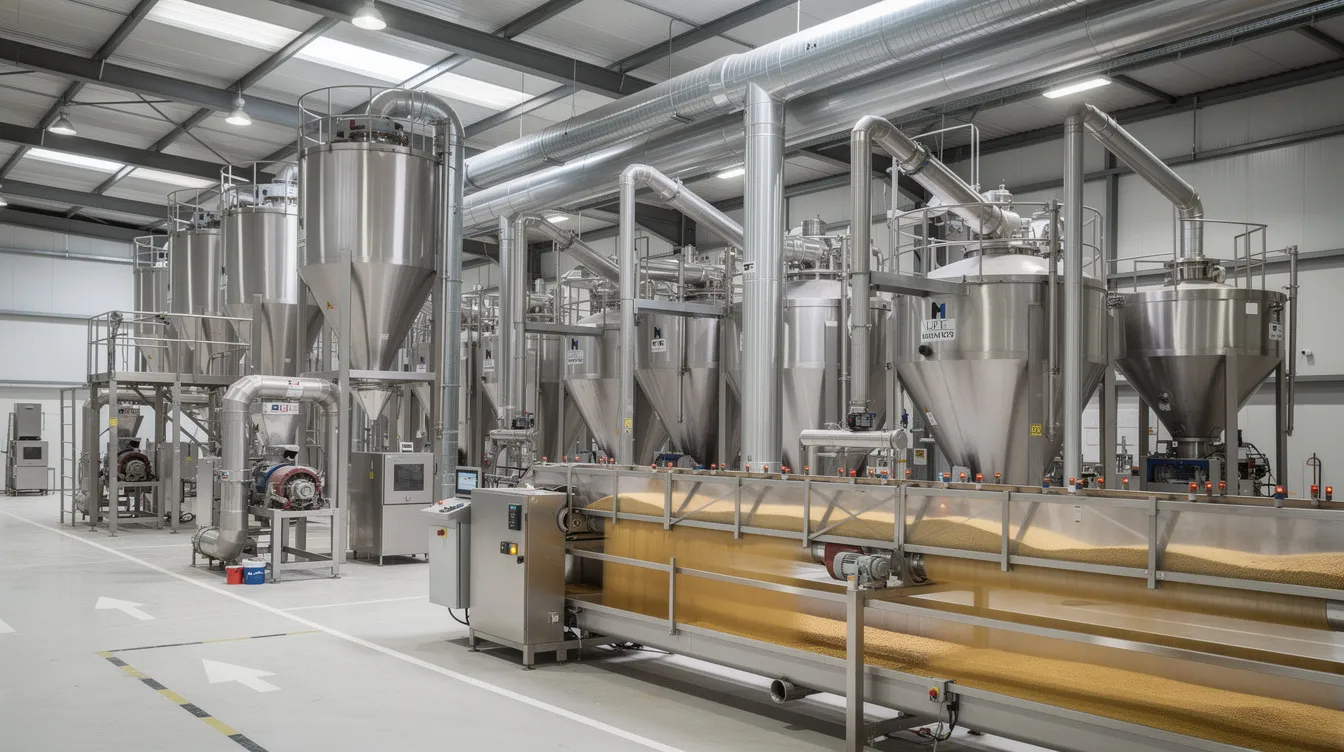
India’s flour manufacturing industry has evolved significantly from basic atta and maida production. Wheat flour is the most produced flour globally and remains a leading source of vegetable protein in human food. In India, the packaged atta market reached approximately ₹84,000 million in 2024 and is projected to grow to ₹255.7 billion by 2033 at a CAGR of around 13%, according to IMARC Group research. The high-protein atta segment alone is valued at approximately USD 924.6 million in 2025.
Market demand for specialty flours includes health-conscious consumers and commercial bakeries driving consistent demand for functional and nutritional flour products. The global convenience food market reached USD 511.1 billion in 2024, and the processed food sector in India accounted for 23.4% of agri-exports in 2023-24, reflecting the scale of opportunity in value-added food processing.
Current market trends influencing specialty flour projects include:
- Rising consumer preference for multigrain, high-fibre and organic atta in urban and semi-urban markets
- Government policy push for fortified wheat flour through PDS, ICDS and mid-day meal programmes
- Growing B2B demand from bakery, snack, ready-to-eat and HoReCa segments for custom flour blends and baked goods
- Branded packaged atta currently represents only about 5% of total atta consumption, indicating significant room for organised players
- International innovation, such as Bay State Milling launching a functional flour with triple the fibre in March 2023, signalling global interest in whole grain and functional flour products
These industry trends influence DPR parameters directly – preferred capacity ranges, automation levels, hygiene and food safety standards, packaging formats and distribution models must all align with the targeted market segment. Specialty flour processing is a higher-margin but more knowledge-intensive business compared with commodity wheat flour production.
Types of Specialty & Value-Added Flour Products
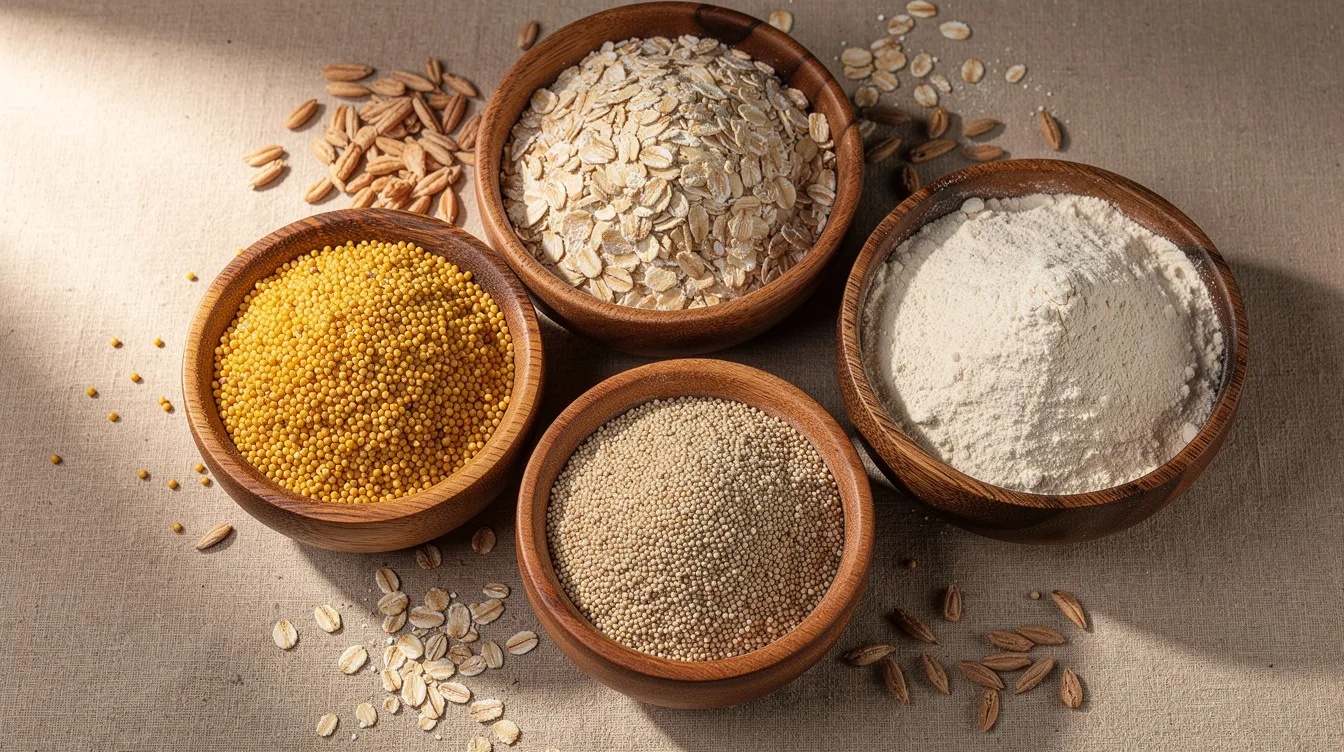
Specialty flour refers to flour products that go beyond standard whole wheat atta or refined maida by incorporating specific nutritional, functional or certification-based attributes. Wheat flour contains about 15.4 grams of protein per 100 grams, but specialty formulations can significantly enhance nutritional profiles through ingredient selection and blending.
A comprehensive flour manufacturing project report should clearly identify which specialty flour segment the unit will focus on, as this drives the entire business plan, manufacturing process design and regulatory framework. Customer segments for specialty flour products include retail consumers, bakeries, and food manufacturers.
| Product Category | Key Ingredients | Regulatory Focus | Pricing Premium | Target Customers | Key Challenges |
|---|---|---|---|---|---|
| Multigrain Atta | Wheat + millets, oats, pulses, seeds | Labelling of grain percentages, nutrition claims | 40–80% over standard atta | Health-conscious retail, modern trade | Consistent formulation, sourcing multiple grains |
| Fortified Wheat Flour | Wheat + micronutrient premix (Iron, Folic Acid, B12) | FSSAI fortification standards, +F logo | Minimal (₹0.07–0.08/kg additive cost) | Institutional, PDS, retail | Uniform premix dosing, QC testing |
| High-Fibre Atta | Wheat + bran, oats, psyllium | Permitted nutritional claims | 20–50% premium | Diet-conscious consumers, bakeries | Texture, taste acceptance, shelf life |
| Organic Atta | Certified organic wheat and grains | Third-party organic certification, traceability | 20–30% over conventional | Premium retail, e-commerce, exports | Supply-chain segregation, certification cost |
| Custom Blended Flours | Base flour + functional ingredients per client spec | Labelling, allergen declarations | Varies (B2B negotiated) | Bakeries, food manufacturers, private label | Batch flexibility, quality consistency |
Some products depend largely on blending and premix dosing of already milled flour, while others require integrated grain milling plus downstream flour processing and sieving. The DPR must avoid mixing incompatible requirements in one plant layout – for example, organic and non-organic production areas need proper segregation.
For product-specific DPR details, refer to the Multigrain Atta Manufacturing Plant Project Report & DPR, the Fortified Wheat Flour Manufacturing Plant Project Report & DPR, the High-Fibre Atta Manufacturing Plant Project Report & DPR and the Organic Atta Manufacturing Plant Project Report & DPR.
Scope of a Specialty Flour Manufacturing Plant
A specialty flour manufacturing plant in India differs from a conventional roller flour mill producing only atta, maida and suji. The scope extends to formulation, blending, quality testing and often multiple product lines with different packaging requirements.
Plant configurations typically fall into three categories:
- Integrated milling plus blending: A full wheat flour mill with roller mills, plansifters, cleaning systems, plus dedicated blending and packaging lines for specialty products
- Blending-only processing plant: A unit that purchases refined or whole wheat flour and other flour ingredients, then blends, tests and packages specialty products
- Expansion of an existing flour mill: Adding dedicated value-added flour manufacturing lines, blending equipment and packaging to an operational mill
Expected capacity bands range from small 5–10 TPD blending units suitable for first-time entrepreneurs to 50–100 TPD integrated plants targeting regional markets. Plant capacity selection should be based on validated demand, investment appetite and the promoter’s operational experience.
The DPR should define product mix, installed capacity, achievable capacity utilisation by year and how the plant layout supports flexible flour processing and packaging operations. Plant scope in the detailed project report should also include warehousing, quality lab, utilities, material handling, staff facilities and compliance areas. For a detailed comparison of blending-only versus integrated configurations, see the Specialty Flour Blending Plant Project Report & DPR.
Manufacturing Process Flow for Specialty Flour
The manufacturing process for specialty flour includes cleaning, milling, and packaging, but the specific workflow depends on the plant configuration. The milling process involves cleaning, conditioning, and milling as its core unit operations involved in converting wheat grains into flour. The process ensures product safety and consistency when properly controlled.
Integrated specialty flour mill process:
- Grain receiving and pre-cleaning (removal of foreign matter, stones, dust)
- Conditioning / tempering (moisture adjustment for optimal milling)
- Milling through roller mills and plansifters (extraction rate typically 72–75%)
- Sifting and grading of various unit operations
- Blending with functional ingredients or premixes (multigrain, fortification, fibre enrichment)
- Metal detection and dust control
- Quality testing (physical, chemical, microbiological)
- Packaging and warehousing
Blending-only specialty flour unit process:
- Receipt and inspection of purchased base flour
- Sieving if required
- Batch weighing and formulation of specialty ingredients
- Dry mixing in ribbon or spiral blenders
- Metal detection
- Quality testing
- Packaging in consumer or bulk formats
Quality control in flour manufacturing involves allergen management and compliance with food safety standards at critical control points. Hygienic zoning in flour manufacturing prevents cross-contamination during production, which is especially important for organic and allergen-sensitive lines. Accurate premix dosing is essential for fortified products to meet FSSAI standards.
The project report should include a clear manufacturing process flow chart and mass balance, with throughput and yield assumptions aligned with chosen machinery specifications. For the detailed production-process guide, refer to the Specialty Flour Manufacturing Process & Flow Chart. You can also review the broader atta manufacturing process and flour mill flow chart guide for conventional wheat flour production context.
Machinery, Raw Materials and Technology Selection
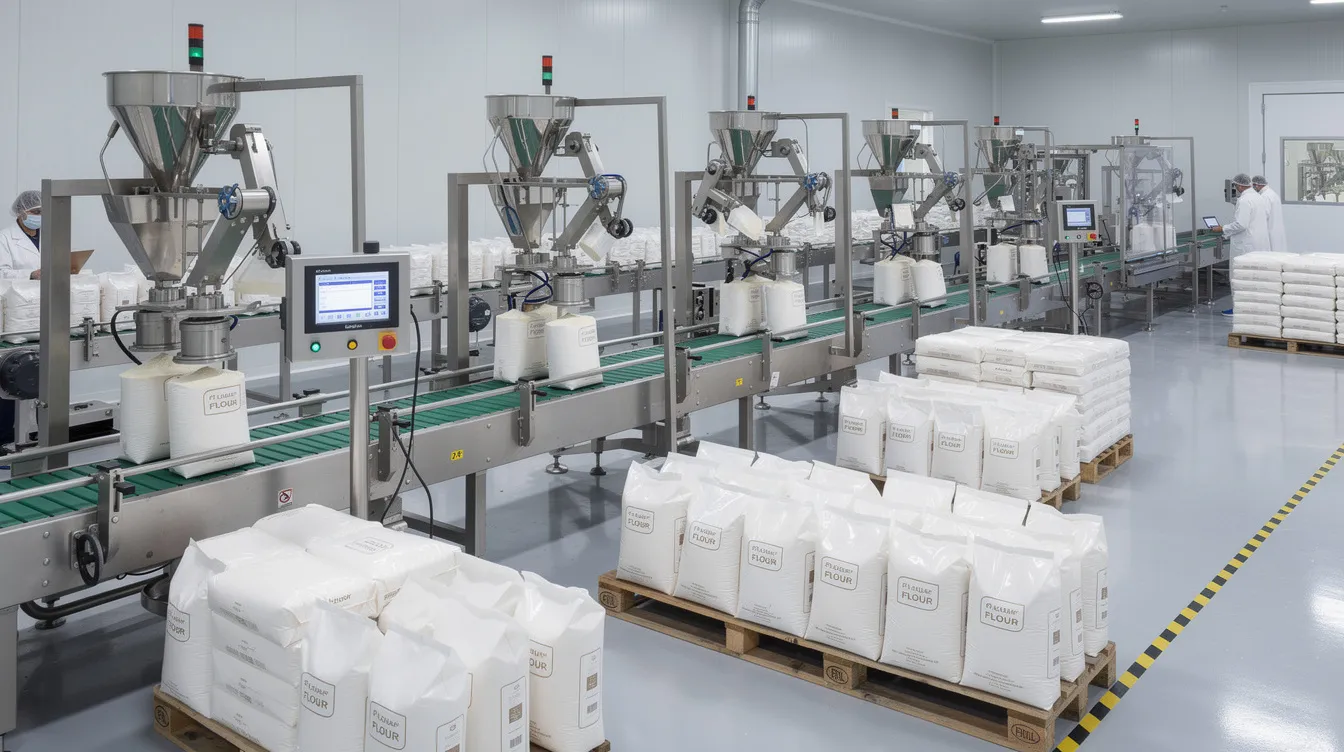
Wheat flour processing plants require grain cleaners and roller mills as foundational equipment. Wheat flour production requires grain cleaners and roller mills regardless of whether the unit is integrated or blending-based, though the extent of milling machinery varies significantly by configuration. Modern plants use automation and quality control systems to maintain consistency across batches.
Main machinery categories for specialty flour plants include:
- Grain cleaners, destoners and dampeners (integrated mills)
- Roller mills and plansifters (integrated mills)
- Pneumatic conveying systems
- Automatic batching and blending units, ribbon or spiral blenders
- Premix feeders for fortification dosing
- Metal detectors and dust control systems
- Packing machines (sachet, pouch, bulk bag)
- Quality control laboratory equipment
For a 50 TPD integrated roller mill with blending and packing, machinery cost typically ranges from ₹90 lakh to ₹1.8 crore. For a 100 TPD plant with good automation, machinery cost may be ₹2.0–3.5 crore. A blending-only plant requires significantly fewer machines, primarily mixing, batching, detection and packaging equipment.
Key raw materials include wheat grain of appropriate wheat quality, other flour and cereals such as ragi, jowar and oats for multigrain atta, micronutrient premixes for fortified wheat flour, high-fibre ingredients like bran, oats and psyllium, and certified organic grains for organic atta. Raw material procurement strategies should consider quality assurance and sourcing proximity to reduce transportation requirements and cost.
The detailed project report should summarise technology choices, shortlist reputable machinery suppliers and outline expected power consumption (typically 36–38 kWh per metric tonne for efficient equipment, rising to 45–50 kWh/MT for budget lines), automation and control systems. DPR machinery capacity must align with the business plan’s capacity utilisation schedule. For comprehensive machinery analysis, see Specialty Flour Plant Machinery, Equipment & Cost.
Plant Setup, Land and Building Requirements
Plant capacity and configuration determine land requirements, covered area, building height, structural loading design and internal material flow. A wheat flour processing plant typically requires 2000 square meters of land for a mid-capacity integrated unit, though smaller blending-only plants may need less than half an acre while larger integrated facilities may require 2–5 acres.
Typical zones in a specialty flour manufacturing plant include:
- Raw grain or flour storage area
- Cleaning and milling section (integrated plants)
- Blending and packing hall
- Finished goods warehouse
- Quality control lab
- Staff amenities and utility blocks (power, water, compressed air)
Infrastructure requirements include approach roads, parking, loading and unloading bays, fire-fighting systems, drainage and compliance with local building by-laws. Building specifications must account for food-grade flooring, adequate roof height, dust control, structural loading for heavy machinery and ventilation for hygienic food processing. The report should state whether land is owned, to be purchased or leased, as this affects project cost and funding structure.
For detailed setup cost analysis, refer to Specialty Flour Plant Setup Cost in India.
Project Cost Estimates and Investment Opportunities
Capital expenditure includes costs for land, building, machinery, and working capital. Machinery costs account for the largest portion of capital expenditure in a specialty flour manufacturing plant, followed by civil construction and utilities. Wheat flour processing plant reports include capital investment analysis as a core component.
Major CAPEX heads in a specialty flour DPR include:
| Cost Head | Description |
|---|---|
| Land and site development | Purchase or lease, levelling, boundary, approach road |
| Civil construction | Factory building, warehouse, lab, office, staff rooms |
| Plant and machinery | Milling, blending, packing, detection, dust control |
| Electrical and automation | Power supply, panels, control systems, wiring |
| Utilities | Water, compressed air, steam (if needed), DG set |
| Pre-operative expenses | Professional fees, trial runs, travel, interest during construction |
| Contingency | Typically 5–10% of fixed investment |
| Working capital margin | Promoter’s contribution to working capital |
Total capital investment for a 25 TPD flour mill is approximately Rs. 6.45 crore. For a 50 TPD integrated specialty flour plant, the total cost including working capital may range from ₹7–10 crore. A blending-only plant can be set up at a fraction of this, often under ₹1–2 crore for modest capacities.
Investment opportunities cost and revenue projections must be evaluated over a multi-year horizon using realistic assumptions. Machinery costs are the largest portion of capital expenditure, so quotation-based estimates are important. Project Report Bank can customise DPRs for varying budget levels based on promoter objectives and bank requirements. For detailed project cost structuring, see Specialty Flour Plant Project Cost & Means of Finance.
Operating Costs, Working Capital and Revenue Model
Flour manufacturing and flour processing are high-throughput, relatively low-margin businesses where cost control and capacity utilisation drive profitability. The operating cost for a wheat flour plant includes raw materials and utilities as the dominant cost heads. Operating costs are projected to increase significantly by year five due to scale-up, inflation and maintenance requirements.
Major operating expenses include:
- Raw materials (wheat, specialty grains, premixes) – typically 65–75% of total cost
- Packaging materials (higher for premium consumer packs)
- Power and fuel (at ₹7/kWh, electricity cost can run ₹280 per tonne of flour)
- Direct and indirect costs of labour
- Repairs and maintenance
- Quality control and testing
- Freight, distribution and transportation networks
- Sales, marketing and administrative overheads
Working capital in a specialty flour business is locked in raw material stocks, finished goods inventory, trade receivables and minimum cash balances. The working capital cycle typically runs 95–125 days. This must be quantified in the DPR’s business plan and CMA Data.
Revenue modelling should reflect product-wise selling prices, expected sales mix, price trends and projected annual turnover at various capacity utilisation levels. Multigrain atta retail pricing can range from ₹40/kg for budget variants to ₹120+/kg for premium products. The DPR should incorporate contribution analysis (selling price minus variable costs), break-even sales, DSCR analysis and sensitivity to changes in wheat prices or sales realisations. Processing cost per metric tonne falls from approximately ₹380–420 at 50 TPD to ₹260–300 at 100 TPD, demonstrating the importance of scale. For detailed financial analysis, see Specialty Flour Plant Financial Projections, Working Capital & DSCR.
Financial Projections and Feasibility Study
Financial projections in a specialty flour DPR test commercial feasibility, measure profitability and evaluate repayment capacity before approaching banks or investors. Financial projections should include profit and loss statements, cash flow statements, and balance sheets projected over 5–10 years. Financial projections include income and expenditure estimates based on capacity utilisation, product mix and pricing mechanism assumptions.
Key financial statements and metrics in the DPR:
- Projected profit and loss account
- Cash flow statement
- Projected balance sheet
- Funds flow statement
- Ratio analysis including DSCR, ROI, IRR, net present value and payback period
- Expenditure projections by major cost head
The expected rate of return for a flour mill is approximately 25%, and the break-even point for the flour mill is estimated at 50% capacity utilisation, though these figures vary with product mix, pricing, fixed costs and variable costs. Sensitivity analysis assesses project viability under changing market conditions – for example, the impact of a 10% increase in wheat cost or a 15% shortfall in capacity utilisation on DSCR and profitability.
Project feasibility assessments include technical viability, financial projections, and market analysis covering market research, competitive landscape analysis including identifying major competitors and pricing strategies, and demand validation. For the complete feasibility framework, refer to Specialty Flour Plant Feasibility Study & Project Viability.
Risk Factors and Mitigation Strategies
Every specialty flour manufacturing project carries risk factors that a professionally prepared project report must identify and address. The key success of a project depends on how well these risks are anticipated.
Major risk categories include:
- Raw material price volatility – wheat and specialty grain prices can fluctuate significantly, and supply chain disruptions can affect sourcing
- Competition from established brands with deeper distribution networks and pricing power
- Demand uncertainty – premium positioning requires consumer trust, credible claims, taste and packaging
- Regulatory changes – FSSAI fortification norms, organic certification rules, labelling requirements and GST treatment (branded packaged atta carries 5% GST)
- Quality failures – inconsistent formulations, contamination, adulteration or moisture problems
- Operational risks – machinery breakdown, underutilisation of installed plant capacity, energy cost increases
Mitigation strategies should include long-term sourcing contracts, quality management systems (GMP, HACCP), preventive maintenance schedules, diversified customer base, conservative financial projections with adequate working capital buffers, and properly designed project funding structures with realistic term loan tenors.
The importance of reviewing risks jointly with technical consultants, marketing advisors and financial professionals before final investment closure cannot be overstated.
Business Plan Structure for a Specialty Flour Manufacturing Unit
The business plan that accompanies a specialty flour detailed project report should convert technical and financial data into a coherent narrative. The competitive landscape analysis includes identifying major competitors and pricing strategies in the target geography.
Key components include:
- Promoter background and relevant experience (grain trading, existing flour mill, FMCG distribution)
- Market study covering geography, competition, customer segments and demand forecasting
- Chosen specialty flour segments and capacity justification
- Manufacturing process and technology selection
- Marketing and distribution strategy (retail, online, institutional, direct supply)
- Pricing mechanism and revenue projections with profit projections
- Human resource requirements and management structure
- Project timelines and implementation schedules
Project reports should establish measurable performance indicators for operational success – capacity utilisation targets, quality rejection rates, sales volume milestones and working capital cycle benchmarks.
A strong business plan shows how the unit intends to move up the value chain, for example from bulk B2B flour processing to branded consumer packs or from generic atta to fortified and multigrain lines. For promoters with an existing conventional operation, the wheat flour mill project report provides useful baseline context.
Regulatory, Quality and Certification Requirements
Regulatory compliance includes obtaining licenses from food safety authorities as a mandatory first step. Key regulatory procedures for a specialty flour manufacturing plant in India include:
- FSSAI licence (mandatory for all food businesses)
- Business and factory registration under applicable state laws
- Pollution control consents where applicable
- Labour registrations (PF, ESI, minimum wages)
- Local municipal permissions
- Key certifications required for specific product lines
Special compliance requirements apply to:
- Fortified wheat flour: FSSAI fortification standards mandate Iron (20 mg/kg), Folic Acid (1,300 µg/kg) and Vitamin B12 (10 µg/kg), with +F logo usage on packaging. The incremental cost is only about ₹0.07–0.08 per kg.
- Organic atta: Third-party organic certification through accredited bodies, supply-chain traceability and complete segregation of organic and non-organic materials in the manufacturing plant
- Product labelling: Ingredient list, nutrition facts, allergen declaration and key certifications as per FSSAI standards
Quality systems like GMP and basic HACCP principles, while not always legally mandatory for small MSMEs, are highly advisable and often expected by institutional buyers and modern retail chains. The DPR should suggest a basic quality control lab setup for physical, chemical and microbiological testing. Promoters should cross-check latest central and state-level regulations before implementation, as rules may change.
Bank Finance, CMA Data and Project Appraisal
Indian banks appraise term loan proposals for manufacturing plants by evaluating project cost, means of finance, projected profitability, DSCR, break-even analysis and risk commentary. A bankable DPR must present these elements in the format banks expect, supported by defensible assumptions.
Banks and financial institutions typically evaluate:
- Project cost and means of finance (term loan, promoter contribution, project funding structure)
- Promoter experience and margin money contribution
- Collateral security
- Repayment capacity through DSCR analysis (typically requiring DSCR of 1.25 or above)
- Quality of assumptions in the manufacturing project report
CMA Data (Credit Monitoring Arrangement) is required for working capital limits and includes projected balance sheets, fund flow statements, working capital assessments and financial ratios. For a clear understanding of CMA Data requirements, refer to the CMA Data preparation guide.
Project Report Bank, led by CA Manish Gugliya, prepares DPRs and CMA Data tailored to specific bank formats and can assist with loan-structuring analysis for specialty flour manufacturing units. For professional support with bank finance DPR and loan proposal assistance, promoters can connect through the website.
Role of Chartered Accountant-Led Advisory in DPR Preparation
Having a practising Chartered Accountant with manufacturing-project experience prepare or review the specialty flour DPR improves financial credibility and risk assessment. CA Manish Gugliya’s role includes:
- Validating capital costs and operating cost assumptions against industry benchmarks
- Computing accurate DSCR, IRR, net present value and ROI based on realistic capacity utilisation
- Structuring debt-equity mix and assessing working capital adequacy
- Incorporating tax considerations (GST on inputs and outputs, depreciation, interest deductions) and their impact on cash flows
- Ensuring financial projections align with banking norms and utility requirements
Project Report Bank does not sell generic templates. Each specialty flour manufacturing project report and financial model is prepared based on project-specific data, promoter discussions, machinery quotations and market assumptions. For project feasibility study services, serious promoters should engage professional advisory before committing to large machinery orders or loan applications.
Pre-Investment Checklist for Specialty Flour Projects
Before finalising investment in a specialty flour manufacturing plant, promoters should verify the following:
- Confirm demand and competition in target geography through market research
- Freeze product mix – multigrain, fortified, organic, high-fibre or blended
- Obtain benchmark machinery quotations from reputable machinery suppliers
- Estimate land, building and infrastructure costs for the chosen location
- Validate raw material requirements, availability and sourcing arrangements
- Complete preliminary feasibility study covering technical, commercial and financial viability
- Discuss project funding options with bankers and understand promoter contribution expectations
- Test sample formulations through a pilot or toll-milling facility
- Understand regulatory obligations – FSSAI, fortification norms, organic certification
- Plan for skilled technical manpower for flour processing and quality control
- Review total cost including pre-operative expenses, contingency and working capital margin
The DPR and business plan should be finalised only after this checklist is substantially addressed. Project Report Bank can use this as a starting framework in consultations and refine it for each project. For capacity and product-mix planning, see Specialty Flour Plant Capacity Planning & Product Mix.

Frequently Asked Questions
What capacity is suitable for a first-time specialty flour entrepreneur in India?
For a blending-only specialty flour unit, 5–10 TPD is a practical starting point with lower capital investments. For an integrated milling-and-blending plant, 25–50 TPD is a reasonable first capacity, balancing investment with achievable scale economies. The choice depends on available capital, target market size and the promoter’s operational experience. There are about 1,300–1,400 medium-to-large flour mills in India, most operating at only 55–60% capacity, so demand validation is essential before capacity decisions.
Can a small flour mill convert to specialty flour processing without large new investment?
Yes, many existing mills can add a blending line, premix feeder and upgraded packaging without rebuilding the entire facility. However, if the target product requires organic certification or fortification compliance, additional investment in segregation, quality lab and testing may be needed. The scope of conversion depends on the existing infrastructure and the target product category.
How long does it typically take to prepare a customised DPR and CMA Data for a specialty flour project?
Typically 2–4 weeks, depending on data gathering, machinery specifications, market survey completeness and the complexity of financial modelling. Projects with multiple product lines, organic certification requirements or larger capacities may take longer. Ratings yet to be assigned by banks can also influence documentation requirements.
What financial ratios do banks focus on for specialty flour manufacturing plants?
Banks primarily examine DSCR (generally expecting 1.25 or above), projected ROI and IRR, payback period (typically under 5–7 years), debt-equity ratio (often 70:30) and working capital cycle adequacy. The financial analysis must demonstrate that projected cash flows comfortably cover term loan repayment and interest obligations under realistic – not optimistic – assumptions.
Is blending-only specialty flour processing accepted by banks as a manufacturing activity?
Yes, if the process involves genuine value addition through formulation, blending, quality testing, packaging and regulatory compliance. Banks may treat the purchase of base flour followed by blending, branding and packaging as manufacturing if there is meaningful transformation and the DPR clearly demonstrates the value-addition process, project economics and repayment capacity.
For project-specific questions on specialty flour manufacturing DPR, feasibility study, CMA Data or bank finance assistance, reach Project Report Bank directly through WhatsApp via the website contact page.
CA Manish Gugliya FCA, DISA (ICAI) Practising Chartered Accountant since 2006, with more than 20 years of professional experience in detailed project reports, CMA Data, financial projections, project feasibility studies, MSME advisory and bank finance assistance.