Key Takeaways
- A specialty flour blending plant purchases pre-milled wheat flour, millet flours, pulse flours, bran and premixes, then blends them into value-added products like multigrain atta, high-fibre atta, fortified flour and organic blends – avoiding the heavy investment of a full flour mill plant.
- Typical total cost for a small 5 TPD blending unit ranges from approximately ₹50–80 lakh, while a medium 15–20 TPD automatic plant may require ₹2–3 crore, depending on location, automation and building ownership.
- A well-prepared specialty flour blending plant project report helps promoters estimate realistic project cost, assess profitability, plan working capital and present a bankable proposal to lenders.
- Specialty flours are increasingly popular due to health-conscious consumer trends, urbanisation and growth in bakery, institutional and private-label demand across India.
- Project Report Bank, led by CA Manish Gugliya (FCA, DISA, ICAI), prepares customised DPRs, financial projections, CMA Data and bank finance proposals for such projects across India.
Specialty Flour Blending Plant Project Report – Introduction
A specialty flour blending plant is a food processing facility that receives pre-milled flours – wheat flour, ragi, jowar, bajra, oats, pulse flours and similar ingredients – and blends them in controlled proportions to produce value-added flour products. Unlike a conventional flour mill that involves grinding raw grains through roller mills or chakki stones, a blending plant focuses on recipe-based mixing, quality control and packing.
The business opportunity is driven by India’s changing food consumption patterns. Urbanisation is driving demand for wheat flour in baked goods, snacks, noodles and bread, while health-aware consumers increasingly seek multigrain, high-fibre and fortified options. The processed food sector in India accounted for 23.4% of agri-exports in 2023-24, reflecting the country’s growing strength in value-added food manufacturing.
Establishing a commercially viable blending unit requires more than an idea about healthy flour. It requires a detailed understanding of machinery costs, raw materials, manufacturing process, capacity planning, working capital and financial analysis. A comprehensive project report outlines technical feasibility and financial viability – helping promoters make informed investment decisions and present structured proposals to banks.
This article, written from my professional experience as CA Manish Gugliya at Project Report Bank, covers the practical aspects of planning, costing and financing a specialty flour blending plant in India.
What Is a Specialty Flour Blending Plant?
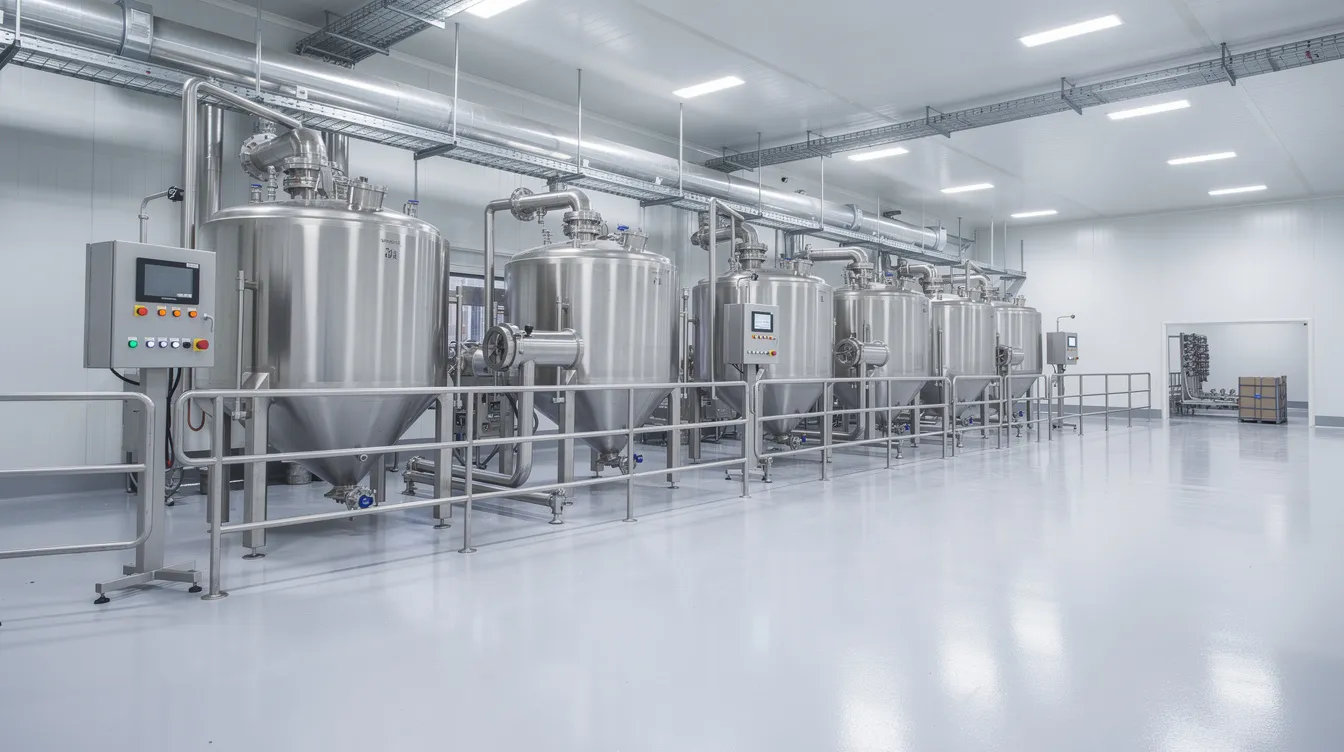
In simple terms, a specialty flour blending plant weighs various flours and ingredients according to a specific recipe, blends them uniformly in a ribbon mixer or similar machine, passes the blend through metal detection and sieving, and then packs the finished product into consumer or bulk bags. Milling machines are essential for crushing grains into flour – but in this business model, that milling step is handled by the supplier, not the blending plant.
There are three common approaches:
| Model | Capital Cost Level | Key Machinery | Complexity | Manpower Skill | Product Flexibility | Operating Cost |
|---|---|---|---|---|---|---|
| Standalone blending & packing plant | Low to Medium | Ribbon blender, sifter, packing machine, metal detector | Low | Medium | High | Low |
| Integrated flour mill + blending section | High | Roller mills, cleaners, sifters, blenders, packers | High | High | Medium | High |
| Add-on blending line in existing mill | Medium | Blender, dosing, packing line | Medium | Medium | Medium–High | Medium |
For many small and medium entrepreneurs, the standalone model is the most practical starting point. It avoids the heavy capital investment of a roller flour mill, which requires grain cleaning machines, conditioning equipment, roller stands, purifiers and extensive sifting systems. For comparison, a wheat flour processing plant requires grain cleaning machines and a full milling line – details covered in our Atta Chakki Plant Project Report & DPR and Roller Flour Mill Project Report & DPR.
Types of Specialty Flour Products That Can Be Manufactured
The strength of a blending business lies in its product portfolio. Different target customers – retail consumers, bakeries, institutional kitchens – require different blends. This section outlines the main product categories. Globally, interest in functional and specialty flours is rising; for instance, Bay State Milling launched a functional flour with triple the fibre in March 2023, reflecting the broader industry direction.
Multigrain Atta Blends
These combine wheat flour with flours like ragi, jowar, bajra, maize, oats and pulse flours. Typical retail SKUs are 5 kg and 10 kg packs, while institutional supply moves in 25 kg bags. Formulation must balance taste, colour and dough-handling properties while managing raw material cost per kg. Readers interested in a dedicated multigrain project may refer to our Multigrain Atta Manufacturing Plant Project Report & DPR.
High-Fibre Atta Blends
These blends incorporate bran, husk or other permitted fibre ingredients into wheat flour. The main buyers are urban, health-conscious consumers and select institutional accounts. Recipe design must account for texture, water absorption and shelf-life. Labelling must not make medicinal or disease claims. Further details are available in our High-Fibre Atta Manufacturing Plant Project Report & DPR.
Fortified Wheat Flour
Micronutrient-fortified flour is produced by adding approved premixes containing iron, folic acid and vitamin B12, as specified under FSSAI’s Food Fortification Regulations. The incremental cost of fortification premixes is approximately 7–8 paise per kg. Accurate dosing equipment and batch records are essential. See our Fortified Wheat Flour Manufacturing Plant Project Report & DPR for deeper coverage.
Organic Specialty Flour
Organic blends require ingredients certified under recognised standards (e.g., NPOP), with dedicated storage, prevention of mixing with conventional inputs and full traceability. Premium pricing potential is significant – often 20–40% above conventional blends – though the market is comparatively small. Our Organic Atta Manufacturing Plant Project Report & DPR covers sourcing, certification and economics in detail.
High-Protein and Functional Flour Blends
These include pulse flours, soya-based ingredients and seeds to achieve higher protein or specific functional properties. Promoters must manage allergen risks carefully and invest in sensory trials. Starting with one or two well-differentiated SKUs is more practical than launching a wide range immediately.
Bakery and Institutional Flour Blends
B2B blends for bakeries, biscuit manufacturers, hotels and QSR chains are supplied in 25–50 kg bags. These customers demand consistent protein, gluten and absorption profiles. Margins per kg may be lower than retail, but volumes can be substantial. Credit periods tend to be longer, which impacts working capital.
Specialty Flour Blending Plant Market Opportunities in India
India’s packaged atta market was valued at approximately ₹84 billion in 2024, with projections suggesting growth to roughly ₹255.7 billion by 2033 at a CAGR of about 13.16%. Branded packaged atta still accounts for only about 5% of the total atta market, leaving substantial room for new entrants. The global convenience food market reached USD 511.1 billion in 2024, underlining worldwide demand for processed food products.
Market analysis should assess customer segments and competitor products carefully. Demand drivers include health awareness, dual-income households, modern retail expansion and increased experimentation with millets. B2B demand from bakeries, cloud kitchens, HORECA and snack manufacturers adds another layer of opportunity.
Practical market validation is essential: meet distributors, run test batches, collect consumer feedback and assess achievable sales volume before finalising plant capacity. For certain products, nearby export markets such as the Middle East, Nepal and Bangladesh may also be explored, subject to compliance and logistics.
Raw Materials Required for Specialty Flour Blending
Raw materials determine both product quality and cost per kg. Supplier selection and quality specifications are critical inputs in any specialty flour blending plant project report. Key ingredients include:
- Wheat flour and whole wheat atta
- Ragi, jowar, bajra and maize flour
- Oats and barley flour
- Besan and pulse flours
- Bran and permitted fibre ingredients
- Approved micronutrient premixes
- Storage silos are needed for secure grain and flour storage
Quality checks at inward receipt should cover moisture percentage (FSSAI standards typically require below 14% for atta), granulation, colour, odour and absence of insects. Allergen management – particularly for soya, certain pulses or nuts – requires separate handling and clear labelling. Batch traceability from supplier lot number to finished-product batch code is a basic food safety practice.
Illustrative Formulation – 100 kg Multigrain Atta Batch (for illustration only, not a recommended or FSSAI-approved recipe)
| Ingredient | % by Weight | Kg | Indicative Cost/kg (₹) | Cost (₹) |
|---|---|---|---|---|
| Wheat flour (standard atta) | 60% | 60 | 25 | 1,500 |
| Ragi flour | 10% | 10 | 40 | 400 |
| Jowar flour | 5% | 5 | 35 | 175 |
| Bajra flour | 5% | 5 | 35 | 175 |
| Oats flour | 10% | 10 | 45 | 450 |
| Wheat bran | 5% | 5 | 12 | 60 |
| Besan (pulse flour) | 5% | 5 | 50 | 250 |
| Total | 100% | 100 | – | ₹3,010 |
Changing the recipe – say, increasing costly millets or imported oats – directly changes raw material cost per kg and therefore the required selling price and contribution margin. This sensitivity is a key factor in financial modelling.
Specialty Flour Blending Plant Manufacturing Process & Flow Chart
The manufacturing process for a standalone blending plant is substantially simpler than an integrated flour mill. Quality control measures should include testing protocols for raw materials and finished products at each stage.
Process Flow:
Raw Material Procurement → Inward Quality Check → Storage & Handling → Sieving (vibro sifter) → Weighing & Batching → Recipe-Based Dosing → Blending/Mixing (ribbon blender) → Sampling & Lab Testing → Metal Detection → Packing (FFS/VFFS machine) → Batch Coding → Finished Goods Storage → Dispatch
Batch blending is common in MSMEs, with typical batch sizes of 300–1,000 kg. Blending time per batch is usually 10–20 minutes depending on ingredients. Contamination prevention requires sieve and magnet usage, dust control, allergen cleaning protocols during product changeover and pest control in storage. Automation and quality control systems ensure product safety, particularly in larger plants with automated dosing.
In an integrated plant, the process would add wheat cleaning, conditioning, milling, bran separation and flour grading upstream – significantly increasing machinery, power demand and complexity.
Specialty Flour Blending Plant Machinery, Equipment & Cost
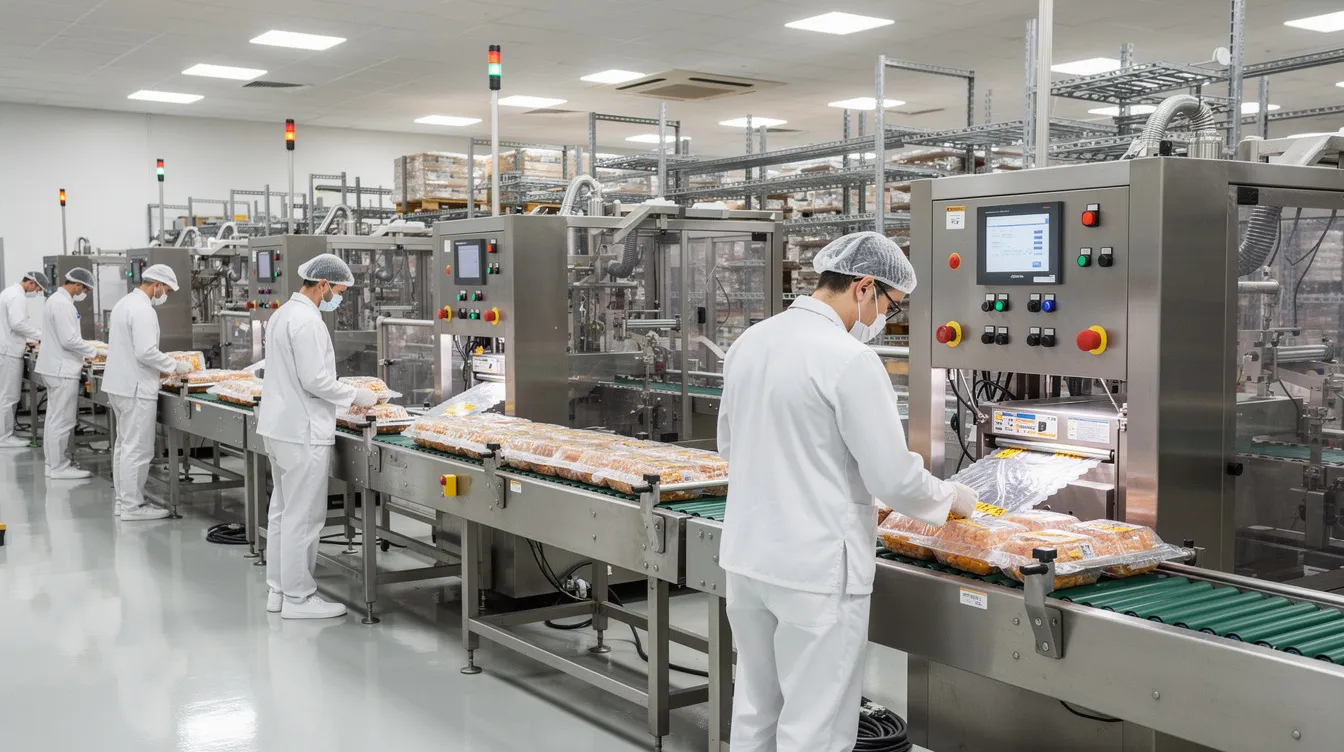
Technical assessments must detail the production process and equipment requirements. Machinery costs are the largest portion of capital expenditure in most blending plants. The exact selection depends on capacity, automation level and product range.
| Equipment | Function | Indicative Capacity | Approx. Price Range (₹) |
|---|---|---|---|
| Ribbon blender (SS, horizontal) | Uniform mixing of flours & premixes | 500 kg – 2,000 kg/batch | ₹4–12 lakh |
| Vibro sifter | Removing lumps and foreign particles | 300–500 kg/hr | ₹1.5–3.5 lakh |
| Metal detector (food-grade) | Ferrous/non-ferrous contaminant removal | Line-specific | ₹7–11 lakh |
| VFFS packing machine (automatic) | Forming, filling, sealing pouches | 30–80 pouches/min | ₹4–15 lakh |
| Storage bins/hoppers | Ingredient storage | 500 kg–2.5 tonne each | ₹1–2 lakh each |
| Dust collection system | Airborne dust management | Plant-specific | ₹2–5 lakh |
| Lab equipment (moisture meter, balances, sieves) | QC testing | – | ₹1–3 lakh |
For comparison, a 500 kg flour mill in India costs between ₹3 lakh to ₹5 lakh, while an Atta Chakki plant with 5 tons capacity costs ₹8.5 lakh to ₹9.55 lakh. Even domestic-scale Swastik flour mill prices range from ₹6,500 to ₹35,000, and Crompton flour mill costs range from ₹26,500 to ₹35,000 – these are household or small commercial units, not industrial blending equipment.
Non-machinery costs – electrical panels, cabling, foundation, erection, commissioning, GST and freight – should all be budgeted separately. Promoters must obtain current supplier quotations; the figures above are indicative estimates, not firm offers. Semi-automatic versus fully automatic lines differ considerably in throughput, consistency, labor requirement and investment level.
Specialty Flour Blending Plant Capacity Planning
Typical commercial capacities range from micro units of 1–2 TPD to medium plants of 10–20 TPD and larger installations above 30 TPD for B2B or private-label production.
Numerical Example: A plant with a 500 kg per batch blender, running 3 batches per hour, operating 8 hours per shift (single shift), has a theoretical daily output of 12,000 kg (12 TPD). Over 300 working days, theoretical annual production is 3,600 tonnes. At 65% capacity utilisation (realistic for initial years), actual annual output would be approximately 2,340 tonnes.
Multiple SKUs and frequent recipe changes reduce practical output due to cleaning and setup time. Packing machines must match or exceed blender output to prevent bottlenecks. The difference between installed capacity and saleable output is an important input in financial projections.
Land, Building & Factory Layout Requirements
Specialty flour blending generally requires less built-up area compared with a full roller flour mill, but still needs hygienic, food-grade infrastructure. A flour mill setup requires a good layout and ventilation, and the plant layout must support efficient production and prevent cross-contamination.
Indicative space requirements:
- 5 TPD semi-automatic plant: 3,000–4,000 sq.ft.
- 10–15 TPD automatic plant: 6,000–8,000 sq.ft.
Key internal zones include raw material receiving and storage, sieving and pre-processing area, blending room, packing hall, finished goods store, QC lab, utility room and office facilities. Hygienic features – washable floors, proper drainage, dust extraction, ventilation, rodent control and segregation of non-food utilities – are essential. Promoters should plan for future expansion by reserving space for additional blenders or packing lines.
Specialty Flour Blending Plant Setup Cost in India
Capital investment for a flour processing plant is significant and should be estimated carefully. “Setup cost” covers the complete project cost – not just machinery. Below are two illustrative models using 2025–26 price-level assumptions.
Model A: Small 5 TPD Semi-Automatic Plant (Leased Premises)
| Component | Indicative Cost (₹ Lakh) |
|---|---|
| Lease deposit & civil modifications | 20–30 |
| Plant & machinery (blender, sifter, packing, metal detector, conveyors) | 25–35 |
| Electrical installation | 5–8 |
| Lab & QC equipment | 2–4 |
| Preliminary & pre-operative expenses | 3–5 |
| Contingencies | 3–5 |
| Margin for working capital | 10–15 |
| Total Project Cost | ₹68–102 Lakh |
Model B: Medium 15–20 TPD Automatic Plant (Partly Owned Building)
| Component | Indicative Cost (₹ Lakh) |
|---|---|
| Land & building / civil works | 100–150 |
| Plant & machinery (larger blender, auto dosing, multi-track packing, metal detectors, conveyors, dust collection) | 50–70 |
| Storage infrastructure | 10–20 |
| Electrical & DG backup | 10–20 |
| Lab, QC, furniture, office | 5–10 |
| Pre-operative expenses & contingencies | 8–15 |
| Margin for working capital | 50–80 |
| Total Project Cost | ₹233–365 Lakh |
A blending-only plant avoids the cost of roller mills (₹60–90 lakh for machinery alone for a 30 TPD mill) and extensive grain-handling systems, making it a lower-investment entry into the value-added flour business.
Specialty Flour Blending Plant Project Cost & Means of Finance
The typical funding structure combines promoter equity (30–35% of project cost) with a bank term loan (65–70%) for fixed assets. Working capital is financed separately through CC/OD limits.
| Source | % of Project Cost | Illustrative Amount (₹ Lakh) – for ₹200 Lakh Project |
|---|---|---|
| Promoter contribution | 30–35% | 60–70 |
| Term loan | 65–70% | 130–140 |
| Total | 100% | 200 |
Banks expect machinery quotations, civil cost estimates, promoter margin evidence, collateral or CGTMSE cover and a clear repayment plan. Loan tenure is typically 5–7 years including moratorium. For readers seeking professional help in structuring bank proposals, our Bank Finance DPR & Loan Proposal Assistance service covers exactly this requirement. Sanction remains at the sole discretion of the lending institution.
Specialty Flour Blending Plant Financial Projections & Profitability
Financial projections include capital expenditure and working capital requirements over a 5–7 year horizon. Assumptions must be internally consistent – capacity utilisation, sales volume, selling prices, raw material cost, overheads, interest and depreciation must connect logically.
A realistic ramp-up pattern may assume 50% utilisation in Year 1, rising to 70% by Year 2 and 85% by Year 3. Operating costs for a wheat flour plant increase significantly by year five as maintenance, replacement parts and market-expansion expenses grow.
Premium products like multigrain or fortified flour often command higher selling prices (₹35–45/kg versus ₹25–35/kg for standard atta), but also carry higher ingredient, packaging, distribution and marketing costs. Gross margin per kg must be analysed alongside selling expenses to assess true profitability. Project Report Bank prepares detailed Excel-based models with sensitivity variants – see our Financial Projections & Financial Modelling Services for more on this approach.
Working Capital Requirements for Specialty Flour Blending Plants
Working capital analysis is crucial for managing cash flow in projects of this nature. The operating cycle involves purchasing raw materials in bulk, processing, holding finished goods, selling on credit and collecting receivables.
Main components include raw material inventory (typically 15–30 days), packing material (15 days), finished goods (7–15 days) and trade receivables (15–45 days depending on channel), less trade payables from suppliers. Growth in sales volume and geographic reach increases working capital needs even when profitability is strong.
Banks typically require CMA Data Preparation Services for Bank Loans for sanctioning working capital limits, particularly for larger facilities.
DSCR, ROI, IRR, Break-Even & Payback Period
Project viability relies on detailed financial metrics like ROI and break-even point. No single ratio should be used in isolation.
| Indicator | What It Shows |
|---|---|
| DSCR (Debt Service Coverage Ratio) | Cash available vs. annual loan repayment obligations |
| ROI (Return on Investment) | Overall return relative to total investment |
| IRR (Internal Rate of Return) | Annualised effective return accounting for time value of money |
| Break-even point | Sales volume at which total revenue equals total cost |
| Payback period | Time to recover the initial investment from net cash flows |
A simplified DSCR example: if annual profit after tax is ₹18 lakh and depreciation is ₹7 lakh, cash accrual is ₹25 lakh. If annual principal repayment is ₹15 lakh and interest is ₹8 lakh, DSCR = 25 ÷ 23 = 1.09. DSCR above 1 indicates debt-servicing ability, though lenders prefer higher ratios for comfort.
Specialty Flour Blending Plant Feasibility Study & Project Viability
Feasibility studies evaluate investment decisions based on demand and cost assessments across multiple dimensions: market, technical, commercial, financial, managerial and regulatory. A practical SWOT for a blending plant:
- Strengths: Lower capex than integrated mills; high product flexibility; low maintenance relative to milling plants
- Weaknesses: Dependence on supplier quality for wheat flour; limited control over primary raw material
- Opportunities: Growing demand for health-oriented products; private-label and contract blending; export to nearby markets like Bangladesh and Africa
- Threats: Price competition from large national brands; raw material price volatility; regulatory changes
Key scenarios to test: base case, 15–20% lower capacity utilisation, 10% higher raw material cost, and 10% lower selling prices. Each scenario should be evaluated for its impact on EBITDA, cash flow and loan repayment capacity. Our Project Feasibility Study & Viability Services covers structured feasibility analysis for promoters seeking professional support.
Licences, Registrations & Compliance Requirements
Statutory approvals are necessary for food safety compliance. Key requirements typically include:
- FSSAI licence (central or state, depending on scale and distribution)
- GST registration
- Udyam registration for MSME benefits
- Factory/shops act registration and labour compliances
- Legal Metrology compliance (net quantity, MRP, batch number, date of packing)
- State pollution control board consent (generally limited to dust and noise for small flour-based units)
- Additional certifications for organic products (NPOP or equivalent) and fortified flour (+F logo compliance)
Obligations vary by scale, product, location and applicable law. Promoters should consult updated official notifications and professional advisors.
Major Risks & Practical Risk Mitigation
A risk analysis should identify potential operational and financial risks. Risk mitigation strategies should address supply chain disruptions and regulatory changes alongside operational concerns.
| Risk | Mitigation |
|---|---|
| Raw material price volatility | Multiple supplier contracts; locked-price agreements |
| Inconsistent wheat flour quality | Specification-based purchase; inward quality testing |
| Recipe errors and blend inconsistency | Calibrated scales; SOPs; automated dosing in larger plants |
| Contamination and food safety failures | Metal detectors; sieving; pest control; hygiene protocols |
| Underutilised plant capacity | Conservative ramp-up; pre-sales validation; pilot batches |
| Distributor credit risk and delayed receivables | Credit limits; regular ageing review; deposit-based terms |
| Shelf-life and product returns | FIFO stock management; realistic expiry dates; controlled distribution |
| Intense price competition | Product differentiation; brand building; institutional tie-ups |
Setting up basic MIS to track batch yields, stock ageing, customer-wise margins and overdue receivables on a regular basis helps resolve emerging problems before they become serious.
Why a Detailed Project Report Is Important for Bank Finance
Project reports should include market assessment and technical design alongside detailed financial projections. A professionally prepared specialty flour blending plant DPR should contain: promoter profile, project background, market study, product details, manufacturing process description, capacity planning, machinery specifications with quotations, site and building plan, project cost breakup, means of finance, 5–7 year projected P&L and cash flow, working capital assessment, DSCR calculations, break-even analysis, risk analysis and sensitivity testing. Detailed project reports should include appendices to support core documentation.
Professional project reports cater to specific customer needs like DPR preparation and financial modelling – they are planning and appraisal tools, not guarantees of loan sanction. Banks look for clarity on assumptions, internal consistency and evidence of market enquiry.
How CA Manish Gugliya Can Assist Specialty Flour Blending Plant Entrepreneurs
I work with entrepreneurs at every stage of project planning – from initial cost estimation through to finalising bank proposals. Through Project Report Bank, I offer customised DPR preparation, project cost and means-of-finance planning, financial projections and modelling, CMA Data preparation, working capital estimation, DSCR and repayment analysis, and assistance in responding to bank queries.
Each project is customised to the promoter’s specific capacity, location, machinery configuration and marketing plan. I do not rely on generic templates. Professional documentation improves the quality of proposals, though it does not guarantee any bank, investor or regulatory approval.
CA Manish Gugliya, FCA, DISA (ICAI) – practising Chartered Accountant with over 20 years of professional experience, based in Ratlam, Madhya Pradesh, providing online advisory services across India through www.projectreportbank.com.
Frequently Asked Questions
What is a specialty flour blending plant and how is it different from a flour mill?
A specialty flour blending plant buys pre-milled wheat flour and other flours, mixes them as per recipes using ribbon blenders, and packs the finished product. A flour mill processes raw wheat using milling machines to produce wheat flour. The blending plant avoids heavy milling machinery and focuses on formulation, quality control and packaging, though it depends on reliable flour suppliers for its primary inputs.
How much investment is required to start a specialty flour blending plant in India?
Investment depends on capacity, automation and location. A small 5 TPD semi-automatic unit may require ₹50–100 lakh in total project cost, while a medium 15–20 TPD automatic plant could need ₹2–3.5 crore. Exact figures emerge only after project-specific analysis, including current machinery quotations, building costs and working capital assessment.
Can I start a specialty flour blending business without owning a wheat flour mill?
Yes. Most standalone blending units operate by sourcing wheat flour from nearby atta chakki or roller flour mills under specification-based purchase arrangements. This is a common and commercially viable model that keeps capital investment focused on blending and packaging operations.
Is specialty flour blending manufacturing profitable?
Profitability depends on product mix, contribution margin per kg, capacity utilisation, control over wastage and working capital discipline. Premium products may offer higher selling prices but also involve higher ingredient, packaging and marketing costs. A feasibility study with realistic assumptions is strongly recommended before committing investment.
Can banks provide loans for specialty flour blending plants?
Banks do finance such projects under MSME or manufacturing term loan schemes. They typically require a detailed project report, KYC documents, financial statements, project cost and means of finance details, machinery quotations, CMA Data for working capital and collateral or guarantee arrangements. Loan sanction depends entirely on the lender’s appraisal and credit policies.
Conclusion – Planning a Financially Viable Specialty Flour Blending Plant
A specialty flour blending plant can be a viable business opportunity in India – provided the promoter identifies the right product mix, secures reliable raw material sources, selects appropriate machinery and capacity, and builds the project on realistic financial assumptions rather than optimistic guesses.
Viability must be judged on end-to-end economics: formulation cost versus selling price, contribution per kg, realistic capacity utilisation, working capital cycle and ability to service term loans. The numbers should tell a logical business story, not merely present attractive profit percentages.
If you are seriously evaluating a specialty flour blending project, I would encourage you to get a customised DPR, financial model and bank finance proposal prepared based on your specific capacity, location and product mix. You can reach me through www.projectreportbank.com or WhatsApp to discuss your project requirements in detail.
CA Manish Gugliya FCA, DISA (ICAI) Project Report Bank