Key Takeaways
- A small hospital project report / DPR is a bank-focused document that converts a hospital concept (10–50 beds) into structured project cost, revenue projections, financial statements, DSCR analysis and repayment capacity – serving as a blueprint for operations and loan appraisal alike.
- Banks in India typically expect realistic financial projections covering at least five to seven years, built on reasonable assumptions around occupancy ramp-up, tariff rates, salary escalations, working capital and promoter contribution of at least 25% of total project cost.
- The project cost in a bankable DPR must cover land or building, civil and interior work, medical equipment, technology, pre-operative expenses and margin for working capital – all supported by quotations, estimates or documented assumptions rather than arbitrary round figures.
- Every DPR should be customised to the actual proposal – location, specialty mix, bed strength, ownership model – because generic, copy-pasted templates are quickly recognised by lenders and can delay or derail bank appraisal.
- CA Manish Gugliya at ProjectReportBank.com assists promoters with customised hospital DPRs, financial projections, CMA data and bank-loan support without guaranteeing sanction.
Explore General Hospital DPR Guides
Explore our complete series on General & Small Hospital project planning, cost, financial projections, repayment capacity and bank finance.
Introduction: Small Hospital Project Report for Bank Loan – Practical Context
Setting up a 10–50 bed general hospital in India requires far more than clinical expertise. It demands structured planning across infrastructure, medical equipment, staffing, regulatory compliance and – critically – finance. Whether a doctor is building a new hospital in a Tier-II town or an entrepreneur is entering private health care in a district headquarters, the financial structure of the project determines whether the idea moves from paper to reality.
For any meaningful bank loan – say, in the range of ₹2 crore to ₹25 crore as a term loan – lenders insist on a bankable small hospital project report or detailed project report (DPR) before considering sanction. This document translates the hospital concept into numbers that a credit team can evaluate: how much the project costs, how it will be funded, what revenue is expected, whether cash flows support loan repayment, and what risks exist.
This guide walks through the practical journey of preparing a hospital DPR:
- Hospital models by bed capacity (10, 20, 30, 50 beds)
- Project cost components and means of finance
- Revenue model, financial projections and working capital
- DSCR and loan repayment capacity
- How banks appraise the proposal
- Information and documents required
- Common mistakes to avoid
The article is written from the perspective of CA Manish Gugliya for ProjectReportBank.com, focusing on Indian banking and regulatory context rather than generic theory.
What Is a Small Hospital Project Report / DPR?
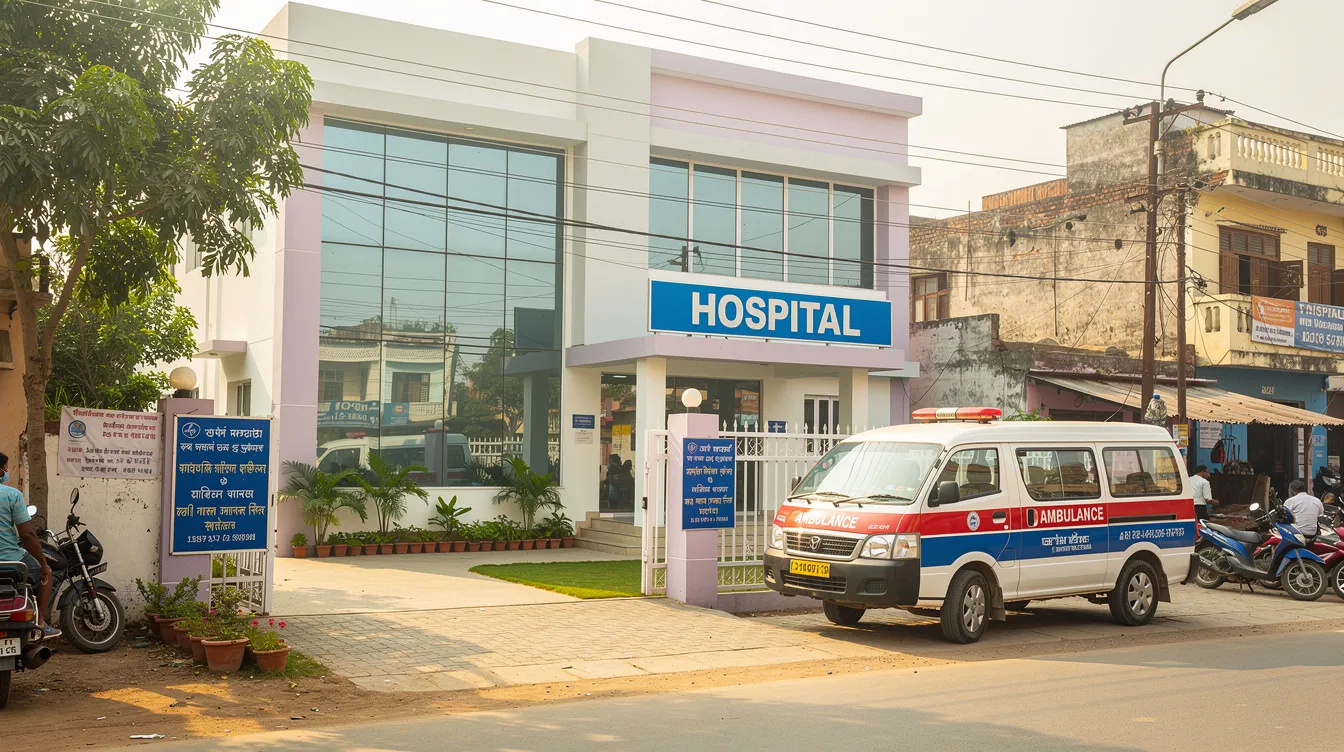
A small hospital project report is a structured document that explains a proposed healthcare facility – for instance, a 30-bed general hospital – in terms of its concept, location, infrastructure, project cost, revenue potential, profitability and finance requirements. A comprehensive project report outlines the facility size and estimated startup costs in a format that lenders and investors can evaluate systematically.
A detailed project report goes further. Unlike a brief pitch or business plan that focuses on vision and strategy, a bankable DPR provides documented assumptions, multi-year financial statements, risk analysis and an implementation schedule over a horizon of 7–10 years. It must include an executive summary, an overview of technical specifications and infrastructure, and a clear financial model including revenue projections. It must also outline technical and operational feasibility – whether the hospital can actually deliver quality health care as proposed.
In practical project-report preparation, lenders need to see four things clearly:
- Technical feasibility: Can the hospital run as planned with the proposed infrastructure, equipment and staffing?
- Commercial feasibility: Is there sufficient demand in the catchment area? A hospital DPR requires a market and demand analysis section that assesses patient demand for proposed hospital services.
- Financial viability: Financial viability includes projected income statements and cash flow statements – will the hospital generate enough surplus to sustain operations and service debt?
- Repayment capacity: Can cash accruals comfortably cover term-loan principal and interest over the entire repayment period?
All projections – income, expenses, cash flow – must rest on documented assumptions: bed occupancy rates, tariff schedules, salary structures, annual cost escalation and similar operational parameters. Arbitrary growth percentages without supporting logic reduce credibility during bank appraisal.
The promoter profile, medical experience and management capability are integral parts of the DPR and are critical for long-tenure health services facility loans. A high-quality small hospital DPR is always customised to the proposed facility’s location, building type and specialty mix. One-size-fits-all templates rarely survive scrutiny at the appraisal stage.
Who Needs a Small Hospital DPR?
The need for a structured hospital project report spans a wide range of promoters and situations:
- Individual doctors (MBBS, MD/MS, DNB) planning to start their own 10–30 bed hospitals in Tier-II or Tier-III cities, where they see unmet demand for quality medical services and specialist consultation facilities.
- Existing polyclinics, day-care centres or nursing homes wanting to convert into 20–50 bed general hospitals with ICUs, equipped emergency operation theatres and diagnostic units.
- Partnerships, LLPs and private limited companies formed by groups of doctors or healthcare-focused entrepreneurs seeking organised hospital project finance.
- Existing hospitals planning expansion: adding beds (e.g., from 20 to 40), introducing new specialties (orthopaedics, critical care, paediatric and neonatology inpatients), or upgrading infrastructure (second OT, CT scan, advanced diagnostics).
- Charitable or trust-run hospitals – including proposals like a charitable cardiology hospital proposal or a palliative care hospital – that need to demonstrate financial viability to secure institutional funding or government grants. A strong DPR improves chances of government funding approval as well.
- Investors or strategic partners evaluating opportunities in international health business or domestic private health services often ask for a professional project report before committing capital.
Anyone approaching banks, NBFCs or other financial institutions for a hospital term loan, equipment finance or composite project finance (term loan plus working capital) will benefit from a well-prepared small hospital DPR. A market feasibility study within the DPR validates hospital project ideas and helps avoid costly mistakes in hospital planning.
Small Hospital Models: 10, 20, 30 and 50 Beds
Hospital project planning typically starts by deciding bed strength, which directly influences built-up area, medical equipment needs, staffing and total project cost. A small hospital typically ranges from 30 to 50 beds in most classification standards, though 10-bed and 20-bed nursing homes and general hospitals are equally common in smaller towns. The DPR should detail the hospital’s bed strength and department breakdown clearly, as this drives every subsequent financial assumption.
Rather than prescribing rigid universal cost figures, it is more practical to understand how requirements change qualitatively and quantitatively with each size. Final budgets depend on city, land or building cost, and specialty profile.
10-Bed Hospital Model
A 10-bed general hospital or nursing home is common in semi-urban or Tier-III locations. It typically includes 4–6 IPD rooms (private or semi-private), a small ICU or HDU unit of 1–2 beds, one basic OT and 1–2 consultation rooms for outpatient services.
Infrastructure is often on leased premises – around 5,000–8,000 sq.ft. of built-up area – with modest civil and interior work. The specialty focus depends on the promoter’s background: obstetrics, general surgery or general medicine are common starting points. Services may include basic emergency services and a blood pressure clinic for OPD patients.
Project cost for a 10-bed hospital is usually driven by interior work, lifts (if multi-storey), basic critical-care equipment and working capital for salaries and consumables for at least 6–9 months. Total investment may range from approximately ₹1–2.5 crore, excluding high land costs.
A 10-bed hospital project report must show conservative occupancy build-up – perhaps 20–30% in the initial year – with strong emphasis on promoter skill and referral network rather than large capital expenditure.
20-Bed Hospital Model
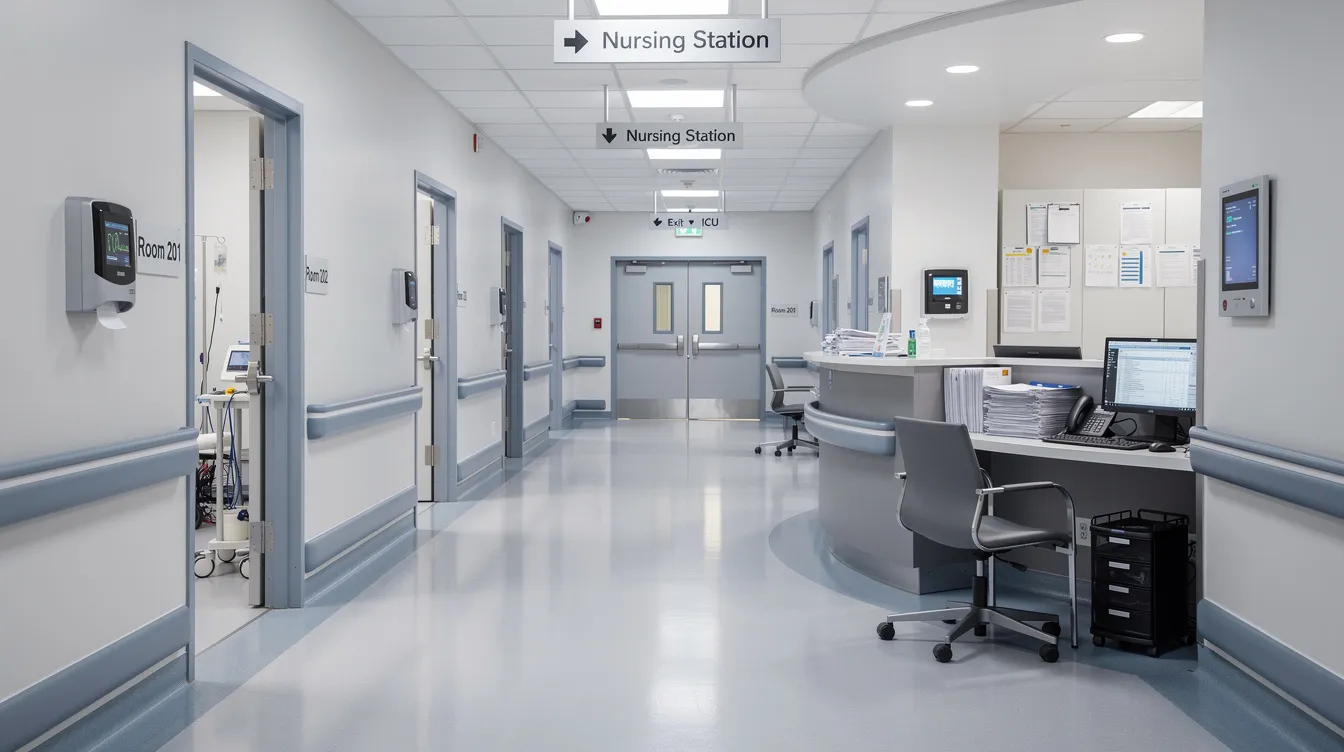
A 20-bed general hospital supports more hospital departments: emergency, two OTs, a 4–6 bed ICU, labour room, general wards and private rooms, along with in-house pathology, X-ray and laboratory services. Some facilities also include a blood collection room, noting the need for proper sample handling protocols.
Built-up area may be around 10,000–15,000 sq.ft., with more extensive civil work, fire-safety systems and medical gas pipelines. The hospital building requires nurse call systems and structured communication services comprising intercom, paging and emergency alerts.
A 20-bed hospital project report must capture increased doctor strength, nursing and paramedical staff, and correspondingly higher medical equipment investment – OT tables, anaesthesia workstations, monitors and C-arm where indicated. Revenue assumptions usually combine OPD, IPD, basic surgeries and diagnostics, with occupancy ramping from perhaps 25–35% in Year 1 to 50–60% by Year 4–5.
30-Bed Hospital Model
A 30-bed hospital often moves towards multi speciality hospital positioning: medicine, surgery, obstetrics and gynaecology, paediatrics, orthopaedics, plus a fully equipped ICU (6–8 beds) to handle critically ill patients.
Space requirements increase to approximately 18,000–25,000 sq.ft., with multiple OTs, larger diagnostics (ultrasound, digital X-ray, possibly CT depending on the concept), pharmacy and dedicated waiting areas. The pptx outpatient department presentation that promoters sometimes prepare for internal planning should translate into structured assumptions in the DPR.
Capital investment for a 30-bed hospital generally involves higher medical equipment cost – ICU ventilators, advanced monitors, OT lights, laparoscopic systems – and intensive working-capital needs due to the wider service range. Well-known facilities like Vardan Multi Speciality Hospital demonstrate how a focused specialty hospital capacity in this segment can achieve strong occupancy when properly positioned.
A 30-bed hospital DPR must present detailed department-wise bed distribution, tariff structure and anticipated occupancy to justify the higher project cost and term loan requirement.
50-Bed Hospital Model
A 50-bed hospital is a more substantial general or multi specialty hospital project, usually in a district headquarters or larger city. It includes multiple OTs, 8–12 bed ICU, NICU (if planned) and comprehensive diagnostic services. Some facilities in this range also offer renal transplant surgery or advanced health care services depending on the promoter’s vision and local demand.
Infrastructure is often purpose-built – 30,000–50,000 sq.ft. – with significant civil work, HVAC, fire systems, lifts, medical gas systems and separate service flows. Regulatory requirements become more stringent beyond 30 beds under the National Building Code.
Staffing for a 50-bed facility includes multiple full-time consultants, residents, intensivists, 24×7 nursing teams, lab and radiology staff (with awareness of patient radiation dosage norms), as well as administrative departments including HR, billing and IT. Medical records services and sterile supply services become formalised departments at this scale.
A 50-bed hospital DPR must handle large project cost, phased commissioning and robust financial projections ensuring DSCR remains acceptable across the entire loan tenure. Project cost at this level may range from ₹15–30 crore depending on location and service level.
Small Hospital Setup Cost in India
Small hospital setup cost in India depends on city, ownership model (own land versus lease), clinical scope and quality level. The DPR should always detail component-wise project cost rather than presenting a single lump sum figure. Capital expenditure should cover land, construction, equipment, and operational costs in a structured breakdown.
Major cost heads include:
- Land (if purchased) or long-term lease deposits and leasehold improvements
- Building construction: Basic construction costs may range from ₹3,500–₹6,000 per sq.ft. for small hospitals, with interiors, HVAC, medical gas pipeline, fire safety infrastructure, lifts and STP pushing costs higher
- Hospital furniture: beds, trolleys, nurse stations, office furniture, fixtures, signage
- Medical equipment: OT tables, anaesthesia machines, ventilators, monitors, hospital electronic cell counters, ultrasound, X-ray, pathology analysers, suction units, defibrillators, sterilisation equipment
- Technology and administrative assets: computers, servers, networking, hospital management software (similar in concept to the Fortis Hospital information system approach), biometric systems, CCTV
- Preliminary and pre-operative expenses: architect fees, consultant fees, legal/professional fees, statutory fees, pre-opening salaries, marketing, interest during construction, trial-run expenses
- Deposits and contingencies: electricity, water, gas deposits plus a 5–10% contingency margin to cover cost escalations
- Margin for working capital: covering initial months of operations before cash inflows stabilise
Where possible, estimations should be supported with vendor quotations, civil-work estimates and realistic rate assumptions. A Bharuch hospital project overview, for instance, would have very different cost parameters compared to one in Bangalore or Mumbai.
Readers seeking detailed, bed-wise investment benchmarks can refer to the specialised guide on Small Hospital Setup Cost in India.
Medical Equipment Required for a Small Hospital
Medical equipment can form 30–60% of the total capital expenditure for a small hospital project, depending on how diagnostic-intensive the model is.
Equipment needs can be grouped by hospital zones:
- OPD: Examination couches, diagnostic sets, ECG machines, nebulizers
- IPD: Hospital beds, side lockers, patient monitors, infusion pumps
- Emergency: Defibrillators, crash carts, emergency medicine supplies, resuscitation equipment
- ICU: Ventilators, syringe pumps, multi-parameter monitors, central monitoring – essential for providing proper treatment to critically ill patients
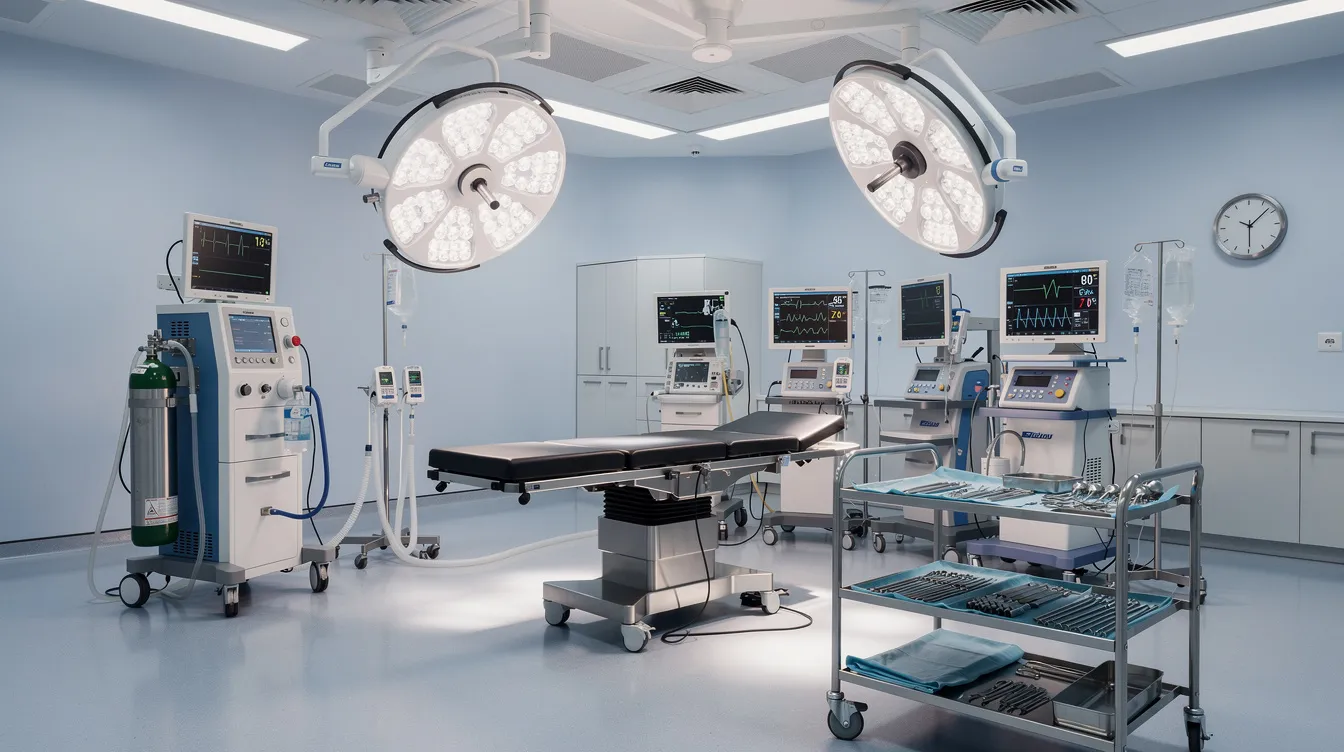
- Operation theatre: OT tables, anaesthesia workstations, OT lights, electrosurgical units, suction units, laparoscopic towers where relevant, C-arm for orthopaedic centres
- Diagnostics and lab: Haematology analysers, biochemistry analysers, microscopes, ultrasound, digital X-ray; CT or MRI only where clinically and financially justified
- Support systems: Autoclaves, sterilisers, washing machines, RO plant, medical gas manifold, vacuum pumps, DG sets, UPS for critical areas
The equipment mix varies significantly by specialty. A maternity-focused 20-bed hospital needs different assets than an orthopaedic trauma centre. Banks reviewing a hospital project report check whether equipment budgets are reasonable and aligned with proposed services – over-investment in diagnostic equipment without matching demand weakens financial viability.
Promoters who need a detailed, item-wise list with typical costs can refer to the companion guide on Small Hospital Equipment List & Cost.
Project Cost and Means of Finance
After estimating total project cost, the DPR must show how it will be financed. The project cost section shows how the hospital will be funded – this is the “Means of Finance” that bankers scrutinise closely.
Common financing components include:
| Component | Typical Range | Notes |
|---|---|---|
| Promoter’s own funds (equity) | 25–35% of project cost | NEDFi mandates minimum 25% for doctor loans |
| Term loan from bank/NBFC | 65–75% of project cost | Subject to appraisal, collateral and DSCR |
| Unsecured loans from promoters/relatives | Case-specific | Subject to bank policy on acceptability |
| Subsidies/soft loans | Where applicable | Government schemes, CGTMSE guarantee |
Hospital projects often require a mix of equity and bank loans. The margin for working capital is built into project cost, with the term loan financing a portion and promoters bringing in the rest.
For illustration: in a hypothetical ₹10 crore project, the means of finance could be structured as ₹3 crore promoter contribution plus ₹7 crore term loan. This is only an example – actual financing depends on the individual proposal and lender assessment.
In a bankable project report for hospital finance, total project cost and total means of finance must match exactly, with no unexplained surplus or deficit. Readers wanting deeper examples can refer to the detailed resource on General Hospital Project Cost & Means of Finance.
Revenue Model of a Small Hospital
The hospital revenue model section should include a clear financial model including revenue projections built from operational assumptions rather than arbitrary growth percentages.
Key revenue streams for a general hospital include:
- OPD consultations (general and specialist)
- IPD bed and room charges
- ICU charges
- Operation theatre fees and procedure charges
- Maternity packages
- Diagnostics: pathology, radiology and ray and laboratory services
- Pharmacy margin on medicines and hospital supplies
- Emergency services and minor procedures
Revenue projections should be built from the ground up: bed capacity × occupancy × average revenue per occupied bed (ARPOB), plus OPD footfall and procedure volumes. A project report should include a clear financial model that connects these operational drivers to the revenue line.
Realistic occupancy assumptions are essential. For small hospitals, Year 1 occupancy is often projected in the range of 25–40% depending on city and promoter’s established practice, rising gradually to 50–60% by Year 3–5. Projecting 90% occupancy from the first month is unrealistic and rejected by experienced bankers.
Pricing must be consistent with local market rates, competition and target segment – middle-income patients, insurance and TPA mix, government schemes like Ayushman Bharat. Market analysis should assess local demographics and competitor hospitals, evaluate healthcare demand and prevalent local diseases, and be based on health-care needs of the target population and existing hospitals in the area. Market analysis should use real data from health reports – the world health report and national health policy documents can provide useful macro context, while local public health facilities and primary health centers data helps establish micro-level demand.
Ancillary revenues – ambulance, cafeteria, health check packages – can supplement income but should not be overstated in initial years.
For deeper analytical models, refer to the detailed guide on General Hospital Revenue Model & Financial Projections.
Financial Projections Required in a Hospital DPR
Financial projections in a DPR typically cover five to seven years – often the full loan tenure plus a buffer. Financial projections should include capital expenditure and operating costs in a structured, year-wise format. Financial viability includes projected income statements and cash flow statements that a lender can trace from assumptions through to repayment capacity.
Core projected statements include:
- Projected Profit & Loss Account (year-wise revenue, expenses, depreciation, interest, net profit)
- Projected Balance Sheet (assets, liabilities, net worth progression)
- Projected Cash Flow Statement (operating, investing and financing activities)
Supporting schedules include:
- Fixed asset schedule and depreciation schedule
- Term-loan repayment schedule and interest calculation
- Working capital assessment
- Break-even analysis
- DSCR calculation
- Inventory and receivables schedules
Hospitals are capital-intensive with a long gestation period, so projections should factor initial losses or low profitability in early years, followed by gradual improvement as occupancy builds. The project report should also provide a risk analysis and implementation schedule showing how the project moves from construction to commissioning.
Internal consistency matters: bed occupancy in operational assumptions must match revenue in the P&L, which in turn must align with cash flows and DSCR calculations. Sensitivity analysis – for example, the impact of 10% lower occupancy or 10% higher salary costs – is useful for both promoters and bankers to assess robustness.
All projections are management estimates, not guaranteed outcomes. The DPR should use language like “projected” or “estimated” throughout.
Working Capital Requirement of a Small Hospital
Even after fixed assets are funded through a term loan, the hospital needs working capital to run day-to-day operations until cash inflows stabilise. Operating costs should include salaries, medicines, and utilities – and these recur every month regardless of occupancy levels.
Main working-capital elements include:
- Medicines and consumables stock (including supplies for the medical and general store)
- Oxygen and medical gases
- Laboratory reagents
- Outstanding receivables from patients and TPAs/insurance companies
- Minimum cash balance for daily operations
Recurring monthly expenses that drive the working-capital cycle:
- Salaries and wages (doctors, nurses, paramedical, administrative staff)
- Consultants’ fees
- Utilities (electricity, water, internet)
- Housekeeping and maintenance
- Biomedical waste disposal
- Administrative overheads and administrative services
The working-capital cycle represents the time gap between incurring expenses and receiving payments – particularly significant when insurance and TPA settlements can take 30–60 days or more. Banks may assess working capital through operating-cycle analysis or turnover-based methods, providing cash-credit limits or overdraft facilities alongside the term loan.
In a hospital DPR, the margin for working capital is included in project cost and forms part of the means of finance calculation. For step-by-step computation illustrations, refer to the specialised guide on General Hospital Working Capital Requirement.
DSCR and Hospital Loan Repayment Capacity
DSCR – Debt Service Coverage Ratio – measures whether the hospital’s projected surplus is sufficient to service term-loan instalments comfortably.
Formula: DSCR = Cash Accrual ÷ Total Debt Service
Where:
- Cash Accrual = Net Profit + Depreciation + other non-cash charges
- Total Debt Service = Term-loan principal repayment + interest for the year
Simple illustration: If a hospital’s projected cash accrual is ₹1.50 crore and annual principal plus interest is ₹1.00 crore, the DSCR is 1.50. A Debt Service Coverage Ratio of 1.25 is generally considered acceptable for hospitals, though many banks and schemes require a minimum of 1.50.
Hospital projects often show lower DSCR in initial years (during occupancy ramp-up) and improve over time. Bankers typically focus on both average DSCR and minimum DSCR across the projection period. A declining DSCR trend in later years raises red flags about sustainability.
Unrealistic revenue assumptions or underestimation of costs can artificially inflate DSCR. If actual performance turns out weaker than projected, the hospital may face repayment stress. In practical bank appraisal, sustainable repayment capacity – not just headline profitability – is what matters for sanctioning a hospital term loan.
For detailed formulas and case-style illustrations, refer to the in-depth article on General Hospital DSCR & Loan Repayment Capacity.

Bank Loan for a Small Hospital Project
Most banks require a DPR for hospital loan applications. Banks also require a feasibility study for hospital loan approvals – a well-prepared DPR fulfils both requirements. Typical bank facilities for small hospitals include:
- Term loan for building and infrastructure
- Separate equipment finance if required
- Working-capital limits (cash-credit, overdraft, bank guarantee for utility deposits)
The usual process flow is:
- Project conceptualisation and rough cost estimation
- Discussion of promoter contribution and funding structure
- Preparation of the small hospital DPR
- Submission of loan application with supporting documents
- Bank appraisal, queries and site visit
- Sanction with terms and conditions
- Disbursement in stages (linked to project milestones)
Some lenders structure composite loans – one sanction covering building, equipment and working capital – while others separate term loan and working capital limits. Security and collateral expectations differ across lenders: some projects are funded against the hospital property itself, others may require additional collateral or personal guarantees.
The project report for starting a hospital should be prepared before formally applying, so that promoters can respond credibly to bankers’ queries on projections and DSCR. No article or consultant can guarantee a bank loan; approval depends on bank policy, risk appetite, credit scores and overall proposal strength.
For step-by-step coverage, refer to the dedicated guide on Bank Loan for General & Small Hospital – Project Finance Guide.
How Banks Assess a Small Hospital Loan Proposal
From a bank appraisal perspective, lenders evaluate four broad areas: promoter profile, project viability, security/collateral and overall repayment capacity.
Promoter Profile:
- Medical qualifications (MBBS, MD/MS), years of clinical experience
- Prior hospital or clinic management experience
- Existing practice income and personal financial track record
- How the banker views a hospital project often starts with how credible the promoter appears
Project Viability:
- Location and catchment population
- Demand-supply gap – how many existing government owned hospitals and private facilities serve the area
- Proposed bed strength, specialty mix and pricing strategy
- Tie-ups with corporates, TPAs, insurance companies or public health services
- It assesses patient demand for proposed hospital services against what already exists
Financial Assessment:
- Reasonableness of project cost and equipment investment
- Adequacy of promoter contribution (typically 25% or more)
- Revenue and expense assumptions – are they commercially defensible?
- Profitability, cash flow, DSCR over the loan tenure
- Consistency across P&L, balance sheet and cash flow projections
Regulatory and Statutory Feasibility:
- Building approvals, fire NOC, healthcare establishment registration
- Biomedical waste management arrangements
- A project report should identify regulatory and approval requirements relevant to the hospital
Banks also review existing liabilities (personal and business), credit history, tax compliance and bank-statement conduct. The appraisal is about India’s hospital quality of the specific project proposal, not about the sector in general.
For more granular appraisal criteria, refer to the detailed article on How Banks Assess a General Hospital Term Loan Proposal.
Information Required for Preparing a Small Hospital DPR
The project report should include a human resources plan detailing staffing needs, along with comprehensive clinical and financial inputs. Here is a practical checklist:
Promoter Information:
- Names, educational qualifications, medical registration numbers
- Years of practice, current clinics/hospitals and approximate annual turnover
- Proposed constitution: proprietorship, partnership, LLP or private limited company
Project Location and Infrastructure:
- Complete address, city classification (Tier I/II/III)
- Land details (owned with survey numbers, leased with tenure), total land area, proposed built-up area
- Architect drawings if available, estimated cost per sq.ft., lift requirements, fire-safety plan
Clinical Concept:
- Planned bed capacity (e.g., 20 or 30 beds) with bed-wise allocation (general, semi-private, private, ICU)
- Proposed departments: medicine, surgery, OBG, paediatrics, orthopaedics, etc.
- Target patient segment and expected service offerings – whether the hospital will render quality medical services to a broader population or focus on niche specialties
Equipment and Manpower:
- Medical equipment list with indicative vendor quotations for major items
- Projected manpower plan: number of doctors, nurses, paramedical and administrative staff with tentative salary ranges
Business and Financial Assumptions:
- Expected OPD patients per day, expected occupancy (year-wise), average tariffs for key services
- Anticipated ramp-up period
- Existing loans and EMIs, proposed loan amount, available own funds, expected collateral
Implementation Schedule:
- Land readiness, civil work timeline (6–9 months), equipment installation and trial run (2–3 months)
- This is essential for structuring interest during construction and moratorium
Documents Generally Required for Hospital Bank Finance
Exact document requirements vary across banks and schemes. However, a small hospital loan proposal typically needs both KYC and financial/technical documents:
KYC and Entity Documents:
- PAN, Aadhaar, photographs of promoters, proof of residence
- Constitution documents: partnership deed, LLP agreement, MOA/AOA, certificate of incorporation
Professional Documents:
- Medical registration certificates, post-graduate qualification certificates
- Experience certificates from previous hospitals or clinics
Financial Documents:
- Last 2–3 years’ income-tax returns and financial statements of promoters or related entities
- Latest 6–12 months’ bank statements
- Details of existing loans and EMIs
Property-Related Documents:
- Title documents of project land/building (if owned), sanctioned building plans
- Non-encumbrance certificates, valuation reports where required
- For leased premises: draft or registered lease deed with sufficient tenure, landlord KYC
Project-Specific Papers:
- Item-wise equipment quotations and civil-work estimates
- Project report / DPR with projections
- CMA data if required by the banker
- Working capital estimation
Relevant licences (e.g., provisional registration as a healthcare facility under the Clinical Establishments Act) may be needed before final disbursement – promoters should clarify this upfront with the bank.
Licences and Regulatory Considerations
Regulatory requirements differ by state, type of hospital and services offered. Regulatory compliance includes obtaining licenses such as clinical establishments registration, and regulatory approvals must be listed in the hospital DPR. This section provides high-level guidance only.
Typical requirements include:
- Clinical establishment registration or nursing home licence as per state-specific rules – some states operate under the Clinical Establishments (Registration and Regulation) Act, 2010
- Local municipal permissions and trade licences where applicable
- Fire-safety NOC and building-use permissions, especially for multi-storey hospital buildings with public access. Licenses and permits required may include pollution control and fire safety clearances
- Biomedical waste management agreements with authorised agencies. Environmental considerations must include biomedical waste management and water conservation measures
- Pharmacy licence from the state drug controller for in-house pharmacy operations
- Laboratory and radiology approvals: AERB registration for X-ray equipment, laboratory accreditation where applicable
- Pollution-control consents if the hospital operates large DG sets, STPs or effluent discharge systems
Understanding views on rural healthcare management or urban health services study findings can also help position the hospital within the broader structured public health system. The national rural health mission and related programmes have shaped how providing primary health care infrastructure is planned across India.
Promoters should consult local health department offices, municipal bodies and qualified legal advisors to ensure all mandatory approvals are identified early. Hospital DPR preparation should account for regulatory timelines – delays in obtaining approvals affect the implementation schedule and interest cost during construction. Related queries around government hospital projects, a medical college project report, or even an Apollo Hospital industry analysis for benchmarking purposes are distinct from a small hospital DPR but reflect the breadth of healthcare facility planning in India.
Common Mistakes in Small Hospital Project Reports
A thorough study helps avoid costly mistakes in hospital planning. Here are the issues that most frequently create problems during bank appraisal:
- Underestimating total project cost: Not allowing for contingencies, under-budgeting interiors or medical equipment, ignoring GST impact and underestimating pre-operative expenses are common errors. A PPT or Apollo Hospital case study may provide useful benchmarks, but direct comparison with a small hospital is misleading.
- Overlooking working capital: Hospitals frequently run short of funds within months of opening despite having well-built infrastructure. Working capital for salaries, consumables and receivable cycles must be planned and financed.
- Unrealistic occupancy and revenue assumptions: Projecting 70–80% bed occupancy in Year 1 or excessively high average revenue per bed compared to local market benchmarks. A DPR should not resemble the kind of generic overview one views in a summer internship report – it must reflect local realities.
- Underestimating salary and HR costs: Specialist doctors, nurses and 24×7 support staff in metros earn significantly more than in smaller towns. Annual increments, shift allowances and retention costs must be factored. Occupational health hazards compliance also adds to operational cost.
- Copy-paste or generic DPRs: Financial projections not aligned with the proposed location, specialty mix or promoter profile. Banks quickly recognise such reports.
- Technical inconsistencies: P&L, balance sheet and cash-flow statements not matching, incorrect loan repayment schedules or DSCR miscalculations.
- Absence of a clear implementation timeline: This leads to confusion over when interest during construction is incurred and when commercial operations start in projections.
Promoters should review projections critically rather than accepting untested templates. A medical college project comparison or a views hospital project document from another context may provide ideas, but each hospital’s economics are unique.
Why a Bankable DPR Should Be Customised
Two 30-bed hospitals can have completely different economics. One in a metro suburb – say, a hospital in Mumbai targeting Mumbai health services demand with leased premises – and another in a small town with owned land will have vastly different project cost, tariffs, occupancy patterns and profitability.
Key variables requiring customisation:
- Land/building model (owned versus leased)
- City and catchment demographics – for instance, a health services study for a Tier-III district may reveal very different disease patterns and paying capacity
- Specialty mix: maternity and paediatrics versus trauma and orthopaedics
- Level of ICU and diagnostic facilities
- Staffing model: full-time versus visiting consultants
- Financing structure: the extent of term loan, promoter contribution and working capital arrangements
Banks quickly recognise copied assumptions or generic project reports. Such DPRs delay appraisal or invite adverse comments about project preparedness. A well-prepared DPR helps validate hospital project ideas by demonstrating that the promoters understand their own numbers and are prepared for realistic outcomes.
A properly customised small hospital DPR for bank loan – whether for a 10-bed nursing home in a semi-urban area or a 50-bed facility near a medical college – improves overall confidence in the proposal.
Professional Assistance for Small Hospital Project Report
CA Manish Gugliya is a practising Chartered Accountant working extensively with project reports, CMA data, term-loan proposals and MSME advisory, with specific experience in hospital and healthcare projects. A hospital DPR typically takes four to eight weeks to prepare when done professionally with customised assumptions.
Professional assistance typically involves:
- Understanding the proposed hospital model (e.g., 20-bed general hospital in Rajasthan or 30-bed maternity hospital in Maharashtra)
- Structuring project cost and means of finance
- Building revenue and expense assumptions based on local market data – not generic benchmarks from an unrelated city
- Preparing projected P&L, balance sheet, cash flow and DSCR analysis over the loan tenure
- Working capital estimation and break-even analysis
- Compiling a bankable project report for hospital, preparing CMA data where required by bankers
- Supporting promoters during discussions with banks on projections and loan-structure options
Professional support extends to various hospital types – from a general hospital to a multi speciality hospital, from outpatient department-focused clinics to facilities offering inpatient services, patient services across departments and support services.
Promoters and doctors planning a new small hospital or hospital expansion are welcome to connect via ProjectReportBank.com for customised small hospital DPRs aligned with Indian bank requirements.
Frequently Asked Questions (FAQ)
Below are common queries that promoters have when planning a small hospital DPR for bank finance.
What is a Small Hospital Project Report?
It is a financial and technical document that translates a proposed 10–50 bed hospital concept into structured details on infrastructure, medical equipment, staffing, project cost, revenue, profitability, working capital and bank-loan requirements. It serves as a blueprint for operations and is prepared specifically to help banks understand and appraise term-loan and working-capital proposals.
Is a DPR Compulsory for Getting a Hospital Term Loan?
For meaningful loan sizes, banks in India almost always ask for a detailed project report or equivalent financial projections, even if they do not use the term “DPR” formally. Without a structured DPR, it is difficult for lenders to assess viability, DSCR and repayment capacity. Preparing one is strongly advisable before approaching the bank.
How Much Does It Cost to Start a Small Hospital in India?
The cost varies significantly by location, bed strength, specialty mix and whether the building is owned or leased. As a broad reference, a 20-bed hospital may require ₹8–15 crore, a 30-bed hospital ₹12–20 crore and a 50-bed hospital ₹15–30 crore, excluding land in high-cost areas. These are indicative ranges – actual costs must be estimated based on the specific project.
Can the Same Hospital DPR Be Used for Every Bank?
While the core project report and projections can remain the same, each bank may have its own formats, annexures and CMA data requirements. It is advisable to keep a master DPR and then adapt the presentation, annexures and application forms as per the specific bank or scheme approached.
Can Working Capital and Medical Equipment Also Be Financed Under the Project Loan?
Many banks structure composite hospital finance where the term loan covers building, interiors, medical equipment and margin for working capital. Others use a mix of term loan, separate equipment finance and cash-credit limits. The DPR should clearly show how much of each component is proposed to be financed by the bank and how much will be brought in by the promoters.
What Is the Difference Between a Hospital Business Plan and a Bankable DPR?
A business plan focuses on vision, strategy and market opportunity. A bankable DPR goes deeper – it includes detailed project cost, means of finance, year-wise financial projections, DSCR analysis, loan repayment schedules and risk analysis. Banks appraise a DPR, not a business plan. The DPR must demonstrate repayment capacity, not just business potential.
What Information Is Required to Prepare a 20-Bed or 30-Bed Hospital DPR?
You will need promoter details and qualifications, proposed location and land/building information, bed capacity and department plan, equipment list with vendor quotations, civil-work estimates, proposed staffing and salary ranges, expected OPD and IPD volumes, tariff assumptions, available promoter contribution, proposed loan amount and an implementation timeline. The more specific your inputs, the stronger and more credible the DPR.
Conclusion
A strong small hospital project report for bank loan connects clinical planning with financial structuring: realistic project cost, appropriate means of finance, operational assumptions, revenue model, working capital, DSCR and repayment capacity – all presented in a format that bankers can evaluate with confidence.
The purpose of the DPR is not merely to produce projected statements. It is to present the hospital project in a structured, commercially reasonable and financially understandable manner. A well-prepared DPR helps validate hospital project ideas and positions the promoter as someone who understands their numbers.
Promoters, doctors and healthcare entrepreneurs planning a new hospital – or undertaking hospital expansion – should invest time in preparing a customised, bankable DPR rather than relying on generic templates.
For customised small hospital DPRs, financial projections, CMA data or project-finance assistance for hospitals in India, connect with CA Manish Gugliya through ProjectReportBank.com for structured, proposal-specific support.
Explore All General Hospital DPR Guides
Continue exploring our complete series on General & Small Hospital project planning, setup cost, equipment, financial projections, repayment capacity and bank finance.