Key Takeaways
Cancer Hospital DSCR is one of the first financial ratios Indian banks examine when appraising a term loan for an oncology project, because it directly reflects loan repayment capacity by comparing projected cash generation against scheduled debt service obligations.
- The debt service coverage ratio is calculated from projected cash accrual (PAT + depreciation + interest on term loan and other non-cash items) versus total debt service (interest + principal repayments). Both year-wise and average DSCR matter to lenders reviewing your proposal.
- Oncology projects involve heavy capital expenditure on building, radiotherapy bunkers, LINAC machines and diagnostic equipment. Even a “profitable” income statement may show weak DSCR if cash flows and the repayment schedule are not properly aligned.
- Banks in India typically prefer a comfortable DSCR band – for example, an average above 1.30–1.50 with no very weak individual years – but exact benchmarks vary by lender policy, borrower profile and overall project strength.
- A robust DSCR lowers the cost of capital and improves access to financing for cancer hospitals, while a DSCR below 1.0 indicates potential default risk due to insufficient cash flow.
- At ProjectReportBank.com, CA Manish Gugliya focuses on realistic financial projections, DPRs and DSCR analysis specifically designed for cancer hospital and oncology centre project finance in India.
Explore Cancer Hospital DPR Guides
Explore our complete series on Cancer Hospital project planning, financial analysis and bank finance.
Introduction: Why DSCR Is Critical for a Cancer Hospital Term Loan
Setting up a cancer hospital in India in 2026 is a capital-intensive undertaking. A 100–150 bed oncology hospital with radiotherapy, chemotherapy and diagnostics infrastructure can require ₹120–₹250 crore in total project cost, including land, building, radiation bunkers and medical equipment. Cancer hospitals often rely on debt financing to acquire expensive medical technology such as LINACs, PET-CT scanners and surgical robotics, meaning term loans typically constitute 65–75% of total funding.
India records over 1.4 million new cancer cases annually, and 45% of cancer treatment beneficiaries are aged 16–45 years – a working-age population that drives demand for specialised oncology infrastructure across metros and tier-2 cities alike. This disease burden creates strong demand, but lenders are not satisfied with projected accounting profit alone. They focus on whether the hospital can actually generate sufficient income as cash every year to meet interest obligations and principal repayments on the term loan.
Cancer Hospital DSCR is the specialised application of the general debt service coverage ratio that banks use to judge loan repayment capacity. Because cancer treatment, radiotherapy machines and diagnostics create high fixed costs and extended ramp-up periods, DSCR is particularly demanding for oncology projects. This article focuses specifically on DSCR and repayment capacity. For related planning, ProjectReportBank.com offers detailed guides on cancer hospital project cost in India, oncology equipment investment and revenue modelling.

What Is DSCR in a Cancer Hospital Project?
DSCR measures a cancer hospital’s ability to cover its debt obligations with operating income. In simple terms, it tells lenders how comfortably the hospital’s annual cash generation can service its term loan – covering both interest and scheduled principal repayments.
The standard formula used in Indian project finance is:
DSCR = Cash Available for Debt Service ÷ Total Debt Service
This is computed year-wise across the full loan tenure. The numerator, cash available for debt service, is typically assembled as follows in accrual based accounting guidance commonly applied by lenders:
- Profit After Tax (PAT)
- Plus depreciation and amortisation (non-cash charges added back)
- Plus interest on term loan (since it appears again in the denominator)
- Plus or minus other non-cash or exceptional items as per the lender’s methodology
The denominator, total debt service, includes:
- Interest on term loan for the year
- Plus scheduled principal repayment for the year
- Optionally, any loan-related charges or contributions to sinking funds required by the lender
Some banks may label this differently – “cash accrual”, “gross cash accrual” or “net cash accrual for debt service” – but the commercial intent remains the same: to verify that cash inflow comfortably exceeds obligatory cash payments on the term loan. Note that DSCR calculation is generally performed for the specific term loan taken for establishing or expanding the cancer hospital, not for short-term working capital limits.
Why DSCR Matters for a Cancer Hospital Bank Loan
From a lender’s perspective, Cancer Hospital DSCR is central to bank loan assessment because oncology facilities carry large, long-tenure debt and relatively long ramp-up periods before reaching stable operations. A strong DSCR is essential for cancer hospitals due to their capital-intensive operations – and it provides an early warning of potential liquidity issues well before a company’s finances actually deteriorate.
DSCR helps the bank estimate whether projected cash accrual will be adequate to service yearly principal instalments, whether the hospital can comfortably pay interest even in weaker occupancy years, and what financial cushion exists in case of delays, cost overruns or lower capacity utilisation. DSCR should be considered alongside other financial ratios and measures for comprehensive analysis – lenders also examine project cost, promoter contribution and means of finance, collateral, management team credentials, location and competitive landscape. A DSCR below 1.0 in any projected year indicates potential default risk, meaning the hospital may not generate sufficient cash to repay its debt that year.
In project finance, lenders typically review average DSCR over the loan tenure, minimum DSCR in any single year and DSCR during specific stress periods – particularly the years immediately after the moratorium ends. A strong Oncology Hospital DSCR can sometimes compensate for weaker collateral, but each bank applies its own credit policy and risk appetite.
How to Calculate Cancer Hospital DSCR (Step-by-Step Example)
This section walks through a simple DSCR calculation for a hypothetical 100-bed cancer hospital. These numbers are purely illustrative – actual projections depend entirely on project size, financing structure, interest rates, loan terms and operating assumptions.
Assumptions: Total project cost ₹180 crore, funded by equity ₹60 crore and bank term loan ₹120 crore at 9.25% p.a. floating interest, repayment over 10 years with a 1-year moratorium on principal.
Year 3 of Operations (Illustrative):
| Item | ₹ Crore |
|---|---|
| Profit After Tax (PAT) | 12.00 |
| Depreciation | 9.00 |
| Interest on term loan | 9.50 |
| Cash Available for Debt Service | 30.50 |
| Principal repayment during the year | 11.00 |
| Interest during the year | 9.50 |
| Total Debt Service | 20.50 |
| DSCR | 1.49 |
To calculate total debt service, simply add interest and principal for the year. PAT flows from the projected income statement, depreciation from the fixed-asset schedule, interest from the term-loan amortisation table and principal instalments from the sanctioned repayment structure. Lenders often recalculate DSCR from underlying projections and may adjust what qualifies as “cash accrual” based on their credit policy.
Accurate Cancer Hospital DSCR calculation requires internally consistent financial projections for the DPR. Over-optimistic revenue, understated operating expenses or missing working capital requirements will misrepresent the company’s ability to repay.

Year-Wise DSCR and Average DSCR for a Cancer Hospital
In project finance, I generally prefer to examine year-wise repayment capacity rather than relying only on an average DSCR. A headline “Average DSCR 1.60” can be misleading when high coverage in later stable years masks very weak coverage during the initial ramp-up.
Illustrative 6-Year DSCR Pattern (₹ Crore):
| Year | Cash Available | Total Debt Service | DSCR |
|---|---|---|---|
| Year 1 (FY28) | 18.00 | 15.00 | 1.20 |
| Year 2 (FY29) | 24.00 | 18.00 | 1.33 |
| Year 3 (FY30) | 30.50 | 20.50 | 1.49 |
| Year 4 (FY31) | 33.00 | 20.00 | 1.65 |
| Year 5 (FY32) | 34.00 | 18.00 | 1.89 |
| Year 6 (FY33) | 32.00 | 16.00 | 2.00 |
From this pattern, the minimum DSCR is 1.20 (Year 1) and the average DSCR across six years is approximately 1.59. Banks pay special attention to DSCR during the first 2–3 years after moratorium, any year where coverage falls close to 1.00 and the overall trend line as capacity utilisation improves and the interest burden declines.
Increasing utilisation, stabilising margins and reducing outstanding principal over time typically result in improving DSCR – but this depends on realistic assumptions. In project finance analysis, it is prudent to propose a repayment schedule aligned with projected ramp-up: slightly lower instalments in early years and higher ones later when the hospital is expected to have stabilised. Bank of Baroda’s Arogyadham loan scheme, for instance, requires average DSCR of 1.75 with no year below 1.25 – illustrating how specific lenders set their own thresholds.
What Is a Good DSCR for a Cancer Hospital Project?
There is no single DSCR benchmark prescribed uniformly for every bank or every oncology project in India. Each lender applies its own risk-based criteria. However, hospitals generally aim for a DSCR of 1.25 or higher to ensure financial stability, and many banks look for an average DSCR of around 1.30–1.50 over the tenure, with minimum DSCR in any year staying above approximately 1.15–1.20.
A healthy DSCR typically indicates effective management of operational revenues and expenses in oncology. Acceptable DSCR depends on project complexity, promoter track record, debt-equity ratio, collateral quality, location and cash-flow stability. A relatively lower DSCR may be tolerated where promoter contribution is strong, collateral coverage is high, or the project is a brownfield expansion of an existing successful brand. Conversely, lenders may expect a higher DSCR where the cancer hospital is greenfield, catchment demand is uncertain, or income is expected predominantly from cash-pay patients rather than institutional tie-ups.
Artificially inflating revenue projections or cutting necessary expenses merely to achieve a target DSCR reduces the credibility of the DPR and invites deeper scrutiny.
Factors Affecting Cancer Hospital Loan Repayment Capacity
Several operational, financial and structural factors drive DSCR for an oncology hospital. Understanding these helps promoters build realistic projections and structure debt appropriately.
Capacity utilisation is the primary revenue driver. OPD visits, IPD bed occupancy, chemotherapy chair utilisation, radiotherapy machine slots, operating theatre usage and diagnostic volumes all ramp up gradually. Typical assumptions might be 40–50% utilisation in Year 1 rising to 70–75% by Year 4. These assumptions directly determine projected revenue and, consequently, DSCR. Per NATHealth’s PPP study, operating cost per bed-day in greenfield hospitals runs approximately ₹11,000–₹13,000 excluding financial costs, underscoring how early low utilisation can strain cash flows.
Revenue mix matters enormously. Shares of medical oncology, radiation oncology, surgical oncology, diagnostics and pharmacy each carry different margins and cash conversion cycles. A realistic cancer hospital revenue model must account for payer mix – insurance companies, TPAs, government scheme customers and cash-pay patients each present different receivable cycles and tariff negotiations.
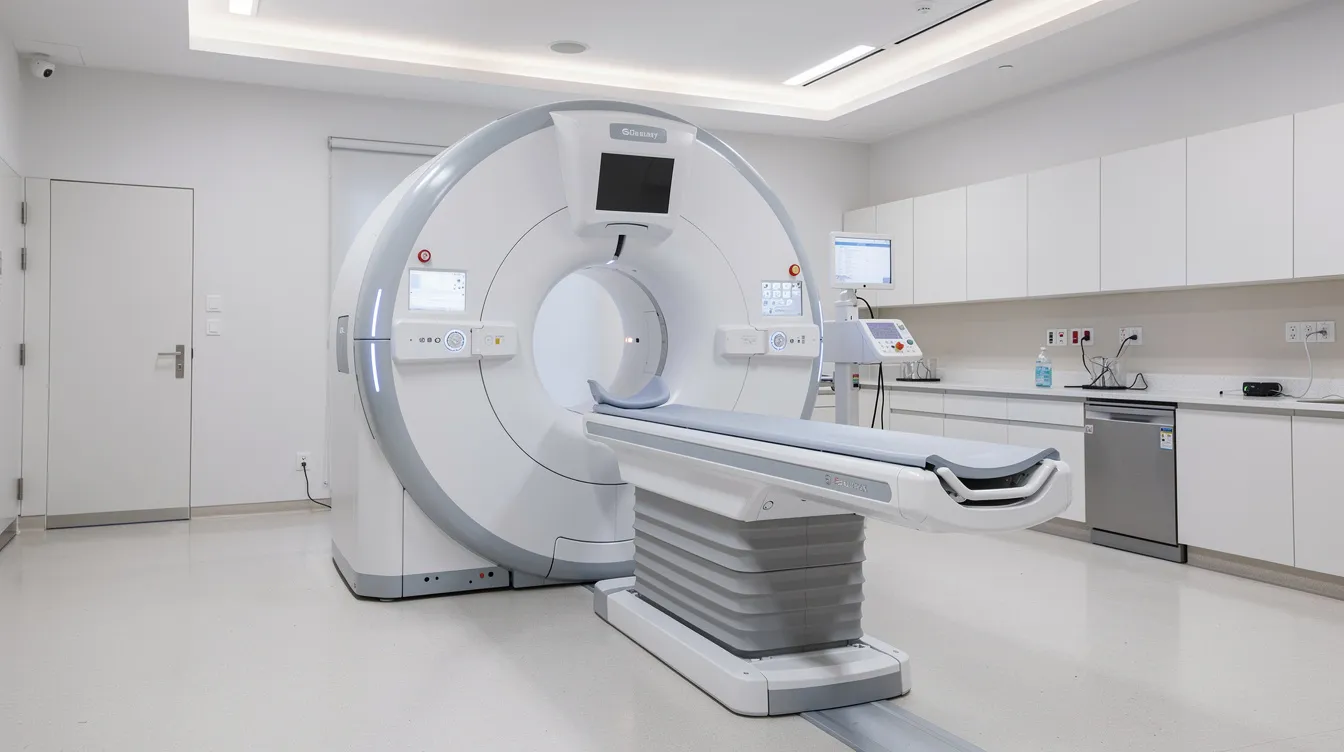
Medical equipment investment in LINAC machines, CT simulators, MRI and PET-CT scanners drives both initial capex and ongoing maintenance costs. Detailed equipment list and cost planning is essential because equipment AMC charges and calibration expenses are often underestimated.
Working capital and receivables create liquidity pressure even when the balance sheet shows profit. Delays in TPA payments, government scheme reimbursements and insurance settlements can stretch receivable days beyond 30–45 days. Institutions like Arogya Finance offer medical loans for cancer treatment to many patients, and organisations such as Indian Cancer Society – which has disbursed ₹341.14 crores for over 18,000 patients – provide financial assistance, but reimbursement timelines vary. Medical loans can cover costs from ₹20,000 to ₹1 crore, and the maximum amount of ₹25,000 is sanctioned for initial diagnosis and treatment under certain schemes. Inadequate working capital assessment can cause cash-flow stress despite reported earnings.
Interest rates and tenure significantly affect DSCR. In 2026, many healthcare term loans carry floating interest linked to repo-based benchmarks. Higher rates or shorter tenure reduce DSCR for the same net operating income. A 12–18 month moratorium on principal during commissioning supports DSCR in the early ramp-up period but extends total interest outgo, a trade-off that should be carefully evaluated.
Cancer Hospital Revenue Projections and Their Impact on DSCR
DSCR is ultimately a function of how revenue converts into the company’s operating income and then into cash accrual. The logical chain runs: installed capacity → utilisation → patient volumes → revenue by department → operating profit (EBITDA) → cash accrual → ability to repay → Oncology Hospital DSCR.
Revenue projections for key oncology departments should cover chemotherapy cycles per month (individual cycles can cost ₹50,000 to ₹5 lakh each), radiation therapy volumes (costing around ₹2 to ₹3 lakh per course), surgeries for cancer treatment (ranging from ₹2 to ₹6 lakh), diagnostics including MRI and PET-CT, and pharmacy margins. Overall cancer treatment costs in India range from ₹2 lakh to over ₹25 lakh depending on disease stage and modality, and these numbers should inform realistic tariff assumptions rather than aspirational pricing.
Regular screenings that improve survival rates for early cancer detection are also expanding the pool of cancer patients accessing treatment, while medical loans help reduce treatment abandonment by over 50%, supporting sustained demand. However, banks often back-check revenue assumptions against industry norms and local competition. Artificially stretching utilisation or tariffs only to reach a desired DSCR is a red flag. For DSCR purposes, slightly conservative and well-argued revenue assumptions are far more credible than aggressive ones that invite questions during bank appraisal.
How Banks Evaluate Cancer Hospital Repayment Capacity in India
Indian banks and NBFCs follow a structured project appraisal process for cancer hospital term loans, typically starting with submission of the DPR and financial projections, followed by credit-committee review and field verification.
Lenders examine the detailed project report covering project rationale, services, location and promoter credentials. They review overall oncology hospital investment estimates and means of finance including debt-equity structure and promoter contribution. Key financial projections scrutinised include the projected P&L for 7–10 years, projected balance sheet, cash-flow statement, DSCR schedule (year-wise and average), break-even analysis and capacity utilisation milestones.
Many banks insist on CMA Data or a structured financial model where revenues, expenses, capital structure, interest, principal and DSCR are presented as a single integrated framework. Lenders often test DSCR credibility by comparing per-bed and per-machine revenue with similar projects, reviewing promoter experience and stress-testing assumptions. A comprehensive analysis that demonstrates internally consistent projections is far more convincing than isolated numbers that don’t reconcile.
How to Improve DSCR of a Cancer Hospital Project
The goal is to strengthen genuine repayment capacity and operational efficiency, not to manipulate projections for borrowing purposes.
Capital-structure measures: Increasing promoter equity contribution reduces the term-loan requirement and improves DSCR. Optimising project cost by phasing non-critical capex – for example, starting with one LINAC rather than two – avoids over-investment in under-utilised facilities during initial years.
Repayment-structure strategies: Choosing an appropriate repayment tenure balances EMI size and total interest cost. Negotiating a realistic moratorium aligned with construction and commissioning, or considering step-up structures where instalments increase as revenues stabilise, can materially improve early-year DSCR.
Operational initiatives: Strengthening referral networks, ensuring empanelment with insurance partners and government schemes, prudent cost management in drug procurement and manpower planning, and maintaining adequate working capital limits all improve cash accrual without inflating revenue on paper. Lenders view favourably those promoters who demonstrate tested scenarios and willingness to adjust project scope for a healthy DSCR. Reverse-engineering revenue merely to raise DSCR may harm both cancer care quality and the company’s financial trend over time.
DSCR Sensitivity Analysis for a Cancer Hospital
Sensitivity analysis helps promoters and investors understand how changes in key assumptions impact Cancer Hospital DSCR. A high DSCR acts as a buffer against revenue volatility in cancer care, while a declining DSCR may signal financial stress or jeopardise covenant compliance.
Consider a base-case average DSCR of 1.55 over the tenure. Sensitivity cases might include:
| Scenario | Avg DSCR | Min DSCR | Risk |
|---|---|---|---|
| Base case | 1.55 | 1.20 | Comfortable |
| Revenue 10% lower | ~1.30 | ~1.05 | Early years tight |
| OpEx 10% higher | ~1.25 | ~1.00 | Mid-tenure strain |
| Interest rate +1% | ~1.45 | ~1.12 | Moderate pressure |
| Ramp-up delayed 1 year | ~1.40 | ~0.90 | First year critical |
Presenting such analysis in the DPR signals that the promoters have seriously considered downside risks. It makes the request for financial help from lenders more credible and can actually accelerate the credit-approval process. Promoters should use sensitivity analysis internally before approaching lenders to decide on appropriate project scale, debt component, and contingency planning for their business.
Common Mistakes in Cancer Hospital DSCR Projections
Many oncology projects face avoidable delays at the credit-sanction stage because DSCR projections are not aligned with realistic operating assumptions.
Operational errors: Assuming unrealistically high bed occupancy or machine utilisation within the first year. Ignoring gradual ramp-up of OPD referrals and local brand recognition in a new city – whether in New Delhi, Tamil Nadu or any other region. Underestimating manpower costs for experienced oncology consultants and medical physicists, and ignoring maintenance contracts for radiotherapy equipment.
Financial-modelling mistakes: Treating principal repayment as an expense in the P&L rather than in the cash-flow and DSCR computation. Calculating only average DSCR while hiding very low individual years. Not partially calculated or fully incorporate interest during moratorium where the loan structure actually capitalises it.
Working-capital gaps: Under-estimating receivable days from TPAs and government schemes. Not providing for initial inventory build-up of oncology drugs and consumables, leading to a liquidity crunch post-commissioning.
Documentation inconsistency: Variance between DPR narrative and detailed financial projections. Adjusting assumptions at the last minute to meet a target DSCR – experienced bankers reviewing the file can detect this easily. Transparent, technically sound projections improve trust with lenders and speed up appraisal.
Role of DPR and Financial Projections in Establishing Repayment Capacity
A Cancer Hospital DPR should logically connect clinical vision with financial viability. It should link project cost (land, building, radiation bunkers, equipment and working capital) through means of finance and department-wise revenue assumptions to resulting profitability, cash accrual and DSCR. Lenders expect DSCR to emerge as an outcome of integrated projections – not as a pre-decided number with back-fitted revenue and cost lines.
Supporting documents such as equipment quotations, architectural layouts, manpower plans and local market studies strengthen the credibility of the DPR and, by extension, the DSCR numbers. The financial projections for a cancer hospital DPR must follow the same assumptions described in the narrative – any inconsistency is a red flag during bank appraisal.
Conclusion: DSCR as the Financial Reflection of a Bankable Cancer Hospital
Cancer Hospital DSCR is not merely a ratio on a spreadsheet. It is the financial reflection of how realistically the hospital is expected to generate funds versus its debt obligations across the entire loan tenure. A sustainable oncology project must integrate realistic project cost budgeting, properly structured means of finance, clinically grounded revenue assumptions, prudent operating-cost forecasts, adequate working capital and a repayment schedule aligned with ramp-up.
When these elements are internally consistent, DSCR naturally falls into a comfortable range, reducing the need for last-minute restructuring. In my practice preparing project reports, DPRs and CMA Data for hospital and oncology projects, I have consistently found that borrowers who invest effort in building realistic, well-documented financial models achieve smoother credit appraisals and stronger relationships with their lenders.
For deeper planning of your oncology hospital venture – from project cost and equipment budgeting to revenue modelling and DSCR computation – I encourage you to explore the specialised cancer hospital resources available on ProjectReportBank.com.
Frequently Asked Questions (FAQs) on Cancer Hospital DSCR
These concise answers address practical DSCR doubts that hospital promoters commonly raise during early planning discussions with their advisors and lenders.
What is DSCR for a cancer hospital and how is it different from a normal business DSCR?
DSCR for a cancer hospital uses the same core formula – cash available for debt service divided by total debt service – as any other business. However, projections are tailored to oncology-specific factors: heavy medical equipment capex, longer ramp-up periods, healthcare cost structures and payer-mix complexities. Because oncology projects are capital intensive and clinically complex, lenders usually pay closer attention to year-wise DSCR, implementation risk and working-capital needs than they might for a less capital-intensive enterprise or a research center project.
Can a new oncology centre with no track record still obtain a bank term loan?
Yes. Many cancer hospitals in India are financed as greenfield projects. Banks typically insist on strong promoters, adequate equity contribution and satisfactory DSCR before sanctioning a term loan. While the entity’s past financial track record may be absent, lenders evaluate the promoters’ clinical background, technical partners and overall project structure to gain comfort on execution and repayment capacity. The availability of credit support from institutions and the growing base of Indian citizens seeking cancer care also strengthen demand-side arguments.
How does a moratorium period affect Cancer Hospital DSCR?
During the moratorium, principal repayment is postponed, keeping total debt service lower and improving DSCR in initial years. Interest may still be payable or capitalised depending on sanction terms. A longer moratorium smoothens DSCR during ramp-up but increases total interest outgo and extends the loan tenure. Moratorium length should be aligned with realistic commissioning and utilisation timelines – typically 12–18 months post-commissioning for oncology projects.
Why can a profitable cancer hospital still face repayment difficulties?
Accounting profit does not automatically mean sufficient cash for repayment. Delays in receivables from insurance and TPA companies, under-estimated working capital, high replacement capex or aggressive repayment schedules can all create cash-flow stress even when the income statement shows a positive bottom line. This is precisely why lenders rely on DSCR – which focuses on actual cash available for debt service – rather than net profit alone along with other ratios such as interest coverage.
Should DSCR be calculated only on an average basis or year-wise for a cancer hospital?
Banks and financial institutions generally expect DSCR to be presented year-wise across the full loan tenure, with an additional summary of minimum and average DSCR. Year-wise DSCR highlights weaker periods – for example, just after moratorium – which might be masked by a healthy overall average. This helps both promoters and lenders design a more suitable repayment schedule with appropriate hope for long-term financial sustainability of the project.
Explore All Cancer Hospital Project Report Guides
Continue exploring our complete series on Cancer Hospital project planning, project cost, equipment, financial projections, repayment capacity and bank finance.