Key Takeaways
This article answers two fundamental questions for anyone planning an oncology centre in India: “How much does a cancer hospital cost?” and “How should that investment be financed?” The perspective is that of a Chartered Accountant experienced in DPR preparation, project finance, and bank loan assessment – not a clinical or architectural viewpoint.
- A 50–150 bed dedicated cancer hospital in India can typically require an indicative investment of about ₹80–400+ crore depending on land cost, radiation technology, diagnostic intensity, and location. These are illustrative numbers; actual project cost must be determined through detailed feasibility and vendor quotations.
- Total project cost includes land, specialised radiation-shielded construction, high-value radiotherapy and diagnostic equipment, furniture, electrical and HVAC systems, medical gas systems, pre-operative expenses, contingency, interest during construction, and margin for working capital.
- Means of Finance must exactly match total project cost. The typical structure blends promoter contribution, equity, bank term loan, equipment finance, and working capital facilities in an appropriate debt-equity ratio.
- Financial viability depends on realistic assumptions about occupancy, cancer treatment volumes, payor mix, EBITDA, cash flow, and DSCR – not merely on bed count or a generic cost per bed benchmark.
- CA Manish Gugliya and ProjectReportBank.com help promoters prepare customised Cancer Hospital DPRs, financial projections, CMA Data, and bankable cost and finance structures for lender and investor discussions.
Explore Cancer Hospital DPR Guides
Explore our complete series on Cancer Hospital project planning, financial analysis and bank finance.
Introduction: Why Cancer Hospital Projects Are Capital-Intensive
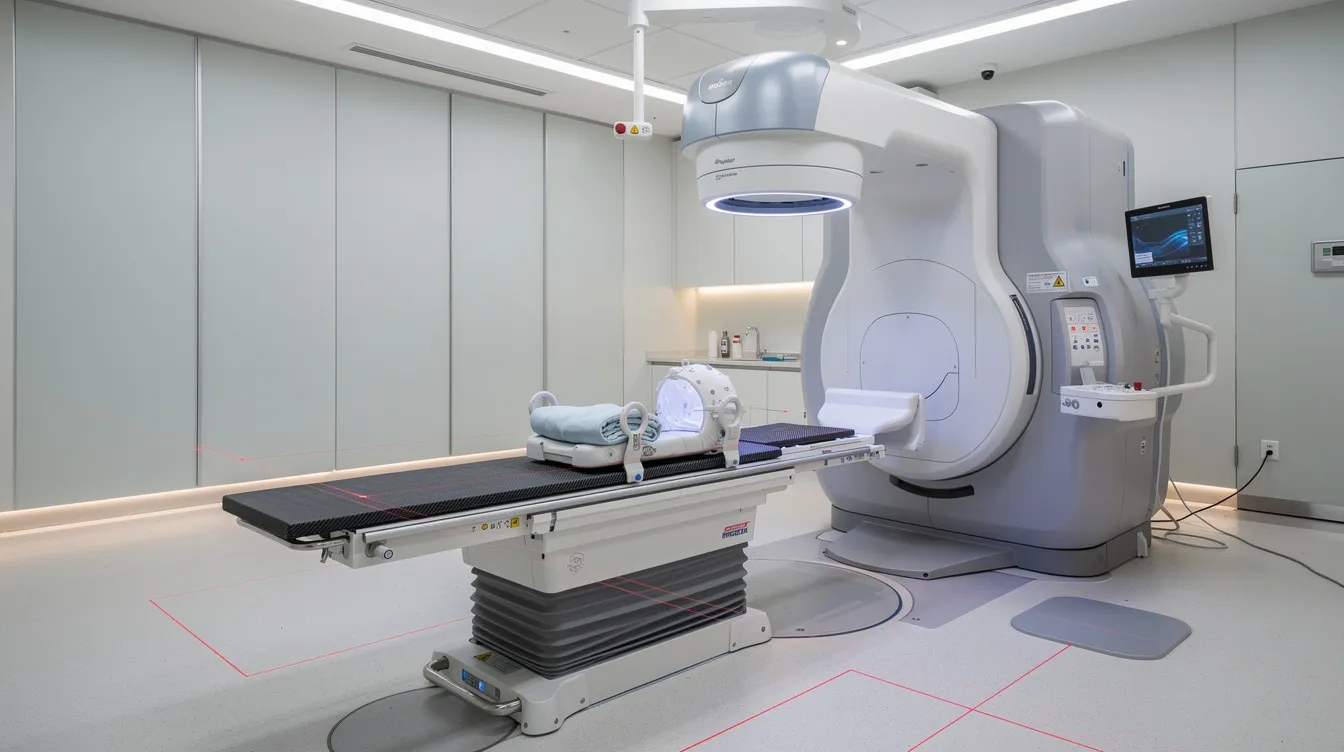
Developing a specialized cancer hospital requires high capital investment that goes well beyond what a general hospital of similar bed strength would demand. The difference lies in three areas: radiation infrastructure, diagnostic technology, and the complexity of cancer care delivery. A radiation oncology department needs thick concrete vaults to house linear accelerators safely, with maze-style entries and lead-lined doors that add substantially to building cost. A single LINAC installation, including the bunker, can cost ₹30–50 crore. Add PET-CT, MRI, multiple CTs, and molecular diagnostics, and the equipment budget alone can rival the entire civil construction cost.
Cancer patients often require extended inpatient services, repeated chemotherapy cycles, daily radiation therapy sessions over weeks, and complex surgical interventions. This means the hospital needs day-care chemotherapy bays, multiple ICU beds for immunocompromised patients, modular operation theatres, and palliative care facilities – all of which increase both capital and operating expenditure. Many patients, including pediatric patients and adult patients with advanced stage cancers, require bone marrow transplant units or isolation wards that carry significant construction and equipment costs.
A modern cancer centre typically houses medical oncology, surgical oncology, radiation oncology, PET-CT and CT imaging, MRI, pathology and histopathology, day-care chemotherapy, ICUs, operation theatres, and palliative care. Building a cancer hospital usually takes 2–4 years to reach mature utilization, during which capital remains deployed without full revenue.
The central financial relationship I always emphasize to promoters is: Project Cost → Means of Finance → Debt Servicing → Financial Viability. Underestimation at the project cost stage distorts the entire DPR and cash-flow projections, potentially making an otherwise strong project appear unviable – or worse, causing financial stress after commissioning. This article is written from a project-finance and DPR perspective, focusing on cancer hospital project cost and means of finance rather than clinical design.
What Is Included in Cancer Hospital Project Cost?
From a DPR and project-finance perspective, total project cost is the sum of all capital expenditure, pre-operative expenses, and margin for initial working capital required to bring the cancer hospital to stable, revenue-generating operations. It is not simply land plus building plus equipment.
About 20% to 30% of project costs are typically attributed to soft costs including permits, studies, consultancy, interest during construction, and statutory deposits. Ignoring these creates a gap between what is budgeted and what is actually needed. Statutory approvals alone can add 10–15% to hospital project costs when you account for AERB licensing, pollution board NOCs, fire approvals, and municipal permissions.
The following are the major sub-components of cancer hospital project cost:
- Land and site development – Purchase price or long-term lease premiums, boundary walls, approach roads, levelling, and basic utility connections (water, sewer, power).
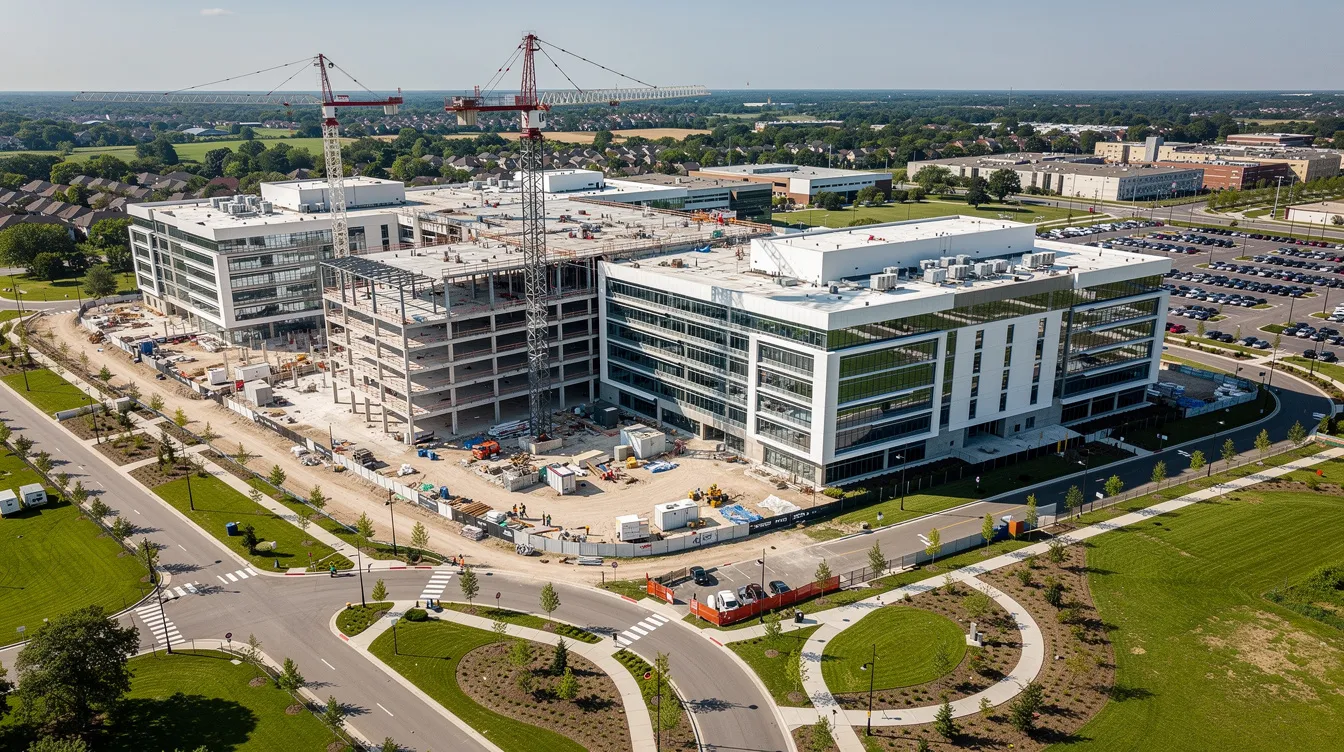
- Building and civil construction – OPD, IPD wards (general and private), ICUs, OTs, chemo day-care, administration, support services, and radiation bunker superstructures. In India, hospital construction costs average ₹3,200 to ₹4,500 per square foot, and this rises significantly for oncology-grade specifications.
- Radiation-related civil works and shielding – LINAC bunkers require concrete of particular density, labyrinth-style entry, lead doors, and specialised HVAC to control radiation leakage. PET-CT hot labs need similar shielding. These can add 8–12% to base building cost.
- Medical equipment – LINACs, HDR brachytherapy, CT simulators, chemo chairs, infusion pumps, surgical instruments, ICU ventilators, anaesthesia machines, and monitors.
- Radiotherapy equipment – LINACs, cobalt units where applicable, treatment planning systems, mould rooms, dosimeters, and QA tools. At Salem Government Hospital, a LINAC was recently procured at approximately ₹22.96 crore, with brachytherapy and CT simulator adding another ₹8 crore.
- Diagnostic equipment – PET-CT, CT, MRI, mammography, ultrasound, digital X-ray, and pathology or molecular diagnostics infrastructure. High-end imaging and radiation equipment can individually cost tens of crores in India.
- OT and ICU equipment – Modular OT tables, laminar flow systems, anaesthesia workstations, ventilators, monitors, endoscopy and laparoscopy sets.
- Furniture and fixtures – Patient beds, side lockers, couches, nursing stations, pharmacy and lab furniture, and waiting-area seating.
- Electrical installations – Internal wiring, panels, transformers, DG sets, UPS, and heavy cabling sized for radiation and imaging equipment loads.
- HVAC systems – Central air-conditioning, specialised AHUs, HEPA filtration in OTs and sterile labs, and precise humidity and temperature control. Cancer hospitals require specialized HVAC systems and precise air filtration to protect immunocompromised patients. MEP systems can claim 25% to 30% of the building budget in specialized cancer facilities.
- Medical gas pipeline system – Oxygen, vacuum, compressed air manifolds with outlets in ICUs, OTs, wards, and emergency areas.
- Fire detection and safety systems – Sprinklers, hydrants, alarms, fire doors, evacuation staircases as per local fire NOC norms.
- IT and HIS infrastructure – Hospital information system, EMR, PACS, LAN, Wi-Fi, servers, cybersecurity, and tele-consultation capabilities.
- Ambulance and outreach vehicles – BLS/ALS ambulances and outreach vans for screening camps covering breast cancer and other common cancers.
Additionally, the project cost must include:
- Preliminary and pre-operative expenses – Trust or company formation, legal fees, architectural and engineering design, project management consultancy, and trial runs.
- Professional and consultancy expenses – DPR preparation, financial advisory, NABH/NABL consultancy, radiation safety and AERB consultancy.
- Interest during construction (IDC) – For term loans drawn during the 18–30 month implementation period.
- Deposits and statutory expenses – Electricity deposit, water connection, municipality charges, and licensing fees.
- Contingency provision – Typically 5–10% of hard costs to cover price escalation and minor scope changes.
- Margin for working capital – Initial inventory of high-cost chemotherapy drugs, consumables, staff salaries, and overheads before revenue stabilises.
Among these, land, building, equipment, and core systems are capitalised in the balance sheet. Working capital margin forms part of current assets in financial projections.
Indicative Cancer Hospital Project Cost in India (By Scale)
The cancer hospital project cost in India varies enormously with land cost in that city, tier of the city, radiation setup, level of diagnostics, and whether building is owned or leased. Urban areas typically have higher land acquisition costs for hospital construction. The following table provides illustrative bands for 2026 – these are not quotations or fixed benchmarks.
| Project Type | Indicative Capacity | Major Facilities | Indicative Investment (₹ Crore) |
|---|---|---|---|
| Small Oncology Centre | 25–40 beds, outpatient oncology, limited IPD, day-care chemo, no radiotherapy | Basic lab, ultrasound, X-ray, minor OT, pathology | ₹40–80 (excl. land); ₹70–120 (incl. land in metro fringe) |
| Mid-sized Cancer Hospital | 60–90 beds, medical + surgical oncology, 2–3 OTs, ICU, CT, basic radiotherapy or tie-ups | 1 LINAC or cobalt unit, CT, operational diagnostics, day-care chemo | ₹120–200 (excl. land); ₹200–300 (incl. land in Tier-1 cities) |
| Comprehensive Cancer Hospital | 100–150 beds, full medical, surgical and radiation oncology, 1–2 LINACs, CT simulator, mammography | Radiotherapy bunker(s), PET-CT, CT, MRI, multiple OTs, ICU, palliative care | ₹250–400 |
| Advanced Cancer Centre | 150+ beds, 2+ LINACs, HDR brachytherapy, PET-CT, MRI, bone marrow transplant unit, research centre | Full-spectrum oncology, molecular diagnostics, dedicated research facilities | ₹400–700+ |
For reference, the National Cancer Institute at Jhajjar (Haryana) was built at a project cost of ₹2,035 crore for 710 beds, representing one of India’s largest single hospital investments.
Key points to note:
- Two 100-bed cancer hospitals can differ by ₹50–100 crore depending on whether PET-CT is included, the number of LINACs, quality of finishes, and payor-segment targeting. Costs for advanced hospitals can exceed ₹1 crore per bed, while a general 100-bed hospital typically costs ₹30–60 crore to build. Hospital construction cost per bed in India ranges from ₹50 lakh to ₹1 crore in standard setups, but oncology specifications push this higher.
- For reference, a 20-bed hospital costs ₹8–15 crore, a 30-bed hospital project costs around ₹12–20 crore, and a 50-bed hospital project costs ₹15–30 crore in India – all at general hospital specifications. Hospital setup costs vary by location, ranging ₹10–20 crore for smaller facilities. Cancer-specific infrastructure adds substantially to these base numbers.
- Promoters should treat these figures as starting references and then refine them through a detailed feasibility study and architect plus equipment vendor quotations.
For a more construction- and infrastructure-focused breakdown, readers can refer to the Cancer Hospital Project Cost in India – Complete Setup & Investment Guide.
Major Factors That Determine Cancer Hospital Project Cost
Using a “₹x crore per bed” formula to estimate oncology hospital investment is unreliable. The major cost drivers for building a cancer hospital include location, technology mix, and scale. A 100-bed hospital project with two LINACs, PET-CT and molecular diagnostics will cost dramatically more than a 100-bed hospital with basic chemotherapy and outsourced radiation.
Key determinants include:
- Bed capacity and department mix – Ratio of ICU to general beds, day-care chemo capacity, proportion of private rooms, inclusion of pediatric oncology wards and separate areas for adult patients, and the planned specialty mix and service mix across oncology sub-disciplines.
- Location and land cost – Metro versus Tier-2/3 city, owned versus leased premises, FSI/FAR rules, and built up area permissible. Land cost in urban areas is one of the largest variables.
- Construction specifications – NABH-ready designs, modular OTs, infection control zoning, and façade quality. NABH compliance increases hospital construction costs by 8–12%. Construction costs for specialized medical and cancer-care buildings average $500+ per square foot internationally, and 40% to 55% of total project budget is typically spent on civil construction.
- Radiotherapy technology – Type and number of LINACs, energy levels, IGRT/IMRT/VMAT capabilities, and whether brachytherapy is included. Oncology hospitals need stringent regulatory compliance for radiation therapy installations.
- Imaging and diagnostic facilities – PET-CT, MRI, multiple CTs, mammography, digital pathology, and molecular labs. A PET-CT alone can add several crore to the budget.
- Surgical oncology infrastructure – Number of OTs, laminar flow systems, plans for robotic surgery where applicable.
- ICU and HDU capacity – Isolation rooms and negative-pressure rooms for immunocompromised cancer patients undergoing treatment.
- Accreditation ambitions – NABH, NABL, or JCI-level infrastructure raises IT, HVAC, documentation, and compliance investments.
- Imported versus domestic equipment – Import duty, foreign exchange risk, and shipping costs affect the total cost. New versus refurbished equipment decisions must comply with AERB and other safety regulations.
- Construction period – Hospital construction costs vary by location and specialty services. Longer implementation increases interest during construction. Phased commissioning can spread the investment but delays revenue.
- Working capital cycle – Payor mix of cash, insurance, TPAs, and government scheme patients affects receivable days and thus working capital within the project cost.
A formal feasibility study should quantify these factors before finalising cancer hospital setup cost and financing structure.
Illustrative Cancer Hospital Project Cost Breakup (Hypothetical Example)
To demonstrate how total project cost is allocated in a DPR, here is a hypothetical example of a 120-bed comprehensive cancer hospital in a Tier-2 city with 2 LINACs, PET-CT, full diagnostics, and NABH-ready finishes. All values are purely illustrative for understanding purposes in 2026 and are not quotations.
| Particulars | Amount (₹ Crore) | % of Total Project Cost |
|---|---|---|
| Land / Site Development | 25.00 | 10.0% |
| Building & Civil Work | 62.50 | 25.0% |
| Radiation Infrastructure (bunkers, shielding, specialised civil) | 22.50 | 9.0% |
| Medical Equipment (OT, ICU, chemo, surgical instruments) | 37.50 | 15.0% |
| Diagnostic Equipment (PET-CT, CT, MRI, lab) | 27.50 | 11.0% |
| Furniture & Fixtures | 10.00 | 4.0% |
| Electrical / HVAC / Utilities (incl. MGPS, fire, lifts) | 20.00 | 8.0% |
| IT / HIS & Communication | 5.00 | 2.0% |
| Preliminary & Pre-operative Expenses | 7.50 | 3.0% |
| Deposits & Statutory Expenses | 3.00 | 1.2% |
| Interest During Construction | 12.50 | 5.0% |
| Contingency | 7.50 | 3.0% |
| Working Capital Margin | 10.00 | 4.0% |
| Total Project Cost | 250.00 | 100.0% |
Key observations from this breakup:
- Medical, radiotherapy, and diagnostic equipment together represent about 35% of total project cost. In a more technology-intensive setup, equipment represents 15% to 40% of one-time project costs in cancer hospitals, and medical equipment costs account for 20–30% of total hospital costs in most configurations.
- Specialised radiation infrastructure adds approximately 9% to the project cost – a line item that simply does not exist in a general hospital project.
- Contingency and working capital margin together provide about 7% buffer against cost escalation and initial cash-flow stress. Without these, even a small delay or cost overrun can push the project into financial difficulty.
For detailed equipment-level budgeting, promoters should consult the Cancer Hospital Equipment List & Cost in India resource, as equipment configuration materially affects total project cost and loan requirement.

What Is “Means of Finance” for a Cancer Hospital Project?
Means of Finance is the complete set of funding sources used to meet 100% of total project cost. In any DPR prepared for bank appraisal, the most basic consistency check is: Total Project Cost = Total Means of Finance. If these two numbers do not match, the DPR loses credibility immediately.
Typical funding sources include:
- Promoter contribution – Equity capital, internal accruals, or unsecured loans subordinated to bank debt where acceptable to the lender.
- Equity from strategic or financial investors – Healthcare groups, PE/VC investors, or partner hospitals contributing capital.
- Bank term loan – For eligible fixed assets including building, plant and machinery, medical equipment, and radiotherapy systems.
- Dedicated medical equipment finance – From banks or NBFCs, sometimes with vendor-linked financing schemes for LINACs, PET-CT, CT, and MRI.
- Working capital facilities – Cash credit, overdraft, or working capital term loans for operating cycle needs.
- Other sources – Quasi equity, grants, CSR contributions for charitable trusts, or eligible government incentives under programmes like NPCDCS where genuinely applicable and verifiable.
Availability and terms of each source depend on promoter profile, credit history, security offered, lender policy, and current market conditions. No source is automatic.
In my experience, the real challenge in cancer hospital financing is not just raising funds but matching each asset category with an appropriate source and tenor. A mismatch – such as funding a 15-year-life LINAC through a 5-year loan – creates avoidable repayment stress.
Promoter Contribution in a Cancer Hospital Project
Promoter contribution is the equity and quasi-equity that promoters bring into the project from their own resources. Lenders view this as a measure of the promoter’s commitment and risk sharing. A project where the promoter has minimal financial exposure signals higher risk to the bank.
- Banks typically expect promoters to fund a reasonable portion of the project cost – illustratively 30–40% of total cost – from own sources. Actual margins vary by lender, promoter strength, and project risk.
- Promoter contribution can take several forms: share capital, capital contribution by partners, corpus of a charitable trust, or unsecured loans from promoters that are subordinated to bank debt (subject to lender acceptance).
- Lenders will verify the source of promoter funds – savings, business profits, asset sale proceeds, family income – through bank statements and supporting documentation. This evidence must be clearly presented in the DPR and loan application.
- Timing matters: lenders may prefer phased equity infusion during project implementation rather than back-ended contributions, to ensure cost overruns are not solely debt-funded.
- Promoter contribution directly influences cancer hospital debt-equity ratio and bank comfort. Higher equity reduces debt burden and improves DSCR.
Promoters should design the project primarily for long-term sustainability and realistic occupancy, not simply to maximise term-loan amount.
Bank Term Loan for Cancer Hospital Project
Bank term loans are the primary external long-term funding source for most oncology hospital projects in India, subject to project viability and adequate security.
- Eligible assets typically include building and civil works, radiation infrastructure, core medical and diagnostic equipment, electrical and HVAC systems, furniture and fixtures, and IT/HIS servers – depending on bank policy.
- Margin: Banks typically finance 60–75% of eligible fixed assets; the balance is brought by promoters as margin. These percentages are indicative, not uniform norms.
- Repayment tenure and moratorium: Typically 7–12 years post-commissioning, with a possible moratorium during construction and initial stabilisation. Each lender’s policy differs.
- Security: Primary charge on project assets, possible additional collateral such as immovable property or personal guarantees, and assignment of project cash flows.
- Appraisal parameters: Financial feasibility, projected DSCR, break-even period, sensitivity to occupancy assumptions, promoter experience in healthcare, and regulatory readiness (AERB, pollution board, building approvals, fire NOC).
- Documentation: A detailed cancer hospital loan project report or DPR including financial projections, CMA data, and implementation schedule is mandatory.
A high bed hospital project cost alone does not guarantee a large term loan. Sanction depends on demonstrated viability and risk assessment.
Medical Equipment Finance for Oncology & Radiotherapy
The cost of medical equipment – particularly LINACs, brachytherapy units, PET-CT, CT, MRI, and advanced surgical instruments – can be a dominant share of oncology hospital project cost and deserves focused financing strategy.
- Cost profile: A mid-to-high-end LINAC costs ₹15–30 crore including bunker fit-out; PET-CT ₹8–15 crore; MRI ₹4–10 crore; CT scanner ₹1–4 crore. These are broad bands – actual costs depend on vendor, specifications, and import duties.
- Financing options: Equipment can be financed through the main bank term loan or through specialised equipment finance from NBFCs or vendor-linked schemes. Medical equipment financing interest rates in India currently range from approximately 8.5% to 12% per annum, depending on borrower profile and lender type.
- Useful life and tenure alignment: A LINAC has a useful life of 12–15 years; MRI 8–10 years; CT 7–8 years. Finance tenure should not exceed realistic economic life to avoid paying for obsolete technology.
- Quotation accuracy: DPR equipment costs must include delivery, installation, commissioning, training, customs duty, and GST. Hidden costs in freight, insurance, and site preparation are common sources of budget overrun.
- Annual maintenance: Annual maintenance for sophisticated equipment like LINACs can cost around 10% of the initial cost. AMC/CMC, software licence renewals, and consumables must be factored into operating projections and DSCR calculations.
- Regulatory requirements: AERB licences for LINACs and PET-CT scanners influence layout, construction timelines, and commissioning schedules. Health facility licensing and environmental approvals are required for opening cancer hospitals with radiation equipment.
Working Capital Requirement for a Cancer Hospital
Securing funds for land, building, and equipment alone is not enough. Cancer hospitals need sufficient working capital to manage day-to-day operations, especially during the first 18–24 months when occupancy ramps up.
- Working capital requirement covers inventory of chemotherapy drugs, injectables, disposables, implants, blood products, and diagnostic reagents, plus receivables from TPAs and government schemes, minus current liabilities.
- Key expense heads include salaries of oncologists, surgeons, radiologists, nurses, and technicians. Personnel costs can represent 35% to 45% of operational expenditure in cancer facilities, with recurring operational expenses including 40% to 45% for staffing in oncology hospitals. Additionally, 30% to 40% of operating expenses are spent on pharmaceuticals and consumables in cancer hospitals.
- There is an important distinction between initial working capital requirement (included in total project cost as margin for working capital) and ongoing working capital facilities from banks (cash credit or overdraft limits sanctioned based on operating cycle).
- Oncology receivable cycles can be lengthy. When dealing with government schemes, insurance TPAs, or NGO-supported treatment fund disbursements, payment delays of 60–90+ days are common. Many patients, including poor patients and underprivileged cancer patients, may be covered under schemes where reimbursement is slow. The Indian Cancer Society, for instance, has disbursed ₹341.14 crores for over 18,000 patients – but such payments flow to hospitals, not directly to patients, creating receivable lags. NGOs provide financial aid directly to hospitals, not to patients.
- Underestimating working capital is a frequent cause of financial stress, even when the fixed-asset side of the project is well-funded.
Illustrative Means of Finance Structure (Linked to Example Project)
Continuing the earlier hypothetical 120-bed cancer hospital example with a total project cost of ₹250 crore, the Means of Finance must match this amount exactly.
| Source of Finance | Amount (₹ Crore) | % |
|---|---|---|
| Promoter Contribution | 75.00 | 30.0% |
| Equity / Investor Contribution | 15.00 | 6.0% |
| Bank Term Loan | 120.00 | 48.0% |
| Equipment Finance | 30.00 | 12.0% |
| Other Eligible Sources (grants, CSR, subordinated loans) | 10.00 | 4.0% |
| Total Means of Finance | 250.00 | 100.0% |
- A reasonable equity base (₹90 crore or 36% in this example) is important to absorb initial operating losses and any cost overruns during construction.
- Allocating a separate line for equipment finance can optimise cash flows by matching equipment-loan instalments to the incremental EBITDA those machines generate, particularly for LINACs and PET-CT.
- Lenders will evaluate overall debt level (₹150 crore term debt in this example) against projected cash accruals and average DSCR while deciding acceptable term-loan quantum. The generous support of strategic investors or CSR contributions can meaningfully reduce debt pressure.

Debt-Equity Ratio and Financing Structure in Cancer Hospitals
Debt-equity ratio is calculated as total long-term debt divided by tangible net worth or equity. In the example above, total long-term debt (term loan ₹120 crore + equipment finance ₹30 crore) is ₹150 crore, and equity (promoter + investor contribution) is ₹90 crore, giving a debt-equity ratio of approximately 1.67:1.
- A very high debt-equity ratio creates repayment stress during the initial phase when occupancy and cancer treatment volumes are still ramping up. In the private sector, lenders generally look for ratios between 1.5:1 and 2:1, but this varies.
- For a charitable trust-promoted project that may have access to grants or CSR, acceptable leverage may differ from a corporate for-profit venture.
- Beyond balance-sheet leverage, lenders also assess cash-flow leverage through DSCR and interest coverage ratios.
- There is no single “ideal” debt-equity ratio for every cancer hospital project. Structure must reflect project cash flows, promoter strength, and lender comfort within the context of the specific hospital type and its existing facility plans.
How DSCR Affects Cancer Hospital Loan Eligibility
DSCR (Debt Service Coverage Ratio) indicates how comfortably the project’s annual cash accrual can service its term-loan principal and interest obligations. It is perhaps the single most important ratio that banks examine during cancer hospital project finance appraisal.
Formula: DSCR = Cash Accrual Available for Debt Service ÷ Total Debt Service (interest + principal due for the year)
Using the hypothetical project: if stabilised-year cash accrual (net profit + depreciation + interest on term loans) is ₹35 crore and annual debt service (principal repayment + interest) is ₹25 crore, the DSCR is 1.40. Most lenders consider a minimum annual DSCR of approximately 1.25–1.30 acceptable, with average DSCR over the loan period expected to be higher.
- DSCR is highly sensitive to changes in occupancy levels, treatment tariffs, mix of cash versus scheme patients, and operating cost assumptions.
- During DPR preparation, sensitivity checks on DSCR – such as “what if revenue falls 10%?” – are essential before finalising means of finance.
- A DSCR below 1.10 in any year is generally viewed as risky by lenders and may trigger covenant concerns.
Matching Each Asset With the Right Source of Finance
A fundamental project-finance principle is that long-term assets should be funded by long-term sources, and short-term requirements by short-term facilities.
| Requirement | Suitable Funding Source | Reason |
|---|---|---|
| Land | Promoter contribution / long-term equity | Lenders are generally cautious about funding land |
| Building & Civil Works | Equity + Term Loan | Long useful life, low obsolescence |
| Medical Equipment | Term Loan / Equipment Finance | Match tenure with equipment economic life |
| Radiotherapy Equipment (LINACs, brachytherapy) | Long-tenor equipment finance or term loan | Very high cost, central to revenue, 12–15 year life |
| Furniture & Fixtures | Equity or term loan (shorter tenure) | Moderate useful life |
| IT / HIS Systems | Mix of equity, term loan, or leasing | Technology obsolescence considerations |
| Initial Working Capital | Promoter margin + WC facility | Revolving in nature |
| Ongoing Operating Cycle | Cash credit / overdraft / internal accruals | Not suited to long-term loans |
Funding permanent assets with short-term borrowings creates liquidity stress. Aligning moratorium and repayment schedules with realistic commissioning and ramp-up timelines of the cancer hospital is equally important.
Common Mistakes in Cancer Hospital Project Costing & Financing
In my experience preparing cancer hospital project reports and DPRs, many problems arise from early planning mistakes rather than post-commissioning issues.
- Underestimating radiation-shielding and bunker costs – missing maze walls, lead doors, and specialised HVAC for LINAC and brachytherapy installations.
- Ignoring escalation in steel, cement, and fitout costs during an 18–24 month construction period; providing inadequate contingency. The Goa Tertiary Cancer Care Centre saw its budget revised from ₹150 crore to ₹310 crore due to scope changes and cost escalation.
- Using outdated equipment quotations or excluding freight, insurance, installation, testing, calibration, and training charges.
- Not budgeting adequately for IT/HIS, PACS, cybersecurity, and integration with diagnostic equipment.
- Under-provisioning pre-operative expenses – marketing, staff recruitment, trial runs, license fees – and interest during construction.
- Underestimating working capital, especially inventory of high-cost chemotherapy drugs and delayed payments from government schemes.
- Over-optimistic occupancy projections and revenue assumptions not aligned with actual regional demand for cancer care and competitive landscape. Such patients who might be projected but never arrive create a DSCR gap.
- Structuring the project with excessive debt and minimal promoter contribution, leading to DSCR pressure.
- Mismatch between project cost and means of finance tables – a basic numerical error that destroys credibility with bankers.
- Ignoring lifecycle costs like equipment AMC/CMC, software upgrades, and periodic overhauls of radiotherapy machines.
A realistic feasibility study and disciplined DPR preparation are the most effective control measures against these errors.
Cancer Hospital DPR for Bank Finance
A Detailed Project Report converts the promoter’s concept into a structured document that banks and investors can evaluate. A bankable cancer hospital DPR typically includes:
- Promoter and management profile – experience in healthcare, finance, governance.
- Project concept – scale, bed strength, service mix across medical, surgical, and radiation oncology, and diagnostic tests planned.
- Location analysis – demand for cancer treatment, existing oncology facilities (like Tata Memorial Hospital or similar regional centres), referral patterns, catchment covering both general category and underserved populations.
- Technical configuration – departments, bed count (how many beds in each category), ICU and OT planning, radiotherapy plan, diagnostic plan.
- Detailed project cost estimate – with assumptions, quotations, and clear heads.
- Means of finance structure – promoter contribution, bank term loan, equipment finance, working capital facilities.
- Equipment list and cost summary.
- Implementation schedule – Gantt chart covering civil work, equipment procurement, recruitment, trial runs, and when the project starts generating revenue.
- Manpower planning – doctors, nurses, technicians, support staff, administration, with cost projections.
- Projected financial statements – P&L, Balance Sheet, Cash Flow for at least 7–10 years.
- Working capital assessment, break-even analysis, DSCR, and key financial ratios.
- Risk analysis and sensitivity scenarios.
All quantitative assumptions – patient volumes, tariffs, inflation – must be internally consistent and transparent for lenders’ scrutiny. Promoters can explore broader Cancer Hospital / Oncology Centre Project Report resources available on ProjectReportBank.com for understanding DPR expectations.
How Banks May Examine the Cost & Financing Structure
While each bank has its own credit policy, certain evaluation themes are common in cancer hospital project finance appraisal:
- Reasonableness of projected project cost compared to benchmarks and peer projects, supported by quotations and BOQs.
- Adequacy and timing of promoter contribution; verification of source and whether it is firmly tied up.
- Debt-equity ratio and overall leverage, including other group-level borrowings.
- Technical feasibility and regulatory readiness – land title, building plans, AERB and pollution norms, fire NOC, hospital registration. These relate to health facility licensing requirements.
- Implementation schedule and risk of delays leading to cost overruns and higher IDC.
- Projected occupancy and revenue assumptions, with particular attention to high-incidence segments like breast cancer treatment and emergency treatment demand in the region.
- EBITDA margin trends and cash accrual sufficiency to cover term-loan instalments and interest.
- Sensitivity scenarios in the DPR – how resilient is the project if revenue is lower or costs higher.
- Security, collateral, guarantees, and quality of governance structures.
Sanction terms – loan quantum, tenure, pricing, security – depend on the lender’s risk perception and cannot be standardised across every cancer hospital bank loan application.
Practical Example – From Project Cost to Loan Repayment
This simplified case study uses rounded numbers for a hypothetical 100-bed cancer hospital with one LINAC and CT in a new hospital facility near New Delhi.
Step 1 – Project Cost: ₹180 crore (Land ₹25 Cr, Building ₹55 Cr, Equipment ₹55 Cr, Pre-operative & contingency ₹20 Cr, Working Capital Margin ₹10 Cr, IDC ₹15 Cr).
Step 2 – Means of Finance: Promoter Contribution ₹65 crore (36%), Bank Term Loan ₹100 crore (56%), Equipment Finance ₹15 crore (8%). Total = ₹180 crore.
Step 3 – Year 3 Operating Snapshot: 75% occupancy, average inpatient services revenue, radiotherapy sessions and chemotherapy cycles volume achieving near-capacity. Revenue: ₹75 crore. Operating expenses (including staffing at 40–45% and pharmaceuticals at 30–35%): ₹55 crore. EBITDA: ₹20 crore.
Step 4 – DSCR Calculation (Year 3):
| Particulars | ₹ Crore |
|---|---|
| Revenue | 75.00 |
| Operating Expenses | 55.00 |
| EBITDA | 20.00 |
| Depreciation | 10.00 |
| Interest on Term Loans | 10.50 |
| Profit Before Tax | 9.50 |
| Tax (assumed 25%) | 2.38 |
| Net Profit | 7.12 |
| Cash Accrual (Net Profit + Depreciation) | 17.12 |
| Annual Principal Repayment | 11.50 |
| Total Debt Service (Principal + Interest) | 22.00 |
| DSCR | 1.25 |
Step 5: If occupancy drops to 60%, revenue falls to approximately ₹60 crore, EBITDA drops to ₹12–13 crore, and DSCR could fall below 1.0 – requiring either additional promoter support, loan restructuring, or cost reduction. This demonstrates why project cost, means of finance, and financial projections must be designed together, with a buffer built in for out of pocket expenses during initial diagnostic tests and ramp-up phases.
Sensitivity Analysis – What If Assumptions Change?
Sound cancer hospital financial feasibility analysis always includes sensitivity scenarios. Early stage planning that ignores downside risks produces unreliable DPRs.
Key scenarios to test:
- Construction cost increase by 10% – Adds ₹5–10 crore to project cost (depending on base), requiring either additional promoter contribution or higher term loan, increasing interest cost and reducing DSCR by 0.05–0.10 points.
- Equipment cost escalation or mid-project additions – Deciding to add a second LINAC or PET-CT increases capex but also potential revenue. The DPR must show whether incremental revenue justifies the higher debt.
- Commissioning delay of 6–9 months – Higher IDC (possibly ₹3–5 crore additional), more working capital needed, later revenue start. The effect compounds across DSCR, payback, and cash flow.
- Lower occupancy (60% vs 75%) – Revenue falls, fixed costs remain, EBITDA shrinks, DSCR deteriorates. This is perhaps the highest-impact scenario.
- Higher operating costs – Rising salaries, consumable prices, or interest rates (even a 1% increase on ₹100+ crore debt adds ₹1+ crore annually to interest).
- Delayed receivables from government schemes – Increases working capital requirement. Many cancers treated under government programmes involve significant payment lags, affecting cash flow for poor families being served.
For each scenario, the DPR should recalculate revised total cost, means of finance, annual profitability, cash flow, DSCR, and payback period. Additional promoter support may be needed to keep the project stable.
Sensitivity analysis is a planning tool, not an academic exercise. It helps promoters choose safer financing structures, adequate contingency, and realistic revenue assumptions. The financial help it provides during planning far outweighs the effort of running additional scenarios.
FAQs – Cancer Hospital Project Cost & Finance
The following FAQs address practical questions from promoters, doctors, and trusts planning oncology centres.
How much does it cost to build a dedicated cancer hospital in India?
A small oncology centre with day-care chemo and limited beds may start around ₹40–80 crore excluding land, while a 100–150 bed comprehensive cancer hospital with LINACs and PET-CT can require ₹150–400+ crore depending on land cost in India, city tier, radiation technology, and finish quality. A 50-bed hospital project costs ₹15–30 crore at general hospital specifications, but oncology adds significantly. These are indicative for 2026; a detailed feasibility study and DPR with vendor quotations are essential for accurate budgeting of any new hospital. Tax benefits and financial assistance available under specific schemes, if any, should be verified with relevant authorities.
Is there any special financing support available only for cancer hospitals?
While some public schemes and credit-linked incentives may support healthcare infrastructure – including tertiary care cancer centre programmes under the National Cancer Institute umbrella or NPCDCS – they are policy-dependent and not universally available. Organisations like ICS empanelled hospital networks or Indian Cancer Society may provide financial aid for needy cancer patients and underprivileged patients, but this supports treatment costs rather than hospital construction. Dr. Arun Kurkure Fund provides ₹25,000 for initial cancer treatment, and over 17,000 patients received ₹23.82 crores for initial treatment since 2019. The Cancer Cure Fund supports underprivileged patients with a maximum of ₹5 lakh per patient. However, these are patient-support mechanisms, not hospital-construction financing. Promoters should verify current schemes with government agencies and lenders rather than relying on generic assumptions in their cancer hospital financing plan.
Can refurbished LINACs or diagnostic machines reduce project cost?
Some promoters explore refurbished equipment to reduce oncology hospital investment cost, but they must carefully consider patient safety, AERB regulatory compliance, vendor reliability, warranty availability, and potential difficulty in arranging finance. Lenders and regulators are generally more cautious with refurbished high-end oncology equipment. Professional and legal advice is essential before taking this route for end stage cancer patients’ treatment infrastructure.
How early should I approach banks for a cancer hospital bank loan?
Start preliminary discussions once land is identified, initial feasibility is done, and a draft DPR outline is ready. Early engagement allows time to refine project cost, bed count, equipment scope, and means of finance in line with lender feedback before finalising contracts and starting major civil work. This also gives adequate time for square foot cost benchmarking and securing AERB and regulatory approvals.
Can the same DPR be used for all banks and investors?
While the core cancer hospital DPR – project cost, means of finance, financial projections – can be common, different lenders may ask for additional annexures, different working capital assessments (including assessment of receivables from partner hospitals or TPAs), or specific sensitivity cases. Prepare a robust base DPR, then customise presentations, CMA data formats, and annexures to match each bank’s appraisal process. In the general category of project finance documentation, this adaptability is expected and necessary for effective control over the approval timeline.
Conclusion – Integrating Cost, Finance & Viability for a Bankable Cancer Hospital
A successful cancer hospital project in India is not defined only by the amount spent on land, building, or medical equipment. It is defined by the integration of realistic project cost estimation, appropriate means of finance, adequate working capital, practical revenue and occupancy assumptions, and sustainable DSCR over the loan tenure. Hospital bills paid by cancer patients, insurance, and government schemes together determine whether the project can service its debt – and this entire chain must be modelled honestly from day one.
Detailed, honest feasibility analysis and a well-structured cancer hospital project report give lenders confidence and help promoters avoid financial stress while serving cancer patients effectively – including needy cancer patients, poor families, and underprivileged cancer patients who depend on accessible, well-managed cancer care infrastructure.
Need a Detailed Cancer Hospital DPR / Project Report?
CA Manish Gugliya and ProjectReportBank.com assist promoters, doctors, healthcare entrepreneurs, companies, and trusts in preparing customised Cancer Hospital and Oncology Centre DPRs, financial projections, CMA Data, and project-finance analysis for bank and investor discussions. The focus is on creating credible, bankable documentation – not on guaranteeing loan sanction or funding approval. If you are planning a cancer hospital or oncology centre at any scale, reach out for a structured, financially sound project report tailored to your specific requirements.
Explore All Cancer Hospital Project Report Guides
Continue exploring our complete series on Cancer Hospital project planning, project cost, equipment, financial projections, repayment capacity and bank finance.