
Key Takeaways
A pathology lab project report is the core document banks use to assess project cost, profitability, cash flow and loan repayment capacity before sanctioning finance. Setting up a pathology lab in India can cost between ₹27,50,000 to ₹40,00,000 for a routine setup, while the total capital investment for a larger diagnostic lab can reach ₹1.29 crore or more depending on scale and automation.
A pathology laboratory focuses on lab-based diagnostic tests using blood, urine, tissue and other biological samples. It is different from a broader diagnostic centre or modern diagnostic centre that may combine pathology with radiology and imaging. This distinction matters because project cost, equipment, staffing and the DPR structure differ between the two.
- A bankable pathology lab DPR must cover total project cost, means of finance, revenue model, operating expenses, working capital, financial projections and DSCR, all grounded in realistic assumptions.
- Promoters, pathologists and entrepreneurs should treat the DPR as a planning tool for service mix, equipment, staffing, pricing and bank finance, not merely a document for loan sanction.
- A detailed project report is essential for securing funding; it outlines financial, technical and operational aspects of the lab.
- The setup process for a pathology lab can take 3 to 6 months from concept to commissioning.
- CA Manish Gugliya and ProjectReportBank.com prepare lender-oriented DPRs and financial models for pathology laboratories across India.
Explore Diagnostic Centre DPR Guides
Explore our complete series on Diagnostic Centre project planning, equipment, financial projections and bank finance.
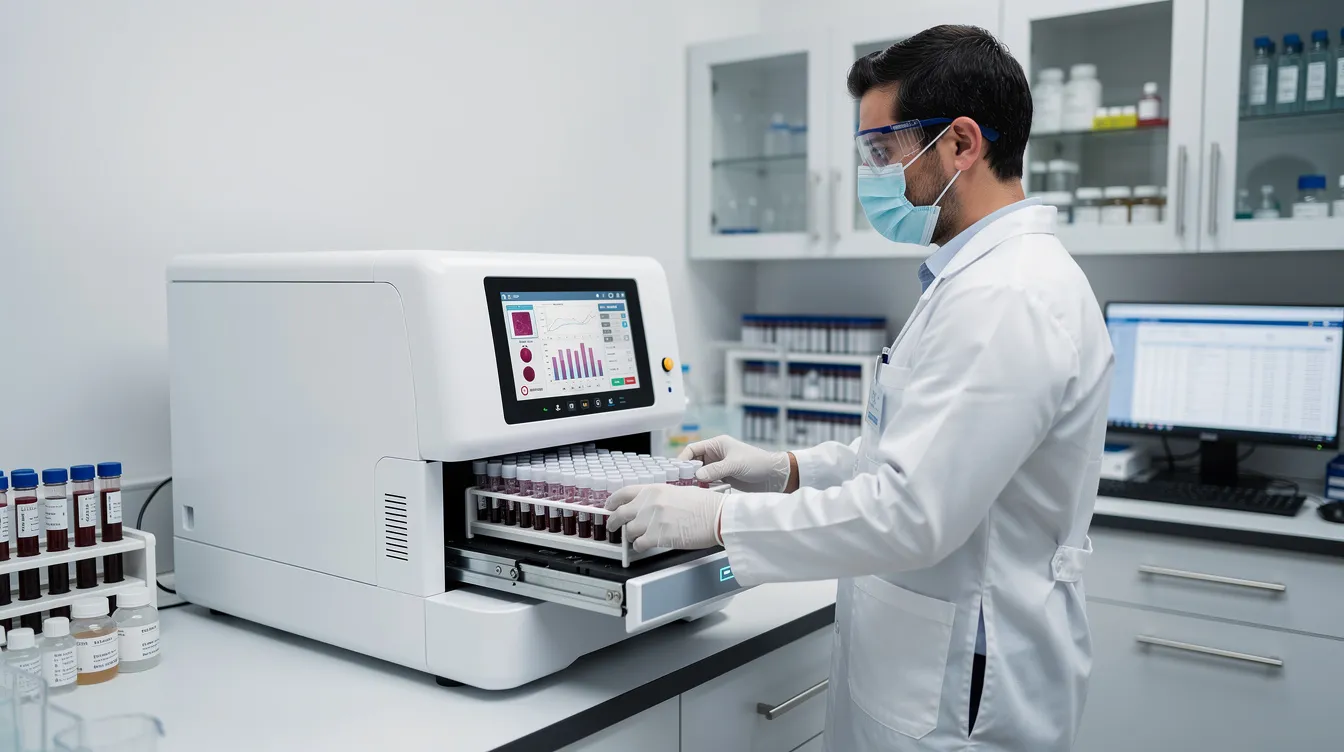
What Is a Pathology Lab Project Report / DPR?
A detailed project report for a pathology lab converts your clinical and business ideas; test menu, location, equipment, staffing; into structured financial and technical information that lenders can evaluate. A comprehensive pathology lab project report requires medical accuracy and operational clarity, combining both in one document.
Key components of a pathology lab project report include a title page (with project title and author details), an executive summary covering objectives, methodology, key findings and main conclusions, and detailed sections on infrastructure requirements, equipment, revenue, costs and financial projections. The introduction should provide background context and rationale for the project, while the methodology section covers study design and protocols related to sample collection and testing. A results section presents data using text, tables and visual charts, and the discussion section interprets results and compares them with standard benchmarks.
The main roles of a DPR are:
- Assessing technical and financial feasibility
- Estimating total pathology lab project cost
- Planning infrastructure and equipment
- Projecting revenue, profit and cash flow
- Demonstrating repayment capacity for a bank term loan
A basic pathology lab business plan provides a high-level concept. A bank-ready DPR goes further: it integrates financial projections, DSCR analysis and linked statements where every assumption flows through to cash accrual. Internal consistency between cost, revenue, cash flow and the loan schedule matters more than presenting high projected profits. Promoters sometimes search for a sample project report or mini project report online; while these can illustrate structure, each pathology lab report must be tailored to the actual project.
Who Needs a Pathology Lab DPR?
Any promoter approaching a bank or institutional lender for a pathology lab project should prepare a DPR. A project report is essential for securing funding from banks, whether for a new lab or expansion.
Situations where a pathology lab DPR for bank loan is required:
- New standalone pathology lab setup in a tier-2, tier-3 or metro city
- Expansion of an existing medical lab adding new test categories
- Modernization with fully automated analyzers replacing semi-auto equipment
- Addition of molecular diagnostics or histopathology services
- Creation of a central processing lab with collection centres (hub-and-spoke model)
- Equipment finance for high-value analyzers
- Working-capital limits for labs with institutional receivables
DPR depth varies. A small routine lab in a tier-4 town needs a simpler report than a large city-based hub-and-spoke laboratory network. Consultants, investors and JV partners also use a pathology laboratory project report to understand financial feasibility and risk before committing capital.
Pathology Lab Business Model and Scope of Services
The DPR must define the business model clearly because it drives project cost, staffing and projected revenue. A pathology lab affords facilities for diagnostic purposes ranging from routine blood tests to advanced molecular analysis, depending on the chosen model.
Typical business models include:
- Small routine pathology laboratory (hematology, biochemistry, urine and stool test, pregnancy test, sputum test, semen test, bp test and other tests)
- Advanced lab with microbiology, immunology and serology
- Histopathology and cytology lab
- Hospital-attached lab serving inpatients and outpatients
- B2B reference lab processing samples from clinics
- Hub-and-spoke model with multiple collection centres
- Home sample collection service
Common test categories in the DPR: hematology profiles (CBC, ESR), biochemistry (LFT, KFT, lipid profile, blood sugar), clinical pathology (urine, stool), immunology and serology (HIV, HBsAg, dengue, mmr test), microbiology (culture and sensitivity), histopathology and cytology, and molecular diagnostics if proposed. The wide scope of pathological tests available means the DPR should specify which tests are done in-house and which are outsourced, as this directly affects equipment planning, reagent costs and turnaround time.
Laboratory quality management throughout the workflow emphasizes accuracy, timeliness and reliability. The DPR should include a concise note on target market: walk-in patients, referrals from local doctors, tie-ups with hospitals, corporate health check-ups and home collection. Quality control measures such as internal audits and monitoring of turnaround times should also be referenced.
Pathology Lab Project Cost in India
Pathology lab setup cost in India varies based on city, test menu, level of automation and premises. The DPR should calculate project cost item by item rather than relying on generic averages. A pathology lab setup can cost between ₹27,50,000 to ₹40,00,000 for a routine-scale lab, while total capital investment for a larger diagnostic lab with advanced analyzers and automation can reach ₹1.29 crore or beyond.
Key cost heads:
- Premises: lease deposit, basic civil work, flooring, partitions, air-conditioning and ventilation
- Interiors and furniture: lab counters, reagent storage, reception and waiting area
- Electrical and plumbing: UPS wiring, dedicated power points near analyzers, water lines
- Laboratory equipment: analyzers, microscopes, centrifuges, incubators, autoclaves, refrigerators and deep freezers
- IT systems: computers, networking, Laboratory Information System (LIS), barcode printers and scanners, CCTV
- Power backup: inverter/UPS, generator where relevant
- Pre-operative expenses: professional fees, initial market research, trial runs, staff hiring before commercial operations, statutory registration fees
The total project cost should also include contingency margin and margin for working capital if required by the bank. Documentation includes SOPs and test records relevant to laboratory operations, which should be budgeted under pre-operative and compliance expenses.
For promoters considering a full diagnostic facility combining pathology with imaging (X-ray, ultrasound test, CT), the investment will be higher. Refer to diagnostic centre project cost in India for that scope. Do not conflate the two in a single DPR.
Pathology Lab Equipment Planning
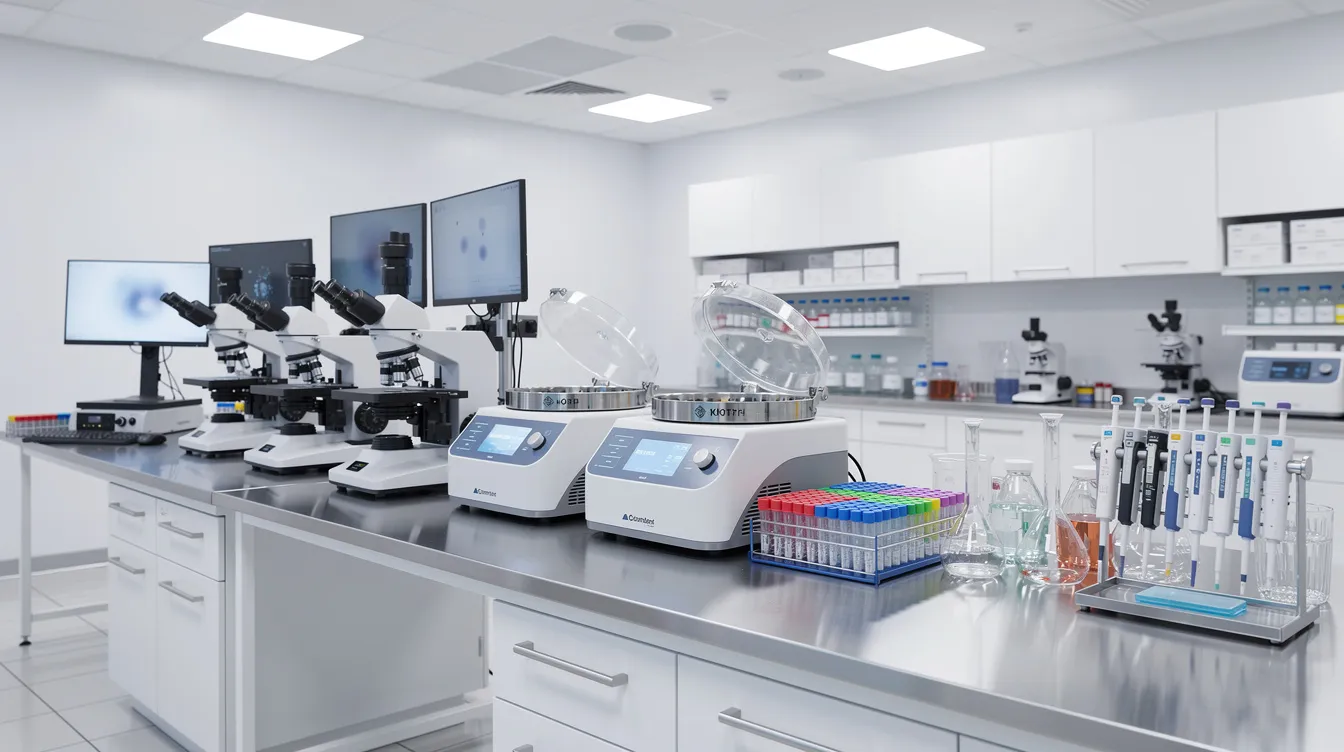
Equipment planning must follow the chosen test menu, expected daily workload and future scalability. Banks frequently ask for vendor quotations to validate pathology lab equipment cost. Equipment and materials used in a pathology lab include major instruments, reagents and consumables.
Main equipment categories:
- 3-part or 5-part hematology analyzers (essential equipment includes hematology analyzers and centrifuge machines)
- Semi-auto or fully-auto biochemistry analyzers
- Electrolyte analyzers
- Immunoassay systems for hormone and specialised tests
- Microscopes for manual review and differential counts
- Centrifuges, incubators, hot-air ovens and autoclaves
- Refrigerators and deep freezers for reagent and sample storage
- Urine analyzers and coagulation analyzers
- Microbiology incubators and biosafety cabinets where applicable
- Histopathology equipment (microtome, tissue processor) if planned
- Laminar airflow units where required
A modern diagnostic center requires advanced medical instruments; labs aiming for high throughput should invest in most modern instruments appropriate to their test volumes. The DPR should incorporate equipment price, freight, installation, applicable taxes, annual maintenance contracts (AMC), calibration charges and recommended equipment life for depreciation. Reagent rental or cost-per-test models offered by some suppliers should be mentioned, as they shift cost from capital expenditure to operating expenditure. Quality assurance measures such as calibration schedules and error checks must be factored in.
For readers planning a broader diagnostic facility with radiology, see diagnostic centre equipment list and cost. Imaging machines like X-ray or CT are not included in a pure pathology lab DPR.
Means of Finance for a Pathology Lab Project
The DPR should show how the total pathology lab project cost will be financed. A detailed project report aids in loan approval from banks by presenting a clear funding structure.
Typical components:
- Promoter contribution (equity, capital, share application money)
- Bank term loan for equipment and interiors
- Separate equipment finance where applicable
- Unsecured loans from promoters or group entities (where bank policy permits)
- Internal accruals for expansion projects
| Particulars | Amount | % of Project Cost |
|---|---|---|
| Promoter Contribution | Illustrative | 25–35% |
| Term Loan | Illustrative | 60–70% |
| Other Eligible Sources | Illustrative | 0–10% |
| Total | 100% | 100% |
Acceptable debt-equity ratios differ by lender and case. Factors influencing financing structure include promoter profile, security and collateral, cash-flow projections, repayment capacity and bank lending norms for healthcare projects. The investment requirements for a pathology lab must be matched with the requested pathology lab term loan tenure and moratorium, aligned to the lab’s expected capacity ramp-up and cash accrual period. Financial planning at this stage prevents mismatches later.
Revenue Model of a Pathology Laboratory
The revenue model in a pathology lab DPR must be built from operational drivers: expected samples per day, tests per sample and average billing per test. Simply assuming annual growth percentages without grounding them in capacity and market analysis weakens the proposal.
The basic formula: number of patients (or samples) per day × average tests per patient × average rate per test = gross revenue, adjusted for discounts and free tests.
Revenue segments to cover:
- Routine tests (CBC, blood sugar, lipid profile, blood tests)
- Specialized tests (thyroid panels, tumour markers, diagnostic tests for chronic diseases)
- Health check packages including detailed medical check up, diagnostic check up and preventive healthcare bundles
- B2B institutional contracts with hospitals and clinics
- Referrals through collection centres
- Home collection charges
- Corporate wellness and insurance panels
With increasing awareness around preventive healthcare, labs offering health packages covering a range of tests (from basic pathological tests to cardiological test and nervous system checkups) can capture additional revenue. Some labs tie up with facilities offering eye checkup pertaining to ocular ailments and refractive anomalies, or referrals from an ent specialist for throat ailments, but these are typically diagnostic procedures outside the pathology lab’s own scope; the DPR should not overstate revenue from services the lab does not directly perform. Similarly, an ivp test or eye checkup may be part of a broader diagnostic center’s menu but not a standalone pathology lab.
Pricing strategy, referral commissions, package discounts and B2B rates affect net realization. The DPR should compare projected test volumes with installed analyzer capacity, staff availability and local market demand. Seasonality (monsoon-related infections, seasonal health packages) influences month-wise cash flow and should be acknowledged.

Operating Expenses and Working Capital
Recurring operating expenses and working capital requirements are critical in a pathology lab project report for bank loan appraisal. Staffing needs include experienced pathologists and lab technicians, each qualified in their respective fields required for the proposed test menu.
Key operating expenses:
- Salaries: pathologists, lab technicians, phlebotomists attending patients, reception and administrative staff, professionals in respective fields
- Reagents and consumables (often the largest variable cost)
- Collection materials
- Outsourced test charges for tests sent to reference labs
- Rent or lease payments
- Electricity, water and backup power
- Equipment maintenance, AMC and calibration
- LIS software subscription and IT expenses
- Sample transportation and logistics
- Marketing and referral commissions
- Biomedical waste management and housekeeping
- Safety protocols addressing biohazard control and disposal of sharp objects
- Insurance and administrative overheads
Working capital cycle involves reagent inventory, consumables stock, receivables from hospitals and corporates (often 30 to 60 days), cash and bank operating balances, minus supplier credit and statutory dues. A retail cash/UPI-based pathology lab has a shorter receivable cycle and lower working capital need. A lab with heavy institutional or corporate business faces longer credit periods and higher working-capital requirements. Banks may finance part of this through cash credit or overdraft facilities, assessed through CMA data.
Financial Projections Required in a Pathology Lab DPR
A complete pathology lab DPR must include integrated financial projections, typically for 5 to 7 years, depending on bank requirements. The report includes market analysis and financial projections tied to operational assumptions. A literature review section, where applicable, summarizes existing guidelines and standards relevant to the pathology focus area.
Projected statements required:
- Profit & Loss Account
- Balance Sheet
- Cash Flow Statement
- Term-loan repayment schedule with interest calculation
- Depreciation schedule
- Fund-flow statement and ratio analysis where required
Projections should link operational assumptions (test volume ramp-up, average billing, reagent consumption per test, staffing levels) to revenue, gross margin, EBITDA, profit after tax and cash accrual. Break-even analysis and payback period should use conservative assumptions. Plant economics covering per-test cost at different utilisation levels add depth.
From a lender’s perspective, projections must show stable or strengthening DSCR, reasonable margins, adequate working-capital coverage and no mismatch between project cost and means of finance.
DSCR and Loan Repayment Capacity
Debt Service Coverage Ratio (DSCR) is a key parameter in pathology lab project finance. It expresses how comfortably cash accruals cover term-loan instalments and interest during each year.
DSCR = Cash Available for Debt Service ÷ (Principal Repayment + Interest during the year)
The DPR should calculate year-wise DSCR and average DSCR over the loan tenure, using cash accrual (profit after tax plus depreciation and other non-cash charges) as the numerator. Factors like slower test-volume growth, higher reagent cost or salary escalation can reduce DSCR and may require adjusting loan tenure or instalment structure.
Lenders often have internal DSCR benchmarks (commonly 1.2 or above), but no single DSCR level guarantees loan approval. They also consider promoter strength, collateral, market risk and overall project robustness.
What Banks Examine Before Financing a Pathology Lab
Banks treat a pathology lab as both a healthcare service and a business. They examine technical, commercial and financial aspects before sanctioning a loan. It helps in assessing the feasibility of the pathology lab from multiple angles.
Key appraisal points:
- Promoter qualifications (pathologist degree, medical college credentials, healthcare management experience), track record, credit history and net worth
- Location and catchment area demographics, demand potential and competition from existing diagnostic labs
- Clarity of test menu and service mix; alignment of modern instruments and automation level with local need
- Equipment quotations from credible vendors and realism of cost estimates
- Promoter contribution, means of finance and collateral or security offered
- Revenue projections, profitability, working-capital assessment, DSCR
- Proof of licences or applications for required registrations
- Implementation schedule and contingency planning
A well-prepared DPR enhances the quality of appraisal but cannot by itself ensure sanction; overall viability and risk profile remain decisive. This serves as a step by step guide for promoters to understand lender expectations.
Licences, Registrations and Compliance
Regulatory requirements for pathology laboratories differ by state, municipality and type of services. Promoters must verify current rules with local authorities and professional advisors, and take all requisites measures before commissioning.
General requirements:
- Choice of constitution (proprietorship, partnership, LLP, company), PAN and applicable GST registration
- Local shop and establishment or trade licences
- Compliance with applicable clinical establishment regulations (where notified by the state)
- Professional qualifications of pathologists and technical staff
- Biomedical waste management authorisation through registered agencies
- Fire and safety norms, environmental clearances where applicable, and municipal permissions for healthcare facilities
NABL accreditation under ISO 15189 ensures quality and reliability of diagnostic services. For smaller labs, NABL’s QAS BC (Quality Assurance Scheme for Basic Composite labs) offers a less burdensome entry point. The DPR should highlight the promoter’s plan to work towards NABL accreditation as a medium-term objective. A management system covering quality assurance, calibration and error checks strengthens the lab’s credibility.
Documents Generally Required for Pathology Lab Bank Finance
Each bank has its own checklist, but the DPR should anticipate and compile the usual documents to avoid delays.
- Promoter KYC: PAN, Aadhaar, address proof, educational and professional qualification certificates, experience profile
- Business and financial documents: entity formation documents, last 2 to 3 years financial statements and income-tax returns (for existing businesses), recent bank statements
- Project-specific: detailed project report, projected financial statements, CMA data, equipment quotations, interior and civil work estimates, premises ownership or lease agreement, copies of licences obtained or applied for
- Security: property title deeds, valuation reports, details of existing loans and liabilities
A pathology lab project report outlines financial and operational aspects in a format lenders can appraise systematically. The title page of a project report should include the project title and author details, setting the professional tone from the first page.
Common Mistakes in Pathology Lab DPR Preparation
In project appraisal, many pathology lab proposals face queries or delays because of avoidable mistakes in the DPR and financial model.
Assumption-related issues:
- Unrealistic patient and test volumes from the first month (full utilisation rarely happens in year one)
- Overly aggressive revenue growth without supporting market research
- Ignoring local competition from established diagnostic labs and healthcare facilities
Cost-related mistakes:
- Underestimating reagent and consumable costs or forgetting cost escalation
- Omitting outsourced test charges
- Ignoring equipment maintenance, calibration and AMC
- Inadequate provision for salaries and annual increments
Structural and financial errors:
- Mismatch between project cost and means of finance
- Insufficient working capital provision
- Incorrect depreciation or interest calculations leading to weak DSCR in early years
- Confusing a standalone pathology lab with a full diagnostic centre in the same DPR, or including imaging equipment without justification
A professionally prepared, internally consistent DPR reduces these errors and makes the banking conversation about business potential rather than document correction.
Illustrative Pathology Lab DPR Financial Structure
The following figures are illustrative only and should not be treated as standard project costs, expected profitability or assured financial performance. They demonstrate DPR mechanics.
| Parameter | Illustrative Figure |
|---|---|
| Total Project Cost (interiors, equipment, IT, pre-operative, WC margin) | ₹35,00,000 |
| Promoter Contribution (30%) | ₹10,50,000 |
| Term Loan (70%) | ₹24,50,000 |
| Year 1 Revenue (at ~50% capacity utilisation) | ₹28,00,000 |
| Year 3 Revenue (at ~80% utilisation) | ₹48,00,000 |
| Operating Expenses (Year 3, reagents, salaries, rent, utilities) | ₹30,00,000 |
| EBITDA (Year 3) | ₹18,00,000 |
| Depreciation + Interest (Year 3) | ₹5,50,000 |
| Profit Before Tax (Year 3) | ₹12,50,000 |
| Cash Accrual (Year 3) | ₹15,00,000 |
| Annual Debt Service (Year 3) | ₹7,50,000 |
| DSCR (Year 3) | 2.0x |
Pathology labs can achieve a break-even point of 58% capacity utilisation, and the rate of return for a well-run diagnostic lab can reach 47%. The DPR should present these using the actual project’s numbers. Promoters should base their own DPR on location-specific quotations, realistic demand from their target market and current lending terms. The conclusion section of the DPR provides final takeaways and actionable recommendations for improvement as the lab scales.
Sensitivity Analysis in a Pathology Lab DPR
Sensitivity analysis tests the resilience of the pathology lab project under less favourable scenarios. This benefits both promoters and lenders.
Typical downside scenarios:
- 10 to 20% lower test volumes than projected
- Lower average billing per test due to competition or discounts
- Higher reagent costs (import dependency, forex fluctuation)
- Faster-than-expected salary increases in the healthcare sector
- Delayed lab commissioning or slower ramp-up of collection centres
For each scenario, the DPR should indicate the impact on EBITDA, cash flow, DSCR and break-even. This demonstrates responsible financial planning and helps promoters decide whether to build additional buffers such as higher promoter capital or longer loan tenure.
Pathology Lab vs Diagnostic Centre; DPR Perspective
A pathology lab is a core component of many diagnostic facilities, but its DPR differs from that of a multi-service diagnostic center with imaging. The structure of a pathology lab project report should present clinical and operational data specific to lab-based testing.
| Parameter | Pathology Lab | Broader Diagnostic Centre |
|---|---|---|
| Primary activity | Laboratory testing (blood tests, tissue, urine) | Pathology and/or imaging diagnostics |
| Equipment | Lab analyzers, microscopes, centrifuges | May include lab + X-ray, ultrasound, CT, MRI |
| Investment | ₹27,50,000 to ₹40,00,000 (routine); higher for advanced | Can increase to several crores with imaging |
| Revenue drivers | Test volumes and sample processing | Tests + imaging diagnostic procedures |
| Technical manpower | Pathologists, lab technicians in respective fields | Broader specialist team including radiologists |
| DPR complexity | Lab-specific with focused test menu | Multi-service model; complex feasibility study |
Imaging equipment changes project cost, staffing and regulatory requirements. A lab offering only pathology services should not include X-ray or ultrasound in its DPR. The earlier links on diagnostic centre project cost and equipment list provide supplementary resources for broader projects.
How CA Manish Gugliya and ProjectReportBank.com Can Assist
I am CA Manish Gugliya, Chartered Accountant, and I work with promoters on DPR preparation and project finance for healthcare ventures, including pathology laboratories.
Services available through ProjectReportBank.com:
- Preparation of a detailed pathology lab project report with linked financial statements
- Financial modelling covering revenue, cost assumptions and working-capital assessment
- Project cost structuring and means-of-finance planning
- DSCR and repayment analysis, break-even and sensitivity analysis
- CMA data and other banker-facing formats where required
The role is to help promoters present a clear, realistic and bankable proposal. Loan approval decisions remain with the lending institutions, and no guarantees of sanction are offered. ProjectReportBank.com is the platform through which promoters can request customised pathology lab DPRs, clarify financial queries and coordinate data required for banking discussions.

FAQs on Pathology Lab Project Report and DPR
How much does it cost to prepare a professional pathology lab DPR?
The cost of preparing a customised pathology lab project report depends on project size, complexity, number of locations and depth of financial modelling required. Fees are a small fraction of overall project cost and can prevent much larger mistakes in investment and financing decisions. Contact ProjectReportBank.com with brief project details (city, proposed services, expected investment) to receive an indicative fee quote.
When should I start working on the DPR; before or after finalising premises and equipment?
Start DPR work as soon as the business concept, target area and broad test menu are decided, even before finalising the exact premises and equipment vendor. The DPR can use realistic budgetary quotations and then be refined once final quotations and lease terms are available. Early DPR preparation helps promoters understand funding requirements, investment requirements and negotiate better with landlords and equipment suppliers.
Is NABL accreditation mandatory before applying for a pathology lab loan?
Banks generally do not insist on NABL accreditation at the loan-application stage, especially for new labs that have not yet started operations. Lenders do appreciate a clear plan to work towards NABL standards over time, as NABL accreditation ensures quality and reliability and improves revenue potential through hospital and insurance empanelments. Include your quality roadmap in the DPR.
Can I use the same DPR for multiple banks?
A well-prepared pathology lab DPR can usually be submitted to more than one bank, with minor customisation to match each lender’s application format and specific queries. Update key details such as proposed bank limits, interest rate assumptions and security offered before sharing the report with another lender. ProjectReportBank.com can help adapt an existing DPR for different banks while keeping the core project assumptions and accurate results consistent.
How long does it typically take to prepare a bankable pathology lab DPR?
The time required depends on how quickly promoters share data (test menu, premises details, quotations) and the complexity of the proposed project. For a single-location routine pathology lab, a complete DPR with financial projections can usually be prepared within a few working days once information is available. Factor DPR preparation time into your overall project timeline so that loan applications can be filed well before the planned opening date.
Explore All Diagnostic Centre DPR Guides
Continue exploring our complete series on Diagnostic Centre project planning, equipment, financial projections, repayment capacity and bank finance.