Setting up an MRI and CT scan centre requires substantial capital expenditure and careful financial planning that goes well beyond the price of medical imaging equipment. This guide breaks down every major cost component, from MRI and CT machine investment to infrastructure, working capital and bank finance, so that promoters can plan a realistic and bankable project.
Key Takeaways
- MRI and CT scan centre setup cost in India is not limited to MRI or CT machine price alone. Total project cost typically ranges from about ₹5 crore to over ₹15 crore in 2026, depending on city tier, modality mix and infrastructure scope. A full multi-modality facility with MRI can cost ₹8 to ₹12 crore.
- MRI machine cost in India varies roughly from ₹1.5 crore to ₹12 crore depending on magnet strength (1.5T vs 3T), condition (new vs refurbished), brand and configuration. CT scan machine cost ranges from about ₹80 lakh to ₹3.5 crore or more based on slice count and features.
- Infrastructure investment including civil work, interiors, RF shielding, radiation shielding, electrical upgrades, HVAC, UPS and DG, plus dedicated IT infrastructure including PACS and RIS, can add 30–50% over pure equipment cost.
- From a project finance perspective, a bankable MRI CT scan centre DPR must include complete project cost, working capital margin for at least 6–9 months, realistic utilisation assumptions, and a repayment plan aligned with expected cash flows and DSCR analysis.
- A professionally prepared Imaging Centre Project Report / DPR for Bank Loan converts equipment choices into a structured, finance-ready document with financial projections, sensitivity analysis and debt-service coverage.
Explore Diagnostic Centre DPR Guides
Explore our complete series on Diagnostic Centre project planning, equipment, financial projections and bank finance.
Introduction: Why MRI & CT Scan Centre Setup Cost Needs Holistic Planning
MRI and CT scan centres are among the most capital-intensive diagnostic centre projects in India. Diagnostic equipment typically accounts for 50 to 70 percent of setup costs, yet promoters frequently underestimate the infrastructure and working capital required to bring a centre to commercial operations.
The total cost to start an MRI and CT scan centre depends on multiple factors: magnet strength (1.5T vs 3T), CT slice count (16 to 128+), city tier, new vs refurbished equipment, owned vs rented premises, and the planned modality mix within the diagnostic imaging centre. A basic digital X-ray and ultrasound setup costs ₹40 to ₹60 lakh; adding a CT scanner pushes costs to ₹3 to ₹5 crore; and setting up a diagnostic centre with full imaging services including MRI can run between ₹8 and ₹12 crore or more.
Promoters should not calculate MRI CT scan centre investment only from MRI and CT quotations. The complete cost must include civil work, interiors, electrical infrastructure, MRI RF shielding, radiation protection for CT rooms, HVAC, UPS, DG backup, PACS/RIS/IT, furniture, pre-operative expenses, deposits, licensing and working capital. Excluding any of these heads can create a funding gap that stalls the project mid-implementation.
I am CA Manish Gugliya, Chartered Accountant and project finance consultant at ProjectReportBank.com, with practical experience in preparing project reports and DPRs for diagnostic imaging centres, pathology labs and healthcare delivery projects. This article provides indicative 2026 Indian market ranges (not vendor quotations) along with a CA’s perspective on equipment investment, total project cost, working capital and bank finance for MRI and CT scan centres.
Overall MRI & CT Scan Centre Setup Cost in India
How much does it cost? A combined MRI and CT diagnostic imaging centre project generally requires about ₹5 to ₹12 crore in tier-2 and tier-3 cities and up to ₹15 to ₹18 crore or more in metros, depending on equipment configuration, infrastructure scale and city. The total initial investment for an MRI and CT scan centre typically ranges from ₹3 crore to ₹12 crore for most standalone projects.
| Particular | Indicative Investment Range (₹) |
|---|---|
| MRI Machine (1.5T/3T) | 2.5 – 10 crore |
| CT Scan Machine (16–128 slice) | 0.80 – 4 crore |
| Supporting Equipment (injectors, monitors, X-ray, ultrasound) | 0.40 – 1.5 crore |
| Civil & Interior Work | 0.50 – 1.5 crore |
| Electrical & Power Infrastructure | 0.25 – 0.75 crore |
| MRI RF Shielding | 0.20 – 0.60 crore |
| Radiation Shielding (CT/X-ray) | 0.10 – 0.30 crore |
| HVAC / Cooling | 0.15 – 0.50 crore |
| PACS / RIS / IT Infrastructure | 0.15 – 0.40 crore |
| Furniture & Fixtures | 0.10 – 0.25 crore |
| Pre-operative & Professional Expenses | 0.10 – 0.30 crore |
| Deposits & Licensing | 0.10 – 0.25 crore |
| Working Capital Margin | 0.75 – 1.50 crore |
| Total Project Cost (Indicative) | ~5 – 18+ crore |
- The proportion of cost in each head varies between a standalone imaging centre, a hospital-based radiology unit and a multi-modality diagnostic centre with pathology services.
- Setting up a diagnostic centre with only basic modalities can cost as low as ₹40 lakh to ₹12 crore depending on scale.
- Diagnostic imaging centre setup cost must be customised to each city, building and business plan; there is no single fixed number.
All figures in this article are indicative, based on typical Indian market conditions in 2025–2026, and must be validated with current quotations before finalising MRI CT scan centre project cost.
Key Cost Drivers in MRI & CT Scan Centre Project Cost
Several factors determine the total MRI CT scan centre investment:
- Equipment specification: MRI magnet strength (1.5T vs 3T), CT slice configuration (16 vs 64 vs 128+), new vs refurbished machines, and brand/technology level. Choosing the right modality mix is crucial for profitability.
- Additional modalities: Including digital X-ray, ultrasound, color doppler, mammography or DEXA increases both imaging equipment cost and infrastructure scope. A basic digital X-ray and ultrasound setup alone costs ₹40 to ₹60 lakh.
- Infrastructure: Size and condition of premises, RF cage requirements for MRI, AERB-compliant radiation shielding for CT, electrical load upgrades, HVAC tonnage, UPS and DG sizing, and site access for installation. Civil work and shielding for MRI and CT rooms can cost ₹20 lakh to ₹60 lakh.
- Commercial factors: Rent vs owned premises, security deposits and advances, pre-operative expenses (design, architecture, regulatory consultancy, CA and engineering fees), and working capital requirement during ramp-up of patient volumes.
- Positioning: A basic CT centre in smaller towns has a fundamentally different cost structure from an advanced MRI CT diagnostic imaging centre targeting premium hospitals and corporate empanelment in a metro.
A structured business plan and MRI CT scan centre DPR should quantify how each driver impacts total cost and long-term profitability.
MRI Machine Cost in India: 1.5 Tesla vs 3 Tesla and Beyond
MRI machines generally cost between ₹1.5 crore and ₹12 crore depending on magnet strength and condition. For 2026, indicative MRI machine cost in India is roughly ₹2.5 to ₹5.5 crore for a typical 1.5 Tesla MRI and around ₹5 to ₹10 crore for a 3 Tesla MRI, varying by brand, coils, software, warranty and installation package. New MRI systems can cost between ₹3 crore to over ₹8 crore for most commonly installed configurations.
| MRI Category | Indicative Cost (New) | Refurbished Range | Typical Use |
|---|---|---|---|
| 1.5T Basic | ₹2.5 – 4.5 crore | ₹1.2 – 2 crore | General diagnostics, MSK, neuro screening |
| 1.5T Advanced | ₹4.5 – 7 crore | ₹2 – 3 crore | Multi-specialty hospitals, advanced neuro, onco |
| 3T Standard | ₹6 – 10 crore | ₹2.5 – 5 crore | Neurology, cardiac, research-oriented centres |
| 3T High-End | ₹10 – 15+ crore | ₹5 – 7 crore | Academic and premium hospitals, fMRI |
- MRI centre setup cost in India should be based on local referral patterns, expected case mix (neuro, MSK, oncology, cardiac) and competition rather than selecting the highest Tesla for prestige. A 3T MRI is not automatically required for every new diagnostic centre.
- Other factors affecting MRI machine cost include imported vs locally assembled machines, foreign exchange movements, number of coils, injector inclusion, software packages, extended warranty and on-site training support.
- From a CA perspective, higher MRI CT scan centre equipment cost must be justified by realistic utilisation and tariffs. Avoid purchasing top-end advanced machines purely for market share if the catchment and referral base do not support the required scan volumes.
CT Scan Machine Cost in India by Slice Configuration
CT scanner prices vary between ₹80 lakh and ₹3.5 crore based on equipment configuration and brand. New CT machines range from ₹60 lakh to over ₹2 crore for entry-level systems, while high-end models command significantly more.
| CT Category | Indicative Cost (New) | Refurbished Range | Clinical Applications | Centre Positioning |
|---|---|---|---|---|
| 16-slice | ₹80 lakh – 1.5 crore | ₹35 – 80 lakh | Head, chest, abdomen, routine trauma | Entry-level |
| 32-slice | ₹1.3 – 2 crore | ₹70 – 95 lakh | Mid-size hospital, trauma staging | Intermediate |
| 64-slice | ₹2 – 4 crore | ₹1 – 2 crore | Cardiac CTA, angiography, oncology | Advanced |
| 128-slice+ | ₹3.5 – 6+ crore | ₹2 – 4 crore | High-volume cardiac, 3D, research | Premium |
- A 16-slice CT may suffice for many tier-2 and tier-3 diagnostic centres focusing on routine imaging tests for head, chest and abdomen. A 64-slice or above is preferred where cardiac and advanced angiography work involving blood vessels and contrast dye studies is expected.
- CT scan centre investment should consider competition from existing diagnostic imaging centers and private hospitals in the area, potential corporate and TPA tie-ups, and payor mix before opting for expensive high-slice equipment.
- CT machine quotations often exclude site preparation, accessories, injector, workstations and extended warranty. All of these must be built into CT scan centre project cost and the DPR.
New vs Refurbished MRI & CT: Impact on Project Investment
Many Indian diagnostic centres evaluate refurbished MRI and CT scanners to reduce initial capex and improve financial feasibility, especially in tier-2 and tier-3 cities and for first-time promoters.
| Factor | New Equipment | Refurbished Equipment |
|---|---|---|
| Initial Investment | Higher (full OEM pricing) | 30–50% lower |
| Technology | Latest software, AI features | Previous-generation, limited upgrades |
| Warranty | Full OEM warranty (3–5 years) | Shorter warranty (1–2 years typical) |
| Maintenance | Lower AMC initially | Higher relative AMC; parts risk |
| Financing | Easier bank finance, longer tenure | Shorter loan tenure, higher equity ask |
| Useful Life | 8–10 years | 4–7 years (depends on usage history) |
| Downtime Risk | Lower | Moderate to higher |
| Suitable For | Metro centres, high-volume hospitals | Budget-conscious, tier-2/3 centres |
Refurbished CT scanners can reduce costs by 30 to 50 percent compared to new systems. However, promoters must evaluate remaining useful life, AMC structure, parts availability and service support carefully. A lower purchase price should not be evaluated independently of maintenance, remaining life and expected downtime.
From a bank finance perspective, new machines are usually easier to finance and may qualify for longer repayment periods, while refurbished equipment might require higher promoter contribution. An MRI CT scan centre DPR should ideally model both options with separate financial projections, DSCR and payback analysis to help promoters and lenders determine the optimal configuration.
MRI & CT Scan Centre Equipment List and Cost
MRI CT scan centre equipment cost includes not only the scanners but also injectors, monitoring devices, workstations, communication systems, PACS/RIS and emergency equipment. This is part of overall diagnostic centre equipment list and cost planning.
| Equipment Category | Type | Indicative Cost Range |
|---|---|---|
| MRI Scanner | Major | ₹2.5 – 10+ crore |
| CT Scanner | Major | ₹0.8 – 4+ crore |
| Contrast Injectors (MRI + CT) | Supporting | ₹8 – 25 lakh each |
| Patient Monitoring System | Supporting | ₹3 – 8 lakh |
| MRI-Compatible Accessories | Supporting | ₹5 – 15 lakh |
| Reporting Workstations | Supporting | ₹3 – 8 lakh per unit |
| PACS Server & Software | Major | ₹10 – 30 lakh |
| RIS Software | Supporting | ₹5 – 15 lakh |
| UPS System | Supporting | ₹5 – 15 lakh |
| DG Set with Acoustic Enclosure | Supporting | ₹8 – 25 lakh |
| Emergency Trolley / Defibrillator | Supporting | ₹2 – 5 lakh |
| Digital X-Ray Unit | Additional Modality | ₹15 – 35 lakh |
| Ultrasound Machine | Additional Modality | ₹10 – 25 lakh |
- Dedicated IT infrastructure, including PACS and RIS, is essential for modern medical imaging centers. These systems enable efficient reporting, teleradiology, record-keeping and corporate/insurance compliance. They should not be treated as optional add-ons.
- Additional modalities such as digital X-ray, ultrasound and mammography change the diagnostic imaging centre setup cost. Hire 2 to 3 radiographers per modality for two-shift operations to ensure adequate turnaround time.
- Promoters planning an integrated imaging plus pathology facility should also factor in pathology equipment investment. A basic pathology lab setup costs ₹8 to ₹15 lakh. Refer to Pathology Lab Setup Cost & Equipment List for detailed planning.
Infrastructure & Civil Work Cost for MRI & CT Projects
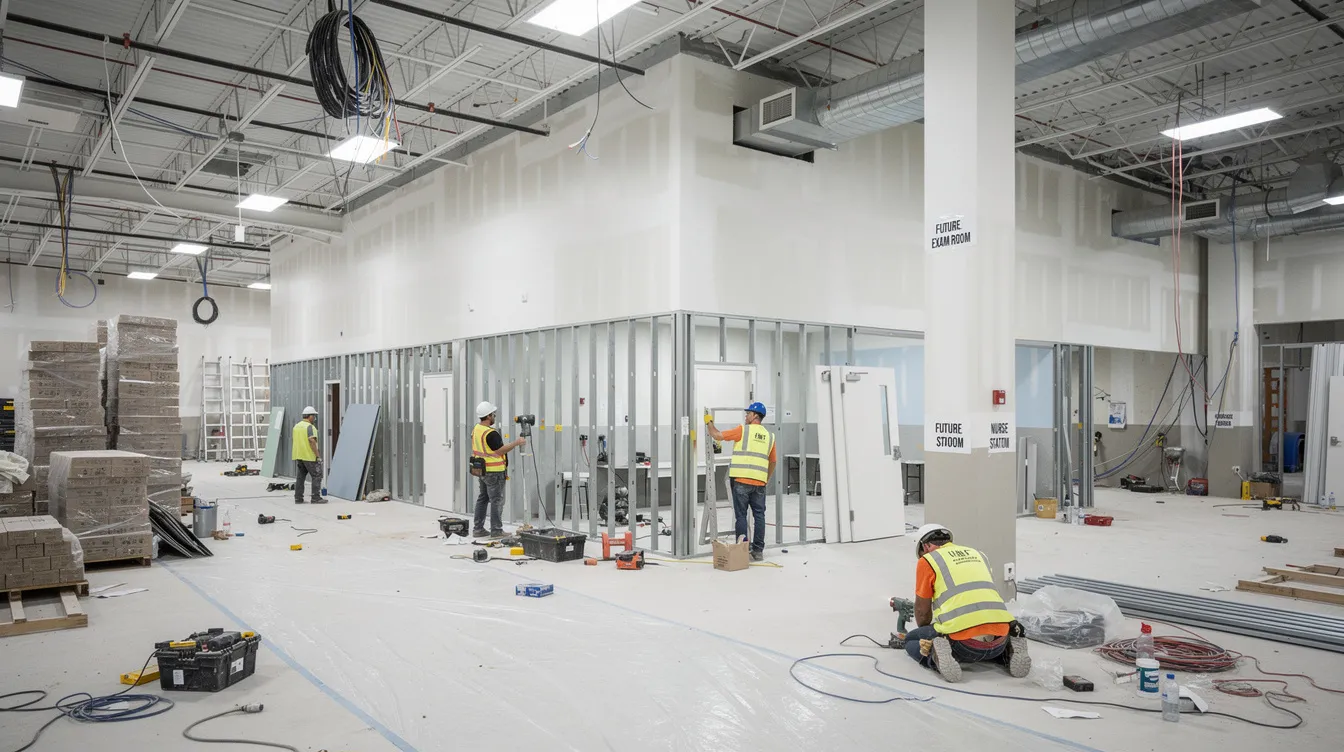
Radiology centre setup cost in India often escalates due to under-budgeted civil, interiors and infrastructure work. In many projects, this head accounts for 25–40% of fixed costs excluding land or building value. Civil works for radiology rooms typically take 8 to 12 weeks.
| Infrastructure Component | Indicative Cost Range |
|---|---|
| Civil Alterations & Structural Work | ₹15 – 50 lakh |
| Flooring & False Ceiling | ₹8 – 25 lakh |
| RF Shielding for MRI Room | ₹15 – 50 lakh |
| Radiation Shielding for CT/X-ray | ₹8 – 20 lakh |
| Electrical Wiring, Panels & Earthing | ₹10 – 30 lakh |
| HVAC Ducts & Units | ₹12 – 40 lakh |
| Plumbing & Drainage | ₹3 – 8 lakh |
| Fire Safety Systems | ₹5 – 12 lakh |
| Signage & Safety Displays | ₹2 – 5 lakh |
MRI rooms require RF cage construction using non-magnetic materials, vibration-controlled flooring and clear access for magnet installation. CT rooms require lead-lined walls to meet radiation safety standards per AERB guidelines. Improper sequencing of civil work before obtaining AERB approval can lead to costly rework.
MRI Room Infrastructure Requirements & Cost Considerations
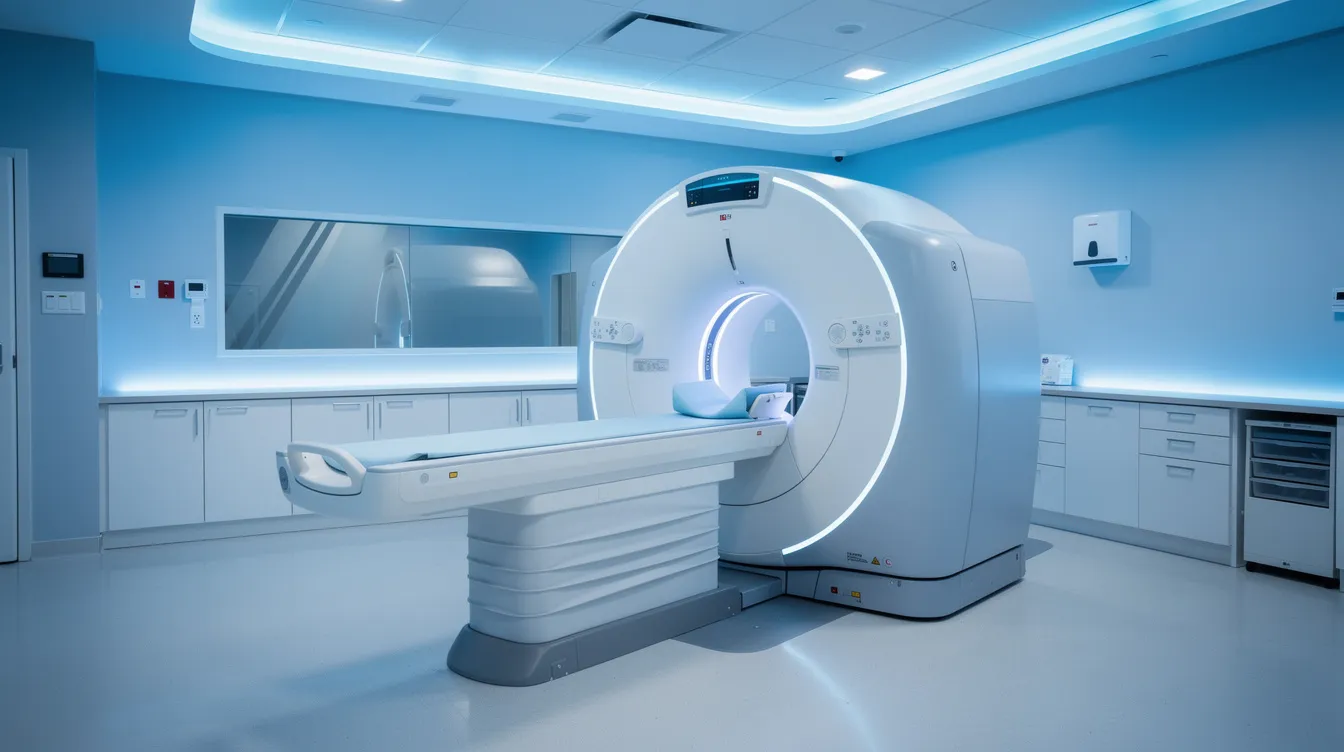
MRI room planning requires special attention to the magnet room, control room, equipment room, patient preparation and changing area, and a safe access path for gantry installation and future replacement.
Key cost items specific to MRI rooms:
- MRI rooms need specialized RF shielding to block external electromagnetic interference. This RF cage cost alone can run into several tens of lakhs depending on room size and vendor.
- Non-ferromagnetic doors and windows, quench pipe planning (if applicable), and floor reinforcement for the heavy magnet assembly.
- Dedicated chilled-water or HVAC system for stable temperature and humidity. Power and cooling are significant operational expenses in imaging centers due to high electricity consumption from the MRI system.
- Stable power supply with isolation transformer where required, clean earth, and UPS backup for console and network. Helium supply for cooled magnets is an ongoing cost that must be factored into operating budgets.
- Noise-control materials and safety signage for patient comfort and staff safety.
Exact technical specifications and regulatory requirements should be finalised with equipment suppliers and consultants. This article focuses on financial and planning aspects rather than engineering design.
CT Room Infrastructure Requirements & Cost Considerations
A typical CT suite includes the scanner room, control room, patient preparation area, injector bay and waiting area integration.
Main cost drivers include:
- Radiation shielding with lead lining or equivalent materials, AERB-compliant doors and view windows, and safety interlocks. Regulatory approvals and compliance are essential before operating a CT scanner. AERB approval is mandatory for CT systems emitting radiation exposure, and AERB registration is mandatory for X-ray and CT facilities.
- Control room console furniture, electrical panels, wiring and cabling.
- CT power requirement (kVA) and heat load significantly influence electrical cabling size, panel capacity and air-conditioning tonnage. These must be budgeted early using vendor load sheets.
- Planning for gurney movement, emergency access and ambulance entry also affects internal partitions and corridor widths, influencing civil and interior cost.
Promoters should ensure CT room and MRI room positioning supports efficient patient flow, minimal cross-traffic and optimal staffing for better patient care and operational efficiency.
Space Planning & Premises Requirement
A dedicated MRI and CT scan centre generally needs 2,500 to 4,000 sq ft of built-up area, while a larger multi-modality facility may require 4,000 to 8,000 sq ft depending on the modality mix.
Key functional areas include:
- Reception and billing counter
- Patient waiting area
- MRI suite (magnet room + control room + equipment room)
- CT suite (scanner room + control room)
- Reporting room and doctor/radiologist cabins
- Patient changing rooms and washrooms
- Staff area and administration
- Utility rooms (UPS, DG, server, storage)
Ground-floor or easily accessible locations with adequate floor load capacity are preferred. Basements may need careful evaluation for patient access, safety and approvals. In metros like Mumbai, Delhi and Bengaluru, rent or cost of premises is a major component of total cost. In tier-2 and tier-3 cities, built-up area costs may be lower, but infrastructure and licensing timelines should still be planned conservatively.
Illustrative MRI & CT Scan Centre Project Cost Example (Not a Quotation)
Illustrative Example – Not a Vendor Quotation. Figures are rounded for learning purposes only. Real projects must rely on current quotations and site-specific estimates.
Sample Scenario: A tier-2 city imaging centre with one 1.5T MRI and one 32/64-slice CT, in leased premises of about 3,000 to 3,500 sq ft, starting in FY 2026.
| Cost Head | Indicative Amount (₹ Lakh) |
|---|---|
| 1.5T MRI Machine (new) | 350 |
| 32/64-Slice CT Scanner (new) | 180 |
| Supporting Equipment (injectors, monitors, X-ray, UPS, DG) | 80 |
| Civil Work & Interiors | 65 |
| RF Shielding (MRI Room) | 30 |
| Radiation Shielding (CT Room) | 12 |
| Electrical & Power Infrastructure | 25 |
| HVAC / Cooling | 22 |
| PACS / RIS / IT | 18 |
| Furniture & Fixtures | 12 |
| Pre-operative & Professional Expenses | 18 |
| Deposits (rent, electricity, licensing) | 12 |
| Contingency (~5%) | 40 |
| Working Capital Margin | 100 |
| Total Project Cost | ~964 (≈ ₹9.6 crore) |
- Opting for refurbished MRI and CT could reduce equipment cost by ₹1.5 to ₹2.5 crore. Reducing interior finish or using existing hospital space would further lower investment.
- Upgrading to a 3T MRI or 128-slice CT could increase total cost by ₹3 to ₹6 crore or more.
- A professional Imaging Centre Project Report / DPR for Bank Loan converts such a cost sheet into full financial projections including revenue, profit, cash flow and DSCR analysis.
Frequently Overlooked Costs in MRI CT Scan Centre Investment
Promoters who focus only on MRI CT scan centre equipment cost or basic civil work often face funding gaps. Here is a practical checklist of items commonly missed:
- Freight and transit insurance for imported equipment, customs/clearing charges where applicable.
- Site preparation specific to vendor requirements: floor cutting, wall reinforcement, access widening for magnet delivery.
- Electrical upgrades: Transformer or new electrical connection, heavy-duty cabling, earthing and lightning protection.
- UPS batteries (replaced every 3–5 years) and DG set with acoustic enclosure.
- External signage, security systems (CCTV, access control), fire safety equipment and mandatory biomedical waste management contracts.
- Professional expenses: Architect and structural consultant fees, medical physics/radiation safety consultant fees, CA and legal fees for entity setup and licenses including GST registration.
- Maintenance contracts for MRI and CT equipment typically cost 10% to 15% of the equipment value annually. This is a recurring cost that must be budgeted from year one.
- Soft-launch marketing, referral outreach, website development, patient information materials and initial brand building expenses for capturing market share.
Working Capital Requirement for MRI & CT Scan Centres
MRI CT scan centre working capital is distinct from fixed asset investment and is required to fund day-to-day operations until the centre reaches stable utilisation. A working capital reserve of ₹75 lakh to ₹1.5 crore is recommended for initial operations. Most new centers underestimate working capital needs during the ramp-up period, and working capital is crucial for sustaining operations in the first year.
| Monthly Operating Expense | Indicative Range (₹ Lakh) |
|---|---|
| Radiologist Fees (contract or salaried) | 2 – 4 |
| Technologist & Staff Salaries | 4 – 8 |
| Rent / Lease Charges | 1 – 4 |
| Electricity (including HVAC/MRI/CT) | 2 – 5 |
| Consumables (contrast, films, etc.) | 1.5 – 3 |
| AMC / Maintenance | 1.5 – 4 |
| IT / Software Subscriptions | 0.5 – 1 |
| Insurance | 0.3 – 0.8 |
| Housekeeping / Security | 0.5 – 1.5 |
| Marketing & Outreach | 0.5 – 2 |
| Total Monthly Operating Cost | ~14 – 33 |
Average monthly operating expenses for a medium-sized center can range from ₹19 lakh to ₹39 lakh. Working capital covers salaries, consumables, and utility bills. The operating budget should cover 3 to 6 months of operational overhead before reaching profitability. A diagnostic imaging center needs at least six months of working capital.
A mid-sized diagnostic center needs ₹4 to ₹8 lakh monthly for staffing alone. A full-time radiologist costs ₹25 to ₹40 lakh per year, though radiologists are often hired on a reporting contract basis to manage fixed costs. Initial hiring and training should start 4 to 6 weeks before launch.
Banks may finance part of working capital through separate facilities (cash credit or overdraft) while expecting some portion as promoter-contributed margin. From a CA perspective, underestimating working capital is a common reason for cash flow stress even when the underlying diagnostics business is operationally sound.
Means of Finance: Structuring MRI CT Scan Centre Investment & Bank Loan
The typical funding mix for an MRI CT scan centre project includes promoter equity, bank term loan, equipment finance and working capital limits.
| Source of Funds | Approximate % | Amount (for ₹10 Cr Project) |
|---|---|---|
| Promoter Contribution (Equity + Unsecured Loans) | 30 – 35% | ₹3.0 – 3.5 crore |
| Bank Term Loan | 55 – 60% | ₹5.5 – 6.0 crore |
| Working Capital Facility (CC/OD) | 5 – 10% | ₹0.5 – 1.0 crore |
| Total | 100% | ₹10 crore |
Banks usually prefer a minimum promoter contribution of 25–35% of project cost and will size the MRI CT scan centre bank loan based on projected cash flows and DSCR rather than equipment value alone.
Repayment period for MRI CT scan centre loan repayment might be 7 to 9 years including moratorium for large equipment-heavy projects, subject to bank policy and project risk profile. The financing structure should be aligned with project cash flows and repayment capacity rather than simply maximising debt.
A well-prepared MRI CT scan centre project report for bank loan, with realistic assumptions and sensitivity analysis, improves the quality of credit appraisal and lender confidence-though it does not guarantee sanction.
Bank Loan & DPR Requirements for MRI & CT Scan Centres
From a lender’s perspective, banks and financial institutions evaluate several parameters when considering MRI CT scan centre project finance proposals:
- Promoter profile: Medical or management background, clinical qualifications, association with a radiologist and prior healthcare experience.
- Project fundamentals: Location and catchment analysis, competitive landscape of existing diagnostic imaging centers and hospitals, equipment configuration and vendor quotations.
- Financial structure: Total project cost, means of finance, adequacy of promoter contribution and working capital provision.
- Market potential: Projected scan volumes based on population data, referral network, competition, demand for imaging services and planned corporate empanelment.
An MRI CT scan centre DPR typically contains a detailed project description, equipment list with costs, infrastructure plan, implementation schedule, regulatory and licensing status, market study, projected revenue and operating expenses, profitability analysis and reports on financial metrics.
Key financial metrics banks review include projected EBITDA, cash accrual, DSCR, break-even point, sensitivity to lower utilisation or tariff pressure, and security or collateral offered. Expected break-even is typically achieved at 60 to 70 percent capacity utilisation within 14 to 18 months. Most well-located centres break even at 60 to 70 percent utilisation.
Revenue & Capacity Planning vs Equipment Investment
MRI CT scan centre investment decisions must be aligned with realistic revenue potential. Equipment selection should follow demand estimates, not the other way around.
- Revenue formula: Annual revenue per modality = Average scans per day × Working days per year × Average realisation per scan. Separate lines should be modelled for MRI and CT MRI with different assumptions.
- Factors influencing volumes: Local doctor referral base, hospital tie-ups, competition intensity, pricing strategy, corporate and insurance contracts, operating hours (single vs two shifts), and marketing effort for building future growth.
- Utilisation reality: High-end 3T MRI or 128-slice CT scanners can generate strong revenue only if the catchment supports the required mix of advanced studies involving diagnostics like cardiac, neuro, and oncology planning. Otherwise, the centre faces high EMI burden against underutilised equipment.
- A sound MRI CT scan centre financial projection should test conservative utilisation scenarios for at least the initial 2 to 3 years. Artificial intelligence in imaging can enhance efficiency and reporting quality, but revenue ultimately depends on patient volumes and referral demand.
Financial Feasibility: Linking Equipment Investment, Cash Flow & Loan Repayment
The financial feasibility chain runs as follows: Equipment Investment → Installed Capacity → Realistic Utilisation → Revenue → Operating Profit (EBITDA) → Cash Accrual → Ability to service MRI CT scan centre loan repayment.
Common financial pitfalls include:
- Choosing over-specified equipment for prestige without matching referral demand.
- Underestimating AMC and maintenance costs (10–15% of equipment value annually can be a significant budget line).
- Ignoring competitive pricing pressure from nearby diagnostic centres and hospitals that compare prices aggressively.
- Relying on optimistic referral assumptions without written arrangements with referring doctors.
Banks examine DSCR across the loan tenure. A good DPR demonstrates comfortable DSCR even under moderate downside scenarios, not just best-case projections. Promoters should also consider personal financial exposure-guarantees, collateral, family risk-when deciding on scale. Bigger is not always better if utilisation risk is high.
Regular performance monitoring post-commissioning (monthly scan volumes, realisation per scan, cost variance vs DPR) is a necessity to keep the MRI and CT scan centre aligned with the financial plan.

Conclusion: Planning a Bankable MRI & CT Scan Centre Project
MRI and CT scan centre setup cost in India is a combination of equipment, infrastructure, pre-operative expenses and working capital. Success depends on matching modality mix and investment level to realistic demand in the chosen location.
MRI CT scan centre equipment cost is only one component of total project cost. Under-budgeting shielding, HVAC, electrical, PACS and working capital can derail even a well-conceived project. Sound decisions on new vs refurbished equipment, 1.5T vs 3T MRI, and 16 vs 64+ slice CT should follow a structured business plan that weighs clinical requirements against financial feasibility for sustainable healthcare delivery.
A comprehensive Imaging Centre Project Report / DPR for Bank Loan integrates all these elements-equipment quotations, infrastructure cost, working capital, means of finance, projected profitability, cash flows and DSCR-into one finance-ready document.
My advice to promoters: treat the DPR as both a financing tool and a management roadmap. Update it as your MRI and CT scan centre grows, adds modalities and diversifies its imaging services. The investment is substantial, but with disciplined planning and realistic assumptions, an MRI and CT scan centre remains one of the most impactful and commercially viable healthcare ventures in India.
- CA Manish Gugliya, ProjectReportBank.com
FAQs
How long does it typically take to set up an MRI & CT Scan Centre in India?
Total project timeline is generally 6 to 9 months from concept to first patient, assuming timely decisions and approvals. Typical durations include 4 to 8 weeks for detailed planning and MRI CT scan centre DPR preparation, 8 to 12 weeks for civil and interior works (after final drawings and vendor inputs), 6 to 10 weeks for equipment supply and installation, and 4 to 8 weeks for licensing, trial runs and soft launch. Delays often occur due to AERB approvals, civil changes after equipment drawings, and late finalisation of PACS/RIS and IT infrastructure. The licensing process typically takes 4 to 6 months from application to final approval. Total licensing costs range from ₹5 to ₹12 lakh across all applicable authorities, though some estimates cite licensing costs ranging from ₹3 to ₹5 lakh for simpler configurations.
What key licences and approvals are required for MRI & CT Scan Centres?
Key approvals include:
- AERB approval for CT and other radiation-emitting modalities (mandatory for all CT and X-ray facilities)
- State Clinical Establishment registration (where applicable under the Clinical Establishments Act)
- Biomedical waste management authorisation (Pollution Control Board clearance is needed for biomedical waste management)
- Fire safety NOC and local municipal or building permissions
- PNDT registration is required for ultrasound services if the centre includes ultrasound or prenatal imaging
- For pathology addition, separate licences and potentially NABL accreditation planning may be needed
- GST registration is mandatory for all commercial operations
Regulatory requirements vary by state. Promoters should engage qualified legal and regulatory consultants, and the DPR should budget both fees and timelines for licensing.
Is it financially sensible to combine MRI & CT with a pathology lab in one diagnostic centre?
Combining imaging with a basic or advanced pathology lab can improve patient convenience and cross-referrals, but also increases total project cost, complexity and staffing requirements. Many promoters phase the project-starting with MRI and CT first and adding pathology later once cash flows stabilise, unless local demand clearly supports both from day one. Promoters evaluating a combined facility should prepare separate profitability and feasibility analysis for each vertical and refer to the Pathology Lab Project Report / DPR for Bank Loan for pathology-specific financial planning.
Does medical equipment insurance significantly add to MRI CT Scan Centre operating cost?
Insurance premiums for high-value MRI and CT equipment are not negligible but are essential risk-management tools. They typically form a small percentage of annual operating expenses compared to power, staff and AMC. Promoters should include comprehensive asset insurance (fire, burglary, machine breakdown) and professional indemnity cover within the operating cost section of the DPR. Some lenders insist on adequate insurance as a condition for disbursement, so budgeting for it from day one is both prudent and often mandatory.
Can a first-time healthcare entrepreneur (non-doctor) successfully promote an MRI & CT Scan Centre?
Banks in India do finance projects where promoters are not doctors, provided there is a strong professional team-radiologists, technologists-formally associated with the centre and the project shows financial viability. For non-medical promoters, lenders place greater emphasis on project report quality, risk mitigation, proper MoUs with clinical partners (Siemens Healthineers or other OEMs for service contracts, experienced radiologists for reporting), and adequate equity contribution. Such promoters should work with experienced DPR consultants, healthcare architects and regulatory advisors to compensate for their non-clinical background and present a credible, bankable diagnostic imaging business plan.
Explore All Diagnostic Centre DPR Guides
Continue exploring our complete series on Diagnostic Centre project planning, equipment, financial projections, repayment capacity and bank finance.