Key Takeaways
- Correct animal feed mill capacity planning directly affects project cost, working capital, unit production cost, DSCR and overall feasibility – choosing between 50, 100, 200 and 300 TPD is a financial decision, not merely an engineering one.
- Higher capacity reduces per-tonne fixed costs but sharply increases capital investment, raw material funding and risk if demand is overestimated.
- 50 TPD and 100 TPD capacities suit regional promoters with moderate equity; 200 TPD and 300 TPD suit integrated poultry or dairy groups with established distribution and strong balance sheets.
- Raw materials account for 80–85% of operating expenses in feed plants, making procurement economics and commodity price management as important as production capacity.
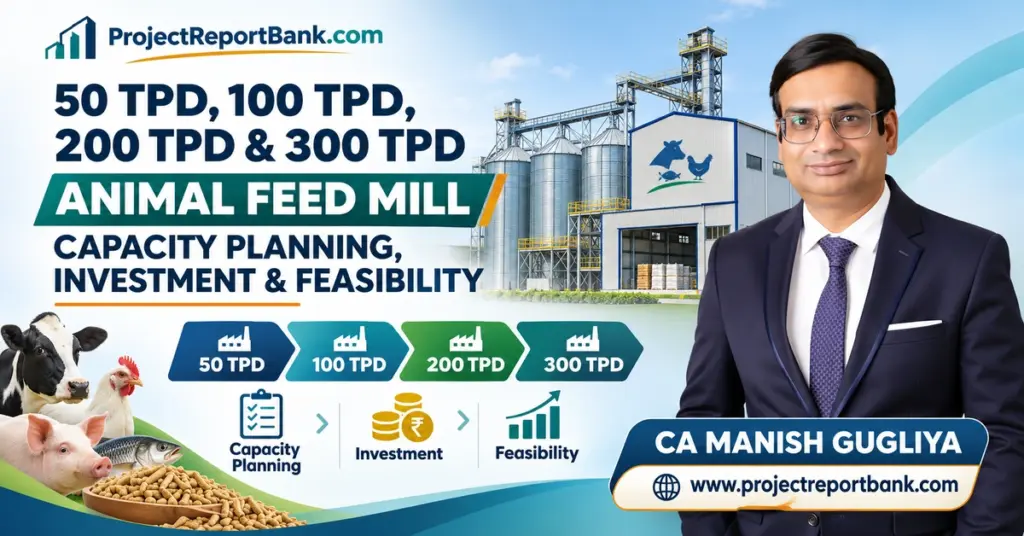
- Project Report Bank, led by CA Manish Gugliya, prepares capacity-wise DPRs, financial models and feasibility studies for bank finance and investor presentations across all four capacity tiers.
Introduction – Why Animal Feed Mill Capacity Planning Matters
India’s compound feed production reached approximately 57.73 million metric tonnes in 2025, growing at about 4.5% year-on-year. The global animal feed market was valued at USD 548.1 billion in 2025 and is expected to reach USD 702.75 billion by 2034, growing at a CAGR of 2.8% from 2026 to 2034. Some estimates also project the animal feed market to reach $460 billion by 2027 under alternative market definitions. Poultry feed demand alone is growing at an annual rate of up to 20% in certain segments, while the global pet food market is valued at approximately $130 billion, indicating the breadth of the feed industry globally.
Against this backdrop, animal feed mill capacity planning is arguably the most consequential decision a promoter makes before committing capital. For a new animal feed plant or expansion in India, choosing between 50 TPD, 100 TPD, 200 TPD and 300 TPD capacities changes land requirements, machinery configuration, equipment costs, utilities, manpower and the entire project finance structure.
Installing an oversized animal feed manufacturing plant without assured demand creates high interest burden, under-utilised assets and DSCR stress. Conversely, an undersized plant may struggle with high conversion costs and limited competitiveness. This article covers capacity definitions, annual output comparisons, capital investment, working capital, per-tonne economics, financial feasibility indicators and practical guidance for selecting the right capacity.
Understanding 50 TPD, 100 TPD, 200 TPD and 300 TPD Feed Mill Capacities
A feed mill’s rated machinery capacity (expressed in TPH or TPD) represents theoretical maximum output under ideal conditions. Practical daily output depends on operating shifts, maintenance downtime, product changeover time and whether the plant produces mash feed, pellet feed or crumbles. The number of shifts directly impacts the production capacity of a feed mill – a 50 TPD rating based on two 8-hour shifts means approximately 3.1 TPH throughput. Capacity planning must account for operational constraints such as maintenance and downtime, and utilization rates generally range from 75% to 85% in established animal feed mills.
Animal feed manufacturing plants have annual production capacities typically ranging from 20,000 to 100,000 MT depending on daily rated capacity and operating days. Animal feed consumption fluctuates seasonally, affecting production capacity planning further.
Annual Production (MT) = Rated Daily Capacity (TPD) × Operating Days × Capacity Utilisation
For example, a 100 TPD plant operating 300 days at 80% utilisation produces 24,000 MT annually.
| Capacity (TPD) | Operating Days | 60% Utilisation (MT) | 70% (MT) | 80% (MT) | 90% (MT) | 100% (MT) |
|---|---|---|---|---|---|---|
| 50 | 300 | 9,000 | 10,500 | 12,000 | 13,500 | 15,000 |
| 100 | 300 | 18,000 | 21,000 | 24,000 | 27,000 | 30,000 |
| 200 | 300 | 36,000 | 42,000 | 48,000 | 54,000 | 60,000 |
| 300 | 300 | 54,000 | 63,000 | 72,000 | 81,000 | 90,000 |
All figures are illustrative based on 300 operating days. Effective days may be lower in early years.
Indian mills commonly assume 300–330 working days, but early-year operations should use conservative estimates.
Comparative Overview of 50 TPD to 300 TPD Animal Feed Mills
Capacity determines the technology level, automation level, plant layout and manpower structure of an animal feed manufacturing plant. Automation can enhance capacity and consistency in feed mill operations, but its cost-effectiveness depends on scale. The following table provides an illustrative comparison across plant sizes.
| Parameter | 50 TPD | 100 TPD | 200 TPD | 300 TPD |
|---|---|---|---|---|
| Hourly throughput (approx.) | 3–4 TPH | 6–7 TPH | 10–13 TPH | 16–20 TPH |
| Annual rated production (300 days) | 15,000 MT | 30,000 MT | 60,000 MT | 90,000 MT |
| Annual at 80% utilisation | 12,000 MT | 24,000 MT | 48,000 MT | 72,000 MT |
| Typical shifts | 1–2 | 2 | 2–3 | 3 |
| Automation | Manual/Semi | Semi-auto | PLC-based | PLC/SCADA |
| Process lines | Mash; optional pellet | Mash + pellet | Multi-product pellet | Multiple pellet lines |
| Raw material handling | Manual/basic | Mechanical | Automated, silos | Truck tipplers, large silos |
| FG storage | Floor warehouse | Warehouse + basic bins | Warehouse + silos | Large silo field + warehouse |
| Typical manpower | 15–25 | 30–50 | 50–80 | 80–120+ |
Unit fixed cost per MT generally declines as capacity rises because depreciation, salaries and overheads are spread over larger volumes. However, absolute fixed costs, breakeven volume and risk of under-utilisation increase sharply. Mid-range plants at 100–200 TPD often balance investment efficiency and demand risk for regional cattle feed and poultry feed manufacturers. For promoters evaluating broader integration strategies, an integrated animal feed mill project report can help assess multi-product setups.
50 TPD Animal Feed Mill – Capacity Planning, Investment and Feasibility
A 50 TPD animal feed mill represents an entry-level organised capacity suitable for regional markets or for upgrading an existing small cattle feed plant. Typical promoters include local feed dealers, small poultry integrators and existing grain traders looking to move into feed manufacturing. Business models may include own-brand sales, contract manufacturing or a combination.
At 50 TPD, the product mix is usually limited – mash cattle feed, simple poultry mash and perhaps a small pellet feed line. Daily raw material consumption would be approximately 45–50 MT of maize, broken rice, wheat bran, soybean meal, mineral mixture and feed additives. The standard machinery configuration includes one intake line, basic pre-cleaning, a single hammer mill, one mixer, an optional pellet mill of modest capacity and manual or semi-automatic bagging.
Land and building requirements are modest – a single industrial shed, basic warehouse for raw material storage and an open yard for truck movement. Connected electrical load typically falls in the 100–200 kW range; a small boiler is needed only if pelleting is included.
Major capital investment components include land development, civil work, machinery, material handling, electrical installation and pre-operative expenses. Even at 50 TPD, working capital for grain and soy procurement is substantial relative to fixed investment.
A 50 TPD plant is commercially viable where strong local demand exists within a short distribution radius and logistics costs remain low. It may be too small to compete on cost against large organised players in contested markets. Promoters should plan the building layout and foundations to allow future expansion to 100 TPD – a practical strategy discussed in detail in the animal feed mill expansion project report.
100 TPD Animal Feed Mill – Project Cost, Machinery and Financial Viability
A 100 TPD animal feed manufacturing plant represents mainstream industrial scale, appropriate for regional brands, integrated poultry operations or mid-sized cattle feed companies. Machinery upgrades compared to 50 TPD include higher-capacity hammer mills, a larger feed mixer, a pellet mill rated for 8–10 TPH, additional conveyors and bucket elevators, larger bins and semi-automatic or automatic bagging.
Production scheduling at 100 TPD typically assumes two shifts of 8 hours each, with changeover planning for different formulations (broiler feed, layer feed, cattle feed). Warehouse and silo requirements increase meaningfully – larger raw material godowns, optional grain storage silos and multi-day finished feed storage become important.
Capital investment involves a step-up in machinery and civil cost, a higher electrical load and a more robust boiler and steam system where pelleting is central. Equipment costs must be based on actual EPC and vendor quotations rather than generic online numbers. Working capital requirements rise with higher recurring purchases of maize, soy and other feed ingredients, along with receivable cycles from dealers and integrators.
Compared to 50 TPD, a 100 TPD plant offers better absorption of salaries and overheads and a more competitive conversion cost per MT, but carries greater vulnerability if demand dips or the raw material cycle turns adverse. Capacity utilisation ramp-up – for instance, 60% in Year 1, 75% in Year 2 and 85% from Year 3 – directly affects revenue trajectory and early-year DSCR.
200 TPD Animal Feed Mill – Investment, Production Economics and Expansion Potential
A 200 TPD plant qualifies as a large regional or multi-state animal feed plant, usually backed by strong promoters, integrated poultry or dairy companies, or diversified agro-industrial groups. A tender for a 200 MTPD cattle feed plant by Tamil Nadu Co-op Milk Producers Federation was awarded at approximately ₹23.82 crore in 2024 for turnkey design through commissioning, providing a concrete Indian benchmark.
Key technical features include multiple intake points, automated raw material weighing, high-capacity hammer mills, automated batching systems, large-volume mixers, robust pelletising lines and PLC-based plant control. Automated recipe management supports fast formulation changes across broiler feed, layer feed, cattle feed and sometimes aquatic feed.
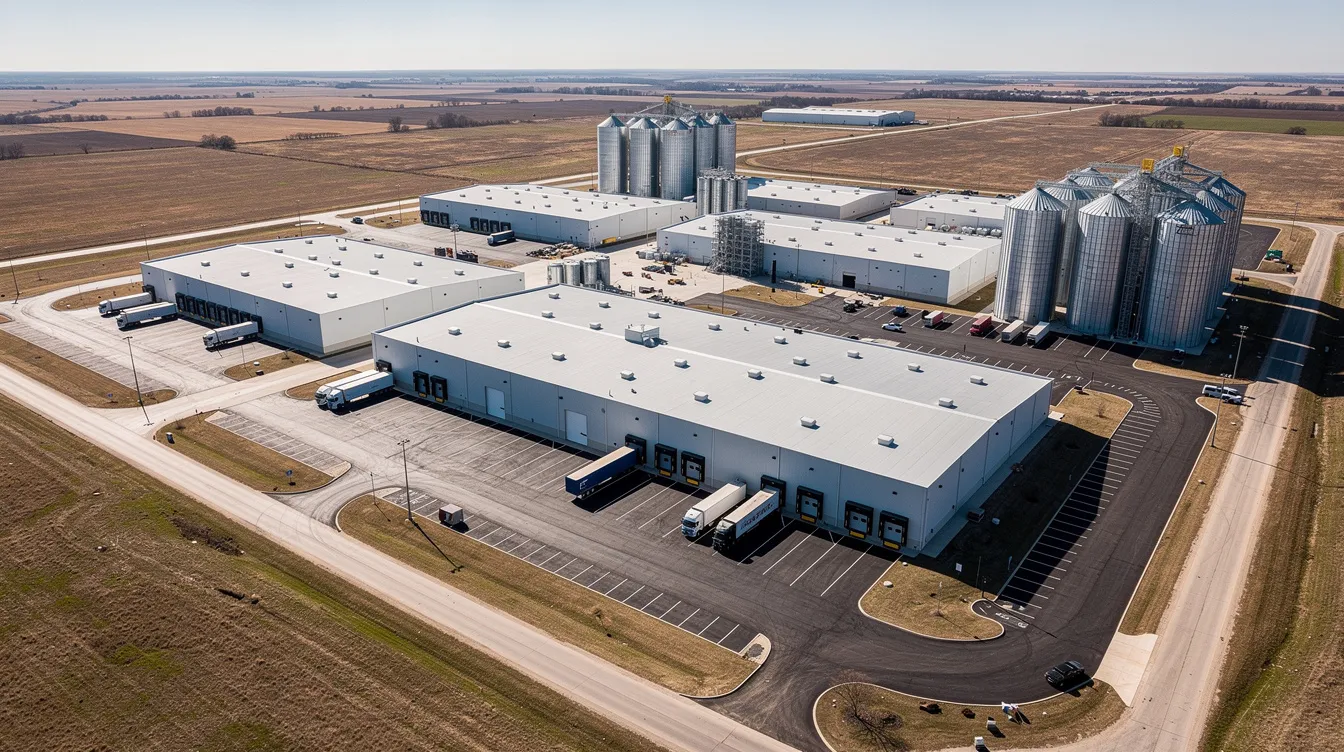
Infrastructure requirements are substantial: larger industrial land, a multi-storey process tower, separate raw material and finished goods warehouses, silo clusters, boiler house, DG set, quality assurance laboratory and administrative block.
The economic logic is compelling when utilisation is high – significantly lower per-tonne fixed cost, ability to negotiate better raw material prices due to bulk procurement. However, working-capital exposure is heavy and distribution network strength becomes critical. For engineering-led perspectives on automatic animal feed mill machinery and EPC cost, promoters should evaluate detailed supplier proposals. A phased approach – designing for 200 TPD but initially running one 100 TPD line – can reduce early-year financial risk.
300 TPD Animal Feed Mill – Large-Scale Industrial Project Feasibility
A 300 TPD capacity represents a very large, capital-intensive industrial animal feed mill, typically viable only with assured demand from integrated poultry or cattle operations or multi-state dealer networks. Annual production capacity at 80% utilisation exceeds 72,000 MT – well within the 20,000 to 100,000 MT range that characterises large-scale animal feed manufacturing plants.
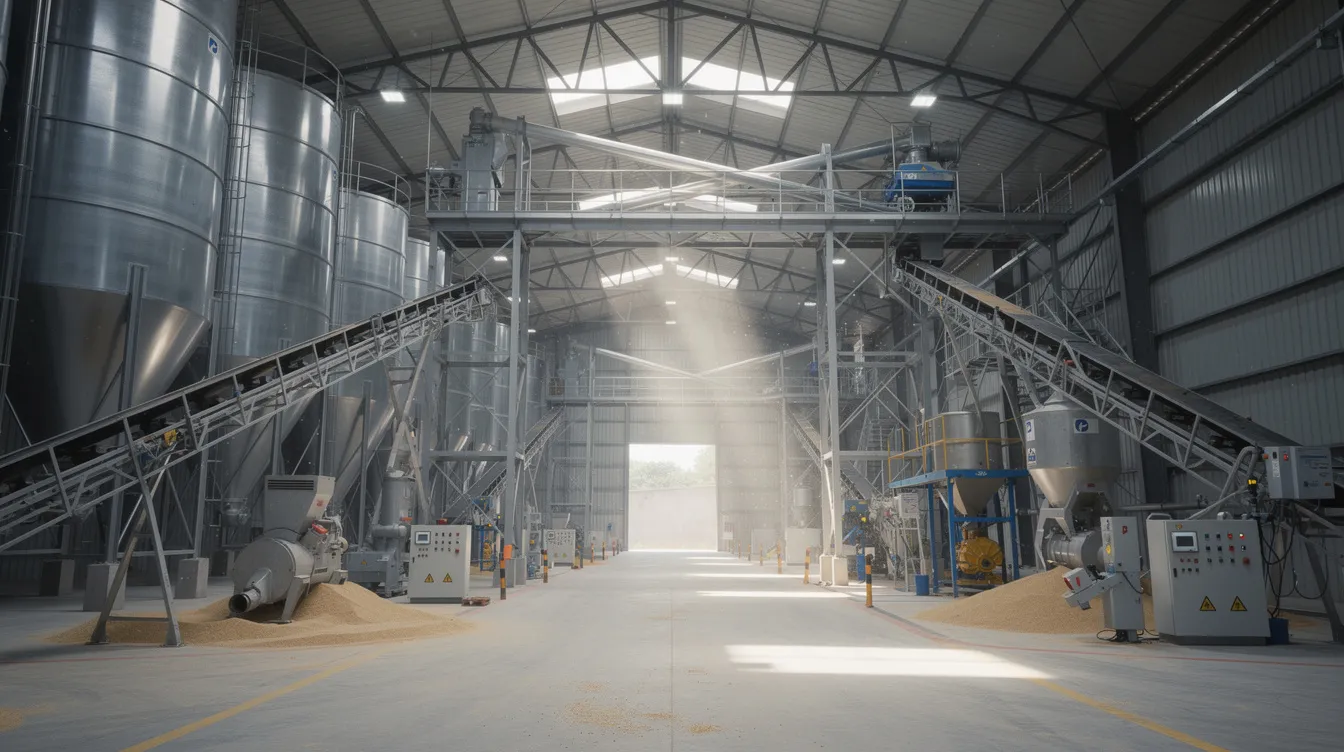
Production configuration involves more than one grinding and pelleting line, a centralised control room with PLC/SCADA, extensive bucket elevators and conveyors, high-capacity coolers and sifters, and automatic bagging and palletisation. Bulk material handling includes multiple large grain silos, bulk molasses and oil systems, truck tipplers and an on-site weighbridge.
Utility requirements are substantial: a high connected power load, a multi-tonne per hour boiler, compressed air systems and dust collection with emission controls. Energy costs depend on regional energy prices and consumption levels, making location selection critical. VFDs and waste-heat utilisation can improve energy efficiency.
Working-capital intensity is very high – continuous large-scale procurement of grain and protein meals creates significant exposure to commodity price cycles. Even 50–60% utilisation at 300 TPD produces meaningful absolute tonnage, but may be insufficient to service high term-loan instalments if pricing or demand weakens. Rigorous market study, long-term supplier and buyer contracts, and detailed feasibility modelling are essential before committing to this scale.
Animal Feed Mill Machinery and Equipment – Capacity-Wise Comparison
While basic process blocks remain similar across capacities, equipment rating, count and automation differ sharply between 50 and 300 TPD animal feed mills. Animal feed production requires equipment like grinders, mixers and pelletizers at every scale. Feed grinders are essential for grinding raw materials into powder, pelletizers press mixed feed into pellets for easier digestion, extruders produce high-digestibility extruded feed, cooling machines reduce the temperature of freshly pelleted feed, and packaging machines are used to bag finished animal feed products. Globally, 1–40 T/H animal feed manufacturing plant equipment costs range from $10,000 to $850,000 depending on configuration. A 10 T/H feed plant, capable of processing both pellet and mash feeds, typically costs between $250,000 and $420,000.
| Equipment | 50 TPD | 100 TPD | 200 TPD | 300 TPD |
|---|---|---|---|---|
| Intake hopper | 1 basic | 1–2 | 2–3 | 3+ with truck tippler |
| Conveyors/elevators | Few, short runs | Multiple | Extensive | Very extensive |
| Pre-cleaner | 1 | 1–2 | 2 | 2–3 |
| Magnetic separator | 1 | 1–2 | 2 | 2–3 |
| Hammer mill | 1 small | 1 medium | 1–2 large | 2–3 large |
| Batching scale | Manual/1 auto | 1 auto | 2 auto | 2–3 auto |
| Feed mixer | 1 (1–2 MT) | 1 (2–3 MT) | 1–2 (3–4 MT) | 2–3 (4+ MT) |
| Steam conditioner | Optional | 1 | 1–2 | 2–3 |
| Pellet mill | Optional/1 small | 1 medium | 1–2 large | 2–3 large |
| Pellet cooler | Optional/1 | 1 | 1–2 | 2–3 |
| Crumbler | Optional | Optional | 1 | 1–2 |
| Bagging machine | Manual | Semi-auto | Auto | Auto + palletiser |
| Boiler | Small/none | Medium | Large | Large/multiple |
| PLC/SCADA | None | Basic PLC | PLC | Full SCADA |
Animal feed mills should include sufficient drying, grinding and mixing capacities to meet demand. Different feed types require distinct processing equipment configurations – pellet-heavy projects need larger boiler and steam systems, discussed in detail in the industrial feed pelleting plant project report. Customer demands influence the selection and configuration of manufacturing processes in feed mills, and different livestock species require unique formulations affecting production complexity.
Manufacturing Process and Production Technology
The standard production flow for grain-based animal feed production in India follows a well-established sequence. The setup process includes selecting technology and planning layout appropriate to the intended feed types and capacity.
Raw material receiving → Sampling and lab testing → Cleaning → Grinding → Batching and weighing → Mixing → Steam conditioning (for pellets) → Pelletisation → Cooling → Crumbling (where required) → Screening → Final quality check → Bagging or bulk loading → Storage → Dispatch
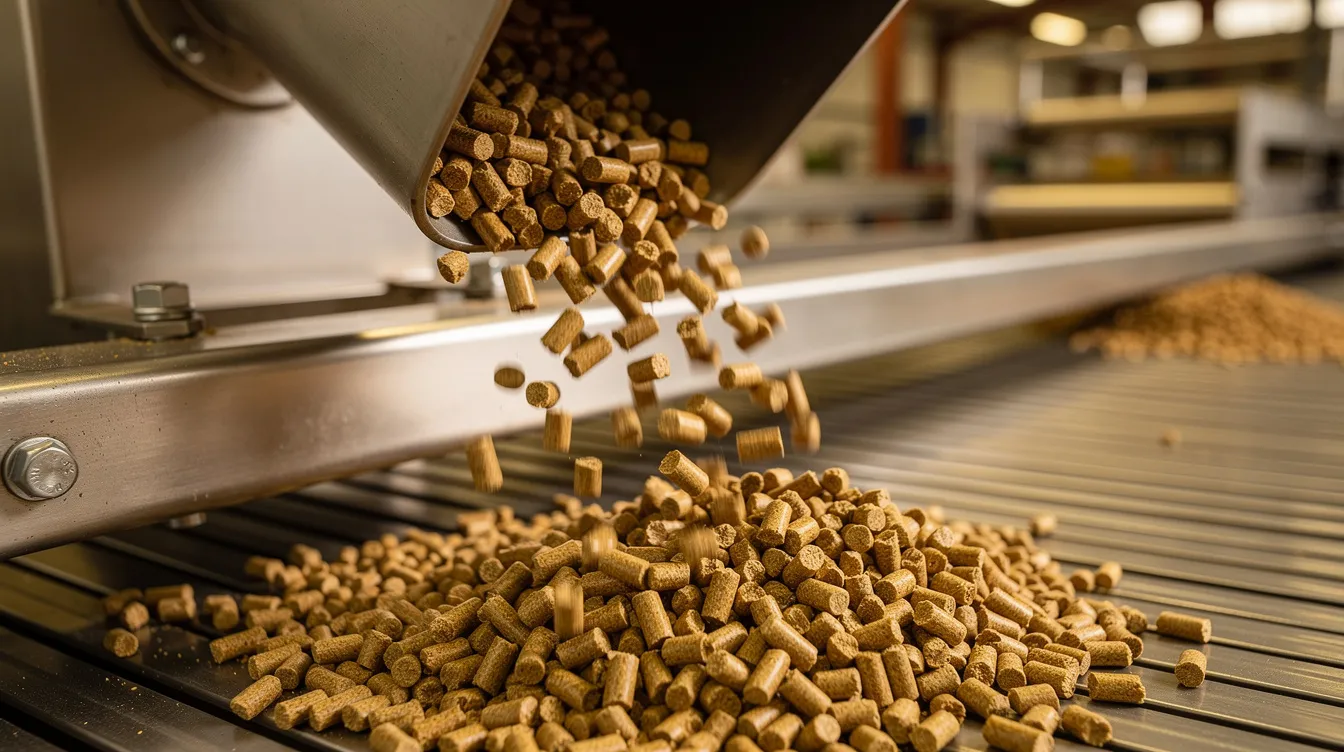
Mash feed plants end the process at mixing and screening, skipping pelleting, cooling and crumbling – reducing both equipment costs and energy consumption. Animal feed plants can produce mash, pellets and crumbles depending on market requirements. Pelletizers press mixed feed into pellets, while cooling machines reduce the temperature of freshly pelleted feed before screening.
Critical technical considerations include correct grinding fineness for different animal species, mixing time for homogeneity, conditioning temperature and moisture control. Effective mill capacity is often determined by its slowest bottleneck operation – implementing process line balancing prevents bottlenecks in feed mill production. Operational logistics must be planned to avoid production stalls. Quality control processes are necessary for maintaining feed production standards, with in-house lab facilities checking moisture, protein, fibre and mycotoxin levels to maintain product quality and protect brand reputation.
Land, Factory Building, Storage and Infrastructure Requirements
Land and building for an animal feed manufacturing plant must be planned around vertical process flow, truck circulation and future expansion – not just current machinery footprints. Land and construction costs vary by geographical location across India.
| Parameter | 50 TPD | 100 TPD | 200 TPD | 300 TPD |
|---|---|---|---|---|
| Land | Small industrial plot | Medium industrial plot | Large industrial site | Multi-acre site |
| Building | Single shed | Shed + small tower | Tower + ancillary sheds | Tower + multiple sheds |
| Storage | Floor godowns | Godowns + small bins | Godowns + silos | Large silo field + godowns |
| Utilities block | Basic | Boiler house, panel room | Full utility zone | Extensive utility infrastructure |
| Lab and admin | Combined room | Separate small lab | Dedicated lab + admin | Full lab, admin, canteen |
| Expansion area | Moderate provision | Should be planned | Should be planned | Usually purpose-built |
Building height requirements for vertical process towers and bucket-elevator runs differ significantly from simple warehouse design and influence civil cost. Truck turning radius, loading bays, weighbridge needs (typically from 100–200 TPD upwards), storm-water drainage and fire-safety planning are practical considerations. For an overview of plant layout and infrastructure considerations, the grain-based animal feed plant setup cost page provides relevant planning context.
Animal Feed Mill Capital Investment – 50 TPD vs 100 TPD vs 200 TPD vs 300 TPD
Capital investment for an animal feed mill comprises fixed capital plus initial working-capital margin and pre-operative expenses. The main components include land acquisition and site development, civil construction, main process machinery, material handling systems, storage infrastructure, boiler and utilities, electrical installations, automation systems, laboratory and quality control equipment, pollution control, installation and commissioning, engineering and consultancy, preliminary and pre-operative expenses, interest during construction and contingency.
| Component | 50 TPD | 100 TPD | 200 TPD | 300 TPD |
|---|---|---|---|---|
| Land & site | Low | Low–Medium | Medium | Medium–High |
| Civil construction | Low | Medium | High | Very High |
| Process machinery | Medium | Medium–High | High | Very High |
| Material handling | Low | Medium | High | Very High |
| Storage (silos, warehouses) | Low | Medium | High | Very High |
| Boiler & utilities | Low (if pellet) | Medium | High | Very High |
| Automation | Minimal | Basic PLC | PLC | PLC/SCADA |
| Lab & QC | Basic | Moderate | Full | Full |
| Total investment intensity | ₹8–12 Cr* | ₹15–20 Cr* | ₹20–28 Cr* | ₹30–40+ Cr* |
Illustrative ranges for pellet-based plants. Actual cost depends on location, automation, product mix and vendor quotations. Based on scaling from available benchmarks: a 32 TPD cattle feed plant costs approximately ₹3.80 crore total, while a 200 TPD turnkey plant was tendered at ₹23.82 crore.
Capital cost does not increase linearly with capacity. Certain infrastructure is lumpy – admin buildings, labs, transformers and weighbridges serve multiple capacity levels. Some utilities can accommodate future expansion. Higher capacities need proportionally more spending on silos, material handling and automation, but shared fixed infrastructure dilutes the cost per TPD. Financial projections include capital investment and operating costs analysis, and actual rupee estimates should be based on up-to-date vendor quotations through a customised project report.
Working Capital Requirements for Different Feed Mill Capacities
In the animal feed industry, raw materials (maize, wheat bran, soybean meal, mineral mixture, amino acids and feed additives) dominate monthly working-capital needs. Raw material storage capacity should align with daily consumption needs. Operating costs for animal feed plants are driven overwhelmingly by raw material consumption.
The main working-capital elements include raw material inventory, in-process and packaging materials, finished goods inventory, trade receivables from dealers and integrators, less trade payables and supplier credit, plus minimum cash balances. The operating cycle can be estimated as inventory holding days plus receivable days minus payable days. The working-capital gap equals average daily cost of sales multiplied by operating-cycle days.
A 300 TPD plant, even with better payment terms, requires substantially larger absolute working-capital funding compared to 50 TPD – often demanding higher CC/OD limits from banks. Working capital must also absorb commodity price volatility; stocking extra grain in harvest season may require short-term additional funding but can improve margins over the year.
| Parameter | 50 TPD | 100 TPD | 200 TPD | 300 TPD |
|---|---|---|---|---|
| Working-capital intensity | Moderate | High | Very High | Extremely High |
| Monthly RM spend (indicative) | Significant | 2× of 50 TPD | 4× of 50 TPD | 6× of 50 TPD |
| Bank CC limit required | Moderate | Substantial | Large | Very Large |
Production Cost Per Tonne and Operating Economics
In grain-based animal feed production, raw materials account for 80–85% of operating expenses. The balance comprises conversion cost and overheads. Labor costs vary based on regional market conditions, and energy costs depend on regional energy prices. Different animal species require unique formulations affecting production complexity and cost.
A practical per-tonne costing framework involves calculating raw material cost per MT based on formulation percentages (maize, protein meals, bran, minerals, premixes), adding conversion cost per MT derived from total annual operating costs divided by expected annual tonnage, and including selling and distribution expenses (including transportation costs) separately.
Higher-capacity plants achieve lower conversion cost per MT through better fixed-cost absorption. However, raw material cost per MT depends primarily on feed formulation and procurement efficiency, not capacity alone. At 80% utilisation, a 300 TPD plant may achieve conversion costs 30–40% lower per MT than a 50 TPD plant – but these figures are hypothetical and depend on specific plant configurations. Animal feed manufacturing plants typically achieve gross profit margins of 15–25%, with the spread heavily dependent on formulation mix, procurement timing and market realisation.
Revenue, Profitability and Financial Projections – Capacity-Wise Comparison
Revenue and profitability depend on a combination of plant capacity, utilisation, selling price per MT and raw material spread – not just installed TPD. Production capacity must be sized to accommodate expected future growth while avoiding over-investment. Identifying market share percentage helps in setting realistic production targets.
For illustrative purposes, assuming 300 operating days, 80% utilisation in a stabilised year and a notional average realisation, annual production capacity and revenue scale proportionally. However, the ramp-up period differs materially across capacities – smaller plants may reach 80–85% utilisation in 2 years due to smaller market requirements, while 300 TPD plants may need 3–4 years, affecting early-year DSCR and IRR.
Ten-year financial projections should factor periodic maintenance capex, potential capacity upgrades, and gradual increases in wages, power tariffs and other operating expenses. All illustrative numbers in any project report must reflect project-specific assumptions and should be labelled accordingly. A stabilised-year comparison should include annual production, annual sales value, raw material cost, variable manufacturing costs, fixed operating expenses, EBITDA, depreciation, interest on term loan and working capital, profit before tax and profit after tax.
Financial Feasibility – DSCR, IRR, NPV, Break-Even and Payback Period
Banks and financial institutions in India assess animal feed mill projects using several key factors. Proper financial modelling is essential for determining project economics, and financial assessments are crucial for determining project viability in feed mill planning.
- DSCR (Debt Service Coverage Ratio): annual cash accrual divided by annual debt service. Lenders typically expect minimum DSCR of 1.25–1.30 and average DSCR of 1.4–1.5 over the loan tenure.
- Project IRR vs Equity IRR: project IRR measures returns on total investment; equity IRR measures returns to the promoter’s contribution. Sample benchmarks suggest project IRR in the 15–26% range for well-run feed plants.
- NPV: discounted at weighted average cost of capital.
- Break-even: the capacity utilisation at which contribution covers fixed costs – typically around 55–65% for pellet-based feed plants.
- Payback period: both simple and discounted.
- Debt-equity ratio: commonly 70:30 or 75:25 for industrial projects.
Larger capacities may show better long-term IRR if utilisation is high, but early-year DSCR may be weaker due to higher term-loan servicing and slower market ramp-up. Changing capacity utilisation from 70% to 85% can materially improve both DSCR and IRR. Lenders review the reasonableness of capacity utilisation assumptions before appraising loans.
Sensitivity Analysis – What Happens When Feed Mill Economics Change?
Animal feed mill capacity planning must be tested under multiple economic scenarios. The main variables to stress-test include raw material prices rising by 5–10%, selling prices softening by 3–5% due to competition, actual capacity utilisation falling 10–15 percentage points below projections, power and fuel cost increases, interest rate hikes, project cost escalation, commissioning delays and longer debtor collection periods.
A three-scenario framework – optimistic, base and downside – should evaluate impact on EBITDA margin, DSCR, IRR and payback for each plant size. Larger capacities with higher debt and working-capital utilisation are usually more sensitive to negative changes in utilisation and margin. A professional DPR should always include sensitivity tables, particularly for 200 TPD and 300 TPD projects. Risk factors multiply with scale, making this analysis non-negotiable for serious project finance proposals.
Choosing the Right Capacity – 50 TPD, 100 TPD, 200 TPD or 300 TPD?
Planning a capacity of an animal feed mill requires considering market demand, promoter resources and several key factors simultaneously. No single capacity is universally best.
| Decision Criterion | 50 TPD | 100 TPD | 200 TPD | 300 TPD |
|---|---|---|---|---|
| Promoter equity capacity | Limited | Moderate | Strong | Very Strong |
| Customer base | Local | District/regional | State-level | Multi-state |
| Product complexity | Basic mash/pellet | Multiple formulations | Multi-species | Full range |
| Raw material sourcing | Local traders | Regional procurement | Bulk contracts | Large-scale contracts |
| Distribution network | Small dealer base | Regional dealers | State-level distribution | Multi-state distribution |
| Risk tolerance | Lower | Moderate | Higher | Highest |
| Land requirement | Small plot | Medium plot | Large site | Multi-acre campus |
| Time to full utilisation | 1–2 years | 2–3 years | 2–4 years | 3–5 years |
Smaller plants carry lower financial risk but higher unit conversion cost. Larger plants demand stronger marketing, procurement and financial discipline. Customer demands influence the selection and configuration of manufacturing processes. This matrix should serve as a preliminary filter before commissioning a detailed feasibility study.
Phased Capacity Expansion – Starting at 50 or 100 TPD and Scaling to 200 or 300 TPD
Future scalability should be integrated into the initial design of the feed mill. Modular design allows for future expansion without disrupting operations. Production capacity must be sized to accommodate expected future growth while controlling initial debt burden.
Practical strategies include designing building layout and foundations for a future second processing line, provisioning extra space for silos and warehouses, oversizing certain utilities (transformer, boiler, compressor) where economically justified, selecting modular machinery that can be supplemented without major rework, and provisioning cable trays and panel space for future automation upgrades.
The trade-off is clear: lower initial investment and interest burden versus higher per-tonne conversion costs in early years, with potential retrofit costs and downtime during later expansion. A common approach involves starting with 100 TPD and scaling to 200 TPD in 3–5 years based on demand growth milestones.
Regulatory Approvals and Compliance Requirements in India
Large-scale animal feed mills are subject to multiple central and state-level regulations beyond company registration. Key requirements typically include:
- Business entity registration (proprietorship, partnership, LLP, company)
- Factory licence under applicable Factories Act provisions
- Land-use and building plan approvals
- State Pollution Control Board consents (Consent to Establish and Operate)
- Boiler registration and periodic inspection where steam boilers are used
- Electrical safety clearances and fire NOC
- Labour law compliances (wages, PF, ESI, safety)
- Product quality standards including BIS specifications (such as IS 2052:2009 for cattle feed) and FSSAI requirements
- GST registration for interstate and intrastate sales
Exact requirements vary by state, capacity and whether the unit handles medicated or speciality feed. Voluntary certifications like ISO 22000 may support branding and buyer confidence but are distinct from statutory approvals.
Key Risks in Large-Scale Animal Feed Mill Projects
Risk identification is central to animal feed mill capacity planning, particularly beyond 100 TPD where project size and leverage increase. Primary risk factors include:
- Overestimation of demand leading to low capacity utilisation – mitigate through realistic demand studies and phased expansion
- Raw material price volatility compressing margins – mitigate through multi-supplier procurement and harvest-season stocking
- Formulation quality issues causing product rejection – mitigate through strong quality control protocols and in-house laboratory
- Machinery breakdowns – mitigate through AMC contracts and spare-parts inventory
- Customer credit defaults and collection delays – mitigate through credit limits and receivable monitoring
- Working-capital shortages – mitigate through adequate bank limits and conservative inventory planning
- Delayed project implementation increasing interest during construction – mitigate through rigorous implementation scheduling
- Inventory deterioration due to moisture, pests or mycotoxins – mitigate through proper storage infrastructure and quality management
A formal risk matrix should be included in every DPR, aligned with lender expectations. Nutritionally balanced feed with consistent quality standards is essential for maintaining animal health and market reputation.
Bank Finance and Investor-Ready DPR Requirements
Any serious 50–300 TPD animal feed manufacturing project in India will normally require term loans and working-capital limits from banks or NBFCs. Detailed Project Reports help in evaluating the feasibility of manufacturing projects, and CMA Data preparation is vital for securing bank loans in project financing.
A bankable DPR should include: promoter background and financial strength, industry overview and demand assessment, capacity selection justification, technical description with machinery quotations, plant location details, capital cost estimates with clear assumptions, means of finance, working-capital assessment, manufacturing process description, detailed cost of production, projected financial statements for 7–10 years, DSCR and financial ratios, break-even and sensitivity analysis, implementation schedule and risk analysis.
An investor-oriented DPR additionally emphasises market scalability, competitive advantage and potential exit options, while a bank DPR focuses on cash-flow stability and security cover. Generic template-based project reports are usually insufficient – banks look for realistic capacity utilisation, price assumptions and documented basis for investment figures. Advisory services should focus on customized analysis rather than generic templates. A business plan for a proposed project at any of these capacities must be grounded in verifiable assumptions.
ProjectReportBank.com – Professional Advisory for Animal Feed Mill Capacity Planning
Project Report Bank is a CA-led project-finance and DPR advisory practice specialising in manufacturing and agro-processing projects across India, led by CA Manish Gugliya, FCA, DISA (ICAI), with more than 20 years of professional experience.
Key services for feed industry promoters include:
- Customised Detailed Project Reports covering 50–300 TPD animal feed mills for bank finance
- Capacity-wise investment assessment and project feasibility studies
- Financial projections and financial modelling for 10-year horizons
- CMA Data preparation and working-capital assessment
- Loan structuring, DSCR and repayment planning
- Project economics evaluation including ROI, IRR, payback and sensitivity analysis
- Investor-ready DPRs and pitch material for equity funding
- Support for expansion and diversification projects in the feed industry
All analysis is based on project-specific assumptions – location, product mix (cattle feed, poultry feed, aquatic feed, pig feed, chicken feed), machinery configuration, land cost and promoter funding structure. Serious entrepreneurs and industrial promoters are welcome to contact Project Report Bank through the website for a customised animal feed mill capacity planning and DPR engagement. The final product should serve the total cost assessment needs of both the promoter and the financing institution.
Frequently Asked Questions
How do I choose between a mash feed plant and a pellet feed plant for my capacity?
Mash feed plants require lower capital and energy but may face limited market acceptance in intensive poultry production segments where pellet feed and crumble feed are preferred for better feed conversion ratios. A pellet machine or pellet mill adds meaningful cost – boiler, steam conditioner, cooler and the pellet mill itself – and increases power consumption. At 50 TPD, an optional small pellet line may suffice. At 100 TPD and above, most promoters include pelleting as a core capability because customer needs increasingly favour pelleted feed. The decision should be based on target animal species, customer preferences and the investment cost differential assessed through a customised DPR. The granulation process and rotary distributor configuration also affect equipment price and final product quality.
Is it better to expand an existing 50 TPD plant or set up a new 100–150 TPD plant?
Brownfield expansion is often more economical if the existing plant layout permits additional machinery installation and the land can accommodate expanded warehousing and utilities. However, if the existing site has spatial constraints or the original building was not designed for vertical process flow, a greenfield 100–150 TPD plant may deliver better long-term production efficiency. Key considerations include cost of shifting operations, ability to run old and new lines during transition, and whether existing utilities (transformer, boiler) can serve expanded capacity. Poultry production companies with existing operations often find brownfield expansion attractive due to lower incremental investment.
What is the typical implementation period for an animal feed mill project in India?
A 50 TPD plant can typically move from land acquisition to commercial production in 8–12 months, assuming timely regulatory approvals. A 100 TPD project may take 10–15 months. For 200 TPD, expect 12–18 months, and a 300 TPD project with extensive silo infrastructure and automation may require 15–24 months. These timelines are indicative and depend heavily on land availability, civil construction pace, machinery procurement lead times and regulatory clearances. Clear implementation schedules with defined milestones should feature prominently in any project report.
How does seasonality in grain prices affect operations of a 200–300 TPD feed mill?
Large mills often procure more aggressively during harvest seasons when maize and other grain prices are lower, leading to higher seasonal inventory and substantially increased working-capital needs. Some mills run at slightly reduced capacity during lean procurement periods depending on raw material economics. Effective feed formulation management and storage capacity planning – including featured columns for seasonal buffer stock – are vital. This seasonal cycle must be reflected in working-capital projections and cash-flow analysis within the DPR. Promoters who hate spam from commodity brokers should still maintain relationships with multiple reliable suppliers to detect leaks in supply chains and avoid disruptions, considering various aspects of seasonal procurement.
Can government schemes significantly reduce the cost of an animal feed manufacturing project?
Various central and state schemes for agro-processing and MSMEs may provide interest subsidies, capital assistance or credit guarantees. Under AHIDF (Animal Husbandry Infrastructure Development Fund), 366 feed-plant projects have been approved with combined funding of ₹10,367.90 crore. However, scheme availability, eligibility criteria and subsidy quantum change periodically. Promoters should not base project viability solely on incentives – the project must be financially sustainable on its own merits. Livestock farming support schemes can play a vital role in reducing the effective investment cost, but current guidelines should be verified before planning. ABC Machinery and other equipment suppliers may provide guidance on scheme-compliant configurations, but independent verification remains essential. High efficiency in operations and production should remain the primary driver of viability regardless of subsidy support.
Conclusion – Selecting a Financially Sustainable Animal Feed Mill Capacity
The four capacity tiers – 50, 100, 200 and 300 TPD – differ substantially in capital investment, working capital, per-tonne economics, marketing requirements and financial risk. A 50 TPD plant suits promoters entering the organised feed industry with limited equity and local demand, while a 300 TPD plant demands deep pockets, multi-state distribution and tolerance for higher leverage.
Correct animal feed mill capacity planning requires a realistic assessment of demand, supply chain strength, promoter equity, land availability, storage capacity and comfort with debt obligations. Larger capacities are not automatically more profitable – viability depends on sustainable utilisation levels, disciplined procurement and efficient distribution. The annual production capacity of the plant must match the promoter’s ability to sell, finance and manage the output.
Serious promoters should engage in a detailed feasibility study and customised DPR preparation – whether through Project Report Bank or other competent professionals – before finalising any animal feed plant capacity and approaching banks or investors. A well-structured project report built on defensible assumptions remains the most reliable foundation for committing capital to the feed industry.
CA Manish Gugliya FCA, DISA (ICAI) More than 20 years of professional experience in project reports, financial projections, CMA Data, project finance and business advisory.