Key Takeaways
- Industrial-scale soy protein manufacturing can be financially viable in India when technology selection, food-grade raw material sourcing and long-term offtake contracts are planned correctly from the outset.
- Soy protein concentrate plants require lower capital expenditure and simpler processing than soy protein isolate plants, but SPI commands significantly higher market realisation and serves premium food, nutraceutical and export segments.
- The global soy protein market was valued at USD 10.69 billion in 2025 and is expected to reach USD 19.54 billion by 2034, indicating sustained increasing demand for plant protein ingredients worldwide.
- A professionally prepared detailed project report, CMA data and structured financial modelling are essential before approaching banks or investors for a soy protein plant project of any meaningful scale.
- This article covers raw materials, the production process for SPC and SPI, machinery requirements, plant layout, project cost structures, working capital, profitability benchmarks, bank finance considerations and risk assessment.
Introduction – Investment Opportunity in Industrial Soy Protein Manufacturing
Soy protein has evolved from a commodity by-product of oilseed crushing into a high-value industrial ingredient serving food processing, plant based meat substitutes, sports nutrition, bakery, ready-to-eat foods and specialised animal feed applications. Both soy protein concentrate and soy protein isolate are now recognised as a complete protein source containing all essential amino acids, making them valuable across food industries globally.
India’s soybean production base is substantial, with approximately 12.6–12.7 million tonnes produced in 2025-26 across Madhya Pradesh, Maharashtra and Rajasthan. Yet the country imports nearly 90% of its plant-protein isolates and concentrates due to limited domestic extraction capacity. The food manufacturing market in India is expected to grow from USD 307 billion in 2023 to USD 700 billion by 2030, further strengthening demand for functional protein ingredients. This creates a significant opportunity for value addition beyond simple soybean crushing and oil extraction.
Setting up a soy protein concentrate and isolate manufacturing plant is fundamentally different from operating a solvent extraction unit or a flour mill. The technology is more complex, capital requirements are higher, quality control is stricter and customer qualification cycles are longer. Projects of this nature require structured project finance, validated technology and confirmed market access.
- A soy protein concentrate and isolate plant can be viable in India provided the promoter secures consistent food-grade raw materials, selects appropriate extraction technology and validates commercial offtake before committing capital.
- Commercial viability depends on scale, export focus, disciplined cost management and realistic financial projections prepared as part of a bankable project report.
At Project Report Bank, under the guidance of CA Manish Gugliya, FCA, DISA (ICAI), we prepare customised detailed project reports, financial models and feasibility studies specifically designed for industrial soy protein manufacturing plants and similar capital-intensive food processing projects across India.
What Are Soy Protein Concentrate and Soy Protein Isolate?
Soy protein concentrate typically contains 65–70% protein on a dry basis, produced by selectively removing soluble carbohydrates and other non protein components from defatted soy material. It retains higher water-binding and fat-absorption capacities, making it suitable for textured soy protein, processed meats, bakery products and animal feed applications. SPC offers improved digestibility compared to soybean meal.
Soy protein isolate contains over 90% protein content and represents the highest-purity commercial soy protein product. SPI exhibits superior emulsifying, gelling, and foaming properties, and is cholesterol-free and nutritionally rich. It is produced through extraction, precipitation, and drying using more sophisticated wet-processing technology. SPI serves supplements, high-protein beverages, plant-based meat analogues and premium export markets.
Both SPC and SPI contain all essential amino acids, making them valuable protein sources. However, SPC is more cost-effective to produce than SPI due to lower operational complexity, while SPI commands premium realisation driven by its functional properties and purity.
| Parameter | Soy Protein Concentrate (SPC) | Soy Protein Isolate (SPI) |
|---|---|---|
| Protein Content (dry basis) | ~65–70% | ≥90% |
| Typical Raw Material | Defatted soy flakes/flour | High-spec defatted soy flakes/flour |
| Process Complexity | Moderate (washing/leaching) | High (alkaline extraction, precipitation, spray drying) |
| Capital Intensity | Lower | Significantly higher |
| Energy & Water Demand | Moderate | High |
| Typical Applications | Feed, bakery, textured protein, aquafeed | Supplements, beverages, plant-based meat, nutraceuticals |
| Quality/Food Safety Demands | Good hygiene, basic lab testing | Very strict: purity, solubility, microbial, allergen control |
| Main Customer Segments | Feed mills, food ingredient blenders | Supplement brands, FMCG, premium export buyers |
- Entrepreneurs with existing oilseed crushing units and feed market access may find SPC-only projects more practical with lower risk.
- SPI-only projects suit promoters with confirmed high-value food or nutraceutical customers and willingness to invest in wet-processing infrastructure.
- An integrated SPC+SPI configuration allows risk diversification: SPC as the base product with a defined stream upgraded to SPI for premium markets.
Market Demand and Commercial Opportunities in India
The soy protein market is projected to grow at a CAGR of 6.93% from 2026 to 2034, driven by plant-based diets, functional food development and rising protein consciousness. Soy proteins are used in various applications including meat alternatives and nutritional supplements.
Key demand segments include:
- Food ingredient manufacturers seeking consistent, functional soya protein for processed foods
- Plant-based meat and seafood products producers requiring high-functionality SPI
- Nutraceutical and sports nutrition brands sourcing plant protein isolate
- Bakery, confectionery and convenience food manufacturers
- Aquafeed and specialised animal feed producers, where SPC is widely used in animal feed and food industries
- Export-oriented buyers in SE Asia and the Middle East requiring non-GMO, identity-preserved soy protein
Import substitution represents a genuine opportunity. India currently depends heavily on imported SPC and SPI. Domestic production meeting international quality, functionality and consistency standards can displace imports, particularly for non-GMO certified soy protein. However, new entrants must compete on consistent product quality and functional performance, not price alone.
Long-term supply contracts, technical approval trials with large FMCG buyers and export qualification processes can take 6–18 months. Promoters should incorporate a dedicated market study as part of their detailed project report to validate the product mix before finalising plant capacity.
Raw Material Selection and Soy Protein Production Economics
The primary raw material for both SPC and SPI is high-protein, low-damage, food-grade defatted soy flakes or flour, not general feed-grade soybean meal. This distinction is critical. SPC production starts with defatted soybean flakes, and SPI production involves solubilizing proteins from defatted soy flour using alkaline extraction. Using cheaper, inconsistent feed-grade meal quickly erodes profitability through lower protein recovery, higher reject rates and loss of premium customers.
Key quality parameters include: protein percentage (typically 45–50% in defatted material), moisture content, residual oil, fibre, urease activity, microbial load, pesticide residues and heavy metals. Low-temperature processing preserves protein functionality during extraction, which is why low-temperature desolventised flakes are preferred over conventional high-temperature processed soybean meal.
- Promoters should consider sourcing directly from integrated oilseed processors or establishing captive low-temperature extraction to ensure consistent raw material quality.
- Soybean prices in India exhibit seasonal volatility. The MSP for yellow soybean in 2026-27 is approximately ₹5,708 per quintal, though mandi prices in Madhya Pradesh have sometimes exceeded ₹7,000 per quintal.
- Raw material stocking policies and seasonal procurement planning are essential to protect margins, as raw materials account for 75-85% of total operating expenses in soy protein plants.
Soy Protein Concentrate Manufacturing Process
SPC manufacturing focuses on selectively removing soluble carbohydrates and other non protein components from defatted soy flakes to raise protein concentration to above 65% on dry basis. The main challenges in soy protein processing include flavor issues and nutrient retention, which process design must address.
The principal commercial routes are aqueous alcohol leaching, acid leaching and purely aqueous extraction. Alcohol-based methods produce better flavour profiles but require solvent recovery infrastructure and regulatory compliance. Acid leaching is less solvent-intensive but may affect functionality.
Standard SPC process steps include:
- Raw material preparation (cleaning, conditioning of defatted flakes)
- Extraction using alcohol or acid wash to remove soluble sugars and non-protein solids
- Solid–liquid separation using decanters or filtration
- Desolventising or drying of the protein-rich fraction
- Heat treatment to inactivate anti-nutritional factors and improve digestibility
- Cooling, grinding and sieving to target particle size
- Quality testing and final packaging
Process Flow: Defatted soy flakes → Extraction (alcohol/acid/aqueous wash) → Solid–liquid separation → Desolventising/drying → Heat treatment → Cooling → Grinding → Sieving → SPC packaging
SPC production can achieve protein content above 65% with yields of approximately 53–78% by weight from defatted soy material and protein recoveries of 70–98%, depending on extraction method and raw material quality.
Soy Protein Isolate Manufacturing Process
SPI aims for ≥90% protein on a dry basis and requires more complex wet-processing. The extraction process requires strict quality control measures at every stage. Excessive heat during processing can denature proteins, reducing their functionality, so temperature management throughout is critical.
The main process stages include:
- Preparation of low-temperature defatted raw material
- Alkaline extraction of protein (pH ~8–10) to solubilize proteins
- Solid–liquid separation using decanters and disc-stack centrifuges
- Acid precipitation at isoelectric point (pH ~4.5–5.5) to precipitate protein
- Washing and neutralisation of precipitated protein curd
- Concentration using membrane filtration (UF/RO) or evaporation
- Pasteurisation or thermal treatment
- Spray drying to produce the final product powder
- Milling, sieving and packaging
The solubility of soy protein products greatly depends on processing conditions and methods. Alternative or complementary technologies such as membrane filtration can improve yield and reduce water consumption, though they add CAPEX.
The production of SPI generates large volumes of wastewater which require treatment through dedicated effluent treatment plants. Typical SPI yields are approximately 15–30% by weight from defatted material, with protein recovery of 30–60%.
Process Flow: Defatted soy flakes → Alkaline extraction → Separation → Isoelectric precipitation → Washing/neutralisation → Concentration → Spray drying → Milling → SPI packaging
SPC vs SPI – Which Manufacturing Project Is More Feasible?
The choice between SPC and SPI is a strategic business decision based on market access, technology capability, risk appetite and investment capacity. Neither is universally superior.
| Parameter | SPC | SPI |
|---|---|---|
| Protein Content | ~65–70% | ≥90% |
| Main End-Use Sectors | Feed, bakery, textured protein | Supplements, beverages, meat analogues |
| Process Complexity | Moderate | High |
| Environmental Load | Lower (some solvent handling) | Higher (wastewater, chemicals, energy consumption) |
| Indicative CAPEX per TPD | Lower | 2–3× higher |
| Gross Margin Potential | Moderate | Higher per kg |
| Quality Sensitivity | Moderate | Very high |
| Customer Approval Time | Shorter | Longer (6–18 months) |
Conditions favouring SPC: Existing soybean crushing infrastructure, strong demand from feed or aqua markets, moderate investment budgets, tolerance for slightly lower per-kg realisation.
Conditions favouring SPI: Established food and nutrition customer network, export orientation, capability to manage sophisticated wet-processing, willingness to invest in high-spec utilities, effluent treatment and spray drying.
An integrated SPC–SPI configuration may balance risk: producing SPC as the primary product while upgrading a defined stream to SPI. This approach improves overall capacity utilisation and market flexibility.
A plant project report and financial model must compare at least two or three configuration options using realistic yields, selling prices and CAPEX to determine which is more financially sound for the specific promoter.
Plant Capacity Planning – Commercial-Scale Manufacturing
Capacity is typically expressed as raw material input per day (TPD of defatted soy material). Finished SPC or SPI output depends on protein recovery and moisture content. Soy protein manufacturing plants typically have a capacity of 10,000 to 50,000 MT annually in established operations.
- 5–10 TPD: Pilot or specialty units, suitable for technology validation or niche markets
- 20–30 TPD: Small commercial plants for focused regional or single-product operations
- 50–100 TPD: Mainstream mid-scale facilities targeting domestic and export markets
- 150+ TPD: Large integrated soybean processors with diversified product portfolios
Indian processing plants typically operate 300–330 days per year. Capacity utilisation ramp-up is usually gradual: 50–60% in Year 1, 70–80% in Year 2, and 80–90% from Year 3 onwards for well-managed plants.
Capacity decisions must be grounded in confirmed offtake, raw material linkages, utility availability and project funding ability. A detailed project report should simulate financials for at least two capacity options to identify the minimum economic scale that allows competitive manufacturing cost per kg.
Plant and Machinery Requirements for Soy Protein Concentrate and Isolate
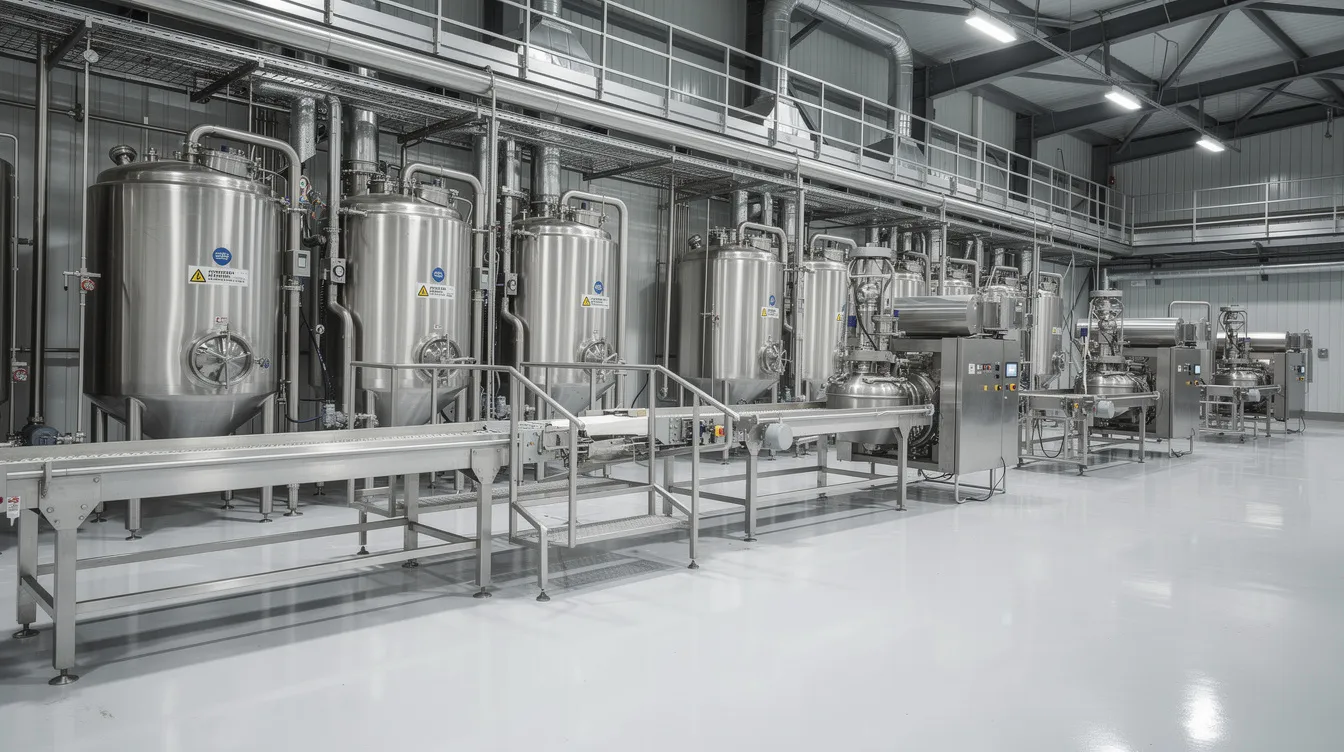
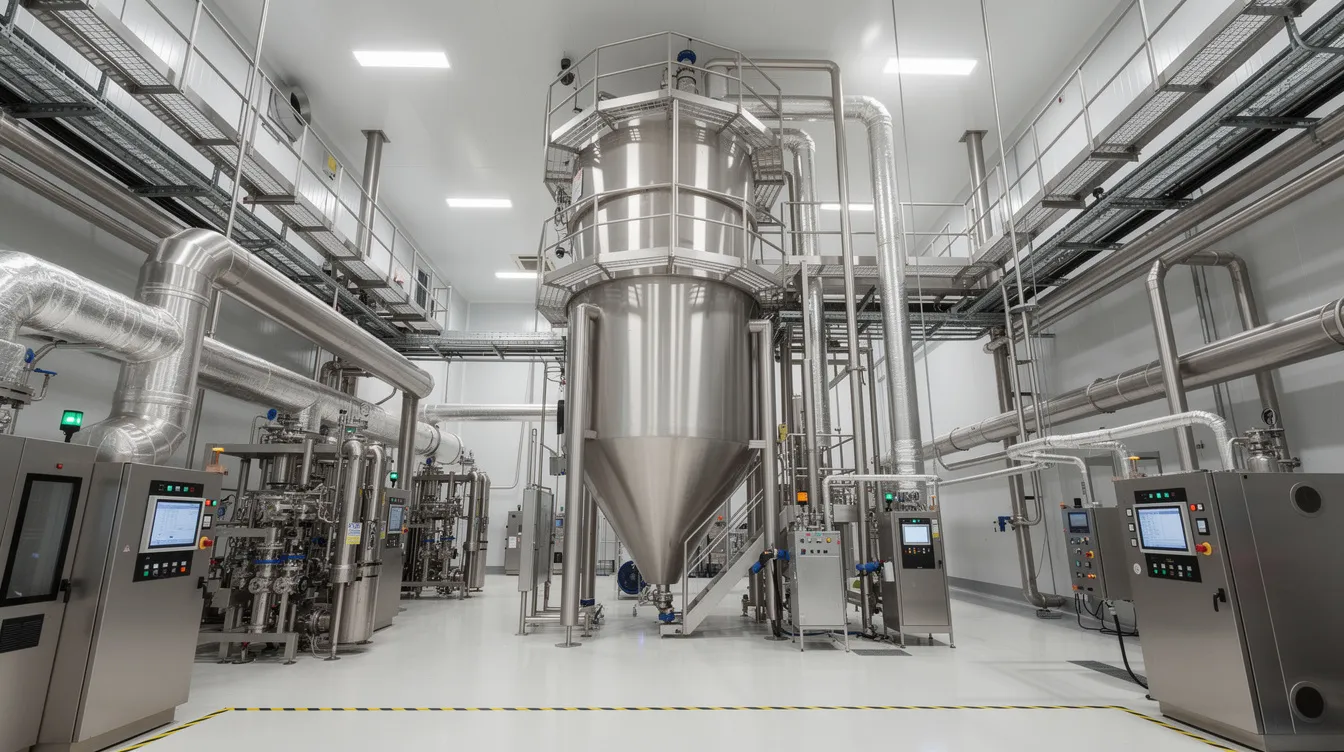
Machinery configurations differ substantially between SPC and SPI lines, though material handling, grinding, utilities and packaging equipment overlap. All equipment must meet hygienic food-grade standards (SS 304/316, CIP/SIP capability where needed).
| Process Area | Typical Equipment | Main Function |
|---|---|---|
| Raw Material Handling | Conveyors, silos, feeders | Receiving, storage, metering |
| Extraction | Batch/continuous extractors, agitated tanks | Protein extraction or carbohydrate removal |
| Separation | Decanters, disc centrifuges, filters | Solid–liquid separation |
| Concentration | Membrane skids (UF/RO), evaporators | Protein concentration |
| Drying | Spray dryers, flash/fluidised bed dryers | Moisture removal |
| Milling & Sieving | Hammer mills, air classifiers, sifters | Particle size control |
| Packaging | Semi/auto filling, sealing, coding | Final product packing |
| Utilities | Boilers, water treatment, compressors | Steam, clean water, compressed air |
| Effluent Treatment | ETP modules, neutralisation tanks | Wastewater treatment |
| Quality Control | Lab instruments, moisture/protein analysers | Testing and release |
Equipment selection criteria include: capacity range, energy efficiency, level of automation (PLC/SCADA), ease of cleaning, vendor service support in India and compatibility with FSSAI and export quality expectations. The DPR should incorporate budgetary offers from reputed machinery suppliers for credible CAPEX estimation.
Land, Building, Infrastructure and Utility Requirements
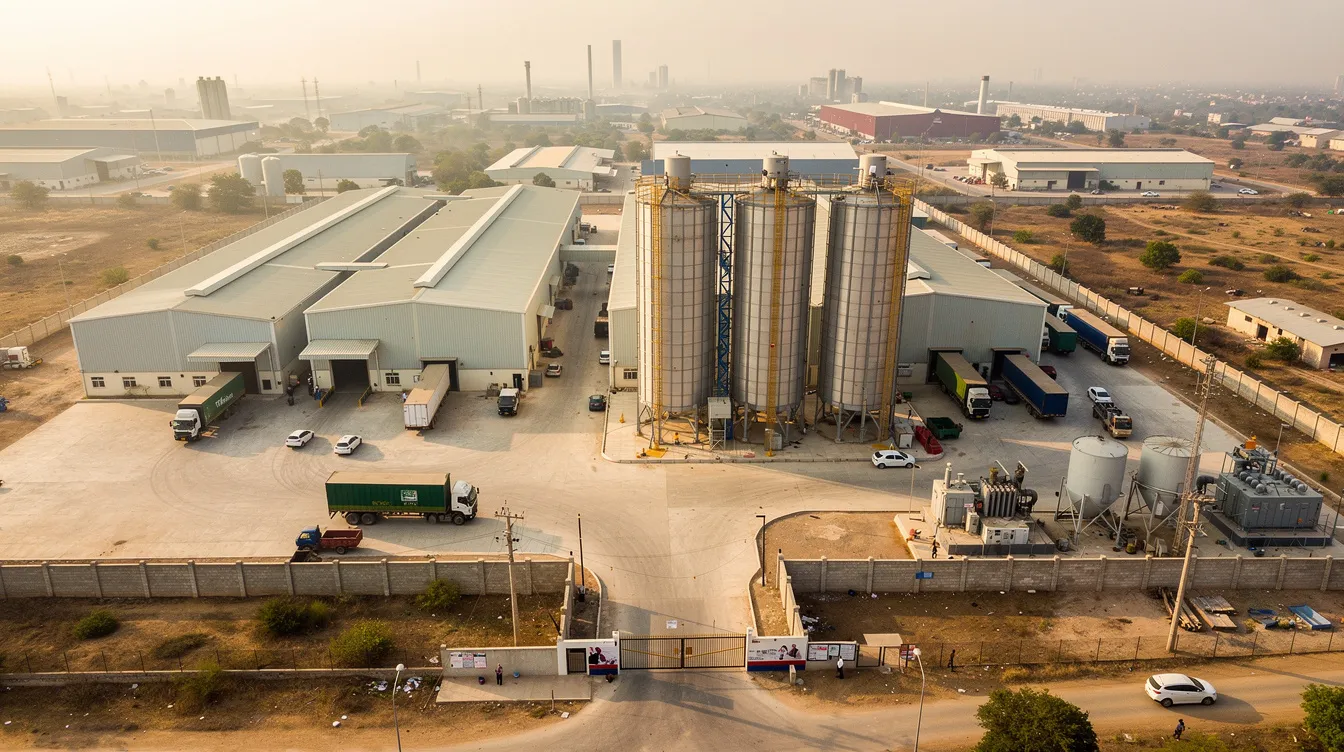
Land and infrastructure requirements vary with chosen capacity and configuration. A 20–30 TPD integrated SPC+SPI plant may require 1–2 acres of industrial land, while a 50+ TPD facility would need proportionally larger site allocation including process block, warehousing, utilities area and effluent treatment plant.
- Plant layout should ensure hygienic zoning, logical material flow and separation between raw material storage, processing and finished-goods warehousing
- Water supply: Process and boiler water demand is substantial, especially for SPI; dedicated water treatment systems are essential
- Electrical load: Connected load scales with capacity; spray dryers and membrane systems are major power consumers
- Steam consumption is significant for drying, desolventising and heat treatment operations
- Effluent treatment: A properly sized ETP is mandatory; solvent recovery systems are required if alcohol-based extraction is used
- Quality and safety infrastructure: In-house QC laboratory, fire-fighting systems, ventilated solvent storage (if applicable) and personnel amenities
An engineering layout and utility balance should be incorporated in the plant project report to enable accurate CAPEX estimation and technical due diligence by banks.
Soy Protein Manufacturing Plant Project Cost and Investment
Actual investment depends on capacity, technology route, level of automation, whether the promoter already owns land and the extent of captive utilities. The following framework is illustrative and not a substitute for project-specific vendor quotations and engineering estimates.
| Investment Component | Description |
|---|---|
| Land and site development | Purchase or lease, levelling, fencing, roads |
| Building and civil works | Process block, warehouses, utilities, admin |
| Main process machinery | Technology-specific extraction, separation, drying |
| Utilities and auxiliary equipment | Boiler, water treatment, ETP, compressed air |
| Electricals and automation | Panels, transformers, PLC/SCADA, installation |
| Laboratory and QA | Testing instruments, sample preparation |
| Engineering and consultancy | Design, EPC management, advisory fees |
| Preliminary and pre-operative expenses | Licensing, trials, pre-commissioning costs |
| Contingency | 5–10% provision for escalation and design changes |
| Margin for working capital | Initial raw material, consumables, operating cash |
As a reference benchmark, sample industry reports indicate that a 10 TPD SPI plant may require total capital investment in the range of ₹14–15 crore including land, building, machinery and working capital margin. SPC-only plants at similar capacity would be meaningfully lower due to simpler processing. Larger integrated plants in the 50–100 TPD range can require ₹25–50 crore depending on technology, automation and location.
Precise project cost estimation must be based on vendor budgetary offers, detailed engineering and location-specific benchmarks, which Project Report Bank incorporates when preparing customised detailed project reports.
Working Capital Assessment and Funding Requirements
Working capital is critical for soy protein plants because of high raw material intensity, credit terms offered to large industrial buyers and potential inventory build-up for export shipments. Raw materials alone can constitute 75–85% of total operating costs, making inventory management a major factor.
Key working capital components include raw material stock (defatted flakes/flour), in-process material, finished SPC/SPI inventory, packaging material, trade receivables, cash balance, minus supplier credit and current liabilities.
Seasonal soybean procurement in India means some units hold larger post-harvest inventory to secure better prices, which increases working capital needs temporarily but can protect margins over the year.
- Cash credit/overdraft limits against hypothecation of stock and receivables
- Bill discounting for domestic sales to large buyers
- Packing credit and post-shipment finance for export contracts
- Margin money requirements typically 20–25% of working capital limits
The DPR should present an illustrative working capital calculation with clearly stated assumptions on inventory holding days, receivable periods and creditor terms. Aligning term loan repayments with realistic cash-flow and DSCR analysis is essential so that working capital is not squeezed by aggressive debt schedules.
Soy Protein Manufacturing Cost per Kg
The cost-per-kg model should separate SPC and SPI under illustrative assumptions. The dominant cost driver is defatted soy material. Assuming defatted flakes at approximately ₹60–80 per kg, an SPC yield of ~65% and an SPI yield of ~25%, the raw material cost per kg of finished product differs substantially between the two.
Key cost components include:
- Defatted soy material (dominant share)
- Processing chemicals and solvents (acid, alkali, alcohol where applicable)
- Utilities: steam consumption, electricity, water, effluent treatment
- Direct labour
- Packaging materials
- Repairs and maintenance
- Factory overheads
Depreciation and interest should be kept separate from manufacturing cost to calculate contribution margin and compare with international competitors on an operational basis. An illustrative SPC manufacturing cost might range ₹90–130 per kg, while SPI could range ₹250–400 per kg depending on scale, technology and utility costs. These are indicative figures; actual costs require project-specific analysis.
Sensitivity of unit cost to raw material price and yield variation is significant. Even a 5% decline in protein recovery can erode margins materially in high-volume protein manufacturing.
Revenue, Profitability, ROI and Break-Even Analysis
Soy protein concentrate and isolate are margin-sensitive businesses driven by capacity utilisation, product mix and stable offtake. No fixed profit percentage can be guaranteed. Gross profit margins for soy protein plants range between 30-40% under favourable conditions, but depend heavily on realisation, yield and input cost.
A professionally prepared 10-year financial projection should cover: production volumes, sales, revenue, operating costs, EBITDA, depreciation, interest, profit before tax and net profit. Key profitability indicators include EBITDA margin, net profit margin, return on capital employed, project IRR, equity IRR, payback period and NPV.
Break-even capacity utilisation for well-structured SPC plants may fall in the 35–50% range, while SPI plants with higher fixed costs may require 40–55% utilisation. Industry sample reports have indicated break-even as low as 32% for certain SPI configurations, though such figures assume favourable selling prices and optimised operations.
A practical sensitivity analysis should test: ±10% change in raw material cost, ±5% change in selling price, ±5 percentage-point change in recovery yield and ±10 percentage-point change in capacity utilisation on IRR and DSCR. In professional practice, I evaluate multiple financial scenarios in the DPR to advise promoters and bankers about risk-adjusted returns rather than optimistic single-case projections.
Bank Loan, CMA Data, DSCR and Project Financing for Soy Protein Plants
Soy protein projects typically require term loans and working capital finance from banks or financial institutions. Lenders insist on a robust, data-backed plant project report before sanctioning credit.
Means of finance generally include promoter’s equity (typically 25–33% of project cost), term loan from banks/FIs, possible unsecured loans from promoter group, applicable government subsidies and working capital limits.
CMA Data in the Indian banking context summarises past and projected financials, working capital assessment, fund flow and ratio analysis for credit appraisal. It is a standard requirement for term loan and cash-credit proposals.
- DSCR (Debt Service Coverage Ratio) measures whether projected cash flow can service term loan instalments and interest; most lenders expect minimum DSCR of 1.25–1.50 for industrial projects
- The DPR should contain detailed project cost, financing pattern, projected balance sheets, profit and loss statements, cash-flow statements, DSCR calculations and sensitivity analysis
- Realistic assumptions are more valuable than optimistic projections; experienced bankers examine the logic behind numbers, not just the ratios
Project Report Bank prepares customised DPRs, financial models and CMA data specifically tailored to soy protein manufacturing plants. We do not guarantee loan sanction, as that depends on the lending institution’s appraisal and the promoter’s overall financial standing.
Licences, Regulatory Approvals and Quality Standards in India
Soy protein concentrate and isolate are food-ingredient products subject to Indian food safety and environmental regulations.
- FSSAI licence: Central licence required for interstate trade or export; products must comply with FSSAI soy protein product standards for protein content, residual solvents and microbial safety
- Factory registration under the Factories Act
- State Pollution Control Board: Consent to Establish and Consent to Operate, particularly important given effluent generation and potential solvent usage
- Fire safety NOC and occupational health compliance
- Tax and commercial: GST registration, PAN, TAN, IEC for export units, Udyam/MSME registration where applicable
Customer-driven certifications such as HACCP, ISO 22000, FSSC 22000, Halal/Kosher and non-GMO verification are not always statutory but often critical for market access, especially in export segments.
Entrepreneurs should verify up-to-date requirements with official FSSAI, state and central government notifications rather than relying solely on generic checklists.
Technical, Financial and Commercial Risks
Soy protein projects combine agro-commodity risk with sophisticated processing and market risk. Structured risk assessment is a vital component of any plant project report.
| Risk Category | Description | Mitigation Strategy |
|---|---|---|
| Raw Material Quality | Variable protein %, heat damage, contamination | Long-term contracts with certified suppliers; captive defatting |
| Low Protein Recovery | Yield below assumptions erodes margins | Process optimisation; pilot trials before full-scale commitment |
| Machinery Underperformance | Dryer, centrifuge or membrane issues | Performance guarantees from vendors; phased commissioning |
| Effluent Treatment | High wastewater volume, regulatory non-compliance | Properly sized ETP; regular monitoring; biogas recovery |
| Market Price Pressure | Competition from imports or commodity price shifts | Diversified customer base; long-term contracts; product differentiation |
| Working Capital Shortage | Seasonal raw material procurement strain | Adequate bank limits; seasonal stocking strategy |
| Cost Overruns | Delays, design changes, price escalation | Contingency provisioning; fixed-price EPC contracts where feasible |
| Customer Concentration | Dependence on few large buyers | Market diversification; multiple product grades |
Project Report Bank’s DPRs explicitly include risk and sensitivity analysis so that promoters, bankers and investors can make informed decisions based on realistic scenarios.
Project Implementation Timeline
SPC/SPI plant implementation typically spans 15–24 months for medium-scale projects, covering multiple stages:
- Months 1–3: Concept validation, market study, technology and vendor evaluation
- Months 3–5: DPR preparation, financial modelling, loan application
- Months 5–8: Financial closure, detailed engineering, statutory approvals
- Months 8–14: Civil construction, machinery procurement and installation
- Months 14–18: Utility setup, ETP commissioning, trial production
- Months 18–24: Customer qualification, production stabilisation, commercial ramp-up
Common reasons for delay include late financial closure, import lead times for spray dryers or membrane modules, layout modifications and statutory approval delays. Realistic scheduling and cash-flow plans during the construction phase help banks and investors assess funding adequacy.
How to Prepare a Bankable and Investor-Ready Soy Protein Plant Detailed Project Report
A soy protein concentrate and isolate plant project report must integrate market validation, technical design and robust financial projections to satisfy serious lenders and investors.
Core DPR components include:
- Industry and market analysis with validated demand segments
- Detailed SPC/SPI technology description and process flow
- Capacity planning rationale and plant layout
- Machinery lists with budgetary cost estimates
- Utility sizing, manpower planning and implementation schedule
The financial-analysis section should contain: project cost and means of finance, working capital assessment, projected financial statements for 7–10 years, DSCR, IRR, NPV, break-even analysis and sensitivity scenarios.
All key assumptions for raw material prices, selling prices, yields, capacity utilisation and financing terms must be documented clearly so that bankers can test them and promoters can revisit them as market conditions change.
Professional Project Finance and DPR Advisory – CA Manish Gugliya, Project Report Bank
CA Manish Gugliya, FCA, DISA (ICAI), is a practising Chartered Accountant with more than 20 years of professional experience in project finance, DPR preparation, CMA data, financial modelling and industrial feasibility studies across manufacturing sectors in India.
Professional services relevant to soy protein manufacturing projects include:
- Customised detailed project reports for SPC, SPI and integrated plants
- Bank finance DPRs and CMA data for term loans and working capital
- Financial projections, modelling and viability analysis
- DSCR, IRR, NPV and break-even assessment
- Investor-ready DPRs and pitch documentation support
Serious project promoters are invited to contact via WhatsApp or enquiry form with details of planned capacity, proposed location, intended product mix (SPC, SPI or both), available equity and bank-finance expectations for a professional consultation.
Frequently Asked Questions
What is the approximate cost of setting up a soy protein isolate plant in India?
A commercial-scale SPI plant typically requires multi-crore rupee investment. As a reference, sample industry reports suggest approximately ₹14–15 crore for a 10 TPD facility including land, building, machinery and working capital margin. Costs scale with capacity, level of automation and whether imported or domestic machinery is selected. Precise costing requires vendor quotations and a plant-specific detailed project report rather than generic estimates.
Is soy protein concentrate manufacturing profitable in current market conditions?
SPC manufacturing can be profitable where there is consistent access to quality defatted soy material, efficient extraction technology and reliable buyers. Gross profit margins for soy protein plants range between 30-40% under favourable conditions. However, margins depend heavily on raw material prices, capacity utilisation and exchange rates for exporters, making detailed financial projections critical before investment.
Which raw materials are used for SPC and SPI and what quality is required?
Both SPC and SPI are manufactured from food-grade, low-temperature defatted soy flakes or flour with high protein content (typically 45–50%), low residual oil, controlled moisture and low microbial load. Generic feed-grade soybean meal is generally unsuitable for premium food or nutraceutical applications because heat damage during conventional desolventising reduces protein functionality and recovery.
Can one plant produce both soy protein concentrate and isolate?
Integrated plants are technically feasible and often commercially attractive. SPC is produced as an intermediate, and part of it is further processed to SPI using wet extraction, acid precipitation and spray drying. This increases CAPEX, process complexity and effluent load, so feasibility must be tested through a tailored plant project report with separate financial projections for each configuration.
Why is a detailed project report important before investing in a soy protein plant?
A DPR brings together market validation, technology selection, capacity planning, project cost estimation, working capital assessment, 7–10 year financial projections, DSCR and IRR analysis, and risk assessment. These elements are essential for the promoter’s own decision-making and for satisfying the appraisal requirements of Indian banks and investors. Without a properly structured DPR, business requirements cannot be assessed objectively and financing discussions lack the analytical foundation that serious lenders expect.
Conclusion – Assessing Investment Readiness for Soy Protein Concentrate and Isolate Plants
Soy protein concentrate and isolate manufacturing in India offers a genuine value-add opportunity over basic soybean crushing, driven by strong domestic and global demand for functional plant protein ingredients. The expansion of food processing, nutritional supplements and plant-based food categories continues to support this market trajectory.
However, the opportunity demands careful planning. Assured access to food-grade defatted raw materials, appropriate choice of SPC, SPI or integrated configuration, proven technology partners, robust utilities and effluent treatment, and confirmed offtake arrangements with demanding industrial customers are all prerequisites for success.
Realistic, professionally prepared financial projections are indispensable to understand manufacturing cost per kg, break-even capacity, DSCR, IRR and payback before committing to machinery orders and construction. The income potential of a soy protein plant must be validated through structured analysis, not assumed from market enthusiasm alone.
Prospective promoters should commission a comprehensive feasibility study and bankable detailed project report from a qualified professional before finalising land, machinery vendors or financing commitments for a soy protein manufacturing plant. At Project Report Bank, we focus on delivering exactly this level of rigorous, project-specific financial advisory.