Key Takeaways
- Soybean meal is a critical high-protein commodity primarily used in animal feed, and India’s non-GMO positioning, rising demand for animal protein and established oilseed processing infrastructure make it a commercially significant sector for project investment.
- Quality upgradation for export markets – achieving consistent crude protein, controlled urease activity and compliance with buyer-specific specifications – is central to achieving sustainable export realisations and long-term contracts.
- Plant choices range from 50 TPD standalone DOC upgradation units to 500 TPD+ integrated crushing and solvent extraction plants, with vastly different capital requirements, operating economics and risk profiles; the soybean meal processing plant project report must reflect these distinctions accurately.
- Raw material (soybean or DOC) price volatility, export market selection, capacity utilisation and working capital management are the primary profitability drivers; gross profit margins for soybean processing typically range from 10–20%, demanding careful financial structuring.
- Project Report Bank, led by CA Manish Gugliya, FCA, DISA (ICAI), prepares bankable DPRs, CMA data and financial models specifically for soybean meal and oilseed projects – serious promoters should not rely on generic templates but on project-specific feasibility and risk analysis.
Introduction – Role of Soybean Meal and Need for a Professional Project Report
Soybean crushing and solvent extraction form the backbone of India’s oilseed processing industry. The manufacturing process yields two primary outputs: crude soybean oil – widely valued as cooking oil and in food processing owing to its high smoke point of around 230 degrees Celsius and content of healthy fats, essential amino acids and fatty acids – and de-oiled soybean cake (DOC), which after controlled heat treatment and grading becomes soybean meal of defined protein and moisture specifications.
For most integrated soybean processing plants, the meal is actually the primary revenue driver. Commercial grade soybean meal constitutes approximately 80% of the soybean seed by weight after oil extraction, while soybean oil comprises about 20%. This means that the commercial viability of a crushing operation depends more on meal realisations than oil margins in most market conditions.
Quality parameters – crude protein percentage, fibre content, residual oil, urease activity and protein dispersibility index – directly influence realisations, especially for buyers in the animal feed industry and export markets requiring strict compliance. The difference between a standard-grade domestic sale and a premium export contract can materially affect project economics.
A soybean meal processing plant project report, when properly prepared, integrates market study, process design, plant and machinery selection, cost analysis, financial projections, DSCR computation and risk assessment into one coherent decision document. A comprehensive project report outlines feasibility for soybean meal and oil processing plants and should demonstrate the economic feasibility of establishing a soybean processing facility.
This article is written from the perspective of CA Manish Gugliya, practising Chartered Accountant and project finance advisor at Project Report Bank, focusing on medium-to-large Indian projects targeting both domestic feed and export markets.
Soybean Meal Industry and Market Opportunities in India
India’s soybean production in the 2025–26 Kharif season is estimated at approximately 12.6 million tonnes over 12.39 million hectares, with an average yield of about 1,017 kg/ha. Major producing states are Madhya Pradesh (approximately 47% share), Maharashtra (approximately 38.5%), followed by Rajasthan, Gujarat, Karnataka and Telangana. However, USDA projections for marketing year 2026/27 forecast production declining approximately 8% to around 9.6 million tonnes due to erratic monsoons and shifting cropping patterns.
The global soybean market was valued at USD 167 billion in 2025 and is projected to reach USD 286.73 billion by 2034, driven by rising global protein consumption and demand for soybean oil linked to plant-based diets and long term sustainability trends. Within India, domestic soybean meal consumption is substantial – the poultry feed sector, layer and broiler integrators, cattle feed manufacturers, aquafeed producers and structured compound feed companies absorb an estimated 5.2–5.8 million tonnes of soya bean meal annually. Conventional soybean meal remains a common protein source in animal feed, valued for its nutritional value, essential amino acids crucial for growth performance, and feed efficiency.
Market demand analysis should investigate competitive pricing and price trends in the soybean processing industry. Refined soybean oil is widely used in food processing and cooking, while meal serves various industries across the animal feed industry and, in processed forms like soya chunks, for human consumption.
India’s soybean meal exports, however, dropped significantly in 2025/26 to approximately 0.9 million tonnes from about 2.02 million tonnes in the prior year, driven by high domestic soybean costs making Indian FOB soymeal uncompetitive. FOB prices for Indian soymeal were quoted around US$680/tonne in mid-2026, compared to South America offers closer to US$430/tonne. Key export destinations include Bangladesh, Nepal, Sri Lanka, Vietnam and UAE, though volumes have contracted sharply.
India’s soya bean meal carries a non-GMO positioning advantage in markets sensitive to GMO labelling across Southeast Asia, Middle East and parts of East Asia. Non GMO soya beans from India command a premium in specific buyer segments, differentiating Indian supply from South America.
For promoters, procurement strategy is critical. Soybean is a Kharif crop with seasonal arrivals peaking October–January. The cost of production (A2+FL) is approximately ₹3,805 per quintal for 2026–27, with MSP at ₹5,708 per quintal. Warehousing capacity to ensure continuous plant feeding through the off-season is essential. Rising demand from India’s growing animal protein consumption makes this an attractive, though cyclical, opportunity requiring robust risk buffers.
Types of Soybean Meal Processing and Quality-Upgradation Projects
Understanding where a proposed project lies on the value chain is fundamental to preparing accurate expenditure projections and financial models.
Integrated soybean crushing and solvent extraction plants process raw soybeans from seed to finished oil and meal. These 200–1,000 TPD facilities require major capital investment covering cleaning, dehulling, conditioning, flaking, oil expellers or mechanical pressing, solvent extraction, desolventising-toasting and downstream meal processing. They suit investors with strong procurement networks and logistics capability.
Standalone DOC processing and soybean meal quality upgradation plants purchase de-oiled cake from existing solvent extraction units and focus on heat treatment, de-hulling (where applicable), grinding, screening and grading to achieve export-grade consistency. The soybean meal quality upgradation plant model involves lower CAPEX but operates on tighter margins because the feedstock is already partially processed.
High-protein (Hypro/Hipro) soybean meal manufacturing targets 48–50% protein content through rigorous dehulling, hull removal and tighter process control. Hypro soybean meal has a higher protein content than commercial grade and commands a premium in specialised poultry feed and aqua feed applications. Soybean hulls, separated during dehulling, have a higher energy value and find use in ruminant feed formulations.
Soybean meal quality-upgradation and grading plants focus specifically on sieving, de-dusting, blending, fine grinding and controlled heat treatment to standardise protein across batches. These units address product quality consistency, which is the primary concern of export buyers.
Export-oriented soybean meal processing and packaging units emphasise hygienic handling, fumigation, bulk and bagged loading near ports and compliance with buyer protocols. Expeller soybean meal, which retains more oil than solvent extracted meal, may serve specific domestic or regional markets.
White flakes, a distinct product stream, are used for human consumption products like soya chunks and texturised vegetable protein. Fermented soybean meal, another specialised product, can increase body weight gain in calves and has niche applications. Specialised soy protein ingredient projects (concentrates, isolates) represent related but significantly higher CAPEX ventures serving different market segments in food production and industrial applications.
Each project type leads to a different financial model, working capital pattern and soybean meal processing plant cost profile, which the DPR must reflect accurately.
Soybean Meal Manufacturing & Quality Upgradation – Process Flow
The production process for soybean meal can be described as a stepwise workflow suitable for conversion into a professional process-flow diagram. The applicable steps differ materially between integrated plants and standalone DOC-based upgradation units.
Integrated Crushing and Solvent Extraction Plant
- Receiving and weighing: Raw soybeans arrive by truck or rail, are weighed at the weighbridge and unloaded into intake hoppers.
- Primary cleaning and separation: Vibratory screens, destoners and magnet separators remove foreign matter, stones, metallic particles and dust from raw soybeans.
- Dehulling (for high-protein meal): Where Hipro specifications are targeted, soybeans pass through dehullers to separate soybean hulls from the cotyledon. This step raises protein content but reduces overall meal yield.
- Conditioning and flaking: Cleaned or dehulled soybeans are conditioned (heated with steam to optimal moisture) and then passed through flaking rolls to produce thin flakes, increasing the surface area for efficient soybean oil extraction.
- Oil extraction: Flakes undergo mechanical pressing using oil expellers or direct solvent extraction (typically using food-grade hexane) to recover crude soybean oil. Utilization of proper extraction technology impacts oil recovery and production efficiency in processing plants.
- Desolventising and toasting (DT): The solvent-laden meal passes through the desolventiser-toaster, where heat treatment removes residual hexane and deactivates trypsin inhibitors and urease enzymes. This is a critical step – under-processing leaves anti-nutritional factors, while over-processing damages protein digestion and reduces protein solubility.
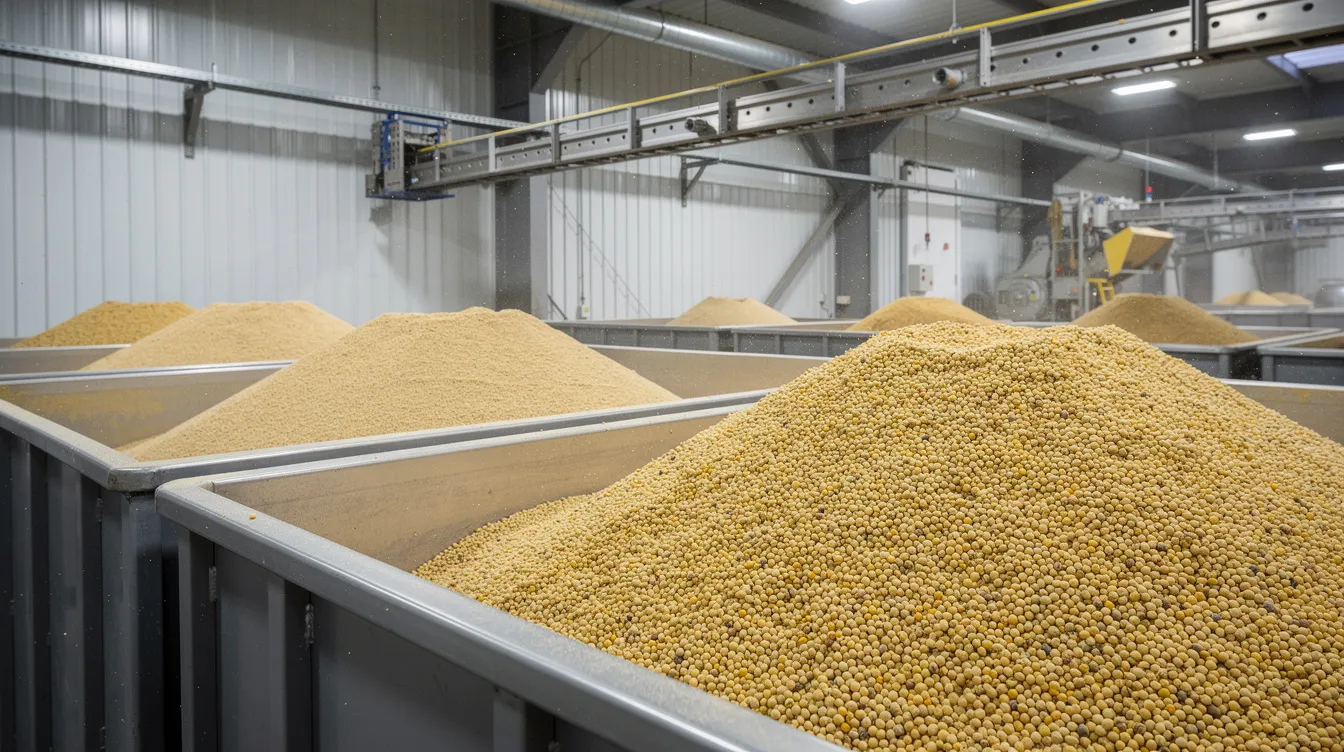
- Drying and cooling: Meal from DT is dried to target moisture (typically below 12%) and cooled to near-ambient temperature for safe storage.
Downstream Stages (Common to Quality Upgradation Plants)
- Grinding and milling: DOC or DT meal is processed through hammer mills or pulverisers to achieve desired particle size for the target market.
- Screening and grading: Rotary or vibratory screens classify meal by particle size. Oversized material is recycled; fines and dust are managed through aspiration systems.
- Heat treatment for quality upgradation: Where DOC has not been adequately toasted, additional controlled heat treatment is applied to bring urease activity and trypsin inhibitors within acceptable limits.
- Blending and standardisation: Batches are blended to achieve consistent protein content across production lots, which is essential for meeting export buyer specifications.
- In-process quality control: Sampling occurs after DT, after grinding and prior to packing for protein, moisture, urease activity and other quality standards checks. The quality of soybeans affects the quality of oil and meal produced, making incoming raw material inspection equally important.
- Storage, packaging and dispatch: Finished soybean meal is stored in silos or bag warehouses under controlled conditions. Packaging uses HDPE or PP bags (25/50 kg) or jumbo bags for bulk export shipments. Palletisation and container stuffing follow for export consignments.
A pure DOC upgradation plant skips steps 1–7 (oil extraction and associated processing methods), beginning its operations at step 8. This substantially reduces machinery requirements, utility loads and CAPEX while also eliminating the need for hexane handling, solvent recovery and associated environmental regulations infrastructure.
Export-Grade Soybean Meal Quality & Compliance Requirements
There is no single universal export specification for soya meal. Requirements vary by buyer, destination country and end use – poultry feed formulations differ from aqua feed or dairy applications. Contract-specific specifications must be confirmed before production scheduling.
Key Quality Parameters
| Parameter | Typical Export Range | Notes |
|---|---|---|
| Crude protein | 44–46% (standard), 46–48% (Hipro), 48%+ (premium) | On dry matter basis; buyer-specific |
| Moisture | Max 12% | Critical for storage and transport stability |
| Crude fibre | Max 6–7% | Lower for dehulled/Hipro grades |
| Residual oil | 0.5–1.5% (solvent extracted) | Expeller grades higher |
| Ash | Max 6–7% | Varies by specification |
| Urease activity | Max 0.02–0.05 pH rise | Indicates adequate heat treatment |
| Foreign matter | Max 1–2% | Sand, silica, metal particles |
Functional quality parameters include protein dispersibility index (PDI) and protein solubility, which indicate the degree of heat treatment and protein quality. For certain applications, a balance must be achieved: too little heat treatment leaves active trypsin inhibitors affecting protein digestion, while excessive processing reduces nutritional value and makes the meal less highly palatable.
Quality control ensures compliance with industry safety standards. Regular testing for contaminants is essential in production – mycotoxins (aflatoxin B1, DON, zearalenone), pesticide residues, heavy metals and microbiological limits (particularly Salmonella) are routinely tested. Codex Alimentarius sets global standards for edible oils and related products, and destination-country import regulations often specify maximum residue limits.
Laboratory and quality control infrastructure should include basic proximate analysis equipment (Kjeldahl or Dumas for protein, moisture analysers, fibre and fat determination), rapid urease test kits, sample retention protocols and tie-ups with NABL-accredited external laboratories for complex testing.
Export documentation requires batch coding, traceability to source soybeans or DOC, non-GMO declarations where contractually required, APEDA registration, phytosanitary certification and certificates of analysis. Food safety and buyer audits are increasingly common.
Adherence to agreed specifications is not optional – rejections, price discounts and claims can erode already thin processing margins and undermine long-term buyer relationships.
Plant Capacity Planning and Scale Selection
Capacity definition must be unambiguous in the DPR: whether rated capacity refers to soybean seed crush per day (for integrated plants), DOC input per day (for upgradation plants) or finished soybean meal output. This distinction directly affects project cost, raw material procurement and financial projections.
Soybean processing plants can produce 100,000–500,000 MT annually depending on scale and configuration. Common capacity brackets in the Indian context are outlined below.
Illustrative Capacity Comparison
| Parameter | 50 TPD (DOC) | 100 TPD (DOC) | 200 TPD (DOC) | 500 TPD (Seed Crush) |
|---|---|---|---|---|
| Input type | DOC | DOC | DOC | Raw soybeans |
| Yield (kg meal per tonne input) | ~920–950 | ~920–950 | ~920–950 | ~780–800 |
| Annual operating days | 270 | 280 | 290 | 300 |
| Annual meal output (approx. MT) | 12,400–12,800 | 25,800–26,600 | 53,400–55,100 | 117,000–120,000 |
| Project type | MSME | MSME/Mid | Mid-scale | Large/Corporate |
Assumptions: DOC upgradation plants have 92–95% meal yield after screening and dust losses. Integrated plants yield 78–80% meal and 18–20% crude oil from seed input.
Capacity utilisation ramp-up typically follows a realistic trajectory: 60–65% in Year 1 (during market development, production stabilisation and workforce training), increasing to 75–85% by Year 3 under normal conditions.
Larger plants enjoy lower processing cost per tonne through economies of scale but require consistent, high-volume procurement and assured offtake. Smaller units offer niche flexibility – including the option to start with domestic sales and progressively allocate capacity to exports – but carry higher unit overheads. Expansion planning should consider designing civil structures and utilities for modular addition of processing lines, so a 100 TPD plant can be upgraded to 150–200 TPD with incremental machinery CAPEX.
Land, Building, Plant & Machinery Requirements
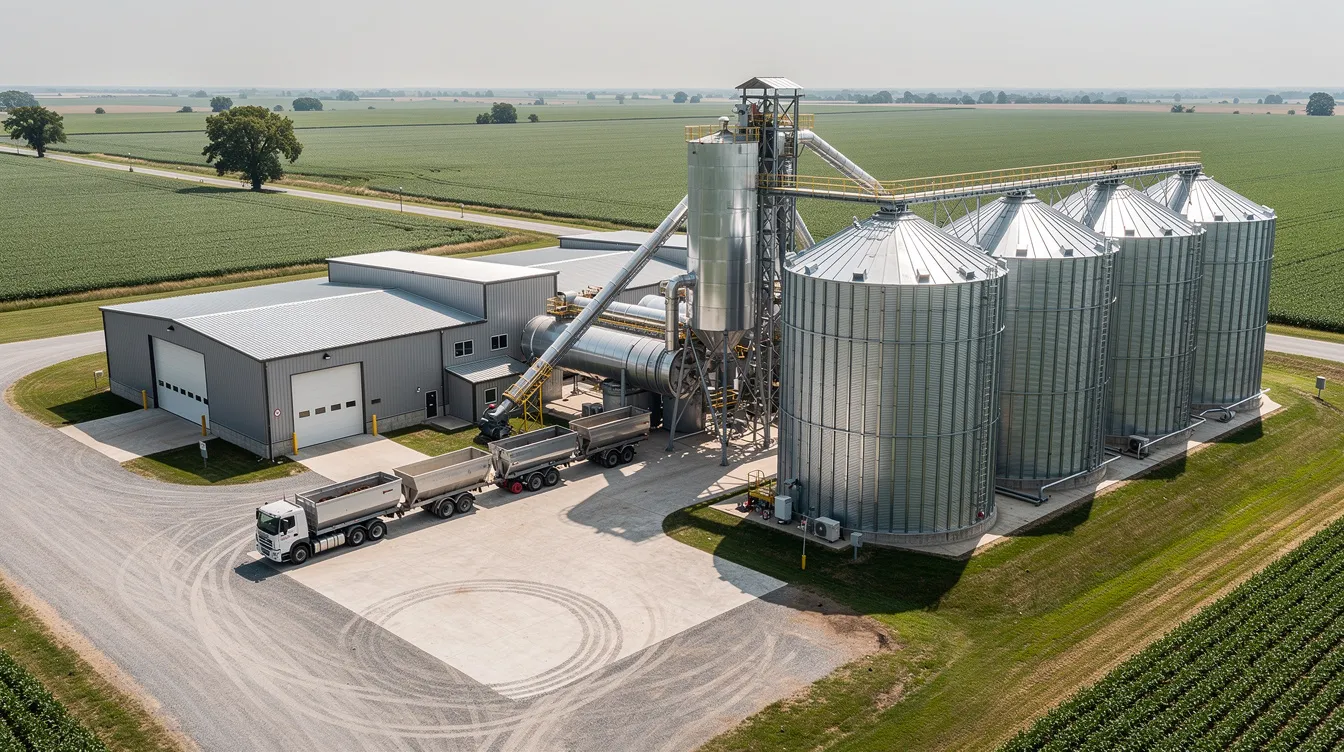
Land requirements vary significantly by project type. A 100–200 TPD DOC upgradation plant may require 2–5 acres including storage and utilities. A 300–500 TPD integrated crushing and solvent extraction plant typically needs 10 acres or more, accounting for safety setbacks required for solvent handling, boiler installations, fire safety zones and vehicle movement.
Layout Components
- Raw material godowns (seed or DOC storage with moisture protection)
- Intake, pre-cleaning and weighing area
- Main processing building housing DT units, dryers, coolers, grinders and screens
- Finished meal storage – silos and/or bag warehouse; storage conditions prevent soybean oil from going rancid and similar principles apply to maintaining meal quality
- Utility block: boiler, compressor room, electrical substation, DG set
- Quality control laboratory
- Administrative block, canteen and weighbridge
Core Process Machinery
Proper machinery and equipment selection is vital for efficient processing in soybean meal plants. Key equipment includes:
- Vibratory cleaners, destoners and magnet separators
- Dehullers and hull separators (for Hipro production)
- Conditioners and flaking rolls (integrated plants)
- Oil expellers or mechanical pressing units and solvent extraction plant (integrated plants)
- Desolventiser-toaster
- Rotary dryers and coolers
- Hammer mills, pulverisers and grinding equipment
- Rotary or vibratory screens and classifiers
- Blending and mixing equipment
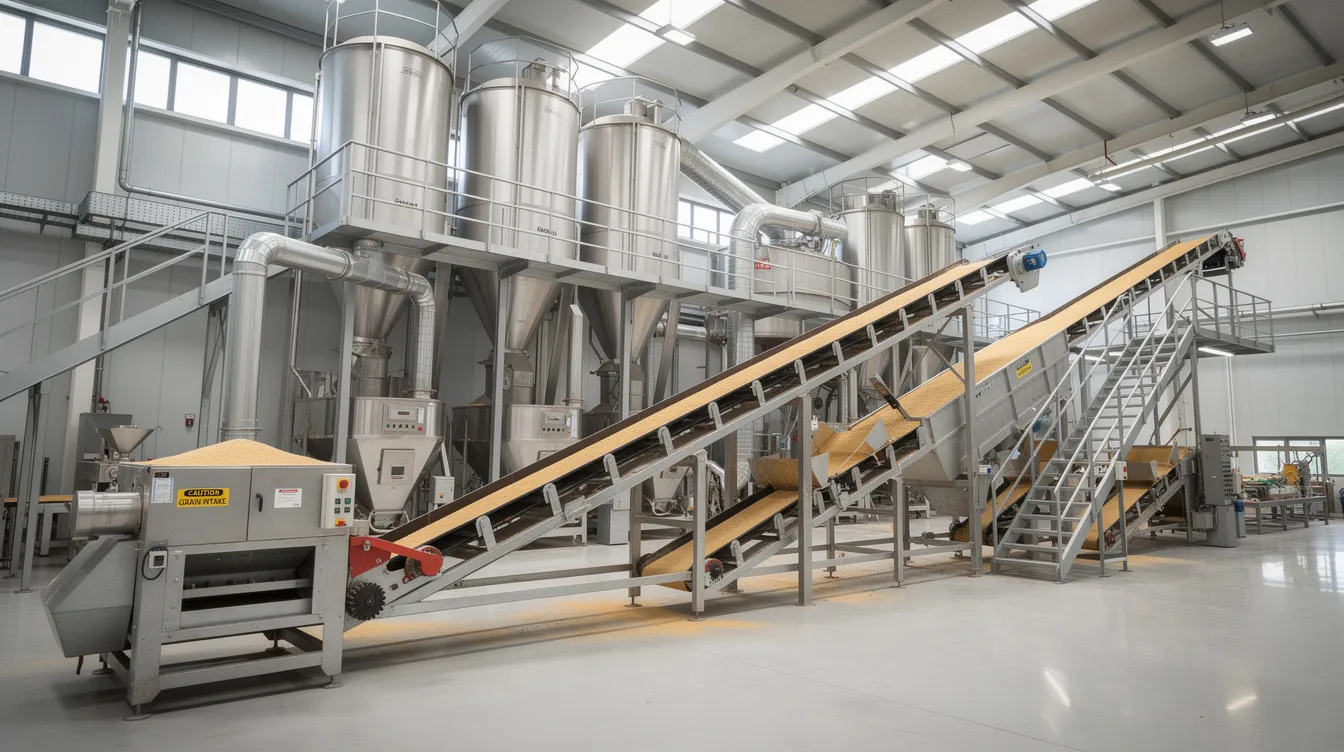
Material handling systems include bucket elevators, chain conveyors, screw conveyors, pneumatic systems, bulk loading arrangements and bagging machines (25/50 kg bags and jumbo bags) with precision weighing scales.
Supporting installations encompass electrical panels, DG backup, boiler and steam piping for heat treatment, compressed air systems, water storage, firefighting infrastructure and dust collection systems essential for reducing explosion risk and maintaining manufacturing practices compliant with environmental impact norms.
Machinery supplier evaluation should consider multiple OEMs rather than selecting solely by lowest price – reliability, after-sales service, spare parts availability and proven performance in similar soybean processing applications matter significantly.
Soybean Meal Processing Plant Cost and Capital Investment Structure
A DPR must clearly separate fixed capital investment (FCI) from total project cost, which includes FCI plus working capital margin, preliminary expenses, interest during construction and contingencies. This distinction is essential for proper loan structuring and means of finance planning. Fixed capital investment covers essential elements such as land, machinery and construction costs.
Indicative Machinery and Project Cost Benchmarks
| Capacity (TPD Seed Crush) | Machinery & Equipment (₹ Crore) | Total Project Cost (₹ Crore) |
|---|---|---|
| 100 TPD | ₹4.0–6.5 | ₹10–17 |
| 200 TPD | ₹6.5–10.5 | ₹18–31 |
| 300 TPD | ₹9.0–14.5 | ₹26–45 |
| 500 TPD | ₹14–22 | ₹41–70 |
Source: ProjectReportBank.com Soybean Processing Plant Machinery Guide. These are indicative benchmarks for integrated solvent extraction plants. DOC upgradation units involve substantially lower CAPEX.
Typical cost heads include land and site development, compound wall and roads, factory building and civil works, plant and machinery, electrical installations, utilities, pollution-control systems, laboratory equipment, vehicles, furniture, installation and commissioning charges, engineering consultancy, company formation, pre-operative expenses, trial-run costs and contingencies.
New promoters frequently underestimate installation, commissioning and pre-operative costs. Electrical infrastructure, civil foundations for heavy equipment, steam piping, pollution-control systems and professional expenses can collectively add 20–30% over bare machinery costs.
The soybean meal processing plant cost also varies by level of automation, choice of imported versus Indian-origin machinery, existing infrastructure at the proposed site (power evacuation capacity, water availability), and proximity to ports or railheads. For allied projects, promoters may refer to the Edible Oil Refinery Project Cost & Investment analysis for comparable capital structuring approaches.
Raw Materials, Operating Costs and Production Economics
Raw material cost dominates variable costs in soybean meal manufacturing. Raw soybeans account for 85–90% of operating expenses in processing. For DOC upgradation units, the feedstock cost structure is similar – DOC procurement forms the bulk of production cost.
Input-Output Relationships
Soybeans typically contain 18–22% oil by weight. Soybean meal forms 80% of the soybean seed after oil extraction, with soybean oil comprising about 20%. For DOC upgradation, expected yield of finished meal is 92–95% of DOC input after screening, dusting and moisture losses.
Operating Cost Components
| Cost Head | Nature | Indicative Share |
|---|---|---|
| Raw material (soybean/DOC) | Variable | 85–90% of OpEx |
| Power and fuel (electricity, boiler fuel) | Semi-variable | 3–5% |
| Direct labour | Semi-fixed | 2–3% |
| Repairs and maintenance | Semi-variable | 1–2% |
| Packaging materials | Variable | 1–2% |
| QC and lab testing | Fixed/variable | <1% |
| Overheads (admin, insurance, marketing) | Fixed | 2–4% |
First-year operational costs cover raw materials, utilities and maintenance as the plant stabilises operations and develops customer relationships.
Distribution costs and export-related operating expenses include fumigation, port handling, freight to port, documentation charges, export inspection where applicable, bank charges for LC or collection, and any applicable export incentives. Power consumption for soybean processing runs approximately 15–25 kWh per tonne of seed processed, varying by scale, technology and whether dehulling is involved.
A realistic cost analysis must account for seasonal fluctuations in raw material price, off-season under-utilisation and rising wage and energy costs over a 7–10 year projection horizon. Financial projections include capital investment, operating costs and ROI as core analytical components.
Export-Oriented Soybean Meal Plant Business Model
Export business models typically involve direct sales to overseas feed mills, transactions through international commodity traders, or long-term off-take agreements with global market commodity houses. Direct exports offer better margins but require buyer development capability and credit risk management. Trading-house arrangements reduce commercial risk but compress margins.
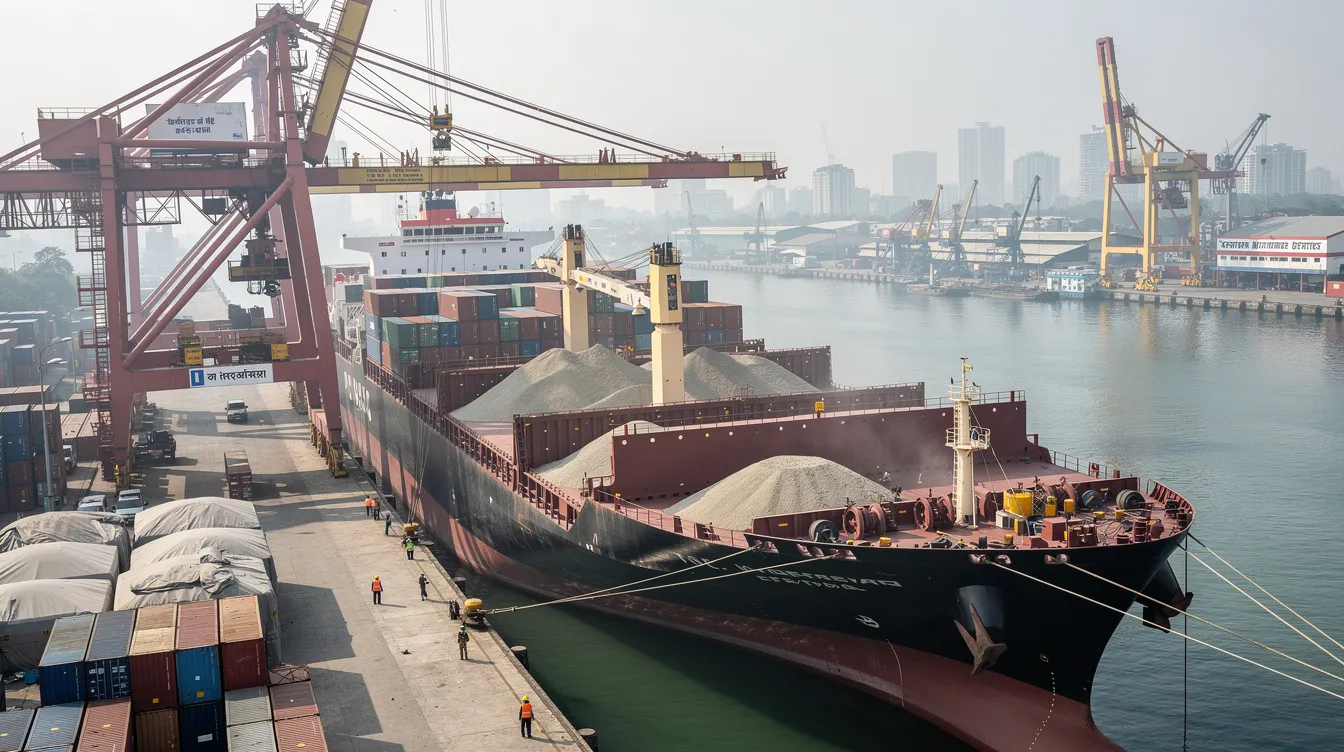
Export market selection depends on freight advantage from the plant location to the nearest port (Kandla, Mundra, Mumbai, Vizag), demand patterns in target countries, non-GMO premium potential and trade policy stability. India’s key players in soybean meal exports have historically served Bangladesh, Nepal, Sri Lanka, Vietnam and UAE.
The export operations flow includes buyer enquiry, specification confirmation, contract with defined Incoterms (FOB, CFR or CIF), production scheduling, pre-dispatch quality checks, port logistics, customs clearance and post-shipment documentation. Key export documents include IEC from DGFT, APEDA registration, commercial invoice, packing list, bill of lading, certificate of analysis and phytosanitary certificate.
Commercial risk management requires attention to payment terms (LC at sight or usance LC, DA/DP arrangements), ECGC coverage for buyer default and forex risk management. Currency fluctuation can materially affect realisations – a soybean meal export plant with significant dollar-denominated revenue should evaluate natural hedging or derivatives.
An export-heavy business model significantly elongates the working capital cycle due to shipment transit and collection periods, which must be factored into the soybean meal processing plant financial feasibility assessment.
Working Capital Assessment for Soybean Meal Plants
Working capital is required for purchasing raw materials and covering operating expenses. In oilseed processing, working capital availability is often the binding constraint for expansion rather than term loan availability.
Typical Inventory and Receivable Norms
| Component | Norm (Days) | Notes |
|---|---|---|
| Raw material stock | 15–45 | Seasonal: higher during peak procurement |
| Work-in-progress | 1–3 | Processing cycle is short |
| Finished goods | 7–15 | Domestic vs export dispatch timing |
| Goods in transit (export) | 15–30 | Port handling and shipment |
| Receivables (domestic) | 10–30 | Feed mill credit terms |
| Receivables (export) | 15–60 | LC, DA/DP terms and transit |
| Creditors (raw material) | 7–15 | Limited supplier credit in season |
Working capital finance tools available in India include cash credit limits against stock and book debts, packing credit (pre-shipment export finance at concessional rates), post-shipment credit and discounting of export bills. These interact with assessed working capital requirements computed through the Nayak Committee or Turnover method for MSME-scale projects or detailed operating cycle analysis for larger facilities.
Proper cash-flow forecasting is critical to prevent production disruptions due to inability to procure raw materials during peak season, which is a key risk in oilseed-based industries. Seasonal procurement patterns mean that a plant may need to build 30–45 days of raw material inventory during October–January, creating a significant cash outflow that must be funded.
Financial Projections, CMA Data and Bank Finance Requirements
A professionally prepared soybean meal processing plant project report requires 7–10 year financial projections for income statement, balance sheet and cash flows, backed by clearly stated technical and market assumptions. Financial projections should include profit and loss statements, cash flow and break-even analysis.
Core Projection Framework
- Total project cost broken into FCI, margin money and pre-operative expenses
- Means of finance: promoter equity, term loan, working capital limits; avoid promising subsidies but verify eligibility for applicable schemes case by case
- Revenue assumptions: installed capacity, capacity utilisation ramp-up, sales mix by product and market (domestic vs export), selling price assumptions linked to observable market data
- Operating expenses: raw material cost correlations with market prices, utility costs, labour, maintenance, overheads with realistic annual escalation
- Banking metrics: DSCR (annual and average over loan tenure), interest coverage ratio, break-even sales volume, payback period, IRR and NPV
CMA data, in the format prescribed by Indian banks, must contain past financials (where the promoter has an existing business), projected financials, fund and non-fund-based limit requirements and ratio analysis tailored to the soybean meal project. Project reports must include a market analysis to assess local and export demand for soybean meal.
Project Report Bank, led by CA Manish Gugliya, prepares bank-focused DPRs and CMA statements that align technical feasibility with realistic financial, tax and compliance considerations.
Profitability and Soybean Meal Processing Plant Financial Feasibility
The financial analysis section is crucial in assessing project profitability for investors and lenders. The main profitability drivers include gross processing margin (the difference between meal selling price and DOC or seed procurement cost, net of oil recovery for integrated plants), export quality premiums, capacity utilisation, energy efficiency, labour productivity and logistics optimisation.
Gross profit margins for soybean processing typically range from 10–20%, influenced heavily by the prevailing raw material and meal price cycle. Protein requirements from export buyers and the ability to deliver consistent specifications create premium opportunities.
Three Illustrative Scenarios
| Parameter | Conservative | Base | Optimistic |
|---|---|---|---|
| Capacity utilisation (Year 3) | 65% | 80% | 90% |
| Meal realisation (₹/tonne) | Below export parity | At export parity | Above (premium grade) |
| Raw material cost | Above MSP trend | At MSP trend | Below trend |
| DSCR (average) | 1.20–1.30x | 1.50–1.70x | 1.80–2.20x |
| IRR | 12–15% | 18–22% | 24–28% |
Illustrative only. Actual projections depend on capacity, location, technology, financing structure and market conditions.
Contribution per tonne and overall EBITDA should be computed from assumed sales and cost figures. Debt servicing ability depends not only on average profitability but also on volatility and worst-case outcomes. Sensitivity analysis should test the impact of adverse movements in soybean or DOC prices, export meal prices, currency, interest rates and capacity utilisation on DSCR and IRR.
A project should only proceed after confirming robustness of financial viability under conservative assumptions, not merely optimistic projections. Other protein sources and competitive dynamics from South America add pricing pressure that must be modelled.
Licences, Regulatory Compliance and Export Documentation
Regulatory compliance is essential for obtaining necessary approvals from environmental and safety authorities. Common registrations for a soybean meal manufacturing plant in India include:
- Company/LLP registration, PAN, GST
- Factory licence under Factories Act, local trade licence, labour law compliances
- Fire and safety NOCs as applicable
- State Pollution Control Board consents to establish and operate
- FSSAI licence where soybean meal is classified as a food or feed ingredient under applicable regulations
- IEC from DGFT, APEDA registration for agricultural exports
Environmental management plans should address emissions control, waste management and pollution prevention. Solvent extraction plants have stricter environmental regulations given hexane handling, solvent recovery requirements and effluent management.
Additional certifications – ISO 22000, GMP+, HACCP, non-GMO certifications, halal or kosher – may be buyer-driven rather than legally mandatory. A safety assessment and compliance spending plan should be case-specific rather than one-size-fits-all. Destination-country regulatory requirements can evolve, including maximum residue limits, GMO rules and sustainability certifications.
Major Investment Risks and Mitigation Strategies
Risk assessment should identify major commercial and operational risks associated with the project. The following framework summarises key risks for a soybean meal processing plant project:
| Risk Category | Key Risk | Mitigation Strategy |
|---|---|---|
| Market / Price | Soybean/DOC price volatility; export meal price decline | Diversified markets, conservative leverage, contract procurement |
| Procurement | Inconsistent raw material quality; mycotoxin contamination | Rigorous incoming QC, vendor selection, proper storage |
| Competition | South America price advantage; global supply shocks | Non-GMO positioning, quality premium focus, freight-advantaged markets |
| Operational | Commissioning delays; technology underperformance; unplanned shutdowns | Phased commissioning, experienced EPC partners, robust SOPs |
| Financial | Over-reliance on short-term borrowing; slow export receivables | Prudent gearing, realistic working capital assessment, tight credit control |
| Currency | INR/USD movement affecting export realisations | Natural hedging, derivatives where appropriate |
| Logistics | Port congestion; container shortages; geopolitical disruptions | Route diversification, adequate contractual buffers |
| Regulatory | Environmental non-compliance; export policy changes | Proactive compliance, updated knowledge of destination-country norms |
| Customer | Buyer concentration; specification disputes | Diversified buyer base, clear contracts, pre-shipment inspection |
A professional DPR and sensitivity analysis prepared by a Chartered Accountant helps promoters and lenders transparently understand and plan for these risks.
Preparing a Bankable Soybean Meal Processing Plant DPR – Step-by-Step
A detailed project implementation schedule is critical for tracking progress and ensuring timely completion. The DPR preparation sequence for a soybean meal project follows a structured approach:
- Project concept definition: Integrated vs DOC-based, domestic vs export focus, target capacity, and alignment with promoter strengths and risk appetite.
- Technical feasibility assessment: Selection of the manufacturing process, technology provider evaluation, preliminary layout and utility planning. Technical feasibility includes assessments of the manufacturing process and production capacity planning.
- Market and export demand study: Analysis of domestic feed sector demand, regional consumption, export trends, competitor capacity and port access. A comprehensive project report outlines feasibility through this market lens.
- Detailed project cost estimation: Break-up of CAPEX, identification of funding sources (equity, term loan, applicable schemes) and promoter contribution strategy. Key aspects of the soybean meal processing project report include technical feasibility and financial viability.
- Working capital assessment: Using standard banking norms and realistic inventory and receivable assumptions, supported by CMA data formats demanded by Indian banks.
- Financial projections and ratio analysis: Projected P&L, balance sheet, cash flows, DSCR, break-even, IRR/NPV plus sensitivity analysis on key variables.
- Banking and investor documentation: Executive summary, risk analysis, annexures including technical quotations, layout drawings and licence status, resulting in a bankable plant project report.
Why Engage CA Manish Gugliya & Project Report Bank for Your Soybean Meal Plant DPR
CA Manish Gugliya, FCA, DISA (ICAI) is a practising Chartered Accountant with more than 20 years of professional experience in project finance, DPR preparation, CMA data, financial modelling and project feasibility advisory for industrial projects across India.
Project Report Bank specialises in customised, bank-focused DPRs rather than generic templates, covering soybean meal processing, oil extraction, edible oil refining and related agro-processing sectors. Advisory services relevant to soybean meal projects include:
- Detailed plant project report preparation with project-specific assumptions
- Project cost and means of finance planning
- Detailed financial projections aligned with banking requirements
- DSCR and viability analysis
- CMA data for bank loan applications
- Working capital assessment
- Investor-ready DPR preparation and fundraising advisory
No advisor can guarantee loan sanction or investor funding. However, a professionally structured DPR and realistic financial model significantly improve the quality of discussions with banks and investors by presenting defensible projections based on reasonable assumptions.
Frequently Asked Questions (Project Planning & Practical Considerations)
What is a realistic budget range for a mid-sized soybean meal quality-upgradation plant in India?
A standalone 100–200 TPD DOC-based quality upgradation unit may require a total project cost in the range of ₹5–15 Crore, depending on the level of automation, infrastructure at the site and whether high-protein or standard-grade processing is targeted. An integrated 300–500 TPD solvent extraction and meal plant involves significantly higher investment – indicatively ₹26–70 Crore for total project cost including working capital margin. These are indicative ranges; actual costs require project-specific estimation based on machinery quotations, site conditions and technology choices.
How long does it typically take to commission a soybean meal export plant from project sanction to commercial production?
Depending on capacity, site readiness and machinery delivery timelines, commissioning a 100–200 TPD DOC upgradation plant may take approximately 8–14 months from financial closure. Integrated solvent extraction plants of 300–500 TPD capacity could require 14–24 months, accounting for civil construction, equipment fabrication, installation, trial runs and regulatory approvals. Delays in environmental clearances, equipment delivery or site preparation are common and should be built into the project schedule.
Can a soybean meal quality upgradation line be added downstream of an existing soybean oil extraction facility?
This is one of the most practical approaches. Existing solvent extraction plants already produce DOC as a by-product. Adding downstream grinding, screening, heat treatment, blending and packaging capabilities for export-grade meal requires incremental CAPEX significantly lower than a greenfield integrated plant. The DPR for such an expansion should evaluate the existing plant’s infrastructure, utility capacity and raw material throughput to determine the optimal upgradation scale.
Is it feasible to start with domestic feed sales and later shift capacity to exports?
Many Indian soybean meal producers follow this strategy. Starting with domestic feed mill supplies allows the plant to stabilise production, build quality consistency and establish batch traceability systems before approaching export buyers who demand stricter specifications and documentation. The transition requires investment in quality control upgrades, export-compliant packaging, buyer audits and export documentation infrastructure. Financial projections should model both phases and their respective working capital implications.
What minimum batch size or volume do export buyers generally expect from new Indian suppliers?
Export buyers typically expect consistent monthly volumes, often starting from 500–1,000 MT for containerised shipments and higher for bulk vessel-based transactions. New suppliers may need to demonstrate quality consistency through trial shipments before securing longer-term contracts. Buyer expectations vary by destination and whether the transaction is through a trading house or direct. A plant targeting export markets should be able to maintain protein and quality consistency across production batches – a capability that requires robust quality control systems, not merely processing capacity.
Conclusion and Professional Call to Action
India’s soybean meal industry presents strong long-term opportunities, supported by a growing animal feed industry, India’s non-GMO competitive advantage in the global market and rising demand for protein sources. However, project success depends on disciplined procurement strategy, appropriate process and technology selection, export-quality consistency through rigorous manufacturing practices and quality standards, and prudent financial structuring built on realistic assumptions.
An export-oriented soybean meal processing plant project report must integrate technology assessment, market study, quality compliance, cost analysis and project finance into one coherent decision framework. The financial feasibility must withstand conservative scenario testing, not merely validate optimistic expectations.
Serious entrepreneurs and industrial promoters planning a new soybean meal processing, quality upgradation or export-oriented plant project are encouraged to obtain a customised DPR, project cost estimate and financial feasibility study tailored to their specific capacity, location and business model.
For a preliminary project discussion, please contact Project Report Bank and CA Manish Gugliya via WhatsApp or through ProjectReportBank.com. Services include customised DPRs, CMA data preparation, financial modelling and project finance advisory for soybean meal, oilseed processing and related manufacturing projects across India.
Disciplined planning, defensible assumptions and robust risk analysis remain the foundations of a sustainable soybean meal processing and export business.
CA Manish Gugliya FCA, DISA (ICAI) More than 20 years of professional experience in project reports, financial projections, CMA Data, project finance and business advisory.