
Key Takeaways
- For a new manufacturing project in India, the working capital requirement is often 20–35% of annual operating cost and can materially change the total equity funding needed – it is not a minor line item.
- Equity investors do not look only at land, building and machinery. They scrutinise cash flow projections, current assets, current liabilities, accounts receivable assumptions and accounts payable terms before committing capital.
- Underestimating working capital before fundraising can lead to production stoppages, a liquidity crunch, emergency short term borrowing at unfavourable rates and unplanned additional equity dilution.
- A professionally prepared DPR with detailed working capital calculation, current ratio analysis, cash conversion cycle assumptions and realistic bank working capital financing options is essential before approaching serious equity investors.
- Working capital planning must be integrated with capital expenditure planning, means of finance and year-wise capacity utilisation to present a credible, defensible funding requirement.
Introduction: Why Working Capital Planning Matters Before Equity Funding
Many otherwise viable Indian manufacturing projects encounter severe cash flow stress within the first 12–24 months of commercial operations – not because demand is weak or margins are poor, but because working capital was inadequately planned before equity funding was raised. Working capital is crucial for day to day business operations, and failing to estimate it properly creates a gap that no amount of machinery investment can fill.
Promoters typically concentrate their financial planning on capital expenditure – plant and machinery, land, building and civil works. The money required to actually run the plant – purchasing raw materials, maintaining inventory, financing customer credit, paying wages and electricity before collections arrive – often receives far less attention. Yet this is precisely the area where investors and bankers focus their sharpest scrutiny.
Incorrect working capital assumptions in DPRs and financial projections can cause funding gaps, negative working capital stress, supplier overdues and production interruptions. When the shortfall surfaces after equity has been raised and deployed into fixed assets, the promoter faces an uncomfortable choice: seek emergency funding at dilutive terms or slow down operations.
This article, written from the professional perspective of CA Manish Gugliya of Project Report Bank, addresses practical working capital requirement planning for ₹5–100 crore manufacturing projects before raising equity funding in India.
What Is Working Capital and Why It Matters Before Raising Equity Funding
Working capital is the money blocked in the operating cycle – from purchasing raw materials through production and sales to collecting payment from customers. It is fundamentally different from capital expenditure on land, building and machinery.
In financial terms, working capital equals current assets minus current liabilities. Current assets must be liquidated within 12 months and typically include inventory, trade receivables, cash and cash equivalents, and short term investments. Current liabilities include trade payables, wages payable, statutory dues and other short term obligations.
Three definitions matter in practice:
- Gross working capital – total current assets of the company.
- Net working capital – current assets minus current liabilities, representing the portion funded by long-term sources.
- Operating working capital – operating current assets minus operating current liabilities, excluding non-operating items like excess cash or most liquid assets held as short term investments.
Consider a simple manufacturing example. A promoter buys raw materials worth ₹50 lakh on 30-day supplier credit, spends ₹10 lakh converting them into finished goods over 10 days, holds finished stock for 15 days, and then sells on 45-day credit to distributors. Cash leaves the business long before customers pay, creating a funding gap that must be covered.
This distinction between profitability and liquidity is critical. A project can show accounting profit on the balance sheet but still struggle to pay vendors and electricity bills because funds are locked in current assets. Positive working capital demonstrates a business’s operational viability and liquidity, while negative working capital can signal potential cash flow problems.
A healthy current ratio – the working capital ratio of current assets to current liabilities – ranges between 1.2:1 and 2.0:1. Both equity investors and banks look for a comfortable current ratio, typically above 1.25–1.33, to ensure the project can meet near term obligations without distress.
Why Equity Investors Evaluate Working Capital Requirements
Institutional and strategic investors analyse the working capital requirement before equity funding decisions because it directly affects whether projected cash flow from operations can support planned production volumes and business growth.
Specifically, investors examine:
- Inventory levels – raw material, work in progress and finished goods stock relative to production needs.
- Customer credit terms – the accounts receivable period, or how many days sales outstanding the business must finance before customers pay.
- Supplier credit terms – accounts payable period, or days payable outstanding, which offsets the funding requirement.
- Operating cash requirements – minimum cash buffer for wages, power, freight, statutory dues and unexpected outflows.
- Seasonal fluctuations – for example, seasonal raw material procurement in agro-processing or festive demand patterns in consumer goods.
The cash conversion cycle measures how quickly a business turns inventory into cash. Investors use days inventory outstanding, days sales outstanding and days payable outstanding to assess working capital efficiency and the company’s ability to sustain operations without repeated capital infusions.
Equity investors want to see working capital used for growth and scaling, not to plug gaps created by poor planning. Positive working capital indicates financial flexibility for growth. This is why detailed working capital analysis is a core element of equity funding eligibility and investor readiness.

Components of Working Capital in Manufacturing Projects
Only operating current assets and operating current liabilities are considered for working capital assessment in project finance. Non-operating items such as deferred revenue from unrelated activities or short term resources not linked to the operating cycle are excluded.
The major components and their estimation basis:
| Component | Nature | Estimation Basis |
|---|---|---|
| Raw material inventory | Current asset | Holding days × daily raw material consumption cost |
| Work-in-progress | Current asset | WIP days × daily production cost (at appropriate completion stage) |
| Finished goods inventory | Current asset | Stock days × daily cost of goods sold |
| Trade receivables (accounts receivable) | Current asset | Credit days × daily credit sales (at selling price) |
| Operating cash reserve | Current asset | Typically 15–30 days of fixed expenses |
| Trade payables (accounts payable) | Current liability | Credit days × daily raw material purchases |
| Other current liabilities (wages, statutory dues) | Current liability | Based on payment cycles |
For raw material inventory, the holding period depends on procurement lead times, supplier reliability and whether materials are seasonal. Holding too much inventory increases working capital requirements unnecessarily, while holding too little risks production stoppages.
Work in progress depends on the production cycle length. According to CMIE data reported by Business Standard, the average WIP cycle for Indian manufacturing firms fell to approximately 14.2 days in FY25, down from 23.4 days in FY15 – reflecting improved operational efficiency and just-in-time inventory systems that can lower cash tied up in stock.
For trade receivables, the credit days offered to distributors or institutional buyers – whether 30, 45, or 60 days – translate directly into unpaid invoices that the business must finance. Faster collections reduce working capital requirements significantly.
For trade payables, promoters of new units should understand actual supplier credit terms rather than assume generous trade credit that may not be available to a unit without a track record. Businesses can reduce their working capital requirement by negotiating longer supplier payment terms where feasible.
How to Calculate Working Capital Requirements Using the Operating Cycle Method
For manufacturing projects in India, the operating cycle method is the most widely used approach to calculate working capital requirements. The working capital formula in simplified form is: Working Capital Requirement (WCR) = (Inventory + Accounts Receivable) − Accounts Payable. A positive WCR indicates sufficient cash for day to day operations.
The step-by-step process:
- Raw material requirement = (Annual RM consumption ÷ 365) × RM holding days
- WIP requirement = (Annual production cost ÷ 365) × WIP days × completion percentage
- Finished goods requirement = (Annual COGS ÷ 365) × FG stock days
- Receivables = (Annual credit sales ÷ 365) × receivable days
- Operating cash = Fixed monthly expenses × buffer period
- Trade payables = (Annual purchases ÷ 365) × payable days
- Net working capital = Sum of items 1–5 minus item 6
Note that inventory-related requirements are calculated on cost, while receivables are linked to credit sales at selling price. Subtracting current liabilities from current assets gives the net working capital that must be funded through long-term sources – either promoter equity, external equity, or long term debt.
In a formal DPR and CMA data submission, these calculations are presented year-wise with a clear link between the projected P&L, balance sheet and cash flow statement. For detailed guidance on building such financial projections for equity investors, the assumptions must be internally consistent and defensible.
Practical Example – Working Capital Planning for a ₹20 Crore Manufacturing Project
Consider an Indian manufacturing project with total investment of approximately ₹20 crore, split between capital expenditure of ₹16.5 crore and net working capital requirement of ₹3.5 crore.
Key assumptions (illustrative, Year 2 at 60% capacity utilisation):
| Parameter | Assumption |
|---|---|
| Annual turnover | ₹36.00 crore |
| Annual raw material consumption | ₹21.60 crore |
| Annual production cost (excl. RM) | ₹6.00 crore |
| Annual cost of goods sold | ₹27.60 crore |
| Annual fixed expenses | ₹3.60 crore |
Working capital calculation:
| Component | Days | Annual Base (₹ Cr) | Amount (₹ Cr) |
|---|---|---|---|
| Raw material inventory | 30 | 21.60 | 1.78 |
| Work-in-progress (at 50% completion) | 7 | 27.60 | 0.26 |
| Finished goods | 15 | 27.60 | 1.13 |
| Trade receivables | 45 | 36.00 | 4.44 |
| Operating cash (15 days fixed costs) | 15 | 3.60 | 0.15 |
| Total operating current assets | 7.76 | ||
| Less: Trade payables | 30 | 21.60 | 1.78 |
| Less: Other current liabilities | – | – | 0.30 |
| Total operating current liabilities | 2.08 | ||
| Net working capital requirement | 5.68 |
From this net working capital of ₹5.68 crore, assume the bank sanctions a cash credit limit of ₹3.50 crore (secured finance requires the company’s current assets as collateral for such loans). The promoter must provide margin money of approximately ₹0.88 crore (25% margin on sanctioned limit), and the remaining working capital of ₹2.18 crore must be funded through equity or retained earnings.
Means of finance summary:
| Source | Amount (₹ Cr) |
|---|---|
| Bank term loan (for CapEx) | 11.55 |
| Bank working capital (CC limit) | 3.50 |
| WC margin money (promoter/equity) | 0.88 |
| Unfunded working capital gap | 1.30 |
| Total equity requirement (for CapEx + WC) | 7.27 |
This illustrative example shows why working capital planning cannot be separated from equity funding decisions. The distinction between total project cost, bank term loans, bank working capital limits and the residual equity funding requirement must be clearly drawn.
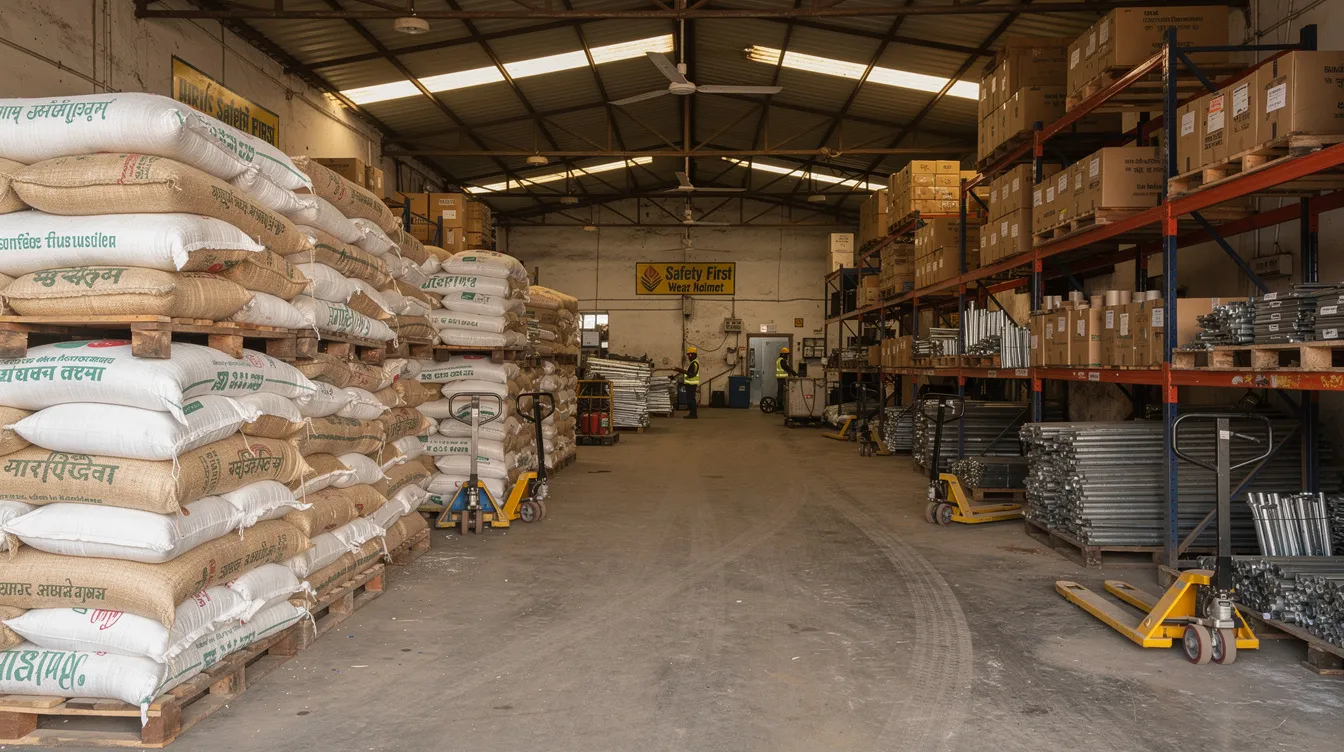
Working Capital Planning During the Initial Years of a New Manufacturing Project
Working capital requirement is not constant. It evolves significantly from trial production through to stabilised operations, and this must be reflected in year-wise projections before finalising equity funding plans.
The typical pattern in Indian manufacturing units involves low capacity utilisation and possible initial operating losses in Year 1, ramp-up to 60–70% utilisation in Year 2, and stabilisation at 80–85% thereafter. During this ramp-up, inventory and receivables build up faster than sales revenue, while credit from suppliers may be limited for a new unit without an established track record.
Investors expect at least 3 to 6 months of operational runway before equity funding translates into steady revenue. Maintaining a cash buffer is crucial for covering essential expenses before funding arrives and production stabilises. Financial models used for equity discussions should show separate working capital requirements for each of the first 3–5 years, linked to capacity utilisation and customer development assumptions.
For additional working capital considerations during capacity expansion of manufacturing businesses, the same principle applies – expansion creates a temporary spike in working capital before incremental revenue catches up.
Working Capital Funding Through Equity vs Bank Finance
Working capital can be funded through several sources, each with different implications for project economics and promoter control.
| Aspect | Bank Working Capital Finance | Equity Funding for WC |
|---|---|---|
| Cost | Interest at 9–13% (variable) | Investor expects higher long-term returns |
| Repayment | Renewable annually; working capital loans typically last less than 12 months | No repayment obligation |
| Ownership impact | No dilution | Causes equity dilution |
| Availability | Subject to bank appraisal, security, compliance | Subject to investor negotiation |
| Flexibility | Limited by sanctioned limits | More financial flexibility once deployed |
| Suitability | Regular operating cycle funding | Margin money, uncovered WC gap, contingency |
Working capital finance helps businesses improve cash flow and can resolve short term cash flow issues without permanent capital. Beyond traditional bank loans and cash credit, other financing options include invoice financing (where unpaid invoices are used to access funds), invoice factoring, asset based lending against stock and receivables, and revenue based financing which can provide up to 20% of annual recurring revenue in certain business models. A business line of credit may also provide access – globally, such facilities can offer significant annual limits depending on the business model and financial health.
From a project finance perspective, it is usually more efficient to utilise eligible bank working capital facilities and supplier credit first, then use equity primarily for margin money and the portion of working capital not covered by bank finance. Working capital management should aim to minimise the equity deployed in short term debt obligations.
Assumptions about bank limits in projections must be realistic. Promoters should avoid assuming high cash credit limits without actual lender appraisal. For a detailed understanding of how to balance equity, term loans and working capital limits, the promoter contribution, debt-equity mix and funding gap analysis framework is essential.
How Working Capital Affects the Total Equity Funding Requirement
Total equity funding is not determined only by capital expenditure. It must also cover promoter contribution for term loans, margin money for working capital, and any part of working capital not covered by bank finance or supplier credit.
The formula for estimating the equity funding gap:
Required Equity = Promoter Margin for Term Loan + Working Capital Margin Money + Uncovered Working Capital + Contingency Buffer
A high WCR may indicate excess cash tied up in operations. Equally, even a moderate change in working capital assumptions can substantially alter the equity ask. For example, moving trade receivables from 30 days to 60 days on a ₹36 crore turnover project increases receivables by approximately ₹2.96 crore – directly raising the equity funding requirement by several crore for a mid-sized plant.
Accurate working capital assessment helps avoid under-raising equity (leading to a cash crunch and possible personal guarantee obligations for emergency small business loans) or over-raising (leading to avoidable dilution and idle liquid assets). Promoters should integrate working capital planning into overall means of finance, as explained in the context of equity funding for new manufacturing projects in India.
Working Capital Projections in an Investor-Ready DPR
Sophisticated investors expect a full integrated financial model where working capital is projected for at least 5–10 years in line with capacity utilisation, sales growth and changing credit policies. Accurate cash flow projections help prevent operational stalls during fundraising and demonstrate the company’s short term liquidity management capability.
The DPR should clearly show assumptions for inventory days, receivable days, payable days and minimum cash balance for each projected year, with justification. These assumptions flow into the projected balance sheet (current assets and current liabilities), the cash flow statement (change in working capital) and financial ratios including the current ratio and acid test ratio.
Project feasibility studies are essential for assessing the viability of new ventures, and detailed working capital planning is a core part of that assessment. A well-structured model allows quick scenario analysis – varying receivable days, inventory levels and customer payments – before finalising the equity amount to raise. For guidance on building such models, the project feasibility study before equity funding framework provides a comprehensive approach.
For professional preparation of integrated financial models, Project Report Bank’s financial projections and financial modelling services are designed specifically for manufacturing promoters and investors.
Sensitivity Analysis – Impact of Changes in Working Capital Assumptions
Working capital sensitivity analysis tests how vulnerable a project’s financial stability is to changes in operational assumptions.
Consider three scenarios:
- Customer collection period extends from 45 to 75 days – trade receivables increase, the working capital cycle stretches and the project needs additional equity or bank limits. For a ₹36 crore turnover project, this single change can add ₹2.96 crore to the funding requirement.
- Raw material inventory increases due to seasonal procurement – if holding days increase from 30 to 60 days because the promoter must buy raw materials during a specific harvest season, the rupee value blocked in current assets increases proportionally. Too much inventory creates immediate access problems for cash.
- Supplier credit period reduces from 30 to 15 days – this adds pressure on net working capital and may require the promoter to borrow money or deploy additional equity to pay vendors on time.
Even positive developments like faster-than-planned capacity utilisation can create temporary working capital gaps if bank limits are not enhanced in time. Companies can improve cash flow by negotiating better supplier terms and tightening vendor payments and early payments policies.
A professionally prepared DPR should present at least 2–3 working capital scenarios (base, conservative and stressed) so investors clearly see the range of possible funding requirements. This kind of sensitivity analysis strengthens investor confidence in the financial metric rigour of the projections.
Common Working Capital Planning Mistakes Before Seeking Investors
Frequent mistakes observed in DPRs submitted for equity funding:
- Assuming very low inventory days compared to industry norms – for example, showing 10-day finished goods holding when the sector average is 25–30 days.
- Overestimating supplier credit – new units without purchase history rarely receive 60–90 day credit terms. Realistic supplier payments assumptions matter.
- Ignoring receivables ageing – assuming all customer payments arrive exactly on the due date, without accounting for delayed collections or excess inventory of slow-moving products.
- Showing only one static working capital figure without explaining year-wise buildup, seasonal variations or ramp-up requirements.
- Relying on informal unsecured borrowing to bridge working capital gaps instead of planning bank facilities and equity funding adequately, which can disturb cash flow and the company’s short term financial health.
- Using equity to compensate for inefficiencies – uncontrolled receivables, poor inventory management or large obsolete stock is not viewed favourably by serious investors.
Corrective actions include conducting a detailed operating cycle study, realistic benchmarking of credit terms, tighter receivable policies, better inventory control and early discussions with bankers regarding working capital eligibility. Promoters should avoid copying working capital structures from unrelated industry DPRs and instead obtain a customised assessment aligned to their own business model.
Working Capital Planning Checklist Before Approaching Equity Investors
Before preparing pitch decks or meeting investors, promoters should ensure they have:
- Latest management accounts with stock statements and bank limit utilisation (for existing units)
- Ageing analysis of accounts receivable and accounts payable
- Monthly cash flow statements for the past 12–24 months (if operational)
- Documented assumptions for planned inventory days, expected supplier credit terms, proposed customer credit policy and targeted collection timelines
- 24–36 month projected monthly cash flow showing inflows (sales, equity drawdown, bank disbursements) and outflows (purchases, wages, overheads, interest, term-loan instalments)
- Sanction letters for existing bank working capital facilities, term sheets or expressions of interest from lenders
- Evidence of short term resources and financial resources available during the transition period
- Contingency plan if actual cash flow deviates from projections
Promoters should review the investor-ready DPR checklist for equity funding to ensure their working capital documentation aligns with wider investor expectations. Investors look for detailed project reports when assessing funding opportunities, and incomplete working capital analysis is a common reason for delayed or failed fundraising.
When to Obtain Professional Working Capital Assessment and DPR Support
Once the total project investment or equity funding requirement crosses ₹5–15 crore, informal estimates of working capital are no longer sufficient. The financial consequences of an incorrect assumption become larger as project size increases.
A professional Chartered Accountant-led team can analyse the business model, prepare a realistic operating cycle assessment, calculate net working capital requirement and integrate it into a comprehensive DPR and CMA data. Professional means-of-finance planning considers term loans, working capital limits, promoter contribution, external equity, grants and contingency reserves.
Project Report Bank, under the guidance of CA Manish Gugliya, specialises in customised investor-ready DPR preparation and fundraising assistance for manufacturing projects across India. Promoters should seek professional assessment well before opening detailed negotiations with equity investors, so that the funding ask is realistic and defensible.

Frequently Asked Questions on Working Capital Requirement Before Equity Funding
How much working capital should be funded by equity versus bank working capital limits?
There is no fixed rule, but the general principle in project finance is to utilise eligible bank working capital financing first – typically cash credit against stock and receivables – and use equity for margin money (usually 25% of the sanctioned limit) plus any working capital gap that banks will not cover. For a new manufacturing project, the unfunded working capital portion that equity must cover is often 30–50% of the total net working capital requirement, depending on bank appraisal and the business’s financial health.
Is negative working capital acceptable to equity investors?
In most manufacturing contexts, negative working capital can signal potential cash flow problems and is viewed with concern by investors. While certain business models – such as advance-payment-based service businesses – can operate with negative working capital, manufacturing projects with significant inventory and receivables cycles are generally expected to maintain positive working capital. Positive working capital indicates that the business has sufficient short term resources to meet its obligations and supports the company’s ability to sustain operations.
How does working capital affect valuation and equity dilution?
A higher working capital requirement increases the total equity funding needed. If the promoter must raise more external equity to cover working capital gaps, the dilution increases. Conversely, demonstrating efficient working capital management – through controlled days inventory outstanding, disciplined receivable policies and favourable supplier terms – can reduce the equity ask and preserve promoter ownership.
How often should working capital assumptions be revisited during project implementation?
Working capital assumptions should be reviewed quarterly during the first two years of operations and at least semi-annually thereafter. If actual cash flow deviates from projections – for instance, if customer collection periods extend or raw material prices increase – the promoter should update the financial model and, if necessary, approach the bank for limit enhancement or discuss additional funding with investors.
What are the typical working capital challenges for MSME manufacturers starting their first plant?
First-time MSME manufacturers often face limited supplier credit (since vendors require advance or immediate payment from new customers), longer-than-expected customer collection cycles as they build distributor relationships, and the need to maintain higher safety stock of raw materials until supply chains stabilise. These factors can push actual working capital requirements 30–50% above initial estimates. Banks may also sanction lower working capital limits initially, requiring the promoter to fund the gap from equity or short term loans until a track record is established.
The information in this article is educational and based on typical project finance practice in India. Actual bank policies, investor preferences and funding eligibility vary case to case. Readers should obtain project-specific professional assessment before making financial decisions.
Conclusion and Professional Advisory Note
Realistic working capital planning is central to project feasibility, cash flow stability, bankability and investor confidence for manufacturing projects in India. A project that shows healthy profitability on paper can still face disruptions if the working capital requirement before equity funding is miscalculated – leading to production interruptions, strained supplier relationships and emergency fundraising at unfavourable terms.
Equity funding decisions must be based on an integrated analysis of capital expenditure and working capital needs, supported by defensible assumptions, year-wise projections and sensitivity analysis. The working capital requirement is not a residual figure to be filled in after everything else is planned – it is a core financial metric that determines whether the project can actually operate.
Promoters planning new manufacturing plants or capacity expansion are welcome to approach Project Report Bank for customised working capital assessment, financial projections, project feasibility studies and investor-ready DPR preparation. Share your basic project details and funding requirements through the website’s WhatsApp enquiry facility for an initial professional review.
CA Manish Gugliya FCA, DISA (ICAI) More than 20 years of professional experience in project reports, financial projections, CMA Data, project finance and business advisory. www.projectreportbank.com
Disclaimer: This article provides general information based on typical project finance practice in India. It does not constitute personalised financial, legal or investment advice. Actual bank policies, investor requirements and funding eligibility are subject to project-specific assessment and prevailing regulations.