Estimating solvent extraction plant setup cost based solely on machinery quotations is one of the most common and costly mistakes I see promoters make. The actual project cost encompasses fixed capital investment across land, civil works, specialised extraction machinery, utilities, safety infrastructure, pre-operative expenses and interest during construction, plus a substantial working capital requirement for seasonal raw material procurement, solvent inventory and trade receivables. In this article, I break down the complete capital investment structure, capacity-wise cost benchmarks and financial planning framework that serious entrepreneurs and industrial investors need before committing to a solvent extraction project in India.
Key Takeaways
- In 2024-25 price terms, a standalone 200 TPD solvent extraction plant in India typically requires ₹25–35 crore total project cost (including working capital) for standard configurations, escalating to ₹40–55 crore for high-automation or integrated setups. A 500 TPD plant can range from ₹50–80 crore, reaching ₹80–110 crore with refining integration.
- Solvent extraction plant setup cost is driven mainly by capacity (TPD), plant configuration (standalone extraction vs integrated crushing and refining), automation grade, land and construction costs, and safety-compliance infrastructure.
- Solvent extraction plant capital investment has two distinct parts: fixed capital (land, building, machinery, utilities, pre-operative expenses, IDC, contingencies) and working capital (inventory of oil seeds, solvent stock, receivables, minus supplier credit).
- Working capital can account for 20–40% of total project cost due to seasonal raw material procurement and inventory requirements.
- A bankable, project-specific Detailed Project Report is essential before finalising machinery orders or approaching banks for term loan and working capital limits.
Understanding Solvent Extraction Plant Investment in India
As a practising Chartered Accountant advising industrial projects since 2006, I have prepared DPRs for numerous oilseed processing ventures. A solvent extraction plant is an industrial facility that uses a solvent-hexane is the most commonly used solvent for extraction, being a petroleum-derived hydrocarbon with a suitable boiling point-to dissolve and recover oil from oil bearing materials such as oilcake, rice bran, sunflower meal, cottonseed cake and rapeseed cake. The underlying principle of solvent extraction is “like dissolves like,” where hexane dissolves the oil from prepared seed flakes or pre-pressed cake. The extraction process begins with cleaning and crushing seeds, followed by the solvent extractor dissolving oil to form an oil solvent mixture, which is then separated from solid materials. Distillation separates the extracted oil from the remaining solvent, while the desolventizing process removes residual solvent from the meal, leaving less than 1% oil in the residual meal. Solvent extraction can recover over 99% of oil from seeds, delivering significantly more oil and a high oil yield compared to mechanical expelling alone.
Solvent extraction is preferred for seeds with less than 20% oil content. Soybean oil and sunflower oil are commonly extracted oils, while cottonseed oil-from seeds containing 35% to 45% oil content-rapeseed oil used in cooking and processed foods, and coconut and palm kernel oils are also extracted using solvents. Three common project models exist in India: (a) standalone solvent extraction unit processing pre-pressed oilcake from external suppliers, (b) integrated seed preparation, crushing and solvent extraction complexes, and (c) integrated extraction and edible oil refining plants. Each model carries a different project cost profile, risk structure and payback expectation.
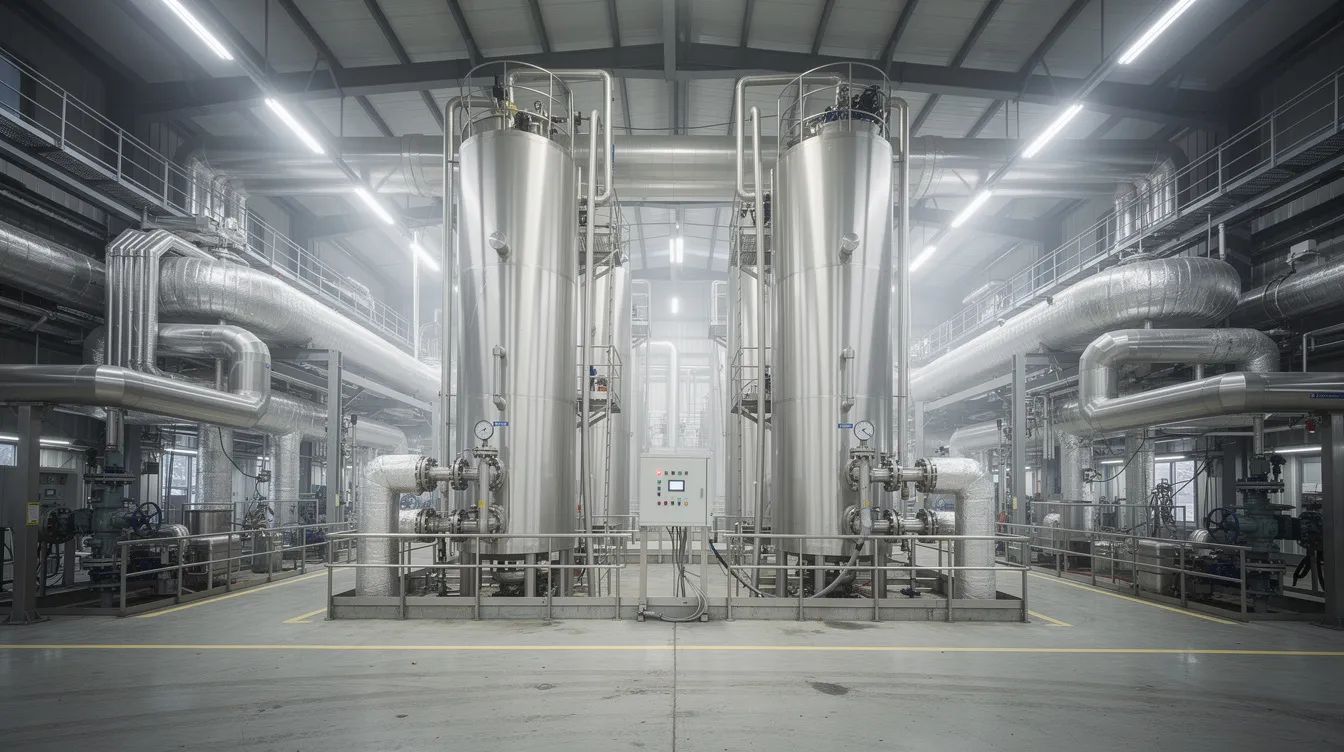
The major components of investment include land and site development, factory buildings and civil works, main oil extraction plant machinery (extractor, DTDC, evaporators, condensers, solvent recovery systems), utilities infrastructure, storage tanks for raw materials and finished products, safety and environmental systems, pre-operative expenses, interest during construction and margin money for working capital.
Solvent Extraction Plant Setup Cost – Capacity-Wise Investment
The capacity of a solvent extraction plant directly affects overall setup costs. Capital expenditure varies based on equipment and capacity, and economies of scale can reduce the unit cost of production in larger plants. Below is an indicative comparison based on 2024-25 estimates for standalone extraction plants with basic seed or cake preparatory handling, excluding full refining.
| Capacity (TPD) | Configuration | Estimated Fixed Capital (₹ Crore) | Working Capital Margin (₹ Crore) | Total Project Cost Range (₹ Crore) |
|---|---|---|---|---|
| 100 | Standalone extraction | 7–12 | 3–5 | 10–17 |
| 200 | Standalone extraction | 12–20 | 6–15 | 18–35 |
| 300 | Standalone with preparatory | 18–30 | 8–18 | 26–48 |
| 500 | Standalone or semi-integrated | 28–45 | 13–25 | 41–70 |
| 1,000 | Integrated extraction complex | 55–80+ | 25–40+ | 80–120+ |
Sources: Indicative ranges compiled from supplier data and published DPRs. GST, land cost variability and interest during construction assumptions must be validated project-specifically.
Per-TPD investment generally declines as capacity increases from 100 to 500+ TPD, but civil works, utilities and safety systems also scale up. For entrepreneurs evaluating fully integrated soybean crushing and extraction complexes, I recommend referring to our detailed guide on soybean crushing plant setup cost and investment to understand how integrated project costs differ from standalone extraction.
Detailed Solvent Extraction Plant Project Cost Breakdown
Investors and bankers require a structured solvent extraction plant project cost breakdown separating direct CAPEX, indirect CAPEX and working capital. Factors affecting plant setup costs include land development, machinery, and utilities infrastructure. Initial capital investments typically cover machinery, site development, and regulatory compliance costs.
| Cost Head | What It Covers |
|---|---|
| Land and site acquisition | Purchase or long-lease premium, registration |
| Site development | Boundary wall, internal roads, drainage, levelling |
| Factory buildings and civil structures | Process building, boiler house, tank farm, utility block, admin, laboratory |
| Main extraction plant and preparatory machinery | Extractor, DTDC, evaporators, condensers, seed cleaning, flaking machines |
| Solvent recovery, condensers and storage | Stripping columns, mineral oil system, hexane storage |
| Boilers, steam distribution and utilities | Boiler, cooling tower, air compressor, water treatment |
| Electrical systems and automation | MCCs, explosion-proof panels, PLC/SCADA, transformer |
| Storage tanks, silos and material handling | Raw material godowns, oil storage, DOC storage, conveyors |
| Fire protection, safety and environmental | Scrubbers, ETP, fire hydrant system, bunding |
| Erection, installation and commissioning | Contractor charges, trial runs |
| Engineering, consultancy and project management | Architect, structural engineer, process consultant fees |
| Preliminary and pre-operative expenses | Statutory fees, staff salaries during construction |
| Interest during construction (IDC) | Capitalised interest on term loan until COD |
| Contingencies | Typically 5–10% of base fixed capital |
| Margin money for working capital | Promoter’s contribution towards current assets |
Main solvent extraction equipment plus DTDC and solvent recovery blocks typically account for 35–45% of total plant and machinery cost. Civil and structural work generally represents 20–30%, while utilities add 8–12% of total project cost.
Solvent Extraction Plant Machinery Cost and Equipment Investment
Solvent extraction plant machinery cost is usually the single largest CAPEX component after land and civil works. Raw material characteristics influence preparation and extraction equipment requirements, and the automation grade significantly affects both cost and operational efficiency. Major equipment includes extractors, distillers, and recovery systems. The key components of a solvent extraction plant include:
- Solvent extractor (Rotocel, continuous belt or loop type) that uses hexane to dissolve oil from prepared flakes
- DTDC desolventiser-toaster where desolventizers remove residual solvent from the solid meal
- Evaporators and condensers for the distillation process
- Stripping column and solvent recovery system
- Miscella filtration and mineral oil absorption
- Seed or cake preparation equipment: a seed cleaner removes trash from raw materials, while a crusher breaks down seeds into smaller pieces
- Distillation units that separate pure oil from the solvent after extraction
- Storage tanks used for holding extracted oil and solvents
- Instrumentation and automation (PLC/SCADA for fully automated operation)
Equipment materials must resist corrosion due to the solvents used during extraction, particularly for rice bran processing where free fatty acids and moisture content are higher-requiring stainless steel construction in certain sections. For a typical 300–500 TPD plant, machinery cost can form 45–55% of total fixed capital (excluding land), with installation, piping and insulation adding 10–15% on top of equipment quotations. For detailed understanding of machinery blocks and technology selection, refer to our guide on soybean processing plant machinery, equipment and technology.
A critical safety note: hexane and similar solvents are highly flammable. Plant safety includes explosion-proof systems to mitigate risks. Detailed operational safety procedures must come from OEM manuals and statutory guidelines, not from investment-level articles.
Land, Factory Building, Utilities and Infrastructure Cost
Typical land requirements range from 2–3 acres for a compact 100 TPD solvent extraction unit to 7–10+ acres for 500–1,000 TPD plants with adequate storage and expansion provision. Land and construction costs significantly influence setup expenses, and zoning norms and buffer distances vary by state industrial policy.
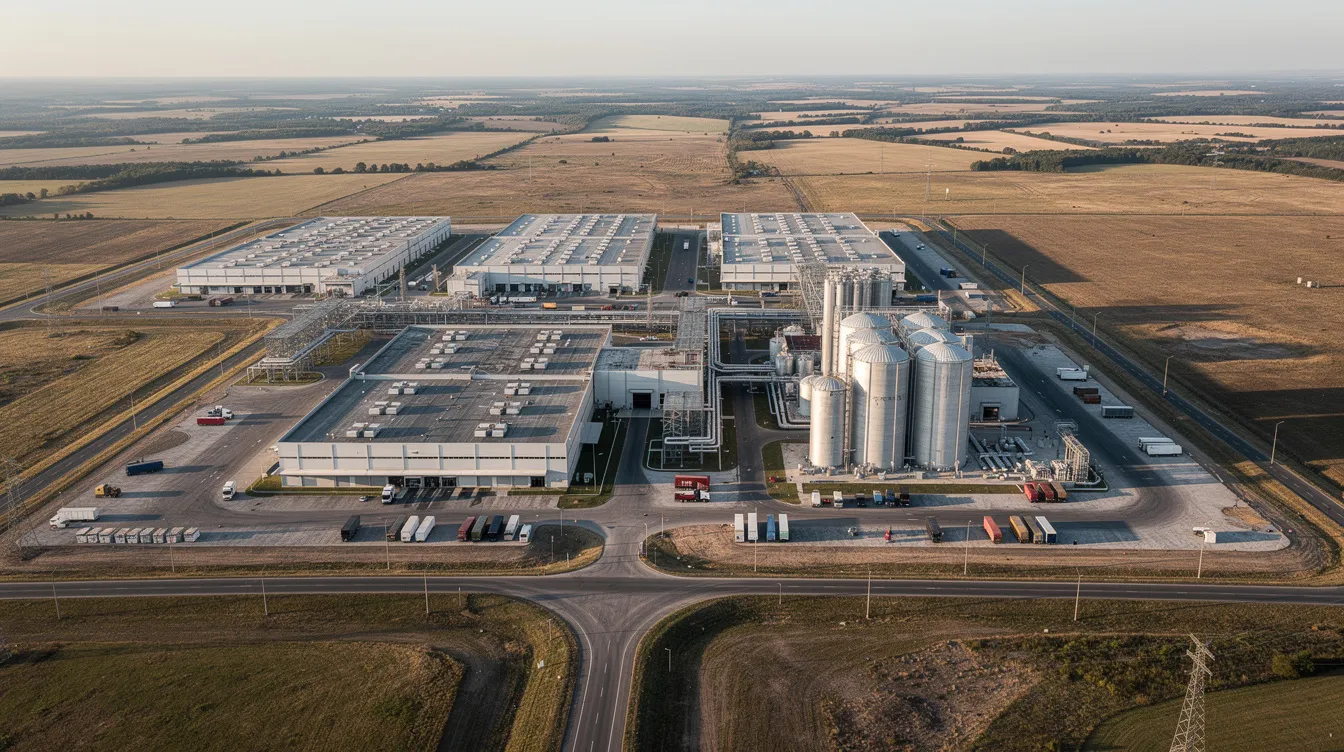
Major civil components include the main process building for extractor and DTDC, boiler and utilities block, pump house, tank farm and solvent storage, godowns for oilcake and de-oiled meal, finished oil storage, and administrative facilities. High-pressure steam and cooling water are essential utilities for the solvent extraction process, requiring properly sized boilers, cooling towers, compressed air systems, water treatment and fire water storage with hydrant systems. Civil and infrastructure costs may account for 20–30% of total fixed capital. For benchmarking typical layouts and utility planning, our article on soybean crushing plant land, building, utilities and factory layout provides a useful reference.
Fixed Capital Investment vs Working Capital Requirement
Fixed capital investment covers land, building, plant and machinery, utilities, pre-operative expenses, IDC and contingencies-these are one-time expenditures creating long-term assets. Working capital, by contrast, represents the recurring funds needed to operate the plant on a day-to-day basis. Working capital assessments include costs for raw materials, wages, and utilities before sales revenue begins flowing in.
For a solvent extraction plant, working capital components include seasonal procurement of oilcake or rice bran (often requiring 2–4 months of inventory), stock of hexane solvent, chemical consumables, packaging material, spare parts, finished edible oil and de-oiled cake inventory, trade receivables and minimum cash balances. Banks normally finance working capital through cash-credit limits against stock and receivables, while promoters provide margin money (typically 25% of current assets) as part of total project cost. In a 200 TPD cottonseed extraction plant, for example, working capital for just 2 months of operations was estimated at ₹26.37 crore against fixed CAPEX of ₹25.15 crore. For detailed inventory planning concepts, refer to our guide on soybean procurement, seasonal inventory and working capital management.
Inadequate working capital is a common cause of financial stress even in technically well-designed plants. Lenders carefully scrutinise current ratio, drawing power calculations and projected CC limit utilisation.
Illustrative Solvent Extraction Plant Project Cost – Financial Example
The following is a purely illustrative financial model for a hypothetical 300 TPD standalone solvent extraction plant in central India, using 2024-25 assumptions. This is not a quotation or universal benchmark.
Project Cost Statement:
| Cost Head | Amount (₹ Crore) |
|---|---|
| Land and site development | 3.50 |
| Building and civil works | 7.00 |
| Plant and machinery (extraction + DTDC + solvent recovery + preparatory) | 14.00 |
| Electricals and utilities | 3.50 |
| Storage, handling and laboratory | 1.50 |
| Preliminary and pre-operative expenses | 1.20 |
| Contingencies (7.5%) | 2.30 |
| Interest during construction | 1.50 |
| Total Fixed Capital | 34.50 |
| Margin money for working capital | 10.50 |
| Total Project Cost | 45.00 |
Means of Finance:
| Source | Amount (₹ Crore) |
|---|---|
| Promoter’s equity (30%) | 13.50 |
| Term loan (70% of fixed capital + WC margin) | 31.50 |
| Total | 45.00 |
| Working capital CC limit (separate) | 31.50 |
Key Operating Assumptions: 330 operating days, 80% capacity utilisation in Year 2, oil recovery ~16% from soybean cake input, DOC output ~82%, raw material cost ~₹38,000–42,000/MT, crude oil realisation ~₹85,000–95,000/MT, DOC realisation ~₹28,000–32,000/MT.
At stabilised operations, indicative annual revenue may be in the range of ₹330–400 crore, with EBITDA margins of 4–6% on sales, DSCR of 1.5–2.0x, project IRR of 15–20% and payback within 5–7 years. Operational expenses are primarily driven by raw material costs, which constitute 85–90% of cost of sales. Solvent loss during extraction processes impacts overall operational efficiency-optimally maintained at 1.0–1.5 litres per tonne versus 3–5 litres in poorly managed plants, reflecting low solvent consumption targets.
For a customised bank-ready financial model, I recommend reviewing our approach to soybean oil plant financial projections, CMA Data, DSCR and bank finance.
Means of Finance and Bank Loan Structure
Solvent extraction plant capital investment is normally financed through a combination of promoter’s equity, term loan for fixed assets and margin money, and separate working capital limits for inventory and receivables. Typical debt-equity norms for medium and large scale production projects range from 1.5:1 to 2:1, depending on project risk, collateral and promoter profile. Term loan parameters generally include 7–10 year tenure including moratorium, interest linked to MCLR/RLLR, and primary charge on fixed assets with personal guarantees. Interest during construction is capitalised as part of project cost until commercial operations date.
Operating Cost and Cost of Production per MT
For an oilseed solvent extraction plant, raw materials typically constitute 80–90% of total cost of sales. Running costs include utilities, maintenance, and manpower. Demand for skilled labor is essential for operating a solvent extraction facility effectively. Key operating cost heads per MT include:
| Cost Component | Indicative Range (₹/MT of input) |
|---|---|
| Raw material (oilcake/bran) | 38,000–42,000 |
| Power and fuel costs (electricity + boiler) | 800–1,200 |
| Solvent makeup and process losses | 150–300 |
| Labor costs (direct + indirect) | 100–200 |
| Repairs and maintenance | 80–150 |
| Other infrastructure costs and overheads | 200–400 |
Contribution per tonne (realisation from oil + DOC minus variable cost) must comfortably cover fixed costs, interest and debt service to maintain adequate DSCR. The quality of the financial model depends on realistic cost assumptions validated through careful research and actual supplier quotations.
ROI, IRR, DSCR and Investment Feasibility
Lenders evaluate solvent extraction plant financial feasibility through average DSCR (cash available for debt service vs obligations), project IRR (discount rate at which NPV equals zero), payback period, and break-even capacity utilisation. Key feasibility drivers include the raw material-oil-DOC price spread, capacity utilisation ramp-up in the first 3–5 years, energy efficiency and fuel costs, and logistics cost to major markets. Sensitivity analysis should stress-test 5–10% variations in oil recovery, realisations and input prices. For a detailed treatment of feasibility methodology, our guide on soybean crushing plant feasibility, ROI, IRR and sensitivity analysis demonstrates the analytical framework applicable to extraction projects.
Major Investment Risks and Cost Overruns
Solvent extraction plant cost in India can escalate significantly from initial estimates. Key risks include underestimation of civil and structural costs, steel and construction material price escalation, currency fluctuations for imported other materials, and additional compliance-related CAPEX demanded during project implementation. Commissioning delays from slow statutory approvals, machinery delivery or trial runs increase IDC and pre-operative expenses. Market risks include volatility in oilseed prices, drop in oil and DOC realisations, competition from established large extraction players, and lower-than-planned capacity utilisation. For parallel risk assessment, refer to our analysis of soybean crushing plant investment risks and profitability. Practical mitigations include adequate contingency provisions (5–10% of base CAPEX), conservative capacity ramp-up assumptions and maintaining a liquidity buffer.
Licences, Statutory Approvals and Compliance Costs
Handling hexane classifies a solvent extraction plant under hazardous and flammable chemical storage norms. Safety assessments should address fire protection, emergency response, and solvent handling standards. Environmental compliance includes obtaining various permits and ensuring safety measures for solvent storage. Typical approvals include Factory Licence under the Factories Act, Consent to Establish and Operate from State Pollution Control Board, Fire NOC, PESO approvals for solvent and fuel storage, boiler registration, electrical inspector approvals and local building permissions. Compliance and licensing costs vary by location and regulations, covering statutory fees, legal fees, fire-fighting system CAPEX, environment-management infrastructure and recurring audit costs. Regulatory compliance costs are essential for ensuring operational safety and environmental management.
Importance of a Detailed Project Report for Bank Finance
As a practising Chartered Accountant since 2006, I routinely see solvent extraction projects facing difficulties at bank appraisal because their project cost and financial projections are inadequately documented. Detailed Project Reports are crucial for financial planning and approval processes. A professional industrial DPR integrates technical configuration, machinery specifications, detailed project cost and means of finance, 5–7 year financial projections, DSCR analysis, break-even and sensitivity analysis. Customized project reports help entrepreneurs evaluate the financial viability of new manufacturing projects before committing capital. Project finance advisory services aid businesses in securing funding for new manufacturing ventures through properly structured proposals.
Expert Recommendations from CA Manish Gugliya
- Capacity selection is a strategic decision: avoid very small capacities below 100 TPD unless part of a niche integrated project. The 200–500 TPD range represents a cost effective and practical band for regional players. For capacity-economies thinking, see our article on soybean crushing plant capacity planning.
- Build in a 5–10% price-escalation cushion in plant and machinery quotations and civil contracts. Incorporate this contingency explicitly in the project cost.
- Model seasonal inventory build-up realistically. Do not understate solvent stocks and spare parts. Conservative credit terms from buyers should be assumed.
- Obtain multiple technology offers from any leading manufacturer in the suitable equipment range, but evaluate them through a single integrated DPR and financial model to arrive at bankable CAPEX rather than relying solely on supplier-side project reports.
- A small solvent extraction plant may cost ₹30–50 lakh for very basic setups, medium plants cost ₹1–5 crore and process 50–100 tonnes daily, while large plants cost ₹10 crore to over ₹25 crore for machinery alone-but total project costs including civil works, utilities and working capital are substantially higher, often running into several million dollars equivalent.
- Serious investors planning long term success should reach out through www.projectreportbank.com (WhatsApp contact available) to discuss customised DPR, financial modelling, CMA Data and bank loan proposal structuring.
Frequently Asked Questions
Below are answers to common questions from entrepreneurs evaluating solvent extraction plant investment in India.
What is the total cost of setting up a solvent extraction plant in India?
Total project cost varies significantly by capacity and configuration. For a standalone 200 TPD plant, expect ₹18–35 crore in standard configurations. Integrated extraction and refining complexes at 500 TPD can range from ₹50–80 crore or higher. These figures include fixed capital and working capital margin but exclude land cost variability across states. All estimates are indicative for 2024-25 and must be refined through a project-specific DPR.
How much investment is required for a 100 TPD solvent extraction plant?
A 100 TPD standalone solvent extraction plant typically requires ₹10–17 crore total project cost, with machinery accounting for ₹3–5 crore and the balance covering civil works, utilities, safety infrastructure and working capital margin. The range widens based on automation level and whether mixed feedstock processing (rice bran vs soybean cake) is planned.
Which machinery accounts for the largest investment in a solvent extraction unit?
The extractor system, DTDC, evaporators, condensers and solvent recovery blocks together account for 35–45% of total plant and machinery cost. Preparatory equipment for seed or cake handling adds another 15–25%. Installation, piping, insulation and structural supports can add 10–15% over base equipment quotations.
How much working capital does a solvent extraction plant need relative to fixed capital?
Working capital can equal 40–80% of fixed capital in many projects. For a 200 TPD cottonseed plant, one published DPR showed working capital of ₹26.37 crore against fixed assets of ₹25.15 crore. Seasonality in oilseed procurement drives this-stocking 2–4 months of raw material ties up significant cash.
Why is a customised DPR necessary before finalising machinery orders?
Machinery quotations alone do not represent total project cost. Civil works, utilities, safety systems, pre-operative expenses, IDC, contingencies and working capital can easily double the machinery budget. A customised DPR integrates all cost heads, validates financial feasibility, structures means of finance and provides the bankable documentation that lenders require for loan appraisal. Without this, promoters risk funding gaps during implementation.
Conclusion and Professional DPR Assistance
Solvent extraction plant setup cost in India is multi-dimensional-spanning fixed capital across land, civil works, specialised machinery, utilities and safety infrastructure, plus substantial working capital for seasonal operations. Judging investment based only on machinery quotations creates a misleading picture. A well-structured capital investment plan, supported by bankable financial projections and thorough risk assessment, is essential for long term success and lender confidence.
If you are planning an oilseed solvent extraction plant, rice bran oil extraction plant or integrated edible oil extraction and refining complex, I invite you to contact Project Report Bank for customised Detailed Project Reports, financial models, CMA Data and project finance advisory. You can reach us through WhatsApp via www.projectreportbank.com.
Every project is unique in its raw material mix, operation scale, location and financing structure. As a practising CA with more than 20 years of experience, my focus remains on practical, numbers-driven guidance rather than generic templates-helping promoters take informed investment decisions.
CA Manish Gugliya FCA, DISA (ICAI)