
Key Takeaways
Raw pulse procurement for dal mills is the single largest driver of profitability, directly influencing recovery percentage, working capital requirements and operating margins. In commercial dal milling, raw material accounts for 80–85% of operating costs, making every procurement and inventory decision a financial decision.
- Timing matters: Purchasing around harvest seasons can lower per-MT cost, but storage losses and finance costs must be evaluated before committing to bulk seasonal buying.
- Scientific warehousing with moisture control, pest management and FIFO protocols protects margins that poor storage silently erodes.
- Realistic inventory holding days-matched to plant capacity, supplier lead times and bank working capital limits-prevent both stockouts and excess stock that ties up capital.
- Bank-financed working capital must reflect seasonal inventory peaks in CMA Data and stock statements, not just average monthly requirements.
This article is written from the perspective of CA Manish Gugliya for Project Report Bank and focuses on commercial dal mills in India ranging from 5 TPD to 50 TPD raw input capacity.
Introduction – Why Raw Pulse Procurement Determines Dal Mill Profitability
In Indian dal mills, raw pulses typically represent 70–80% of cost of goods sold. This means procurement decisions-what you buy, when you buy, at what price and quality-have a far greater bearing on gross margins than incremental savings in power, labour or packaging. A minor shift in purchase price or a small drop in dal recovery can compress margins significantly.
Purchase price is only the starting point. Quality parameters such as moisture content, grain uniformity and damaged-seed percentage directly affect dal yield and broken percentage during processing. Milling recovery should ideally aim for 82–85% to protect profit margins, and this target is achievable only with good-quality raw material. Lead times from supplier to mill, and the number of inventory holding days, influence both cash flow and the risk of quality deterioration.
Seasonal inventory management must be synchronised with plant capacity, demand patterns in the operating region, and bank working capital limits. Pulses are seasonal products with discrete harvest windows, so mills face a recurring decision: buy in bulk when arrivals are abundant, or procure in smaller quantities throughout the year. Both approaches carry distinct costs and risks. The related topics of dal mill capacity planning and dal mill recovery ratio are explored in separate guides on Project Report Bank for readers seeking deeper technical analysis.
Understanding Raw Pulse Requirements for Different Dal Mills
Commercial dal mills processing 5 to 50 TPD of raw input typically handle multiple pulse types-Toor (pigeon peas), Chana, Moong, Urad and Masoor-each with distinct procurement and processing behaviour. Recovery values and processing requirements vary among different raw pulses, so the product mix should be finalised only after local market research, institutional buyer feedback and analysis of seasonal demand in the operating region.
Key procurement characteristics by pulse type:
- Toor / Arhar: Thick, adherent husk requiring multiple dehusking passes. Safe procurement moisture around 11–12%. Excess moisture causes caking and poor dehusking efficiency. Modern mills achieve 82–85% recovery; traditional mills often manage only 65–75%.
- Chana: Relatively easier husk removal. Tolerates conditioning well. Moisture around 12–13% at procurement. Yields in modern plants may reach 78–82%.
- Moong / Urad: Smaller grains, thin skin, very moisture-sensitive. Different pulse varieties exhibit varying gum strength affecting milling efficiency, and Urad in particular has a sticky skin requiring careful conditioning. Traditional recovery 65–70%; modern 80–85%.
- Masoor: Low husk content, splits easily with minimal conditioning. Consumer demand requires tight colour and appearance standards.
Consistent size distribution ensures uniform processing without excess powder, while uniform grain size correlates with higher head-dal recovery rates. High-quality pulses impact dal quality and market reputation, making quality-conscious procurement essential. Ideal moisture levels prevent excessive breaking of pulses during milling, and different raw pulses require specific cleaning, dehusking and processing settings. Dal recovery indicates the quantity of saleable dal from raw pulses-a metric every promoter must track. For detailed discussion of dal mill recovery ratio, dal yield, broken percentage and milling losses, see this in-depth guide on recovery and losses.
Major Sources of Raw Pulse Procurement in India
Indian dal mills typically source raw pulses through several channels, each with distinct trade-offs. Purchasing decisions should consider market demand for specific pulse products, and price alone should not determine supplier selection-quality and reliability are equally important.
Direct from farmers: Direct farmer sourcing can reduce intermediary markups and transit costs, offering better traceability and the ability to specify quality. However, lot sizes are small, quality varies, and aggregation logistics can be complex. Mills should establish contracts with reliable farmers for steady pulse supply.
APMC mandis: Centralised auction or open-bidding markets offer volume availability and price transparency. Market fees, commission agent charges, weighing and settlement cycles add to landed cost. Mandi procurement suits mills needing large, varied lots quickly.
Commission agents, FPOs and wholesalers: Aggregators provide convenience and sometimes credit, but take margins. FPOs may offer pre-agreed specifications and better consistency.
| Channel | Lot Size | Price Transparency | Quality Consistency | Logistics Complexity | Payment Terms | Landed Cost Impact |
|---|---|---|---|---|---|---|
| Direct from Farmers | Small | Low–Moderate | Variable | High | Flexible | Lower base, higher handling |
| APMC Mandis | Medium–Large | High | Moderate | Moderate | Auction settlement | Base + mandi fees + commission |
| FPOs / Co-operatives | Medium | Moderate | Good | Moderate | Pre-agreed | Moderate |
| Wholesalers / Agents | Large | Moderate | Moderate–Good | Low | Credit available | Higher due to margins |
Landed procurement cost must factor mandi fees, commission, loading and unloading, transportation, transit losses and any financing charges. Recoverable input tax credits should be accounted for in supplier comparisons, as these can materially affect net procurement cost in financial projections.
Seasonal Availability and Procurement Planning for Different Pulses
Pulses are seasonal crops influenced by monsoon patterns. India’s Kharif season (June–October sowing, September–February harvest) covers Toor, Moong and Urad, while Rabi season (October–November sowing, March–May harvest) covers Chana and Masoor. Regional variations are significant-Toor arrivals in Maharashtra begin in November, while in parts of Madhya Pradesh they may extend into March.
Market arrivals spike after harvest, causing seasonal price softening. In lean months, prices can rise substantially. Demand surges can exceed 20% during peak festival and wedding seasons, creating high demand periods where mills must meet demand without interruption. MSP announcements-such as Toor at ₹8,000/quintal and Moong at ₹8,768/quintal for Kharif 2025-26-set price floors that influence mandi rates.
| Pulse | Season | Sowing Window | Harvest Window (Indicative) | Major Producing Regions | Procurement Notes |
|---|---|---|---|---|---|
| Toor | Kharif | June–July | Nov–Feb | Maharashtra, Karnataka, MP | Bulk buy feasible post-harvest; plan 60–90 day storage |
| Moong | Kharif / Summer | June–July / Feb–Mar | Sept–Oct / May–June | Rajasthan, MP, Maharashtra | Summer crop offers second procurement window |
| Urad | Kharif | June–July | Sept–Oct | MP, UP, Maharashtra | Moisture-sensitive; shorter safe storage |
| Chana | Rabi | Oct–Nov | Mar–May | Rajasthan, MP, UP | Large volumes available; tolerates longer storage |
| Masoor | Rabi | Oct–Nov | Mar–May | MP, UP, West Bengal, Bihar | Consumer preference for appearance limits acceptable quality |
A dal mill’s procurement strategy should consider seasonal buying and inventory management together. Government policies and import duty structures affect procurement timing, and mills should follow official crop reports rather than speculative market sentiment. Responsive replenishment-building stock during harvest and drawing down in sync with sales-is preferable to one-shot speculative accumulation. Accurate forecasts can reduce margin erosion by 10%–40%, while inaccurate forecasts can lead to stockouts and lost sales.
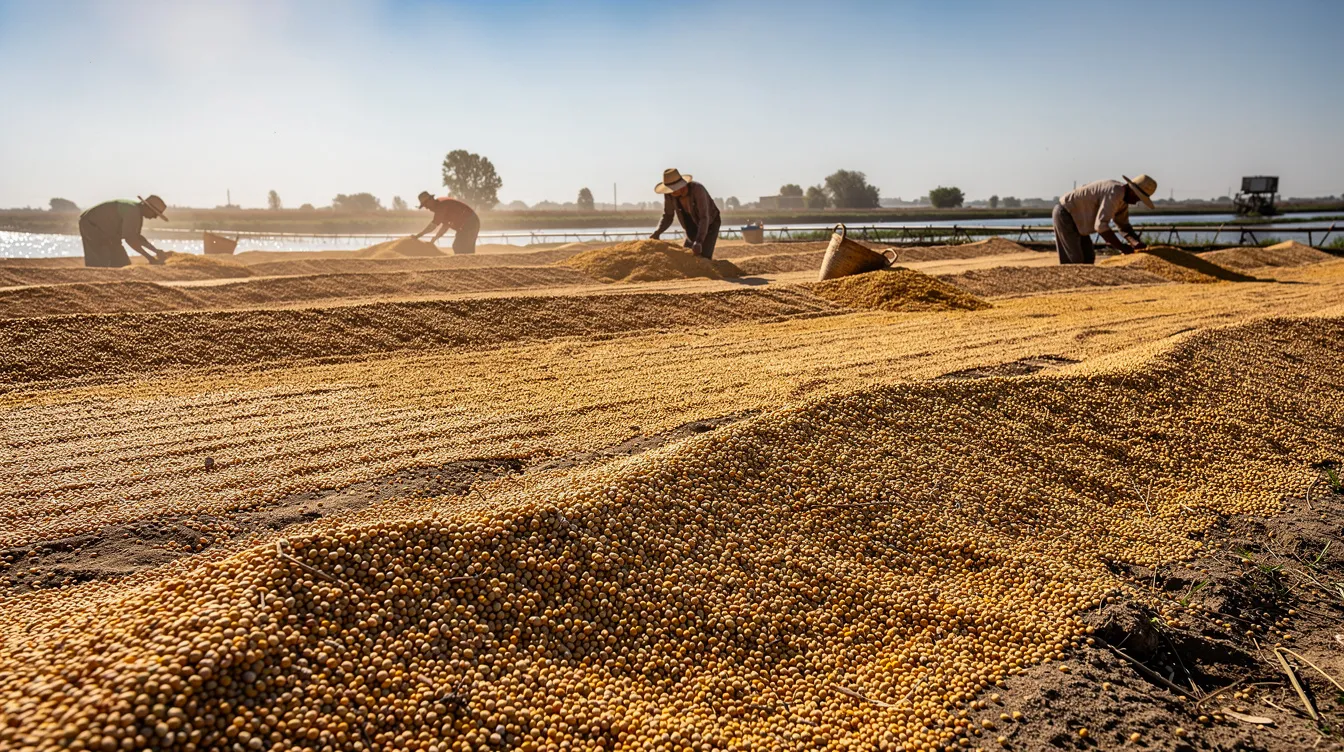
How Much Raw Pulse Inventory Should a Dal Mill Maintain?
Plant capacity in TPD refers to raw pulse input processed during operating hours. Annual requirements depend on operating days assumed in the DPR (typically 250–300 days). Procurement quantities should be tied to production plans to avoid excess inventory.
Formula:
Raw Material Inventory (MT) = Daily Raw Pulse Consumption (MT) × Inventory Holding Days
For a 20 TPD mill at 75% utilisation: daily consumption = 15 MT. At 30 days inventory, raw material stock = 15 × 30 = 450 MT.
Daily consumption estimates assume 75–80% of installed capacity rather than theoretical maximums:
| Plant Size (TPD) | Actual Daily Consumption (MT) | 15 Days (MT) | 30 Days (MT) | 45 Days (MT) | 60 Days (MT) |
|---|---|---|---|---|---|
| 5 TPD | ~4 | 60 | 120 | 180 | 240 |
| 10 TPD | ~8 | 120 | 240 | 360 | 480 |
| 20 TPD | ~15 | 225 | 450 | 675 | 900 |
| 50 TPD | ~38 | 570 | 1,140 | 1,710 | 2,280 |
Safety stock must account for supplier lead times, transportation disruptions and seasonal reliability. Shorter lead times reduce inventory risk significantly. Higher inventory levels reduce the chance to avoid stockouts but increase working capital, storage cost and quality deterioration risks. The optimal range depends on bank finance availability and the promoter’s risk appetite. For a structured approach to choosing between different mill sizes, refer to this guide on dal mill capacity planning.
Raw Pulse Storage Requirements and Scientific Warehousing
Improper warehousing leads to moisture gain, fungal damage, insect infestation and quantitative losses that silently erode margins. Grain quality and storage conditions significantly influence processing recovery. Moisture levels for safe storage typically range between 10% and 12% depending on the pulse variety and ambient climate, and excess moisture triggers fungal growth and insect infestation during storage.
Key warehouse design requirements:
- Construction: Pucca walls, damp-proof flooring with adequate plinth height (minimum 0.6–1.0 m above ground level), well-insulated roofing and proper cross-ventilation.
- Stacking: Standard 50 kg PP or gunny bags placed on wooden or plastic pallets with dunnage. Adequate aisle space for inspection and handling. FIFO and lot-wise identification tags on every stack.
- Pest control: Regular cleaning, physical barriers, scheduled fumigation supervised by trained personnel. Compliance with food-safety standards and proper documentation of all treatments.
- Climate monitoring: Temperature and humidity sensors, particularly in coastal or high-humidity regions. Higher initial moisture in incoming pulses reduces safe storage duration.
Essential warehouse safety provisions include fire extinguishers at accessible points, compliant electrical installations, comprehensive insurance coverage for stored stock, and periodic risk inspections. For a holistic view of land, building and layout planning, see our article on dal mill land, building and plant layout requirements.

Warehouse Capacity Planning for 10 TPD, 20 TPD and 50 TPD Dal Mills
Warehouse capacity depends on maximum expected stock (including seasonal peaks), bag size, permissible stack height, aisle space and handling clearances. Typical planning assumptions include 50 kg bags, stacking five bags high, and approximately 70% of gross floor area available for stacking after aisles and structural elements.
Illustrative calculation for a 20 TPD mill holding 30 days of raw pulses (~450 MT): 9,000 bags at five bags per stack = 1,800 stack positions. Each position occupies roughly 1 m². Adding 30% for aisles, inspection zones and handling space, the total storage space requirement is approximately 2,300–2,600 m².
For a 50 TPD mill with 45–60 days of stock (1,700–2,280 MT), on-site storage alone may be insufficient. Third-party warehouses, CWC/SWC facilities or hired godowns near major mandis become practical options during harvest-season procurement peaks.
Zoning is essential: separate areas for incoming raw pulses awaiting quality approval, approved production feedstock, rejected or hold material, and finished dal with by-products. This supports accurate inventory control and maintains a reliable audit trail. Warehouse capacity planning must comply with fire safety regulations, local building bye-laws and insurance requirements that often specify maximum stack heights and passage widths.
Quality Inspection and Raw Pulse Acceptance Procedures
Proper quality inspection at the point of procurement is far cheaper than dealing with high breakage, low recovery and production disruptions. Food-safety compliance is essential when procuring raw pulses. Establish clear quality inspection processes to verify raw material standards before accepting any lot.
Sampling: Draw representative samples from multiple bag locations within a lot, mix and quarter to produce a laboratory sample. Document protocols in the mill’s quality manual.
Key tests:
- Moisture measurement using a digital moisture meter calibrated for the specific pulse variety
- Foreign matter and inorganic impurities (stones, metal fragments) per FSSAI contract specifications
- Percentage of damaged, discoloured or immature grains
- Size grading for uniformity
- Insect infestation or live pest checks
High percentages of damaged grains lower the recovery percentage of clean split dal. Non-conforming lots may be subject to price negotiation, partial acceptance with documented quality penalties, or outright rejection. Quality checks should be implemented at every production stage, not just at procurement.
A clear understanding of how raw pulse quality influences each step of cleaning, dehusking and splitting is available in our dal milling process and flow chart article, and further detailed in the note on pulse conditioning, dehusking and splitting. Proper documentation-GRN, quality test reports, supplier invoices and lot codes-supports traceability, bank stock-statement accuracy and inventory control.
Seasonal Inventory Planning and Raw Pulse Price Risk Management
Seasonal inventory planning for dal mills involves balancing lower procurement prices during harvest with higher inventory risk, storage losses, finance costs and market price uncertainty.
Strategy A – Regular Monthly Procurement: Buying smaller lots each month at prevailing prices keeps average stock levels and working capital requirements lower. However, mills face exposure to price spikes and supply disruptions during lean months. Inaccurate forecasts can lead to stockouts and lost sales when the season approaches and supply tightens.
Strategy B – Harvest Season Bulk Procurement: Buying significant quantities near harvest, when prices are relatively lower, can generate savings if off-season prices rise. But this is not automatically superior-storage losses, finance costs and the risk of price decline must be evaluated. Long-term supply agreements help hedge against seasonal price volatility.
Comparative evaluation framework:
| Component | Strategy A (Monthly) | Strategy B (Harvest Bulk) |
|---|---|---|
| Purchase price | Market rate (variable) | Potentially lower |
| Storage duration | Short (15–30 days) | Long (60–120 days) |
| Finance cost | Lower | Higher |
| Storage loss | Minimal | 2–5% cumulative |
| Supply disruption risk | Higher in lean months | Lower |
| Market price risk | Spread across year | Concentrated |
Government support through MSP-based procurement and import duty adjustments are external factors that affect seasonal pricing. Mills should follow official updates from the Ministry of Agriculture rather than engage in speculative hoarding. Risk diversification through sourcing from multiple regions, staggered purchasing and pre-agreed pricing arrangements provides greater agility.
Working Capital Requirements for Raw Pulse Procurement
Working capital for a dal mill comprises funding for raw material inventory, work-in-progress, finished goods and receivables, net of supplier credit. Raw pulse stock is usually the largest component-excess stock can tie up 10–40% of working capital.
The working capital cycle flows from cash (or bank cash credit) used to purchase raw pulses, through processing and conversion, to credit sales to wholesalers or retailers, and eventual collection. Longer inventory holding days extend this cycle and increase financing requirements.
Banks assess working capital limits using projected balance-sheet or turnover methods. CMA Data presentation must reflect realistic assumptions on stock levels, credit terms and seasonal peaks.
Illustrative example for a 20 TPD mill:
| Parameter | 30-Day Inventory | 60-Day Inventory |
|---|---|---|
| Daily consumption | 15 MT | 15 MT |
| Raw stock (MT) | 450 | 900 |
| Illustrative price (₹/MT) | 40,000 | 40,000 |
| Stock value (₹) | 1.80 Crore | 3.60 Crore |
| Additional investment for seasonal stock | – | ₹1.80 Crore |
| Annual interest at 12% on additional stock | – | ~₹21.6 Lakh |
These figures are purely illustrative and not current market rates. Sensitivity to pulse prices, interest rates and capacity utilisation means even small changes in assumptions materially affect the finance-cost component. Drawing power, stock statements and margin requirements (banks typically require 25–30% margin on raw material) determine how much of the stock value can actually be financed.
Promoter contribution is required for a part of seasonal inventory build-up, and underestimating working capital in the DPR can create serious stress during harvest-season procurement. For realistic working capital assessment, CMA Data preparation services for bank loans can help structure these assumptions professionally.
Inventory Holding Costs, Storage Losses and Profitability
The true cost of raw pulse procurement for dal mills extends well beyond purchase price. Calculating effective cost per kilogram of saleable dal helps evaluate raw material value realistically.
Full carrying cost components:
- Purchase price at mandi or farm-gate
- Transportation, handling and unloading
- Warehouse rent or depreciation
- Fumigation and pest control
- Insurance
- Interest on working capital
- Quantitative and quality storage losses (typically 2–5% over extended storage)
Illustrative scenario: If purchase price is ₹40/kg and total carrying costs (interest, storage, losses) add ₹2.50/kg over 60 days, the effective raw material cost rises to ₹42.50/kg. With 83% recovery, the effective cost per kg of saleable dal becomes approximately ₹51.20/kg instead of ₹48.20/kg-a difference that directly compresses margins.
The distinction between accounting interest expense and economic opportunity cost of the promoter’s own capital matters. From a promoter’s perspective, both affect project attractiveness, but they should not be double-counted in financial models. Excess stock can tie up working capital and storage space, so simple Excel-based models should include storage losses and hidden carrying costs as explicit input variables.
Raw Material Procurement and Its Impact on Dal Mill DPR Financial Projections
A comprehensive business plan is essential for financial assistance, and any serious Detailed Project Report for a dal mill must treat raw material procurement as a central assumption set. A Detailed Project Report outlines project feasibility and viability, and DPRs are essential for securing financial assistance from banks.
Procurement assumptions influence projected profit and loss (through gross margins), cash flow (through inventory and credit terms), and banking metrics such as DSCR, break-even quantity and ROI. A well-prepared DPR includes financial projections and cost assessments that reflect pulse-wise price bands-base, optimistic and conservative-along with realistic recovery percentages. Financial projections help assess project viability and funding needs.
DPRs help in identifying the right product mix and production capacity aligned with market demand. Professional DPRs ensure compliance with industry standards and regulations. Seasonal inventory build-up should be clearly reflected in monthly or quarterly projected balance sheets, showing peaks in stock levels and corresponding increases in working capital utilisation and interest costs.
Unrealistic assumptions-permanently low raw pulse prices, minimal inventory days, or excessively high dal yields-can make projections look attractive on paper but will fail during bank appraisal and in actual operations. For entrepreneurs seeking bank finance, our bank finance DPR and loan proposal assistance services focus on practical, procurement-grounded assumptions accepted by lenders.
Common Raw Pulse Procurement and Storage Mistakes
Several recurring errors undermine profitability in MSME dal mills:
- Buying on lowest visible price without quality testing: A batch with 3% higher damage can reduce recovery enough to wipe out the price saving. Remedy: standardise procurement specifications and invest in basic testing equipment.
- Over-reliance on a single supplier or mandi: Supply disruptions or demand fluctuations from one source can halt production. Remedy: diversify sourcing across regions, develop relationships with at least three to four supply channels.
- Poor storage infrastructure: Low-height, poorly ventilated godowns with bags stacked directly on floors cause avoidable losses. Remedy: invest in pallets, ventilation and scheduled fumigation.
- Weak inventory records: Mismatch between physical stock and books, delayed updating, and incomplete stock statements damage credibility with lenders. Automated inventory systems improve accuracy and reduce errors. Remedy: adopt simple digital spreadsheets or basic ERP tools for inventory control.
- Speculative over-stocking: Accumulating excess inventory based on price expectations without data-driven analysis ties up capital and increases losses. Remedy: use the comparative framework described above before committing to harvest bulk purchases.
Practical Procurement and Inventory Planning Checklist for Dal Mill Promoters
- ☐ Identify main supplying mandis, regions, key traders, FPOs and farmer contacts
- ☐ Prepare written raw pulse quality specifications with acceptance and rejection criteria
- ☐ Procure basic testing equipment: digital moisture meter, weighing scales, sieves, sample dividers
- ☐ Ensure adequate covered storage space for maximum expected seasonal stock, with pallets, dunnage and aisle clearances
- ☐ Arrange pest-control contracts and fire safety provisions; obtain insurance coverage
- ☐ Define target inventory holding days by pulse, minimum and maximum stock levels, and safety stock policy
- ☐ Prepare working capital estimate including seasonal peaks; arrange bank limits with realistic CMA Data
- ☐ Evaluate interest cost impact before committing to bulk seasonal procurement
- ☐ Schedule monthly physical stock-taking and reconciliation with book records
- ☐ Review this checklist annually or whenever crop patterns, market changes or capacity expansion alter requirements
Frequently Asked Questions
How should a dal mill estimate lead times for raw pulse procurement from different sources?
Lead time should include average days for sourcing, transport, unloading and quality inspection. Mills should maintain simple historical records by supplier and season to refine these estimates over time. Direct farmer procurement may involve 7–15 days including aggregation, while mandi purchases can often be completed within 3–7 days depending on distance and transport availability.
What basic laboratory equipment is recommended for testing incoming pulses in an MSME dal mill?
A digital moisture meter calibrated for pulses, accurate weighing scales (up to 50 kg), standard sieves for size grading, a sample divider for quartering, and a magnifying glass for insect inspection are essential. These represent modest additional investment-typically under ₹50,000-but significantly reduce procurement risk and help save time on manual sorting.
Can a new dal mill rely entirely on spot mandi purchases without any long-term supply understanding?
While spot mandi purchases provide flexibility, exclusive dependence increases exposure to price spikes and supply disruptions in lean months. Even new mills should gradually develop relationships with key traders, FPOs or farmer groups for at least a portion of annual requirements. Companies in this industry that rely on reliable supply partnerships manage operations more effectively.
How often should physical stock verification be done for raw pulses in a commercial dal mill?
At least monthly comprehensive stock-taking is recommended for MSME mills, with more frequent cycle counts during peak season. Reconciliations with book records support both internal control and bank stock-statement reliability, improving forecast accuracy and enabling smarter decisions on future sales and replenishment.
What is the typical ratio between raw material stock and finished goods stock in a steady-state dal mill operation?
In most commercial dal mills, raw material stock (in value terms) is significantly higher than finished goods stock because of continuous processing and quicker dispatch cycles. The exact ratio varies by production schedule and daily demand from buyers but often ranges between 3:1 and 5:1. Plant-specific planning and DPR analysis should determine the appropriate inventory levels for each business.
Conclusion – Integrating Procurement, Storage and Financial Planning
Profitable dal milling depends on integrated decisions across raw pulse procurement, seasonal inventory management, scientific storage and disciplined working capital management-not just on operational efficiency of machinery. Traditional forecasting based on gut feel is no longer sufficient; data-driven procurement and inventory planning are essential to manage demand sensing, seasonal demand fluctuations and real time visibility into stock levels.
A robust DPR and financial model should capture these realities through realistic assumptions on procurement price ranges, recovery ratios, seasonal stock peaks and financing structures, supported by sensitivity analysis. When promoters integrate these operational insights into their financial projections, lenders and investors gain customer trust in the viability of the proposed business.
Raw pulse procurement for dal mills is fundamentally a financial decision. If you are planning a new dal mill or expanding an existing facility, a professionally prepared Detailed Project Report with realistic procurement, storage and working capital assumptions can make the difference between a bankable proposal and one that falls short. I invite serious promoters to connect with me through Project Report Bank for customised DPR, CMA Data and working capital advisory-reach out via our website or WhatsApp to discuss your specific requirements.
CA Manish Gugliya FCA, DISA (ICAI) www.projectreportbank.com