Key Takeaways
- A typical small specialty flour plant in India may need around ₹2.50–₹4.00 crore in total project cost, while larger integrated plants with advanced automation can cross ₹10 crore, depending on capacity, product range and location.
- Total project cost covers land, building, plant and machinery, utilities, preliminary and pre-operative expenses, contingencies and margin for working capital. Fixed capital investment and working capital requirement must be clearly separated in any bankable project report.
- Means of finance is usually structured with 25–35% promoter contribution and 65–75% bank term loan, plus separate working capital limits, subject to bank appraisal and applicable scheme guidelines.
- Realistic financial projections, DSCR analysis and properly prepared CMA Data are critical for sanction of a specialty flour plant bank loan.
- For customised DPR preparation and project finance advisory, promoters can reach out to Project Report Bank, led by CA Manish Gugliya, FCA, DISA (ICAI).
Introduction – Understanding Specialty Flour Plant Investment in India
Understanding the specialty flour plant project cost is the first step for any entrepreneur planning to enter value-added flour manufacturing in India. Post-2020, demand for multigrain atta, fortified wheat flour, high-fibre atta, organic atta and gluten-conscious blends has grown steadily, driven by urban health awareness and modern retail expansion.
Unlike a traditional flour mill that primarily processes wheat into standard atta or maida, a specialty flour plant requires blending systems, fortification equipment, segregated milling paths, quality control infrastructure and premium packaging. Starting a specialty flour production plant requires a balanced capital investment, and the total project cost is influenced by processing capacity, level of automation and product range.
A detailed project report is essential for feasibility studies and financial projections. A complete DPR covers technical feasibility and project costs, helping both the promoter and the lender evaluate whether the business is viable. Flour mill project reports assess market demand and operational viability, which is exactly why accurate cost estimation and a realistic means of finance structure matter before approaching any bank or investor.
Project Report Bank, led by CA Manish Gugliya, prepares bankable detailed project reports and CMA Data for specialty flour plant and flour mill business proposals. If you are planning such a manufacturing project, professional advisory can help translate your business plan into a structured financial proposal.
What Is Included in Specialty Flour Plant Project Cost?
The total project cost for a specialty flour plant represents the complete funding requirement to make the plant operational and sustain it through early operations. It includes fixed capital investment (land, building, machinery, utilities, pre-operative expenses) plus margin for working capital. Initial budgeting should account for equipment installation, operational setup and working capital reserve.
The cost structure varies depending on whether the project is a new greenfield unit or an expansion of an existing flour mill business. Each component below is typically scrutinised during bank appraisal.
Land and Site Development
A 25–50 TPD specialty flour plant generally requires 0.5–1.0 acre in an industrial area. Land and site development costs can vary based on proximity to agricultural hubs and transport corridors. Site development includes boundary wall, approach road, levelling, drainage and borewell arrangements.
Banks prefer clear title or valid lease documents. Where land is already owned, its value appears in project cost but does not require fresh funding; this distinction must be clearly shown in the DPR.
Factory Building and Civil Construction
Key civil components include the production hall, raw material godown, finished goods warehouse, utility room, QC lab, packing area and administration office. For a mid-scale plant, built-up area may range from 10,000–18,000 sq.ft. As a reference, land and building for a 25 TPD mill can cost approximately ₹2.67 crore, though this varies significantly by location.
Existing building use in expansion projects can substantially reduce civil construction cost compared to greenfield setups.
Plant and Machinery
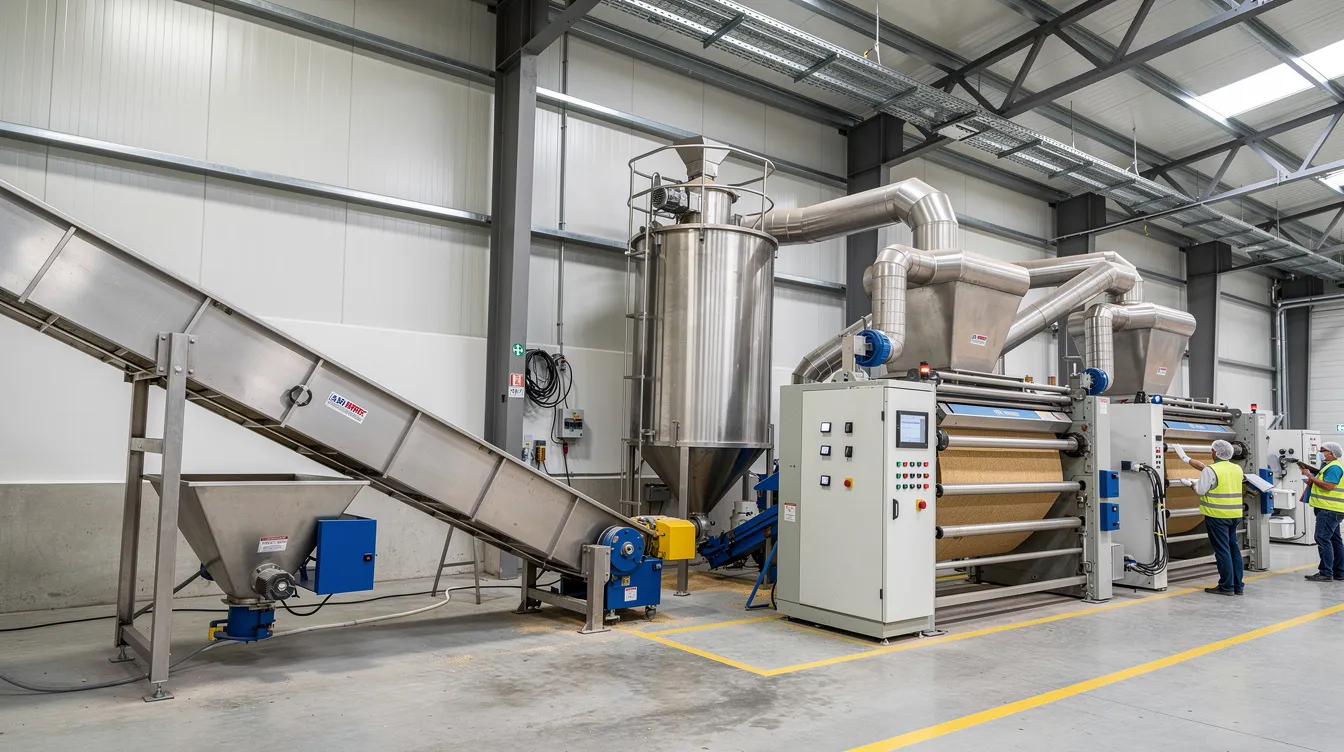
Core machinery includes grain cleaning equipment, roller flour mill or chakki atta units, blending and mixing systems, screw conveyors, sifters, bucket elevators and plansifters. Machinery and equipment can account for 40–60% of the total budget in flour milling projects. For context, machinery for a 25 TPD flour mill costs approximately ₹71.53 lakh, though specialty configurations with blending and fortification systems may cost more.
Flour mill project reports must include detailed machinery cost analysis, and machinery requires careful selection based on specialised needs for different flour types. For granular machine-wise details, refer to the Specialty Flour Plant Machinery, Equipment & Cost guide. A DPR must include machinery cost and capacity details supported by validated supplier quotations.
Electrical Installation and Utilities
Project cost must account for transformer, HT/LT electrical panels, motor control centres, cabling and lighting. Utilities include DG set backup, air compressors, water supply and basic firefighting systems. Electrical and utility costs typically represent 8–12% of plant and machinery cost. Flour production also requires investments in dust control and filtration systems to maintain product quality and comply with workplace safety norms.
Material Handling and Storage Infrastructure
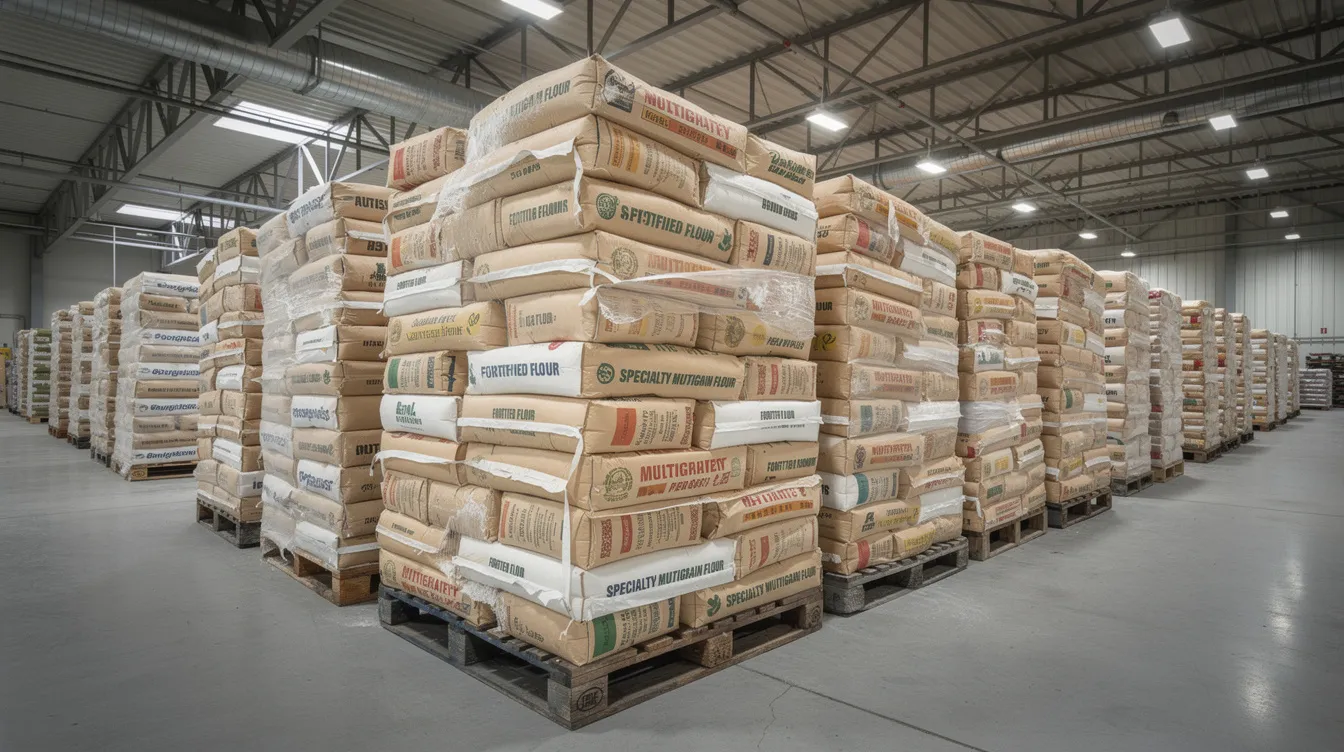
Handling equipment includes forklifts, pallet trucks, conveyor belts, screw conveyors and weighing scales. Storage infrastructure covers bulk silos, bins, racks and modular racking for packed specialty flour. Good storage and plant layout reduce wastage, pilferage and quality deterioration, indirectly supporting profitability and DSCR.
Quality Control and Laboratory Equipment
Typical QC equipment includes moisture meters, ash content testers, gluten testing equipment, lab mills, weighing balances and sieve shakers. For fortified wheat flour and health-positioned products, regular testing is mandatory under FSSAI standards. While QC cost is a small portion of total project cost, it is significant for bank and buyer confidence.
Packaging Machinery and Automation
Packaging requirements include electronic weighers, automatic form-fill-seal machines, sealing machines and date coding systems. Packaging for specialty flours often requires moisture-barrier or nitrogen-flushed materials to extend shelf life. Retail-pack automation for 1 kg, 5 kg and 10 kg packs costs more than bulk 25–50 kg bagging for B2B buyers, but reduces long-term labour cost and improves consistency.
Preliminary and Pre-operative Expenses
These cover company formation, incorporation, consultancy, legal documentation, interest during construction, trial run expenses, salaries during implementation, insurance and project-related administrative costs. Banks may capitalise eligible pre-operative expenses as part of project cost for term loan assessment.
Contingencies
A contingency provision of 5–10% on heads like plant and machinery and civil works covers unexpected cost escalations. This is a realistic cushion, not spare cash, and is appreciated by bankers during appraisal.
Working Capital Margin
The margin for working capital is the promoter’s share of funding towards raw materials, finished goods inventory, receivables and operating expenses. This margin is included in total project cost, while the balance requirement is funded through a separate working capital loan or cash credit limit. Underestimating working capital can strain cash flow even when fixed capital is perfectly financed.
Specialty Flour Plant Project Cost in India – Illustrative Investment Estimates
The figures below are illustrative, based on typical Indian MSME specialty flour projects during 2025–2026, and not specific vendor quotations. Costs for a flour mill plant vary depending on daily processing capacity. Small-to-medium scale operations typically process between 5 to 30 tons per day.
| Plant Type | Capacity (TPD) | Machinery Investment (₹ lakh) | Other Fixed Investment (₹ lakh) | Working Capital Margin (₹ lakh) | Indicative Total (₹ lakh) |
|---|---|---|---|---|---|
| Blending-only specialty flour unit | 5–10 | 20–35 | 15–30 | 20–30 | 55–95 |
| Integrated specialty atta mill | 25–30 | 250–400 | 200–350 | 100–200 | 550–950 |
| Larger integrated plant (B2B + retail) | 100 | 550–750 | 350–600 | 300–500 | 1,200–1,850 |
- A 500 kg/day mini flour mill costs approximately ₹9–27 lakh, while a commercial-scale flour mill typically costs ₹30–60 lakh.
- High-capacity automated plants typically range from ₹1 crore to ₹2.5 crore or more for machinery alone.
- A 25 TPD flour mill requires approximately ₹6.45 crore total capital investment when including land, building, machinery, utilities and working capital.
- Land ownership, location, product mix and level of automation substantially influence the final specialty flour plant investment cost.
Detailed Specialty Flour Plant Project Cost Breakdown
The following illustrative breakdown is for a 30 TPD specialty atta plant with milling, blending and retail packing, located in a typical Indian industrial area with land already owned. All figures are indicative and rounded.
| Cost Head | Amount (₹ lakh) |
|---|---|
| Land and site development | 40 |
| Factory building and civil works | 180 |
| Plant and machinery (including installation) | 300 |
| Electrical equipment and installation | 35 |
| Material handling and storage | 20 |
| QC lab and testing equipment | 8 |
| Furniture, office equipment and miscellaneous | 7 |
| Preliminary and pre-operative expenses | 25 |
| Interest during construction | 15 |
| Contingency provision | 30 |
| Fixed Assets Subtotal | 660 |
| Margin for working capital | 140 |
| Total Project Cost | 800 |
If the promoter rents a ready industrial shed, building cost drops significantly. For a specialty flour blending plant without in-house milling, machinery cost may reduce by 40–50%. Adding advanced automated packing and online fortification systems would increase the machinery and packaging line cost.
Means of Finance for a Specialty Flour Manufacturing Project
In a bankable DPR, the project cost must be matched exactly by the means of finance. Most Indian MSME projects are funded through promoter contribution, bank term loan and sometimes unsecured loans, with working capital limits arranged separately.
Promoter Contribution and Owner’s Equity
Promoter contribution typically ranges between 25–35% of total project cost. Sources include own capital, family funds, retained profits from an existing flour mill or rice mill, or fresh equity from investors. Adequate promoter contribution signals seriousness and improves DSCR. Inflating land value or showing undocumented loans as equity creates issues during bank appraisal.
Bank Term Loan
Banks require a detailed DPR for loan applications. Term loans typically finance eligible fixed assets: plant and machinery, civil works, electricals, and sometimes pre-operative expenses. Banks apply margin norms (for example, 25% on machinery, 30% on building) and evaluate collateral, cash flows and DSCR before sanction. CMA data is mandatory for loans above ₹10 lakh in flour milling, and repayment schedules should be aligned with realistic capacity utilisation build-up.
Working Capital Finance
Common working capital facilities include cash credit and overdraft against stock and receivables. Banks require promoters to bring in a margin of 20–25% and finance the remaining assessed gap. Working capital limits are revolving facilities separate from term loans and are assessed using operating cycle methods with CMA Data. An under-assessed facility can stress supplier payments and term loan repayment capacity.
Other Funding Sources
Supplementary sources include unsecured loans from promoters or directors, partner capital and external investors. Government schemes may offer capital subsidies or interest subventions for food processing units, subject to scheme rules. DPRs must follow specific formats for PMEGP and Mudra schemes where applicable. Subsidies should be treated as potential upside, not guaranteed funding, until formally sanctioned.
Sample Project Cost and Means of Finance Structure
Using the 30 TPD plant example (₹800 lakh total project cost):
| Component | Amount (₹ lakh) | % |
|---|---|---|
| Project Cost | ||
| Fixed assets (including contingency, IDC, pre-operative) | 660 | 82.5% |
| Margin for working capital | 140 | 17.5% |
| Total Project Cost | 800 | 100% |
| Means of Finance | ||
| Promoter contribution | 240 | 30% |
| Bank term loan | 530 | 66% |
| Unsecured loan / other sources | 30 | 4% |
| Total Means of Finance | 800 | 100% |
In actual bankable DPRs, this table is accompanied by a detailed implementation schedule, disbursement phasing and repayment schedule.
How Much Bank Loan Can Be Obtained for a Specialty Flour Plant?
There is no fixed maximum loan amount. Eligibility depends on total project cost, eligible term loan components, promoter net worth, credit history, collateral, business experience in flour mill business or agro processing, and projected repayment capacity.
Banks calculate exposure based on internal norms, sectoral limits and DSCR analysis. While some schemes allow high project cost coverage, most banks still expect meaningful promoter contribution and tangible security or CGTMSE guarantee cover. A typical loan repayment timeline for flour mills is 2–3 years for smaller projects, extending to 7–10 years for larger term loans.
Working Capital Requirements for Specialty Flour Manufacturing
The working capital cycle in a specialty flour plant covers purchase of wheat and ingredients, processing time, storage of finished atta, credit to distributors and cash realisation. Totally, operational costs include raw material procurement, utilities and labor expenses. Raw materials typically constitute 70–80% of total ongoing production costs in flour production, and specialty grains generally have a higher price per kilogram compared to standard commodity wheat.
| Working Capital Component | Holding Period (days) | Amount (₹ lakh) |
|---|---|---|
| Raw material inventory (wheat, grains, premix) | 30 | 65 |
| Packing materials | 15 | 10 |
| Finished goods | 10 | 35 |
| Trade receivables | 25 | 55 |
| Cash and operating expenses | – | 15 |
| Gross Working Capital | 180 | |
| Less: Trade payables | 20 | (40) |
| Net Working Capital | 140 | |
| Bank finance (75%) | 105 | |
| Promoter margin (25%) | 35 |
The promoter margin of ₹140 lakh (as shown in project cost) includes both the equity portion of working capital and operating reserves.
Financial Projections and Loan Repayment Capacity
A specialty flour plant project report must include at least 5–7 years of projected financial statements: profit and loss, balance sheet and cash flow statement. Key assumptions driving projections include installed capacity, capacity utilisation ramp-up, average selling prices and raw material costs.
Flour mills achieve net profit margins of 18–24% at 70% capacity utilisation. Break-even point for flour mills is typically at 50% capacity. Debt Service Coverage Ratio above 1.5 is generally expected for loan approval.
| Year | Capacity Utilisation | Sales (₹ lakh) | EBITDA Margin | PAT Margin | DSCR |
|---|---|---|---|---|---|
| 1 | 45% | 520 | 14% | 6% | 1.25 |
| 2 | 60% | 690 | 17% | 10% | 1.55 |
| 3 | 75% | 870 | 20% | 14% | 1.85 |
| 4 | 80% | 930 | 21% | 16% | 2.10 |
These projections are estimates based on assumptions, not certified future results.
How Product Mix Affects Specialty Flour Plant Investment
Common specialty flour categories include multigrain atta, fortified wheat flour, high-fibre atta, organic atta and customised blends. Each product type affects investment:
- Multigrain atta requires multiple cereal and pulse grain handling, additional storage bins and blending systems
- Fortified atta needs micronutrient premix dosing equipment and regular lab testing
- Organic atta demands certification, segregated storage and documented traceability from conventional grain
- Specialty flour products may require segregated milling paths to avoid cross-contamination
Flexible blending and packing systems allow common infrastructure to serve multiple SKUs, improving capacity utilisation. For product-specific details, refer to dedicated DPR articles on multigrain atta manufacturing, fortified wheat flour, high-fibre atta and organic atta.
Specialty Flour Plant Project Cost – Greenfield vs Expansion Project
A greenfield specialty flour plant involves new land, fresh construction, full machinery and utilities, resulting in higher upfront capital. In contrast, expansion within an existing flour mill or atta chakki plant uses existing land, building, power connection and sometimes existing milling equipment.
In expansion projects, incremental cost may be limited to blending equipment, fortification systems, additional packing machinery and QC upgrades. Banks evaluate expansions differently, giving weight to existing track record, audited financials and historical cash flows. However, a detailed project report is still required for term loan enhancement and revised working capital limits.
Government Schemes and MSME Finance Options
Indian MSME and food processing schemes can support specialty flour plant projects through credit guarantee, capital subsidy or interest subvention, subject to eligibility. Relevant frameworks include MSME lending norms, CGTMSE guarantee for collateral-light projects, and central or state-level food processing assistance schemes.
Promoters should check latest notifications from the Ministry of Food Processing Industries, SIDBI, NABARD and state industrial departments. In a conservative DPR, subsidies are treated as post-scheme benefit rather than core means of finance unless sanction letters are in hand. Compliance with local regulations is crucial before starting a flour processing facility. Regulatory requirements include food safety certifications and pollution control clearances.
Documents Required for Specialty Flour Plant Bank Finance
Complete and organised documentation improves appraisal speed for any specialty flour or mini flour mill project:
- Detailed project report with item-wise project cost, machinery quotations and implementation schedule
- Land ownership or lease papers, building plan approvals, property tax receipts
- Promoter KYC, income tax returns, bank statements, net worth statement
- Existing business financials if applicable (audited balance sheet, P&L)
- Proposed FSSAI licence, GST registration, Udyam registration, pollution control consents and factory registration
Banks require these documents at various stages of appraisal and disbursement.
Common Mistakes in Specialty Flour Plant Project Cost Planning
Inaccurate cost estimation is a key reason for cost overruns and cash-flow strain in manufacturing projects. Frequent errors include:
- Underestimating working capital requirement and seasonal procurement needs
- Ignoring raw material price volatility, especially for specialty grains
- Assuming immediate high capacity utilisation from Year 1
- Not budgeting adequately for packaging and distribution costs
- Buying high-capacity machinery without confirmed market demand, or choosing the cheapest equipment without evaluating reliability
- Expecting banks to finance nearly 100% of project cost or treating uncertain subsidies as assured funds
- Using generic, copy-paste flour mill project reports that do not reflect actual quotations, location-specific costs or realistic sales assumptions
How to Improve the Bankability of a Specialty Flour Manufacturing Project
From a project finance perspective, bankability depends on technical feasibility, financial viability and compliance with lending norms. Promoters should:
- Conduct basic market research on competitors, pricing and distribution channels
- Right-size capacity based on demand rather than choosing the largest available machinery
- Use verified machinery quotations, clear means of finance and sensitivity analysis on key variables
- Prepare realistic financial projections and CMA Data for structured discussion with the bank’s credit team
Professional Specialty Flour Plant DPR and Bank Finance Assistance
CA Manish Gugliya, FCA, DISA (ICAI), has over 20 years of professional experience in project finance, bank loan DPRs, CMA Data and financial projections for MSME manufacturing projects, including flour mill and agro-processing units.
Project Report Bank prepares customised specialty flour plant DPRs covering project cost estimation, machinery configuration, working capital assessment, profitability projections, DSCR analysis and risk assessment. Services include bank finance DPR and loan proposal assistance, CMA Data preparation, financial modelling and project finance advisory.
While professional documentation significantly improves the quality of loan applications, no consultant can guarantee sanction. For project-specific advisory, contact Project Report Bank rather than relying on generic template-based reports.
Frequently Asked Questions
These questions address practical points often raised by first-time specialty flour and flour mill business promoters.
What is the approximate project cost range for a small specialty flour blending unit in India?
A small 5–10 TPD specialty flour blending plant using bought-out base flour may typically require a total project cost in the range of ₹55–95 lakh, covering basic blending, packing, storage and margin for working capital. The exact figure depends on land status, automation level and local construction costs.
Can an existing mini flour mill be upgraded into a specialty flour plant at lower cost?
Yes, many mini flour mill operators can diversify into specialty products by adding blending mixers, fortification systems, better packaging equipment and QC upgrades. This is usually cheaper than a new mini flour mill project from scratch, though a fresh detailed project report is advisable for term loan and working capital enhancement.
Is a detailed project report required even for smaller bank loans?
While very small loans may not always need a lengthy DPR, banks increasingly prefer at least a concise flour mill project report with basic cost, capacity and repayment details. Having a structured report with a project report overview improves clarity and can speed up credit appraisal.
How is specialty flour plant costing different from a rice mill or basic wheat flour mill?
Specialty flour plants incur extra costs on blending systems, ingredient dosing, specialised packaging, QC and sometimes certification (such as organic), whereas a traditional rice mill or basic wheat flour mill focuses mainly on core milling and bulk handling, leading to a different cost structure.
How can Project Report Bank help if my bank has raised queries on my existing project report?
Project Report Bank can review the existing flour mill or specialty flour DPR, correct assumptions, refine project cost and means of finance, prepare proper CMA Data and respond to bank queries with clearer financial projections, improving the credibility of the ongoing loan proposal.
Conclusion – Plan Your Specialty Flour Investment with a Bankable Financial Structure
Successful project financing for a specialty flour plant depends not only on machinery investment but on realistic production assumptions, adequate promoter equity, well-assessed working capital, repayment capacity and sound financial planning. The numbers in your DPR should tell a logical business story that a banker can verify and a promoter can confidently defend.
If you are planning a specialty flour manufacturing project in India and need professional support with project cost estimation, means of finance structuring, CMA Data preparation or bankable DPR, reach out to Project Report Bank for project-specific advisory.
CA Manish Gugliya FCA, DISA (ICAI) More than 20 years of professional experience in project reports, financial projections, CMA Data, project finance and business advisory.