An atta chakki plant project report is not a machinery catalogue or a downloaded PDF template. It is a structured commercial, technical and financial document that connects every aspect of a proposed flour mill into one coherent business case. Whether a promoter is planning a small commercial chakki or a large automatic atta manufacturing plant, the project report should answer a straightforward question: can this project generate enough cash to justify the investment and repay its borrowings?
This guide explains the complete framework of a professional atta chakki DPR, covering plant types, setup cost, machinery, manufacturing process, capacity planning, financial projections, profitability, bank finance and project viability.
Key Takeaways
- An atta chakki plant project report is a complete business, technical and financial blueprint covering 5–7 years of projections, not just a flour mill machinery quote or a generic flour mill project profile.
- A proper flour mill project overview must address capacity, machinery, land and building, raw material procurement, working capital, profitability, DSCR and project viability before any capital is committed.
- Atta chakki plant setup cost in India varies widely depending on capacity (mini flour mill project at 3–5 TPD versus a commercial 40–100 TPD automatic plant), automation level, location and product mix, so figures in any DPR are always project-specific and illustrative.
- Banks and investors require a detailed project report with realistic financial projections, CMA Data, break-even analysis and a repayment schedule grounded in defensible assumptions, not generic templates.
- Project Report Bank, led by CA Manish Gugliya (FCA, DISA – ICAI), prepares customised atta chakki DPRs, financial models and bank finance proposals for serious promoters across India.
What Is an Atta Chakki Plant Project Report?
An atta chakki plant project report, also referred to as an atta manufacturing plant DPR, is a comprehensive project report that examines the commercial, technical and financial dimensions of establishing or expanding a flour mill. It typically covers a projection horizon of five to seven years and integrates market analysis, process design, project cost, means of finance, working capital, revenue assumptions, profitability, debt service coverage and sensitivity analysis into a single document.
This is fundamentally different from a simple machinery quotation or a one-page flour mill project overview downloaded from the internet. A bankable DPR must reflect the promoter’s actual location, wheat sourcing region, target market, product mix and funding pattern. Detailed project reports are essential for project planning because they force the promoter to test whether projected revenue can realistically cover operating costs, interest and loan repayment. A DPR includes financial projections and analysis that make this evaluation possible.
The key components include project background, industry overview, market analysis, plant capacity in TPD, atta production process and costs, chakki plant machinery, land and building, total project cost, means of finance, working capital assessment, profitability, DSCR calculation and project viability. As a practising Chartered Accountant, I prepare such DPRs with integrated financial projections and CMA Data, ensuring the document serves both the promoter’s decision-making and the bank’s appraisal requirements.
An atta chakki project report for bank loan must clearly demonstrate how term loan and working capital will be repaid from project cash flows. Strong projected profits have limited value if the business does not generate adequate cash to service its debt obligations.
Types of Atta Manufacturing Projects
A flour mill can mean quite different business models. The plant design, investment, financial projections and risk profile of a project depend heavily on which model the promoter selects. India’s wheat industry is valued at around Rs. 80,000 crores, and the domestic branded atta market grows by 25% annually, creating opportunities across multiple segments. Major players in the market include Ambe Agro Inds. Ltd. and Cargill India Pvt. Ltd., but there remains very good scope for regional and local mills.
The following subsections outline the main types relevant to Indian conditions.
Commercial Atta Chakki (Local & Regional Flour Mill)
A commercial atta chakki typically operates at 2–10 TPD, catering to local retailers, hotels, restaurants and institutional buyers with loose or semi-packed atta. Capital investment is relatively lower, automation is modest, and the distribution radius is usually within 20–80 km.
Product focus is mainly wheat atta, sometimes with small volumes of coarse flour or bran sold locally. Branding investment is usually minimal. The project report for this model should emphasise local demand, competition mapping, procurement of local wheat, power availability and transportation cost. Market analysis should focus on local demand and competition in the flour industry to determine whether the area can absorb planned output.
Automatic Atta Manufacturing Plant
An automatic atta plant typically ranges from about 30 TPD to 120 TPD and includes mechanised wheat cleaning, conditioning, pneumatic conveying, multiple chakkis or rollers and automated sieving. These plants offer higher extraction efficiency, consistent whole wheat flour quality, better dust control and lower manual handling, but require higher capital and greater power.
An automatic atta plant project report must include detailed machinery layout, automation specifications, higher depreciation charges and skilled manpower requirements. Promoters should weigh higher productivity and quality against larger financing cost and a higher break-even volume.
Packaged Atta Manufacturing Plant
A packaged atta manufacturing plant supplies consumer and institutional packs of 1 kg, 5 kg and 10 kg under a private label or its own brand. Atta demand is increasing for 5 to 10 kg packs, which is driving growth in this segment. Beyond core milling, such plants need automated weighing and packing machines, sealing equipment, batch coding, finished goods warehousing and a separate branding and marketing budget.
A packaged atta manufacturing project report should separately estimate packaging material cost, trade discounts, distributor margins, advertising and promotion expenditure, and higher receivables. A detailed business plan describing target cities, channel strategy and working capital required to sustain inventory and credit sales is important.
Integrated Wheat Flour Processing Project
Some plants process wheat into multiple wheat products: atta, maida, suji, bran and sometimes speciality flours, often in capacities of 80–300 TPD. These are usually roller flour mill projects with sophisticated machinery, silos, blending lines and by-product handling systems, supplying bakeries, biscuit manufacturers and institutional buyers.
While this hub article focuses on atta, an integrated wheat flour mill project report must allocate revenue and cost across all food products and model margins accordingly. Such manufacturing projects require more detailed feasibility and financial modelling.
Atta Chakki Plant Setup Cost in India
The atta chakki plant project cost depends on capacity, technology, brand of machinery, civil construction, utilities and location. Project cost assessments include capital and operational expenditures for machinery and facilities, and two plants with the same TPD can show significantly different setup costs.
Major fixed cost heads include:
- Land purchase or lease and site development
- Factory shed and RCC building
- Plant and machinery
- Electrical installation and power backup
- Packing equipment and lab instruments
- Furniture and office equipment
- Contingency (typically 5–10%)
Pre-operative and preliminary expenses cover company formation, consultancy fees, interest during construction, trial runs, initial marketing and statutory fees. Total project cost equals fixed investment plus margin for working capital, which covers wheat stock, packing materials, finished goods inventory and initial operating expenses.
As an illustration, a small commercial chakki plant at 500–1000 kg/hr may involve a total project cost of ₹40–80 lakh excluding land, while a fully automatic plant at 5 TPH can require ₹1.5–2.5 crore or more. For MoFPI cost norms, fully automatic equipment for a 2.0 TPH capacity plant costs approximately ₹102.70 lakh for machinery alone. These are illustrative ranges; actual figures depend on plant size, automation and vendor quotations.
Promoters seeking detailed cost breakdowns can refer to the complete atta chakki investment guide which discusses cost heads and decision factors at length.
Machinery Required for an Atta Manufacturing Plant
Machinery configuration must follow process design and capacity planning, not the other way round. A basic commercial chakki plant and a fully automatic atta processing plant have very different equipment lists and power requirements. Machinery investment is crucial for an atta chakki plant and typically forms 40–60% of total fixed investment, depending on land cost.
Typical equipment includes:
- Wheat intake hopper and pre-cleaner
- Destoner and magnetic separator
- Scourer or grain cleaning system
- Conditioning and dampening unit
- Elevators and conveyors (bucket or pneumatic)
- Chakki mills or roller mills
- Plansifter and vibratory sieving system
- Dust collection and aspiration system
- PLC panels and control systems for automatic plants
- Automatic packing machines and weighing scales
- Electrical panels and utility equipment
Promoters should compare atta chakki machine price quotations based on capacity in kg/hour or TPD, power consumption, build quality, after-sales support and spares availability. The lowest cost quote is not always the most economical choice over the plant’s operating life. For a commercial atta chakki project report, attaching vendor quotations and tentative plant layout drawings as annexures strengthens the bank appraisal.
A more detailed machine-wise discussion is available in the guide on atta chakki machine price and automatic atta plant machinery cost.
Atta Manufacturing Process
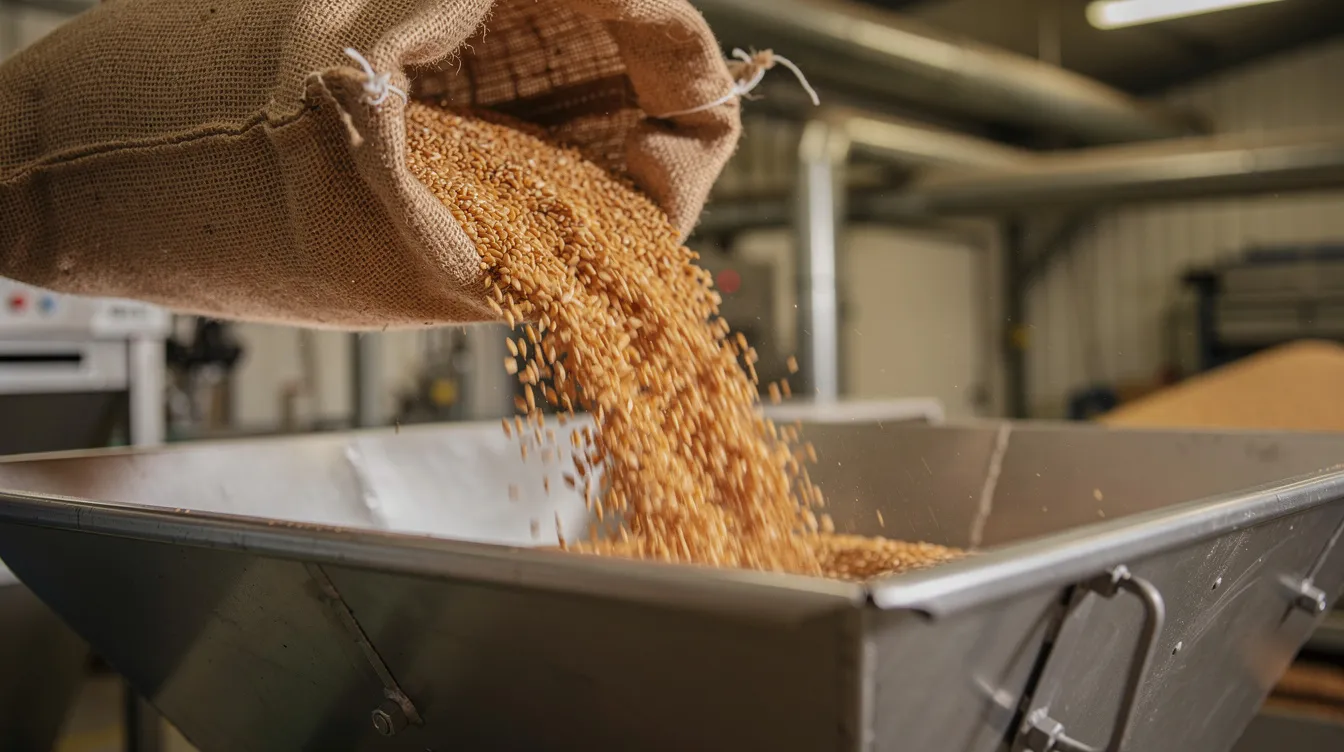
The atta manufacturing process follows a logical sequence: wheat procurement, unloading and intake, pre-cleaning, destoning, magnetic separation, scouring, conditioning and dampening, resting period, grinding through chakki or roller system, sieving and grading, blending if required, quality checks, packing, storage and dispatch.
In a mini flour mill, the process is simpler with minimal cleaning stages and manual packing. In an automatic atta processing plant, multiple cleaning stages, automated conveying and plansifters increase both investment and operational cost. High protein Canadian wheat is sometimes preferred for premium atta production, though most Indian plants use domestically procured wheat.
Key process parameters to note:
- Extraction rate (flour yield) typically ranges from 65–70% for chakki atta; roller milling can achieve higher extraction
- Quality control measures should be implemented to ensure product standards at every stage
- FSSAI registration is mandatory for food processing businesses in India
- Statutory compliance requires multiple licenses including GST registration and local municipal clearances
- By-product utilization, particularly bran sales, can enhance profitability in flour milling
Process parameters such as conditioning time, grinding fineness and sieve size directly affect atta quality, energy consumption and by-product generation. These should be reflected in the financial projections. For a stepwise flow diagram and deeper technical detail, refer to the guide on atta manufacturing process and flour mill flow chart.
How to Decide Plant Capacity
Selecting plant capacity should start from market study and distribution plans, not only from available bank finance or machinery offers. Capacity utilization planning is crucial for determining operational efficiency and financial success, and an incorrectly sized plant creates problems regardless of market demand.
Factors influencing capacity selection include:
- Identified demand in target geography and buyer types (retail, wholesale, institutional)
- Planned number of shifts and working days per year (often approximately 300)
- Storage and logistics constraints
- Power reliability and raw material availability
- Promoter’s management bandwidth and distribution network
- Wheat availability near the sourcing location, since raw material procurement strategies should account for proximity to sourcing locations
Realistic capacity utilisation ramp-up should be built into the atta manufacturing financial projections. In my experience, assuming 45–55% in the first year, 60–70% in the second year and 75–85% thereafter is more defensible than projecting full utilisation from day one. A PM FME DPR for a wheat flour mill unit with 480,000 kg annual capacity assumed utilisation rising from 60% in year one to 80% in later years.
Detailed TPD-based guidance is available in the article on atta chakki plant capacity planning.
Land, Building and Plant Layout
Land and building decisions strongly affect overall project cost and operational efficiency. An efficient layout can reduce material handling, power usage and labour cost.
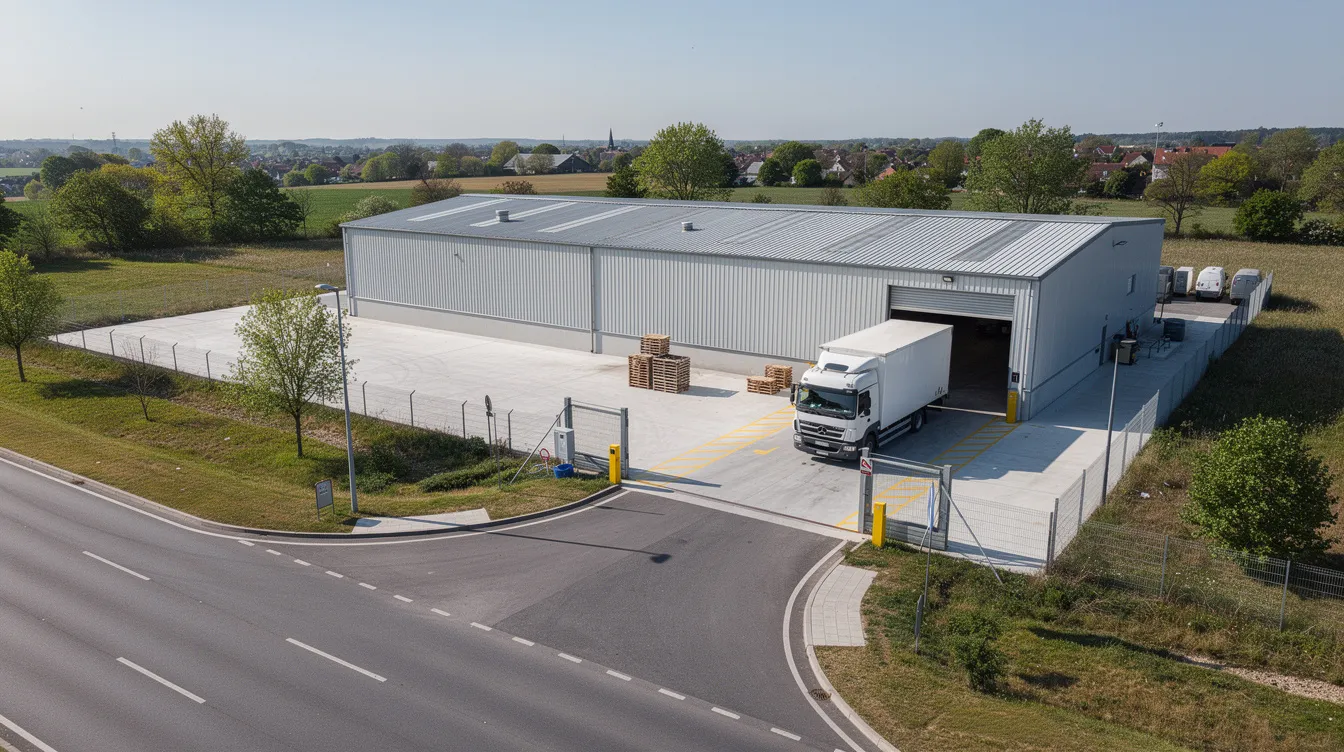
Main space components include raw wheat storage (godown or silos for 15–45 days stock), processing floor for cleaning and milling machines, packing area, finished goods warehouse, quality control lab, utility room for electrical panels and compressor, office and administrative area, and worker amenities.
An atta chakki plant layout should be designed for straight-line material flow from intake to dispatch, with minimal cross-movement and adequate headroom for elevators and ducting. Practical considerations include truck turning radius, firefighting access, drainage, pest control, ventilation and provision for future expansion without disrupting operations.
I generally advise promoters to share land documents and preliminary layout with the DPR consultant early so that realistic civil construction costs can be estimated. Approximate area norms for various plant sizes are discussed in the guide on atta chakki plant land, building and layout requirements.
Project Cost and Means of Finance
Total atta chakki project cost includes fixed capital investment (land, building, machinery, furniture, pre-operative expenses) plus working capital margin. In most bankable project reports, this forms the project cost considered for term loan and promoter contribution. A DPR typically outlines project costs and funding sources in a reconciled means-of-finance table.
Means of finance typically comprise:
- Promoter’s own equity or capital contribution (usually 20–30% of project cost)
- Term loan from bank or NBFC
- Unsecured promoter loans where acceptable to the lender
- Internal accruals from existing business in expansion cases
Loan structuring is crucial for project finance planning. The repayment schedule must align with the cash-generation capacity shown in projections. An underfunded project can face financial stress even if projected profitability appears attractive. Over-reliance on uncertain subsidies or underestimation of project cost may create funding gaps during implementation.
The dedicated article on atta chakki plant project cost and means of finance covers investment heads and funding patterns in greater detail.
Working Capital Requirement of an Atta Plant
Working capital is the lifeblood of an atta manufacturing project. Wheat is purchased in bulk, production process is continuous and customers often receive credit. Working capital assessment is crucial for project financing, and manufacturing projects require detailed working capital analysis because needs vary significantly across manufacturing sectors.
Working capital components include:
- Wheat inventory (often 15–45 days stock depending on seasonality and procurement strategy)
- Packaging material inventory
- Finished goods stock in warehouse
- Trade receivables from distributors and retailers
- Cash for day-to-day operating expenses
Seasonal procurement opportunities, such as buying more wheat during harvest when prices are lower, may temporarily increase inventory and working capital requirement but can improve gross margins if planned properly. Effective working capital management enhances operational efficiency and protects the project from cash-flow disruptions.
Banks assess drawing power based on stock and receivable statements. Working capital assessment should be prepared separately from fixed investment and clearly shown in the atta chakki business plan and CMA Data submitted to the bank.
Financial Projections for Atta Manufacturing
A professional atta chakki DPR includes integrated 5–7 year financial projections: projected profit and loss account, cash-flow statement, balance sheet, fund-flow where required, and key ratios including DSCR, break-even point, ROI and IRR. Financial projections typically include profit and loss statements and cash flow analyses that allow the promoter and lender to evaluate the project from multiple angles. Financial modeling is essential for project finance advisory and should not be treated as a formality.
Key assumption blocks include installed capacity in TPD, capacity utilisation ramp-up, selling prices by product, raw wheat purchase price, expected extraction yield, power consumption per tonne, labour costs, packaging cost per kg, and distribution and marketing expenses. Operational expenses include raw materials and utilities as the largest recurring cost heads.
Gross profit is derived from sales realisation minus raw material and packing material cost. Operating expenses are then deducted to arrive at EBITDA, followed by depreciation and interest to reach profit before tax and cash accruals. Month-wise or quarter-wise cash flow in initial years is important to test whether the atta plant can service term loan instalments when capacity utilisation is still ramping up.
CMA Data is essential for bank loan applications, and in CMA Data preparation these projections are rearranged in specific formats prescribed by lenders. Figures should align with the main atta manufacturing project report. Financial projections assess the viability of atta chakki plants and form the backbone of any bank appraisal.
For a deeper explanation of projection methodology and bank expectations, refer to the guide on atta manufacturing financial projections, working capital and DSCR.
Profitability of an Atta Chakki Plant
While atta is a staple food for many populations worldwide with steady demand, actual profitability of a flour mill depends on margins per tonne and ability to utilise capacity, not merely on gross turnover.
Key profitability drivers include wheat procurement price and quality, extraction yield (atta plus bran), selling price, power and fuel cost per tonne, labour productivity, packing material cost, transportation, distribution margins, finance cost and inventory losses. Contribution margin per kg must cover fixed costs such as salaries, administrative overheads, interest, depreciation and marketing expenses.
Break-even point analysis determines the capacity utilization at which total revenues equal total costs. Only above that point does the project generate net profit. It is not professionally correct to state a single standard atta chakki profit margin applicable to all projects. Margins differ between loose atta supply to bulk buyers and branded packaged atta sold via distributors.
I generally advise that the DPR should present at least two profitability scenarios (base and conservative) and include sensitivity analysis to help the promoter and bank understand risk and upside.
ROI, IRR and Payback Period
Return on Investment (ROI) measures annual profit relative to project cost. Internal Rate of Return (IRR) is the discount rate at which the net present value of projected cash flows equals zero. Payback period is the time taken to recover initial investment from net cash inflows.
Project IRR considers total investment (debt plus equity), while equity IRR considers cash flows available to equity holders after servicing debt. Both are relevant in an atta chakki project report. Banks often review DSCR more closely than IRR, but investors and promoters use IRR and payback to compare the atta manufacturing project with alternative investments.
Sensitivity analysis tests the impact of changes such as a 5–10% rise in wheat cost, a 5% fall in selling price, delayed capacity ramp-up or higher project cost on ROI, IRR, DSCR and payback period. This is particularly important for projects with high leverage and for packaged atta plants with heavier marketing spends. Simple numerical illustrations of these metrics are available in the guide on atta chakki plant ROI, IRR, payback and sensitivity analysis.
Feasibility and Project Viability
Project feasibility is broader than profitability. A project may appear profitable on paper but still not be viable if it faces raw material constraints, weak market access or execution risks. DPRs help assess project feasibility and viability by examining multiple dimensions together. Feasibility studies assess the potential success of atta chakki plants before capital is committed.
A feasibility study for an atta chakki plant should cover:
- Market feasibility: demand trends in the wheat flour market and atta market, competition, pricing
- Technical feasibility: milling process, machinery, utilities, power reliability
- Financial feasibility: profitability, DSCR, IRR, working capital adequacy
- Location feasibility: logistics, labour availability, power tariff
- Regulatory feasibility: food safety, pollution control where applicable
Project viability assessment should also consider the promoter’s own experience in trading, distribution or food processing, as this often determines execution success more than numbers alone. For medium-to-large flour mill projects, a structured atta chakki plant feasibility study and project viability analysis is expected by serious lenders and investors.
Bank Finance for Atta Chakki Plant
Bank finance is vital for setting up an atta chakki plant. Banks typically evaluate the promoter’s background and track record, project cost reasonableness, machinery quotations, land and building status, debt-equity ratio and expected cash flows.
Lenders review the flour mill project report, CMA Data, projected financial statements and DSCR to judge loan repayment capacity. Debt Service Coverage Ratio must typically be at least 1.5 for commercial loans. DPRs are crucial for securing bank loans and investments, and lending decisions remain at the sole discretion of the respective banks and NBFCs.
Usual banking documents include KYC of promoters, business constitution papers, land and building documents, detailed project report, machinery quotations, projected profit and loss and balance sheet, projected cash flows and CMA Data. Where applicable, past financial statements of an existing business are also required.
Typical bank concerns in atta manufacturing projects include adequacy of working capital, volatility in wheat prices, dependence on a few buyers, competition in local market, and realism of sales projections and capacity utilisation. A well-prepared atta chakki project report for bank loan should present assumptions transparently and demonstrate how loan instalments will be serviced comfortably even under conservative scenarios.
What Should an Atta Chakki DPR Contain?
A comprehensive project report for a flour mill should include:
Narrative chapters: Executive summary, promoter profile, business constitution, project background, industry overview, detailed product profile (atta variants, packaging sizes).
Technical chapters: Plant capacity, atta manufacturing process description, raw material sources and procurement strategy, machinery list with capacities, utilities, land and building details with layout, implementation schedule.
Organisational and compliance: Manpower planning, organisational structure, quality control systems, regulatory requirements.
Financial chapters: Project cost estimate (item-wise), means of finance, working capital assessment, sales and pricing assumptions, projected financial statements (P&L, cash flow, balance sheet), DSCR calculation, break-even analysis, ROI, IRR, payback period, sensitivity analysis, SWOT and risk analysis, loan repayment schedule.
The DPR should close with a clear conclusion on financial feasibility and project viability, summarising the case for bank finance or investment based on realistic assumptions.
Documents and Information Required for Preparing DPR
The quality of an atta chakki DPR depends on the accuracy of inputs received from the promoter. Typical inputs include:
- Promoter names, profiles, PAN/Aadhaar, business constitution (proprietorship, partnership, Pvt Ltd, LLP)
- Proposed location and land details (owned, leased, to be purchased)
- Proposed plant capacity and intended business model (loose commercial atta vs branded packaged atta)
- Preferred machinery suppliers if identified, with available quotations and specifications
- Wheat source, expected quality segment and proposed packaging sizes
- Approximate project budget, promoter’s contribution capacity and term loan requirement
- Historical financials for expansion or diversification by an existing business
Where final machinery selection is pending, DPR work can begin with provisional assumptions, but the final bankable flour mill project report should be updated with confirmed vendor quotations before submission.
Common Mistakes Promoters Should Avoid
One mistake I frequently see in project planning is fixing machinery capacity without serious market analysis. Many atta plant projects face difficulties not because of weak demand but because of planning errors. Common mistakes include:
- Selecting machinery size based on dealer recommendations without validating local demand
- Overestimating selling price and underestimating wheat price volatility
- Assuming 100% capacity utilisation from year one
- Ignoring marketing and distribution costs for packaged atta
- Underestimating working capital and depending solely on term loan proceeds
- Relying on subsidies that are uncertain or delayed as the foundation of project viability
- Copying financials from another flour mill project report without adapting to local realities
- Preparing DPR only after bank queries instead of before the loan application
Corrective steps: conduct at least a basic market survey, obtain multiple machinery quotations, prepare realistic financial projections with sensitivity analysis, and plan funding with adequate promoter margin and contingency. Engaging a professional DPR and project finance advisor early ensures the atta chakki business plan is grounded in realistic economics.
Commercial Atta vs Automatic Packaged Atta – Strategic Difference
Promoters often ask whether to start with a commercial loose atta chakki or an automatic packaged atta plant. The choice depends on capital, experience and market access.
| Parameter | Commercial Atta Chakki | Automatic Packaged Atta Plant |
|---|---|---|
| Business model | B2B supply to local retailers, hotels | B2C and B2B with branding and distribution |
| Typical capacity range | 2–10 TPD | 30–120 TPD |
| Automation level | Semi-automatic | Fully automatic with PLC controls |
| Packing format | Loose or simple sacks | Consumer packs (1, 5, 10 kg) |
| Branding investment | Minimal | Significant (A&P budget required) |
| Distribution complexity | Local, within 20–80 km | Regional or multi-city |
| Working capital intensity | Moderate | High (receivables, packaging, inventory) |
| Scalability | Limited without upgrade | Higher with established brand |
Commercial atta units suit first-time promoters with limited capital and a local network. Packaged atta plants demand stronger marketing capability and patient capital but offer better brand-building potential. The DPR for each model must be designed differently: a packaged atta project report should include a detailed marketing and brand-building plan, whereas a commercial atta project report emphasises B2B relationships and cost competitiveness.
Is Atta Manufacturing a Profitable Business?
Atta is a staple food with stable long-term demand in India, and setting up an atta chakki plant has good scope in many geographies. The domestic branded atta market grows by 25% annually, which indicates strong structural demand. However, profitability of any specific flour mill depends on procurement efficiency, plant utilisation, cost control and selling strategy.
Thin per-kg margins can still yield attractive profits if capacity is well utilised and operations are efficient. Conversely, even large plants can lose money if sales volumes fall short or distribution costs escalate. Online claims like “atta chakki will always give 25–30% profit margin” are often misleading. Only a customised atta chakki feasibility study and financial model can realistically show expected profitability.
Key questions promoters should answer: Can I secure wheat at competitive rates? Do I have access to sufficient market volume? Can I differentiate via quality, freshness or branding? Do I have adequate working capital and management bandwidth?
With proper planning, cost control and market focus, atta manufacturing can be a sound MSME project with good scope, but each case must be evaluated on its own merits through a detailed project report and a comprehensive advisory service aids businesses in project-specific financial assessments. Business valuation services also support investment decisions for both new and existing projects.
How CA Manish Gugliya and Project Report Bank Can Assist
I am CA Manish Gugliya, FCA, DISA (ICAI), a practising Chartered Accountant with more than 20 years of experience in project reports, DPR preparation, CMA Data, financial projections, project feasibility, bank finance and business planning for manufacturing and MSME projects across India.
For atta chakki and flour mill projects, our core services include:
- Customised detailed project report (DPR) for bank finance and investor discussions
- Preparation and assistance in CMA Data for bank loan applications
- 5–7 year financial projections and financial modelling
- Working capital assessment and DSCR analysis
- Project feasibility and viability studies
- ROI, IRR, payback and sensitivity analysis
- Project cost and means-of-finance planning
- Loan repayment and cash-flow planning
- Assistance in responding to banker queries and revising projections
For serious promoters planning a commercial atta chakki, automatic atta plant, packaged atta brand or expansion of an existing flour mill business, professional fees for a bank finance DPR typically start from ₹25,000, depending on project size, scope and complexity. Payment terms are 30% advance at commencement and 70% after submission of the first complete draft, before final release.
To discuss your proposed atta manufacturing project and documentation needs, contact us via WhatsApp through ProjectReportBank.com.
FAQ – Atta Chakki Plant Project Report & DPR
How long does it take to prepare a customised Atta Chakki Plant Project Report?
Once all basic inputs including location, capacity, machinery quotations and funding plan are received, a typical customised DPR for a mini flour mill or medium commercial atta plant may take around 7–15 working days. More complex automatic or integrated projects involving detailed sensitivity analysis and multiple product lines can take longer depending on the modelling involved.
Can one DPR be used for submitting proposals to multiple banks?
The core atta chakki DPR, projections and assumptions can generally be used with more than one bank. However, individual lenders may require their own CMA formats, minor changes in loan structure or additional annexures. Project Report Bank can help align the document with specific lender requirements as needed.
Do I need final machinery quotations before starting the DPR?
While final quotations are ideal for a bankable flour mill project report, preliminary DPR work can begin using indicative machinery configurations and budgetary quotes. The report should be updated with confirmed vendor offers before final submission to lenders to ensure project cost accuracy.
Will the DPR also cover government schemes or subsidies for flour mill projects?
Where the promoter indicates eligibility for specific Central or State schemes, the DPR can describe those schemes in general terms and show how subsidy may impact overall project funding. However, no guarantee of sanction, amount or timeline for subsidy release can be provided, and the project’s viability should not depend solely on subsidy receipt.
Can an existing flour mill use a DPR for expansion or modernisation?
Yes. Many clients use a customised atta chakki plant DPR to justify capacity expansion, automation upgrade or a shift from loose to packaged atta. In such cases, the report incorporates historical financials, current capacity, proposed additions and incremental profitability and DSCR analysis to present a complete picture to the bank.