Key Takeaways
- Anhydrous milk fat is a high-value, low-moisture milk fat product containing over 99.8% pure milk fat, used extensively by food manufacturers in bakery, confectionery, ice cream, infant nutrition and specialty foods – distinct from butter and ghee in composition, flavour and end-use.
- Project success depends on integrating raw material availability, AMF manufacturing process and technology, fat recovery efficiency, capacity utilization, capital expenditure, working capital management and realistic market realization into a single coherent plan.
- A bankable AMF manufacturing plant DPR in India must cover plant setup, machinery, raw material requirements, utilities, project cost, means of finance, AMF production cost, revenue model, profitability, break-even, DSCR, ROI and IRR – supported by sensitivity analysis and risk assessment.
- The global anhydrous milk fat market was valued at approximately USD 3.15 billion in 2025 and is projected to reach USD 6.5 billion by 2030, driven by rising demand in bakery, confectionery, dairy recombination and infant nutrition segments.
- This article is written from the professional perspective of CA Manish Gugliya (ProjectReportBank.com), focusing on medium-to-large industrial AMF production plants and their financial and operational feasibility for promoters, investors, dairy processors and lenders.
Introduction: AMF as a High-Value Dairy-Fat Project
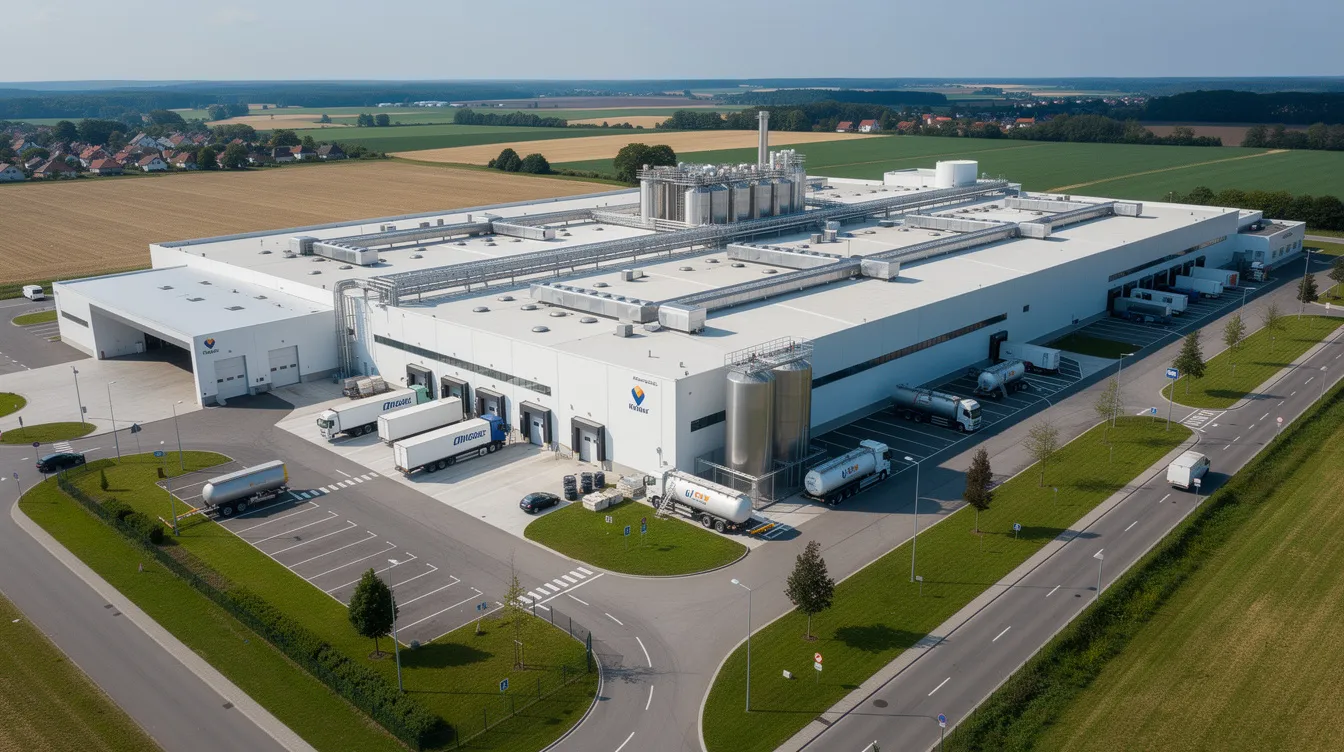
An industrial anhydrous milk fat manufacturing plant converts cream or butter into a highly concentrated, standardized milk fat ingredient that serves as the backbone of premium dairy ingredients across global food manufacturing. Unlike consumer-facing dairy products, AMF is a B2B industrial input – quietly essential in everything from chocolate fillings and laminated pastry doughs to infant formula and reconstituted milk.
From a project-finance viewpoint, an AMF plant is not simply a processing unit. It is a capital-intensive investment combining raw material economics, dairy processing technology, market dynamics, capital expenditure and working capital into a single business proposition. The spread between milk fat procurement cost and AMF selling price, combined with fat recovery efficiency and capacity utilization, determines whether the project generates sustainable returns or erodes capital.
This article provides an anhydrous milk fat manufacturing plant project report style roadmap for medium-to-large plants – typically in the 5 to 50 TPD AMF output range – rather than a process-only description. As a Chartered Accountant and project consultant, my role is to convert realistic technical parameters provided by dairy technologists and equipment suppliers into a coherent, bankable AMF project report suitable for term loan and working-capital finance appraisal.
What Is Anhydrous Milk Fat (AMF)?
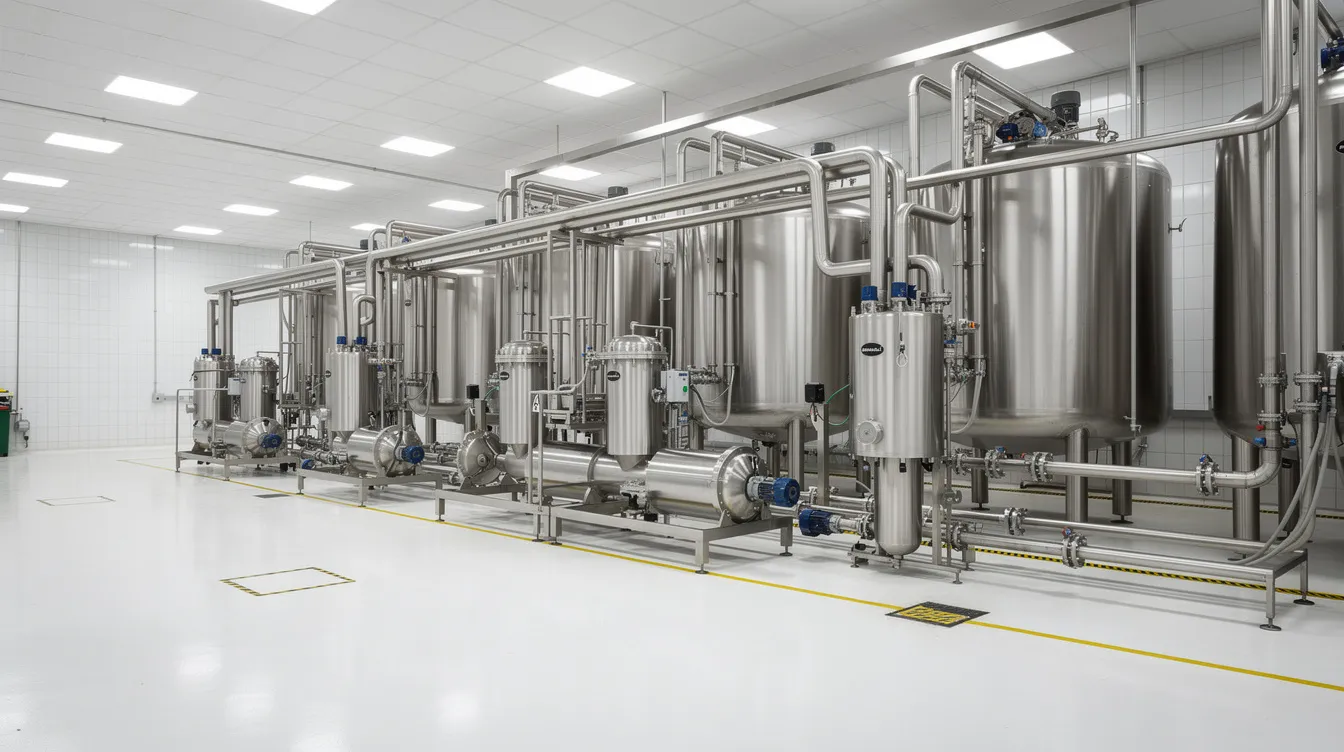
Anhydrous milk fat is a highly concentrated milk fat product obtained by removing virtually all moisture and non-fat solids from cream or butter through physical separation processes. Under the Codex Standard for Milkfat Products (CODEX STAN 280-1973), AMF must contain a minimum of 99.8% milk fat by weight with maximum moisture content of 0.1%. The product is produced by removing moisture and non-fat solids through centrifugal separation and vacuum drying, resulting in an almost pure fat phase.
Key characteristics include a bland-to-buttery flavour depending on grade, good oxidative stability when properly packed with nitrogen blanketing, fluid consistency at processing temperatures (above approximately 35°C) and longer shelf life under recommended storage – typically 12 to 18 months. AMF is stable at room temperature due to low moisture content, making it suitable for international transport and storage without continuous refrigeration.
Critically, AMF functions as a standardized, industrial milk fat ingredient for B2B users rather than a consumer table fat. Bulk packaging formats – drums, bag-in-box, stainless steel tankers – dominate the global anhydrous milk fat trade. This standardization allows large food manufacturers and dairy companies to formulate consistent fat content across seasons and geographies, which is why AMF commands premium positioning in the dairy industry.
Difference Between AMF, Butter, Butter Oil and Ghee
Butter, AMF, butter oil and ghee are all milk-fat-based products but differ materially in moisture, milk solids, flavour, manufacturing route, regulatory classification and end-use. Understanding these differences is essential for any promoter evaluating an AMF manufacturing project.
| Parameter | Table Butter | Anhydrous Milk Fat | Anhydrous Butter Oil | Ghee |
|---|---|---|---|---|
| Typical Fat Content | 80–82% | ≥99.8% | ≥99.6% | 99–99.5% |
| Moisture | 15–16% | ≤0.1% | ≤0.1% | 0.1–0.3% |
| Non-Fat Solids | 1–2% | Negligible | Negligible | Trace (with caramelized residue) |
| Flavour/Aroma | Mild buttery | Bland/neutral | Bland/neutral | Strong caramelized, nutty |
| Manufacturing | Churning cream | Cream or butter concentration | Butter/cream concentration | Heating butter/cream to brown solids |
| Shelf Life | 3–6 months (refrigerated) | 12–18 months | 12–18 months | 6–12 months |
| Primary Market | Retail consumer | B2B industrial | B2B industrial | Consumer retail + foodservice |
| Key Applications | Spreads, cooking, baking | Bakery, confectionery, infant formula, dairy recombination | Similar to AMF | Cooking, religious use, sweets |
AMF is not automatically interchangeable with ghee. AMF is a neutral-flavoured industrial ingredient, while ghee carries strong sensory characteristics and different regulatory expectations. For readers interested in comparing production routes, the industrial ghee manufacturing process differs substantially from AMF processing, even though both start from milk fat.
The terms butter oil and AMF are sometimes used closely in trade, but specifications and intended usage should always be verified per buyer and regulatory requirements.
Industrial Applications of Anhydrous Milk Fat
Understanding end-use applications is critical for preparing a realistic AMF manufacturing plant DPR and market feasibility analysis. Approximately 65% of AMF is utilized in food applications globally, and AMF accounts for about 38% of the global bakery and confectionery market for dairy-fat ingredients.
Major industrial applications include:
- Recombined dairy products and standardized milk and cream
- Ice cream and frozen desserts, where AMF enhances flavour and texture
- Bakery fats, laminated doughs and pastry applications
- Confectionery, chocolate fillings and fat-based coatings
- Infant nutrition products, where manufacturers use AMF to mimic human milk fat composition – demand in this segment is growing at nearly 7.5% CAGR through 2030
- Convenience foods, sauces, ready-to-eat meals and functional foods
- Food service blends and institutional catering ingredients
- Export-oriented specialty foods and food formulations
The global AMF market is projected to reach USD 6.5 billion by 2030, growing at a CAGR of 5.8% from 2024 to 2030. Some industry estimates project the market to reach USD 5.6 billion by 2034 at a CAGR of 9.4%, reflecting variance in methodology but consistent directional growth. The market is influenced by global and regional demand trends, with rising consumer demand in emerging markets like India, Southeast Asia and the Middle East driving market growth. Health conscious consumers increasingly seeking natural dairy fat over synthetic alternatives further support consistent demand.
The AMF market is dominated by 1 to 5 major players globally, with Fonterra Co-operative Group being the largest AMF exporter. For a DPR, the promoter should map specific target segments – large ice cream manufacturers, bakery ingredient blenders, institutional buyers – along with indicative annual offtake and contract conditions rather than relying on generic market size statements.
Raw Materials Required for AMF Manufacturing
The core raw material is milk fat, entering the AMF plant as high-fat fresh cream or butter, with project promoters choosing the route based on their dairy integration model and raw material requirements. Fresh cream or white butter accounts for 80 to 88% of AMF production costs, making raw material sourcing the single most important economic variable.
Primary raw materials include:
- Sweet cream from fresh milk (typically 35–45% fat)
- White or table butter from in-house or external sources
- Process water of potable quality
- Packaging materials: lacquered drums, bag-in-box liners, aseptic containers
- Supporting consumables: CIP cleaning chemicals, food-grade lubricants, laboratory reagents, nitrogen gas for headspace flushing
Raw material quality parameters – fat percentage, acidity, microbiological condition and flavour of cream or butter – directly influence AMF quality, yield and manufacturing cost. Raw milk sourcing impacts the economics of AMF production significantly, and seasonal variation in milk supply can create procurement challenges. Dairy farmers and dairy cooperatives remain the primary upstream suppliers.
A professional AMF project report should include a structured raw material sourcing plan, milk and cream price assumptions, seasonal variation analysis and supplier arrangements. This is where the Chartered Accountant’s role becomes critical – converting procurement assumptions into a defensible cost model.
Anhydrous Milk Fat Manufacturing Process
An industrial AMF production process is a sequence of mechanical and thermal unit operations designed to concentrate fat, remove moisture and non fat solids, and polish the oil to meet target specifications. Two commercially important routes exist: cream to anhydrous milk fat process and butter to anhydrous milk fat process.
Process design, AMF production line layout and operating parameters must be finalized with qualified dairy technologists and machinery suppliers. The DPR focuses on linking these technical assumptions to capacity, cost and returns.
AMF Production from Cream
The cream-based route follows this broad sequence: milk reception and chilling, standardization, cream separation, cream pasteurization, high-fat cream concentration using separators, phase inversion and final concentration through centrifugal separation and vacuum drying.
The milk fat concentration process moves cream from around 35–40% fat up to over 99% fat in several steps. Intermediate streams – the liquid typically called buttermilk and skim fractions – are recovered and routed to other dairy applications, optimizing fat recovery and plant profitability.
Key process-control points include cream acidity, heating profile, holding times, separator speeds and temperature regimes. These affect both AMF yield and quality. For the DPR, realistic assumptions on daily milk intake, cream percentage and fat recovery feed directly into capital expenditure estimates and production cost calculations.
AMF Production from Butter
The butter-based route involves: butter reception from an industrial butter manufacturing process or external sources, chilled storage, controlled butter melting, conditioning and clarification, phase separation to remove moisture and non fat solids, vacuum drying and final polishing to achieve anhydrous milk fat standards.
This route suits dairies or cooperatives already running a butter production line, allowing conversion of surplus butter into AMF for export, long-term storage or supply to food ingredient manufacturers. Operational considerations include gentle indirect heating for butter melting, residence time control and use of high-efficiency centrifugal clarifiers for phase split and fat recovery.
For DPR purposes, promoters should decide whether they will produce butter in-house or purchase it, and quantify expected butter volumes, fat content and price assumptions as key inputs into AMF production cost and profitability analysis.
Final Moisture Reduction and Fat Purification
Final moisture removal using vacuum dryers or de-aerators brings the product within prescribed limits, ensuring long shelf life and stability during international transport. A polishing separator removes residual non fat solids, phospholipids and suspended particles to achieve bright, clear AMF suitable for premium dairy ingredients and demanding food manufacturers.
Small improvements in separator efficiency and moisture reduction significantly influence AMF yield and quality, directly impacting manufacturing profit margin. Some plants may incorporate additional refining processes – fractionation or specialized filtration – for target applications such as infant nutrition or specialty foods.
Operating parameters (temperature, vacuum level, residence time) must be validated with equipment suppliers and documented in the AMF plant process flow diagram within the DPR.
AMF Storage and Packaging
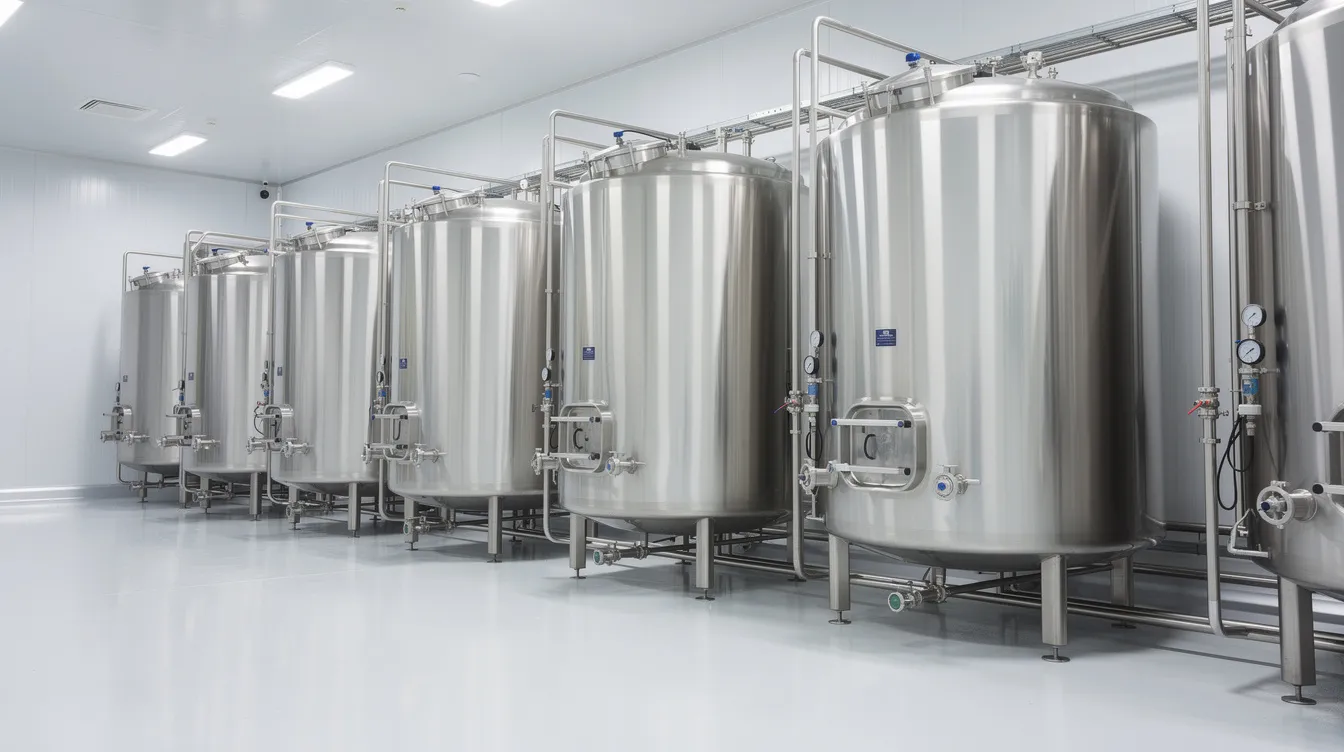
Finished AMF is handled in closed, insulated storage tanks under controlled temperature, with nitrogen blanketing to reduce oxidation risk. AMF is valued for its long shelf life and stability when properly stored.
Typical industrial packaging formats include 180–200 kg steel drums, bag-in-drum or bag-in-box, intermediate bulk containers and bulk tankers. Packaging line capacity, automation level, container cost, nitrogen flushing arrangements and labelling systems compliant with FSSAI and export norms must be factored into the project.
Storage and packaging design influences working capital – inventory days, packaging stock, cold-chain logistics – and should be explicitly modelled in the AMF plant bankable project report.
AMF Manufacturing Process Flow Chart
The following represents a simplified illustrative AMF process flow chart. Actual design depends on chosen technology and supplier.
Butter-based route:
Milk/Cream Reception (if integrated) → Butter Production / Butter Reception → Butter Storage → Butter Melting → Conditioning and Filtration → Phase Separation (fat vs aqueous phase) → Milk Fat Concentration → Vacuum Drying and Moisture Removal → Fat Polishing/Clarification → Quality Testing → AMF Storage Tanks → Packaging (drums/containers) → Finished Goods Storage → Dispatch
Cream-based route:
Milk Reception → Cream Separation → Cream Pasteurization → Cream Concentration → Phase Inversion and Oil Separation → Vacuum Drying → Polishing → Storage → Packaging
Key quality-control points include pasteurization, final moisture measurement, peroxide value and free fatty acids checks. Unit operations like heating, separation, cooling, pumping and CIP form the backbone of the industrial AMF production line and need mapping for regulatory approvals and plant layout design.
AMF Manufacturing Plant Machinery and Equipment
AMF manufacturing plant machinery combines core process equipment, utilities, storage and automation. Specification and count depend on capacity, product range and automation level.
Core process equipment:
- Cream reception and storage tanks, cream pasteurizers, high-fat cream concentrators
- Butter melting systems, balance tanks, plate heat exchanger units
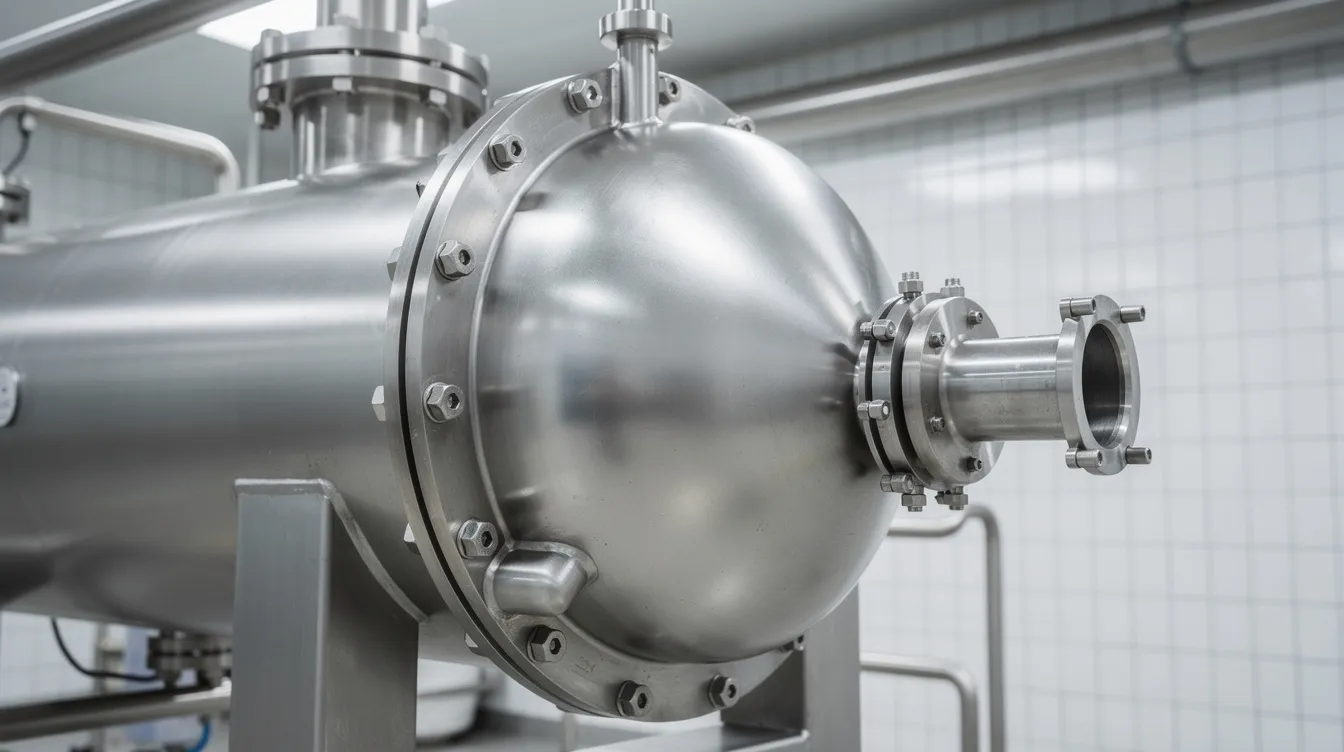
- High-speed separators and centrifuges, vacuum dryers, polishing separators
- Filtration units, insulated AMF storage tanks, bulk loading systems
Packaging and ancillary:
- Automatic filling and sealing machines, nitrogen generation systems
- Pumps, sanitary pipelines, valves, weighing and labelling equipment
Utilities and control:
- Boilers or thermal fluid heaters, refrigeration plant and chilled water system
- Compressed air system, CIP system with multi-tank configuration
- Electrical control panels, PLC/SCADA-based automation, safety interlocks
Much of the milk-fat processing machinery conceptually overlaps with ghee and butter plants, but AMF demands tighter moisture and impurity control. Equipment selection must be supported by supplier quotations and process guarantees before inclusion in the project cost.
AMF Plant Capacity Planning
Capacity planning must start from raw material availability: average daily milk procurement, cream percentage, butter availability and potential for sourcing external milk fat, while accounting for seasonal dips and flush seasons.
Promoters should estimate feasible AMF output through a yearly milk-fat balance: total annual fat available, allocations to liquid milk, curd, butter, ghee and cheese, and residual fat available for AMF production. The manufacturing capacity ranges from 5,000 to 15,000 MT annually for typical industrial installations, though smaller and larger plants exist.
Practical operating assumptions – 300 to 330 operating days per year, shift patterns, planned downtime for CIP and maintenance, and a ramp-up curve over 3 to 5 years – must all be documented. Installed capacity should be justified with realistic market offtake projections rather than selecting the largest affordable machine.
CA-led project reports should test multiple capacity scenarios (base, conservative and aggressive) to understand how capacity utilization affects AMF production cost, fixed-cost absorption, break-even and DSCR.
Material Balance and AMF Yield
AMF yield depends on incoming fat in cream or butter, fat recovery efficiency at each separation stage, final product fat content, moisture target and process losses (spillage, residual fat in buttermilk and wash streams).
Illustrative Only: Assume 1,000 kg of cream at 40% fat processed through an AMF line with 98.5% overall fat recovery. This yields approximately 394 kg of fat, translating to roughly 394 kg of AMF at 99.8% fat content. The remaining approximately 606 kg forms skim/aqueous by-product streams. These figures are purely educational – actual yields depend on equipment performance and process conditions.
Small improvements in fat recovery – from 97% to 98.5% – can lead to substantial financial gains over a year for a medium-to-large plant, given the high value of milk fat per kg. A detailed material balance should be prepared for each process route and validated by a dairy technologist. Overestimating yields is a common reason for over-projected profitability in AMF project reports, so sensitivity analysis on yield assumptions is essential.
Land and Building Requirements
Land and building needs depend on plant capacity, level of integration with a dairy complex, utility systems and storage requirements. No single standard acreage suits all AMF manufacturing projects.
Functional building blocks include:
- Raw milk/cream reception area and butter storage
- AMF process hall with hygienic zoning – essential for food-safety compliance
- Utility block (boilers, refrigeration, compressors)
- CIP and chemical storage area
- Packaging hall and finished-goods warehouse
- Quality-control laboratory
- Administrative block, staff amenities, security and parking
The DPR should include a conceptual site layout drawing, built-up area statement and cost estimates based on current local civil-construction rates. Promoters should plan for future expansion – including a potential integrated butter, AMF and ghee complex – when selecting land.
Utilities Required for an AMF Manufacturing Plant
AMF manufacturing is energy and utility intensive due to heating, cooling, separation, vacuum drying and hygienic CIP processes. Utility requirements for AMF production include power, steam, and water as the primary categories. Under-estimating utility loads can severely affect plant performance and production cost.
Main utilities include:
- Electrical power for motors, separators, pumps and automation
- Steam or thermal energy for pasteurization, butter melting and hot water generation
- Refrigeration and chilled water for temperature control
- Compressed air for valves, instruments and pneumatic systems
- Process water, potable water and cleaning water
Support systems include boiler house with water treatment, refrigeration plant with cooling towers, generator sets for backup power and effluent treatment plant. Environmental management is critical in dairy processing, particularly for effluent treatment of buttermilk, wash water and CIP discharges.
Energy efficiency strategies are important in AMF processing to reduce operational costs – heat recovery from condensate, high-efficiency motors, variable-frequency drives and optimized refrigeration can significantly improve profitability. The DPR should quantify utility loads based on machinery quotations and convert them into monthly and annual operating expenditure.
Quality Control and Food Safety in AMF Production
AMF is used by food manufacturers and infant nutrition companies as a critical fat ingredient, making quality control, food safety and traceability central to any anhydrous milk fat manufacturing plant project report. Anhydrous milk fat contains over 99.8% pure milk fat, and maintaining this specification consistently requires rigorous testing.
Key quality parameters monitored include fat content, moisture content, free fatty acid value, peroxide value, colour, flavour and odour. ADPI’s standard specifies FFA limits of 0.3% or less and non-fat solids of 0.1% or less. The FSSAI Manual of Methods of Analysis provides applicable analytical test methods for Indian regulatory compliance.
A dedicated quality-control laboratory is required. Equipment and staffing costs must be included in capital and operating cost estimates. Quality control systems such as HACCP should be implemented in AMF production, and traceability systems should be implemented for quality assurance across the supply chain.
Plants supplying export or infant nutrition segments may need FSSAI licence, ISO 22000/FSSC 22000 certification, Halal/Kosher certification and customer audits. Statutory and regulatory compliance is mandatory for commissioning AMF processing units. Robust GMP, validated CIP procedures, pest control and documented standard operating procedures form the practical backbone of food safety.
AMF Manufacturing Plant Project Cost
AMF manufacturing plant cost is project-specific, depending on capacity, process route, level of integration, technology supplier, automation, land cost and local construction rates. Initial capital investment for AMF plant setup is significant, reflecting the precision equipment and utility infrastructure required.
Major project cost components include:
- Land and site development
- Civil structures and buildings
- AMF manufacturing plant machinery and process equipment
- Electrical installation, instrumentation and automation
- Utilities and service systems (boilers, refrigeration, compressors, ETP)
- QC laboratory equipment
- Pre-operative expenses, contingency and margin money for working capital
In India, a medium-to-large commercial anhydrous milk fat processing plant requires multi-crore investment, but quoting a single standard number would be misleading. Promoters should obtain supplier quotations and civil cost estimates to build a realistic capital expenditure summary. Current market pricing for equipment and raw materials should be included in the financial analysis.
Many cost elements are similar across milk-fat projects. For comparative reference, the industrial ghee manufacturing plant setup cost article discusses parallel investment structures for ghee-centric projects.
Means of Finance for an AMF Project
Most industrial AMF projects in India are financed through promoter equity or internal accruals, term loan from banks or financial institutions, and separate working-capital limits.
A typical structure (illustrative only) may involve 25–35% promoter contribution and 65–75% term loan, though the actual ratio depends on lender norms, project risk and promoter strength. Possible sources include scheduled commercial banks, cooperative banks, development finance institutions and NBFCs, and in some cases equity investors or strategic partners from the dairy or food manufacturing sector.
Government schemes and subsidies for dairy processing and food processing industries may be available, but eligibility must be checked case-by-case based on state policy, project size and promoter profile. CA-led AMF plant bank loan project reports should include a detailed means-of-finance statement, loan repayment schedule, projected DSCR and sensitivity analysis.
Working Capital Requirement
AMF manufacturing is working-capital intensive because the primary raw material – milk fat via cream or butter – is high value, and finished AMF inventory is equally valuable stock. Operating costs account for 80 to 88% of total expenses, with raw material being the dominant component.
Key working-capital components include:
- Raw material inventory (cream/butter and packaging)
- In-process and finished AMF inventory
- Receivables from B2B customers (dairy companies, food manufacturers, exporters)
- Cash and bank balances
- Less: supplier credit for milk, utilities and consumables
Credit terms vary by segment: large institutional buyers may demand 30–60 days, export sales require longer cycles, while milk procurement often requires shorter payment periods, creating a structural working-capital gap. The DPR should compute requirements using realistic inventory and credit-day assumptions (illustrative only: 7–15 days of raw material, 15–30 days finished goods), then derive required cash credit or working-capital term loan limits.
Revenue Model of an AMF Manufacturing Plant
The primary revenue stream is sale of bulk AMF to B2B customers including dairy processors, bakery and confectionery manufacturers, institutional food manufacturers, infant nutrition producers and specialty foods companies. Some plants generate additional revenue from value-added variants (fractionated AMF, customized blends) and by-products such as buttermilk or skimmed streams.
The DPR should define expected selling-price realization per kg by segment and geography (domestic versus export), considering quality grade, packaging type and contract terms. Revenue projections must be consistent with capacity utilization and yield assumptions, and should account for potential price volatility in global anhydrous milk fat market and local dairy-fat markets.
An outline of marketing and sales strategy – direct institutional sales, tie-ups with food manufacturers, trader channels and possible long-term offtake agreements – should be included as part of the revenue model narrative.
AMF Manufacturing Plant Profitability Drivers
AMF manufacturing plant profitability is driven more by raw-material economics, yield and market realization than by headline production capacity alone. Gross profit margins for AMF plants range from 10 to 16%, and even a small adverse shift in the spread between AMF selling price and milk-fat purchase price can materially affect EBITDA margins.
Core profitability drivers include:
- Milk-fat procurement cost (cream or butter)
- AMF selling price and product quality premiums
- Fat recovery percentage
- Energy consumption per kg of AMF
- Labour, packaging and logistics costs
- Interest, depreciation and by-product credits
Higher levels of automation reduce variable labour cost and improve consistency but increase depreciation and interest. The total operational cost is expected to increase by year five as equipment ages and maintenance escalates. The DPR should compare semi-automatic and automatic AMF production line options on a life-cycle cost basis.
Illustrative Financial Projections for an AMF Plant
This section outlines the structure of financial projections for an AMF manufacturing plant project report. Any sample figures must be labelled illustrative only. Financial projections in AMF project reports should include break-even analysis and sensitivity assessments.
Key components include:
- Year-wise capacity utilization, production quantity and sales volume
- Detailed raw-material consumption and cost, labour, utility expenses
- Repair and maintenance, administrative overhead, selling expenses
- Projected profit and loss statements (EBITDA, EBIT, PBT, PAT)
- Cash-flow statements, balance sheets and working-capital assessments for 7–10 years
- Depreciation based on useful life of machinery and structures
- Interest on term loan and working capital, tax assumptions and repayment schedule
Lenders review metrics such as gross margin per kg, operating margin, cumulative cash accrual and ability to service term loan instalments. Projections must be internally consistent and supported by realistic production processes and commercial assumptions.
Break-Even Analysis
Break-even point for an AMF plant represents the annual sales level at which total revenue equals total cost (fixed plus variable), resulting in zero profit before tax.
Steps to compute: estimate annual fixed costs (salaries, depreciation, interest, minimum utilities, administrative overhead), derive contribution per kg of AMF (selling price minus variable cost), then calculate break-even volume and sales value.
For capacity-intensive projects, break-even capacity utilization – expressed as a percentage of installed capacity – is an important risk indicator. Lower break-even percentage implies a more resilient project under market fluctuations. Break-even analysis should be repeated under sensitivity scenarios (higher raw-material prices or lower selling prices) to test project robustness.
DSCR and Loan Repayment Capacity
Debt Service Coverage Ratio (DSCR) is the ratio of cash available for debt servicing (profit after tax plus depreciation plus interest on term loan) to total debt service obligations (interest plus principal repayment) in a given year.
Banks evaluating an AMF plant term loan look for a comfortable average DSCR over the loan tenure, with attention to minimum DSCR in stressed years – often year 2 or 3 when repayments start and capacity is ramping up. The DPR should present year-wise DSCR calculations along with a proposed repayment schedule, including any moratorium period during construction and initial stabilization.
A good DSCR on paper is only credible if underlying assumptions – AMF selling prices, raw-material costs, capacity utilization and operating expenses – are realistic. Sensitivity analysis on DSCR for adverse changes (5–10% increase in raw-material cost or reduction in selling price) is increasingly expected by lenders.
ROI, IRR and Payback Period
Return on Investment (ROI), Internal Rate of Return (IRR) and payback period are key metrics for promoters and investors to judge AMF plant financial attractiveness, complementing lender-focused metrics like DSCR.
ROI measures average annual profit after tax divided by total capital employed. IRR is the discount rate at which the net present value of project cash flows becomes zero – higher IRR (above cost of capital) signals better financial feasibility. Payback period represents the time for cumulative cash flows to recover initial investment.
The DPR should calculate these metrics under base-case and downside scenarios, testing sensitivity to milk-fat price, AMF selling price, capacity utilization, energy costs and project cost escalations. Financial feasibility is crucial for an AMF manufacturing project report, and these metrics provide the quantitative backbone for investment decisions.
Sensitivity Analysis for an AMF Project
Sensitivity analysis tests how changes in key assumptions affect profitability, DSCR, IRR and payback for an AMF plant.
Major variables to test:
- Increase in raw-material (cream/butter) prices by 5% and 10%
- Decrease in AMF selling prices
- Lower capacity utilization than planned
- Higher energy costs
- Reduced fat recovery percentage
- Increase in total project cost
- Lengthening of working-capital cycle
The DPR should use single-variable scenarios as well as combined scenarios (higher raw-material cost plus lower realization) to show compound impact. Lenders pay close attention to whether DSCR and break-even remain acceptable under stress, and promoters should be comfortable with downside cases before committing capital.
Document risk-mitigation strategies alongside sensitivity results to demonstrate realistic and proactive risk-management outlook.
Bank Loan and Term Loan Assessment for an AMF Plant
Banks evaluate an AMF plant bank loan project report by assessing promoter background, financial strength, technical feasibility, raw-material availability, market arrangements, project cost, profitability, DSCR and security offered.
Typical documentation includes detailed project report for AMF plant, machinery quotations, civil cost estimates, milk/cream procurement plan, market study or customer interest letters, projected financial statements, KYC and financials of promoters, and proposed collateral details. Lenders may seek independent technical opinions, especially for complex automatic AMF production lines.
No consultant or article can guarantee bank sanction. A comprehensive project report for an AMF manufacturing plant acts as a blueprint for securing financing and approvals, improving probability of positive appraisal by providing clarity and addressing likely questions in advance.
Key Risks in an AMF Manufacturing Project
Industrial AMF projects carry specific commercial, technical and financial risks requiring proactive assessment in any AMF manufacturing plant DPR.
| Risk Category | Key Risks | Mitigation Approach |
|---|---|---|
| Raw Material | Milk-fat price volatility, seasonal supply constraints | Long-term sourcing contracts with dairy cooperatives and dairy farmers, consistent supply arrangements |
| Market | AMF price fluctuation, customer concentration, competition from butter and vegetable oils or plant based alternatives | Diversified customer base, product diversification (AMF plus ghee or butter), export channel development |
| Operational | Equipment breakdowns, quality failures, lower-than-expected fat recovery | Preventive maintenance, quality-management systems, operator training |
| Financial | Capacity underutilization, working-capital pressure, interest rate changes | Conservative capacity planning, adequate contingency, transparent banking relationships |
| Regulatory | Changes in food-safety norms, environmental regulations, export/import rules | Compliance systems, regular regulatory monitoring, stringent quality standards |
Risk analysis and mitigation should appear as a distinct section in the feasibility report, showing lenders and investors that the promoter approaches the project with realistic awareness.
AMF Plant Feasibility Assessment
Feasibility must be evaluated across four dimensions: technical, market, financial and management. Only when all four are reasonably positive and aligned should a medium-to-large AMF manufacturing business proceed to investment.
Technical Feasibility
Evaluate raw material availability and reliability, suitability of selected AMF processing technology (cream route, butter route or both), plant capacity and layout, adequacy of utilities and infrastructure, and compliance with food-safety and building regulations. Review machinery quotations, supplier credentials, automation features, technological advancements and after-sales support. The DPR should include a clear process flow diagram, equipment list with specifications and project implementation schedule covering statutory clearances (FSSAI licence, pollution control, factory licence, building permits).
Market Feasibility
Key questions: who are the target customers (dairy processors, bakery and confectionery manufacturers, infant nutrition companies, exporters), what quantities can they realistically buy, and at what specifications? Map domestic and export opportunities, analyze market dynamics, competition from established players, and substitution risk. Market segmentation by application, consumer preferences and consumer demand patterns should inform conservative demand assumptions. The anhydrous milk fat market continues to show market trends favouring natural dairy fat in premium dairy products and food innovation applications. Proximity to major food manufacturing clusters and logistics connectivity – including ports for Middle East and other export destinations – provides competitive edge.
Financial Feasibility
Synthesize capital expenditure, working capital, operating economics and revenue projections into profitability, cash flow, DSCR, ROI and IRR. Test downside scenarios ensuring the project remains viable under moderate stress. Projections must correctly apply depreciation, interest, tax and working-capital calculations. Financial feasibility should be revisited if major shifts in milk-fat prices, interest rates, technology selection or market conditions occur before financial closure.
Management Feasibility
Assess whether promoters and their core team have experience, governance systems and bandwidth for a complex industrial AMF plant. Prior exposure to dairy or food manufacturing, availability of qualified managers, organizational structure, internal controls and commitment to quality systems all matter. Human resource requirements including specialized dairy processing operators should be planned. Lenders evaluate promoter background, credit history and succession planning. Strong management feasibility can offset moderate technical or market uncertainties.
Integrated Butter, AMF and Ghee Manufacturing Complex
An integrated dairy-fat complex processes milk or cream into butter, AMF and ghee within the same site, sharing utilities and infrastructure. Two main pathways – Cream → Butter → AMF and Cream/Butter → Ghee – allow plants to switch allocation between AMF and ghee depending on relative market prices and demand.
Benefits include better milk-fat utilization, ability to target different customer segments (industrial AMF users, retail ghee consumers, food service buyers), risk diversification and improved use of common facilities. The industrial butter manufacturing process and production line describes the butter stage, while the industrial ghee manufacturing process explains the ghee route. Dairy producers with existing operations can leverage sustainable sourcing and shared procurement to reduce transportation costs.
Integration increases project complexity: capacity balancing between lines, additional quality-compliance requirements, more intricate working-capital and marketing management, and higher overall capital expenditure. These must be thoughtfully modelled in the integrated project report. Contract manufacturing arrangements for one or more products may also be considered to optimize utilization and manage market dynamics.
Information Required for Preparing an AMF Manufacturing Plant DPR
A robust, bankable DPR starts with comprehensive promoter inputs:
- Proposed project location and land availability
- Intended installed AMF capacity (TPD or annual)
- Chosen process route (cream-based, butter-based or both)
- Expected milk, cream or butter availability and sourcing arrangements
- Indicative selling markets, customer segments and industry trends
- Preferred technology suppliers and preliminary machinery quotations
- Desired automation level and tentative plant layout
- Utility requirements and packaging formats
- Expected raw-material and utility prices, selling price assumptions
- Project implementation schedule
- Promoter contribution and proposed bank finance
- Security and collateral availability
- Working-capital cycle expectations and applicable government schemes
- Management team details, audited financial statements and banking relationships
Why a Bankable DPR Is Important for an AMF Project
An industrial AMF manufacturing project involves significant capital expenditure, contractual obligations and raw-material risk. A carefully prepared bankable DPR is essential – not a basic cost sheet.
A good DPR logically connects the entire chain: raw material → technology and capacity → material balance → production and sales → operating costs → profitability → cash flow → DSCR → loan repayment capacity. This gives lenders and investors confidence in the project’s internal consistency. Bank appraisers look for clarity in assumptions, sensitivity analysis, realistic implementation timelines and explicit risk discussion.
From the professional standpoint of CA Manish Gugliya, the consultant’s role is to work with dairy technologists, equipment suppliers and promoters to translate technical and commercial information into a coherent financial model and structured documentation suitable for term-loan appraisal. Sustainable practices in project planning, covering environmental regulations and effluent management, should also be documented.
A bankable AMF plant DPR saves time in loan processing, improves communication with stakeholders and serves as a management roadmap during implementation and operation – not merely a financing document.
Frequently Asked Questions
What is included in an Anhydrous Milk Fat Manufacturing Plant Project Report in India?
A comprehensive report typically covers industry overview, technical process description, capacity planning, raw material requirements, machinery list, land and building estimates, project cost, means of finance, detailed financial projections, break-even analysis, DSCR, ROI/IRR and risk assessment – all tailored to Indian regulatory and financing conditions. For bank loan purposes, the report must also include promoter profile, implementation schedule, working-capital assessment and sensitivity analysis following formats acceptable to Indian banks. Project reports should be updated with current raw-material prices, interest rates and policy incentives at the time of submission, as the dairy and credit environment can shift within 6 to 12 months.
How is AMF different from ghee in terms of business model and customers?
AMF is primarily a B2B industrial ingredient sold in bulk to food manufacturers, while ghee is mainly a B2C or food service cooking fat sold under brands with strong flavour and retail-packaging requirements. AMF customers are institutional dairy processors, bakery and confectionery producers, dairy producers and exporters, whereas ghee customers include retail consumers, wholesalers, modern trade and HoReCa segments. From a project perspective, AMF plants emphasize product quality consistency, bulk logistics and technical service, while ghee projects focus more on branding, distribution networks and consumer marketing – even though both rely on the same underlying milk-fat pool. The nutritional benefits of pure dairy fat support rising demand in both segments, though market demand characteristics differ substantially.
Can a new dairy entrepreneur directly start with an AMF manufacturing business?
While technically possible, AMF is a relatively advanced, capital-intensive segment more suited to promoters with prior dairy experience, integration with existing dairy facilities or strong partnerships with established milk-procurement systems. New entrants must realistically evaluate raw-material security, process-technology capability, B2B customer development and access to bank finance before committing. A phased approach – starting with butter or ghee, then adding AMF – may be more prudent. Consulting dairy technologists and financial advisors and possibly undertaking smaller pilot arrangements with contract processors is advisable before installing a full-scale AMF production unit.
How long does it typically take to set up an AMF manufacturing plant from concept to commissioning?
Timelines depend on plant size, complexity, approvals and site readiness, but for a medium-to-large industrial AMF plant, a broad indicative range of 12 to 24 months from concept to commercial production is common. This breaks down broadly as: 2 to 4 months for detailed project report, financing and approvals; 6 to 10 months for civil construction and utilities; 4 to 8 months (overlapping) for machinery manufacturing, delivery, installation and commissioning. Contingency should be built into schedules for delayed approvals, supply-chain disruptions or design changes.
Is AMF manufacturing still attractive when plant-based and low-fat trends are growing?
While plant based alternatives and low-fat market trends exist, there remains robust global and Indian demand for natural dairy fat in bakery, confectionery, premium dairy products and infant nutrition, where milk fat’s functional and sensory attributes through health benefits are difficult to replace. Many food manufacturers use a portfolio approach, combining dairy fat and vegetable oils to serve different market segments. AMF continues to play a central role wherever authentic dairy profile and performance are critical. Promoters should position their AMF business towards segments where genuine dairy fat is valued – premium products, export markets, specialty foods – and monitor evolving consumer preferences and regulatory trends as part of long-term strategy.
Conclusion
An anhydrous milk fat manufacturing project is fundamentally a high-value milk fat processing business combining technical complexity with significant capital and working-capital requirements. The interaction of raw-material economics, fat recovery, process technology, capacity utilization, product realization, utilities, working capital, capital expenditure and financing structure determines whether the project delivers sustainable returns.
Industrial AMF plants in India must be evaluated not only for headline profitability but also for DSCR, cash-flow resilience, risk exposure and management capability – especially when seeking bank finance and investor participation. The global market outlook remains supportive, but local execution discipline is what separates viable projects from aspirational ones.
From my professional perspective as CA Manish Gugliya, I strongly recommend that promoters invest time and effort in developing a detailed, data-backed AMF manufacturing plant project report before approaching lenders or committing irreversible capital. Technical capacity, raw-material availability, machinery configuration, market assumptions and financial projections must be fully aligned – not just individually optimistic but collectively coherent.
If you are planning an AMF manufacturing plant or a broader milk-fat processing project integrating ghee and butter, seek specialized financial and DPR support alongside competent dairy-technology guidance. The vision of a profitable AMF business can be translated into a technically and financially sustainable reality – but only with rigorous planning, realistic assumptions and disciplined execution.