
Key Takeaways
Industrial whey-processing plants producing whey powder, Whey Protein Concentrate, Whey Protein Isolate or lactose are capital-intensive projects that typically require structured bank finance rather than a simple machinery loan.
- A whey processing plant bank loan usually combines a term loan for fixed assets, working capital limits for ongoing operations and adequate promoter contribution, all supported by a bankable Detailed Project Report.
- Banks appraise such projects on technical feasibility, raw-whey supply security, market demand, project economics, Debt Service Coverage Ratio and collateral strength rather than on the business concept alone.
- A professionally prepared whey processing plant project report for bank loan, realistic financial projections and clear documentation improve appraisal quality significantly, though they cannot guarantee sanction.
- Lenders typically evaluate a project’s Debt Service Coverage Ratio, aiming for a minimum of 1.25, with average DSCR expectations of 1.50–1.75 for greenfield projects.
- This article is written in the professional voice of CA Manish Gugliya for ProjectReportBank.com and is focused on medium- to large-scale whey-processing projects in India.
Introduction: Why Whey-Processing Plants Need Serious Bank Finance
Modern whey-processing plants convert liquid whey – the by-product of cheese production, paneer and casein manufacturing – into higher-value products such as whey powder, Whey Protein Concentrate (WPC), Whey Protein Isolate (WPI) and lactose. These ingredients serve fast-growing markets in sports nutrition, functional foods, infant formula, weight management applications, protein shakes and muscle growth supplements. The global whey protein market was valued at USD 11.45 billion in 2025 and is projected to reach USD 19.34 billion by 2034, growing at approximately 9% annually until 2030. This comprehensive market overview confirms that whey processing is no longer a niche – it is a mainstream dairy-processing opportunity.
Establishing a whey processing plant is a capital-intensive industrial project. A medium-to-large facility handling 10,000–30,000 litres/hour of liquid whey or producing 3–10 MT/day of powder manufacturing output requires substantial capital expenditure on membrane-filtration systems, multi-effect evaporators, spray dryers, CIP systems, refrigeration, utilities, effluent treatment and a dedicated quality control laboratory. Initial investment costs for whey processing plants are significantly high, and the working capital demands – covering raw material, energy, chemicals, packaging and receivables – add further to the financing requirement.
This is precisely why a whey processing plant bank loan must be planned as a structured financing exercise. It is not enough to purchase machinery and hope cash flows will cover everything else. Banks need to see that the complete project – from technology selection to market access to debt repayment – has been thought through, documented and financially validated. For a background understanding of broad capex ranges, readers may refer to the discussion on whey-processing plant setup cost in India.
Why Whey-Processing Projects Require Structured Finance
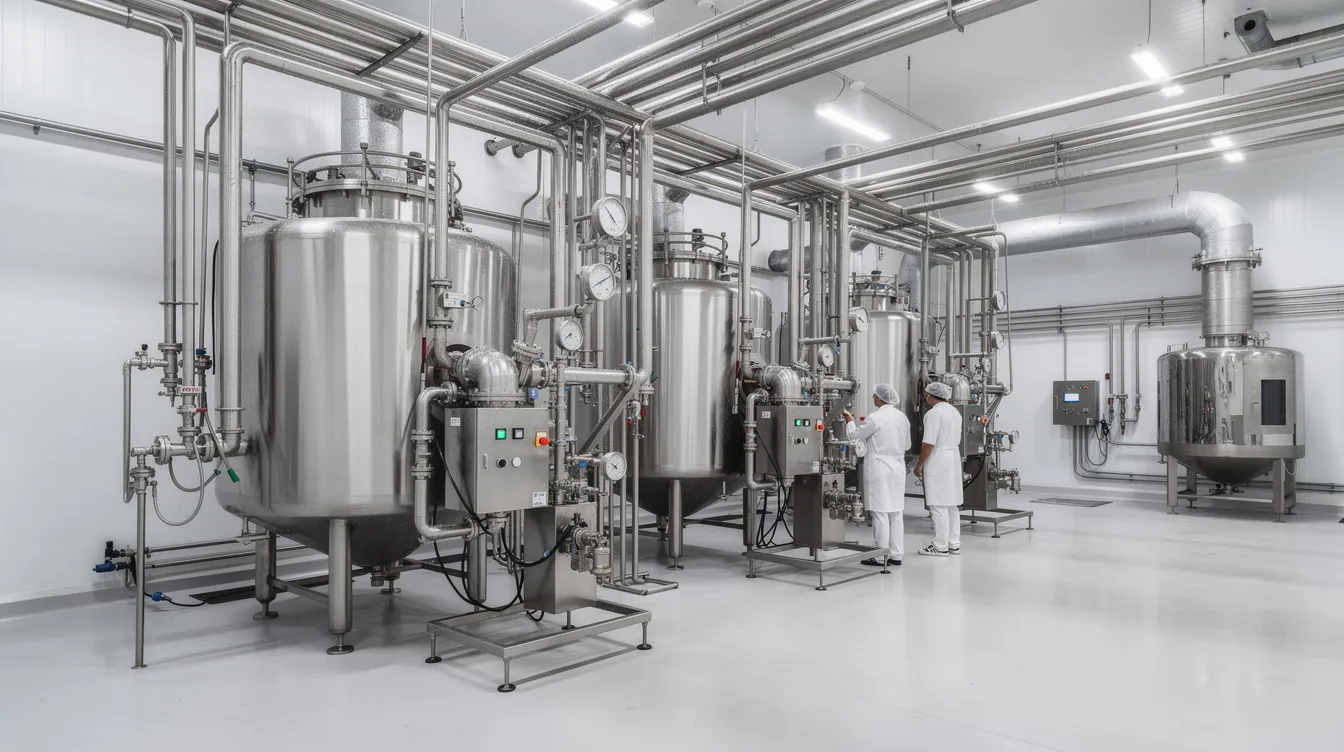
Whey processing is among the most equipment-intensive segments in dairy processing. Project viability depends on the complete financial structure – not just individual equipment loans – especially for medium and large plants where spray dryers, evaporators and membrane systems together can form 45–60% of total fixed-asset cost.
A typical whey processing plant project finance structure includes:
- Promoter contribution (equity, internal accruals or sale of assets)
- Bank term loan for eligible fixed assets
- Working capital finance (cash credit, working capital demand loan)
- Unsecured loans from promoters or group entities treated as quasi-equity where acceptable
- Eligible government incentives or subsidies where applicable
Structured dairy processing plant project finance must cover both project establishment costs (civil work, machinery, utilities, site preparation) and the ongoing working-capital cycle. Raw whey procurement, energy (whey processing plants require high energy consumption for drying), chemicals, manpower requirements, packaging requirements and receivables all need continuous funding. Technologies like membrane filtration, multi-effect evaporation, spray-drying and water treatment increase capital costs but help produce high quality protein ingredients that command better margins when execution and market research are sound.
A detailed view of cost structure and project funding options is discussed further on ProjectReportBank.com under whey-processing plant project cost and means of finance, noting that figures there are indicative and should be adapted to each project.
Types of Finance Available for a Whey-Processing Plant
Banks and financial institutions in India typically offer a mix of term loans, working capital limits and, in some cases, specific machinery loans or project-finance products for whey-processing units. The right combination depends on project size, promoter profile, plant capacity, collateral, existing banking relationships and applicable schemes.
Term Loan for Fixed Assets
A whey plant term loan is normally used to finance eligible fixed assets required for plant setup, supported by invoices, vendor quotations and a clear implementation schedule.
Assets generally eligible under a term loan include:
- Land development (where bank policy allows)
- Factory building and civil work
- Plant and machinery (whey-processing lines, various unit operations involved in concentration and drying)
- Membrane-filtration systems (UF, RO, NF skids)
- Evaporators and spray dryers
- Utilities – boilers, compressors, refrigeration, water treatment
- Electrical installations
- Laboratory and QA/QC equipment
- Effluent Treatment Plant (ETP/WWTP)
- CIP systems, storage silos and packing lines
Non-tangible project-cost elements that may also be eligible include:
- Pre-operative expenses (consultancy, interest during construction, trial-run expenses)
- Initial insurance and contingencies
- Preliminary and formation expenses
Term-loan tenure for whey manufacturing plant bank loan proposals in dairy industry bank finance often ranges around 7–10 years including a moratorium of 6–24 months, but this varies by bank and must not be treated as a fixed rule. In a documented example, Milky Mist Dairy Foods Ltd secured term loans for cheese, whey powder and utility expansion at interest rates of approximately 9.45–9.75% with tenures ranging from 120 to 144 months.
Working Capital Finance
Once commercial production begins, a whey-processing plant requires substantial working capital for raw whey procurement, fuel and power, chemicals, packing material, wages and credit sales. Operating costs are primarily driven by raw material consumption, and whey accounts for 50–60% of total operating expenses in a typical processing unit.
Typical working capital facilities include:
- Cash credit (hypothecation of stocks and receivables)
- Working capital demand loan (WCDL)
- Packing credit and export bills discounting for export-oriented units
- Non-fund-based limits: letters of credit for equipment or raw materials, and bank guarantees for utilities or performance obligations
Assessment of working capital finance is usually based on holding norms for raw materials, work-in-progress, finished goods and receivables, adjusted for supplier credit and promoter margin. The relationship between daily production, inventory days and debtor days directly influences the cash credit limit – parameters that must be justified in the DPR and CMA Data. Operating costs are projected to increase significantly by year five as capacity utilisation stabilises at peak levels. A deeper explanation of how the working-capital cycle is computed for such projects is available at whey-processing plant working capital requirement.
Machinery Finance and Equipment-Specific Loans
Some lenders and NBFCs offer specific machinery loans for high-value items such as membrane-filtration skids, evaporators, spray dryers and packaging lines, usually with hypothecation of the financed equipment and shorter repayment tenures. Machinery costs constitute the largest portion of capital expenditure in whey-processing plants – spray dryers alone can represent 35–40% of total fixed-asset cost.
While machinery finance can be useful for quick acquisition, it should be aligned with the overall whey processing plant project finance structure so that DSCR, security and repayment schedules remain coherent across all borrowings. For example, a promoter might combine a bank’s term loan for main plant and civil work with an NBFC machinery loan for an additional high-efficiency spray dryer, but only if total debt remains serviceable from projected cash flows. Fragmented machinery loans without a holistic project feasibility assessment can create repayment stress and complicate security creation.
Loan for Expansion, Diversification or Modernisation
Existing dairy plants or cheese and paneer manufacturers may seek finance to add whey-utilisation lines, upgrade from whey powder to WPC or WPI, or install lactose and permeate facilities. Whey protein concentrate demand has been growing for over 25 years, and WPC commands higher prices than bulk dry whey, making such upgrades commercially attractive.
Banks consider several factors for expansion loans:
- Existing capacity utilisation and historical profitability
- Current leverage and performance of the base dairy business
- Incremental project cost and incremental revenues
- Combined DSCR after expansion
Expansion projects require a separate DPR focusing on incremental capital expenditure and operating expenses, as well as integration with existing utilities and effluent-treatment capacity. Related project reports such as whey powder manufacturing plant project report, Whey Protein Concentrate manufacturing plant or lactose manufacturing plant project report each require their own financial analysis tailored to the specific product mix.
Typical Means of Finance for a Whey-Processing Project
The means of finance must always equal the total project cost. The exact mix of term loan, promoter contribution, unsecured loans and subsidies varies by project risk, plant capacity and lender policy.
For illustration, consider a hypothetical ₹80 crore whey-processing project:
| Component | Indicative Amount (₹ crore) | Indicative % |
|---|---|---|
| Promoter contribution (equity/internal accruals) | 24–28 | 30–35% |
| Bank term loan | 48–52 | 60–65% |
| Unsecured quasi-equity from promoters | 2–4 | 2–5% |
| Expected capital subsidy (if applicable) | 2–5 | Subject to scheme |
| Total | 80 | 100% |
These figures are purely illustrative. Actual ratios depend on lender norms and project specifics.
Banks usually prefer a balanced debt–equity ratio and may treat long-tenure, subordinated unsecured loans from promoters as quasi-equity under specific conditions. Any expected state or central subsidy should be considered support, not assured finance; banks normally appraise the project independently of subsidy.
Promoter Contribution and Margin Requirements
Promoter contribution is the equity or own funds that promoters bring into the project as their share of risk. A minimum equity contribution of 10% to 30% of total project cost is typically required by banks, though the exact margin depends on lender policy, borrower profile, applicable schemes and risk perception.
- Banks verify the source of promoter contribution – capital introduced, share capital, internal accruals, sale of assets or unsecured loans – and may not accept funds that are clearly borrowed at high interest solely for margin.
- Unsecured loans from promoters or group concerns may be treated as quasi-equity when they are subordinated to bank debt, interest-free or at low interest, and not repayable before bank exposure is cleared.
- Promoters are generally expected to bring in their contribution upfront or proportionately with term-loan disbursement stages. Delay in margin infusion is a common reason for disbursement hold-ups.
- Whether a bank finances 65%, 70% or 75% of eligible project cost differs by institution and should never be quoted as a universal percentage.
How Banks Appraise a Whey-Processing Plant Project
Banks follow a structured credit appraisal covering promoter, technical, market and financial aspects before granting bank finance for whey processing plant proposals. While each institution has its own internal scoring models, core aspects include promoter background, raw-whey availability, product-mix strategy, technology suitability, cost estimates, project economics and repayment capacity. This financial appraisal of whey processing plant project proposals determines whether the loan moves forward.
Promoter and Management Appraisal
Banks review promoters’ experience in dairy, food processing or related businesses, including prior involvement in cheese production, cottage cheese or dairy ingredients, and their understanding of whey manufacturing process complexities.
- Net worth and financial strength, past income-tax returns, credit history (CIBIL/CRIF reports)
- Existing banking track record and repayment behaviour on other loans
- Group-company exposure and cross-guarantees
- Availability of a qualified technical head and production manager with experience in spray-drying or membrane-filtration-based plants
- Transparent disclosures about related-party transactions and governance standards
Technical Appraisal
The technical appraisal checks whether the proposed plant configuration, technology requirements and plant capacity are realistic and aligned with raw-whey availability and market demand.
- Design capacity (litres/hour of liquid whey), planned products (whey powder, WPC 35/60/80, WPI, lactose), expected solid-recovery rates
- Plant utilisation ramp-up: for example 50% in year one, 65–70% in year two, stabilising at 80–90% subsequently
- Utility requirements, CIP capabilities, ETP design and environmental compliance
- Whey protein powder plant capacity ranges from 5,000 to 10,000 MT annually for medium-to-large facilities
- Proximity to cheese manufacturing units is essential for reducing transport costs of liquid whey
- Banks conduct rigorous technical due diligence for processing technology and wastewater management plans, and require a robust and costed Effluent Treatment Plant design before project approval
- Whey processing generates high-strength wastewater, necessitating effective waste management systems and regulatory compliance
A project’s technical feasibility must align with its economic viability for successful bank financing. Banks may review machinery quotations, vendor profiles and implementation schedules through external consultants. Detailed discussions on technology are available at whey-processing plant manufacturing process and membrane-filtration technology for whey processing.
Market Appraisal
Market appraisal focuses on demand, pricing mechanism, competition and price trends for whey products. The whey protein powder market and the broader whey protein powder industry are expanding globally – the whey protein market is projected to reach USD 19.34 billion by 2034 from USD 11.45 billion in 2025.
- Target customer segments: sports nutrition brands, food manufacturers, animal feed processors, export markets and key players in the nutraceutical space
- Offtake commitments or MoUs, proposed distribution costs and channels
- Industry trends such as the surge in U.S. spending on GLP-1 drugs (from USD 13.7 billion in 2018 to USD 71.7 billion in 2023), with households using GLP-1 drugs projected to account for 35% of food sales by 2030 – driving renewed demand for high-protein, low-calorie ingredients
- U.S. cheese production capacity is expected to expand by about 10% over five years, and whey processing investments in the U.S. are expected to exceed USD 8 billion by 2026, generating massive volumes of sweet whey requiring processing
- Banks typically require a solid business plan outlining market demand and operational capacity
- Securing long-term raw material supply contracts is crucial for financing whey processing plants, supporting market segmentation strategies across whey powder, WPC, WPI and permeate
Evidence-based selling-price assumptions must be drawn from actual market data, not optimistic projections alone – particularly for products positioned in the muscle recovery, muscle protein synthesis, muscle mass and essential amino acids segments. Further details on revenue models are available at whey-processing plant revenue model and market applications.
Financial Appraisal
The financial appraisal converts technical and market assumptions into projected financial statements, checking whether cash flows can comfortably service the proposed whey processing plant loan.
- Total project cost and composition, means of finance, projected revenues, raw-material and direct and indirect costs, operating expenses, EBITDA margin
- Whey processing plants can achieve gross profit margins of 40–50%, though actual margins depend on product mix, technology efficiency and market conditions
- Interest coverage, profit after tax, cash accruals, break-even analysis, net present value, IRR and payback period
- DSCR, average and minimum DSCR, debt–equity ratio, current ratio and working-capital cycle
- Detailed project costs, means of finance, and expected cash flows are key components for lender approval
- Financial models for dairy projects must demonstrate the ability to service debt over time
- Sensitivity analysis examining scenarios with reduced selling prices or increased variable costs and fixed costs
Cash-flow-based debt-servicing capacity is more critical to lenders than accounting profits in isolated years. Specialised discussions are available at whey-processing plant profitability and break-even analysis and whey-project DSCR and loan-repayment capacity.
Project-Cost Components Considered by Banks
There is an important distinction between total project cost (all costs to bring the project to commercial operation), eligible project cost (items a bank may finance) and the actual loan amount sanctioned (limited by eligibility and margin requirements).
Typical cost heads in a whey-processing plant DPR include:
- Land purchase and site preparation
- Factory shed and civil structures
- Plant and machinery – membrane units, evaporators, spray dryers, unit operations
- Utilities – boilers, compressors, chilling plants, water treatment
- Electrical installations
- ETP/WWTP
- Laboratory and QA equipment
- Furniture, office equipment, vehicles (if justified)
- Pre-operative and preliminary expenses
- Interest during construction
- Contingencies (typically 5–10% of machinery and civil cost)
- Margin money for working capital
Major process equipment – including spray dryers, evaporation systems and membrane-filtration skids – can form 45–60% of overall fixed-asset cost in medium-to-large Indian plants, though exact proportions vary with technology and capacity. Banks may cap or exclude speculative land cost, unrelated vehicles or excessive pre-operative expenses when computing eligible project cost. For details on how high-technology items influence capital expenditure, see whey-processing plant machinery and equipment cost.
Importance of a Bankable DPR for Whey Processing Plant Bank Loan
A bankable DPR is a Detailed Project Report that integrates technical, commercial and financial details into a coherent document supporting the loan proposal. A comprehensive Detailed Project Report is critical for securing financing for dairy projects.
Core sections of a whey processing plant DPR should include:
- Promoter profile and business constitution
- Industry overview, investment opportunities and industry trends
- Project concept, objectives and complete roadmap
- Detailed product mix (whey powder, WPC, WPI, lactose) and whey-processing plant capacity and product-mix planning
- Manufacturing process flow, various unit operations and unit operations involved in concentration and drying
- Raw-whey availability assessment including a steady supply plan
- Location analysis, infrastructure requirements and machinery requirements
- Utility requirements, human resource requirements and implementation schedule
- Key regulatory procedures, key certifications required and statutory approvals
Financial sections must cover:
- Project cost estimation and capital investments
- Means-of-finance structuring and project economics
- Working capital assessment and expenditure projections
- Revenue projections, profit projections and profit and loss account
- Financial projections (P&L, balance sheet, cash flow), ratio analysis, DSCR, break even points
- Loan-repayment schedule, sensitivity analysis and risk factors
Assumptions must be clearly stated and supported by documents – quotations, market data and raw-whey supply understanding – rather than inflated projections. For professional DPR preparation, readers may refer to whey-processing plant feasibility and project viability and financial projections for a whey-processing plant DPR.

Financial Projections Required in the Loan Proposal
Comprehensive financial projections, usually covering 7–10 years, form the backbone of the credit appraisal and must be consistent across all statements and schedules.
Specific projected statements required:
- Projected profit and loss account
- Projected balance sheet
- Projected cash-flow statement and fund-flow statement
- Detailed fixed-asset schedule and depreciation schedule
- Term-loan amortisation schedule and interest calculation sheet
- Working-capital assessment (CMA format where requested)
- DSCR calculation, break-even analysis and financial analysis
Capacity utilisation, product recovery, selling prices, raw material requirements, operating costs and finance costs must be reconciled across these statements and be technically feasible. Whey protein powder gross profit margins range from 40–50% depending on product mix and market conditions – these assumptions should be verified against actual pricing mechanism data.
Any change in loan amount, interest rate or repayment period must be reflected consistently in all linked schedules. Professional assistance from a Chartered Accountant helps ensure that projections for a whey processing plant project report for bank finance are aligned with the plant design and market plan.
DSCR and Loan-Repayment Capacity
DSCR (Debt Service Coverage Ratio) measures the cash available for servicing term debt relative to the total term-loan repayment obligation for a given year. It is one of the most closely examined ratios in whey plant loan repayment and DSCR assessment.
Formula:
DSCR = (Profit after tax + Depreciation + Interest on term loan) ÷ (Interest on term loan + Principal repayment for the year)
Illustrative example (round figures):
| Item | Amount (₹ crore) |
|---|---|
| Profit after tax | 5.00 |
| Depreciation | 4.00 |
| Interest on term loan | 3.00 |
| Cash available for debt service | 12.00 |
| Principal repayment | 5.00 |
| Interest on term loan | 3.00 |
| Total debt obligation | 8.00 |
| DSCR | 1.50 |
Banks look at both year-wise DSCR and average DSCR over the repayment period. They are particularly cautious about very low DSCR in initial years after moratorium when utilisation is still stabilising and the final product volumes are ramping up. No single DSCR benchmark can be applied to every project – acceptable thresholds vary by lender policy, project risk, collateral and borrower profile. However, as a general guideline, a minimum annual DSCR of 1.25 and an average DSCR of 1.50–1.75 are commonly expected for greenfield whey-processing projects.
Working Capital Assessment for Whey Processing Plant Loan
Whey-processing plants often face intensive working-capital needs due to high energy consumption, inventory of finished products and credit terms offered to institutional buyers or export customers.
Typical components of gross working-capital requirement:
- Raw whey or milk stock, raw material requirements for processing
- Chemicals, consumables and packaging materials
- Spares and stores
- Work-in-progress (concentrates, partially dried product)
- Finished-goods inventory (whey powder, WPC, WPI)
- Receivables from nutrition brands, food manufacturers or exporters
- Minimum cash/bank balance for operations
From this gross requirement, banks deduct supplier credit and operating liabilities (trade creditors, wages payable, utilities) to derive net working-capital requirement. A portion must be funded by promoter margin (typically 20–30%) and the balance by bank working-capital limits.
The working-capital cycle is strongly influenced by selling arrangements – long credit periods to nutrition brands or export customers can significantly increase the need for a cash credit limit. Transportation requirements and distribution costs add further to the operating cycle. For deeper numerical illustrations, refer to whey-processing plant working capital requirement.
Security and Collateral Structure for Whey Plant Finance in India
Banks normally secure a whey processing plant loan through a combination of primary security, collateral security and guarantees. Specifics depend on lender policy and scheme applicability.
Primary security:
- First charge on all fixed assets created out of term loan (all assets created from the bank-financed project)
- Hypothecation of current assets (stock and receivables) for working capital
- Assignment of insurance policies on major assets in favour of the lender
Collateral options:
- Equitable or registered mortgage of land and building
- Additional collateral properties
- Corporate or personal guarantees from promoters and group entities
- Escrow or controlled credit of receivables where required
In some cases, Credit Guarantee Schemes such as CGTMSE or relevant dairy/animal-husbandry guarantee funds may partially cover the loan, but eligibility is subject to scheme conditions, loan size limits, borrower profile and lender participation. Security value alone does not ensure loan approval; project viability, DSCR and promoter track record remain central to the credit decision.
Documents Required for Whey Processing Plant Project Finance
Complete and consistent documentation significantly speeds up appraisal for whey processing plant bank loan proposals. Document sets typically fall into promoter/KYC, business, project, financial and statutory categories.
Promoter and KYC Documents
- PAN card and Aadhaar (or officially valid identity document) for each promoter, director or partner
- Current address proof and recent photographs
- Net-worth statements and personal income-tax returns (last 3 years)
- Existing liability details: loan account statements, sanction letters
- Credit bureau reports (CIBIL/CRIF) and clarification letters for any adverse remarks
Business Constitution and Registration Documents
- Partnership deed, or Memorandum and Articles of Association, Certificate of Incorporation, board resolutions and shareholding pattern for companies
- LLP agreement and incorporation documents for LLPs
- Udyam registration where applicable for MSME status
- GST registration certificate and PAN of the entity
- Current account statements and existing loan sanction letters
Project and Technical Documents
- Detailed Project Report (DPR) with process-flow diagram
- Plant layout drawings, capacity note and product-mix planning
- Machinery quotations with technical specifications from reputed vendors
- Implementation schedule with milestones
- Land title deeds, sale agreements, allotment letters, latest property tax receipts and NA/land-use conversion approvals
- Raw-whey supply agreements, MoUs with cheese or paneer plants, or internal transfer arrangements
Financial Documents and Projections
- Audited financial statements (profit and loss, balance sheet) for the last 3 years with tax audit reports
- Income-tax returns, GST returns (GSTR-1 and GSTR-3B)
- At least 6–12 months of main bank-account statements
- Projected financial statements and CMA Data: projected P&L, balance sheet, cash-flow statement, working-capital assessment, term-loan repayment schedule and ratio analysis aligned with the DPR
Approvals and Statutory Registrations
- FSSAI registration or licence appropriate to the product category
- Pollution-control board consent to establish and operate
- Factory licence, fire-safety NOC and electricity-load sanction
- Regulatory compliance and statutory clearances are mandatory before loan disbursement for food processing units
- Whey processing facilities must comply with environmental and food safety regulations – exact approvals depend on location, capacity, product range and environmental norms in force
Step-by-Step Bank Loan Process for a Whey-Processing Plant in India
The bank loan process for whey processing plant in India involves distinct stages from concept to final disbursement. Sanction and disbursement are separate steps, and each has its own conditions.
Practical sequence:
- Define project scope, capacity and product mix
- Conduct preliminary feasibility and raw-whey availability assessment
- Obtain machinery and utility quotations with technology requirements
- Finalise project cost and preliminary means of finance
- Prepare the DPR, financial projections and market research documentation
- Compile documentation and submit the loan application
- Respond to the bank’s technical and financial queries
- Undergo legal, valuation and technical inspections
- Receive sanction letter with terms and conditions
- Comply with pre-disbursement conditions (key certifications, approvals, margin infusion)
- Bring in promoter contribution as required
- Receive stage-wise disbursement linked to project progress and utilisation evidence
Lenders may appoint empanelled valuers, lawyers or technical experts to independently verify assets, title deeds and project assumptions. Timely and accurate responses to queries help keep the process moving. Indicative timelines range from several weeks to a few months for medium-to-large projects, depending on documentation readiness and project complexity.
Government Subsidies and Incentives for Whey-Processing Projects
Central and state governments periodically announce schemes for dairy processing, cold-chain and food processing which may cover whey-processing units. Government financing schemes may offer subsidies for dairy processing projects, but eligibility, rates and conditions change over time and must be verified from official notifications.
General types of support include:
- Capital-investment subsidies (e.g., under DIDF or AHIDF with interest subvention of 2.5–3%)
- State-level capital subsidy, interest subsidy and stamp-duty reimbursement
- Reimbursement for quality-certification costs, transport or power incentives
- Credit guarantees under specialised schemes linked to dairy or food processing
Key points for promoters:
- Subsidies should never be treated as guaranteed finance when planning term-loan repayment
- Banks may consider approved subsidy as additional comfort but normally appraise the project independently
- Subsidy claims require adherence to scheme terms: minimum plant capacity, eligible cost heads, timely application, completion deadlines and documentary evidence
- Delays in subsidy disbursement are common
Promoters should consult official scheme websites, nodal agencies and experienced advisors before relying on any incentive when structuring whey plant funding options.
Common Reasons for Loan Rejection or Delay
Even technically sound whey projects can face loan rejection or substantial delay due to weaknesses in planning, documentation or financial structure.
Frequent issues include:
- Insufficient or poorly evidenced promoter contribution
- Weak credit history, unresolved past defaults or unexplained existing liabilities
- Unclear land title, missing approvals or incomplete land-use conversion
- Inflated capacity-utilisation assumptions and unrealistic implementation timelines
- Over-optimistic selling prices without market support
- Underestimation of operating expenses, especially energy and indirect costs
- Inadequate working capital planning
- Poor DSCR in early years, excessive debt relative to equity
- Excessive dependence on unconfirmed export orders or subsidy
- Mismatch between DPR and CMA Data – for example, different project-cost totals or inconsistent loan amounts
- Inadequate collateral or unwillingness to offer required security
Inconsistent numbers across documents quickly reduce lender confidence and lead to repeated queries, dragging out the sanction process.
How to Improve the Whey Processing Plant Finance Proposal
A carefully prepared and internally consistent proposal, supported by quality data and realistic assumptions, significantly improves the chances of a timely credit decision – though it still does not guarantee approval.
Practical recommendations:
- Develop clear raw-whey sourcing arrangements or captive cheese/paneer production plans for a steady supply
- Freeze product mix (whey powder vs WPC/WPI vs lactose) before detailed projections, along with whey-processing plant capacity and product-mix planning
- Use vendor-backed machinery and utility costing aligned with machinery and technology requirements
- Build realistic implementation schedules with buffers for infrastructure costs and site preparation
- Include detailed working-capital planning, moderate capacity-utilisation ramp-up and conservative price assumptions
- Cross-check margins, capital costs and infrastructure requirements against industry benchmarks and actual contracts
- Run sensitivity scenarios (for example, 10–15% lower selling prices or higher energy costs) to demonstrate that DSCR and project viability remain acceptable under stress
- Reconcile project cost and means of finance; ensure consistency between DPR and CMA Data
- Maintain transparent disclosure of promoter and group-company financials
Role of a Chartered Accountant and Project Finance Professional
As a practising Chartered Accountant since 2006, I have seen that many well-conceived whey-processing projects face financing difficulties not because of weak fundamentals but because of poorly structured proposals, inconsistent projections or gaps in documentation.
A CA or project finance professional can assist with:
- Structuring project cost and planning the means of finance
- Assessing working-capital needs and preparing the cash credit limit assessment
- Preparing realistic financial projections, expenditure projections and profit projections
- Computing DSCR, net present value, IRR, break-even analysis and other ratios
- Preparing CMA Data in bank-required formats
- Identifying gaps in documentation, feasibility or risk factors
- Coordinating loan documents and responding to lender queries
Projections are prepared based on information and assumptions provided by promoters – a Chartered Accountant does not certify future profits or guarantee loan repayment capability. The ultimate assessment rests with the lender’s credit committee. However, a well-prepared whey processing plant project report for bank loan can save considerable time by pre-empting common queries and presenting technical, financial and legal aspects coherently.
Professionals familiar with dairy industry bank finance can also guide promoters on aligning project structures with relevant schemes, key regulatory procedures and practical banking norms – all without promising guaranteed sanction.

Frequently Asked Questions
This FAQ section addresses common doubts about whey processing plant loan eligibility and practical financing issues. Answers are indicative and depend on bank policy and project specifics.
Can a new entrepreneur obtain a bank loan for a whey-processing plant?
Banks can finance first-time entrepreneurs if they demonstrate strong technical understanding or have an experienced team, adequate promoter contribution, clear raw-whey sourcing and a robust DPR with realistic financial projections. However, credit history, collateral and risk perception remain critical factors, and requirements may be stricter than for established dairy companies. Partnering with an experienced technical head in the whey protein powder manufacturing domain can strengthen the proposal.
Can land and building costs be financed under a whey processing plant term loan?
Many banks finance factory building and related civil works, and some also finance a portion of industrial land cost subject to their policy. However, speculative land purchases, large open land banks or unrelated real-estate capital investments are usually excluded. Margin requirements on land can be higher than for machinery.
Is it possible to use second-hand machinery in a bank-financed whey project?
Acceptance of pre-owned equipment varies by lender. Some banks may consider good-quality, recent-vintage machinery with proper invoices, independent valuation and technical justification, while others prefer new machinery due to warranty, performance and residual-value concerns. This is particularly relevant for branched chain amino acids and essential amino acids grade WPI equipment where precision matters.
Can subsidy be treated as promoter contribution?
Most lenders do not treat unapproved or yet-to-be-received subsidy as full promoter contribution. At best, sanctioned subsidy under a notified scheme may be considered additional comfort or partial margin support. Promoters are usually expected to bring their core equity from own sources. This is a key success factor in whey plant project finance proposals.
How long does it usually take to get a whey processing plant bank loan sanctioned?
Timelines can range from several weeks to a few months for medium-to-large projects. The duration depends on documentation readiness, complexity of technology, need for external technical appraisal, legal and title clarity, and internal processes of the bank or financial institution. Proactive submission of complete documents – including approvals, machinery quotations and CMA Data – helps avoid unnecessary delays.
Conclusion and Professional Call to Action
Whey-processing projects in India offer a genuine opportunity to convert a low-value dairy by-product into high quality protein ingredients serving the growing sports nutrition, weight management, muscle growth and functional-food markets. Over USD 8 billion is being invested in new U.S. dairy processing plants alone, reflecting the global scale of this industry. In India, the opportunity is equally significant for entrepreneurs and dairy companies willing to invest in technology, raw-material planning and market development.
However, successful execution depends on integrated planning of technology, raw-whey supply, market strategy, project economics, working capital and bank finance structure. A well-structured whey processing plant bank loan proposal – supported by a bankable DPR, realistic financial projections and complete documentation – enhances the quality and speed of appraisal, even though approval ultimately rests with the lender’s credit committee.
If you are planning a whey-processing plant project, I can assist with DPR preparation, financial projections, feasibility studies, CMA Data preparation, working capital assessment, DSCR analysis and bank-finance proposals tailored to your specific capacity and product-mix plans. All cost, margin and interest-rate views in this article are indicative and must be reconfirmed with actual lenders and current market data before taking investment decisions.
CA Manish Gugliya Chartered Accountant Project Report & Business Finance Professional ProjectReportBank.com