
A structured feasibility study is the foundation of every sound investment decision in whey processing. This article, written by CA Manish Gugliya, guides entrepreneurs, dairy companies and investors through the technical, financial and commercial evaluation required before committing capital to a whey processing plant in India.
Key Takeaways
A whey processing plant can be a commercially rewarding venture in India, but only when raw whey availability, a realistic product mix, proven technology, market access and a balanced funding structure are jointly assessed through a proper whey processing plant feasibility study. Skipping this step, or basing decisions on generic industry averages, is one of the most common reasons projects underperform or fail to secure bank finance.
- Transforming liquid whey into whey powder, whey protein concentrate, whey protein isolate and lactose is technically proven. However, the financial outcome depends on project-specific factors like capacity utilisation, capital expenditure, operating expenses, working capital adequacy and achievable selling prices.
- The feasibility report or DPR should cover technical feasibility, market feasibility, financial projections, project cost, means of finance, DSCR and risk analysis before the promoter commits to land, machinery and construction.
- In the Indian context, raw materials sourcing from nearby cheese and paneer plants, reliability of power and water supply, and compliance with FSSAI licensing and pollution control norms are critical for bankability.
- Readers seeking a customised, bankable whey processing plant feasibility report can approach CA Manish Gugliya via ProjectReportBank.com. No assurance of loan sanction or guaranteed profitability is implied.
Introduction: From Dairy By-Product to Value-Added Business
Liquid whey is a byproduct of cheese production, paneer making and casein extraction. For decades, most Indian dairies treated it as effluent or low-value animal feed. Today, modern processing technologies convert this once-wasted stream into high-value food products and ingredients, including whey powder, whey protein concentrate, whey protein isolate, lactose and permeate powder, serving the food industry, sports nutrition, infant nutrition, clinical nutrition and functional foods segments.
The global whey protein market was valued at USD 5.69 billion in 2025 and industry trends point toward continued expansion. India, despite being the world’s largest milk producer, imports over 80% of its high-grade whey proteins like WPI and WPC 80, presenting a significant domestic manufacturing opportunity.
However, technical possibility alone does not mean profitability. A structured whey processing plant feasibility study is essential to determine whether a proposed plant is technically sound and financially viable. Viability depends on raw whey supply, recoverable solids, product mix, plant capacity, achievable selling prices, utilities and financing terms. This article, written by CA Manish Gugliya, practising Chartered Accountant (FCA, DISA), will guide entrepreneurs through feasibility analysis, DPR preparation, expenditure projections and risk assessment for whey projects in India.
What Is a Whey Processing Plant Feasibility Study?
A feasibility study is a structured evaluation of whether a whey processing plant project can be implemented successfully from technical, commercial, financial, legal and environmental angles. A feasibility study evaluates the technical, financial, and environmental viability of whey processing before any capital commitment is made.
The study examines multiple dimensions:
- Technical feasibility: Can the proposed manufacturing process convert available whey into the target products at the required quality?
- Raw material feasibility: Is sufficient liquid whey available consistently, and what are its composition and quality characteristics?
- Market feasibility: Is there verifiable demand for whey protein products, whey powder, lactose or permeate in domestic or export markets?
- Operational feasibility: Are manpower, utilities, logistics and human resource requirements adequately planned?
- Regulatory and environmental feasibility: Can the project meet FSSAI, pollution control and other key regulatory procedures?
- Financial feasibility: Do the financial projections show acceptable profitability, DSCR, IRR and payback under realistic assumptions?
- Funding and repayment feasibility: Is the proposed means of finance balanced, and can term-loan obligations be met over the repayment period?
It is important to understand the difference between a quick preliminary assessment (a high-level check, often done before land purchase), a detailed feasibility study, a full whey processing plant project report prepared for internal decision-making, and a bankable DPR tailored to lender requirements including CMA data.
CMA data and financial projections support loan appraisal but remain estimates based on assumptions, not guarantees of performance. Lenders also conduct their own independent credit assessment, stress-testing assumptions on capacity utilisation, selling prices and direct and indirect costs.
Why Feasibility Analysis Is Critical for a Whey Processing Project
Whey processing looks attractive because it adds value to waste. Whey processing turns a low-value by-product into a high-margin ingredient. But high moisture content, logistics complexity and capital intensity create serious risks if not analysed properly. The initial investment for a whey processing plant is significant, making thorough pre-investment analysis non-negotiable.
Practical challenges that a feasibility study must address include:
- Perishable nature of liquid whey requiring immediate chilling or processing
- High transport cost per kg of recoverable solids (raw whey is over 93% water)
- Seasonal variation in whey generation, especially from paneer and chhena units
- Dependence on continuous utility supply including power, steam and water
- Reliance on membrane filtration and spray drying technology with high replacement and energy costs
- Risk of under-recovering protein content or lactose if incoming whey quality fluctuates between sweet whey and acid whey batches
- Quality variation affecting bulk density, solubility and microbial safety of finished products
Projects should not be justified only by high market prices of protein powders advertised online. Risk mitigation identifies operational or market bottlenecks before committing capital. A professional whey processing plant financial feasibility assessment helps avoid over-sizing the plant, mis-selecting product mix or under-budgeting utilities and working capital.
Raw Whey Availability and Procurement Feasibility
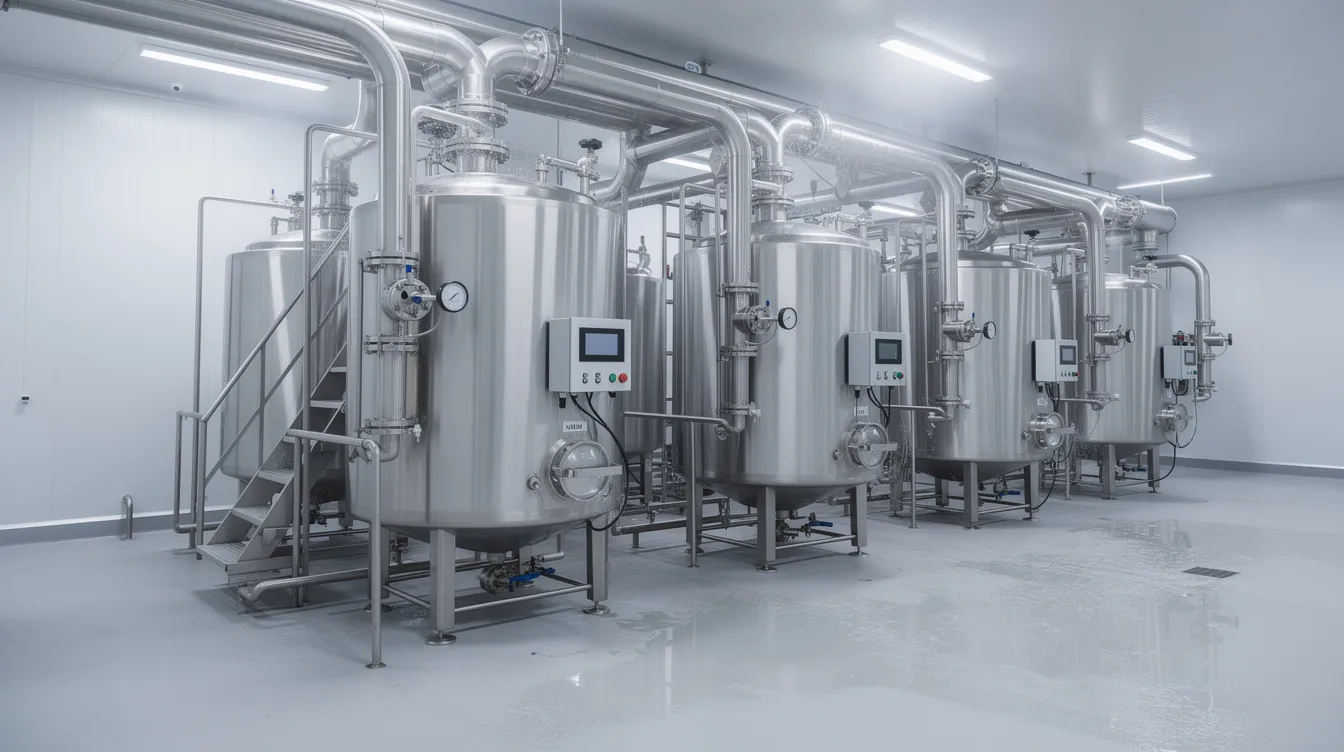
In India, long-term availability and quality of raw whey from cheese, paneer, casein and other dairy plants is the single most critical driver of plant capacity and viability. A feasibility study should assess the quality and quantity of available raw whey before any design decisions are made. Raw material supply calculates the volume and consistency of liquid whey available for processing.
The study must verify:
- Names and locations of existing and upcoming whey-generating dairy plants within a practical radius (typically 50–150 km)
- Daily volumes in litres and seasonal patterns across months
- Type of whey available: sweet whey from cheese production or acid whey from paneer, chhena or strained yoghurt
- Technical quality parameters: protein %, lactose %, total solids (typically 6.5–7.0% for Indian whey), pH and microbial load, backed by lab test reports
- Transport mode (insulated tankers vs regular tankers), distance, travel time and cost per litre
- Contractual terms: duration, pricing formula, minimum guaranteed volume and exclusivity
The feasibility study should provide a detailed mass balance from whey intake to product output. Daily liquid whey volumes must be converted into estimated annual recoveries of whey powder, WPC, WPI and lactose under realistic solid-recovery assumptions before deciding final installed capacity.
| Feasibility Factor | Information Required | Effect on the Project |
|---|---|---|
| Daily whey availability | Litres per day from each supplier | Determines plant capacity and utilisation |
| Whey solids and composition | Total solids %, protein %, lactose % | Determines product recovery and yield |
| Collection distance | Kilometres and travel time | Affects raw material cost and quality |
| Seasonal variation | Monthly supply pattern | Affects annual capacity utilisation |
| Supplier concentration | Number of independent suppliers | Indicates procurement and supply risk |
Procurement risks include dependence on one large supplier, competition from other processors for the same whey, and sudden changes in dairy output. Medium- to long-term supply agreements should be pursued wherever possible to strengthen project bankability.
Technical Feasibility of the Whey Processing Plant
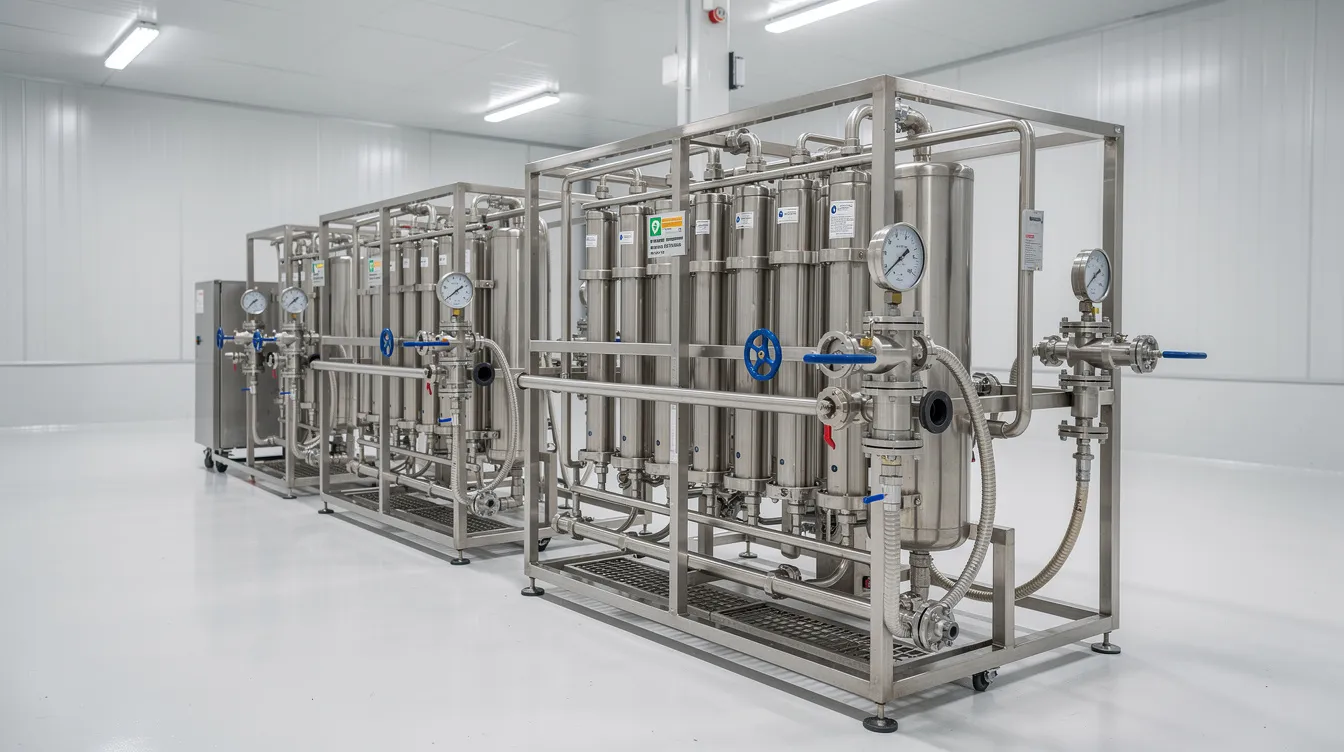
The whey processing plant manufacturing process converts diluted liquid whey into concentrated and dried products through a series of various unit operations involving clarification, heat treatment, membrane filtration, evaporation and spray drying. Whey processing technology includes ultrafiltration, reverse osmosis, and spray drying as the core processing steps. Technical design outlines processing technologies such as ultrafiltration for protein recovery.
Major unit operations involved in logical order:
- Reception, weighing and chilled storage tanks
- Clarification and fat separation
- Pasteurisation and heat treatment
- Microfiltration (where high-purity products are targeted)
- Ultrafiltration and diafiltration for protein concentration (typically using membranes with MWCO of 10–30 kDa)
- Nanofiltration or reverse osmosis for permeate concentration
- Multi-effect evaporator for further concentration
- Crystalliser for lactose recovery
- Spray drying process to achieve final moisture of 4–5% and produce a free flowing powder
- Packaging and cold storage
Auxiliary systems include CIP (clean-in-place), boiler and steam generation, refrigeration and chilled water, compressed air, electrical controls and automation.
Membrane filtration technology for whey processing strongly influences product recovery, energy use and quality consistency. Whey protein production utilizes advanced membrane filtration technology, and membrane selection (type, configuration, flux and cleaning regime) is a critical technical decision.
The feasibility study should evaluate the energy and water demands of whey processing, as these are among the largest operating cost drivers. The spray drying process alone can require inlet air temperatures around 190°C, consuming substantial fuel and power.
Technology selection criteria should include proven reference installations, ability to meet target specs (e.g., WPC 35 vs WPC 80 vs WPI), expected membrane life, ease of cleaning, spare parts availability in India and operator skill requirements. Effluent generation and treatment needs must also be assessed, since whey permeate and CIP wastewater carry high COD/BOD loads.
Product Mix and Capacity Planning
A whey plant can produce multiple products. Product mix and market demand should be determined before designing a plant, not after. The feasibility study must define a realistic product mix based on available whey quality, machinery and technology requirements, and target markets.
Potential whey protein products include:
- Standard whey powder (basic drying, lower value, ₹100–200/kg)
- Demineralised whey powder (40–90% demineralisation, used in infant formula)
- Whey protein concentrate (WPC 35 at ₹250–300/kg, WPC 80 at ₹700–800/kg)
- Whey protein isolate (WPI 90+, ₹1,200–1,800/kg)
- Edible or pharmaceutical grade lactose
- Permeate powder for animal feed or food applications
- Liquid whey concentrate
Annual production capacity for whey protein plants typically ranges between 5,000–10,000 MT, though smaller plants are possible for commodity products. Annual production capacity ranging at different scales requires different capital investments and technology complexity.
Product mix decisions directly affect capital expenditure (more stages and equipment for demineralisation and isolates), energy demand and quality control infrastructure. Selecting the highest-priced product is not always the most feasible option because higher-value products require greater capital investments, stricter quality control and more developed market access.
Whey processing plant capacity and product mix provides further guidance on how raw whey solids translate into saleable product volumes. Capacity planning should account for gradual utilisation build-up over 3–5 years, allowing for commissioning, stabilisation and market development. Product diversification can reduce market risk but must be supported by both technology and marketing capability.
Market Feasibility and Demand Assessment
A comprehensive market overview must match proposed products with specific end-use segments rather than relying only on global growth projections. Market analysis assesses local and global demand for whey products. A proper market analysis should consider customer specifications, competitor pricing, and demand patterns.
Major domestic demand segments include:
- Sports nutrition (protein powders, RTD shakes promoting muscle growth and weight management)
- Infant and clinical nutrition (infant formula requiring strict purity and key certifications required)
- Bakery and confectionery
- Dairy beverages and food products
- Functional foods and nutraceuticals containing essential amino acids and branched chain amino acids
- Animal feed (permeate and feed-grade products)
The whey protein market is expected to reach USD 7.69 billion by 2034, exhibiting a CAGR of 3.41% from 2026 to 2034. Whey protein is increasingly used in sports nutrition and medical foods globally. In India, the whey protein industry is growing at 24–25% CAGR for WPC and WPI segments, creating a significant portion of unmet demand currently filled by imports.
Market segmentation, price trends and competitor capacity in key Indian dairy clusters should be assessed. Realistic ex-factory selling prices should be used after accounting for packing, freight, distribution costs, credit period and any applicable duties. The whey processing plant revenue model and market applications page offers deeper insight into application-wise revenue streams.
Whether a whey processing plant is profitable in India can only be answered after matching product specs, target customers, offtake arrangements and achievable selling prices for the specific project. The economic feasibility of a whey processing plant depends on expected revenues and costs, not industry averages.
Location and Infrastructure Feasibility
The site selection for a whey processing plant should consider proximity to whey suppliers. In whey processing, location is driven more by proximity to reliable raw whey sources than by proximity to end-consumers, because liquid whey is bulky and perishable. This is one of the key success factors for the proposed manufacturing facility.
Site selection factors:
- Distance to supplying dairies (ideally under 100 km for regular tanker collection)
- Road access for tankers and container trucks
- Availability and cost of industrial land (MIDC, state industrial estates or private)
- Zoning suitability for food manufacturing
Infrastructure costs and requirements:
- Stable power supply with DG backup (the whey protein manufacturing plant runs continuous operations)
- Adequate water for process, CIP and cooling
- Boiler fuel availability (biomass, PNG or coal where permitted)
- Refrigeration facilities and cold storage
- Space and approvals for ETP
- Labour availability and access to quality testing laboratories
Regulatory and Environmental Feasibility
A bankable whey processing plant DPR must outline the regulatory framework applicable to the proposed location. Regulatory compliance is essential for adhering to food safety and environmental laws.
Core registrations and approvals:
- Choice of legal entity and GST registration
- FSSAI central licence for dairy processing
- Factory licence and applicable labour-law compliances
- BIS or Codex compliance for purity standards where applicable
- Packaging and labelling norms for protein and dairy ingredients
Environmental assessment reviews compliance with wastewater management and food safety standards. Environmental feasibility includes assessing wastewater generation and treatment requirements. Waste management addresses the high biochemical oxygen demand of whey waste, which requires a properly designed ETP or approved utilisation route (such as biogas generation or cattle feed).
Additional approvals include consent to establish and operate from the State Pollution Control Board, boiler and electrical safety clearances, fire NOC and building plan approvals. Regulations, government schemes and subsidies change over time and should be verified from official websites or professional advisors before finalising the project.
Whey Processing Plant Project Cost: CAPEX Components
Total project cost typically includes civil works, plant and machinery, utilities, preliminary expenses and margin money for working capital. The whey processing plant setup cost in India varies widely with plant capacity, product mix and technology choices. For greenfield WPC/WPI facilities, CapEx estimates can range from INR 150–250 crore for large-scale operations.
Major capital expenditure heads:
- Land and site development
- Factory and administrative buildings (infrastructure costs)
- Whey reception, weighing and storage tanks
- Membrane filtration skids (UF, NF, RO)
- Multi-effect evaporator
- Spray dryer (often the single largest equipment cost)
- Crystalliser (for lactose production)
- Boiler and steam system
- Refrigeration plant and cold storage
- Water-treatment plant, CIP system, compressors
- ETP, laboratory instruments, electrical panels, automation and SCADA
Machinery costs are the largest portion of capital expenditure in a whey processing plant setup. Whey processing plant machinery and equipment cost discusses machinery selection aspects in greater detail.
The project cost estimate should also include installation and commissioning charges, consultancy and design fees, interest during construction, contingency provision and margin money for initial working capital. Capital costs must be estimated with actual supplier quotations rather than generic benchmarks.
Means of Finance and Funding Structure
A balanced funding plan is central to whey processing plant project viability and lender comfort. Project funding for capital-intensive plants with gradual capacity ramp-up requires careful structuring.
Common funding sources:
- Promoter equity (typically 25–35% of project cost)
- Term loans from banks or financial institutions
- Working-capital limits (cash credit, WCDL)
- Unsecured loans from promoters or group entities
- Government subsidy or PLI schemes where eligible
Excessive term debt and thin equity can result in low DSCR and high sensitivity to market or supply shocks. The DPR should clearly present whey processing plant project cost and means of finance. Loan repayment schedules should be aligned with the project’s gestation period: construction, trial runs, stabilisation and expected cash-flow pattern over the first 5–7 years.
Operating Cost Assessment and Working Capital
For a whey processing manufacturing plant, accurate estimation of operating expenses and working capital is as important as CAPEX. Raw liquid whey accounts for 50–60% of total operating expenses in production, making procurement cost and efficiency the dominant variable cost driver.
Major operating costs include:
- Raw whey procurement and transportation (variable costs)
- Power and fuel for evaporation, drying and refrigeration
- Steam generation
- Water and effluent treatment
- Membrane replacement and cleaning chemicals
- Packing material
- Labour, maintenance and quality control
- Administrative overheads, insurance and marketing (fixed costs and indirect costs)
Operating costs increase significantly by the fifth year as membrane replacements, maintenance cycles and market-driven cost escalation accumulate. Working-capital assessment must cover inventories, finished goods holding, receivables and the credit period from suppliers. Whey processing plant working capital requirement explains how underestimating working capital can restrict capacity utilisation and delay loan servicing.
Revenue Estimation, Capacity Utilisation and Financial Projections
The whey processing plant financial feasibility section of the DPR should build year-wise projections for at least 7–10 years based on realistic assumptions. Financial projections estimate capital and operating expenses and expected return on investment.
Revenue estimation approach:
- Calculate saleable output from installed capacity and expected utilisation (e.g., 40–50% in Year 1, rising to 80–90% by Year 3–4)
- Adjust for process losses (typically 5–10%) and product rejects
- Multiply by conservative selling prices based on current ex-factory rates, not retail or import parity
- Include by-product revenue (permeate, fat, animal feed)
Projections should explicitly show gross revenue, net revenue, contribution margin, EBITDA, interest, depreciation, profit after tax and cash accruals. The pricing mechanism should reflect realistic market terms, not aspirational numbers.
Avoid assuming 100% capacity utilisation from the first year. Allow for commissioning delays, product stabilisation, customer approval cycles and market development time. Whey processing plant financial projections for DPR discusses structuring financial statements for bank appraisal. All projections are illustrative and must be tailored with current quotations, tax rules and financing terms.
Financial Viability Ratios: Break-Even, DSCR, IRR and More
Several financial indicators are used to judge whey processing plant economic viability, but no single ratio can decide the project’s fate in isolation. Financial analysis must consider multiple metrics together.
- Operating profitability: Gross contribution, EBITDA margin and net profit margin assess whether revenue adequately covers both variable costs and fixed costs. Gross profit margins for whey protein plants typically range between 40–50%, though actual margins depend heavily on product mix and scale.
- Break-even point: Expressed as a percentage of installed capacity, a lower break-even utilisation (ideally 50–60%) offers more safety when demand or supply fluctuates.
- DSCR (Debt Service Coverage Ratio): Measures cash accrual available against interest and principal repayment obligations. Lenders typically expect DSCR above 1.25 under base case. Whey project DSCR and loan repayment capacity explains this in greater detail.
- IRR: Project IRR and equity IRR compare expected returns with investment risk and cost of capital. Equity IRR above 15–20% is generally expected by private investors.
- Net present value: Reflects the present value of future project cash flows, discounted at an appropriate rate.
- Payback period: Typical payback for whey processing projects ranges from 4–7 years, though complex plants may stretch further.
| Indicator | What It Measures | Why It Matters |
|---|---|---|
| Capacity utilisation | Use of installed capacity | Affects production cost and revenue |
| EBITDA margin | Operating profitability | Shows operating strength |
| Break-even capacity | Minimum viable activity level | Indicates operating risk |
| DSCR | Debt repayment capacity | Critical for lenders |
| Project IRR | Overall project return | Assesses investment attractiveness |
| Equity IRR | Return to promoters | Evaluates promoter returns |
| Payback period | Investment recovery period | Measures recovery speed |
| Current ratio | Short-term liquidity | Indicates working-capital adequacy |
Acceptable levels must be assessed according to the specific project, funding structure and lender policy rather than treated as universal benchmarks. Sensitivity analysis should be run on these indicators to assess resilience.
Risk, Sensitivity and Scenario Analysis
A robust feasibility study for a whey processing plant in India must test the project under different scenarios instead of relying only on a single best estimate. Feasibility studies help secure financing by proving project viability to investors under various conditions.
Three scenarios to model:
- Conservative: Lower capacity utilisation (40–50%), lower selling prices, higher utility costs
- Base case: Most likely assumptions based on verified data
- Optimistic: Faster ramp-up, slightly better prices and cost efficiencies
Key variables to stress-test include raw whey availability and cost, energy tariffs, plant capacity utilisation, selling prices by product, recovery percentages, project cost escalation, interest rates and collection period.
Major risk factors specific to whey processing:
- Dependence on one supplier or one large buyer
- Technology under-performance and frequent membrane replacement
- Quality rejections due to microbial load or solubility issues
- Regulatory non-compliance leading to batch rejection or penalties
- Import competition and price volatility in the whey protein market
Risk management and practical mitigation steps include diversifying suppliers, entering offtake MOUs, maintaining a contingency reserve, choosing proven technologies with reference installations, and early engagement with regulators on environmental and food safety compliance.
Information Required for a Bankable Whey Processing Plant Feasibility Report
Lenders expect a structured, data-backed whey processing plant feasibility report or DPR supported by realistic assumptions, third-party quotations and documented market information. The project report must be comprehensive and decision-ready.
Promoter and project inputs:
- Promoter background, experience and net worth
- Proposed location, land ownership and layout plan
- Planned product mix, target annual production capacity and raw material requirements
Technical inputs:
- Details of raw whey sources with lab test reports on composition
- Selected technology, process flow and machinery specifications
- Equipment supplier quotations and delivery timelines
- Utility consumption estimates, manpower plan and implementation schedule
Financial data:
- Item-wise project cost estimate with means of finance
- Expected selling prices with market references
- Operating cost build-up covering direct and indirect costs
- Working-capital cycle assumptions and tentative loan repayment period
Supporting documents such as draft supply agreements, letters of intent from potential buyers and regulatory status notes strengthen credibility. Related resources include the whey powder manufacturing plant project report, whey protein concentrate manufacturing plant and lactose manufacturing plant project report pages.
Role of a Professional Project Consultant
As a practising Chartered Accountant with experience in project reports and financial feasibility since 2006, I have observed that structured advisory significantly improves the quality and bankability of a whey processing plant proposal.
Typical services include:
- Preliminary go/no-go feasibility check before significant capital commitment
- Detailed techno-economic feasibility report and DPR preparation
- Project cost structuring and means of finance planning
- Detailed financial projections including break-even analysis, IRR, net present value, DSCR and sensitivity analysis
- CMA data preparation for bank submissions
- Identification of project risks, missing information and risk factors that need resolution
The consultant relies on data and quotations shared by promoters, technology suppliers and market sources. The analysis is advisory in nature and is not a certification of future results or bank approval.
Entrepreneurs and dairy companies can contact CA Manish Gugliya via ProjectReportBank.com for project-specific feasibility studies, DPRs and loan documentation. No assurance of sanction or profitability is provided.
When Is a Whey Processing Plant Considered Viable – And When Not?
Favourable conditions for viability include:
- Multiple reliable whey suppliers within economical distance
- Confirmed lab reports on whey quality and protein content
- Proven technology suited to the chosen products with reference installations
- Realistic product recovery assumptions validated by process data
- Identified customers with clear product specifications and offtake potential
- Achievable selling prices and comfortable DSCR under both base and conservative scenarios
- Adequate promoter equity and fully provided working capital
Warning signs that suggest the project should be modified or deferred:
- Plant capacity selected without confirmed whey availability
- Dependence on speculative selling prices or unverified export demand
- Insufficient provision for utilities, ETP or quality control
- Immediate 100% utilisation assumptions in financial projections
- Excessive leverage with tight working capital
- No identified customers or market development plan
- Long raw whey transportation distances without cold-chain planning
If key assumptions fail basic sensitivity checks-for example, a slight reduction in capacity utilisation makes DSCR unsustainable-the project should be reconsidered or scaled differently. The question “Is a whey processing plant profitable in India?” can only be answered through project-specific feasibility findings, not through generic industry data.
Conclusion: Using Feasibility Study to Take an Informed Decision
Whey processing converts a low-value dairy by-product into a valuable resource for the food, nutrition and pharmaceutical industries. But commercial success requires disciplined feasibility analysis rather than decisions based only on market hype or attractive price trends.
A well-structured whey processing plant feasibility study integrates technical, market, financial, regulatory and risk assessments into one decision document.
- Key evaluation points include: raw whey availability and quality, appropriate product mix, realistic plant capacity, technology suitability, accurate CAPEX and OPEX estimation, robust working-capital planning and sustainable repayment capacity.
Entrepreneurs, dairy companies and investors planning to set up or expand a whey processing plant in India are invited to approach CA Manish Gugliya through ProjectReportBank.com for customised feasibility reports, DPRs, CMA data and project-finance documentation for whey and related dairy projects. No guarantee of loan sanction or profitability is implied or offered.
Frequently Asked Questions (FAQ)
The following FAQs address common practical doubts not fully covered in the main sections. Answers are written in concise paragraph form.
How long does it typically take to complete a whey processing plant feasibility study in India?
A reasonably detailed feasibility study and DPR, once basic data and quotations are available, may take around 4–8 weeks depending on project complexity, availability of whey test reports and responsiveness of technology suppliers. The timeline varies by assignment and should be agreed at the outset between the promoter and consultant. Complex projects involving multiple products, export-oriented certifications or multi-location whey sourcing may take longer.
Can a small-scale whey powder plant be viable without producing WPC or WPI?
In regions with moderate whey availability and limited capital, a smaller plant focusing on standard whey powder and animal feed grade products can be considered, provided transport cost, utility tariffs and achievable selling prices support acceptable margins and DSCR. Such projects have lower CAPEX and simpler technology requirements but also earn lower margins per kg. This must still be validated by project-specific financial analysis rather than assumed.
Is it necessary to co-locate a whey processing plant with a cheese or paneer factory?
Co-location is operationally advantageous because it reduces whey transport cost and quality loss, and is particularly beneficial for acid whey which deteriorates rapidly. However, it is not mandatory. Feasibility can also work with a centralised plant aggregating whey from multiple dairies within an economical radius, subject to reliable cold-chain logistics and medium-term supply agreements.
Do Indian banks insist on a Chartered Accountant-signed DPR for whey projects?
Many banks prefer a structured DPR and CMA data prepared with professional support, but formats and specific requirements differ across lenders. A professionally prepared report improves clarity and lender confidence but does not guarantee loan approval, which ultimately depends on each bank’s independent appraisal, credit policy, collateral assessment and the promoter’s track record.
Can government subsidies alone make an otherwise weak whey project viable?
Capital subsidies or interest subvention under schemes like PLI can improve project returns, but they should be viewed as additional support rather than the core basis for investment. If underlying feasibility on supply, demand and cash-flows is weak, reliance on uncertain or delayed subsidies can actually increase risk. The project should demonstrate viability even without subsidy in at least a conservative scenario.