
Key Takeaways
- The whey processing plant working capital requirement in India must be derived from the actual operating cycle-raw-material holding days, WIP days, finished-goods holding days, receivable collection days minus creditor days-rather than treated as a flat percentage of project cost.
- Raw whey procurement, utilities, packaging materials, salaries, inventory build-up and customer credit together drive the working capital for a whey processing plant, and the total often exceeds what promoters initially budget.
- Banks generally finance only a portion of the projected working capital through a cash-credit facility; the balance must come as the promoter’s margin money, planned clearly in the DPR and CMA Data.
- Product mix matters significantly-a whey powder plant, a WPC plant, a WPI plant and a lactose plant each carry different inventory values, holding periods and receivable profiles, which change the working capital cycle and cash-credit limit required.
- This article provides a step-by-step working capital calculation methodology, Indian banking perspective, sensitivity analysis framework, and practical optimisation strategies for whey processing projects.
Introduction: Liquidity Challenges in Whey Processing Plants
A whey protein manufacturing plant can be engineered to perfection-state-of-the-art membrane filtration, efficient spray dryers, automated packaging lines-and still grind to a halt within weeks of commissioning if it runs out of cash to buy raw whey, pay electricity bills, fund packaging material and cover wages.
This is the liquidity paradox that catches many promoters off guard. They plan meticulously for capital expenditure but treat working capital as an afterthought, plugging in an arbitrary number in the project report.
Whey is a perishable by-product of cheese production. It spoils within hours at ambient temperatures. Processing it into whey powder, whey protein concentrate or whey protein isolate demands continuous operation, immediate cooling to prevent bacterial growth, and multi-stage concentration and drying-all of which consume cash daily. The global whey protein market was valued at USD 5.69 billion in 2025 and is expected to reach USD 7.69 billion by 2034, growing at a CAGR of 3.41% from 2026 to 2034. Demand for whey protein is driven by rising health consciousness globally, its increasing use in sports nutrition and dietary supplements, and the growth of protein enriched diets and clinical nutrition. This expanding market opportunity makes accurate estimation of the whey processing plant working capital requirement central to project feasibility and lender comfort.
In many DPRs reviewed in practice, working capital is wrongly taken as an arbitrary 15–25 percent of project cost. Instead, it should emerge from a detailed analysis of current assets, current liabilities and the cash-conversion cycle, tailored to the specific plant’s capacity, technology, product mix and customer base.
This article complements the detailed guide on whey processing plant financial projections and walks you through every component of working capital, from procurement to collection, with illustrative calculations and Indian banking context.
What Is the Working Capital Requirement of a Whey Processing Plant?
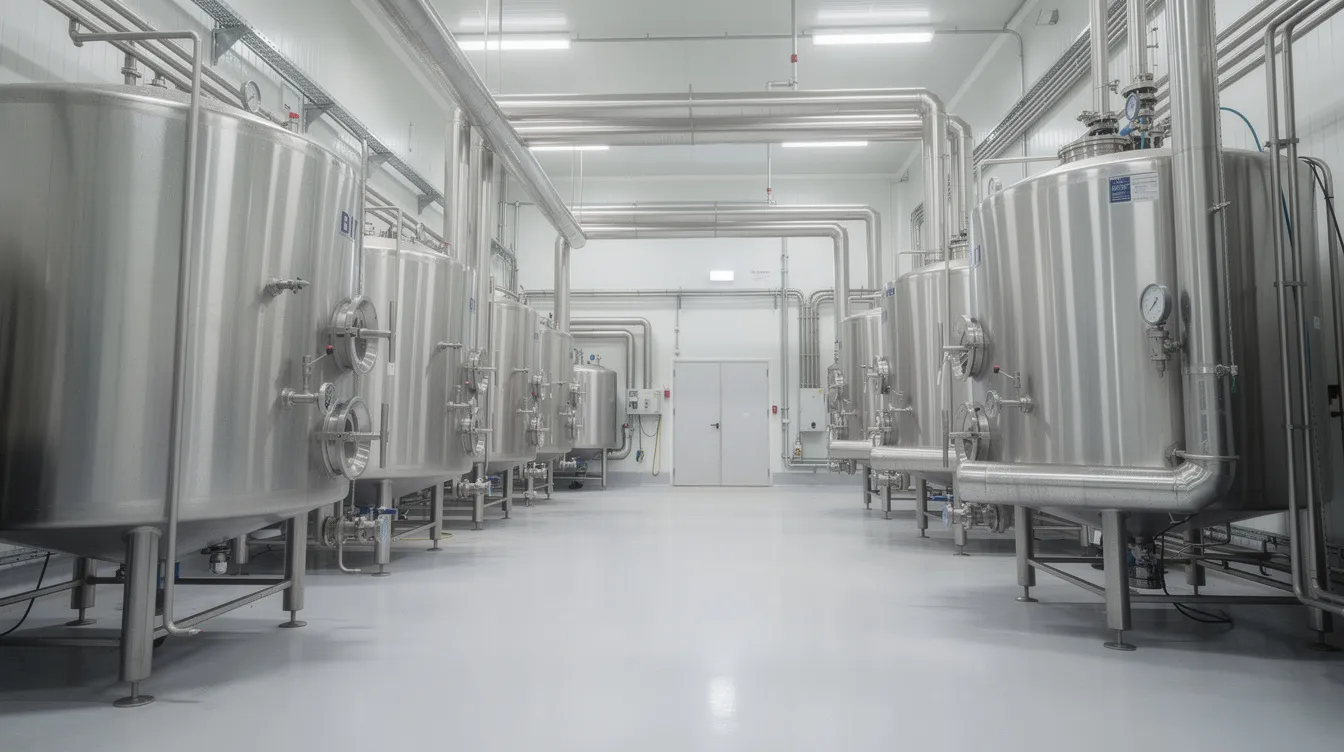
Working capital in a whey processing context is the money required to keep the plant running on a day-to-day basis. It funds the purchase of liquid whey, pays for power and steam, covers packaging inventory, bridges the gap between dispatching finished goods and collecting payment, and maintains a cash buffer for wages and overheads.
This is fundamentally different from the fixed investment in land, buildings, evaporators, membrane systems and dryers. Fixed capital is spent once (or periodically for major upgrades); working capital circulates continuously through the operating cycle.
Key terms every promoter should understand:
- Gross working capital: total current assets-inventories of raw materials, work-in-progress, finished goods, packaging materials, trade receivables and cash balances.
- Net working capital: current assets minus current liabilities (excluding bank borrowings for working capital).
- Permanent working capital: the minimum level of current assets required even at the lowest utilisation.
- Seasonal or variable working capital: additional funds needed during peak production or flush milk season.
- Peak working capital: the highest point of cash trapped in the operating cycle during the year.
- Working capital margin: the portion of working capital that the promoter must bring from own funds, not financed by the bank.
The basic formula is straightforward:
Net Working Capital Requirement = Current Assets − Current Liabilities (other than bank borrowings)
For example, if a whey processing plant’s projected current assets total ₹18.50 crore and current liabilities (trade creditors, outstanding expenses) total ₹3.00 crore, the net working capital requirement is ₹15.50 crore. Of this, the bank may finance ₹10.85 crore (70 percent, illustratively) through a cash-credit facility, while the promoter brings ₹4.65 crore as margin money.
It is also useful to distinguish between the whey processing plant working capital (the fund requirement itself) and the working capital cost (the interest and associated charges on that borrowing), which becomes a recurring operating expense.
Why Working Capital Planning Is Critical in Whey Processing
Whey processing is inherently working-capital intensive. Unlike a warehouse or trading operation, the manufacturing process involves continuous operations with perishable inputs, high utility consumption and multi-stage conversion.
Specific risks that make working capital planning non-negotiable:
- Liquid whey has a shelf life measured in hours, not days. Perishability of raw whey necessitates tight synchronization between cheese plant output and processing schedules.
- Whey processing is extremely energy-intensive, requiring significant electricity and thermal energy for evaporation, spray drying and refrigeration. Energy consumption is a major component of operating expenses.
- Membrane cleaning chemicals, CIP solutions and membrane replacement are recurring costs that must be paid promptly.
- Seasonality in milk production affects whey availability and working capital requirements-flush season can flood the plant with raw material, while lean season can leave capacity idle.
- Yield variations during ultrafiltration and concentration stages can change per-unit costs unpredictably.
Maintaining sufficient working capital is crucial for the smooth operation of whey processing facilities. During plant ramp-up in the initial 12–18 months, capacity utilisation may hover at 30–50 percent, but fixed costs and minimum inventory requirements persist.
Trade receivables compound the challenge. Institutional buyers-food manufacturers, nutraceutical companies, sports nutrition brands-often demand 30 to 60 days of credit. Export customers may stretch this further. These credit terms significantly stretch the cash conversion cycle for B2B sales, amplifying the peak working capital requirement.
Understanding how multiple processing stages extend the operating cycle is essential. The whey processing plant manufacturing process article explains these stages in detail-from clarification and pasteurization through advanced membrane filtration and spray drying-and each stage holds material and cost in the system.
Difference Between Project Cost and Working Capital
A common confusion among first-time promoters is treating project cost and working capital as the same bucket. They are fundamentally different.
The total project cost of a whey processing plant typically includes:
- Fixed capital expenditure: land and site development, civil construction, plant and machinery, utilities, effluent treatment and waste management systems. Machinery costs are the largest portion of capital expenditure. Initial investment for a whey processing plant is significant, and whey processing plants require significant capital investment for setup.
- Preliminary and pre-operative expenses: DPR preparation, legal fees, registration, trial-run costs.
- Contingency: typically 5–10 percent of fixed assets to cover unforeseen cost overruns.
- Working capital margin: the promoter’s share of day-to-day operating funds.
- Initial operating losses: sometimes included in the project cost for the stabilisation period.
A bank term loan normally finances fixed assets and certain pre-operative expenses. Working capital finance for a whey plant-the cash-credit limit or working capital loan-is a separate facility for day-to-day operations.
The promoter’s contribution towards working capital margin must be built into the whey processing plant project cost and means of finance and cannot be entirely replaced by bank borrowing. Attempting to do so increases financial stress, weakens the current ratio and signals liquidity risk to lenders.
It is equally important not to confuse whey processing plant machinery and equipment cost with operating liquidity. A ₹25 crore investment in a spray dryer is a capital investment; the ₹50 lakh monthly electricity bill to run it is an operating cost that must be funded through working capital.
Major Components of Current Assets in a Whey Processing Plant
Current assets in a whey processing plant broadly fall into five categories: raw-material inventory, work-in-progress inventory, finished-goods inventory, trade receivables and a cash-and-expense buffer.
Typical dairy and whey processing working capital is driven by raw material inventory, receivables and operating costs. Each component must be assigned a realistic holding period in days to arrive at the whey plant working capital calculation.
The sections that follow examine each component individually with illustrative assumptions drawn from Indian DPR practice.
Raw Whey and Raw-Material Inventory
Raw-material inventory for a whey processing plant includes liquid whey (both sweet whey from cheese production and acid whey from casein production or cottage cheese manufacturing), processing aids, anti-foaming agents, CIP chemicals (caustic soda, acids), membrane system consumables, and packaging materials for the final powder form products.
Raw liquid whey accounts for 50–60 percent of operating expenses and is the single largest cost driver. Operating costs for whey protein plants are driven primarily by raw material consumption. Liquid whey is typically secured via long-term supply contracts to ensure consistent availability, and it spoils within hours at ambient temperatures requiring immediate processing-so physical inventory of liquid whey is minimal (0–2 days).
However, the cash requirement can still be substantial. If the supplying dairy expects payment within 2–5 days of delivery while the whey processor takes 60+ days to convert whey into finished goods and collect payment, there is a significant financing gap.
Key raw materials and their indicative holding periods in Indian DPRs:
| Item | Illustrative Holding Days |
|---|---|
| Liquid whey | 0–2 days |
| Chemicals and CIP supplies | 10–15 days |
| Membrane spares | 15–30 days |
| Packaging materials (bags, liners, cartons) | 10–15 days |
| Fuel / coal / furnace oil (if applicable) | 7–15 days |
These ranges are illustrative only and vary by location, supplier reliability and procurement frequency.
Work-in-Progress (WIP) Inventory in Whey Processing
Work-in-progress represents the value of material that has entered the manufacturing process but is not yet classified as finished goods. In whey processing, this includes material undergoing clarification, separation, pasteurization, filtration and drying stages.
The manufacturing process involves multiple steps: whey is processed through pasteurization, filtration and drying. Ultrafiltration can concentrate whey protein to 35–80 percent protein content depending on the product grade. The longer the processing and holding cycle, the greater the work-in-process inventory requirement.
In practice, WIP holding in a whey processing plant is relatively short-typically 0.5 to 2 days-because most operations run continuously. However, higher-value intermediates such as concentrated WPC retentate or lactose mother liquor carry a disproportionately high rupee value even when physical volume is small.
Inventory turnover impacts how long cash is tied up before revenue recovery, and WIP is one area where plant design and membrane filtration technology for whey processing directly influence the whey processing plant working capital requirement. Faster filtration throughput and efficient evaporator design reduce WIP days.
Finished-Goods Inventory: Whey Powder, WPC, WPI and Lactose
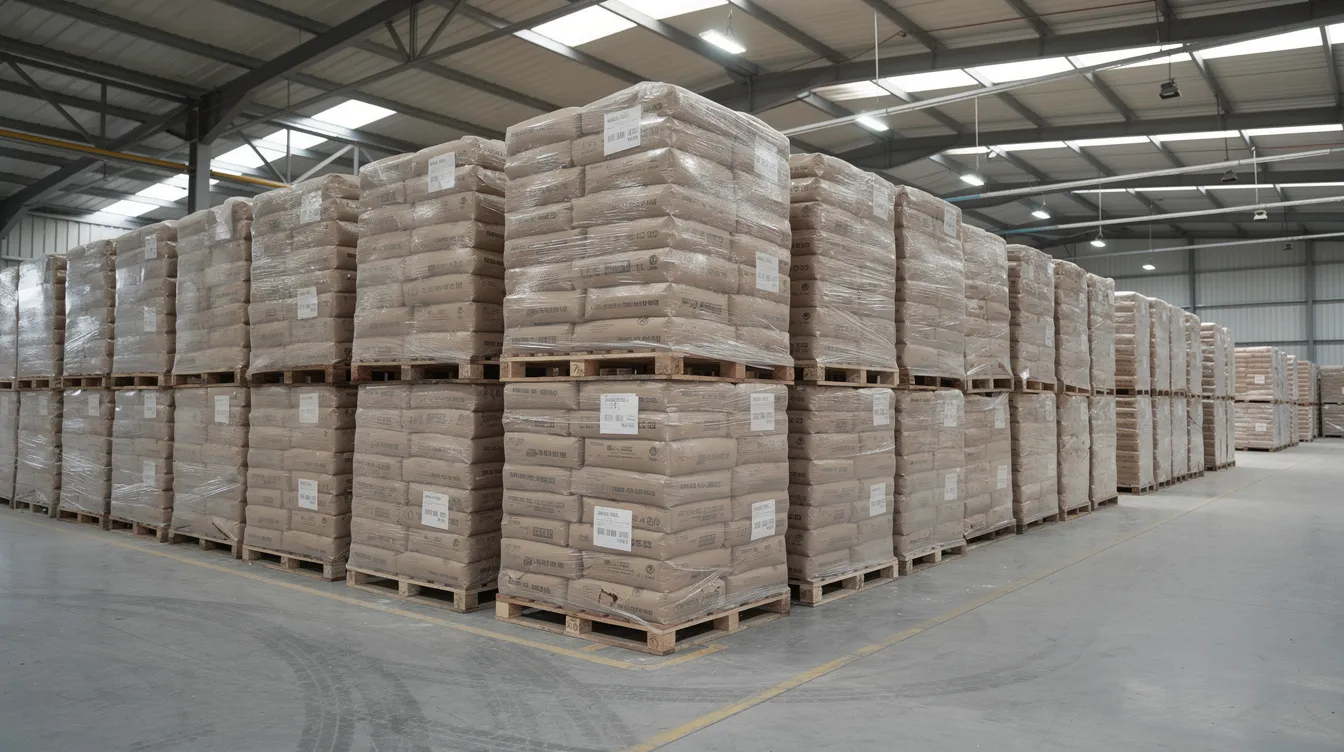
Finished-goods inventory is often the largest current-asset component by value. Whey powder production involves evaporating and spray drying whey concentrate, and the resulting products must pass through quality control, microbiological testing and batch release before dispatch.
Finished-goods categories include whey powder, whey protein concentrate (WPC35, WPC80), whey protein isolate, lactose and milk protein concentrates. Quality testing and compliance expenses continuously tie up capital in whey product manufacturing because batches cannot be shipped until cleared.
Average inventory turnover in dairy processing is approximately 18.16 days, but finished-goods holding for whey products can be considerably longer depending on the sales model:
- Domestic whey powder for food manufacturers: 15–30 days (illustrative)
- WPC for institutional buyers: 20–30 days (illustrative)
- WPI for export or sports nutrition: 30–45 days or longer due to documentation and container consolidation
- Lactose for pharmaceutical or infant formula applications: 20–40 days (illustrative)
The absolute value locked in finished-goods inventory depends on the product’s price per kg. A WPI batch worth ₹8–12 lakh per tonne ties up far more capital than a whey powder batch at ₹2–3 lakh per tonne, even if the physical quantity is smaller.
Trade Receivables from Whey and Dairy-Ingredient Customers
Trade receivables-amounts due from customers who purchase on credit-form a significant part of the whey processing plant working capital requirement in India.
Major customer segments include food and bakery manufacturers, confectionery producers, nutraceutical and dietary supplements companies, sports nutrition brands, large dairy companies, pharmaceutical buyers, infant nutrition companies and export customers. Each segment has different credit expectations.
Accounts receivable cycles for B2B customers typically operate on 30 to 60-day payment terms. However, dairy companies average 91.68 days for accounts receivable collection in some studies, which underscores the risk of assuming short collection periods. Export customers may stretch to 60–90 days including shipping, customs clearance and bank realisation.
Fluctuations in sales and credit policies affect receivables and payables. GST adds another layer: tax is payable on invoice or dispatch, but collection from the customer may come 30–60 days later, creating a financing gap that effectively increases net working capital.
For a new whey processing plant, conservative assumptions-30 to 60 days for domestic institutional sales and 60–90 days for export-should be used in the DPR. Optimistic receivable assumptions are among the most common causes of working capital shortfalls after commissioning.
Cash and Operating-Expense Buffer
Beyond inventories and receivables, a whey processing plant needs a cash buffer to meet recurring expenses that cannot be deferred.
Key monthly cash outflows include:
- Salaries and wages
- Power and fuel (high energy costs account for roughly 20 to 25 percent of total operating expenses in dairy processing)
- Steam generation and refrigeration
- Water treatment and ETP expenses
- Transport, logistics and distribution costs
- Repairs and maintenance costs, which are critical for long-term sustainability
- Laboratory testing and quality control
- Insurance
- Administrative overheads and regulatory compliance costs
- Marketing and distribution costs
Operational expenses include utility costs, maintenance, and employee wages which impact cash flow cycles. Most DPRs assume a buffer of 7–15 days of operating expenses (illustrative), funded through working capital. This buffer is especially important during the first 6–12 months when the plant is ramping up and may not yet generate stable positive cash flows.
Current Liabilities That Reduce the Working Capital Gap
Certain current liabilities offset the working capital requirement by providing short-term funding from suppliers and operational accruals.
Key items include:
- Credit from raw-whey suppliers (often limited to 2–5 days unless formal contracts exist)
- Credit from packaging suppliers (15–45 days is common)
- Deferred payment terms for chemicals and consumables
- Outstanding electricity and utility charges (typically 15–30 days)
- Accrued wages and salaries
- Customer advances (where applicable, especially for export orders)
- Accounts payable for other operational supplies
In practice, liquid whey suppliers-usually large dairies-may give very limited credit, while suppliers of packaging materials and chemicals may extend 15–45 days depending on the relationship.
A word of caution: artificially inflating creditor days in the DPR or CMA Data purely to show a lower financing requirement is a common but dangerous practice. Banks scrutinise these assumptions, and unsustainable creditor terms collapse once operations begin. Only stable, recurring and contractually supported liabilities should be considered.
Working Capital Operating Cycle and Cash-Conversion Cycle
The operating cycle traces the journey of cash through the business:
Procurement of raw whey → Processing and WIP → Finished-goods storage → Sales and invoicing → Receivables collection → Cash → Back to procurement
The net operating cycle is calculated as:
Net Operating Cycle (days) = Raw-Material Days + WIP Days + Finished-Goods Days + Receivable Days − Creditor Days
Illustrative example: 10 (raw materials) + 1 (WIP) + 25 (finished goods) + 45 (receivables) − 20 (creditors) = 61 days
This means the plant’s cash is locked for approximately 61 days in every rotation of the cycle. The cash-to-cash conversion cycle for a whey plant generally spans 60 to 90 days, and whey processing plants manage a capital-intensive cash conversion cycle. Some dairy firms’ cash conversion cycles have been observed to range from as low as −359 days (where payable days vastly exceed other components) to as high as 584 days in extreme cases.
A longer cash-conversion cycle directly increases the whey plant operating capital requirement. Reducing the cycle-through faster processing, quicker QC release, shorter collection periods or better supplier terms-is a powerful lever.
Step-by-Step Working Capital Calculation for a Whey Processing Plant
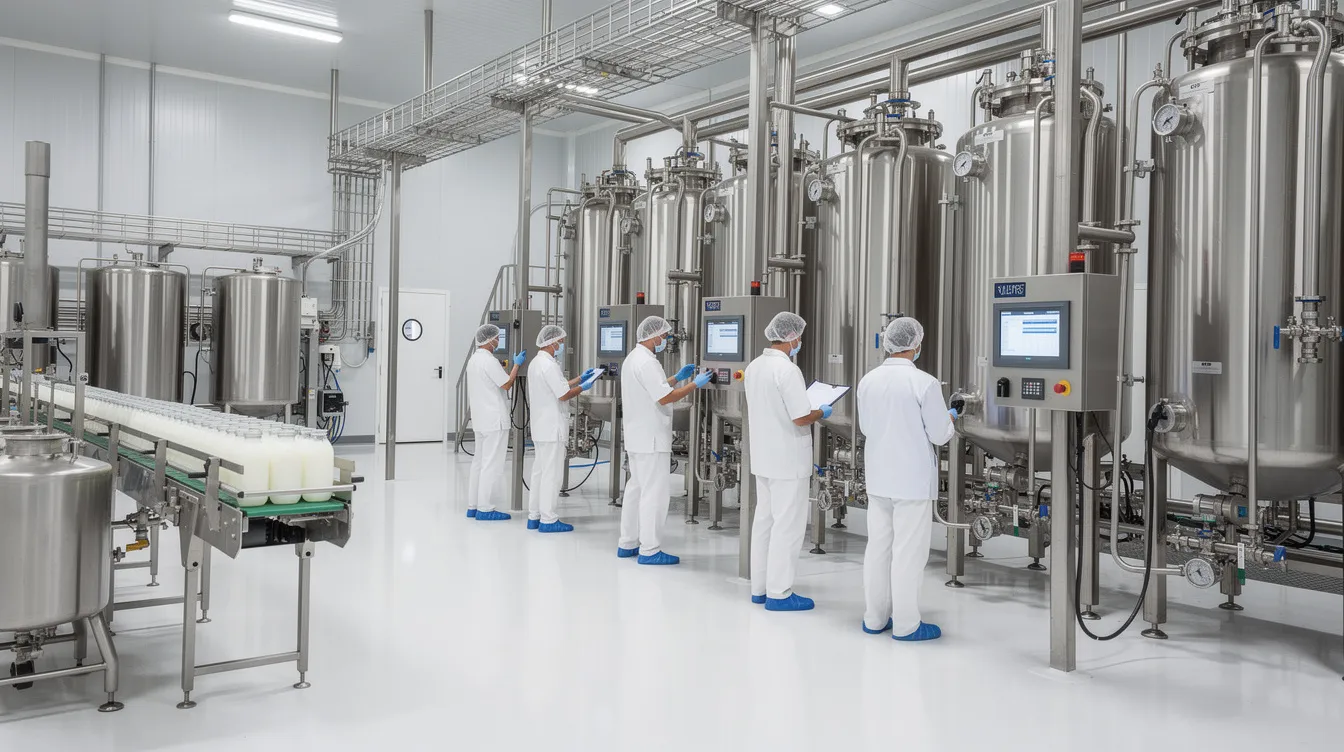
Here is a practical methodology, presented step by step:
- Estimate annual production based on plant capacity and targeted utilisation.
- Determine annual raw-material consumption at projected utilisation.
- Calculate total operating costs-raw materials, utilities, packaging, wages, overheads.
- Convert annual costs to per-day costs (÷ 365).
- Apply realistic holding periods to each current-asset component.
- Estimate trade receivables based on projected credit sales and collection period.
- Add the minimum cash and operating-expense buffer.
- Deduct eligible trade creditors and operating liabilities.
- Arrive at the net working capital gap.
- Separate promoter’s margin and proposed bank finance.
- Test the requirement at peak production, not only annual averages.
Working capital for dairy processing facilities typically runs at 15 to 25 percent of annual gross revenue as a broad cross-check, but the bottoms-up calculation is what banks expect.
Illustrative Working Capital Calculation
(All figures are illustrative estimates for explanation only, not benchmarks. Assumes a mid-sized whey processing plant at 70 percent capacity utilisation.)
| Particulars | Annual Cost / Sales (₹ crore) | Holding Period (days) | Amount Tied Up (₹ crore) |
|---|---|---|---|
| Raw materials (whey, chemicals, consumables) | 50.00 | 10 | 1.37 |
| Packaging materials | 4.00 | 15 | 0.16 |
| Work-in-progress | 55.00 (cost of production) | 1 | 0.15 |
| Finished goods | 70.00 (cost of goods sold) | 30 | 5.75 |
| Trade receivables | 100.00 (credit sales) | 45 | 12.33 |
| Cash and expense buffer | 20.00 (operating expenses excl. RM) | 10 | 0.55 |
| Total Current Assets | 20.31 | ||
| Less: Trade creditors | 30.00 (purchases on credit) | 25 | 2.05 |
| Less: Outstanding expenses | 10.00 | 15 | 0.41 |
| Total Current Liabilities | 2.46 | ||
| Net Working Capital Requirement | 17.85 |
Each amount is calculated as: Annual Cost × (Holding Days ÷ 365). For instance, raw-material inventory = ₹50.00 crore × (10 ÷ 365) = ₹1.37 crore.
From this net working capital of ₹17.85 crore, the split might be:
- Promoter’s margin (25 percent, illustratively): ₹4.46 crore
- Bank finance (cash-credit limit): ₹13.39 crore
The actual split depends on bank policy, project specifics and applicable guidelines.
Effect of Plant Capacity and Capacity Utilisation on Working Capital
Working capital requirements evolve as the whey protein manufacturing plant moves from trial runs at 30–40 percent capacity utilisation to 70–80 percent in subsequent years. Operating costs account for 50–60 percent of total expenses in whey processing, and these scale with utilisation.
However, the relationship is not perfectly linear. Some components-minimum safety stock of chemicals, base-level cash buffer, minimum staff wages-remain relatively fixed. As utilisation rises, the working capital requirement per tonne of output typically improves.
Larger installed capacity may also allow bulk procurement and negotiated supplier credit, marginally compressing the working capital cycle. The article on whey processing plant capacity planning and product mix explores how optimised capacity and product diversification can reduce inventory bottlenecks.
Promoters should include a year-wise working capital schedule in the DPR-typically Year 1 through Year 5-showing how net working capital rises with utilisation while the cycle in days may gradually reduce.
Product-Wise Working Capital Differences: Whey Powder, WPC, WPI, Lactose and MPC
Each product has a different value density, market behaviour and customer base, which alters its specific working capital profile. Whey protein concentrate and whey protein isolate are high-value ingredients derived from whey, and the whey protein sector continues to expand across functional foods, weight management, infant formula, fortified foods, muscle growth supplements and high quality infant formula applications.
| Product | Main Working Capital Drivers | Typical Inventory Concern | Receivable Consideration |
|---|---|---|---|
| Whey powder | Drying via spray dryer, bulk storage | Large-volume finished-goods inventory with long shelf life | B2B credit to food manufacturers |
| WPC (35–80%) | Membrane filtration, grade-wise segregation | Multiple grades, quality consistency requirements | Institutional and functional foods buyers |
| WPI (>90% protein content) | Advanced membrane filtration, extensive QC for essential amino acids and branched chain amino acids profile | High-value, lower-volume inventory | Sports nutrition, export, premium markets |
| Lactose | Crystallisation, further processing, drying | Slow crystallisation cycle, pharmaceutical-grade testing | Industrial, pharmaceutical, infant nutrition |
| MPC | Milk solids, filtration, high nutritional value | High-value inventory of protein rich diets ingredients | Food and nutrition companies |
Whey protein isolate contains over 90 percent protein in dry matter and commands a premium price, meaning even a few days of additional finished-goods holding ties up a significant portion of working capital. A whey powder manufacturing plant project report will show different inventory assumptions than a whey protein isolate manufacturing plant project report.
Similarly, the working capital profile of a whey protein concentrate manufacturing plant differs from that of a lactose manufacturing plant project report or a milk protein concentrate manufacturing plant.
In a multi-product dairy ingredients plant, working capital analysis in the DPR and CMA Data should model product-wise inventory and receivable days rather than using a single blanket assumption. Whey protein production across multiple grades demands this granularity.
Working Capital Assessment for Bank Finance in India
Indian banks assess working capital for whey processing plants using either the turnover method (for smaller limits, typically up to ₹5 crore) or the traditional method based on projected current assets and current liabilities-whichever gives a higher requirement.
Under the RBI Master Circular norms, assessment for smaller limits may assume roughly 25 percent of projected turnover as the working capital need, with the promoter’s margin and bank finance sharing the load. For larger facilities-which most whey processing plants are-banks expect detailed projections.
Lenders examine:
- Projected inventory and receivable norms
- Creditor days and working capital cycle
- Promoter’s margin adequacy
- Drawing power based on stock and book-debt statements
- Projected balance sheet and cash-flow statement
- Security and collateral (hypothecation of inventory, charge on assets)
- Debt-service coverage ratio (DSCR) and current ratio
- Borrower’s track record and financial credibility
The sanctioned cash-credit limit may differ from the actually drawable amount at any point, because drawing power is recalculated monthly based on verified stock and receivable values minus the applicable margin.
There is no single universal formula used by all banks. The whey plant working capital assessment depends on bank policy, applicable guidelines, the borrower’s profile and the overall risk assessment. The distinction between a term loan (for capital expenditure on fixed assets) and a cash-credit facility (for day-to-day operations) must be clearly reflected in the bank finance proposal.
Working Capital Margin in the Means of Finance
Banks typically finance only a portion of the projected working capital and expect the balance as promoter’s margin money. In Indian banking practice, this margin is often 20–30 percent of the net working capital requirement, though it varies.
Working capital margin appears as a separate line item in the project cost and means-of-finance statement, alongside term loan, equity and any unsecured promoter loans. Trying to fund the entire working capital through a term loan creates repayment pressure-term loans require EMI payments from day one of disbursement, while working capital needs fluctuate with the operating cycle.
Underestimating the whey plant margin money requirement is a frequent cause of commissioning delays. Promoters discover, after the plant is built, that they lack liquidity for the first few months of operations. The initial working capital requirement should ideally be tied up before trial production begins.
Comprehensive whey processing plant setup cost in India planning must integrate both capital investments and margin for working capital.
Role of CMA Data and Financial Projections in Working Capital Estimation
CMA Data preparation for a whey processing plant is a structured way of presenting projected financials, working capital assumptions and bank-borrowing requirements to lenders. It typically includes:
- Projected profit and loss account (5–7 years)
- Projected balance sheet
- Cash-flow and fund-flow statements
- Working capital assessment schedule
- Inventory and receivable assumptions
- Key ratios: current ratio, debt-equity, interest coverage, DSCR
The working capital schedule in CMA Data must reconcile with the projected balance sheet. If the DPR shows finished-goods holding of 30 days, the balance sheet must reflect the corresponding inventory value-not a round number picked for convenience.
Realistic assumptions about raw-material inventory, finished-goods holding days, receivable days and creditor terms are essential for a credible projected working capital requirement and for a bankable whey plant project report. Professional assistance in preparing or reviewing CMA Data helps identify gaps, avoid over- or under-estimation and present a coherent story to lenders.
Connection Between Working Capital and Profitability
A profitable whey processing plant-on paper-can still struggle to pay suppliers, salaries or interest if working capital is inadequate. Whey protein plant gross profit margins range from 40–50 percent, which appears healthy, but margins are meaningless if cash is trapped in inventory and receivables.
Working capital management affects profitability in dairy processing. The cash conversion cycle significantly relates to profitability in dairy firms-every additional day of cash lockup means more interest expense, more risk and less financial flexibility.
Scenarios that erode liquidity despite apparent profitability:
- Excess finished-goods inventory from overproduction or slow-moving whey products
- Extended customer credit beyond what the production process economics can absorb
- Sudden raw-material price trends moving upwards
- Unexpected utility-cost spikes
- High variable costs and fixed costs during low utilisation
- Excessive reliance on short-term borrowing
These dynamics are explored in the context of whey processing plant profitability and break-even analysis. The revenue-side assumptions-product mix, pricing, customer segments, export share-are covered in the whey processing plant revenue model and market applications article and directly impact receivable days and inventory strategies.
Effective working capital management is not a one-time exercise at the DPR stage. It requires continuous monitoring and adjustment through the life of the plant project.
Working Capital Sensitivity Analysis for Whey Processing Projects
Sensitivity analysis tests how the whey processing plant working capital requirement changes under different scenarios without presenting results as guarantees.
Key variables to stress-test: raw-material prices, capacity utilisation, finished-goods holding days, receivable collection period, creditor days, export share and utility costs.
Illustrative Sensitivity Table
(Base case: 70% utilisation, FG 30 days, receivables 45 days, creditors 25 days)
| Scenario | Change Applied | Net WC (₹ crore) | Change vs Base |
|---|---|---|---|
| Base case | – | 17.85 | – |
| FG days increase to 40 | +10 FG days | 19.77 | +10.8% |
| Receivable days increase to 60 | +15 receivable days | 21.96 | +23.0% |
| Creditor days reduce to 15 | −10 creditor days | 18.67 | +4.6% |
| Combined adverse | All three above | 22.78 | +27.6% |
| Optimistic: FG 20, receivables 30, creditors 35 | Improved terms | 13.42 | −24.8% |
Under the combined adverse scenario, the promoter’s margin requirement increases by nearly ₹1.25 crore (at 25 percent margin). Lenders appreciate seeing this analysis in the DPR, as it reflects the promoter’s understanding of risk management and preparedness for adverse conditions.
Common Mistakes in Estimating Whey Plant Working Capital
Frequent errors observed in practice:
- Using a flat percentage of project cost (say 15 or 20 percent) instead of a bottoms-up calculation from the operating cycle.
- Ignoring the plant’s ramp-up phase-initial years often have higher per-unit working capital due to low utilisation and slow receivable build-up.
- Assuming all sales are cash sales or collected within 30 days, when actual B2B collection may average 60–90 days.
- Underestimating packaging-material inventory and membrane consumable requirements.
- Ignoring QC testing time, batch release delays and export documentation periods that extend finished-goods holding.
- Assuming excessive supplier-credit days (e.g., 60 days from raw-whey suppliers who actually demand weekly payment).
- Not accounting for GST timing differences between tax payment on dispatch and cash collection from customers.
- Using identical holding periods for whey powder, WPC, WPI and lactose when each product has a different operational efficiency and sales cycle.
- Calculating only average working capital and ignoring peak working capital requirement during flush season or full capacity.
- Failing to reconcile the working capital schedule with the projected balance sheet and profit and loss account in CMA Data.
Practical Ways to Optimise Working Capital in a Whey Processing Plant
Pragmatic recommendations for promoters:
Supplier management:
- Negotiate structured credit with packaging-material and chemical suppliers.
- Ensure timely payment to raw-whey suppliers to avoid supply disruption-these are operational lifelines, not negotiation targets.
- Establish reliable whey-sourcing contracts that reduce procurement risk and price trends volatility.
Operational improvements:
- Align the production process with confirmed orders to reduce speculative inventory build-up.
- Reduce cycle time between production and QC clearance-faster lab testing means fewer finished-goods holding days.
- Segregate fast-moving and slow-moving SKUs in inventory to eliminate harmful microorganisms of capital being tied up in dead stock.
Receivable management:
- Set customer-wise credit limits based on accounts receivable history.
- Monitor ageing of receivables weekly, not monthly.
- Use part-advance or letter of credit for high-risk buyers.
- Encourage early-payment discounts where commercially viable.
Financial controls:
- Prepare rolling 13-week cash-flow forecasts.
- Track drawing power against monthly stock and book-debt statements.
- Review the cash-conversion cycle periodically as capacity or product mix changes.
- Reassess the whey plant working capital loan requirement annually with the bank.
Maintenance costs are critical for long-term sustainability, so optimisation should never compromise food safety, product quality, or supply reliability. Minimum safety stocks of critical raw materials, chemicals, and spares must be maintained.
Documents Required for Working Capital Finance for a Whey Processing Plant
A practical checklist for Indian bank submissions:
Project documents:
- Whey processing plant DPR with production, capacity and raw material requirements
- Detailed project cost and means of finance
- Machinery quotations and technical specifications
- Plant capacity details and product mix
- Raw-material procurement plan and supply contracts
Financial documents:
- Projected profit and loss, balance sheet and cash-flow statements
- Detailed working capital calculation with assumptions
- CMA Data with inventory, receivable and creditor schedules
- Ratio analysis (current ratio, DSCR, debt-equity)
- Bank borrowing and interest calculations
Statutory and historical documents:
- GST registrations and returns (if available)
- Bank statements (12–24 months)
- Income-tax returns and audited financials of existing businesses
- Details of existing loans and security offered
Commercial documents:
- Major supply agreements for liquid whey and packaging
- Key customer contracts or purchase orders
- Details of proposed credit terms (supplier and customer)
A clear note explaining the working capital cycle, expected collection pattern and margin contribution helps bankers understand the logic behind the proposed cash-credit limit.
How a Chartered Accountant Can Assist with Whey Processing Plant Working Capital
As a practising Chartered Accountant with over two decades of experience in project reports, DPR preparation, CMA Data and project finance advisory, I regularly assist promoters in structuring the financial aspects of whey processing plants and other dairy and food-processing projects.
Specific areas of assistance include:
- Preparation or review of the whey processing plant DPR
- Working capital assessment aligned to plant capacity, product mix and customer base
- Financial projections covering profit and loss, balance sheet and cash flow
- CMA Data preparation for presentation to banks and financial institutions
- Advising on project cost and means-of-finance planning
- Cash-flow analysis and working capital sensitivity analysis
- Helping promoters present their case effectively during bank appraisal
The role is to prepare, assist, review and advise. No professional can guarantee loan sanction, assured funding or specific profitability outcomes. The quality of a financing proposal depends on realistic assumptions, adequate promoter contribution, sound technical design, credible market potential and favourable lender appraisal.
Promoters planning a whey protein manufacturing plant, whether for whey powder, WPC, WPI, lactose, whey protein hydrolysate or animal feed-grade whey products, are welcome to reach out for a discussion on their specific project requirements.
Frequently Asked Questions
The questions below address practical concerns that entrepreneurs and dairy companies frequently raise when planning working capital for whey processing plants in India. Each project should be evaluated individually based on capacity, technology, location and product mix.
How often should the working capital requirement of a whey processing plant be reviewed?
Projections made at the DPR stage should be revisited at least annually after commissioning, and more frequently-quarterly-during the first one to two years of operations. Major changes in product mix, capacity utilisation or customer base warrant an immediate review.
Actual inventory and receivable behaviour should be compared with projections. If significant gaps emerge, the cash-credit limit should be revised with the bank through an updated stock and book-debt statement and revised CMA Data.
Can working capital be funded entirely through internal accruals without a bank cash-credit facility?
Some well-capitalised or smaller plants may choose to fund working capital from equity and internal accruals, avoiding interest costs. However, this ties up substantial promoter funds that could otherwise be deployed for capacity expansion or market development.
Many promoters adopt a balanced approach-bringing sufficient margin while availing a cash-credit facility-to retain liquidity flexibility for growth, seasonal peaks or contingencies. The choice depends on the promoter’s financial strength and risk appetite.
Does a co-located whey processing plant with an existing dairy require lower working capital?
Co-location with a cheese or dairy plant can reduce certain elements of working capital, such as raw-whey procurement risk and logistics-related inventory. The liquid portion of whey from the nearby cheese line arrives directly, eliminating transport costs and curd particles separation delays.
However, finished-goods inventory, receivables funding, packaging inventory and the cash buffer remain largely unchanged. Each integrated setup must perform a full working capital cycle analysis, as credit terms offered to customers and the product mix may remain unchanged regardless of co-location.
How early should promoters arrange working capital before starting commercial production?
Working capital facilities and promoter margin should ideally be tied up during the trial production phase, not after the first commercial dispatch. Term-loan disbursement for machinery alone is not sufficient-without adequate working capital, the plant cannot procure raw whey, pay utilities or build initial inventory.
Starting operations without arranged working capital leads to frequent stoppages, supplier delays, inability to honour customer commitments and loss of credibility with both lenders and buyers. The functional properties of many whey products-especially for high protein diets, clinical nutrition and infant formula-demand uninterrupted, quality-consistent production that only adequate liquidity can support.
Is there a standard working capital percentage for whey processing projects in India?
There is no universal percentage of project cost or turnover that fits all whey processing projects. Working capital depends on inventory policy, receivable terms, supplier credit, capacity utilisation, product profile (whey powder versus WPI versus lactose) and the proportion of domestic versus export sales.
Lenders typically expect a detailed, bottoms-up working capital estimation based on the operating cycle rather than a simple rule-of-thumb percentage. A professionally prepared DPR with realistic, supportable assumptions is always more convincing than a single percentage applied across all projects.