
Setting up a whey processing plant is not comparable to establishing a conventional fluid milk or pasteurisation unit. The capital investment, technology complexity, and regulatory requirements are fundamentally different. When liquid whey – a by-product of cheese and paneer production – must be converted into whey powder, whey protein concentrate, whey protein isolate, lactose, or demineralised powders, the range of unit operations involved expands dramatically. This means the whey processing plant project cost depends on a web of interrelated decisions around capacity, product mix, membrane technology, evaporation, spray drying, and environmental compliance rather than a single thumb rule.
This article, prepared by CA Manish Gugliya, FCA and DISA (ICAI), a practising Chartered Accountant since 2006 with specialisation in Detailed Project Reports, CMA Data, project finance, and bankable documentation, explains how to estimate the complete project cost and structure an appropriate means of finance for a whey processing facility in India.
Key Takeaways
- A whey processing plant project cost in India can range broadly from ₹8–15 crore for a small basic whey powder line to ₹100–250+ crore for a large integrated WPC, WPI and lactose facility. Exact figures depend on daily liquid whey capacity, product mix, technology level, and implementation conditions.
- Total project cost is far more than machinery price – it includes land, civil works, utilities, effluent treatment plant, freight, installation, pre-operative expenses, interest during construction, contingencies, and margin money for working capital.
- A sound means of finance typically combines promoter contribution (minimum 20–30%), a bank term loan, and working-capital limits. Lenders closely examine the debt-equity ratio, DSCR, and cash-flow-based repayment capacity before sanctioning dairy processing plant financing.
- A customised, bankable whey processing plant DPR is essential for realistic cost estimation, financial planning, and for obtaining a whey processing plant bank loan in India.
- CA Manish Gugliya and ProjectReportBank.com assist promoters with detailed project reports, cost estimation, CMA Data, term-loan assessment, working-capital assessment, and complete funding-structure planning for whey projects above ₹10 crore.
Why Whey Processing Plant Project Cost Estimation Is More Complex
Liquid whey contains only about 6–7% total solids – mostly lactose, protein, minerals, and water. Recovering high-value products from this dilute stream requires advanced membrane filtration, multi-effect evaporation, spray drying, and sometimes lactose crystallisation, none of which feature in a basic fluid milk dairy. A detailed mass balance is essential for determining the required input and output specifications, and this balance drives the sizing of every major equipment block.
The composition of liquid whey – protein content, lactose percentage, acidity, and whether it is sweet whey (from cheese) or acid whey (from paneer or Greek yoghurt) – drastically changes the manufacturing process, equipment selection, and ultimately the cost of whey processing plant. A simple whey powder plant requires only concentration and drying, while a whey protein manufacturing plant targeting WPC 80 or WPI 90 needs multiple membrane stages, sophisticated controls, and stringent hygiene design.
Setting up a whey processing plant involves significant capital investment, and key factors influencing project costs include scale, technology, and regulatory compliance. When promoters ask about whey processing plant project cost in India, the answer must consider all these variables rather than relying on a generic template.
CA Manish Gugliya (FCA, DISA – ICAI), practising since 2006, specialises in preparing detailed whey processing plant project reports, cost assessments, and means-of-finance structures for banks and investors. Promoters seeking a quick high-level view of whey processing plant setup cost in India may also refer to that resource, while this article focuses specifically on project cost breakdown and funding structure.
Understanding Whey Processing Plant Project Cost
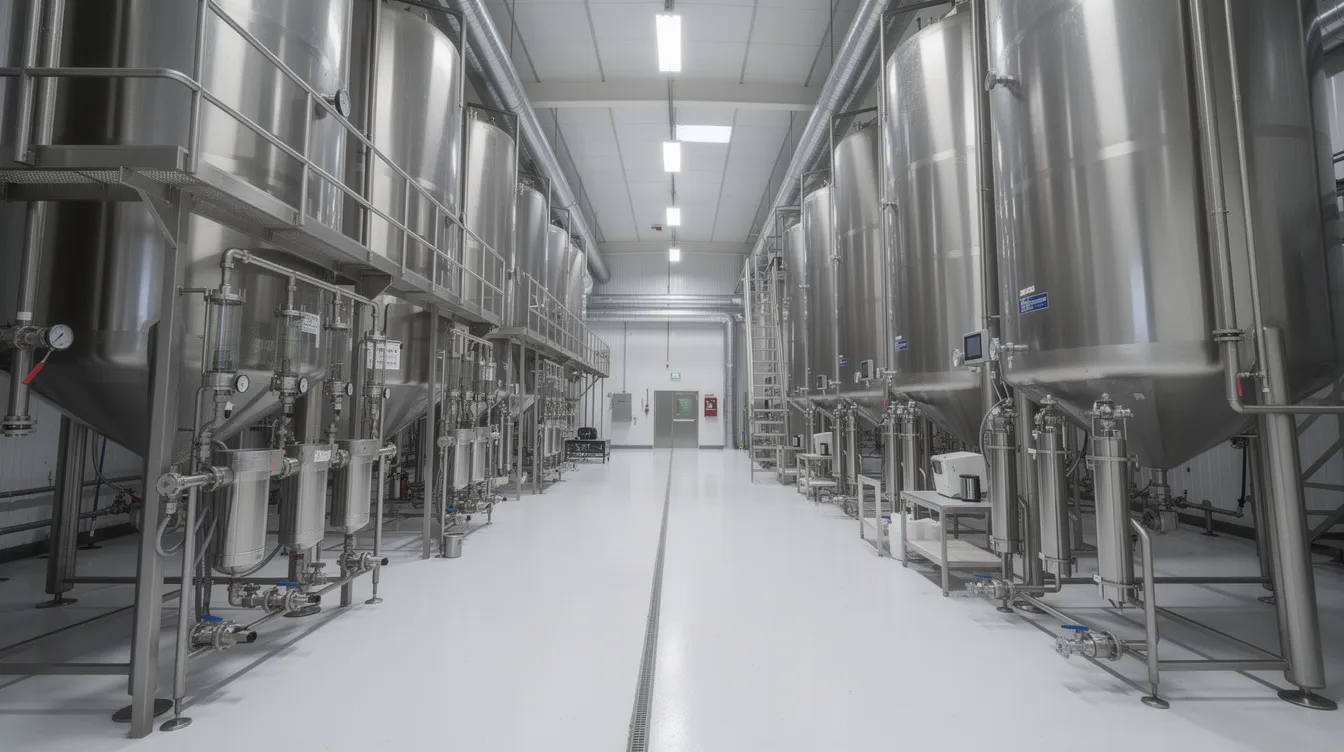
In a bankable whey processing plant DPR, “project cost” is the comprehensive investment figure that banks use to assess the term loan requirement and overall whey processing project finance. It is not simply the machinery purchase price.
Plant setup cost covers land, building, machinery, utilities, and installation. Total project cost adds interest during construction, pre-operative expenses, contingencies, and margin money for working capital on top of setup cost. Fixed capital investment refers to tangible long-term assets – land, building, plant and machinery, utilities. Working-capital requirement represents funds blocked in stock, receivables, and day-to-day operating expenses after commissioning, assessed separately. Margin money for working capital is the promoter-funded portion of the working-capital gap, and it forms part of the total project cost. The total funding requirement is the sum of project cost plus any additional working-capital finance not capitalised.
Capital expenditures for whey processing plants often include major components like land, machinery, and utilities. Simply requesting a whey processing plant machinery cost quotation for a spray dryer and UF system does not capture civil construction, land and building cost, infrastructure, ETP, or pre-operative expenses. The total project cost figure is the base for structuring the whey processing plant means of finance – promoter contribution, term loan, subsidy, and unsecured loans.
For expansion projects within existing dairies, land cost may be minimal, but integration with the existing manufacturing plant and utilities still requires careful budgeting within fixed capital investment.
Major Factors Affecting Whey Processing Plant Cost in India
Whey processing plant cost in India varies widely even for similar capacities. Technology choices, plant layout, local construction rates, and targeted product quality all play a role. The primary cost driver in whey processing is capacity and scale.
Capacity and raw-material factors: Daily liquid whey capacity – whether 50,000 litres or 5,00,000 litres – determines economies of scale. Whey composition matters: sweet whey from cheese typically has higher lactose and a favourable pH, while acid whey requires different handling, affecting both equipment material and processing cost. Whey solids percentage and concentration ratio govern the size of the ultrafiltration system, nanofiltration system, reverse osmosis plant, and evaporation plant. Higher product-recovery targets need more advanced process controls and higher whey processing equipment cost.
Processing and technology: During the whey processing plant manufacturing process, liquid whey is pasteurised and filtered. Ultrafiltration produces whey protein concentrate with 70–80% protein. Whey protein isolate contains over 90% protein after additional filtration. Spray drying converts liquid protein into dry powder form. Enzymatic hydrolysis creates whey protein hydrolysate for faster absorption. Advanced filtration technology is essential for high-quality whey protein, and understanding whey membrane filtration technology is critical for sizing these systems correctly. Whey processing technology can significantly affect machinery expenses due to the required complexity of equipment.
Automation and compliance: High automation levels in whey processing can require substantial initial investment, though automation can reduce labour costs over the long term. GMP certification is required for whey protein manufacturing facilities, and regulatory certification costs can impact overall expenses. High-quality materials like stainless steel are essential for maintaining food safety. Environmental compliance is a critical consideration in budgeting.
External factors: Costs of a whey processing plant vary among regions due to local regulations and construction costs. Imported machinery from European suppliers (GEA, Tetra Pak) costs 20–30% more than Indian equivalents but may offer higher efficiency. Provisions for future expansion marginally increase initial investment but save cost later.
Capacity and product selection are jointly planned before freezing the plant design and investment budget – a process explained in detail in our guide on whey processing plant capacity and product mix.
Capacity-Wise Whey Processing Plant Cost
Capacity must be defined not only in litres per day of liquid whey, but also in terms of whey solids processed, expected powder output per day, and targeted protein-product output, considering operating hours and shifts. Whey protein plant capacity typically ranges from 5,000 to 10,000 MT annually for medium-to-large facilities.
| Input Capacity (Liquid Whey) | Probable Products | Technology Level | Major Equipment | Investment Intensity | Suitable Promoter |
|---|---|---|---|---|---|
| 50 KL/day | Whey powder only | Basic membrane + spray dryer | Small UF, single-effect evaporator, compact dryer | Low (₹8–15 crore indicative) | Standalone MSME with existing cheese plant |
| 1,50 KL/day | WPC 35–50, whey powder | Intermediate UF/RO, multi-effect evaporator, mid-size spray dryer | UF + RO trains, MVR evaporator, packaging line | Medium (₹25–60 crore indicative) | Integrated dairy, mid-size cooperative |
| 3,00–5,00 KL/day | WPC 80, WPI, lactose, permeate powder | Advanced multi-stage membranes, high-capacity spray dryer, lactose crystalliser | Full membrane train, large evaporator, tall drying tower, CIP, automation | High (₹100–250+ crore indicative) | Large cooperative, corporate dairy, JV |
Assumptions: Greenfield site in an Indian dairy cluster, medium-to-high automation, standard building specifications. All figures are illustrative ranges, not vendor quotations.
Very small stand-alone whey plants are often unviable unless integrated with an existing cheese or paneer manufacturing plant to ensure continuous liquid whey supply and shared utilities.
Product Mix and Its Impact on Project Investment
Product mix selection is one of the biggest drivers of whey processing plant capital investment and long-term profitability. The global whey protein market was valued at USD 5.69 billion in 2025 and is projected to reach USD 7.69 billion by 2034, growing at a CAGR of 3.41% from 2026 to 2034. Whey protein demand is driven by health and fitness trends, sports nutrition, clinical nutrition, and protein enriched diets, making high-value products increasingly attractive.
Whey protein concentrate contains about 70–80% protein by dry weight. Whey protein isolate comprises over 90% protein with minimal lactose, and WPI production costs 30% to 50% more than WPC due to additional purification stages. Whey protein manufacturing costs range from Rs 700 to Rs 1,100 per kg depending on grade and scale.
| Product | Processing Stages | Major Technology | Investment Intensity | Value-Addition | Key Financial Risk |
|---|---|---|---|---|---|
| Whey powder | Pasteurisation, concentration, spray drying | Evaporator, spray dryer | Low | Moderate | Commodity pricing |
| WPC 35–80 | UF, RO, evaporation, spray drying | Membrane modules, dryer | Medium | High | Membrane replacement cost |
| WPI 90+ | UF, NF, additional purification, spray drying | Advanced membranes, ion-exchange | High | Very high | Strict quality, export dependency |
| Lactose | Permeate concentration, crystallisation, drying | Crystalliser, centrifuge, dryer | Medium-High | Moderate-High | Market volatility |
| Demineralised whey powder | Ion-exchange or electrodialysis, drying | Demineralisation plant | High | High | Technical complexity |
For a detailed understanding of each product line, promoters may refer to the whey powder manufacturing plant project report, the guide on setting up a Whey Protein Concentrate manufacturing plant, or the Whey Protein Isolate manufacturing plant resource. Those exploring lactose recovery should review the lactose manufacturing plant project report. Broader dairy-protein strategies can be compared against the casein and caseinate manufacturing plant project report and the milk protein concentrate manufacturing plant guide.
A whey processing plant DPR must lock the final product mix and grades before freezing the cost and funding structure, because each additional purification step escalates both capital investments and operating costs.
Whey Processing Plant Project Cost Breakdown
Banks expect clear segregation of each project-cost component in the whey processing plant DPR and CMA Data. All values in the report are estimates based on vendor quotations, architectural drawings, and realistic implementation schedules.
Land and Site Development
Land costs include purchase price or long-term lease premium, stamp duty, registration, and conversion charges. Site development covers levelling, soil compaction, boundary wall, approach and internal roads, drainage systems, guard room, gates, and security infrastructure. Whey plant land and building cost varies widely between industrial estates in Gujarat, Maharashtra, Uttar Pradesh, Punjab, and Karnataka. For expansions within an existing dairy campus, incremental site-development cost might be limited to internal roads and utility corridors.
Factory Building and Civil Construction
Civil construction includes processing halls, membrane rooms, evaporation and drying towers, liquid whey reception area, packaging section, finished-goods warehouse, quality-control laboratory, utility block, administration office, and staff amenities. Design must consider floor loadings for large tanks, height for spray-drying towers, food-safety norms, and future expansion. Costs include foundations, structural steel, RCC works, dairy-grade flooring, insulated roofing, and cold rooms. Faulty budgeting of civil works is a common cause of cost overruns in whey projects.
Plant and Machinery
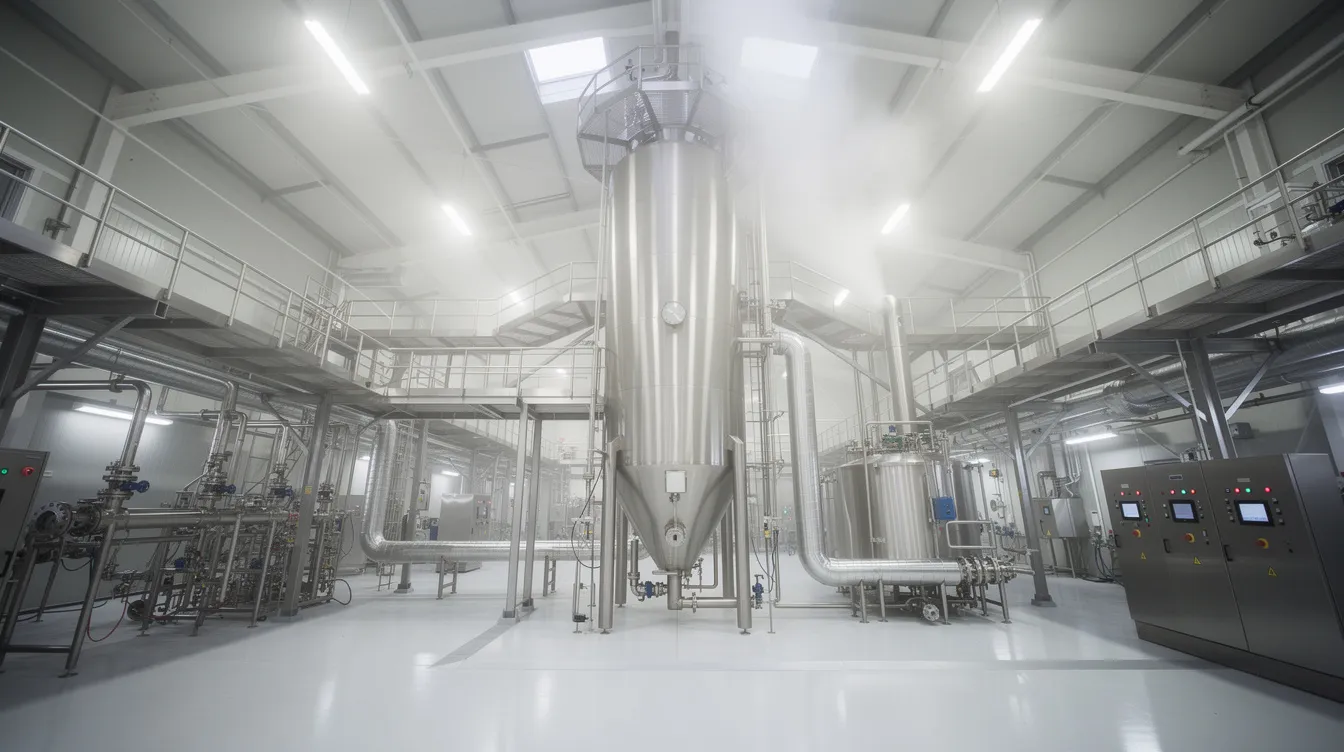
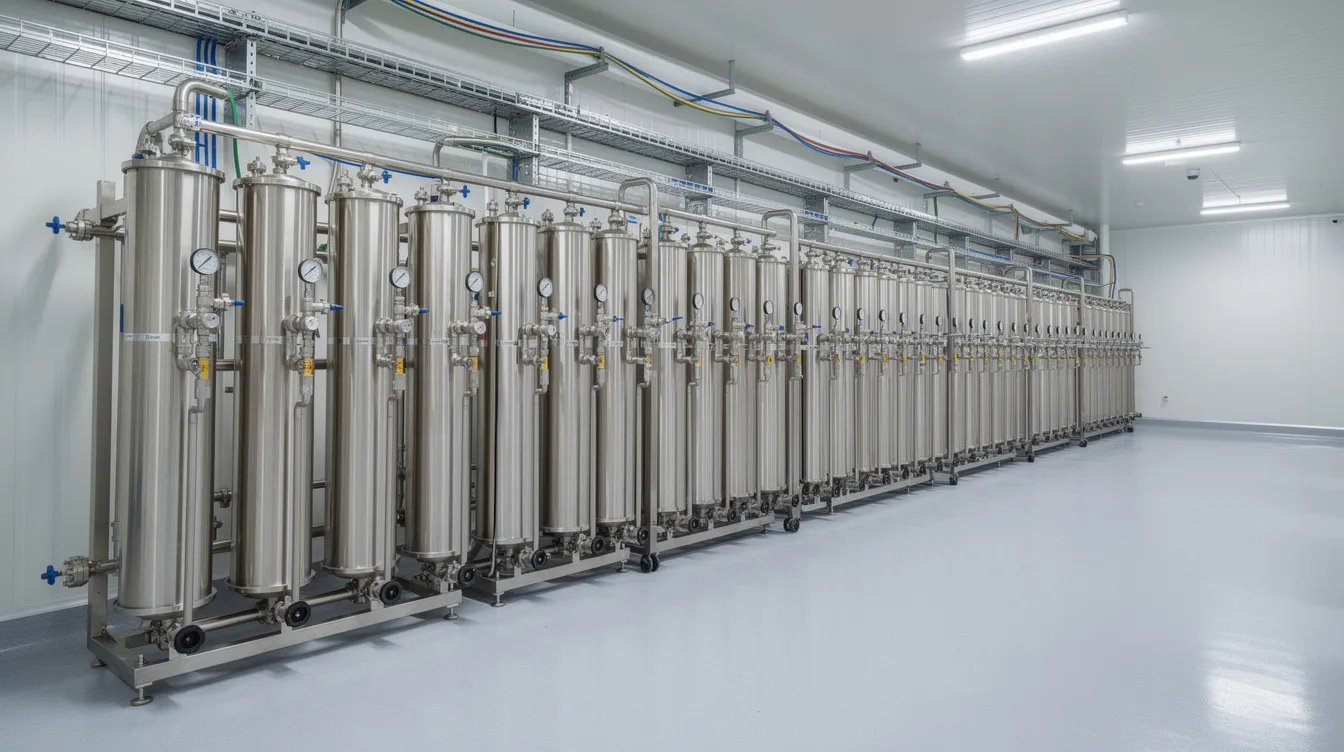
Machinery costs constitute the largest portion of capital expenditure in a whey processing plant, typically 40–55% of total project cost. Key equipment groups include whey reception and storage tanks, clarification and fat-separation equipment, pasteurisation system, microfiltration, ultrafiltration, nanofiltration and reverse osmosis systems, demineralisation equipment, multi-effect or falling-film evaporator, spray dryer with atomisers and fluid-bed cooler, crystallisation and lactose recovery equipment, powder handling and conveying systems, packaging line, CIP system, and process-control automation (PLC/SCADA).
Detailed guidance on whey processing plant machinery and equipment cost helps promoters understand how machinery selection, capacity, and supplier choice significantly influence total investment. Imported items involve customs duty, freight, and clearing charges in addition to ex-works prices. Based on SMP plant benchmarks, a high-efficiency spray dryer for a 15 MT/day powder line costs ₹8–15 crore from European suppliers, with Indian equivalents at roughly 20–30% lower.
Utilities and Supporting Infrastructure
Whey processing involves several utility types, including water, steam, and electricity. Key systems include boiler and steam distribution, refrigeration and chilled-water plant, electrical installations with transformer and HT/LT panels, water-treatment plant, compressed-air system, effluent treatment plant, fire-safety system, and material-handling equipment. Utilities demand for whey processing requires substantial amounts of energy, particularly for evaporation and spray drying. A robust effluent treatment plant is necessary for whey processing to manage high-strength wastewater, with ETP costs for large dairy plants ranging from ₹8–50 crore depending on capacity and discharge norms.
Freight, Installation and Commissioning
Capital budgeting must include freight and logistics, transit insurance, unloading, erection, mechanical installation, piping, insulation, cabling, instrumentation, testing, trial runs, and process commissioning. Underestimation of these costs is a common mistake, particularly with large evaporation and spray-drying systems.
Technical Know-How and Consultancy
This head covers process-design fees, detailed engineering, architectural services, legal advisory, financial consultancy including DPR and CMA Data preparation, and project-management support. For advanced products like WPC, WPI, and lactose, technology partnerships may involve separate fees.
Preliminary and Pre-Operative Expenses
Preliminary expenses include company incorporation and initial professional fees. Pre-operative expenses cover statutory approvals (pollution control, FSSAI, factory licence), salaries during construction, training, travel, insurance during the construction period, and trial production losses before commercial production. These directly increase total project cost and therefore the term-loan requirement.
Contingencies
Contingency provisions serve as a buffer for unforeseen cost increases – design refinements, currency fluctuations, or price escalation. Lenders expect reasonable physical and price contingencies. Zero contingency is viewed as a red flag in project-finance appraisal.
Interest During Construction
Interest during construction (IDC) is the interest accrued on the term loan from first disbursement until commencement of commercial operations. IDC estimation requires a clear implementation schedule, phased drawdown plan, and assumed interest rate range. Delays in civil works or machinery delivery can increase IDC significantly.
Margin Money for Working Capital
Only the stipulated margin money for working capital is usually capitalised into total project cost. The remaining working-capital requirement is funded through separate cash-credit or other facilities. A typical whey processing plant working capital structure involves inventories of finished whey powder, WPC, WPI, packing materials, chemicals, and receivables from institutional or export buyers. Under-provision of working-capital margin can strain liquidity even if the plant is technically successful.
Illustrative Whey Processing Plant Project Cost Table
The following table illustrates indicative project cost for a medium-to-large whey processing plant (approximately 3,00,000 litres/day liquid whey, producing WPC + whey powder + some lactose recovery) with advanced membrane and spray-drying technology.
| Cost Head | Indicative Range (₹ Crore) | % of Total Project Cost |
|---|---|---|
| Land and site development | 3–8 | 3–5% |
| Building and civil works | 10–18 | 15–20% |
| Plant and machinery | 30–45 | 40–55% |
| Utilities (boiler, refrigeration, water treatment, compressed air) | 5–10 | 8–12% |
| ETP and environmental systems | 5–12 | 5–10% |
| Laboratory and quality-control equipment | 0.5–1.5 | 1–2% |
| Electrical installation | 2–4 | 3–5% |
| Freight and insurance | 1.5–3 | 2–4% |
| Installation and commissioning | 2–4 | 3–5% |
| Technical consultancy | 1–2.5 | 1.5–3% |
| Preliminary expenses | 0.3–0.8 | 0.5–1% |
| Pre-operative expenses | 1–3 | 1.5–3% |
| Interest during construction | 3–7 | 5–8% |
| Contingency | 3–6 | 5–8% |
| Margin money for working capital | 3–6 | 4–7% |
| Total Project Cost | ~70–130 | 100% |
This example is for guidance only – not a standard quotation. Actual cost depends on capacity, location, technology, product mix, and time of implementation. For project-specific estimates, a customised whey processing plant DPR must be prepared based on actual quotations and site details.
Ongoing operational costs associated with whey processing include raw materials, utilities, and labour. Operating expenses account for 50–60% of total costs, and are primarily driven by raw liquid whey costs. Gross profit margins for whey protein typically range between 40–50%.
What Is Means of Finance for a Whey Processing Plant?
Means of finance shows how the total project cost will be funded. Banks verify whether the funding pattern is realistic, timely, and fully tied up.
Typical components include promoter contribution (capital from owners), equity share capital, internal accruals for expansion projects, term loan from banks or financial institutions for fixed assets, unsecured loans from promoters or directors (sometimes treated as quasi-equity), subordinated debt instruments, eligible capital subsidy or grant (only after checking scheme eligibility), strategic investor contribution, and equipment finance or leasing where suitable.
Total means of finance must exactly match the total project cost. Dependence on uncertain sources – such as an expected but unapproved subsidy – should be highlighted with alternative back-up funding options.
Illustrative Means of Finance Structure
| Source of Finance | Indicative Share (%) | Indicative Amount (₹ Crore)* |
|---|---|---|
| Promoter’s equity contribution | 20–30% | 14–39 |
| Unsecured loans (quasi-equity) | 0–5% | 0–6.5 |
| Bank term loan | 55–70% | 38.5–91 |
| Eligible subsidy or grant | 0–5% | 0–6.5 |
| Total Means of Finance | 100% | ~70–130 |
Amounts correspond to the illustrative project cost range above. Actual debt-equity ratio and promoter contribution depend on project risk, banking policy, collateral, and promoter financial strength.
A balanced whey processing plant financial structure aims to keep DSCR comfortable while avoiding over-leveraging the balance sheet. For reference, Uttar Pradesh’s dairy expansion policy expects 30% promoter equity for dairy plants of approximately ₹100 crore, with eligible grants of about ₹5 crore.
Promoter Contribution and Debt-Equity Ratio
Promoter contribution demonstrates financial commitment and risk-sharing. Banks assess the promoter’s net worth, liquidity, source of funds, and capacity to bring additional funds if costs escalate. Unsecured loans from promoters may be subordinated to bank debt and treated as quasi-equity under certain conditions.
Debt-equity ratio measures leverage – excessively high leverage increases risk, especially for technologically complex whey projects with volatile product prices in the global whey protein market. Promoter margin funded from fresh personal borrowings without repayment capacity is viewed negatively by lenders. Documentary evidence for the source of promoter funds is essential during appraisal. Acceptable ratios vary by lender and scheme, but the structure must be backed by realistic cash-flow projections.
Term Loan for a Whey Processing Plant
A term loan finances fixed assets – land development, building, plant and machinery, utilities, ETP, and electrical works, and sometimes part of pre-operative expenses and margin money. Loan tenure is linked to asset life and projected cash flows, typically 7–10 years including a moratorium period covering construction and stabilisation.
Banks disburse the term loan in stages against invoices and utilisation statements, monitoring promoter-margin infusion and physical progress. Security includes a primary charge on project assets, collateral security, and personal or corporate guarantees of promoters. Interest-rate assumptions in projections should reflect realistic prevailing ranges without promising any fixed rate.
Working Capital Finance for Whey Processing Operations
The working-capital cycle runs from procurement of liquid whey to realisation from customers. Key components include input cost of liquid whey, packaging materials, chemicals and consumables, inventory of finished products (whey powder, WPC, WPI, lactose, protein powder in powder form), receivables from institutional buyers or dietary supplements companies, and ongoing expenses including power, steam, and labour. Seasonal whey availability affects stock build-up patterns.
Working-capital finance – cash-credit, WCDL, bill discounting, or export packing credit – is sanctioned based on projected turnover, inventory norms, and internal rating. Non-fund-based facilities such as LCs for imported membranes and bank guarantees may also be required. The distinction between variable costs (whey procurement, energy) and fixed costs (salaries, lease rentals, insurance) matters for accurate working-capital assessment.
Bank Loan Requirements for a Whey Processing Plant
Bankers examine both technical and financial dimensions before sanctioning a whey processing plant bank loan.
Appraisal focus areas:
- Promoter profile, experience in dairy or food processing, and financial background
- Availability and assured supply of liquid whey – tie-ups with cheese or paneer units
- Realistic capacity-utilisation assumptions supported by raw material requirements and market demand
- Product-market assessment including domestic and export demand, competitor landscape, and price trends
- Detailed machinery quotations, plant layout, and process-flow diagrams
- Statutory approvals, land title or lease documents, and project-implementation schedule
- Projected P&L, balance sheet, cash-flow statement, and expenditure projections
- Break-even analysis, DSCR, interest-coverage ratio, and debt-equity ratio
- Sensitivity analysis covering key risk factors
Comprehensive and realistic DPRs significantly improve the clarity and speed of appraisal, though they do not guarantee approval.
Role of DPR in Whey Processing Project Finance
A customised whey processing plant DPR is the central document through which promoters present the project to lenders and investors. Generic reports rarely satisfy bank requirements for sizable projects. Initial investment for a whey processing plant is significantly high, making thorough documentation essential.
A well-prepared DPR contains promoter background, a comprehensive market overview including whey protein industry trends (demand for protein powders, functional foods, functional food products, weight management supplements, and export markets), the technical manufacturing process route, capacity and product mix rationale, raw-material availability assessment, and a detailed plant and machinery list with vendors and cost estimation. It presents project cost in a structured format, means of finance, revenue assumptions, operating expenses (including direct and indirect costs, distribution costs, human resource requirements), and projected financial statements for the entire loan tenor.
Financial projections include capital investment, operating costs, and expected ROI. Key analytical sections cover fund-flow statement, working-capital assessment, loan-repayment schedule, DSCR analysis, break-even point, ROI and internal rate of return, net present value, and sensitivity analysis on key variables. CA Manish Gugliya prepares such bankable project reports and CMA Data after discussing assumptions in detail with promoters and technology providers.
Financial Viability Indicators Considered by Lenders
Understanding viability indicators helps non-finance promoters prepare for appraisal discussions.
- Gross contribution (sales minus variable costs) must cover fixed costs, loan instalments, and provide adequate margin. Amino acid profile and protein content drive product pricing, which in turn determines contribution.
- EBITDA margin measures operating profitability before interest, tax, depreciation, and amortisation.
- Break-even capacity indicates the minimum utilisation percentage for no-loss-no-profit.
- Cash accrual (profit after tax plus depreciation) is the primary source for servicing term-loan instalments.
- DSCR (Debt Service Coverage Ratio) – lenders prefer comfort over the full tenor, not just isolated years.
- Interest-coverage ratio signals resilience during tough market phases.
- Return on investment and IRR indicate overall project attractiveness. Payback period shows time required to recover promoter investment.
The financial viability of a whey processing plant can be influenced by the local dairy industry’s trends and milk cycles. Total operational costs are expected to increase significantly by year five due to inflationary pressures and membrane replacement schedules. Acceptable ranges for all these indicators depend on lender policies, collateral support, and promoter experience – they must be assessed case-by-case.
Government Schemes and Subsidy Considerations
Various central and state schemes periodically announce subsidies or grants for food and dairy processing, cold chain, and export-oriented units. Promoters should check currently applicable schemes from official government portals and verify eligibility criteria, investment limits, location restrictions, and conditions relating to plant capacity.
Subsidy should not be assumed automatically. Disbursement may occur after project completion, creating a time gap between investment and receipt. The funding plan should remain viable even if subsidy is delayed, reduced, or not received. All scheme benefits must be verified from current official sources before inclusion in any manufacturing plant project report.
Common Mistakes in Project Cost and Means of Finance
Based on experience reviewing whey processing plant DPRs, CA Manish Gugliya frequently encounters:
- Treating machinery price as the full project cost, ignoring civil, utilities, and pre-operative expenses
- Underestimating freight, installation, and commissioning – particularly for large spray drying systems
- Neglecting ETP and environmental-compliance costs despite high-COD whey effluent and waste management systems requirements
- Ignoring membrane-replacement expenses and high energy costs in operating expenses forecasts
- Providing inadequate contingency despite using imported technology
- Underestimating implementation time and thereby interest during construction
- Providing insufficient margin for working capital, causing liquidity stress after commissioning
- Assuming capital subsidy as confirmed finance before approval
- Presenting unrealistic promoter contribution or concealing the source of margin money
- Mismatch between project cost and total means of finance in financial statements
- Over-optimistic capacity-utilisation or selling-price assumptions without market research support
- Not aligning repayment schedule with projected cash-accrual pattern
- Using one generic cost template for very different product mixes without adjusting machinery and technology requirements
A professional review before approaching banks can help avoid these issues and improve credibility.

How to Prepare a Bankable Funding Plan
A step-by-step approach for promoters:
- Finalise product mix (whey powder, WPC grades, WPI, lactose, permeate powder) based on market study, industry trends, and strategic goals – consider demand for complete protein products, sports nutrition, infant formula, clinical nutrition, and high protein diets.
- Assess sustainable availability and quality of liquid whey, including long-term agreements with cheese or paneer plants. Key raw materials must be assured before committing capital.
- Choose feasible processing capacity considering whey availability and realistic sales potential.
- Obtain comparable machinery quotations for the selected production process route and automation level.
- Estimate civil-construction and utility requirements based on preliminary engineering layouts.
- Compile all project-cost components – land, building, machinery, utilities, installation, consultancy, pre-operative expenses, IDC, contingencies, and margin money.
- Estimate implementation period and phase-wise cash outflows.
- Assess working-capital requirement and corresponding bank finance and promoter margin.
- Structure the term loan so that DSCR remains comfortable over the full repayment tenor.
- Prepare realistic financial projections (P&L, balance sheet, cash flows) and test DSCR, break-even, ROI, and IRR under conservative as well as expected scenarios.
- Conduct sensitivity analysis, then finalise the DPR and supporting documents for bank submission.
CA Manish Gugliya typically works closely with technology vendors and promoters through these steps to align technical and financial aspects of the whey processing project, covering all key regulatory procedures.
Illustrative Financial Sensitivity Scenarios
Sensitivity analysis tests how financial indicators behave when critical assumptions change. This is particularly important given the whey protein market’s price volatility and seasonal raw-material availability.
| Variable Tested | Base Case | Moderate Stress | Severe Stress |
|---|---|---|---|
| Capacity utilisation | 80% | 65% | 50% |
| Selling price change | As projected | –10% | –20% |
| Whey procurement cost | As projected | +15% | +25% |
| Power and fuel cost | As projected | +10% | +20% |
| DSCR indication | Comfortable (>1.5) | Tight but acceptable (~1.25) | Stressed (<1.15) |
| IRR indication | Attractive | Moderate | Below threshold |
Figures are qualitative illustrations. Actual sensitivity must be modelled using project-specific data. Lenders increasingly expect such scenario analysis in DPRs for sizable whey processing plant project finance proposals.
Additional stress variables to test include increased interest rate, delay in commissioning, increased machinery and civil cost, longer receivable periods, and delay in subsidy receipt.
Frequently Asked Questions
How much does a whey processing plant cost in India?
A small integrated whey powder line attached to an existing dairy may start from ₹8–15 crore. A mid-capacity WPC facility could range between ₹25–60 crore. A greenfield high-capacity WPC/WPI and lactose facility can cross ₹100–250 crore. Final investment depends on daily whey volume, desired products, technology level, utility design, and location-specific costs. For projects above ₹10 crore, a customised whey processing plant DPR and cost estimation is strongly recommended before approaching banks. The whey protein sector continues to attract attention from both domestic and global investors as the whey protein continues to grow in demand.
What is included in the total whey processing plant project cost?
Total project cost includes land and site development, factory building, plant and machinery, utilities and ETP, electrical installations, freight and insurance, installation and commissioning, technical consultancy, preliminary and pre-operative expenses, interest during construction, contingencies, and margin money for working capital. Machinery price alone captures only a fraction of the total investment required for commercial operations of a whey processing unit. Essential amino acids and branched chain amino acids present in the final product enhance its nutritional value, but the equipment required to achieve high nutritional quality adds to capital cost.
Is working capital included in the project cost for bank finance?
Typically, only the margin money for working capital is included within total project cost. The remaining working-capital requirement is funded through separate facilities like cash-credit and non-fund-based limits. Banks assess these based on projected turnover, inventory, and receivable norms. The whey protein solution for working-capital assessment lies in realistic modelling of the operating cycle. Market research and a comprehensive understanding of digestive enzymes, functional properties, and protein rich diets that drive buyer demand help validate receivable assumptions.
Can an existing dairy company use internal accruals as promoter contribution?
Yes. For expansion projects, retained earnings and internal accruals of an existing dairy company can form part of the promoter contribution. Banks will verify the source through audited financial statements, and the contribution must be infused ahead of or alongside term-loan disbursement. This approach is common among established companies with a whey protein brand or a presence in casein production looking to add a whey processing line to eliminate harmful microorganisms from liquid whey and convert it into value-added dairy ingredients.
What documents are required for a whey processing plant loan?
Banks typically require a detailed project report (DPR) with financial projections, CMA Data, machinery quotations with technical specifications, land title or lease documents, statutory approvals, promoter KYC and net-worth statements, audited financials of existing entities, plant layout and process-flow diagrams, supply arrangements for liquid whey, and offtake agreements or market-assessment reports. A well-prepared manufacturing plant project report significantly improves appraisal speed and clarity.
Conclusion
Accurate estimation of whey processing plant project cost and careful design of means of finance must follow final decisions on capacity, raw-whey availability, technology route – including membranes, evaporation, and spray drying – product mix, plant setup layout, and market strategy. A realistic whey processing plant project cost and funding pattern cannot be standardised and must be prepared specifically for each project through a customised DPR and financial-feasibility study.
Such a DPR helps promoters and investors assess viability, structure a balanced debt-equity ratio, plan term-loan and working-capital facilities, and present the project professionally to banks and financial institutions. Whether the goal is a simple whey powder line or an integrated facility producing WPC, WPI, and lactose, the discipline of structured project-cost estimation and risk management separates bankable proposals from wishful planning.
Dairy entrepreneurs, cooperatives, ingredient manufacturers, and investors planning a whey processing project are invited to contact CA Manish Gugliya through www.projectreportbank.com for assistance with:
- Whey processing plant DPR and project report preparation
- Project cost estimation and means of finance planning
- CMA Data and detailed financial projections
- Term-loan and working-capital assessment
- DSCR, break-even, ROI, and IRR analysis
- Bank finance documentation and lender discussions for whey and other dairy-processing projects