Key Takeaways
- UHT milk is commercially sterile milk produced by ultra high temperature heat treatment – typically around 135–150°C for 2–5 seconds in continuous flow – followed by aseptic processing and hermetic packaging in pre sterilized containers.
- The core UHT milk process flow chart runs: raw milk reception → quality testing → clarification → chilling → standardisation → preheating → homogenisation → UHT heat treatment → holding → rapid cooling → aseptic buffer storage → aseptic filling and sealing → coding and dispatch.
- Heat treatment alone does not guarantee shelf life or safety. Both the UHT sterilisation process and the aseptic packaging (aseptic carton, aseptic pouches, plastic bottles) jointly determine whether the product achieves commercial sterility and long shelf life of 6 to 12 months at ambient temperature.
- From a project promoter’s perspective, technology choice – direct vs indirect heating, packaging format, automation level and utility infrastructure – directly affects capital expenditure, operating cost, energy efficiency and overall commercial viability of the UHT milk manufacturing plant.
Introduction: Why UHT Milk Matters in Modern Dairy Business
The UHT milk manufacturing process has become one of the most important capabilities in organised dairy processing across India. As modern retail chains, institutional buyers (railways, defence, school nutrition programmes), HoReCa establishments and e-commerce platforms demand shelf-stable milk that can travel long distances without refrigeration, ultra high temperature processing has moved from a niche technology to a mainstream requirement.
UHT processing is not simply about heating milk to a higher temperature. It is a combination of controlled high-temperature heat treatment plus hygienic, aseptic processing and packaging. If commercially sterilised milk is exposed to microbial contamination at any point before final hermetic sealing, the entire benefit of UHT treatment is lost. This single principle governs every design and operating decision in the production line.
A properly engineered industrial UHT milk manufacturing process directly influences product safety, commercial sterility, shelf life, flavour, nutritional value, packaging performance, energy consumption and ultimately, project feasibility. For regions with weak or unreliable cold chains, a well-planned UHT milk manufacturing plant can unlock distribution channels that pasteurized milk simply cannot reach. Serious entrepreneurs and borrowers should consider a comprehensive UHT milk processing and aseptic packaging plant project report as an essential planning tool before committing capital.
What Is UHT Milk and How Is It Different from Pasteurised Milk?
UHT stands for ultra high temperature. UHT milk is milk that has been rapidly heated to a very high temperature – typically in the range of about 135–150°C for only a few seconds (commonly 2–5 seconds) – and then cooled and packaged under aseptic conditions. The result is a commercially sterile product. Commercially sterile means that any surviving microorganisms and spores cannot grow under normal, non-refrigerated storage conditions for the intended shelf life. This is not the same as claiming absolute sterility in a laboratory sense.
Because UHT milk is sealed in hermetically closed, pre sterilized containers, unopened packs can usually be stored at ambient temperature for 6 to 12 months, depending on the process, packaging materials and storage conditions. Once opened, however, the sterile atmosphere is broken and the product must be refrigerated and consumed within a few days, just like any fresh milk.
UHT also allows for filling of large containers for food service and institutional supply – a significant commercial advantage over short-life pasteurized milk.
Key differences at a glance:
- Pasteurized milk is heated to around 72°C for 15 seconds without achieving commercial sterility. It requires an uninterrupted cold chain and offers a shelf life of roughly 2–3 days in loose distribution or 5–7 days in packaged form.
- Ultra-pasteurised or ESL (extended shelf life) milk uses a higher temperature than standard pasteurisation, usually still requires refrigeration, and extends shelf life moderately.
- UHT milk undergoes ultra high temperature processing combined with aseptic packaging, making it shelf-stable at room temperature – a true long life milk product.
Overview of the UHT Milk Manufacturing Process Flow Chart
Below is a simplified UHT milk process flow chart showing the typical sequence of operations in an industrial UHT milk production line. Real plants may add, rearrange or combine steps such as deaeration, fortification or inline blending depending on product type and equipment design.
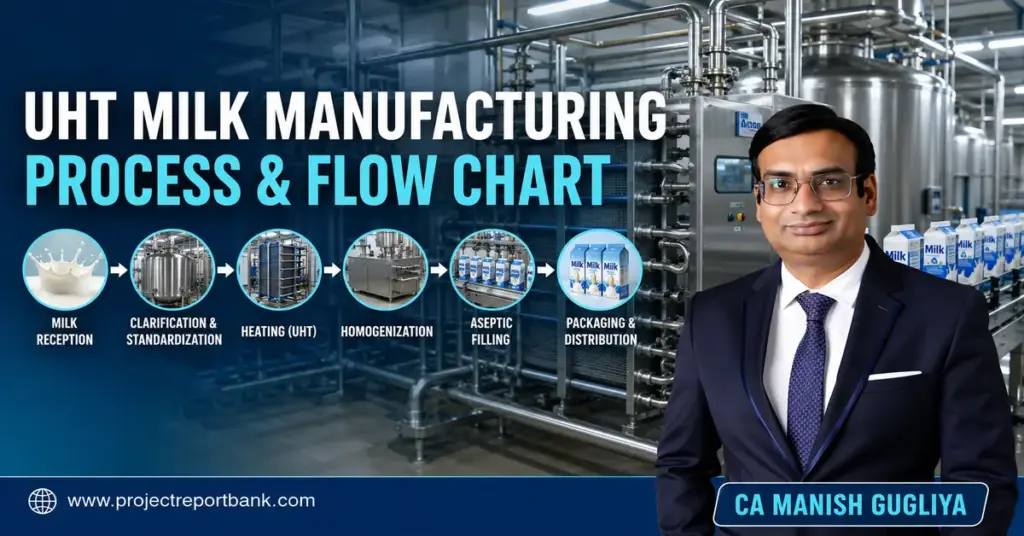
Raw Milk Reception → Quality Testing → Filtration & Clarification → Chilling & Raw Milk Storage → Standardisation → Preheating → (Optional Deaeration) → Homogenisation → UHT Heat Treatment (Direct Heating / Indirect Heating) → Holding Section → Rapid Cooling / Flash Cooling → Aseptic Buffer Tank → Aseptic Filling & Sealing → Coding & Secondary Packaging → Finished Goods Storage & Dispatch
The exact position of homogenisation, flash cooling, deaeration and standardisation may change depending on the selected UHT milk processing technology, product type (plain, flavoured, fortified) and specific production line design. This UHT milk processing plant flow diagram serves as a conceptual reference when discussing projects with dairy technologists, equipment suppliers and lenders.
The following table summarises each stage with its purpose, equipment and a key control consideration.
Tabular Summary of UHT Milk Manufacturing Stages
| Process Stage | Main Operation | Purpose | Major Equipment / Systems | Key Control Consideration |
|---|---|---|---|---|
| Raw milk reception | Tanker unloading, weighment, sampling | Receive and record incoming milk | Weighing tank, pumps, sampling valves | Reception temperature, traceability |
| Raw milk quality testing | Lab and platform tests | Confirm milk quality and suitability | Milk analyser, pH meter, antibiotic test kits | Acidity, antibiotic residues, heat stability |
| Filtration and clarification | Physical removal of impurities | Eliminate sediment and foreign matter | Inline filters, centrifugal clarifier | Filter condition, clarifier efficiency |
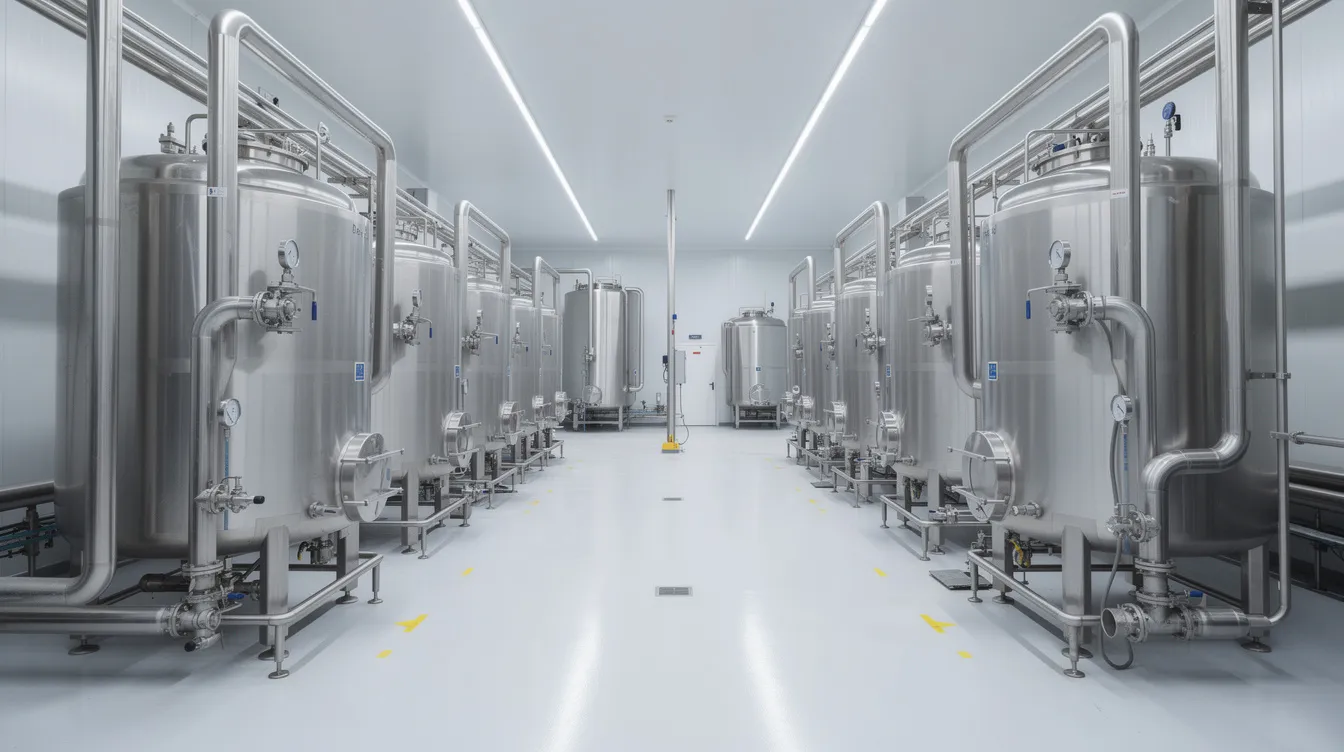
| Chilling and raw milk storage | Cooling to ~4°C, insulated storage | Prevent microbial growth before processing | Plate chiller, insulated silos with agitators | Temperature, maximum holding time |
| Milk standardisation | Adjust fat and SNF content | Meet product specification | Inline fat standardiser, mixing tanks | Fat and SNF accuracy |
| Preheating | Gradual temperature rise via heat recovery | Improve energy efficiency, prepare for homogenisation | Plate heat exchangers, balance tank | Preheat temperature, flow rate |
| Optional deaeration | Remove dissolved air and volatiles | Improve heat transfer and flavour stability | Vacuum chamber / deaerator | Vacuum level, process time |
| Homogenisation | Reduce fat globule size under pressure | Prevent cream separation, improve mouthfeel | Two-stage homogeniser | Homogenisation pressure (first and second stage) |
| UHT heat treatment | Rapid heating to sterilisation temperature | Achieve commercial sterility | Direct heating systems (steam injector/infusor) or indirect (plate, tubular, scraped surface heat exchangers) | Product temperature, holding time, flow rate |
| Holding section | Maintain target temperature for validated time | Ensure required microbial lethality | Holding tube | Residence time, outlet temperature |
| Rapid cooling / flash cooling | Quick temperature reduction | Prevent overcooking, preserve quality factors | Vacuum flash vessel (direct), regenerative coolers (indirect) | Cooling rate, outlet temperature |
| Aseptic buffer tank | Sterile intermediate storage | Balance processing and filling speeds | Aseptic tank with sterile air over-pressure | Sterile pressure, tank integrity |
| Aseptic packaging | Filling into sterilised packs and sealing | Maintain sterile atmosphere, hermetic closure | Aseptic filling machine for aseptic carton, aseptic pouches, or bottles | Packaging sterilant concentration, seal integrity |
| Coding and secondary packaging | Batch code, carton packing, palletisation | Traceability, dispatch readiness | Ink-jet coder, case packer, palletiser | Code legibility, pack count accuracy |
| Finished-goods storage | Ambient warehouse storage | Hold until dispatch | Warehouse, pallet racking | Temperature, humidity, protection from sunlight |
Step-by-Step UHT Milk Manufacturing Process (Industrial Scale)
The following numbered sequence explains each UHT milk processing step in operational order.
1. Raw Milk Reception Milk arrives in insulated road tankers from collection or chilling centres. Each tanker is weighed, sampled and temperature-checked before unloading into reception tanks. Traceability records link every lot to its source. Poor-quality raw milk – whether adulterated, high in spore count or containing antibiotic residues – cannot be corrected merely through UHT treatment or aseptic processing.
2. Raw Milk Quality Testing Platform and laboratory tests cover sensory evaluation (appearance, smell, taste), temperature, fat and SNF content, acidity and pH, adulteration screening, antibiotic residue testing, microbial load estimation and the alcohol or heat-stability test. Antibiotic residues can interfere with processing conditions and affect product stability, while poor heat stability leads to protein coagulation inside heat exchangers.
3. Filtration and Clarification Incoming milk passes through inline strainers and centrifugal clarifiers to remove visible dirt, sediment and suspended foreign matter. This protects downstream equipment and improves finished-product cleanliness.
4. Chilling and Raw Milk Storage Milk is cooled to approximately 4°C using plate chillers and stored in insulated silos with gentle agitation. Holding time must be minimised to limit psychrotroph growth, which produces heat-stable enzymes capable of causing defects even after UHT processing.
5. Milk Standardisation Fat and SNF content are adjusted to match the target product – full-cream, standardised, toned, double-toned, skimmed UHT milk, or fortified and flavoured variants. Applicable Indian food standards and labelling requirements must be verified for each product category.
6. Preheating Milk is gradually heated using regenerative plate heat exchangers, which recover heat from the outgoing hot product stream. This indirect heating step improves energy efficiency significantly and brings the milk to a suitable temperature for homogenisation and subsequent high-temperature sterilisation.
7. Optional Deaeration / Degassing In many UHT milk production lines, dissolved air and undesirable volatile compounds are removed under vacuum before high-temperature treatment. The UHT process includes this degassing step because removing air improves heat-transfer performance, reduces oxidative flavour damage and improves aseptic filling accuracy.
8. Homogenisation Milk passes through a two-stage homogeniser that limits particle size of milk fat globules and prevents cream separation during storage. Typical first-stage pressure ranges from approximately 10–30 MPa, with the second stage at 3–5 MPa. Whether homogenisation is positioned upstream (before UHT treatment) or downstream (after, in aseptic conditions) depends on the heating system. In direct heating systems, downstream aseptic homogenisation is common; in indirect systems, upstream placement is typical.
9. UHT Heat Treatment This is the core step of ultra high temperature processing. Milk is heated rapidly to the sterilisation target – UHT processing typically heats products to 135–150°C for 2–5 seconds – using either direct heating systems (steam injection or steam infusion where the product makes direct contact with high pressure steam of potable or culinary quality) or indirect systems using plate heat exchangers, tubular heat exchangers or scraped surface heat exchangers where the heating medium is separated from the product by a metal surface. The objective is to destroy vegetative microorganisms and inactivate relevant spores to achieve commercial sterility while UHT processing minimizes heat damage to flavor and nutrients through rapid heating and cooling.
10. Holding Section After reaching the target temperature, milk flows through a validated holding tube where it is maintained at the UHT temperature for the designed holding time. The combination of flow rate, holding-tube dimensions and product temperature determines the effective lethality of the treatment.
11. Rapid Cooling / Flash Cooling Milk must be cooled quickly to avoid overcooking. In direct heating systems, flash cooling under vacuum in a vacuum chamber instantly removes the added steam condensate and volatile off-flavours, restoring the original solids concentration. In indirect systems, regenerative cooling sections and a separate cooling medium bring the product temperature down efficiently. The cool down time leads to less cooked flavour and better nutritional retention when minimised.
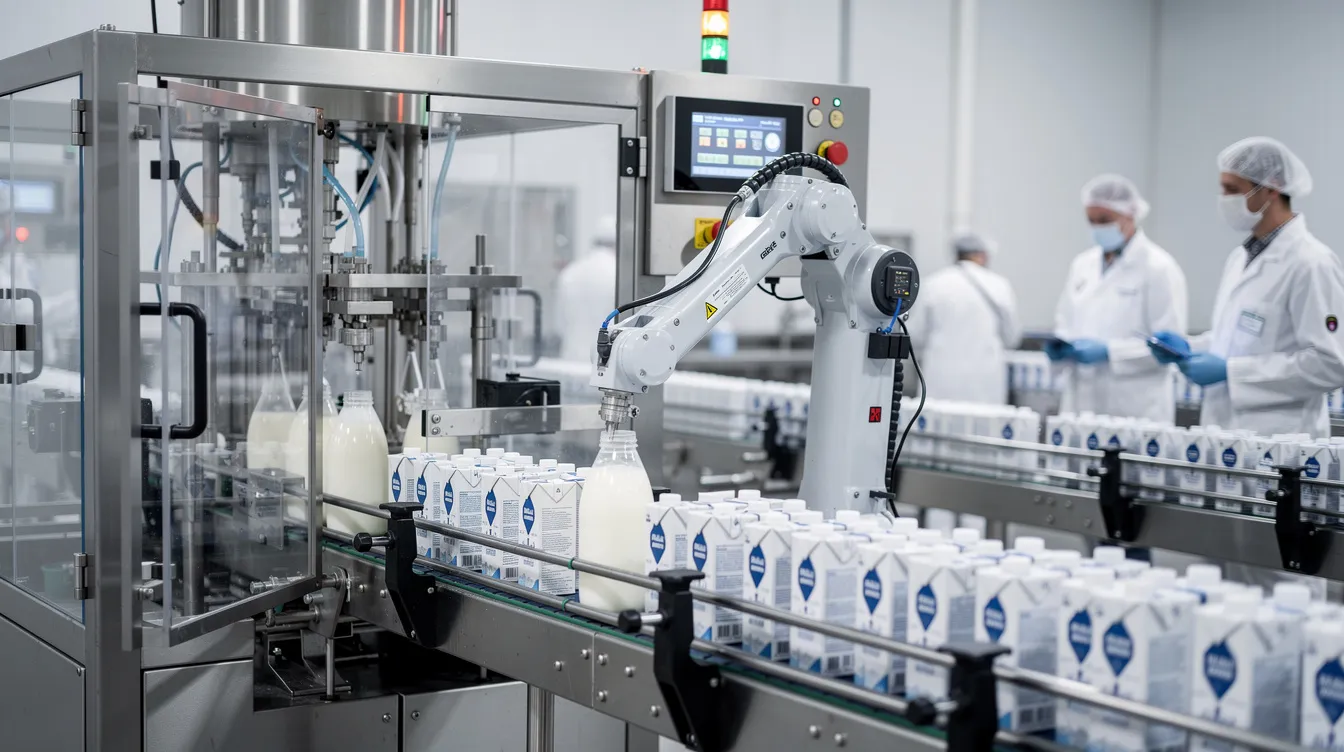
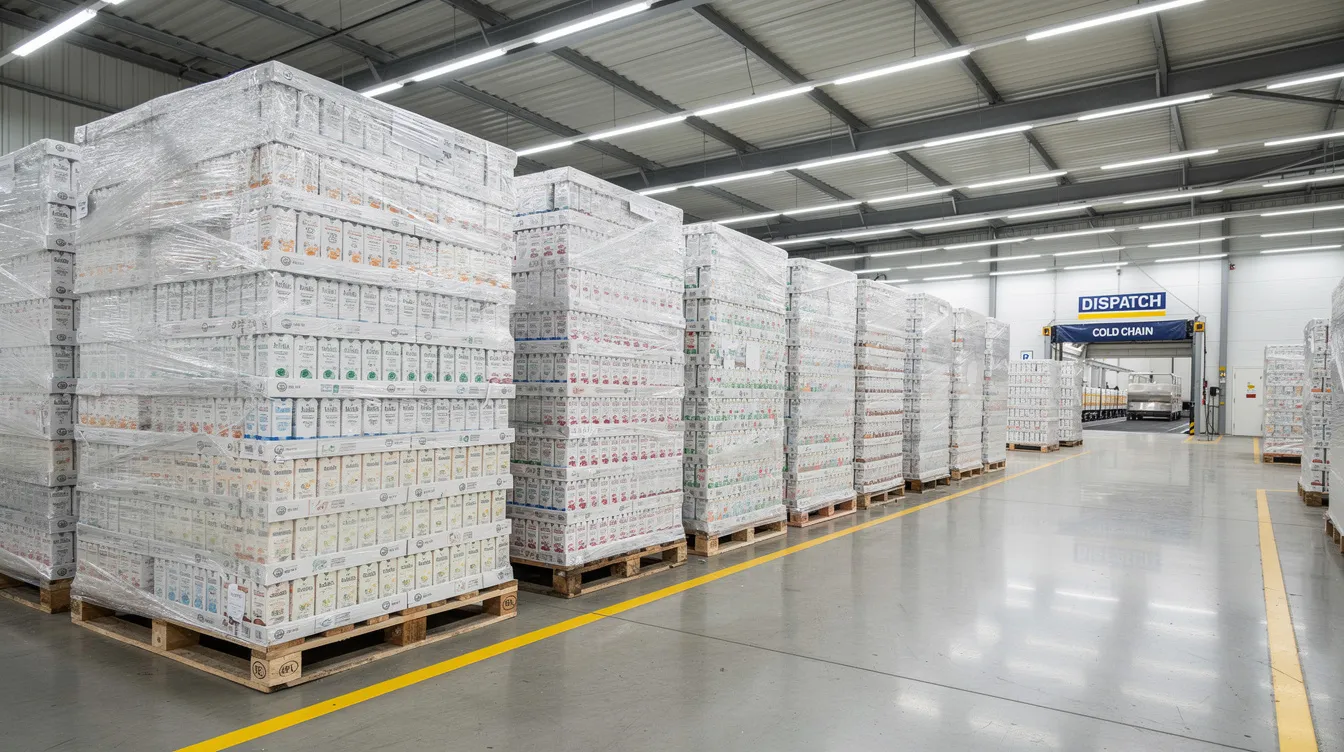
12. Aseptic Buffer Storage, Aseptic Filling, Coding and Packing Cooled, commercially sterile milk enters an aseptic buffer tank maintained under sterile air over-pressure. From there, it flows to the aseptic filling machine where it is filled into pre-sterilised packaging materials – typically aseptic cartons consisting of 3–7 layers (paperboard, aluminium foil, polyethylene) for light resistance and barrier protection, or aseptic pouches and plastic bottles. The packaging process includes hermetic sealing to prevent microbial re-entry. UHT milk can be packaged in aseptic cartons that extend shelf life to 6–9 months at room temperature. UHT milk in bottles has a shelf life of approximately 6 months at room temperature. Batch coding, secondary carton packing and palletisation complete the line before finished goods are stored and dispatched at ambient temperature. This laminated packaging approach, combined with the sterile atmosphere maintained throughout, is what makes the product truly shelf-stable.
Direct vs Indirect UHT Milk Processing Methods
The UHT milk production process employs two principal methods for heating milk to sterilisation temperatures: direct heating and indirect heating. Some modern plants use hybrid approaches combining elements of both.
In direct UHT processing, culinary steam of potable or culinary quality is brought into direct contact with milk – either by injecting steam into the milk stream (steam injection) or by allowing milk to fall through a steam-filled chamber (steam infusion). Heating is virtually instantaneous, with minimal come up time. The milk is then flash-cooled under vacuum, which simultaneously removes the condensed water and volatile off-flavours. Direct heating minimizes heat damage and preserves flavor better than indirect methods, but demands very high-purity steam, more complex controls and higher skilled operators.
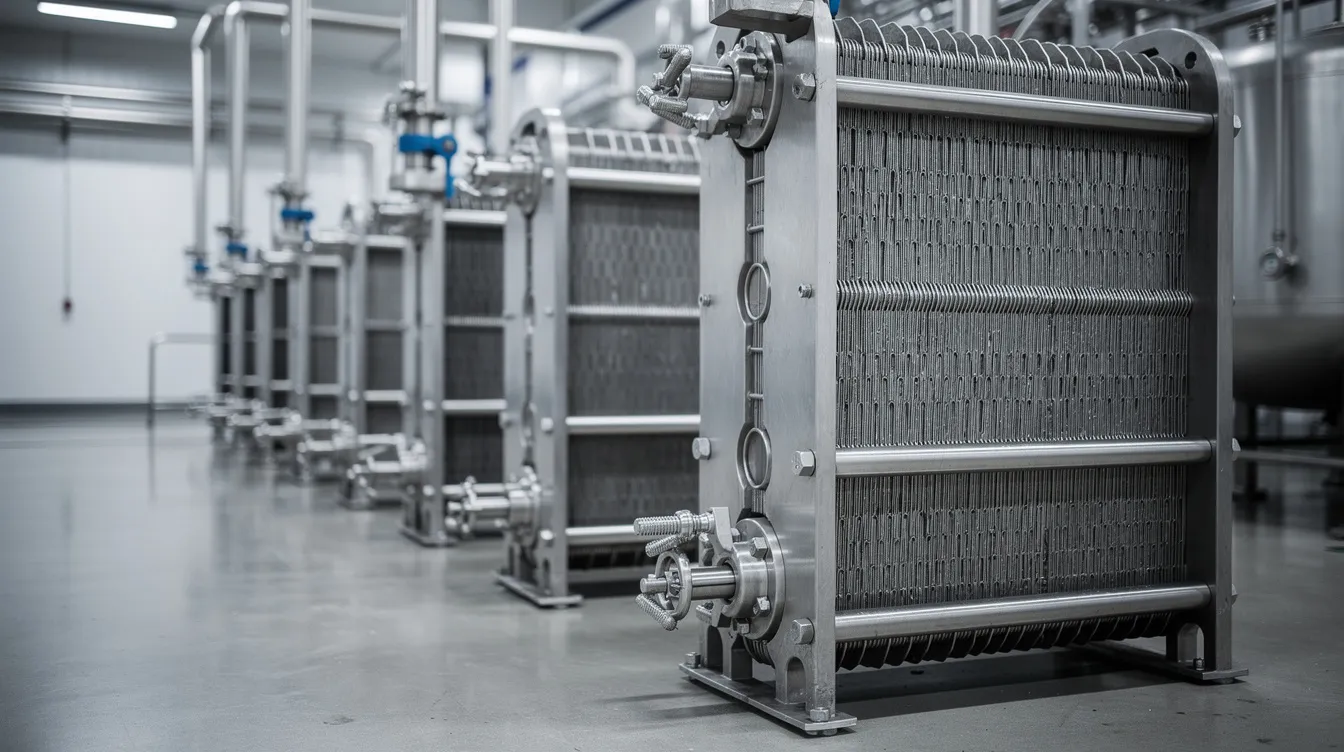
In indirect UHT processing, the product and the heating medium are always separated by a metal heat-transfer surface. Equipment options include plate heat exchangers, tubular heat exchangers and scraped surface heat exchangers (the last being used for viscous or particulate products). Indirect heating allows excellent regenerative heat recovery (often exceeding 80–90%) and simpler utility integration. However, the slower come-up and cool-down times result in a higher cumulative heat load, which may produce a more noticeable cooked flavour. Indirect heating generally requires higher temperatures and longer processing times to compensate for slower heat transfer dynamics.
| Parameter | Direct UHT | Indirect UHT |
|---|---|---|
| Heating method | Steam injection or infusion (direct contact) | Plate, tubular or scraped surface heat exchangers |
| Heating / cooling speed | Extremely rapid | Moderate – slower come-up and cool-down |
| Heat load & flavour impact | Lower heat load; fresher flavour profile | Higher heat load; possible cooked or caramelised notes |
| Energy recovery | Lower (flash cooling loses some energy) | Higher (regenerative recovery 80–90%+) |
| Process complexity | Higher – vacuum flash vessel, steam purity controls | Lower – simpler piping and utility setup |
| Maintenance | More specialised | Generally simpler |
| Product suitability | Best for plain milk and heat sensitive product lines | Suitable for wide range including viscous products |
| Investment implications | Typically higher capex; potentially energy intensive | Generally lower capex; lower steam-purity requirements; cheaper packaging of utilities |
From a promoter’s perspective, the choice must consider product mix, target markets, desired sensory quality, capacity, available utilities, operator skill level and long-term operating cost rather than just initial machinery price.
Major Machinery and Equipment in a UHT Milk Manufacturing Plant
A complete UHT milk production line requires the following equipment groups:
- Reception and testing: Weighbridges, weighing tanks, sampling devices, milk analysers and laboratory instruments for incoming raw milk evaluation.
- Purification: Inline filters, strainers and centrifugal clarifiers for removing sediment and foreign particles.
- Chilling and storage: Plate chillers (using chilled water or glycol as cooling medium), insulated storage silos with agitators and temperature monitoring.
- Standardisation: Inline fat standardisers and mixing tanks for adjusting milk fat and SNF to the target specification.
- Heat exchange and preheating: Plate heat exchangers and tubular heat exchangers for preheating and regenerative heat recovery; balance tanks to stabilise flow.
- Deaeration: Vacuum deaerators (where required by the process line).
- Homogenisation: Two-stage high-pressure homogenisers for reducing fat globules and improving physical properties of the finished product.
- UHT sterilisation: Direct heating systems (steam injection/infusion units) or indirect systems (plate exchangers, tubular heat exchangers, scraped surface heat exchangers) with validated holding tubes.
- Aseptic storage and filling: Aseptic buffer tanks, aseptic filling machines for aseptic cartons, aseptic pouches or bottles, packaging-material sterilisation modules and sterile air-handling units to maintain sterile atmosphere in filling zones.
- Support utilities: CIP and SIP systems, boiler and steam distribution (food-grade steam generation), refrigeration plant, compressed-air system, water-treatment plant, electrical switchgear, automation/PLC/SCADA, and effluent-treatment plant.
Promoters should analyse UHT milk plant machinery and equipment cost separately while finalising brand, capacity and automation level.
Key Process Parameters and Critical Control Points (CCPs)
Every UHT milk manufacturing plant must operate within validated process parameters. These parameters form the backbone of any food safety plan (HACCP). Both UHT sterilisation process variables and aseptic zone conditions must be continuously controlled and recorded via PLC/SCADA systems.
| Parameter | Stage | Why It Matters | Consequence of Deviation |
|---|---|---|---|
| Raw milk temperature | Reception | Indicates cold-chain integrity | Elevated temperature → higher microbial load |
| Acidity / heat stability | Testing | Predicts processing behaviour of milk proteins | Unstable milk → fouling, coagulation in heat exchangers |
| Preheat temperature | Preheating | Prepares milk for sterilisation | Deviation → inconsistent UHT treatment |
| Homogenisation pressure | Homogenisation | Controls fat globule size | Low pressure → fat separation; excessive pressure → energy waste |
| UHT temperature and time | Heat treatment | Core parameter to achieve commercial sterility | Under-treatment → sterility failure; over-treatment → cooked flavour, browning |
| Holding tube outlet temp | Holding | Validates minimum treatment | Drop below target → potential spore survival |
| Cooling outlet temperature | Cooling | Prevents overcooking | Slow cooling → Maillard browning, nutrient loss |
| Sterile air pressure | Aseptic tank / filler | Prevents microbial contamination from environment | Pressure loss → contamination risk |
| Packaging sterilisation | Filling | Ensures container size and surface are commercially sterile | Inadequate sterilisation → post-process spoilage |
| Seal integrity | Filling | Ensures hermetic closure | Failed seals → microbial re-entry, shortened shelf life |
| CIP parameters | Cleaning | Removes deposits, prevents biofilms | Inadequate CIP → fouling, cross-contamination |
All numerical ranges used here are indicative. Each parameter must be validated by a dairy technologist for the specific plant, product matrix and processing conditions.
Cleaning-in-Place (CIP), Sterilisation-in-Place (SIP) and Hygienic Design
CIP is the automated internal cleaning of pipelines, heat exchangers, holding tubes, tanks and filling equipment without dismantling. A typical CIP sequence removes milk residues, protein deposits and mineral scale that cause fouling, reduced heat-transfer efficiency, off-flavours and biofilm formation.
SIP follows CIP as a thermal or chemical sterilisation step – using hot water, steam or approved chemicals – to bring the entire cleaned line to a microbiologically safe condition before introducing milk for UHT processing.
Inadequate CIP directly risks sterility failure, shorter production runs and compromised shelf life. A typical CIP/SIP sequence:
- Product push-out and recovery
- Pre-rinse with warm water
- Caustic (alkaline) circulation
- Intermediate rinse
- Acid circulation
- Final rinse with treated water
- Conductivity and concentration verification
- SIP with hot water or steam
- Sterile hold until aseptic production begins
Quality Control in UHT Milk Production
Raw milk testing covers fat and SNF analysis, adulterant screening, antibiotic residue tests, microbial counts, alcohol/heat-stability tests, sediment index, temperature and sensory examination.
In-process controls include continuous logging of UHT temperature and holding time, flow-diversion logic, homogenisation pressure, differential pressures across filters and heat exchangers, sterile air pressure in aseptic zones, and checks on flash cooling conditions.
Finished UHT milk testing involves chemical composition verification, sensory evaluation, package integrity tests (vacuum, compression, leak tests), incubation tests at elevated temperature per FSSAI methods to detect slow spoilage, commercial-sterility assessment, and stability checks for sedimentation, creaming, age gelation, browning and flavour changes during storage. UHT milk may have a slightly cooked or caramelized taste due to the extreme heat treatment, and quality teams must track this attribute across batches. Shelf life can be affected by raw milk quality and storage temperature, reinforcing the need for end-to-end monitoring.
Quality assurance should align with FSSAI standards, buyer specifications and internal shelf-life studies rather than relying on any single test.
Common UHT Processing Problems, Causes and Practical Considerations
| Problem | Likely Causes | Preventive Measures |
|---|---|---|
| Cooked / burnt flavour | Excessive heat load, slow cooling, indirect heating with high residence time | Optimise time–temperature curve; consider direct heating for heat sensitive product applications |
| Browning / colour change | Maillard reaction from prolonged heat exposure, high storage temperature | Reduce cumulative heat load; control warehouse temperature |
| Fat separation / creaming | Insufficient homogenisation pressure, poor two-stage balance | Validate homogeniser settings; target adequate first-stage pressure |
| Sedimentation | Poor heat stability of raw milk, high mineral content | Tighten raw milk specifications; alcohol stability test |
| Age gelation | Protein aggregation over extended storage at elevated temperature | Control storage conditions; optimise UHT parameters |
| Package swelling / spoilage | Spore survival, post-process contamination, seal failure | Validate UHT lethality; inspect aseptic zone; check seal integrity |
| Leakage | Faulty seals, damaged packaging materials | Routine seal-integrity testing; packaging-line maintenance |
| Excessive fouling | Protein/mineral deposition in heat exchangers | Optimise CIP frequency and chemistry; monitor pressure differentials |
| Inconsistent filling volume | Air entrainment, deaerator malfunction, filler calibration | Verify deaeration; calibrate filling heads |
Persistent sterility or shelf-life failures require joint investigation by dairy technologist, quality team, equipment OEM and laboratory – not ad-hoc shop-floor adjustments.
Utilities and Infrastructure Required for UHT Milk Manufacturing
- Electricity: Reliable power supply with backup DG sets. UHT lines, homogenisers and filling machines are energy intensive and cannot tolerate interruptions during aseptic production runs.
- Steam: Food-grade, dry steam at appropriate pressure for UHT heat treatment, SIP and CIP. Direct heating systems demand culinary quality steam with strict purity controls.
- Treated process water: Required for product make-up, CIP, utilities and boiler feed. Water quality directly affects product taste, equipment longevity and CIP effectiveness.
- Refrigeration: Chilled water or glycol circuits for raw milk chilling, process cooling and cold-room applications where needed.
- Compressed and sterile air: Instrument air for control valves; sterile air for aseptic buffer tanks, filling chambers and maintaining sterile atmosphere over the product.
- Effluent treatment: CIP discharge, whey and waste milk generate effluent that must be treated in compliance with local pollution-control norms.
Utility sizing must be matched to processing capacity, number of shifts, duration of production runs between CIP cycles, planned expansion and energy-efficiency targets.
Food Safety, Hygiene and Regulatory Considerations in India
An industrial UHT milk manufacturing process in India must comply with FSSAI licensing norms, relevant FSS Regulations for milk products, and food-safety management system requirements such as HACCP or ISO 22000 where adopted. Food manufacturers in the dairy industry must treat regulatory compliance as a continuous process, not a one-time exercise.
Hygienic plant design considerations include separation of raw and processed zones, use of food-grade stainless steel (304/316L), sanitary welding, proper drainage, ventilation, pest control and validated cleaning procedures. The food processing environment must prevent any microbial contamination of the commercially sterile product.
Packaging-material compliance (migration limits, food-grade inks, multilayer laminate safety), correct labelling (fat category, storage instructions, “consume within X days after opening”), batch coding and traceability must all be in place to enable product recall if required. Promoters should consult qualified food safety professionals and verify the latest central and state regulations while finalising plant layout and capacity.
Factors Affecting Selection of UHT Processing System and Packaging
Key decision variables for entrepreneurs evaluating UHT milk processing technology:
- Product-related: Planned product mix (plain, flavoured, fortified, lactose-free), fat categories, desired shelf life at Indian ambient conditions, expected flavour profile, and container size options.
- Process-technology: Direct vs indirect UHT systems, availability of culinary quality steam, desired heat regeneration level, automation (PLC/SCADA), inline vs batch standardisation, CIP/SIP turnaround time.
- Packaging options: Aseptic carton (most common for long life milk), aseptic pouches (lower cost but generally shorter barrier life – transport material limitations), plastic bottles (PET/HDPE for premium positioning). UHT milk is also available in aseptic pouches and bottles, and each format affects barrier properties, transportation costs, consumer perception and overall packaging cost. Aseptic cartons extend UHT milk shelf life to 6–12 months. UHT milk in aseptic cartons lasts 6 to 9 months at room temperature depending on storage conditions. Cheaper packaging options exist but may compromise barrier performance.
- Operational: Target capacity (litres per hour), operating hours per day, availability of skilled manpower, local technical support and spares for selected UHT milk processing equipment, and future expansion potential.
Commercial and Project-Planning Perspective for UHT Milk Plants
Technology selection in a UHT milk manufacturing plant directly shapes project economics. The choice between direct and indirect UHT processing, the packaging format, the automation level and the utility infrastructure together determine fixed investment, machinery cost, building design and working capital requirements.
Commercial variables influenced by process design include operating cost (steam, power, water, chemicals), labour requirement, frequency and length of CIP/SIP shutdowns, material yield losses, packaging material consumption, shelf life (which affects stock rotation and wastage in the food industry) and overall capacity utilisation. UHT milk can be stored for 6 to 12 months, and UHT milk does not require refrigeration until opened – both factors that significantly improve distribution economics and reduce transportation costs compared to pasteurized milk.
Promoters planning a UHT project should refer to the detailed guide on UHT milk processing plant setup cost in India for cost estimation, DPR preparation, financial projections and CMA Data. CA Manish Gugliya’s role is to help promoters integrate technical options with bankability, risk assessment and realistic projected cash flows while working alongside dairy technologists and plant suppliers.
Conclusion and Key Takeaways for Project Promoters
The UHT milk manufacturing process is not just about reaching a high temperature. It is an end-to-end aseptic system where every step – from milk procurement and clarification to flash cooling, aseptic buffer storage, aseptic filling, seal integrity and finished-goods storage – must be controlled. UHT milk can be stored at room temperature without refrigeration precisely because every link in this chain has been validated.
Success requires suitable UHT milk processing technology (direct or indirect), robust utilities, hygienic plant design, disciplined CIP/SIP, trained operators, effective quality control and a realistic understanding of market demand and distribution channels. The UHT manufacturing process includes steps like reception, standardization, homogenization, heating, cooling, and aseptic packaging – each requiring specific expertise and investment.
A well-designed UHT milk manufacturing process can become a strong, scalable profit centre when integrated with correct project planning and risk management. Serious entrepreneurs, MSMEs, investors and consultants are invited to contact CA Manish Gugliya through ProjectReportBank.com for assistance with a customised UHT milk processing project report, financial projections, CMA Data and bank-finance DPR – prepared with the depth and rigour that lenders expect.
Frequently Asked Questions (FAQ)
What is the UHT milk manufacturing process in simple terms?
The UHT milk manufacturing process starts with chilled, tested raw milk, which is clarified, standardised, preheated and homogenised. It is then subjected to ultra high temperature treatment (approximately 135–150°C) for only a few seconds, cooled rapidly, and filled into pre-sterilised packaging in an aseptic environment. The result is commercially sterile, shelf-stable milk that can be stored at room temperature for months. UHT processing requires only 2–5 seconds at high temperatures, making it a remarkably efficient method in the food industry.
What is the standard flow chart for UHT milk production?
The standard flow is: Raw Milk Reception → Quality Testing → Clarification → Chilling → Standardisation → Preheating → Homogenisation → UHT Treatment → Holding → Rapid Cooling → Aseptic Buffer Storage → Aseptic Filling & Sealing → Coding & Packing → Storage & Dispatch. Additional steps like deaeration or fortification may be inserted depending on the product formulation and line design.
At what temperature is UHT milk processed and for how long?
UHT milk is sterilized at 135–150°C for 2–5 seconds. The exact temperature–time combination is validated by dairy technologists based on product formulation, equipment design and the commercial-sterility targets. Regular pasteurized milk, by contrast, is heated to around 72°C for 15 seconds – a far lower intensity that does not achieve commercial sterility.
How is UHT milk different from pasteurised milk in terms of storage?
Pasteurized milk must be kept refrigerated continuously and typically has a shelf life of just a few days. Unopened UHT milk, because of its ultra heat treatment and hermetically sealed aseptic packaging, can usually be stored at room temperature for 6 to 12 months. UHT milk shelf life depends on packaging and storage conditions. Once opened, UHT milk must be refrigerated and consumed promptly, just like fresh milk.
What machinery is generally required for a UHT milk processing line?
A typical UHT milk production line includes: milk reception and testing equipment, filters and clarifier, chilling system and raw-milk silos, standardisation and mixing tanks, plate heat exchangers for preheating, optional deaerator, homogeniser, UHT steriliser with holding tube, cooling section, aseptic buffer tank, aseptic filling and sealing machine, packaging sterilisation system, CIP/SIP plant, boilers, refrigeration, air compressors, water-treatment system, laboratory instruments and effluent-treatment plant.
How is the commercial sterility of UHT milk verified?
Plants carry out incubation tests by storing finished-pack samples at specified elevated temperature (typically around 30°C and sometimes 55°C) for defined periods. Microbiological testing and pack-integrity checks complement incubation. Absence of microbial growth and defects within the validated shelf-life assumptions indicates that commercial sterility has been achieved for that production lot.
What typically causes pack swelling or spoilage in UHT milk?
Common reasons include survival of heat-resistant spores due to high initial spore load or insufficient UHT treatment, post-process contamination from inadequate aseptic conditions or faulty seals, and packaging-material or seal failures that allow microorganisms to enter during storage. Investigation typically requires collaboration between the dairy technologist, quality team and equipment OEM.
What factors determine the capacity of a UHT milk processing line?
Line capacity is primarily governed by raw milk availability, market demand, UHT steriliser throughput (litres per hour), aseptic filler speed, number of production hours per day, CIP/SIP downtime and planned future expansion. All these must be aligned during project planning so that processing, packaging and utilities are properly balanced to avoid bottlenecks.