Starting a pathology lab in India is one of the most common healthcare investments I evaluate as a project finance consultant. The single most frequent question promoters ask is: how much does the whole thing actually cost? The answer depends on various factors including lab size, test menu, location, automation level and whether premises are owned or rented. This guide covers indicative pathology lab setup cost and a practical equipment list to help entrepreneurs, doctors and diagnostic centre promoters plan their investment realistically.
Key Takeaways
- Small pathology lab setup cost in India usually starts around ₹10–15 lakh (rented premises, basic equipment) and can go beyond ₹2 crore for advanced automated labs.
- Machinery is only one part of pathology lab project cost. Interiors, IT/LIS, power backup, licensing and working capital are equally important and often underestimated.
- Actual pathology lab equipment cost in India varies widely by brand, capacity, reagent arrangements and commercial terms, so promoters must work with real quotations rather than internet averages.
- A bankable pathology lab DPR for bank loan requires a structured project cost, department-wise equipment list, working capital estimation and realistic revenue projections.
Explore Diagnostic Centre DPR Guides
Explore our complete series on Diagnostic Centre project planning, equipment, financial projections and bank finance.
How Much Does It Cost to Set Up a Pathology Lab in India?
There is no single standard pathology lab setup cost in India. Two labs offering similar tests in different cities can have dramatically different investment requirements depending on space needs, automation scale, brand preferences and whether the premises are leased or purchased.
This article focuses specifically on a standalone pathology lab handling blood, urine, body fluids and related biological samples – not a full diagnostic centre that includes imaging modalities like X-ray, ultrasound or CT. Entrepreneurs planning a broader facility that combines laboratory testing with other diagnostic services should separately evaluate the Diagnostic Centre Project Cost in India. Similarly, pathology lab equipment should be assessed separately from broader diagnostic infrastructure covered under the Diagnostic Centre Equipment List & Cost.
All figures discussed below are indicative ranges as of 2024–2025. They should not be treated as vendor quotations. Prices vary materially by brand, configuration, GST, installation charges and commercial terms.
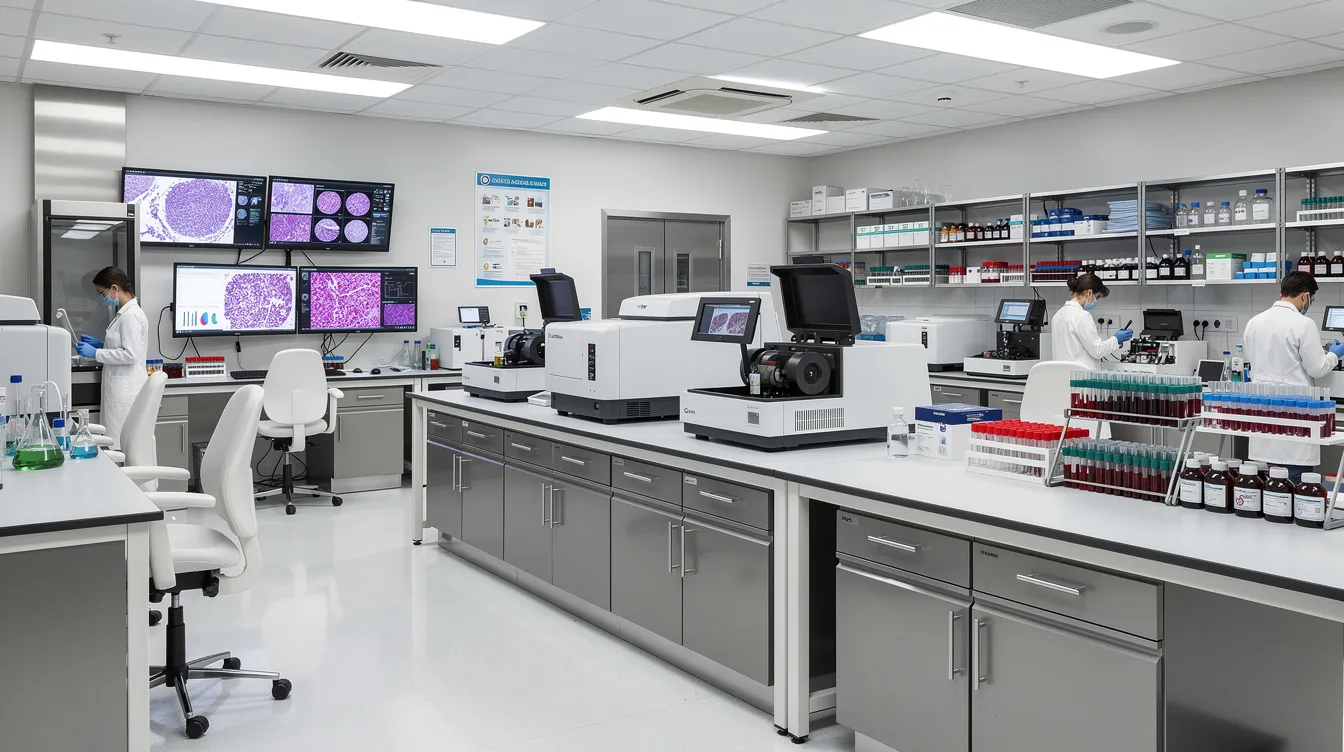
| Type of Pathology Lab | Indicative Setup | Equipment Level | Indicative Investment |
|---|---|---|---|
| Small / Basic (Neighbourhood) | 400–600 sq ft, 40–150 samples/day | Semi-auto analysers, 3-part haematology, manual methods | ₹10–25 lakh |
| Medium (City / Hospital-Linked) | 800–1,500 sq ft, 150–500 samples/day | Fully automated biochemistry, 3- or 5-part haematology, basic immunoassay | ₹30–80 lakh |
| Advanced / Automated (Regional Hub) | 1,500–3,000+ sq ft, 500–1,500+ samples/day | High-throughput analysers, immunoassay, molecular diagnostics, possibly histopathology | ₹1 crore – ₹2.5 crore+ |
Setting up a pathology lab costs approximately ₹20–30 lakh for a well-equipped small-to-medium operation in many Tier-2 cities. Large diagnostic centres or regional hub laboratories can easily exceed ₹1 crore in setup costs.
Small / Basic Pathology Lab (Neighbourhood Lab)
A typical small pathology lab in India operates from 400–600 sq ft of rented space, handles basic biochemistry, haematology and urine tests, and processes 40–150 samples daily. It is often run by a qualified pathologist or managed as a collection-plus-processing centre.
The initial investment for a basic pathology lab in India ranges from ₹8 lakh to ₹20 lakh, excluding land or building purchase. At a high level, roughly 45–55% goes toward equipment and analysers, 20–30% to interiors and electricals, 10–15% to IT and LIS, and the balance covers pre-operative expenses, initial consumables and working capital.
Many advanced tests – special immunoassay panels, molecular diagnostics, biopsy processing – are initially outsourced to reference labs. This keeps the pathology lab setup budget manageable and avoids tying up money in machines that may sit underutilised. For new entrepreneurs, a small lab is often the most practical starting point, with scale-up based on actual sample volume growth.
Medium-Sized Pathology Lab (City / Hospital-Linked Lab)
A medium lab typically occupies 800–1,500 sq ft, offers an extended test menu with semi-automated and fully automated analysers, handles routine microbiology, and collects B2B samples from clinics and small hospitals. Daily volume runs 150–500 samples.
Mid-sized standalone pathology labs range from ₹25 lakh to ₹60 lakh in setup costs for equipment, interiors and initial working capital (rented premises, no building purchase). The equipment list expands to include a fully automated biochemistry analyser, 3-part or 5-part haematology analyser, improved centrifuges, medical-grade refrigerators and possibly a basic immunoassay platform.
IT infrastructure becomes critical at this scale – multiple workstations, barcode printers for effective laboratory information management, report delivery via email and SMS portals, and sometimes integration with hospital information systems. For this category, banks commonly expect a detailed Pathology Lab Project Report / DPR for Bank Loan before sanctioning finance.
Advanced / Automated Pathology Laboratory (Regional Hub)
These labs function as regional hubs for franchise collection centres, processing 500–1,500+ samples daily across a broad test menu including advanced immunoassay, some molecular diagnostics and possibly histopathology for microscopic examination of tissue specimens.
Total pathology laboratory setup cost typically ranges from ₹1 crore to ₹2.5 crore or more for equipment, interiors, high-capacity power backup and working capital – excluding land and building.
The machinery list may include high-throughput fully automated biochemistry and haematology analysers, immunoassay analysers, coagulation systems, blood gas analyser, HbA1c analyser, automated ESR, a tissue processor and microtome for histopathology, and a PCR machine for molecular biology lab capabilities and genetic research applications. The level of automation, brand choice and reagent rental arrangements can change the pathology lab equipment cost significantly. Such labs usually target NABL accreditation to serve corporate clients, TPA/insurance panels and hospital tie-ups. The cost of accreditation – including infrastructure upgrades, documentation, quality control systems and external audits – is part of compliance expenditure, not only equipment.
Major Components of Pathology Lab Project Cost
Entrepreneurs often focus only on machinery, but a bankable pathology lab project cost must include all capital and pre-operative components. Setting up a pathology lab in India requires adherence to regulatory guidelines, and the project cost structure should reflect this.
Key cost heads include:
- Premises lease deposit (where applicable)
- Civil work, interiors, painting, false ceiling
- Electrical wiring, lighting, dedicated analyser circuits
- Plumbing, drainage and water purification
- Laboratory counters and furniture
- Air-conditioning (mandatory for equipment stability)
- Laboratory equipment and instruments
- Computers, LIS software and networking
- Power backup (UPS + generator/inverter)
- CCTV, security and fire safety
- Sample collection area setup
- Pre-operative and professional expenses
- Licensing and regulatory compliance (which add to setup costs – the Clinical Establishments Act mandates compliance for pathology labs in India, and licenses and compliance costs typically range from ₹50,000 to ₹3 lakh)
- Initial consumables and reagents
- Working capital margin
Building or land purchase, if any, should ideally be displayed separately in the DPR. It can double or triple the total pathology lab investment cost, making cross-comparison between projects misleading if clubbed with operational setup.
Illustrative Project Cost – Medium-Sized Pathology Lab
| Particulars | Illustrative Amount (₹) |
|---|---|
| Interiors & Civil Work | 8–10 lakh |
| Laboratory Equipment | 35–40 lakh |
| Furniture & Fixtures | 1.5–2 lakh |
| Computers & LIS | 2.5–4 lakh |
| Electrical & Power Backup | 3–5 lakh |
| Pre-operative Expenses | 2–3 lakh |
| Initial Consumables & Reagents | 2–3 lakh |
| Contingency | 2–4 lakh |
| Working Capital Margin | 5–8 lakh |
| Total Project Cost | ~₹65–75 lakh |
The above figures are illustrative and should not be treated as vendor quotations. Actual amounts depend on location, equipment brands and project-specific requirements.
Equipment cost alone must not be treated as the total pathology lab setup budget when discussing bank finance or planning investment.
Pathology Lab Equipment List with Indicative Cost
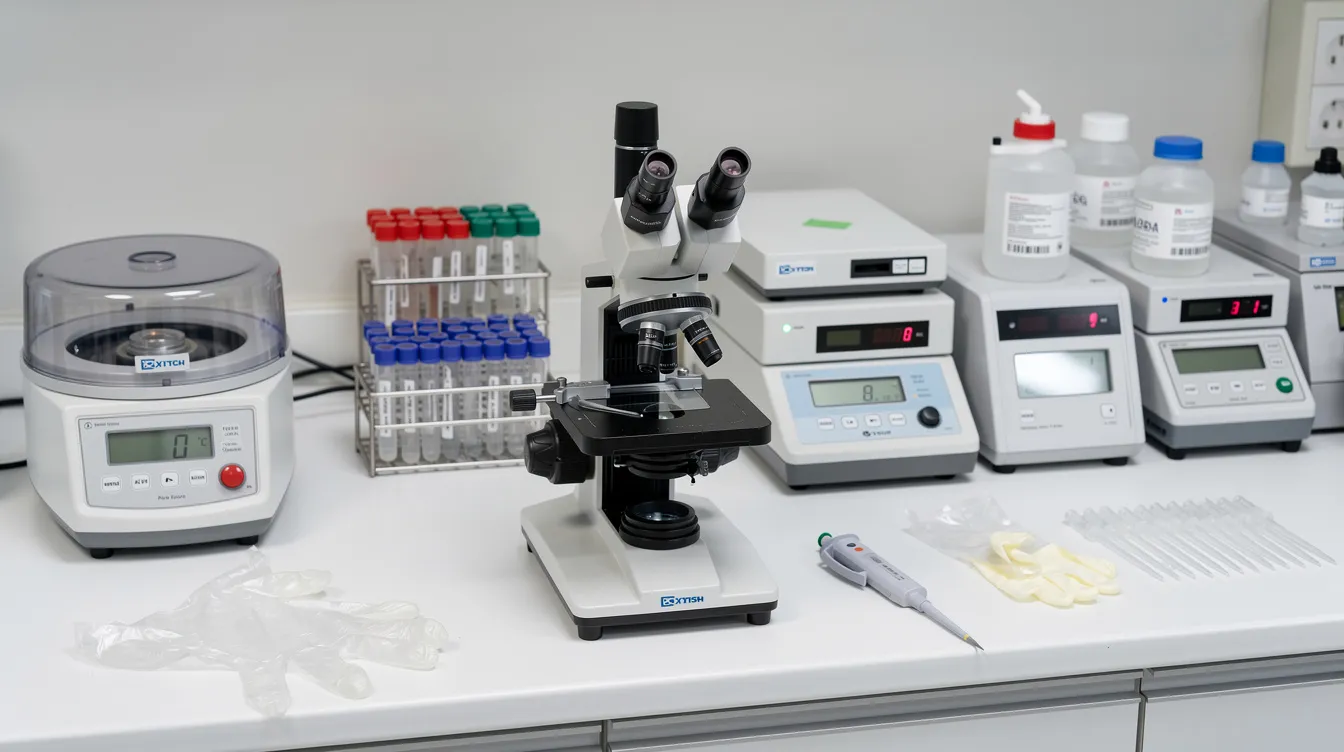
This is the core equipment section. The table below provides an indicative pathology lab equipment list with price ranges typical for 2024–2025 in India. Not every machine is mandatory for every lab; selection depends on test menu, daily sample volume and whether some tests will be outsourced.
Basic equipment costs can range from ₹5–10 lakh for small labs, scaling significantly with automation and test menu breadth.
| Equipment | Main Purpose | Typical Use | Indicative Cost Range (₹) |
|---|---|---|---|
| Binocular Microscope | Visual examination of smears, urine sediment, tissue | Essential in all labs | 30,000 – 2,00,000 |
| Centrifuge (Table-top) | Separate serum from blood samples | Essential in all labs | 25,000 – 1,50,000 |
| Semi-auto Biochemistry Analyser | Basic metabolic panels | Small labs with lower throughput | 1,50,000 – 3,00,000 |
| Fully Automated Biochemistry Analyser | Routine blood chemistry panels (LFT, KFT, lipids etc.) | Medium to high volume labs | 5,00,000 – 25,00,000 |
| 3-Part Haematology Analyser | CBC, Hb, WBC, platelets | Small labs, ~40–60 tests/hr | 3,00,000 – 6,00,000 |
| 5-Part Haematology Analyser | Advanced differential counts | Busier labs, ~90–120 tests/hr | 8,00,000 – 20,00,000+ |
| Electrolyte Analyser | Na, K, Cl measurement | Medium and advanced labs | 2,00,000 – 8,00,000 |
| Coagulation Analyser (Coagulometer) | Tests blood clotting efficiency (PT, aPTT) | Medium and advanced labs | 3,00,000 – 12,00,000 |
| ESR Analyser | Measures sedimentation rate of red blood cells | Most labs | 1,00,000 – 2,50,000 |
| Urine Analyser | Tests for urinary infections and pregnancy detection | Most labs | 1,00,000 – 5,00,000 |
| HbA1c Machine | Measures average blood sugar levels over 2–3 months | Growing demand across labs | 2,00,000 – 6,00,000 |
| Immunoassay / CLIA Analyser | Hormones, viral markers, tumour markers | Medium to advanced labs | 7,00,000 – 12,00,000+ |
| ELISA Reader + Washer | Serology, viral markers | Medium labs | 70,000 – 5,00,000 |
| PCR Machine (Thermal Cycler) | Amplifies DNA and RNA sequences for molecular analysis | Advanced / molecular biology labs | 15,00,000 – 40,00,000+ |
| Tissue Processor | Processes biopsy and surgical tissue specimens | Histopathology labs | 10,00,000 – 15,00,000+ |
| Microtome | Cuts thin slices of tissue for microscopic examination | Histopathology labs | 4,00,000 – 6,00,000 |
| Incubator | Culture growth, immunoassay incubation | Microbiology / serology | 40,000 – 2,00,000 |
| Hot Air Oven | Glassware sterilisation | Most labs | 25,000 – 1,50,000 |
| Autoclave | Sterilisation of instruments and waste | Essential, mandatory | 50,000 – 3,00,000 |
| Biosafety Cabinet (Class II) | Safe handling of cultures, molecular samples | Microbiology / molecular labs | 1,50,000 – 5,00,000 |
| Refrigerator (2–8°C) & Deep Freezer (-20°C) | Cold chain for reagents, samples | Essential | 20,000 – 1,00,000+ |
| Water Baths | Incubation, slide preparation | Biochemistry, histopathology | 15,000 – 60,000 |
| Lab Water Purification System | Purified water for analysers and autoclaves | Essential for biochemistry | 50,000 – 3,00,000 |
| Micropipettes & Analytical Balance | Precise volume measurement, weighing | All labs | 15,000 – 80,000 |
| Vortex Mixer | Sample mixing | All labs | 5,000 – 25,000 |
| Barcode Printer & Scanner | Sample tracking and LIS integration | Medium and advanced labs | 15,000 – 50,000 |
| Desktop Computers (2–5 units) | LIS, reporting, administration | All labs | 1,00,000 – 3,00,000 |
| UPS / Power Backup | Protect equipment from power failures | Essential | 1,00,000 – 5,00,000 |
| Laboratory Information System (LIS) | Software for workflow, reporting, billing | All labs (basic to advanced) | 50,000 – 5,00,000+ |
High-value items like the immunoassay analyser, PCR machine and tissue processor can push the total pathology lab machinery list cost substantially higher. Medical professionals planning an advanced test menu should ensure that projected sample volumes justify this cutting edge technology investment.
Department-Wise Pathology Lab Equipment Requirement
In a DPR, equipment should be grouped department-wise so that both the bank and the promoter understand exactly what is being installed and why. Department-wise machinery selection must always match the intended test mix and estimated test volume – this avoids both under-capacity issues and costly over-investment in medical equipment.
Adding new departments such as microbiology (culture and sensitivity) or histopathology (biopsy processing) can substantially increase pathology laboratory setup cost and may be phased in later when volumes and revenue justify the expenditure. Labs planning NABL accreditation should note that it often expects well-defined department-wise infrastructure.
Hematology
Key equipment: 3-part or 5-part haematology analyser, ESR analyser, centrifuge, microscopes and sample mixers. Hematology analyzers are essential for complete blood count analysis – a haematology analyser counts red and white blood cells, platelets and haemoglobin levels. An ESR analyser measures the sedimentation rate of red blood cells. For small labs, a robust 3-part analyser is often sufficient; 5-part systems are more expensive but required for advanced differential counts in busier labs. Reagent costs and AMC for haematology analysers must be considered along with initial equipment purchase in any pathology lab project report.
Clinical Biochemistry
Key equipment: semi-auto or fully automated biochemistry analyser, centrifuge, water bath, refrigerator, micropipettes and water purification system. Biochemistry analyzers are used for routine blood chemistry panels including blood glucose, liver function tests, kidney function tests, lipid profiles and electrolytes. The choice between semi-auto and fully automated analysers heavily influences equipment cost and should be guided by daily test volume. Open reagent systems (where reagents can be sourced from multiple vendors) may reduce recurring cost but closed systems with reagent contracts can offer better reliability and service support – this trade-off should be evaluated carefully.
Clinical Pathology & Urine Analysis
Common instruments: urine analyser, microscopes, centrifuge, urinalysis strips, test tubes and slides. An urine analyser tests for urinary infections, pregnancy and other conditions in urine and body fluids. Smaller labs can start with manual methods plus a low-cost urine strip reader, while higher-volume centres may prefer automated readers for speed and accuracy. These investments are moderate compared to biochemistry and immunoassay equipment but must still be budgeted in the pathology lab machinery list.
Immunology / Serology
Key items: ELISA reader and washer, immunoassay analyser (chemiluminescence or similar), incubator, micropipettes and biosafety cabinet in some setups. Common tests include thyroid profiles, tumour markers, viral markers (HBsAg, HIV, HCV), fertility hormones and vitamin levels. Immunoassay platforms can significantly increase equipment cost – often running into tens of lakh – so many small labs initially outsource these tests instead of purchasing machines. Promoters should carefully compare expected in-house test volume versus reference-lab outsourcing cost before including immunoassay in first-phase setup.
Microbiology
Essential microbiology labs equipment: incubators, hot air oven, autoclave, biosafety cabinet (Class II for culture activities), refrigerators, microscopes and culture accessories. Typical tests include culture and sensitivity for urine, sputum, pus and blood cultures. Microbiology requires additional infection control measures, space zoning and trained personnel, raising both capital and operating cost. Non-compliance with biomedical waste management rules can lead to legal issues, making proper waste handling infrastructure mandatory. Microbiology can be introduced gradually once routine biochemistry and haematology volumes stabilise.
Histopathology – When Included
Main equipment: tissue processor, microtome (which cuts thin slices of tissue for slides), embedding station, water bath, slide dryer and microscopes. A tissue processor handles biopsy and surgical specimen preparation. Histopathology involves higher investment, specialist pathologists for microscopic examination and stringent quality control. The tissue processor and microtome alone can add several lakh to the equipment list. Many new labs start by sending histopathology specimens to reference centres and consider in-house setup only once volume and expertise justify the cost.
Small Pathology Lab Equipment List and Budget Example
Many entrepreneurs want to know the small pathology lab setup cost in India for a basic neighbourhood lab with essential services only.
Consider an illustrative model: about 500 sq ft of rented space in a Tier-2 city, processed by one pathologist plus 1–2 lab technicians, targeting 60–80 patient samples per day within 12–18 months.
Example Equipment Package (Starter Lab):
- Binocular microscope
- Table-top centrifuge
- Semi-auto biochemistry analyser
- 3-part haematology analyser
- Urine analyser (basic strip reader)
- Refrigerator (2–8°C)
- 2–3 desktop computers with printers
- Barcode printer
- UPS (1–2 kVA)
- Entry-level LIS software
Approximate aggregated machinery investment for such a starter lab: about ₹8–12 lakh (without histopathology, molecular tests or advanced immunoassay). This is indicative and depends on brand and configuration.
Adding other initial costs – interiors and electricals (₹3–5 lakh), furniture (₹1 lakh), signage, initial consumables and reagents (₹1–2 lakh), and 3–4 months of working capital (₹3–5 lakh) – brings total pathology lab startup investment to perhaps ₹15–25 lakh in this scenario.
The financial logic of outsourcing high-end tests initially is straightforward: the lab avoids expensive immunoassay and PCR machines until volumes justify, which keeps the early pathology lab setup budget under control. While specific equipment models are not prescribed here, actual DPR and bank loan proposals must be backed by brand-wise quotations from authorised suppliers.
Factors That Affect Pathology Lab Equipment Cost
Two labs with similar test menus can have very different pathology lab equipment cost in India. Equipment procurement strategy is critical when setting up a pathology lab, and the price on an equipment listing or a website verifies only a starting point – not your actual landed cost.
Key factors that influence cost:
- International versus Indian brands (imported instruments carry higher duties)
- Instrument throughput (tests per hour) – higher capacity means higher price
- Level of automation (manual, semi-auto, fully auto)
- Open versus closed reagent systems – closed systems may offer lower sticker price but higher reagent dependency
- Whether instruments are bought outright or on reagent-rental / pay-per-test models
- Warranty length and post-warranty AMC/CMC cost
- Installation, calibration, required accessories (stabilisers, racks, software modules)
- Freight, GST and import duties
- Portable or bench-top versus floor-standing configurations
The lowest quoted price is not always the best choice. Total cost of ownership over 5–7 years – including reagents, downtime risk and AMC – is more relevant from a DPR and bank appraisal perspective. For high-value equipment like immunoassay platforms and PCR machines, reagent commitments and minimum test volumes in contracts can materially affect long-term profitability. Pathology lab project reports should explicitly comment on such arrangements, not just list the equipment price.
Infrastructure and Interior Cost for a Pathology Lab
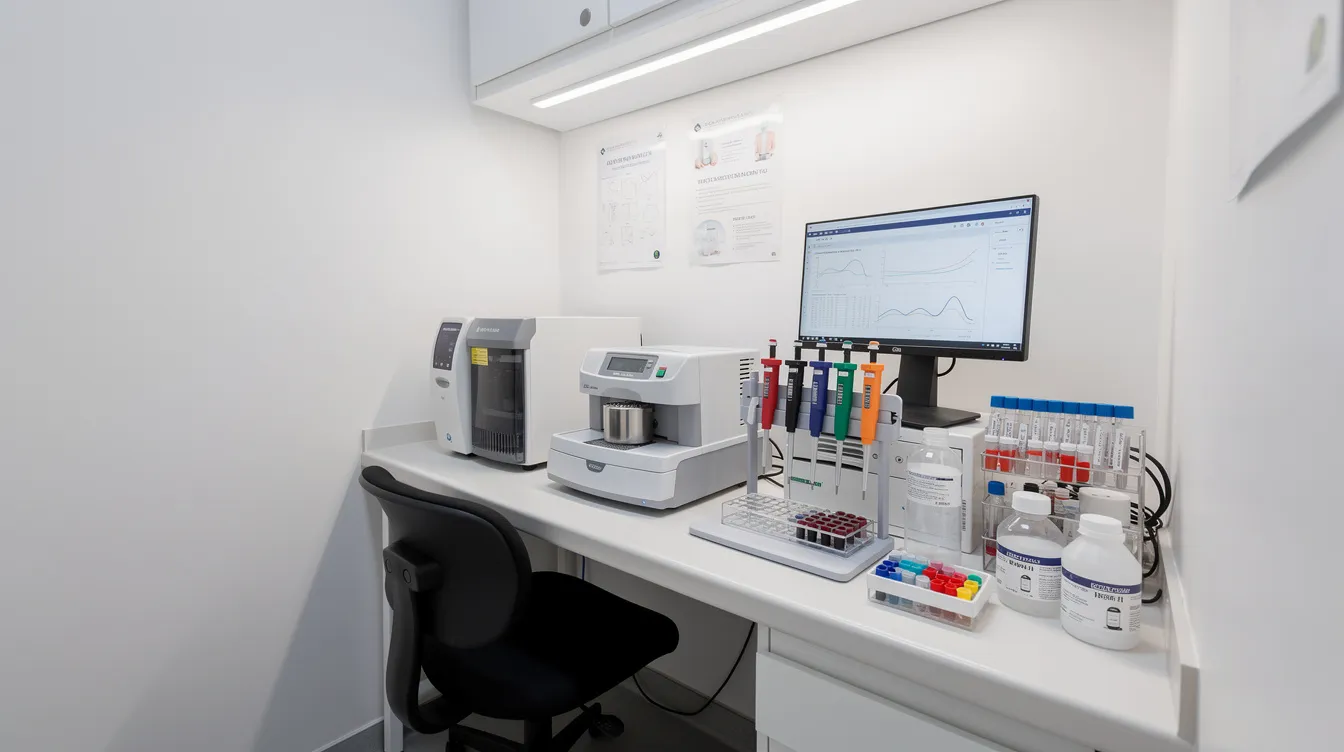
Infrastructure and interiors influence compliance, sample quality and how patients and medical professionals perceive your lab. Investments in laboratory infrastructure must include proper electrical setup and HVAC systems to maintain analyser calibration and reagent stability.
Key functional areas include: reception and billing desk, waiting area, sample collection room (phlebotomy), processing area, main laboratory benches, microbiology or histopathology corners (if any), washing and utility area, reagent storage and reporting area.
Typical elements: tiled or easily cleanable flooring, washable wall finishes in wet areas, adequate lighting, sufficient power points with dedicated circuits for analysers, plumbing for sinks and drainage, and water purification inlet/outlet. Blood collection and disposal systems must comply with healthcare regulations.
Infrastructure and interior setup costs range from ₹3 lakh to ₹12 lakh depending on size, existing premises condition and finish level. IT cabling, CCTV installation and access control should also be part of infrastructure cost, especially for labs planning NABL accreditation or serving corporate clients. Modern lab portals and website systems also need to protect patient data – performing security verification before displaying reports online, ensuring that security service protocols guard against malicious bots, and confirming that verification is successful before any patient data is accessible. While technical details like a respond ray id or bot detection are handled by IT vendors, the cost of securing digital infrastructure should be budgeted.
Working Capital Required for Starting a Pathology Lab
Fixed project cost covers machinery, interiors and computers. Working capital covers funds needed for day-to-day running until cash inflows stabilise. Confusing the two is a common planning mistake.
Major working capital components:
- Reagents and consumables inventory
- Staff salaries (pathologist, lab technicians, receptionist, housekeeping – staffing is typically 2–5 people for small labs)
- Rent and utilities (electricity, water, internet)
- Sample collection consumables (vacutainers, syringes, gloves)
- Biomedical waste handling fees
- Software subscriptions and IT maintenance
- Marketing and local transport for samples
Recurring costs in a pathology lab include reagents and staff salaries, which form the bulk of monthly operating expenditure. Operational expenses include salaries, rent and utilities, all of which continue regardless of daily sample volume during initial months.
Working capital requirement depends on monthly expenses and credit cycle. Where B2B and corporate clients pay after 30–60 days, higher working capital is required than in pure cash-and-carry retail labs. For a small lab, promoters should typically budget at least 3–6 months of expected operating expenses as an initial working capital buffer. Banks may fund part of the working capital as a cash credit or overdraft limit, but margin money (promoter’s own contribution) is required, which must be reflected separately in the pathology lab project report.
Pathology Lab Project Cost for Bank Loan & DPR
Banks do not assess a simple pathology lab equipment price list. They require a structured pathology lab DPR showing total project cost, means of finance and financial viability.
A professional DPR typically includes:
- Promoter background and project concept
- Detailed cost of equipment (with brand-wise quotations) and infrastructure
- Working capital estimation
- Revenue assumptions based on test volume and market
- Operating cost projections
- Profitability, cash flow and break-even analysis
- Debt Service Coverage Ratio (DSCR)
Illustrative Project Cost – Medium-Sized Pathology Lab (₹70–80 Lakh)
| Particulars | Illustrative Amount (₹) |
|---|---|
| Interiors & Civil Work | 8–10 lakh |
| Laboratory Equipment | 38–42 lakh |
| Furniture & Fixtures | 1.5–2 lakh |
| Computers & LIS | 3–4 lakh |
| Electrical & Power Backup | 3–5 lakh |
| Pre-operative Expenses | 2–3 lakh |
| Initial Consumables | 2–3 lakh |
| Contingency | 2–4 lakh |
| Working Capital Margin | 6–10 lakh |
| Total Project Cost | ~₹70–80 lakh |
Illustrative only, not quotations. Actual project cost depends on location, equipment selection and project-specific assumptions.
Such a project could conceptually be financed through promoter equity contribution plus a bank term loan for fixed assets and a separate working capital facility – though the specific financing ratio depends on bank policies, promoter profile and overall project appraisal.
CA Manish Gugliya’s Practical DPR Insight
While preparing a DPR for a pathology laboratory, I generally recommend that promoters follow a specific sequence: first define the test mix and expected daily test volume, then choose appropriate equipment capacity, then obtain vendor quotations, then prepare the total project cost, and finally derive revenue and profitability projections. This logical flow produces a credible DPR.
The reverse approach – deciding a loan amount first and trying to fit the pathology lab project cost into that figure – often leads to either under-investment (compromised service) or unrealistic revenue assumptions that banks see through during appraisal. Equipment utilisation estimates should be commercially reasonable. A 120-tests-per-hour analyser in a lab projecting 50 tests per day will raise questions. From a CA and DPR-consultant perspective, a well-documented and realistic project report improves proposal credibility but is not a guarantee of loan sanction, which depends on bank policies and overall appraisal.
Common Costing Mistakes in Pathology Lab Setup
Here are mistakes I frequently observe in pathology lab DPRs and investment plans:
- Treating only analysers as “project cost” and ignoring interiors, power backup and LIS
- Forgetting initial stock of reagents and consumables – these are not trivial amounts
- Underestimating furniture, seating and sample collection area requirements
- Buying very high-throughput machines or adding molecular diagnostics and histopathology before having clear test volume, which stresses cash flows and DSCR
- Ignoring AMC/CMC cost in financial projections after warranty period
- Not budgeting for calibration materials, quality-control consumables and biomedical waste management
- Copying an internet pathology lab equipment price list without actual quotations into a DPR
- Projecting revenues inconsistent with equipment capacity or the local diagnostics market
- Not distinguishing between fixed investment and working capital in the cost table
- Overlooking the economics of outsourcing low-volume tests versus running expensive in-house machines at poor utilisation
Entrepreneurs should work with both a qualified pathologist (for clinical feasibility) and a finance professional (for financial feasibility) when finalising the pathology lab setup. Neither perspective alone is sufficient to prepare a robust plan.
FAQ – Pathology Lab Setup Cost & Equipment in India
What is the minimum cost to start a basic pathology lab in India?
A very small, manual-to-semi-automatic lab in a low-rent locality with a limited test menu and outsourced high-end tests might be initiated in roughly ₹8–12 lakh for equipment and interiors, plus some working capital. This assumes rented space and careful cost control. However, adding more automation, better interiors and proper IT systems can quickly raise this figure to ₹15–25 lakh. Such a low-budget plan needs detailed feasibility assessment before commitment.
Can I use refurbished equipment to reduce pathology lab setup cost?
Refurbished equipment – pre-owned analysers from reputed vendors – can reduce initial pathology lab equipment cost, especially for semi-auto analysers, centrifuges and microscopes. However, for high-throughput or critical machines, entrepreneurs should ensure proper service backup, availability of reagents, and clear warranty or AMC terms before choosing refurbished options. Always verify that the vendor can support the instrument in your city or location.
How much extra does a PCR machine or molecular setup add to project cost?
Adding a basic PCR machine (also known as a thermal cycler) plus compatible infrastructure – biosafety considerations, additional equipment for handling samples, consumables and trained manpower – can push the investment up by ₹15–40 lakh or more depending on configuration. Such a setup enables advanced molecular diagnostics and supports detection of genetic markers. This upgrade should be based on firm demand projections and usually forms part of an advanced diagnostic lab rather than a starter pathology lab.
How important is NABL accreditation for a pathology lab and what does it cost?
NABL accreditation is not mandatory for all labs, but NABL standards are essential for accreditation of medical laboratories in India aiming to serve large hospitals, corporates and insurance/TPA clients. Quality control systems are vital for labs pursuing this accreditation, as it also signals reliability to clinicians and patients. Direct accreditation fees are only part of the cost – meeting infrastructure, documentation, quality-control and staffing expectations can add both capital and recurring expenses. These should be planned as a separate line item in pathology lab project cost and are distinct from basic licensing under state laws.
Will a bank finance my pathology lab equipment and working capital together?
Many banks can finance both fixed assets (equipment, interiors) through a term loan and working capital through cash credit or overdraft limits, subject to their policies and project viability. A structured Pathology Lab Project Report / DPR for Bank Loan, supported by proper quotations and reasonable financial projections, is usually required for such combined funding. The money required as promoter contribution typically ranges from 20–35% of total project cost, though the exact ratio varies by bank and borrower profile. All figures in the DPR must be internally consistent and supported by evidence.
Conclusion – Investing Wisely in Pathology Lab Setup Cost & Equipment
The right pathology lab investment is a balance of test menu, expected volume, appropriate equipment capacity, infrastructure, working capital and a sensible financing structure. Under-investment can compromise quality, scalability and patient confidence, while unnecessary over-investment in high-end machines can strain cash flows and weaken DSCR in a bank appraisal.
I’d advise entrepreneurs to base their pathology lab setup budget on realistic quotations, a clear test-volume projection and a well-structured business plan rather than on generic internet averages alone. The market for diagnostics in India continues to grow, but individual lab economics depend on disciplined project planning.
For entrepreneurs who need assistance with pathology lab project cost assessment, DPR preparation, CMA data, financial projections or bank finance documentation, feel free to reach out.
Prepared by CA Manish Gugliya, Chartered Accountant & Project Finance Consultant, ProjectReportBank.com. This article provides financial and project-planning guidance. For clinical, regulatory or laboratory-operational matters, readers should consult an appropriately qualified pathologist or relevant authority.
Explore All Diagnostic Centre DPR Guides
Continue exploring our complete series on Diagnostic Centre project planning, equipment, financial projections, repayment capacity and bank finance.