Key Takeaways
- Equipment cost for a diagnostic centre in India ranges from roughly ₹25–40 lakh for a small pathology lab to ₹20–30 crore for an advanced CT + MRI centre, depending on the services offered and the level of technology.
- A “diagnostic centre” is broader than a pathology lab. Healthcare facilities use diagnostic equipment categorized into imaging and laboratory diagnostics; the equipment requirements for basic blood tests differ vastly from a centre with CT, MRI and mammography.
- Equipment cost in a DPR must include not just machine price but also installation, room preparation, radiation shielding, UPS, HVAC, software, initial reagents and taxes; omitting these items can understate actual investment by 15–30%.
- Lenders assess whether the proposed diagnostic equipment, projected test volumes, revenue and loan repayment capacity are consistent, so a realistic equipment list and cost estimate is the backbone of a bankable project report.
- This article is written from the perspective of CA Manish Gugliya (ProjectReportBank.com), focusing on how to plan, cost and finance medical equipment for a diagnostic centre project in India.
Explore Diagnostic Centre DPR Guides
Explore our complete series on Diagnostic Centre project planning, equipment, financial projections and bank finance.
Introduction: How Much Equipment Investment Is Required to Start a Diagnostic Centre in India?
One of the first questions I hear from promoters is: “How much will the medical equipment cost for my diagnostic centre?” There is no single number that applies to every project.
The diagnostic centre equipment list and cost varies based on services offered (pathology only vs pathology + X-ray + ultrasound vs a centre with CT and MRI), location (Tier-1 metro vs Tier-3 town), and target patient volume. A small collection centre with outsourced tests may work with equipment investment under ₹10 lakh. A full imaging centre with CT and MRI may need equipment and infrastructure running into ₹15–30 crore.
Key determinants include the level of automation, the choice between new and refurbished machines, brand and technology, purchase vs lease, and whether high-end imaging is included. Medical equipment is usually the largest component of project cost after building and interiors, so accurate estimation is critical when preparing a DPR or project report for bank loan.
Diagnostic Centre Models and How They Decide Your Equipment List
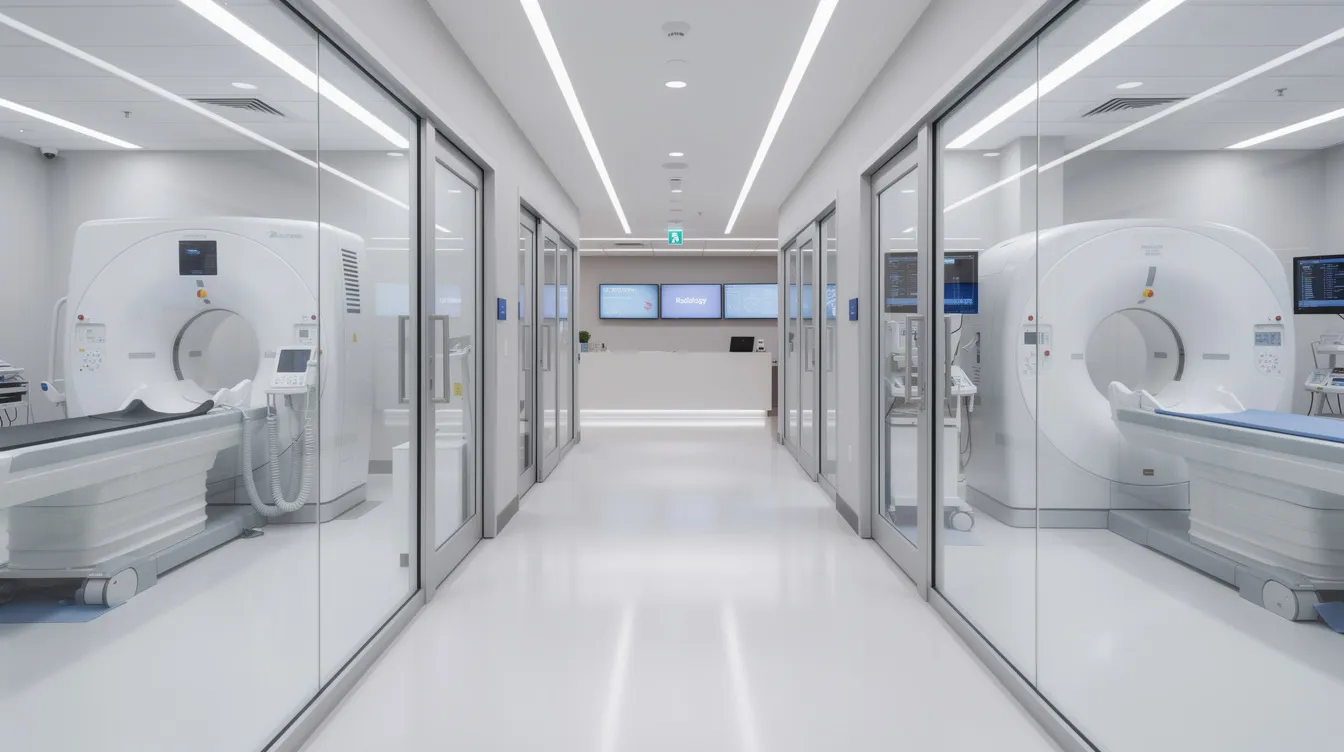
A diagnostic centre is not necessarily a pathology laboratory. Depending on the business model, a diagnostic centre may combine pathology, radiology, cardiac diagnostics and other specialised services. The equipment list must follow the business model; buying machines and then deciding what services to offer is a common and expensive mistake.
Basic Diagnostic / Collection Centre: Samples are collected and sent to a central lab. The core diagnostic set includes BP apparatus, thermometers, ECG machine, and basic laboratory analyzers. Point-of-care testing provides rapid results at the bedside or in a clinic for glucose, urine dipstick and similar tests. Equipment spend: roughly ₹5–10 lakh.
Standalone Pathology Laboratory: In-house haematology, biochemistry, clinical pathology and possibly microbiology. Laboratory equipment includes analysers and microscopes. Moderate automation, suitable for district towns. Equipment investment: approximately ₹25–75 lakh depending on scale and automation. Laboratory equipment costs between ₹25 lakh to ₹75 lakh at this level.
Pathology + Basic Imaging Centre: Adds digital X-ray, ultrasound and ECG/TMT to the lab setup. Typical in Tier-2 and Tier-3 cities. Combined investment for new equipment: roughly ₹1.5–3.5 crore.
Comprehensive Diagnostic Centre: Pathology, X-ray, ultrasound, CT scan, MRI, mammography, echo and cardiac diagnostics. Equipment investment alone can range between ₹10–30 crore, depending on CT slice capacity, MRI Tesla strength and technology choices.
Promoters should first finalise the diagnostic service basket and expected case load, then derive the equipment list and cost from this model.
Pathology Laboratory Equipment List & Indicative Cost in India
Pathology equipment cost depends on automation level (manual, semi-auto, fully auto), daily sample volume and whether immunology and microbiology are included.
| Equipment | Purpose | Indicative Cost Range (₹, 2025–26) | Suitable For |
|---|---|---|---|
| 3-Part Haematology Analyser | CBC, basic WBC differential | ₹3–6 lakh | Small labs, 40–60 samples/hr |
| 5-Part Haematology Analyser | CBC + advanced WBC differential, cells classification | ₹8–20 lakh | Mid-to-large labs, 80–120+ samples/hr |
| Semi-Auto Biochemistry Analyser | Basic metabolic panels, routine chemistry | ₹1.5–4 lakh | Low-volume labs |
| Fully Automatic Biochemistry Analyser | High-throughput discrete sample processing | ₹8–40 lakh | Medium-to-large labs |
| Electrolyte Analyser | Na, K, Cl, pH measurement | ₹2–10 lakh | Labs offering renal/metabolic panels |
| Immunoassay Analyser (ELISA/CLIA) | Hormones, tumour markers, infectious disease | ₹5–60 lakh | Labs with immunology menu |
| HbA1c Analyser | Glycated haemoglobin for diabetes management | ₹2–10 lakh | Diabetes-focused centres |
| Coagulation Analyser | PT, APTT, INR | ₹2–8 lakh | Labs serving surgical/cardiac patients |
| Urine Analyser | Routine urinalysis | ₹75,000–4 lakh | All pathology labs |
| Microscope (binocular/trinocular) | Smear review, histopathology, cytology | ₹40,000–3 lakh | All labs |
| Centrifuge | Separate fluids of different densities (serum, plasma) | ₹25,000–1.5 lakh | All labs |
| Incubator / Hot Air Oven | Culture, sterilisation | ₹30,000–2 lakh | Microbiology labs |
| Autoclave / Steriliser | Sterilising instruments and culture media | ₹50,000–3 lakh | All labs |
| Biosafety Cabinet | Safe handling of infectious specimens | ₹1–5 lakh | Microbiology, molecular labs |
| Refrigerator (2–8°C) / Deep Freezer (-20°C / -80°C) | Sample and reagent cold chain | ₹50,000–5 lakh | All labs |
| Lab Water Purification System | Distilled/deionised water for reagents | ₹50,000–3 lakh | All labs |
| LIS (Lab Information System) + Computers | Data management, barcode tracking, reporting | ₹1–10 lakh | All labs |
| UPS / Power Backup (5–15 kVA) | Power continuity for analysers and data | ₹1.5–8 lakh | All labs |
Automated hematology analyzers process complete blood counts and analyze cellular components of blood; their throughput in samples per hour drives the price gap between a 3-part and a premium 5-part unit. For context, an Erba H560 5-Part analyser is quoted at roughly ₹5.4–5.6 lakh including tax.
Biochemistry analyzers perform chemical analysis of blood plasma, serum, and urine. Fully automatic models priced above ₹15 lakh can handle 200–400 tests per hour, while semi-auto units suit labs processing fewer than 50 samples daily.
Molecular diagnostics, including PCR systems and nucleic-acid extraction systems, add another ₹10–50 lakh if the lab plans to offer RT-PCR or gene-based testing.
Blood collection chairs, phlebotomy equipment, lab furniture and storage, barcode and label printers and sample mixers should also be budgeted. These non-analytical items typically cost ₹3–10 lakh collectively but are often forgotten.
These are indicative 2025–26 planning ranges. Promoters should obtain live quotations from multiple authorised vendors before finalising DPR values.
Diagnostic Imaging & Radiology Equipment List and Cost
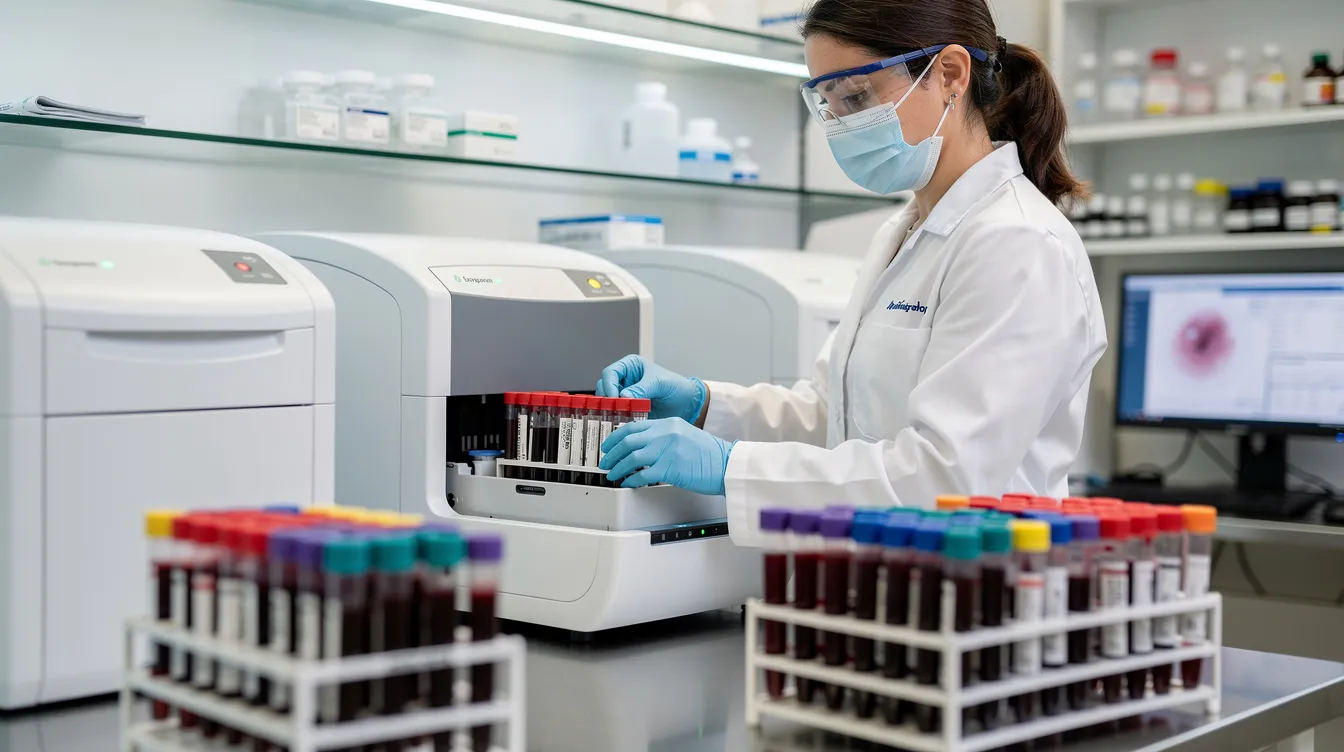
Imaging and radiology equipment forms the most capital-intensive segment of a diagnostic centre. It also carries stringent site, power, shielding and ventilation requirements.
| Equipment | Typical Use | Indicative Machine Cost (₹) | Key Notes for Project Planning |
|---|---|---|---|
| Digital X-Ray (fixed, floor/ceiling mount) | Chest, skeletal, abdominal imaging | ₹25–80 lakh | Lead shielding, AERB licensing, protective aprons required |
| CR/DR Upgrade (flat panel detector) | Retrofit or standalone digital detection | ₹10–35 lakh | Wireless detectors cost more |
| Ultrasound (B/W, basic) | General screening, obstetrics | ₹6–12 lakh | PC&PNDT registration mandatory |
| Colour Doppler Ultrasound (mid-range) | Vascular, cardiac, obstetric Doppler | ₹15–35 lakh | Probe types (linear, convex, endocavitary) affect price |
| High-End 3D/4D Ultrasound | Advanced obstetric, musculoskeletal, cardiac | ₹40 lakh–1 crore | AI-assisted models at the premium end |
| CT Scan, 16-slice | Cross-sectional body imaging | ₹2.25–3.5 crore | Injector, shielding, HVAC, workstation add 25–40% |
| CT Scan, 32/64-slice | Faster acquisition, cardiac CT, angiography | ₹3.5–7 crore | Higher electrical load, larger room footprint |
| CT Scan, 128+ slice / Dual-Energy | High-resolution cardiac, vascular, trauma | ₹7–15 crore | Room, power and chiller costs scale up |
| MRI, 1.5 Tesla | Musculoskeletal, neuro, abdomen, pelvis | ₹6–14 crore | RF shielding, quench pipe, chiller, dedicated power |
| MRI, 3.0 Tesla | High-resolution neuro, research, spectroscopy | ₹12–25 crore | Estimated at ₹19–28 crore per CCI/GeM data |
| Mammography System | Breast tissue screening | ₹80 lakh–2.5 crore | AERB clearance, dedicated room |
| ECG Machine (12-channel) | Heart rhythm and electrical activity | ₹60,000–2.5 lakh | Portable and fixed options |
| TMT System (Treadmill Test) | Stress testing for cardiac patients | ₹4–15 lakh | Requires monitoring accessories |
| Holter Monitor / Ambulatory BP | 24-hour cardiac and BP monitoring | ₹2–8 lakh | Multiple units for parallel patients |
| Echo Machine | Cardiac structure and function imaging | ₹15–60 lakh | Probe variety and imaging modes drive cost |
| PACS / RIS Workstations & Storage | Image archiving, radiology reporting | ₹15–75 lakh | High-res monitors, backup, redundancy |
Computed Tomography (CT) scanners create cross-sectional 3D images of internal organs and blood vessels. A 32-slice Philips CT was quoted at approximately ₹3.9 crore on the GeM portal.
MRI machines are essential for diagnosing patients with neurological, musculoskeletal and soft-tissue conditions. Digital X-ray machines provide high-resolution imaging with lower radiation exposure compared to film-based systems. Ultrasound systems are crucial diagnostic equipment for obstetric, abdominal and vascular assessment. X-ray machines are necessary for patient diagnosis across nearly every clinical specialty.
Mammography systems are used for breast tissue screening, typically in women’s health or oncology-focused centres. Electrocardiogram (ECG) machines are vital for heart diagnostics. Cardiorespiratory equipment monitors heart and lung function; monitoring devices track vital signs continuously or provide rapid results during stress tests and post-procedure observation. Neurological diagnostic tools such as EEG systems assess the electrical activity of the brain and may be added in specialised centres. Endoscopic equipment inspects hollow organs and cavities using a camera-integrated tube but is more common in hospital or gastro-clinic settings than standalone diagnostic centres.
Imaging equipment prices shift with exchange rates, import duties and new model releases. DPRs should reflect recent vendor quotations, not historical data alone.
Installed Cost vs Machine Cost: Hidden Expenses Promoters Often Miss
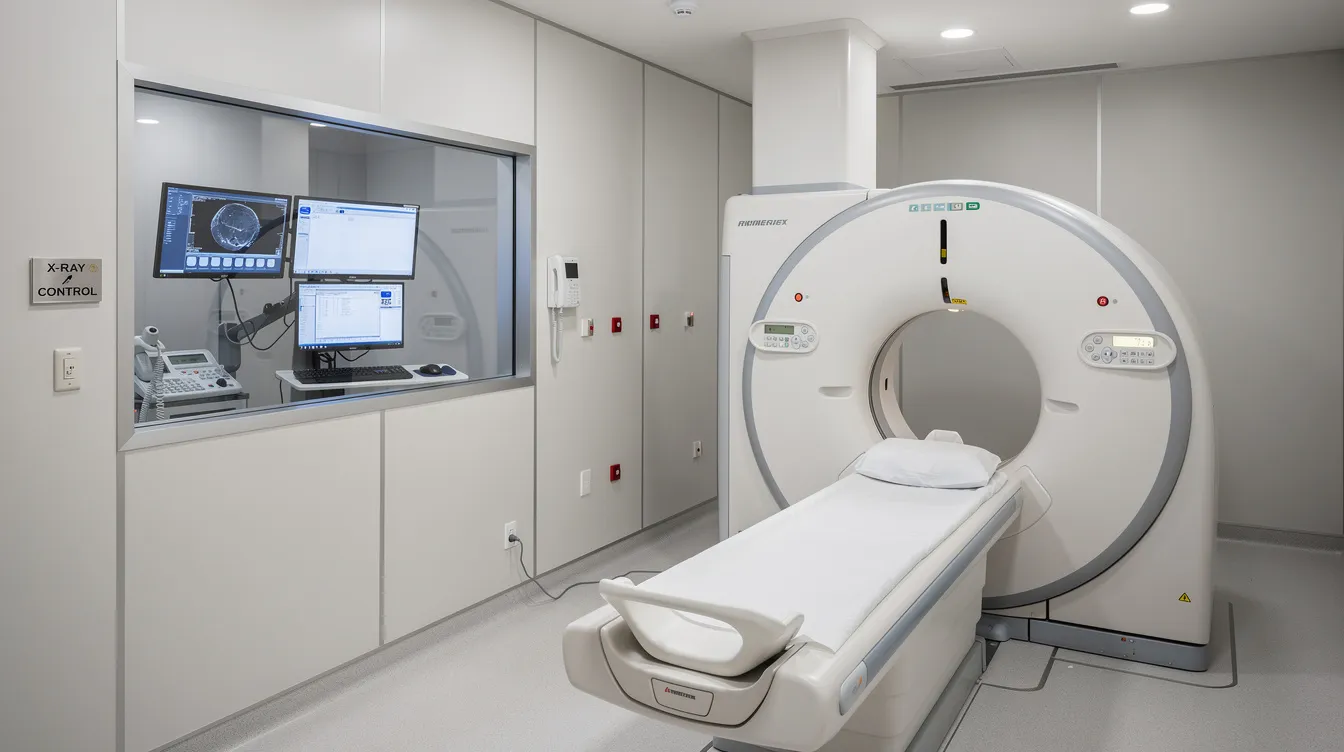
The price displayed on a vendor quotation for a CT, MRI or X-ray unit is rarely the final installed cost. The gap between machine price and ready-to-operate cost catches many promoters off guard.
- Civil and electrical works: Room modification, flooring rated for machine weight, cable trenches, three-phase wiring, dedicated earthing and additional LT panels.
- Stabilisers, UPS and power backup: Sensitive imaging machines need conditioned power. A mid-size centre may spend ₹5–40 lakh on UPS, stabilisers and a DG set, depending on total load and redundancy.
- HVAC and climate control: MRI rooms require stable temperature and humidity. CT rooms need cooling for the gantry and injector area. These can add 10–20% to the equipment budget for high-end modalities. Proper ventilation design is part of the AERB planning guidelines.
- Radiation shielding: Lead-lined walls, lead glass, lead doors, aprons and thyroid shields for X-ray and CT rooms are mandatory, non-negotiable costs.
- IT, networking and software: Computers, LAN cabling, PACS, RIS, LIS licences, high-resolution radiology monitors and integration with billing or hospital information systems.
- Operational start-up stock: Initial reagents, quality control materials, contrast media, phantoms, calibration tools and consumable spares purchased before the first patient walks in.
- Soft costs: Freight, packing, insurance during transit, commissioning, on-site training, warranty extensions, AMC/CMC down-payments and GST. Together, these may add 12–25% over the base machine price.
A well-prepared DPR should list “Machine Cost” and “Site Preparation + Ancillary Cost” separately so that lenders and investors can see exactly where the money goes.
Indicative Equipment Investment for Different Types of Diagnostic Centres
Promoters want a ballpark figure. The following scenarios are broad planning ranges for India as of 2025–26 and must be validated by quotations.
| Diagnostic Centre Model | Major Equipment Included | Indicative Equipment + Related Infrastructure (₹) |
|---|---|---|
| Small Pathology Lab | Haematology and biochemistry analysers, microscope, centrifuge, refrigerator, LIS, computer, furniture | ₹25–40 lakh |
| Pathology + X-Ray + Ultrasound | Above + digital X-ray, colour Doppler ultrasound, ECG, TMT, shielding, UPS | ₹1.5–3.5 crore |
| Diagnostic Centre with CT (no MRI) | Full pathology + digital X-ray, 2 ultrasounds, 16–64 slice CT with injector, workstation, shielding, HVAC | ₹6–12 crore |
| Advanced Centre: CT + MRI | Above + 1.5T or 3T MRI, mammography, echo, PACS, full infrastructure | ₹15–30 crore |
Medical equipment costs can range from ₹1 crore to ₹5 crore for a mid-tier imaging centre without CT or MRI; adding advanced imaging multiplies the figure several times over. These amounts exclude cost of land and major building construction but may include interior works linked to equipment installation. Promoters should cross-check these figures while estimating their overall project cost.
New vs Refurbished Diagnostic Equipment: Financial and Practical Perspective
Many Indian diagnostic centre promoters evaluate refurbished CT, MRI and ultrasound machines to reduce upfront project cost. Refurbished imaging equipment can cost 30–60% less than new units. A refurbished 16-slice CT may be available from ₹35–50 lakh, compared to a new equivalent costing several crore.
The trade-offs are real:
- Warranty and software: New machines include full OEM warranty and current software. Refurbished units may have limited coverage and older software versions.
- Remaining useful life: An older machine depreciates faster, has lower resale value, and may not qualify for standard depreciation schedules assumed in loan appraisals.
- Maintenance cost: Annual AMC/CMC for CT and MRI can run from several lakh to over ₹1 crore per year. Refurbished machines often sit at the higher end.
- Downtime risk: Longer waiting periods for spare parts can reduce throughput, affecting revenue and the ability to service bank loans.
Many lenders prefer new equipment for high-value items but may still finance refurbished machines from reputed vendors if documentation and service support are satisfactory. The decision should be made jointly with technical, clinical and finance advisors, keeping in mind which items offer a flexible middle ground (e.g., certain lab analysers or basic ultrasound) and where new machines are the safer choice.
How to Include Equipment Cost in Overall Diagnostic Centre Project Cost
In a bankable DPR, equipment cost sits alongside several other major cost heads. It should never be planned in isolation.
Principal components of total project cost include:
- Land (if purchased) or long-term leasehold improvements
- Building, civil work, interiors
- Medical and laboratory equipment
- Imaging equipment
- Furniture and fixtures (₹10 lakh to ₹25 lakh for a mid-size centre)
- Computers, software and IT infrastructure (₹10 lakh to ₹25 lakh)
- Electrical installation, HVAC
- Preliminary and pre-operative expenses (architect fees, licensing costs of ₹50,000 to ₹1 lakh for statutory approvals, initial marketing)
- Contingency margin (5–10% on equipment and infrastructure)
- Deposits (electricity, landlord, gas connections)
- Margin for working capital
Rent for a diagnostic centre ranges from ₹50,000 to ₹1 lakh per month in many Tier-2 cities; in metros, it can be several times higher. This recurring cost feeds into operating projections rather than the capital equipment budget but must be accounted for in the DPR.
Promoters estimating machinery investment should also evaluate the complete Diagnostic Centre Project Cost in India, since equipment is only one component of the total investment required to establish the facility.
The DPR should show an item-wise equipment schedule with vendor, model description and cost, reconciled with the summary project cost and block-wise capitalisation (land, building, plant and machinery, furniture).
Equipment Cost, Bank Loan and Means of Finance
For most diagnostic centres, equipment is financed through a combination of promoter equity and a term loan or specialised medical equipment finance from banks and NBFCs.
Common means of finance:
- Promoter contribution: Typically 20–35% of project cost.
- Term loan: Covers building and equipment. Repayment usually 7–10 years.
- Dedicated equipment loans: Some banks and NBFCs offer equipment-specific finance.
- Vendor-assisted finance or lease: Available from select OEMs and third-party lessors, offering a flexible payment structure.
- Working capital facility: For reagent stock, consumable inventory and receivables.
Lenders require detailed quotations for all major equipment, along with technical brochures and a summary justification of capacity. The financial logic chain every good DPR must demonstrate:
Equipment Installed Capacity → Expected Tests/Scans per Day → Realistic Capacity Utilisation (%) → Revenue Projections → Operating Margin → Cash Accrual → Loan Repayment and DSCR
If a promoter proposes a 128-slice CT costing ₹8–10 crore in a small town but projected cases are only 5–10 CT scans per day, lenders will question viability and may suggest either downsizing the machine or strengthening referral assumptions. Diagnostic centre borrowers should include a loan amortisation schedule, interest rate assumptions and sensitivity analysis under moderately adverse scenarios.
How Equipment Selection Affects Financial Projections and Viability
Equipment choices directly shape depreciation, interest cost, maintenance, power bills, staffing and profitability.
High-end equipment leads to higher capital employed, higher depreciation and higher interest obligations. Unless patient volume and pricing power support the resulting fixed costs, DSCR may fall below the bank’s minimum threshold (commonly 1.25–1.50x).
Consider a simple contrast: a centre with a moderately priced 16-slice CT running at 60% utilisation generates healthier returns than an over-equipped 128-slice CT running at only 20% utilisation. The second machine costs three to four times more, consumes more power, and needs a larger HVAC system and more skilled staff, but produces revenue barely exceeding the first if volumes are low.
Operating costs affected by equipment include power consumption (CT/MRI and large HVAC systems), reagent and disposable spend for automated analysers, AMC/CMC charges, calibration fees and software licences. Advanced modalities may also require additional radiologists and technicians, increasing salary costs that must be reflected in projections.
Choose equipment that matches realistic demand forecasts. Invest in what the catchment population and referral base can sustain, not in what looks impressive on paper.
Step-by-Step: Preparing a Practical Equipment List for Your Diagnostic Centre DPR
A structured approach to equipment planning improves both the technical design and bankability of the DPR.
- Define services and clinical scope in consultation with doctors and radiologists.
- Estimate test and scan volumes based on catchment population, competition mapping, referral tie-ups and conversion rates. Factor in a ramp-up curve (lower volumes in Year 1).
- Match machine capacity to projected volumes. A 5-part haematology analyser processing 120 samples per hour is unnecessary if daily volume is 30 CBCs.
- Categorise equipment into “must-have” and “phase-II.” This controls initial project cost and reduces risk.
- Obtain 2–3 quotations per major machine. Compare specs, warranty, installation terms, AMC/CMC and training.
- Compute infrastructure costs alongside each modality: electrical load, UPS rating, HVAC tonnage, shielding, space requirements.
- Consolidate everything into the project cost statement. Prepare means of finance. Ensure capacity assumptions in revenue projections match the final equipment schedule exactly.
Common Mistakes in Estimating Diagnostic Centre Equipment List & Cost
From experience reviewing DPRs, several recurring errors delay or derail projects:
- Buying machines before defining the business model. This leads to mismatch between installed capacity and local demand.
- Assuming every centre needs CT, MRI and mammography. For many locations, a well-equipped pathology + ultrasound + X-ray centre is more viable initially.
- Using online price data instead of updated vendor quotations tailored to the specific city and building layout.
- Omitting installation, shielding, UPS, LIS/PACS, calibration and initial reagents. Actual investments can exceed DPR estimates by 15–30%.
- Overly optimistic patient volume assumptions to justify very expensive equipment, producing unrealistic revenue and DSCR projections that lenders challenge easily.
- Under-estimating working capital. Stock of reagents, consumables, credit extended to corporate clients and monthly salaries and rent all require money beyond the fixed equipment budget.
- Not reconciling equipment values with quotations. Banks notice when totals in the fixed asset schedule do not match the attached vendor quotes.
The corrective approach: engage technical and financial advisors early, base assumptions on field data rather than aspirations, and keep some equipment for a later expansion phase if utilisation is uncertain.
Security, IT Systems and Data Handling for Diagnostic Centres
Beyond medical equipment, a modern diagnostic lab must invest in IT infrastructure and cyber-security to protect patient data and operations.
Performing security verification for staff and user logins through role-based access and two-factor authentication protects LIS, PACS and billing systems. On the centre’s website and patient report portal, basic security verification steps like CAPTCHA and bot-protection services prevent malicious bots from scraping data or launching credential attacks. Some systems respond with a ray id or session token that verifies the user before granting access; if verification is successful, the page is displayed to the legitimate user.
Logging, audit trails and periodic access-rights reviews ensure that the centre verifies every login attempt. A security service provider or managed firewall can help detect and block intrusions, protecting patients’ rights to data privacy.
While these tools are not “medical equipment” in the traditional sense, their cost (firewalls, antivirus, secure hosting, backup solutions) should be included in the diagnostic centre’s IT and equipment budget. IT infrastructure costs range from ₹10 lakh to ₹25 lakh for a mid-size centre and should be capitalised appropriately so lenders see the full technology stack planned for secure operations.
Conclusion: Align Equipment, Project Cost and Finance for a Bankable Diagnostic Centre
There is no universal diagnostic centre equipment list and cost figure applicable to every project in India. Actual investment ranges from a modest pathology lab setting at ₹25–40 lakh to a multi-modality imaging centre with CT and MRI crossing ₹20–30 crore.
The logical chain that should drive planning:
Services Planned → Capacity and Patient/Test Volume → Equipment Selection → Project Cost (including hidden costs) → Revenue and Cash Flow → Loan Repayment Capacity
A realistic equipment budget, backed by current vendor quotations and matched with demand projections, makes the DPR credible for both the promoter and the lender. Promoters, doctors and healthcare investors planning to establish or expand a diagnostic centre in India can seek professional assistance for detailed project reports, financial projections, means of finance and bank loan documentation through ProjectReportBank.com.

Frequently Asked Questions (FAQ)
The section below answers additional questions that entrepreneurs often raise about diagnostic centre equipment cost and planning in India.
What minimum equipment is required to start a small diagnostic centre in India?
A basic centre focused on sample collection and a few in-house tests typically needs a centrifuge, refrigerator, basic microscope, phlebotomy chairs, small haematology and biochemistry analysers, an ECG machine, a computer with LIS and a printer. With most specialised tests outsourced, this setup may start with equipment investment around ₹10–25 lakh, excluding premises. The exact figure depends on brand, automation level and location.
How do I estimate the cost of X-ray and ultrasound equipment specifically?
A new digital X-ray system for a small to mid-size diagnostic centre commonly falls in the ₹25–80 lakh range, while a mid-range colour Doppler ultrasound typically costs ₹15–35 lakh. Installed cost must also account for room shielding (for X-ray), UPS, stabiliser, air conditioning and minor civil works, which should be added on top of the basic machine price in the DPR.
Is it necessary to buy CT or MRI machines at the initial stage?
Many viable diagnostic centres in India operate profitably without CT or MRI, focusing instead on pathology, X-ray and ultrasound. CT and MRI should be considered only after analysing the referral base, projected scan volumes and repayment capacity, or planned as a second-phase expansion once the base business is stable.
How should equipment quotations be attached in a project report for bank loan?
Attach vendor quotations for each major item, clearly showing model, specifications, price (with GST), warranty terms and validity. Summarise them in an equipment schedule in the DPR. Banks appreciate when quoted values reconcile with totals in the fixed asset schedule and when explanations accompany high-value items such as CT, MRI or advanced immunoassay systems.
Can IT security and software be considered part of medical equipment cost?
IT security tools and software are not “medical equipment” in a strict sense, but they are integral to a modern diagnostic centre. They are usually classified under computers and software within fixed assets in the project cost. Costs for LIS, PACS, antivirus, firewalls and other security verification systems should be budgeted and capitalised so that lenders see the full technology stack planned for secure operations.
Explore All Diagnostic Centre DPR Guides
Continue exploring our complete series on Diagnostic Centre project planning, equipment, financial projections, repayment capacity and bank finance.