Key Takeaways
Before you pay a single rupee or share any document, here is what you must know about Mudra loan sanction letter verification:
- Genuine Mudra loans are sanctioned only by scheduled banks, RRBs, cooperative banks, NBFCs and MFIs – never by “Mudra office” directly or private agents on WhatsApp.
- MUDRA is a refinancing agency, not a retail bank. It does not issue direct loan approval letters to individuals.
- Always confirm the sanction letter reference number and details directly with the issuing bank branch before paying any processing fee, insurance premium, or advance GST.
- A genuine Mudra loan sanction letter will carry the lender’s official name, branch details, interest rate, repayment schedule, and authorized signatures – not Gmail contact IDs or vague promises.
- This guide covers step-by-step Mudra loan sanction letter verification (both physical and digital), red flags of fake approval letters, common scam patterns, and what to do if you suspect fraud.
Introduction: Why You Must Verify Your Mudra Loan Sanction Letter
Since the launch of Pradhan Mantri Mudra Yojana in 2015, the scheme has helped millions of small entrepreneurs access credit. As of February 2025, approximately 52.07 crore loan accounts have been opened and Rs 33.19 lakh crore sanctioned under PMMY. But this massive reach has also attracted a wave of scammers who exploit the PM Mudra name to cheat unsuspecting borrowers.
Here is how a typical scam works. You see an ad on social media or receive a WhatsApp message claiming you are eligible for a Mudra loan of Rs 5–10 lakh. You fill a simple Google form. Within hours, you receive a fancy-looking approval letter on a Gmail ID, complete with government logos and the Prime Minister’s photo. The letter says your loan is sanctioned and asks you to pay Rs 2,000–10,000 as “file charge”, “insurance premium”, or “GST” before disbursement. You pay – and the agent disappears.
This is not a rare incident. The Press Information Bureau (PIB) has flagged multiple such cases, including a fake letter promising a Rs 7,00,000 Mudra loan for just Rs 860 as “agreement charges” and another demanding Rs 36,500 as “insurance” for a Rs 3,00,000 loan. Both were confirmed fake by the government.
Legitimate Mudra loans are issued by authorized lending institutions – scheduled commercial banks, regional rural banks, eligible cooperative banks, NBFCs, and MFIs. Mudra loans are for non-corporate small business sectors. No loan is approved without a proper loan application, KYC verification, business assessment, and credit check by the bank. Random agents cannot sanction these loans.
Before paying any money or sharing documents like Aadhaar, PAN, or bank statements, every borrower must check whether the loan sanction letter is genuine by cross-verifying with the bank branch.
In this guide, you will learn: what a Mudra loan sanction letter actually is, the difference between application, approval, sanction and disbursement, signs of a genuine letter, red flags of a fake one, offline and digital verification steps, common scam patterns, and what to do if you have been cheated.
This article is written from the perspective of CA Manish Gugliya (FCA), a Chartered Accountant with 20+ years of practical experience in MSME finance, project reports, CMA data, and Mudra loan consultancy.

Table of Contents
What Is a Mudra Loan Sanction Letter?
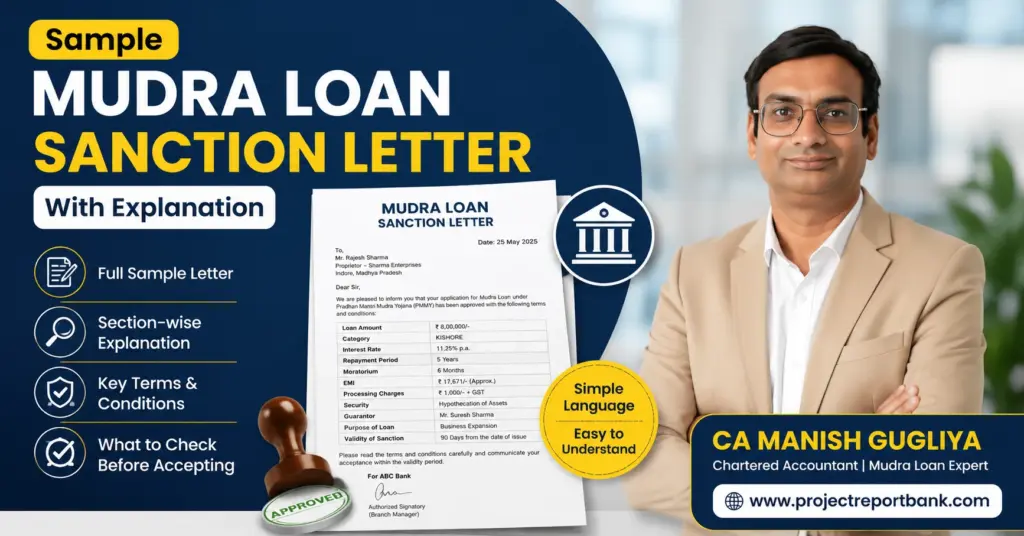
A Mudra loan sanction letter is a formal written approval issued by a bank or lending institution under Pradhan Mantri Mudra Yojana (PMMY). It specifies the approved loan amount, interest rate, tenure, EMI details, conditions, and validity period. Think of it as the bank telling you, in writing, that your loan has been approved in principle and on what terms.
This letter is important because it serves as proof that the bank has agreed to lend to you, it confirms the key terms before you sign the loan agreement, and it is the basis for further documentation and disbursement.
The sanction letter is issued after a multi-step process – after your KYC, income and business assessment, credit check, and internal approval are complete. It is not issued at the time of first enquiry or when you simply submit a form.
MUDRA itself is a refinancing agency, not a retail bank. It refinances the lending institutions. MUDRA does not issue direct loan approval letters to individuals. The sanction letter always comes from the bank or NBFC where you applied.
Under PMMY, loans fall into categories based on amount:
- Shishu category offers loans up to Rs 50,000
- Kishore category provides loans from Rs 50,001 to Rs 5 lakhs
- Tarun category includes loans from Rs 5 lakhs to Rs 10 lakhs
- Tarun+ category (introduced October 2024) offers loans from Rs 10 lakhs to Rs 20 lakhs for eligible repeat borrowers who have successfully repaid a Tarun loan
Understanding the Loan Journey: Application to Disbursement
Many borrowers confuse an application acknowledgement with a sanction letter. Here is a comparison table to clarify each stage:
| Stage | What It Means | Issued When | Key Feature |
|---|---|---|---|
| Loan Application / Acknowledgement | Bank confirms receipt of your application and documents | Day of submission | Just a receipt – no approval implied |
| In-Principle Approval (SMS/Email) | Bank indicates preliminary willingness to lend | After initial screening | Informal; subject to further verification |
| Sanction Letter | Formal written approval with all terms and conditions | After full assessment, KYC, credit check | Legally binding terms; has reference number |
| Loan Agreement & Security Documents | You sign the contract accepting the sanction terms | After you accept the sanction | Creates legal obligation for both sides |
| Disbursement | Money credited to your account or cheque issued | After agreement execution and compliance | Actual receipt of funds |
Example timeline for a Kishor category loan of Rs 3,00,000: Application submitted on 1st March → Preliminary approval SMS on 8th March → Sanction letter issued on 15th March (valid for 30 days) → Agreement signed on 20th March → Amount disbursed on 25th March.
Always read and understand every point in the sanction letter before signing. If any term confuses you, ask the bank to clarify. You can also learn more about Mudra loan documents required at each stage.
Why Verifying the Sanction Letter Is Important
Every year, thousands of borrowers lose money by trusting fake Mudra loan approval letters and paying charges without confirming with the bank. According to a parliamentary response, over 2,506 instances of alleged fraud amounting to Rs 58.36 crore were reported across public sector banks under Mudra schemes by mid-2022. The real number, including unreported cases, is likely much higher.
Financial Fraud Risk
Scammers collect “processing fee”, “file opening charge”, “advance EMI”, or “security deposit” ranging from Rs 3,000 to Rs 25,000 based on forged sanction letters – and vanish after payment. Fraudulent loan letters may demand upfront payments through UPI to personal numbers, wallet accounts, or unknown current accounts. A genuine bank never operates this way.
Identity Theft Risk
Fake agents ask for Aadhaar, PAN, bank statement, selfies, and OTP. They use these to open fraudulent accounts, take loans in your name from other lenders, or sell your data. Remember, you need a valid photo identity proof for the loan, a current address proof is required for the application, latest Income Tax Return is necessary as income proof, a bank statement from the last six months is required, you must submit a loan application form with your documents, and proof of business continuity is needed for the loan application. These are genuine requirements – but they should be submitted only at the bank, not to random agents.
Document Misuse
ITR copies, GST registration certificates, and property papers shared with scammers can be photocopied and misused to create fake businesses, fraudulent credit applications, or tax-related fraud.
Fake Approval SMS and Email Scams
Messages claiming “Your PMMY loan is approved under file no. XXXX – contact this mobile number” are sent to people who never even visited a bank. Banks will not issue loan approvals without prior applications. If you did not apply, it is a scam.
Long-Term Consequences
Beyond immediate financial loss, victims may face CIBIL enquiries by unknown lenders (damaging their credit score), police/cyber complaints, mental stress, and business delays when expected funds never arrive.
A simple phone call to the bank branch can save you from all of this. Never skip verification.
Signs of a Genuine Mudra Loan Sanction Letter
While the exact format differs across banks – SBI, PNB, HDFC Bank, Bank of Baroda, and others each have their own templates – all genuine bank sanction letters under Mudra share certain common features.
A genuine loan letter includes the lender’s official name and branch details. Use the checklist below to evaluate any sanction letter you receive:
| Checklist Item | What to Look For | Notes |
|---|---|---|
| Bank letterhead | Official logo, full branch address, phone, email | Should match the bank’s website |
| Reference number | Unique sanction/proposal number printed clearly | Must be traceable by the branch in CBS |
| Applicant details | Full name, business name, address, customer ID | Must match your KYC exactly |
| Loan amount & category | E.g., Rs 3,00,000 under Kishor; type of facility (term loan, CC, OD) | Amount should align with what you applied for |
| Interest rate | Clearly stated (e.g., 11.50% p.a. floating linked to EBLR/MCLR) | Check if any subsidy note is mentioned |
| Repayment terms | Tenure in months, number of instalments, EMI amount, moratorium if any | Should match the bank’s EMI calculator |
| Purpose of loan | Working capital, machinery, stock, etc. | Should align with PMMY guidelines |
| Sanction date & validity | Date of issue + validity (e.g., “valid for 30 days”) | Expired validity is a concern |
| Branch details | Branch name, IFSC code, contact information | Cross-check on bank website |
| Authorized signature | Name, designation, branch stamp | Digital letters may have system-generated authorization |
| QR code / barcode | Some CBS-generated letters include this | Absence alone does not prove fakeness |
| Official email domain | E.g., @sbi.co.in, @bankofbaroda.com | Not Gmail, Yahoo, or Hotmail |
The language and formatting of a genuine sanction letter is professional – proper paragraphs, consistent fonts, correct spelling, and reference to standard terms and RBI/PMMY guidelines.
If your letter is missing several of these elements, proceed with caution and verify directly with the branch.
Red Flags That Indicate a Fake Sanction Letter
Even if a letter shows the Mudra logo or Prime Minister’s photo, it can still be fake. Authenticity depends on verification with the bank, not on design alone.
Scammers issue fake loans via social media or messaging apps. Here are the warning signs:
Visual and Content Red Flags
- Spelling mistakes, odd capitalisation, poor grammar and unprofessional formatting with random fonts, bright colours, or clip-art images.
- Gmail/Yahoo/Hotmail/Rediffmail email IDs printed on the letter instead of official bank domains. Communications from legitimate banks use official email domains.
- No full branch address or only a mobile number without any landline or official contact.
- Fake or distorted bank logos, wrong colours, or a mix of different bank logos on one page. Fact-checker Factly found identical signatures under different names across multiple fake letters – a clear sign of mass-produced forgeries.
- Missing or vague reference number that the branch later cannot trace in its system.
Behavioural and Process Red Flags
- Letter sent only on WhatsApp or Telegram with no corresponding email or SMS from the bank’s official short code.
- Pressure tactics: “Pay within 1–2 hours or your Mudra loan will be cancelled” or “This is a special Prime Minister scheme closing today.”
- Demand for payment through UPI to personal numbers, wallet accounts, or unknown current accounts for “file charge”, “mandatory insurance”, “agreement stamp”, or “NOC from RBI.”
- Government scams often entail fake promises of pre-approved loans to people who never even applied.
⚠️ Warning: If your sanction letter came only via WhatsApp, asks for fees to a personal UPI ID, uses a Gmail address, and the branch cannot verify the reference number – it is almost certainly fake. Do not pay. Do not share documents. Contact the bank directly.
Genuine bank staff will never ask for your OTP, net banking password, ATM PIN, or full card details while processing Mudra loans.

Step-by-Step Process to Verify Your Mudra Loan Sanction Letter
Verification should be done before paying even Rs 1 to anyone – ideally on the same day you receive the letter. Fraud prevention includes consulting official verification sources. Here is your 10-step verification process:
Step 1: Verify Branch Details
Check the branch address, branch code, and IFSC printed on the letter. Compare these with the official bank website or your existing passbook/cheque book if you are already a customer of that bank.
Step 2: Call Official Bank Numbers
Call the customer care number from the bank’s official website (not the number on the letter or given by the agent). Ask to be connected to the mentioned branch.
Step 3: Visit the Branch Physically
Wherever possible, visit the branch with the printout or PDF of the sanction letter. Request confirmation from the branch manager or loan officer. Individuals should verify loan letters physically at the local bank branch – this is the most reliable method.
Step 4: Verify the Reference Number
Ask bank staff to check the sanction reference number, proposal number, or application ID in their CBS or loan processing system. If it does not exist in their system, the letter is fake.
Step 5: Match Your Application Details
Ensure the key details – your name, address, loan amount requested, business type – in the bank’s system match what is written on the letter. Verify any sanction letter against information on the official MUDRA website.
Step 6: Confirm Interest Rate and Charges
Confirm the interest rate, processing fee, and other charges with the branch. Clarify whether any insurance is genuinely compulsory under that bank’s policy. If something seems off, you can refer to guidance on whether banks can force insurance with Mudra loans.
Step 7: Check the Repayment Schedule
Compare the EMI and repayment schedule in the letter against the bank’s calculation or any online EMI calculator for the same amount, rate, and tenure. Major discrepancies are a red flag.
Step 8: Request Official Re-send
If there is any doubt about the PDF or WhatsApp copy, request the branch to resend the sanction letter from an official bank email ID.
Step 9: Never Pay Unofficial Fees
Never pay any amount – processing fee, GST, file charge, security deposit – to an agent’s UPI ID or personal account. All genuine charges are paid only at the bank counter or through official bank channels.
Step 10: Keep Copies of Everything
Save screenshots, printouts, and copies of all emails, SMS, WhatsApp chats, and documents related to the loan. These become critical evidence if you ever need to file a complaint.
If you need guidance on what documents are required at each stage, check out the detailed guide on Mudra loan documents required.

How to Verify a Digital Mudra Loan Sanction Letter (PDF / Email)
Many banks now send sanction letters as PDF attachments through their official email systems or allow you to download them from net banking portals or platforms like Jan Samarth.
Check the Sender’s Email Domain
Look at the email address carefully. A genuine bank email will come from a domain like @sbi.co.in, @axisbank.com, or @hdfcbank.com – not from Gmail, Yahoo, or any free email service. Compare the sender domain with the contact details listed on the bank’s official website.
Verify PDF Content
Confirm that the PDF file name and content match your name and loan details. Do not open suspicious attachments from unknown email IDs – they could contain malware.
Look for Digital Signatures
Genuine bank PDFs may contain licensed digital signatures, “digitally signed by …” lines, or embedded security certificates. Absence of a visible digital signature does not automatically mean the letter is fake (not all banks use them). However, a mismatched digital signature – wrong name, wrong bank – is a strong warning sign.
Check Document Metadata (Advanced)
For those comfortable with technology, right-click the PDF properties and check creation date, author name, or software used. Very generic entries like “Author: Admin, Company: Unknown” combined with other red flags can signal forgery.
QR Code Verification
Some banks print a QR code that, when scanned, opens the bank’s official site or a confirmation page. If scanning the QR leads to a random survey, unknown URL, or error – be suspicious.
Cross-Check on Portal Dashboards
If you applied through an online platform, cross-check your sanction status on the portal dashboard. Do not trust only forwarded PDFs from agents. You can learn more about how to download your Mudra loan sanction letter online through official channels.
Even for digital letters, final confirmation should always come from the branch through official contact channels.
Common Mudra Loan Scams Related to Sanction Letters
Fraudsters use different tricks, but the goal is always the same – collect money or personal data using fake Mudra sanction or approval letters. Here are the most common patterns:
Fake Approval Emails
Emails promising guaranteed PM Mudra loans for Rs 10 lakh regardless of CIBIL score, asking for an upfront fee of Rs 3,000–10,000. The applicant is told the finance will be deposited within 24 hours of payment.
Fake SMS
Messages in the format “Your Mudra loan approved – call this number” sent to random mobile numbers. The person may never have applied for any loan.
Fake Websites
Websites copying the design of official bank or PMMY pages, collecting Aadhaar, PAN, and OTP, then issuing forged approval letters. These sites often have slightly altered URLs (e.g., mudra-gov-india.com instead of the official government website).
Fake Bank Agents
Individuals claiming to be bank DSAs or agents, promising door-step Mudra loans, taking documents and cash for “home visit charges” or “file processing.”
Processing Fee, Insurance, and Deposit Scams
Large non-refundable amounts demanded through forged sanction letters. As PIB has confirmed, there are no upfront charges demanded by MUDRA or the government of India for loan approval or sanction.
Genuine vs Fake: Quick Comparison
| Aspect | Genuine Mudra Process | Fake Scam Pattern |
|---|---|---|
| Who initiates | Borrower applies at bank | Agent contacts borrower unsolicited |
| Payment channel | Charges paid at bank counter | UPI to personal numbers, wallets |
| Communication | Official SMS, email, branch visit | WhatsApp, Telegram, Gmail only |
| Documentation | Full KYC, business appraisal at branch | Google form, selfie, Aadhaar photo |
| Verification | Branch confirms via CBS reference number | “Trust me” or “branch is closed today” |
| Eligibility check | CIBIL, income, business viability assessed | “No CIBIL needed, guaranteed approval” |
For related reading, you may also want to understand whether the Mudra loan subsidy is real or fake.
What to Do If You Receive or Suspect a Fake Sanction Letter
Many people receive such fake letters. Prompt, correct steps can reduce your loss and help authorities catch scammers.
Immediate Steps
- Stop all communication with the suspected agent. Do not send any more money or documents.
- Contact the concerned bank branch or customer care to confirm whether any loan in your name exists and whether they issued that sanction letter.
Preserve Evidence
- Save screenshots of WhatsApp chats, SMS, emails, payment receipts, UPI transaction IDs, and PDF copies of the fake sanction letter.
- Note down mobile numbers, UPI IDs, and bank account details used by the scammer.
File Formal Complaints
- Lodge a written complaint with the bank (if their name or logo was misused) and take acknowledgement.
- File a complaint on the National Cyber Crime Portal (cybercrime.gov.in) or your local cyber cell, especially if money has already been transferred.
Additional Protective Steps
- Inform your bank to monitor suspicious transactions in your account.
- Warn friends, family, or local business groups about the scam pattern so others do not fall for the same fake Mudra loan approval letter.
- In complex cases or high-value frauds, consulting a professional like a CA or lawyer can help in documenting losses and dealing with authorities. If your Mudra loan has been delayed or rejected unfairly, professional support can also help you understand your rights.
Mistakes Borrowers Commonly Make During Verification
Even smart business owners sometimes make avoidable mistakes when excited about quick loan approvals.
- Trusting WhatsApp or Telegram messages as final approval without any branch contact. A message is not a sanction letter.
- Ignoring direct verification with the branch because the agent says “I am too busy, branch is very crowded, trust me.”
- Paying processing fees before receiving any official acknowledgement SMS from the bank’s own short code or registered number.
- Believing unbelievable promises like “Mudra loan without CIBIL check”, “Mudra without documents”, or “loan in 2 hours only with Aadhaar.”
- Not reading the conditions in the sanction letter carefully – clauses about mandatory margin money, security, guarantor requirement, and default charges. Even with a genuine letter, not understanding the terms can create problems later.
- Sharing OTPs, debit card numbers, or net banking credentials in the name of “bank verification” to unknown callers.
- Sharing Aadhaar and PAN carelessly with agents who have no official bank identification.
Take 10–15 minutes to re-read the sanction letter at home or with a trusted advisor before signing or paying anything. If you are unsure about eligibility requirements or what documents the bank can legitimately ask for, refer to the guide on whether banks can keep asking for new documents.
Expert Guidance by CA Manish Gugliya
As a Chartered Accountant with over 20 years of experience helping MSMEs with Mudra loans, project reports, and bank documentation, I have seen the damage fake sanction letters can cause – and how easily most of it could have been prevented.
Let me share two real examples (names changed for privacy).
A small trader from Jaipur received a WhatsApp message claiming his PM Mudra loan of Rs 5,00,000 was approved. The “sanction letter” had the bank’s logo, a reference number, and even the PM’s photo. He was asked to pay Rs 8,000 as “file processing charge” via UPI. He paid. The agent then asked for Rs 4,500 more as “insurance.” When the trader called the bank branch directly, they confirmed no loan existed in his name. Total loss: Rs 8,000 and weeks of stress.
In another case, a women entrepreneur from Indore shared her Aadhaar, PAN, bank statements, and OTP with a “loan agent” she found on Facebook. Not only did no loan arrive, but she later discovered someone had applied for a personal loan using her documents at a different lender. It took months to resolve.
Here is my practical advice:
- Always start your Mudra loan application directly with the bank or through trusted platforms – not through random social media messages or agents who approach you first.
- Treat every sanction letter as “unconfirmed” until the issuing branch validates it. No exceptions.
- Never pay unofficial charges. If a bank insists on something questionable like compulsory insurance, ask for the relevant circular in writing. You can also check whether cross-selling during Mudra loan processing is legitimate.
- Read each clause of the sanction letter – especially interest rate, processing fee, security, guarantor requirement, and default charges. Ask questions without hesitation.
- As a professional, I help entrepreneurs prepare proper project reports, CMA data, and documentation that increases the chances of genuine Mudra loan sanction and reduces dependence on middlemen. Good preparation means you deal directly with the bank, not through unverified agents.
If you feel confused about any aspect of your Mudra loan process, suspect fraud, or need help preparing your loan documentation, feel free to reach out through ProjectReportBank for professional guidance.

Frequently Asked Questions (Mudra Loan Sanction Letter Verification)
This FAQ section covers additional doubts about checking whether a Mudra loan sanction letter is genuine, beyond what is already explained above.
Can Mudra loan sanction letters be fake even if they show government or Mudra logo?
Yes, absolutely. Scammers frequently use the Mudra logo, PMMY branding, and even the Prime Minister’s photo on forged letters to appear legitimate. As confirmed by PIB fact checks, the presence of official-looking logos does not make a letter genuine. Only verification with the issuing bank branch – through their CBS system and official reference number – can confirm authenticity. Remember, MUDRA is a refinancing agency and does not issue sanction letters to individual borrowers.
Is a sanction SMS or WhatsApp message alone sufficient proof of loan approval?
No. An SMS or WhatsApp message is not a sanction letter. Banks may send preliminary intimation via SMS from their registered short codes, but the formal sanction letter is a separate detailed document with terms, conditions, reference number, and authorized signatures. If you only received a WhatsApp message from a personal number claiming your loan is approved, treat it with extreme suspicion and verify with the branch before taking any action.
Can an agent or DSA issue a genuine Mudra sanction letter on behalf of a bank?
No. Only the bank or authorized lending institution can issue a sanction letter. A Direct Selling Agent (DSA) may help with sourcing loan applications, but the sanction decision and letter come from the bank. If an agent hands you a sanction letter, verify it with the bank branch. The agent cannot sanction loans independently. If the bank confirms they did not issue the letter, it is fake regardless of what the agent claims.
How can I verify my Mudra loan sanction letter online without visiting the branch?
You can start by calling the bank’s official customer care number (found on the bank’s website, not on the letter) and asking them to verify the reference number. If you applied through an online portal like Jan Samarth, check your application status on the portal dashboard. You can also compare the lender name on the letter against the official list of Member Lending Institutions on the PMMY government website. However, for complete certainty, a branch visit remains the gold standard.
What should I do if the bank says they did not issue the sanction letter but my data is already shared?
This is a serious situation. Immediately file a complaint on the National Cyber Crime Portal (cybercrime.gov.in) and your local police station. Inform your bank to flag your account for monitoring. Check your CIBIL report for any unauthorized loan enquiries or accounts. If you shared OTPs, change your net banking and UPI passwords immediately. Consider consulting a CA or lawyer who can help you document the case and take protective legal steps. If you have already lost money, include all UPI transaction IDs and screenshots in your complaint. You can also explore your options if your Mudra loan was rejected or mishandled.
- Hidden Terms and Conditions in a Mudra Loan Sanction Letter

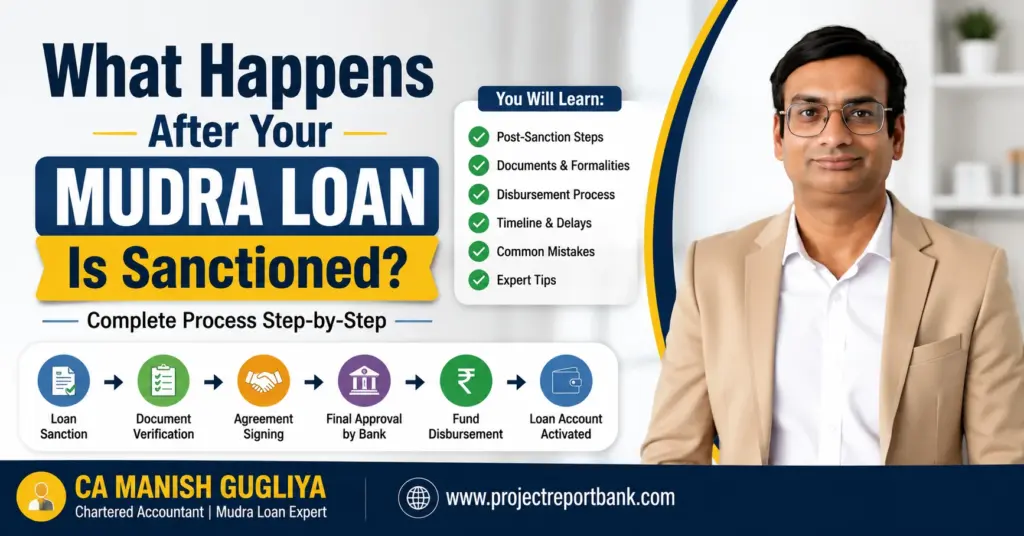
- What Happens After Your Mudra Loan Is Sanctioned?
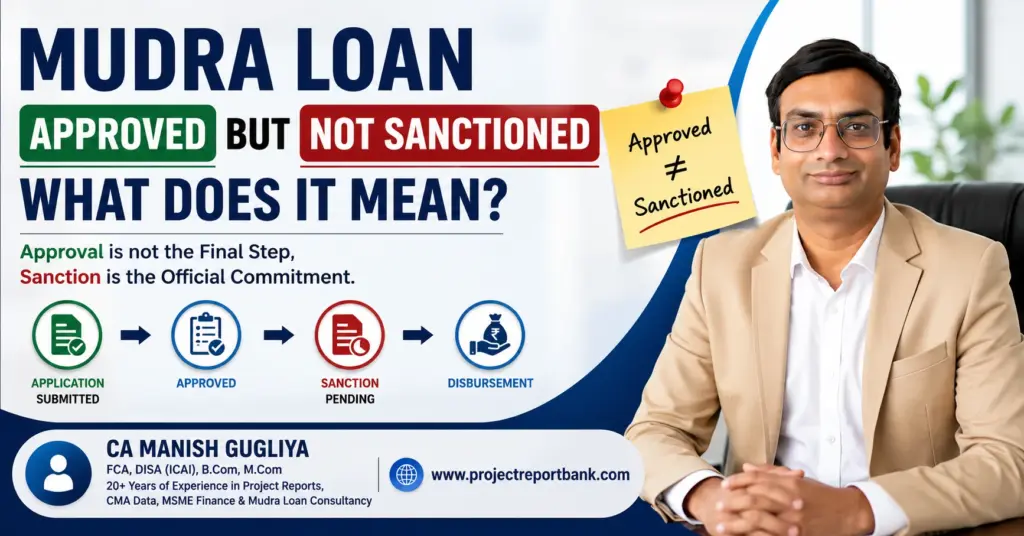
- Mudra Loan Approved but Not Sanctioned: What Does It Really Mean?
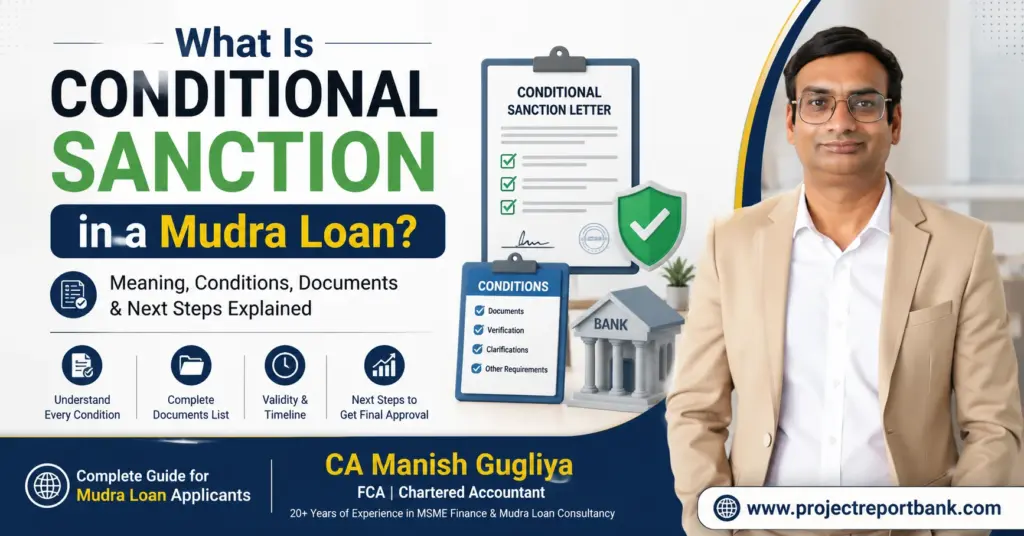
- What Is Conditional Sanction in a Mudra Loan? Meaning, Conditions, Documents & Next Steps
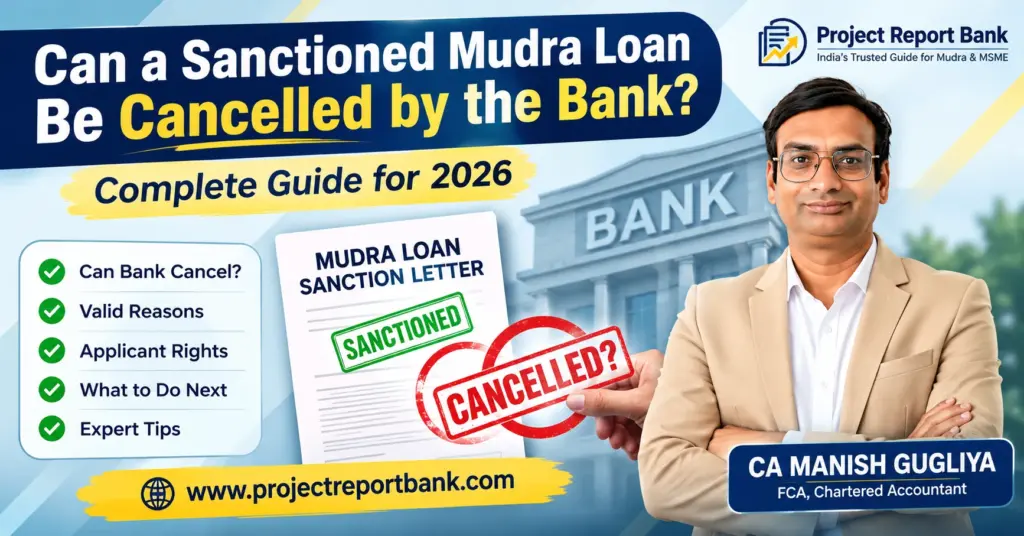
- Can a Sanctioned Mudra Loan Be Cancelled by the Bank? Complete Guide (2026)
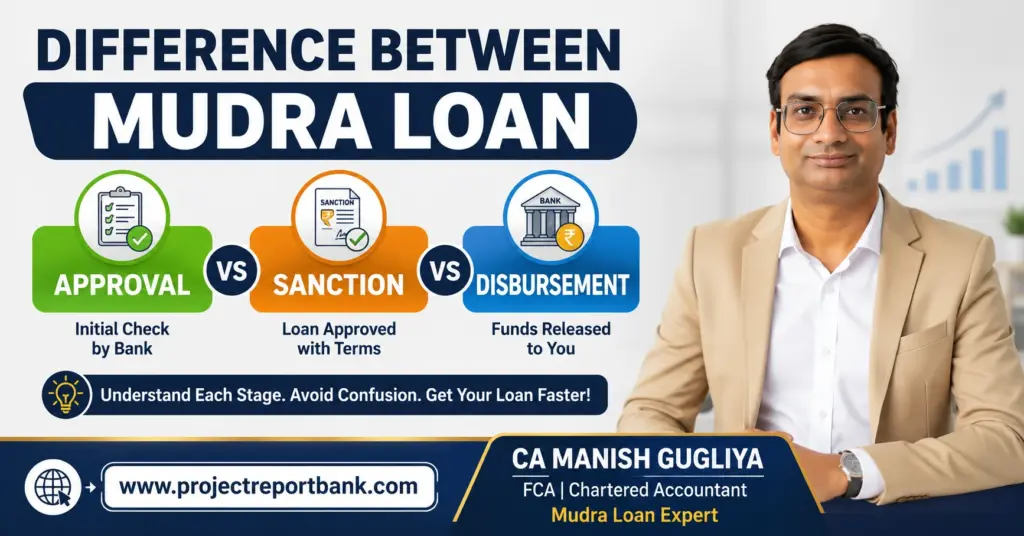
- Difference Between Mudra Loan Approval, Sanction and Disbursement
- How to Check Whether Your Mudra Loan Sanction Letter Is Genuine
- Mudra Loan Sanction Letter Format: Every Section Explained
- Sample Mudra Loan Sanction Letter with Explanation