Key Takeaways
Here is what you need to know before reading the full guide:
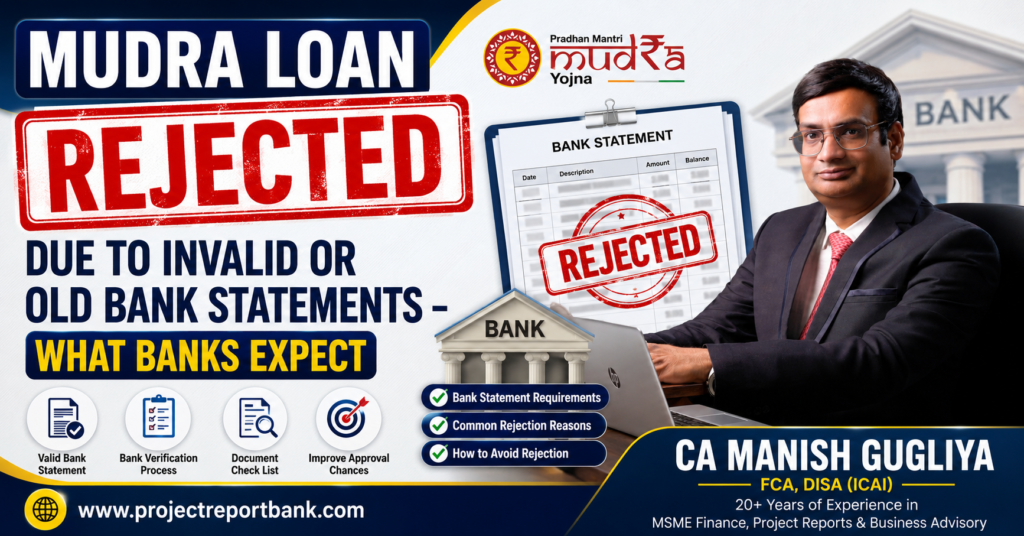
- Many mudra loan applications across Shishu, Kishore, and Tarun categories are rejected solely because of invalid, incomplete, or old bank statements – even when other mudra loan documents are perfectly correct.
- Most banks expect a latest 6-month bank statement (sometimes 12 months for higher loan amounts) in official format, either stamped by the branch or as a digitally signed PDF.
- Top rejection triggers include: statements older than 30–45 days at the time of appraisal, missing pages, screenshots instead of official PDFs, edited documents, inactive accounts, or name mismatches between the statement and the mudra loan application.
- No collateral is required for Mudra loans, which makes bank statements even more critical – they become the primary window into your financial health.
- This guide explains what a “valid” bank statement is, how to fix common issues, and how to prepare before reapplying.
Introduction: Why Your Mudra Loan Was Rejected Due to Bank Statements
In early 2025, a small mobile repair shop owner in Indore applied for a ₹3.5 lakh Kishore Mudra loan. He had a running business, a completed application form with photographs, and decent sales. His application was rejected – not because the business was weak, but because he submitted a 9-month-old bank statement forwarded via WhatsApp, without a bank seal or complete pages.
Under Pradhan Mantri Mudra Yojana (PMMY), banks focus heavily on bank statements to judge repayment capacity and actual business activity, especially for Kishore and Tarun mudra loan amounts. As CA Manish Gugliya (FCA, DISA-ICAI), with around 20 years of experience in project reports, CMA data, and Mudra loan consultancy, I see dozens of cases every month where an otherwise strong business plan is rejected only because of bank statement problems.
This article focuses specifically on why a mudra loan gets rejected due to bank statement issues – covering formats, freshness, transaction patterns, and how to fix them. A rejection on this ground is usually fixable, and by the end of this guide, you will know exactly what to submit before reapplying for a business loan under Mudra.
Table of Contents
What Is a “Valid” Bank Statement for Mudra Loan Purposes?
RBI and PMMY guidelines do not define “valid bank statement” in specific detail. Banks follow their own internal credit policies. However, across most public and private sector banks, the expectations are consistent.
A valid bank statement must be recent – typically covering the last 6 months and generated not more than 30–45 days before the bank’s appraisal date. Some banks insist on statements running up to the previous month-end.
Acceptable formats include:
- Branch-printed statement with bank logo, address, account number, customer name, continuous page numbering, and signed/stamped by a bank official.
- Official e-statement (PDF) downloaded from internet banking, showing bank logo, URL, full account details, and generation date. HDFC Bank’s Mudra documentation page confirms the requirement for last 6 months’ bank statements.
- Updated bank passbook pages – photocopied or scanned clearly, showing transactions and branch seal.
Screenshots from mobile apps, Excel exports, edited Word files, or cropped images are not treated as official statements by mudra loan processing teams. Some banks now accept digitally verified PDFs with secure digital signatures as equivalent to physical stamped copies.
For joint accounts or proprietorship current accounts, the name must match the mudra loan application and KYC documents, otherwise the statement may be treated as invalid.
Why Banks Ask for Bank Statements in Mudra Loan Applications
Mudra loans are collateral-free, but they are not risk-free. Banks rely on bank statements as the main tool to assess risk, especially when formal income proof is limited. Lenders view bank statements as primary indicators of financial health.
Key purposes include:
- Verifying income and repayment capacity: Banks look for regular credits – salary, sales receipts, UPI collections – to confirm that the requested loan EMI can be comfortably managed. A high debt-to-income ratio may signal insufficient cash flow for new debt.
- Understanding business turnover: Total credits per month reveal actual cash flow patterns, seasonality, and whether the business is genuinely active.
- Checking existing obligations: EMI deductions, credit card dues, and other outflows help banks calculate how much additional loan burden the applicant can handle. Missing payment dates on financial obligations can directly affect loan approval.
- Evaluating financial discipline: Maintaining a healthy average balance, avoiding frequent overdrafts, and keeping the account active are all signals banks rely on.
For many applicants – small traders, home businesses, vendors – formal financials like audited balance sheets or ITRs may not exist. Bank statements effectively become both income proof and business proof. They are cross-checked with other documents like udyam registration, shop licence, and GST returns to ensure declared activity matches actual transactions.

Common Bank Statement Mistakes That Lead to Mudra Loan Rejection
In practice, most rejections due to bank statement issues fall into predictable categories. Incomplete or mismatched documents cause most Mudra loan rejections in this area. Here are the major mistakes and how to fix each:
- Statement too old: Submitting a statement ending December 2024 for an April 2025 application. Banks want the latest period. Fix: Download a fresh statement just before submission.
- Only 1–3 months submitted: Most banks insist on minimum 6 months. A bank statement from the last 12 months is necessary for higher categories. Fix: Request full 6-month or 12-month statements.
- Missing pages or incomplete PDF: Skipped page numbers or cut-off transactions raise suspicion. Incomplete bank statements can prevent lenders from analyzing transaction trends. Fix: Re-download full file and verify page numbering.
- Screenshots or Excel printouts: These are routinely refused by credit departments. Fix: Use the “download statement” function in net banking or visit the branch.
- No bank logo or branch details: Generic ledger printouts lack official branding. Fix: Get a stamped or digitally signed version.
- Password-protected PDFs: Branch staff sometimes cannot open these. Fix: Mention the password on a covering letter or provide a printed copy.
- Inactive or low-activity account: Accounts with almost no regular transactions make assessment impossible. Banks prefer to see a steady income stream rather than large sporadic deposits. Fix: Route business or salary through one primary account for a few months before applying.
- Heavy cash deposits just before applying: Sudden lump-sum cash credits with no history raise doubts about fabricated turnover. Large, unexplained deposits can be flagged as suspicious by banks. Irregular deposits suggest an unstable income source. Fix: Build genuine transaction history over time.
- Frequent cheque returns or ECS bounces: Repeated “insufficient funds” entries severely hurt perceived discipline. High frequency of bounced cheques indicates poor financial management. Fix: Avoid bounces for at least 6 months before applying.
- Multiple loan deductions across NBFCs: Banks may feel EMI burden is already high. If this applies, refer to guidance on Mudra loan rejection due to existing EMIs or multiple loan enquiries.
- Name mismatch: The name on the statement must match KYC documents. Issues like PAN and Aadhaar name mismatches can cause immediate rejection.
- Using a relative’s account: Banks need the applicant’s own account. Using a personal account for business transactions can lead to rejection.
Rejection can also occur if the turnover in bank statements does not match application details – always ensure consistency between your statement, project report, and business plan.
How Many Months’ Bank Statement Do Banks Typically Require for Mudra Loan?
There is no single PMMY rule. Requirements are set by individual banks, but most follow a 6–12 month norm. Here is what I observe in practice:
- Shishu loans (up to ₹50,000 for startups): Some banks accept 3–6 months or even a simple business plan if the applicant is completely new.
- Kishore Mudra loan (₹50,000 to ₹5 lakh for business expansion): At least 6 months of bank statement is compulsory, preferably from a current account in the business name. Income proof is required for Kishore and Tarun loan categories.
- Tarun loans (₹5 lakh to ₹10 lakh for established businesses): Many banks ask for 12 months to judge stability and seasonality. The MSME “Know Your Lender” handbook recommends 6–12 months for larger applications.
- Tarun Plus loans can go up to ₹20 lakh for repeat borrowers, effective from October 2024, with even stricter documentation expectations.
Banks typically require a continuous statement of at least six months for assessment. The period should be unbroken and immediately preceding the application date. If your banking history is strong, submit 12 months even when only 6 are asked – it works in your favour. The maximum loan amount under Mudra is ₹10 lakh (₹20 lakh for Tarun Plus).
Personal vs Business Bank Statement – Which One Should You Submit?
Ideally, every micro-entrepreneur should maintain a separate current account for business. In reality, many applicants use their personal savings account for everything.
| Factor | Personal Account Statement | Business Account Statement |
|---|---|---|
| Purpose | Shows salary, personal expenses, savings | Shows business turnover, vendor payments, sales receipts |
| Who uses it | Salaried individuals starting a side business | Proprietors, partnerships, LLPs, companies |
| Advantages | Available immediately; shows stable income | Clearly reflects business activity; preferred by banks |
| Limitations | Mixes personal and business transactions | Requires a separate current account setup |
| Bank preference for Mudra | Accepted for Shishu; weaker for Kishore/Tarun | Strongly preferred for all category loans |
For proprietorships, a current account in the trade name is preferred because transactions clearly reflect business turnover. For partnerships, companies, or LLPs, banks strongly insist on the business account statement in the entity’s name because the mudra loan is sanctioned to the firm, not an individual. Business registration must match across all documents.
Whichever account you submit, the name on the statement, mudra loan application, PAN card, and aadhaar card must be consistent. If business and personal transactions are currently mixed, open a dedicated business account and route all sales through it for at least 3–6 months before applying.
What Exactly Do Banks Check Inside Your Bank Statements?
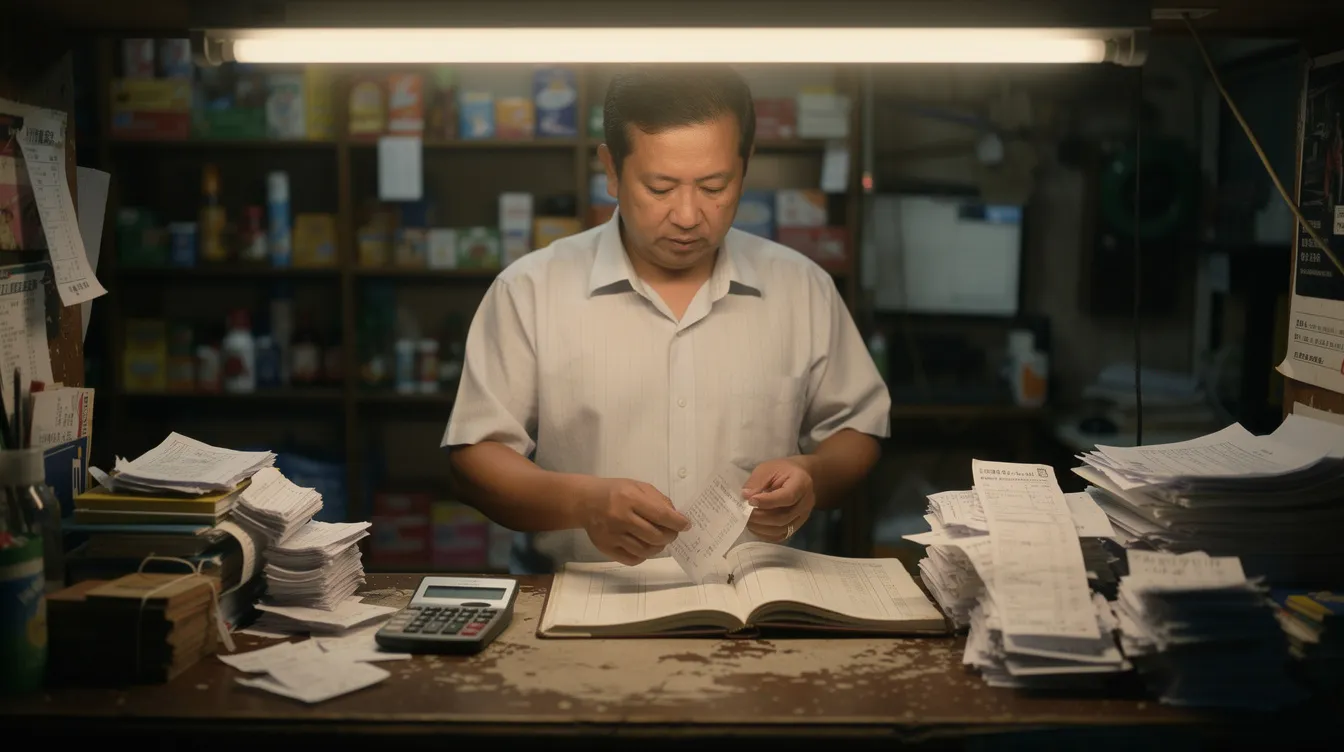
Every bank has its own appraisal checklist, but credit officers consistently look for similar patterns:
- Average monthly balance (AMB): Whether the balance is positive and healthy compared to the requested EMI. Insufficient average monthly balance indicates financial instability.
- Regularity of income credits: Monthly salary, sales receipts, UPI settlements. Banks prefer stable or gradually increasing income rather than random spikes.
- Business turnover: Total credits per month compared with declared sales in the project report or GST returns. Lack of clearly defined business transactions can lead to rejection.
- Existing EMIs and obligations: Deductions to other banks, non banking financial companies, or card payments help the officer calculate fixed obligations to income ratio (FOIR).
- Cheque bounces and ECS returns: Repeated “Cheque Return” or “ECS Return” remarks indicate poor discipline. Frequent cheque bounces or missed payments can negatively impact assessments.
- Cash handling: Heavy cash withdrawals with minimal digital payments may signal unrecorded transactions, making banks cautious.
- Account stability: How long the account has been open, periods of zero activity, and whether the customer suddenly switched banks just before applying.
While bank statements are different from the cibil report, they often confirm each other. For example, your cibil score may reflect existing personal loans, and your statement will show the corresponding EMI outflow. A CIBIL score is not mandatory but preferred by most banks.
Red Flags in Bank Statements That Increase Mudra Loan Rejection Risk
These warning signs often push bankers to either reduce the mudra loan amount or reject the application entirely:
- No business transactions despite claiming a running business – for example, a shop owner showing only salary credits from another job.
- Salary account used for business payments and collections instead of a proper current account, creating confusion between personal and business cash flows.
- Sudden large one-time deposits just before applying – these look like borrowed or rotated funds rather than genuine sales.
- Frequent overdrafts or negative closing balances, especially in current accounts, suggesting liquidity stress.
- Transactions linked to speculative activities like online gambling or frequent crypto app debits, which many banks treat as high-risk behaviour.
- Long chains of UPI pay-receive-refund entries that create artificial turnover with no real profit – experienced credit officers can identify these patterns.
- Repeated EMI bounces shown within the last 6–12 months, especially from micro finance institutions or instant loan apps.
- Heavy dependence on multiple NBFC EMIs, indicating already stretched repayment capacity. If your cibil report shows errors affecting this picture, address those first.
For each red flag, the corrective action is straightforward: stop routing speculative transactions through the main account, avoid cheque bounces for at least 6 months, route genuine sales consistently through one business account, and honestly review your own statements before applying.
Can Edited or Manipulated Bank Statements Be Detected by Banks?
Editing or tampering with bank statements – changing balances, removing bounced cheques, inflating turnover – is risky, unethical, and almost always detectable during mudra loan document verification.
Banks cross-verify statements through:
- Internal systems when the statement belongs to the same bank where the mudra loan is being applied.
- Direct verification by calling or emailing the issuing branch to confirm authenticity.
- Specialised software that checks PDF metadata, fonts, and alignment. Tools like MetrikData and DocuClipper analyse creation dates, software signatures, and balance arithmetic to flag doctored files.
Many banks now accept only PDF statements directly downloaded in front of the banker or e-mailed to the branch by the issuing bank, leaving minimal room for editing.
Consequences of submitting manipulated statements include immediate rejection, blacklisting by that bank, and in serious cases, reporting as a fraudulent attempt – which can damage your credit history and future eligibility for any business loan. Instead of manipulating, invest time in improving genuine cash flow and preparing a realistic business plan.
How to Obtain the Correct Bank Statement Before (Re)Applying for a Mudra Loan
Getting a proper statement is straightforward if you use the right method. Always generate a fresh 6–12 month statement just before submitting mudra loan documents.
Step-by-step options:
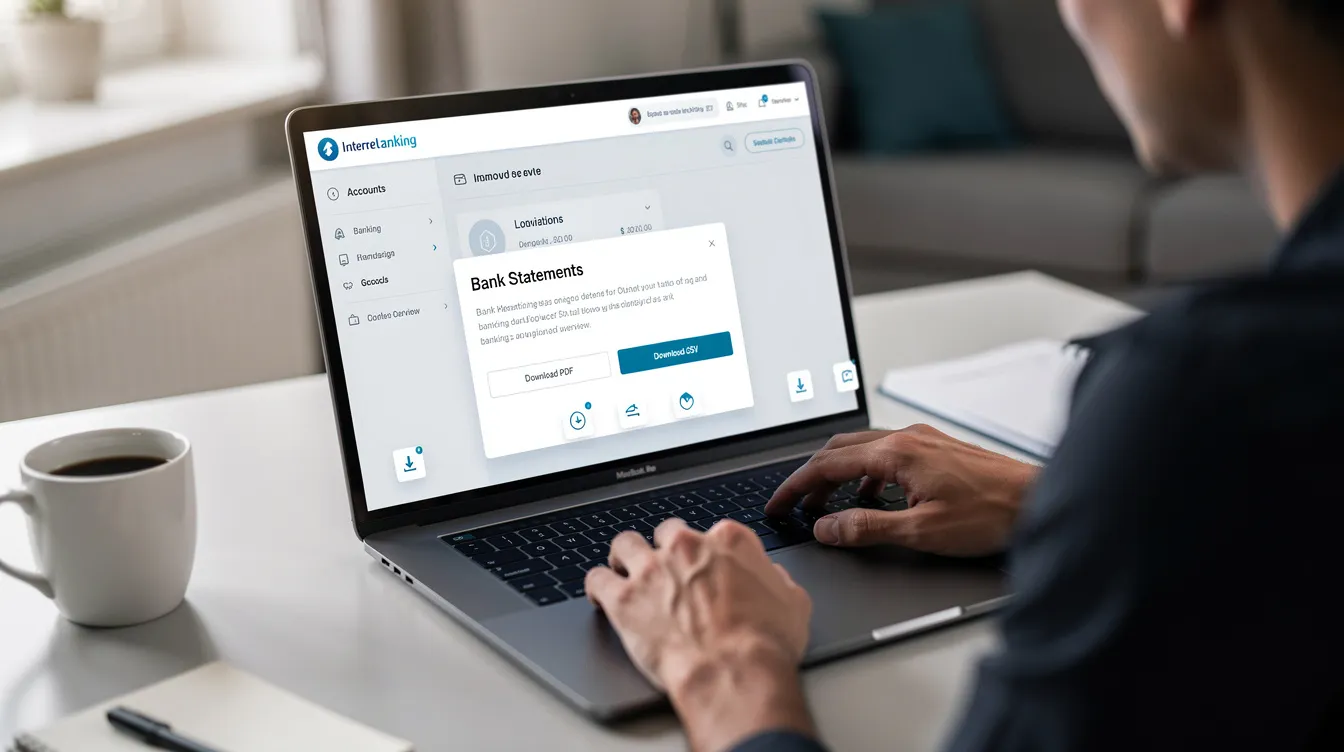
- Internet Banking: Log in, select “Account Statement”, choose 6 or 12 months, download the official PDF. Ensure it shows the bank logo, full pages, and correct date range.
- Mobile Banking App: Use the “Download e-statement” feature (not screenshots). Verify that the PDF contains bank branding and complete details.
- Bank Branch Visit: Request a “latest 6/12 month account statement for loan purpose.” Ask for the official signature and round seal on each page.
- Passbook Update: Update your bank passbook to the latest date, then take clear photocopies or high-quality scans of relevant pages.
Before submitting, verify: correct account holder name, continuous page numbers, legible print, and matching account number. For joint or multiple accounts, clarify with the banker which account is most relevant.
Keep both a soft copy and one physical copy ready – some banks maintain fully digital files while others still insist on physical documents.
What If Your Bank Statement Shows Weak or Irregular Financial Activity?
Many genuine small businesses and new entrepreneurs have irregular banking patterns, especially after disruptions or seasonal slowdowns. This situation can be improved with planning.
Practical steps to strengthen your statement:
- Start routing all business receipts – cash sales deposited, UPI collections, online marketplace settlements – into one main account instead of splitting across wallets and apps.
- Maintain a basic minimum balance. Avoid frequent near-zero balances, especially around EMI due dates.
- Avoid cheque bounces completely. If funds are short, proactively reschedule ECS or pay EMIs manually before the due date.
- Reduce unnecessary cash withdrawals. Make supplier payments through NEFT, RTGS, or UPI to create a clear transaction history of business expenses and raw materials purchases.
If your account has almost no historical banking activity, consider waiting 3–6 months while you build steady turnover in a dedicated current account before applying for a sizeable Kishore or Tarun mudra loan. Proof of business operations is essential for loan approval.
A well-prepared project report and CMA data showing realistic projections and explaining any past irregularity can help the banker understand your situation even if statements are not perfect.
Documents to Submit Along With Bank Statements for a Strong Mudra Loan File
A clean bank statement alone is not enough. It must be supported by complete mudra loan documents, otherwise the file can be rejected for reasons like incomplete KYC or address proof issues.
Essential checklist:
- Identity and address proof: Aadhaar card, pan card, voter id, driving licence, utility bills, or rental agreement matching the residential address and business address proof in the loan application. Ensure your address is not a different address from what appears on other documents.
- Business registration: Udyam registration, shop & establishment certificate, GST registration (if applicable), partnership deed, or company incorporation certificate. Not registering the business can lead to Mudra loan rejection.
- Income proof: ITR for last 1–2 years (if available), previous year’s financials for existing businesses, plus bank statements for 6–12 months.
- Business plan / project report: A clear business plan explaining nature of business, estimated turnover, cost structure, proposed loan amount, utilisation breakup (machinery, stock, working capital), and repayment plan. Even a basic business plan strengthens the file significantly.
- Additional documents: Quotations for machinery, rent agreement for business premises, photos of existing shop, and category-specific certificates.
Cross-check this list with the specific bank’s mudra loan application form. If your rejection was due to incorrect business proof, address that separately.
Steps to Correct Bank Statement Problems Before Reapplying for a Mudra Loan
A first rejection is not final. Applicants can reapply either to the same bank or another lender after fixing the issues. It is important to address issues in bank statements before reapplying.
Action checklist:
- Obtain written or clear verbal confirmation from the bank about the exact reason for rejection. If unclear, read this guide on how to identify the actual reason behind your Mudra loan rejection.
- Open or regularise your main business account. Ensure KYC is updated and start routing all business transactions through it.
- Avoid cheque bounces, overdue EMIs, and irregular lump-sum cash deposits during this “repair period.” Low CIBIL scores below 650 often lead to loan rejection, so work on improving your CIBIL score simultaneously.
- After at least 3–6 months of improved activity, download a fresh 6–12 month statement covering this period.
- Review the new statement yourself – or with a CA – to identify remaining red flags and prepare explanations.
- Update your project report, CMA data, and business plan so all figures match the improved banking pattern. Ensure business viability is clearly demonstrated. Applying for an unjustified loan amount can trigger rejection, so keep the loan amount realistic.
- Reapply with complete documents. If the previous bank remains hesitant, approach another scheduled commercial bank, regional rural banks, or even eligible non banking financial companies.
Maintain a file with all updated documents – it makes future loan applications or enhancements far easier. Mudra loans are available through most banks, and many applicants succeed on their second attempt after proper preparation. Mudra loans are available to individuals and MSMEs, and applicants must be at least 18 years old.
CA Manish Gugliya’s Professional Advice to Avoid Bank-Statement-Based Mudra Loan Rejection
Based on my experience with hundreds of Mudra loan files from 2016–2026 across different states and banks – including applications through Canara Bank, SBI, and various private sector banks – here are my top recommendations:
- Treat your bank account as the mirror of your business. If something is not visible in the bank, the banker will assume it does not exist. Route all sales, even small ones, through the account.
- Build at least 6 months of clean banking history before applying for a Kishore or Tarun mudra loan. Shishu category loans can be more flexible, but clean history always helps.
- Never manipulate or hide information. Instead, prepare written explanations for unusual transactions and attach them with your application.
- Maintain separate accounts for personal and business use, especially once monthly turnover crosses ₹1–2 lakh.
- Coordinate your documents. Your bank statement, simple business plan, GST returns, and ITR should broadly tell the same story. Mismatched documents raise red flags.
- Discuss your statements with a CA before visiting the bank. Small changes in how you route transactions can make a big difference to loan approval chances. While offering collateral can reduce perceived risk during loan assessments, Mudra loans do not require it – so your statement quality matters even more.
- Think long-term. Disciplined banking not only helps with getting a mudra loan approved but also builds creditworthiness for larger MSME finance and business loans in the future. You can even apply online through portals like Jan Samarth once your documentation is strong.
Small businesses deserve access to the right loan scheme, and doing an excellent job on documentation is what separates approved files from rejected ones across all four categories of Mudra – Shishu, Kishore, Tarun, and Tarun Plus. This applies equally to manufacturing and service sectors.
Conclusion: Turn Your Bank Statement into a Strength, Not a Reason for Mudra Loan Rejection
Most cases where a mudra loan is rejected due to bank statement issues are preventable. Banks simply want latest 6–12 month official statements, a clean transaction history, and consistency with other documents. The processing fee and effort of applying are wasted when statements are outdated or incomplete.
Avoid the main pitfalls: stale or partial statements, screenshots, manipulated PDFs, inactive accounts, unexplained cash deposits, and frequent bounces. Each of these is fixable with a few months of disciplined effort.
Improving your banking behaviour, preparing a realistic clear business plan with a solid repayment plan and strong credit history, and submitting a complete mudra yojana application – these steps significantly increase your chances of loan approval, even without collateral.
Review your current bank statements today. Fix the issues. Then approach the bank confidently for the right Mudra loan amount that matches your form, your process, and your ownership of the business opportunity ahead of you.
FAQs on Mudra Loan Rejection Due to Bank Statements
Can I get a Mudra loan if my bank account is less than 3 months old?
For Shishu category loans, some banks may accept a very new account if the business is just starting and you have a basic business plan. However, for Kishore and Tarun categories, most banks want at least 6 months of banking history with regular transactions. If your account is less than 3 months old, it is usually better to wait, build activity, and then apply. This improves your eligibility criteria match significantly.
Are salary account statements enough if I am starting my first small business?
Banks do consider salary account statements to judge stable income and repayment capacity for new entrepreneurs. This can be sufficient for a Shishu loan. However, for Kishore or Tarun amounts, opening a separate current account and gradually routing business receipts through it strengthens your mudra loan application. A salary-only statement does not demonstrate business viability on its own.
Should I submit statements from more than one bank account?
If business transactions are spread across multiple accounts, providing 6–12 month statements for all major accounts helps the banker see the complete picture. Ensure that names and KYC details – including proof of identity and address – match across all accounts. Submitting additional documents from multiple banks is better than hiding transaction history that could support your case.
How long should I wait after improving my banking pattern before reapplying for a Mudra loan?
A practical waiting period is 3–6 months of visibly improved, disciplined banking activity. This gives you enough new transaction history so that the fresh statements clearly show better patterns than the old ones which caused rejection. Use this time to also prepare updated income proof, project reports, and ensure your business registration and other documents are current.
What can I do if the bank still rejects my Mudra loan despite correct bank statements?
First, request written reasons for rejection – banks are required to provide this. If the issue is not the bank statement but something else like poor credit history or lack of business proof, address that specific problem. You can escalate through the branch manager or the bank’s grievance cell. Alternatively, approach another eligible bank, regional rural bank, or micro finance institutions with the same improved documentation. Sometimes a change of lender makes all the difference.
- Mudra Loan Rejection Reasons: Complete Guide to Why Banks Reject Applications


- Mudra Loan Documentation Issues: Complete Guide to Avoid Document-Related Loan Rejections

- How to Prepare a Perfect Mudra Loan Document File Before Visiting the Bank 2026

- Mudra Loan Rejected Due to Signature Mismatch – Practical Guide 2026 by CA Manish Gugliya

- Mudra Loan Rejected Due to Missing Udyam Registration – Complete 2026 Guide by CA Manish Gugliya
- Mudra Loan Rejected Due to Invalid or Old Bank Statements – What Banks Expect (Explained by CA Manish Gugliya) 2026
- Mudra Loan KYC Documents: Complete Checklist to Avoid Rejection 2026
- Mudra Loan Rejected Due to Address Proof Issues – Complete Guide 2026 by CA Manish Gugliya
- Mudra Loan Rejected Due to Incorrect Business Proof – What Documents Do Banks Accept? 2026
- Mudra Loan Rejected Due to PAN and Aadhaar Name Mismatch – Practical Fix by CA Manish Gugliya
- How to Identify the Actual Reason Behind Your Mudra Loan Rejection

- How Banks Assess Mudra Loan 2026 Risk Before Rejecting an Application

- Mudra Loan Interview Rejected: Common Mistakes and How to Prepare Successfully (2026 Guide)
- Mudra Loan Rejected Because the Proposed Business 2026 Already Has High Local Competition

- Mudra Loan Rejected Because Business Category Is Outside Bank Lending Preference 2026