Key Takeaways
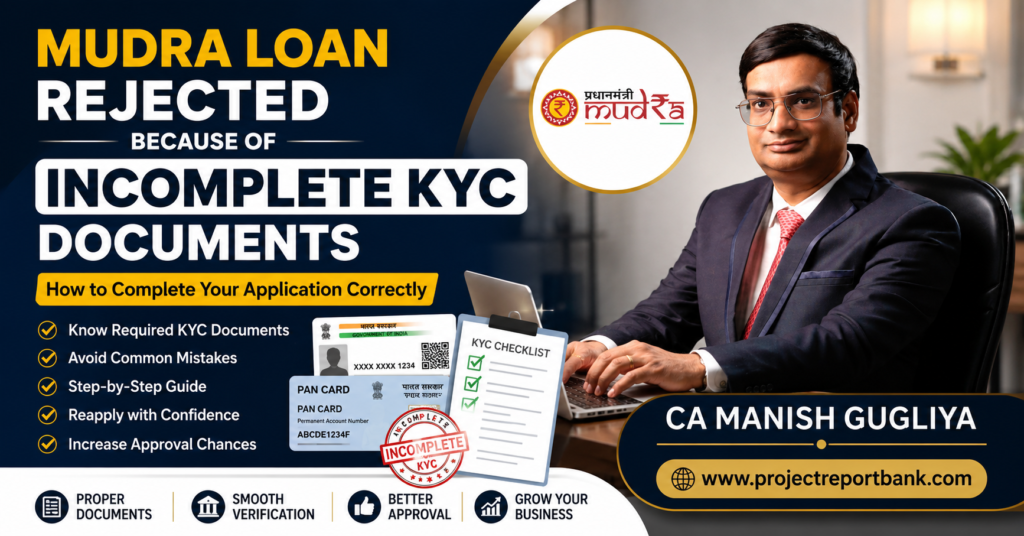
- Most mudra loan rejections at the branch level happen due to incomplete or mismatched documents-not because the applicant is ineligible.
- Proper identity proof, address proof, pan card (where required), recent photographs, and consistent details across all documents form the backbone of a successful mudra loan application.
- Different Mudra categories demand different levels of KYC: a kishore mudra loan or Tarun loan needs stronger business registration, income proof, and bank statements, while a shishu category loan can be processed with simpler paperwork.
- A CIBIL score below 650 often leads to rejection, but even a good score cannot save an application with poor KYC.
- This article gives you a practical, step-by-step KYC checklist and correction process from a CA’s perspective so you can reapply with confidence.
Introduction: Why Mudra Loan KYC Documents Decide Your Approval
A mudra loan under the Pradhan Mantri Mudra Yojana (PMMY) offers collateral-free business loans up to ₹10 lakh for non-farm micro and small businesses. Mudra loans are categorized into Shishu, Kishore, Tarun, and Tarun Plus-each designed for a different stage of business growth. But here is what many applicants do not realise: at the branch level, KYC documents are checked before anything else.
Even if your business plan, cibil score, and project report look acceptable, the loan application cannot move forward if KYC is incomplete or inconsistent. As CA Manish Gugliya, I have seen hundreds of mudra loan applications returned just because of minor issues like a different address on Aadhaar versus the bank passbook, or unclear photocopies that the branch officer could not read. This article focuses entirely on mudra loan KYC documents for individuals, sole proprietors, and small businesses-and will help you avoid rejection or delay at the documentation stage.
Table of Contents
What Is KYC and Why Is It So Important for Mudra Loans?
KYC stands for “Know Your Customer.” It is an RBI-mandated process that requires every bank and lender to verify the identity and address of each borrower before sanctioning any loan.
Why does KYC exist?
- To prevent fraud, money laundering, and benami loans
- To ensure the person taking the mudra loan is genuine and traceable
- To protect both the bank and the borrower from misuse
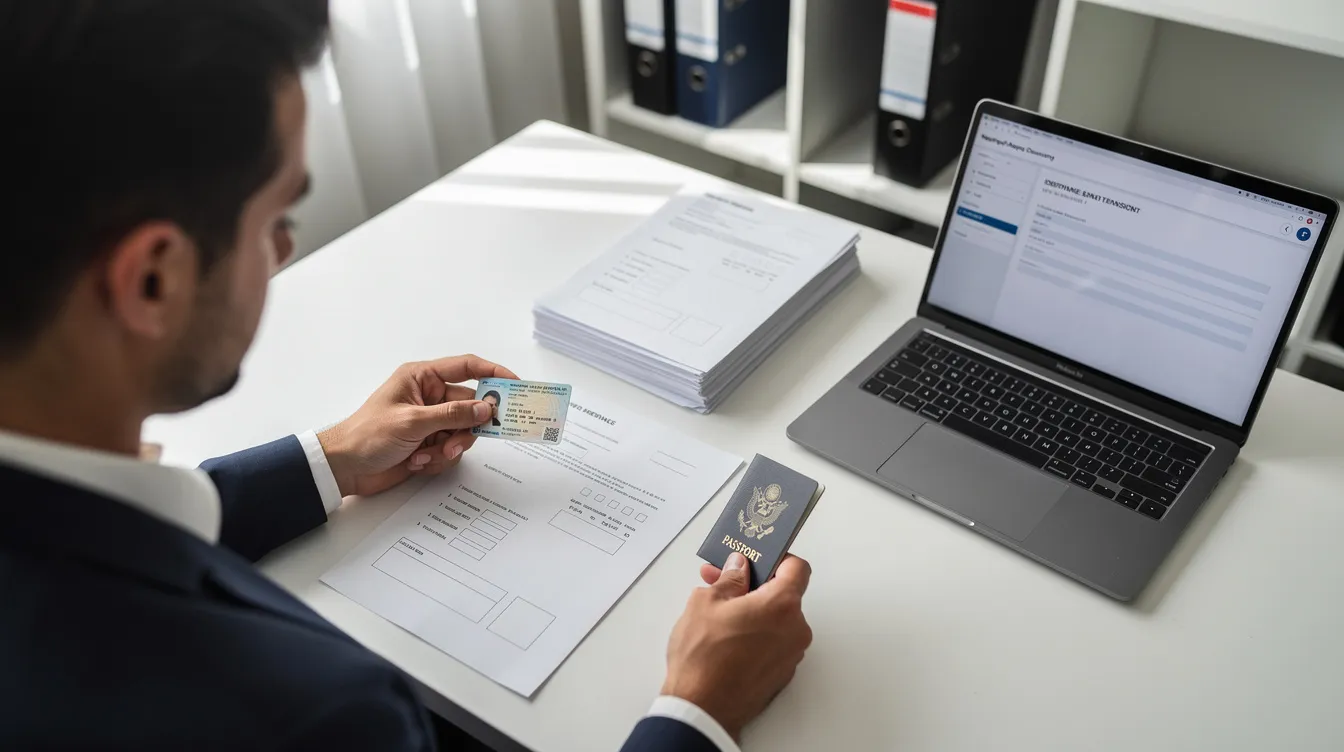
RBI’s KYC Master Directions require banks to collect “Officially Valid Documents (OVDs)” such as aadhaar card, pan card, passport, voter id, driving licence, and similar documents. Mudra loans are no exception. KYC documents include proof of identity and proof of address-these two form the non-negotiable foundation.
For mudra loan KYC, banks usually perform both customer KYC (the individual applicant) and business KYC (the shop, firm, or small enterprise) wherever applicable. Also note that there is a difference between the one-time KYC done when you open a bank account and the additional documents KYC checks required during mudra loan appraisal, especially when the loan amount is higher or when your earlier KYC records are outdated.
Standard KYC Documents Required for Mudra Loan Applicants
This is the core mudra loan KYC documents checklist. Exact requirements vary slightly by bank-most banks, whether public, private sector banks, regional rural banks, or non banking financial companies, follow a fairly standard list. Documents required for KYC verification can vary by bank or lender, so always confirm with your specific branch.
Identity Proof (any one or more):
- Aadhaar Card (most widely accepted; common proof of identity documents are Aadhaar Card, PAN Card, Voter ID, Driving License, or Passport)
- PAN Card
- Voter ID
- Passport
- Driving Licence
At least one photo ID with full name and date of birth is mandatory.
Address Proof (any one or more):
- Aadhaar card with updated residential address
- Passport or driving licence showing current address
- Voter ID with correct address
- Latest utility bills (electricity, water, gas, landline)-recent utility bills can serve as proof of address if they are not older than 2 months
- Property tax receipt
- Bank passbook with current address and recent entries
- Rental agreement for rented premises
PAN Card:
A PAN card is not mandatory for small PMMY loans but is highly recommended for higher amounts. For Kishore and Tarun category loans, most banks treat PAN as compulsory. Mudra loans require a PAN card and Aadhaar for KYC in the majority of cases.
Photographs:
Two recent passport-sized photographs are necessary for most loan applications-colour, taken within the last 6 months, to be pasted and signed on the mudra loan form and KYC forms.
For joint borrowers or guarantors (if any), similar full KYC documents are needed for each person. Many banks now cross-check KYC with CKYC (Central KYC Registry), but still ask for physical copies or self-attested scans at the branch level. All document copies must be self-attested before submission.
Business KYC: Additional Documents for Proprietors and Small Firms
Beyond personal KYC, mudra loans are business loans, so banks also want proof that a genuine business exists or is being set up. To apply for a Pradhan Mantri Mudra Yojana loan, proof of identity, address, and business establishment is required.
Common business registration documents include:
- Udyam Registration Certificate (udyam registration is often required for mudra loan applications)
- GST registration certificate
- Shop & Establishment licence
- Trade licence from local municipal authority
- FSSAI licence (for food businesses)
- Business registration documents include a Business Registration Certificate, GST Certificate, or Trade License
For small proprietors-a kirana shop, tailoring unit, mobile repair shop, or beauty parlour-any one reliable document showing the business name and business address proof is usually enough.
For higher-ticket kishore mudra loan and Tarun loans, banks often insist on more robust business proof: partnership deed (if partnership firm), rent agreement or rental agreement for business premises, electricity bill in business name, and evidence of existing businesses and regular transactions.
Bank statements work as both income proof and business proof. Many branches ask for 6–12 months of bank statements from the current account or savings account where business cash flow is visible-showing transaction history and regular credits. Bank statements for the last 6 to 12 months are commonly required for a loan application.
A business plan is mandatory for Kishor and Tarun loans. Some banks accept a simple business plan or basic business plan for smaller amounts, while Tarun loans need a clear business plan with projections. Verification of identity, address, and business details is part of the lender’s process.
Typical Mudra Loan KYC Requirements by Category: Shishu vs Kishore vs Tarun
Mudra’s four categories determine how strict the KYC and documentation process will be:
- Shishu (up to ₹50,000): Shishu loans offer up to ₹50,000 for new businesses. Banks accept simplified KYC-Aadhaar, an alternate ID if needed, basic address proof, 2 photos, and a very simple business description. Mudra loans can be applied for without income proof in Shishu category. Street vendors and home-based businesses often qualify under this slab.
- Kishore (₹50,001–₹5,00,000): Kishore loans provide funding up to ₹5 lakh for established businesses. Full KYC (Aadhaar, PAN, address proof), business proof (Udyam, GST, shop licence), six-month bank statements are required for mudra loan applications at minimum, and sometimes old sales bills or purchase invoices as activity proof.
- Tarun (₹5,00,001–₹10,00,000): Tarun loans can go up to ₹10 lakh for growing businesses. KYC is close to regular small business term loans-PAN almost always required, full KYC for proprietor and firm, business registration, ITR or income proof where available, and detailed bank statements plus a project report.
- Tarun Plus: Tarun Plus loans offer up to ₹20 lakh for repeat borrowers. These attract even more scrutiny, including credit history checks, repayment capacity calculations, and detailed proof of business viability.
Although RBI gives broad guidelines, each bank’s internal credit and risk policy can add extra documentation requirements. What Canara Bank asks may differ slightly from what a micro finance institutions branch or a private lender demands.

Common KYC Mistakes That Lead to Mudra Loan Rejection
In practice, many applicants find their mudra loan applications marked “KYC incomplete” for avoidable, technical mistakes rather than major eligibility criteria failures. Reports from NITI Aayog and bank branch feedback suggest that 30–50% of initially returned applications have minor KYC errors.
Name and identity issues:
- Name mismatch between Aadhaar and PAN-missing middle name, spelling difference, or surname order. Even a minor PAN and Aadhaar name mismatch can trigger immediate rejection or queries.
- Different dates of birth across documents
- Old photographs that do not match current appearance
Address-related problems:
- Aadhaar not updated after shifting house, showing a different address from current residence
- Rental agreement address not matching any KYC document
- Giving shop address while all other documents show only home address
If your address proof has issues, update your Aadhaar or arrange valid alternative proofs before applying.
Expired or invalid documents:
- Driving licence or passport validity expired-many applicants do not notice this
Submission and technical errors:
- Blurred scans, cropped images cutting off photo or address, missing back side of Aadhaar or voter id, illegible photocopies, and unsigned copies
- Signature mismatch-signature on mudra loan application not matching bank account signature or pan card
Other issues:
- Wrong mobile number, inactive SIM, or unreachable number causing OTP-based e-KYC failures
- Lack of a clear business plan results in loan application denial
- Applying for an unjustified loan amount relative to business size can lead to rejection
- Businesses not eligible under PMMY will face automatic rejection
- Serious identity mismatches or suspicious documents can make the bank treat the file as high risk, leading to outright rejection
Additionally, a CIBIL score below 650 often leads to rejection alongside KYC issues. If you suspect errors in your CIBIL report, get them resolved before reapplying.
How Banks Actually Verify Your Mudra Loan KYC
Many applicants think banks only “collect” documents. In reality, branches perform multiple verification steps as per RBI KYC norms and internal audit requirements.
Physical verification at branch:
The officer compares the photo on your Aadhaar or PAN with your face, checks original documents against photocopies, verifies your signatures in their presence, and sometimes records a brief KYC interview note. For higher loan amounts, field officers may visit your business premises to confirm the address and operations.
Digital and CKYC checks:
- PAN verification through the income-tax database to confirm name, father’s name, and date of birth
- Aadhaar authentication via offline XML or OTP-E-KYC verification can be completed online using Aadhaar-based OTP
- CKYC search to check if you already have a KYC record and whether details match
Address verification:
Banks confirm your address via recent utility bills, physical visits (especially for Tarun loans), or telephonic verification calls to the mobile number on file-and sometimes to your landlord or neighbour.
Bank statement review:
Officers match the address on your bank passbook or statement with your given address, check for regular credits from business activity, and look for red flags like frequent unexplained cash deposits. If the bank statement does not reflect declared income, the application may be flagged.
If anything looks inconsistent-different signatures, varying dates of birth, or overlapping identities-the bank may mark the KYC as “doubtful” and either ask for clarification or reject the mudra loan application.
Step-by-Step Checklist to Prepare Perfect Mudra Loan KYC Documents
Follow this numbered process before visiting the bank or applying online:
- Get the exact checklist from your bank. Ask the branch (or download from its website) for the latest mudra loan application and KYC checklist for your category-Shishu, Kishore, or Tarun. Do not assume all banks ask for the same other documents.
- Collect at least two identity proofs and two address proofs. For example, Aadhaar and PAN for identity, Aadhaar and an electricity bill for address. Cross-check that your name, father’s name, and date of birth match across all documents.
- Update your Aadhaar address if you have shifted residence. You can do this online or at an Aadhaar Seva Kendra. This usually takes a few days, so plan before applying for the loan.
- Arrange business-related KYC. Gather your Udyam registration, GST certificate, shop licence, rental agreement of shop, or any recognised business registration relevant to your activity. If your business proof is weak or incorrect, fix it before submitting.
- Download or request 6–12 months of bank statements from the account where your business income and expenses flow. Ensure statements are stamped if the bank requires physical copies.
- Take 4–6 recent passport-size photographs and sign lightly at the bottom where the form instructs, without covering your face.
- Make clear, full-size photocopies (or scans) of all documents, sign “self-attested” with date on each copy, and arrange them in the order mentioned in the bank’s checklist.

How to Fix KYC Issues After Mudra Loan Rejection and Reapply
If you see remarks like “KYC incomplete” or “address mismatch” on your rejection slip, do not panic. This is one of the most correctable reasons for mudra loan rejection.
Step 1: Obtain a clear written or verbal explanation from the bank about which exact document was missing, invalid, or mismatched.
Step 2: Correct the specific issue. If the problem is a name mismatch, update your name on PAN or Aadhaar. If it is an expired driving licence, renew it. If the address proof is outdated, arrange an alternative like an electricity bill, property tax receipt, or updated bank passbook showing your current address.
Step 3: Revisit the branch with corrected originals plus fresh self-attested copies. Politely request reconsideration or submit a fresh mudra loan application rather than arguing about the previous rejection.
Step 4: Ensure other factors are also in order. Reapplication is treated as a new loan application, so check your cibil score, existing EMIs, repayment plan, credit history, and business plan to avoid fresh objections on repayment capacity or business viability.
There is no fixed waiting period after a purely KYC-based rejection. Once documents are corrected, most banks allow immediate reapplication, subject to internal policy. E-KYC verification can speed up the process if your Aadhaar details are current.
FAQs on Mudra Loan KYC Documents
Below are practical questions that cover additional ground beyond the main sections above.
Is Aadhaar card compulsory for Mudra loan KYC?
Aadhaar is the most commonly accepted ID and address proof and is practically treated as essential in most banks, especially for e-KYC. However, technically, any RBI-approved Officially Valid Document (passport, voter id, driving licence) may work where bank policy allows. In practice, applying without Aadhaar can slow things down significantly.
Can I get a Mudra loan without a PAN card?
Some banks allow small Shishu category loans without PAN if other KYC is strong. However, Kishore and Tarun loans usually require PAN. A PAN card is not mandatory for small PMMY loans but is highly recommended for higher amounts. Apply for PAN early to avoid delays. You can also explore guidance on applying for a mudra loan without a PAN card for specific scenarios.
Do I need separate address proof for home and shop?
Usually, one current address proof (residential address) is enough for personal KYC, and the business address can be mentioned separately on the application form. If your shop is at a different address, attach a rent agreement, shop licence, or utility bill as business address proof alongside your personal address proof.
My name spelling is slightly different on Aadhaar and PAN. Will my Mudra loan be rejected?
Minor spelling differences often trigger queries or delays. I strongly recommend correcting at least one document so that core details-name, father’s name, date of birth-match before submitting your KYC. This single step prevents a large number of mudra loan rejections.
How long does Mudra loan KYC verification usually take?
Basic KYC verification at the branch may be completed the same day or within 1–2 working days. However, full processing of the mudra loan-including credit checks, business verification, and loan approval-can take 7–15 days depending on the bank, category, completeness of mudra loan documents, and whether any additional documents are requested.
Conclusion and Professional Guidance from CA Manish Gugliya
Correct and complete KYC is the simplest part of the mudra loan process to fix, yet it remains the most frequent cause of file returns and rejections. Incomplete or mismatched documents cause most mudra loan rejections-not complex eligibility issues.
Treat your mudra loan KYC documents as seriously as your business plan. Match names and addresses across Aadhaar, PAN, and all other proofs. Ensure every document is valid, legible, and self-attested. Keep a neat set ready before you walk into the bank. Whether you want to apply online or at a branch, whether you run small businesses or a growing enterprise dealing in raw materials, working capital, or service sectors-the KYC fundamentals remain the same. Do not let avoidable mistakes cost you your loan scheme opportunity or result in processing fee wasted on a failed application.
While proper KYC dramatically improves the chances of smooth processing, final mudra loan approved status always depends on the lending institution’s internal policies, risk assessment, cibil report findings, income proof, business viability, repayment capacity, and eligibility criteria compliance. No advisor can guarantee loan approval-but getting your documents right is an excellent job you can do yourself.
About the Author: CA Manish Gugliya (FCA, DISA-ICAI) brings over 20 years of experience in project reports, CMA data preparation, MSME consulting, startup advisory, and business valuation. He has helped hundreds of entrepreneurs across India prepare bank-ready mudra loan documentation-from Shishu to Tarun Plus. If you are unsure about your KYC documents, project report, or overall mudra loan application, professional guidance can reduce your rejection risk and speed up approval. Reach out for expert assistance in getting your file right the first time.
- Mudra Loan Rejection Reasons: Complete Guide to Why Banks Reject Applications

- Mudra Loan Documentation Issues: Complete Guide to Avoid Document-Related Loan Rejections

- Mudra Loan CIBIL Issues, Rejection Reasons & Solutions (2026) – Complete Guide
- How to Prepare a Perfect Mudra Loan Document File Before Visiting the Bank 2026
- Mudra Loan Rejected Due to Signature Mismatch – Practical Guide 2026 by CA Manish Gugliya
- Mudra Loan Rejected Due to Missing Udyam Registration – Complete 2026 Guide by CA Manish Gugliya
- Mudra Loan Rejected Due to Invalid or Old Bank Statements – What Banks Expect (Explained by CA Manish Gugliya) 2026
- Mudra Loan KYC Documents: Complete Checklist to Avoid Rejection 2026
- Mudra Loan Rejected Due to Address Proof Issues – Complete Guide 2026 by CA Manish Gugliya
- Mudra Loan Rejected Due to Incorrect Business Proof – What Documents Do Banks Accept? 2026
- Mudra Loan Rejected Due to PAN and Aadhaar Name Mismatch – Practical Fix by CA Manish Gugliya
- How to Improve Your CIBIL Score Before Reapplying for a Mudra Loan (2026 Complete Guide)
- Mudra Loan Rejected Due to Poor Credit History Despite No Current Defaults – Complete Guide 2026 by CA Manish Gugliya
- Mudra Loan Rejected Because of Multiple Loan Enquiries – Does It Really Matter? 2026
- Mudra Loan Rejected Due to CIBIL Report Errors – Detailed Correction Guide 2026 by CA Manish Gugliya