
Key Takeaways
- You can legally reapply for a Mudra Loan after rejection, and adding a new partner or co‑applicant is possible – especially when converting from a proprietorship to a partnership firm or LLP – but reapplying for a Mudra loan with a new partner requires treating it as a new application with fresh documentation.
- Adding a partner may improve Mudra Loan approval chances only when the new partner brings a strong CIBIL score, clean banking history, proven business experience, and real capital contribution. Approval for a new Mudra loan is not guaranteed and depends on lender assessment.
- If the project itself is weak – poor viability, unrealistic projections, wrong business type, or negative banking behaviour – changing the partner alone will rarely change the bank’s decision.
- Banks under Pradhan Mantri Mudra Yojana (PMMY) assess the entire proposal afresh: business model, DSCR, project report, documents required, and both applicants’ profiles – not just the ownership structure.
Introduction – Why Business Owners Add a New Partner After Mudra Loan Rejection
In my 20+ years as a practising Chartered Accountant, I have seen this pattern repeatedly: a proprietor – let’s say from Indore – gets rejected for a Mudra Kishore loan. Within days, someone advises them, “Add your spouse or friend as partner and apply again.” They believe this single change will turn rejection into approval.
Let me tell you the truth upfront.
The Pradhan Mantri Mudra Yojana, a flagship scheme launched on April 8, 2015, provides collateral-free financial assistance to micro and small business enterprises in non-farm sectors. Under this mudra scheme, PMMY loans are classified into four categories: Shishu loans offer upto rs 50,000, Kishore loans range from ₹50,001 to ₹5 lakh, Tarun loans are available from ₹5 lakh to ₹10 lakh, and Tarun Plus loans range from ₹10 lakh to ₹20 lakh. In total, Mudra Yojana offers collateral-free loans up to ₹20 lakh through commercial banks, small finance banks, NBFCs, and MFIs. Agriculture-related businesses are not eligible for mudra loans – the scheme covers non-farm income-generating activities only.
Now, can a Mudra Loan reapplication with a new partner actually improve your chances? Yes – but only if the new partner genuinely strengthens eligibility through better credit, income, capital, or experience. A mere change in ownership on paper, without addressing the original reasons for rejection, is unlikely to change the outcome. Banks still follow standard credit appraisal – cash flow, business viability, promoter background, and banking habits matter far more than legal forms.
This article focuses specifically on Mudra Loan reapplication with a new partner or co‑applicant, for rejected applicants planning their next move.
Table of Contents
Can You Legally Reapply for Mudra Loan with a New Partner or New Business Structure?
Reapplication after rejection is absolutely allowed under PMMY. There is no nationwide ban on reapplying. However, if major issues like poor CIBIL or negative banking behaviour caused the rejection, banks typically recommend waiting 3–6 months before submitting a fresh application.
Several legal forms are eligible for Mudra Loan: individual proprietor, partnership firm, LLP, private limited company, and other legal forms – all qualify if they meet PMMY norms. Applicants must be aged between 18 to 65 years, and the eligibility criteria for reapplication under PMMY include that both partners operate a non-farm income-generating activity.
Here is how the process typically works:
- A sole proprietor can convert to a partnership firm and reapply. A new partnership deed must be drafted when changing business partners. The firm also needs a new PAN, updated GST registration (if applicable), and updated Udyam Registration reflecting the new ownership. Updating the legal business structure is necessary for reapplication with a new partner.
- The bank will treat this as a fresh case – not the old rejected file. Reapplying for a Mudra loan with a new partner requires treating it as a new application.
- LLPs and companies can also apply online or offline under Mudra Loan for exposures up to ₹10 lakh (or up to ₹20 lakh under Tarun Plus for those who have successfully repaid previous loans).
However, simply changing the legal form on paper – a bogus partnership where only names change but business, premises, and bank statements remain identical – will be viewed suspiciously during field verification. If the same proprietor applies again without addressing the earlier reason of rejection (low income, poor banking, negative CIBIL), the result is likely to be the same, even with a new partner’s name on the file.
Is Co‑Applicant Allowed in Mudra Loan? Co‑Applicant vs Partner vs Guarantor
Official PMMY guidelines primarily refer to the “borrower entity,” but in day-to-day banking practice, three distinct roles exist: main applicant, co‑applicant (joint borrower), and guarantor.
A co‑applicant in the Mudra context is a jointly liable borrower – often a spouse or business partner – whose income, CIBIL, and identity are considered to strengthen repayment capacity. Here is how the three roles differ:
| Role | Ownership in Business | Liability for Loan | Income/CIBIL Checked? |
|---|---|---|---|
| Partner (Partnership Firm) | Yes – shares profits and losses | Yes – jointly liable | Yes |
| Co‑Applicant (Joint Borrower) | May or may not be co-owner | Yes – jointly liable | Yes |
| Guarantor | No ownership | Liable only if borrower defaults | Yes, but less weight |
Under Pradhan Mantri Mudra Yojana, many banks prefer that in partnership firms all active partners sign as co‑applicants. In proprietorships, they may sometimes take a spouse as co‑applicant or guarantor depending on internal policy. Borrowers should not be defaulters to any bank or financial institution – this rule applies equally to co‑applicants and guarantors.
A common misconception: adding a spouse as co‑applicant without any income or CIBIL benefit does not magically improve eligibility. The bank still evaluates real financial strength, not just additional signatures. Also, interest rates under Mudra Loan are not reduced simply by adding a partner – interest rates are determined by lending institutions as per reserve bank guidelines and the bank’s MSME risk-rating policy.
When Adding a New Partner or Co‑Applicant Can Actually Improve Mudra Loan Approval
Not every partner addition is cosmetic. Here are practical situations where it genuinely helps:
- Stronger financial profile: A partner with regular salary income (government employee, reputed private job) or demonstrated business income improves combined repayment capacity. For Kishore or Tarun loans, this can push the Debt Service Coverage Ratio (DSCR) above the preferred 1.25 threshold, a benchmark many banks use internally.
- Better banking history: Adding a partner with clean, consistent bank statements – no cheque returns, regular balances over the last six months – can offset the weak banking pattern that may have caused the original rejection due to negative banking habits.
- Relevant business experience: A new partner with 8–10 years of knowledge in the same industry (for example, a trained mechanic joining as partner in a garage business) increases the banker’s confidence. Individuals must possess necessary skills for the proposed activity, and a qualified partner demonstrates this.
- Additional capital contribution: If the new partner brings documented margin money (say ₹2–3 lakh from genuine savings), the promoter’s capital contribution improves – a critical factor for Kishore and Tarun assessment.
- Better net worth and lower existing liabilities: A partner with low existing EMIs, decent assets (property, FDs), and a good CIBIL score reduces risk perception compared to a sole proprietor carrying multiple loans.
- Better management and compliance: A partner who can handle GST filing, income tax returns, bookkeeping, and licensing reassures banks about long-term business stability. Loan purposes must involve genuine business needs like working capital or equipment purchase – a competent team demonstrates the ability to deploy funds properly.

When Adding a Partner or Co‑Applicant Will NOT Help Your Mudra Loan Reapplication
Many applicants convert to partnership or add a friend’s name only on paper. Banks are trained to identify such cases during site visits and document scrutiny. Here is when a new partner makes no difference:
- Poor project viability: If the business model itself is weak – low demand, heavy local competition, unrealistic sales forecast – the bank may reject again regardless of new partners. This is among the most common reasons for Mudra Loan rejection.
- Copy-paste or unrealistic project report: If financial projections, machinery costs, or working capital calculations are illogical, banks will not be convinced even with a financially strong partner joining. Revise the project report first.
- Fake or temporary partnership: Partners who sign the deed only for the loan, have no operational role, and plan to dissolve later are treated as high risk. Courts have upheld cases where improperly executed partnership deeds led to serious consequences for borrowers.
- Existing loan defaults and CIBIL problems: Clean credit records are necessary for both partners in a new Mudra loan application. If either applicant has serious CIBIL issues – a settled loan, write-off, or credit card default – adding another partner without cleaning old issues rarely helps. Previous loans must be settled before applying for a new Mudra loan with a new partner.
- Negative banking behaviour: Frequent cheque bounces, cash deposits only before EMI dates, or routing personal transactions to inflate turnover are assessed based on bank statement analysis – new partners do not erase these red flags.
- Poor documentation and KYC gaps: If basic documents like PAN, Aadhaar, address proof, business proof, Udyam, or GST are not updated with the new legal form, the file may not even pass initial scrutiny.
How Banks Evaluate the New Partner in Mudra Loan Reapplication
Under Mudra Loan (covering loans across Shishu, Kishore, and Tarun categories), the bank follows almost the same appraisal process for the new partner as for the main applicant. Nothing is treated as “just a formality.”
The lender will evaluate the new partnership’s creditworthiness and business viability through these steps:
- Identity and KYC verification: The bank verifies PAN, Aadhaar, voter’s id card or passport, and address proof (electricity bill, rent agreement, property tax receipt) for each partner. Names must match across all documents to avoid mismatch issues.
- CIBIL and credit history: The bank checks CIBIL score, existing EMIs, enquiries about settled or written-off accounts, and ensures a satisfactory credit track record. A minimum CIBIL of around 680 is sought by some banks like IOB for new-to-bank borrowers.
- Income and net worth: For salaried partners, salary slips and Form 16 are reviewed. For business partners, IT returns and bank statements are checked. This forms the net worth and liability statement analysis.
- Existing liabilities: Term loans, credit cards, OD/CC limits in other banks are considered. High leverage may reduce eligibility even if a partner is added.
- Business experience and role: The credit officer asks who will manage purchase, production, marketing, and accounts. They expect the new partner to have a clear role – not just sign papers. Educational qualification and trading experience may be discussed during the bank interview.
- Capital contribution and profit-sharing: The partnership deed should clearly mention capital brought in by each partner, profit ratio (for example 60:40), and this must match bank statement entries and the project report.
Documents Required for Mudra Loan Reapplication After Adding a Partner
Documentation for a new partnership loan includes KYC documents and updated financial statements. While exact requirements may vary slightly by bank, here is a practical checklist for 2025–26:
Partnership-Related Documents:
- Partnership deed (properly signed and dated by all partners)
- Firm PAN card
- Business registration certificate (if registered firm)
- Updated Udyam Registration in the firm’s name
- GST registration (if turnover or proposed activity requires it)
KYC of All Partners/Co‑Applicants:
- PAN card of each partner
- Aadhaar card of each partner
- Recent colour photographs and ID proofs are required for all partners in the application process
- Current address proof – utility bill, Aadhaar address, rental agreement, or property papers
Business Proof:
- Shop and establishment licence or other documents showing business enterprises operation
- MSME/Udyam certificate
- Rent agreement for business premises
- Electricity bill in business name
Financial Documents:
- Latest 12-month bank statements of business and personal accounts
- ITRs for last 2–3 years (where available)
- Basic financial statement (profit & loss, balance sheet) for existing units
Project Report and CMA Data:
- Updated project report reflecting new partnership structure
- Revised cost of project, means of finance, sales projections, and cash flow
- Simple CMA data for Kishore/Tarun loans above ₹2 lakh
Capital Contribution Proof:
- Bank entries showing capital introduced by each partner
- Fixed deposit receipts (if any)
- Documentary proof of margin money for machinery or working capital
Both partners must submit updated KYC and financial documents to the lending institution. The new partnership must be registered with the bank and possibly include an updated Udyam Registration.
Do You Need to Update the Project Report and Financial Projections?
The short answer: absolutely yes. Submitting a revised business plan is required when applying with a new partner. Whenever you change from proprietorship to partnership, or add or remove partners, you must update the Mudra Loan project report before reapplying. Using the old report with old ownership details will weaken credibility.
Here is what the revised report should include:
- Ownership structure: Clearly mention the legal form (partnership, LLP, or company), names of all promoters, their shareholding or profit-sharing ratio, and brief personal profiles with details of experience and identity.
- Capital and margin money: Show updated capital contributions of each partner, source of funding (savings, sale of assets, etc.), and how much of the project cost is funded by promoters versus the Mudra loan amount.
- Financial projections: Include 5-year projected profit and loss, cash flow, and DSCR calculations based on realistic assumptions. Show how combined income of partners supports EMI repayment. Banks prefer DSCR of at least 1.25 for Kishore and Tarun loans.
- Management responsibilities: A small table describing who handles operations, finance, marketing, and compliance helps the banker see a competent team rather than a one-man show.
- Banking behaviour and turnover: Highlight improved banking patterns, any recent increase in sales, or business expansion since the last rejection.
A specialised project report and CMA Data prepared by a professional CA can significantly improve presentation, though it still cannot guarantee sanction.
Practical Case Study – Reapplying for Mudra Loan with a Genuine New Partner
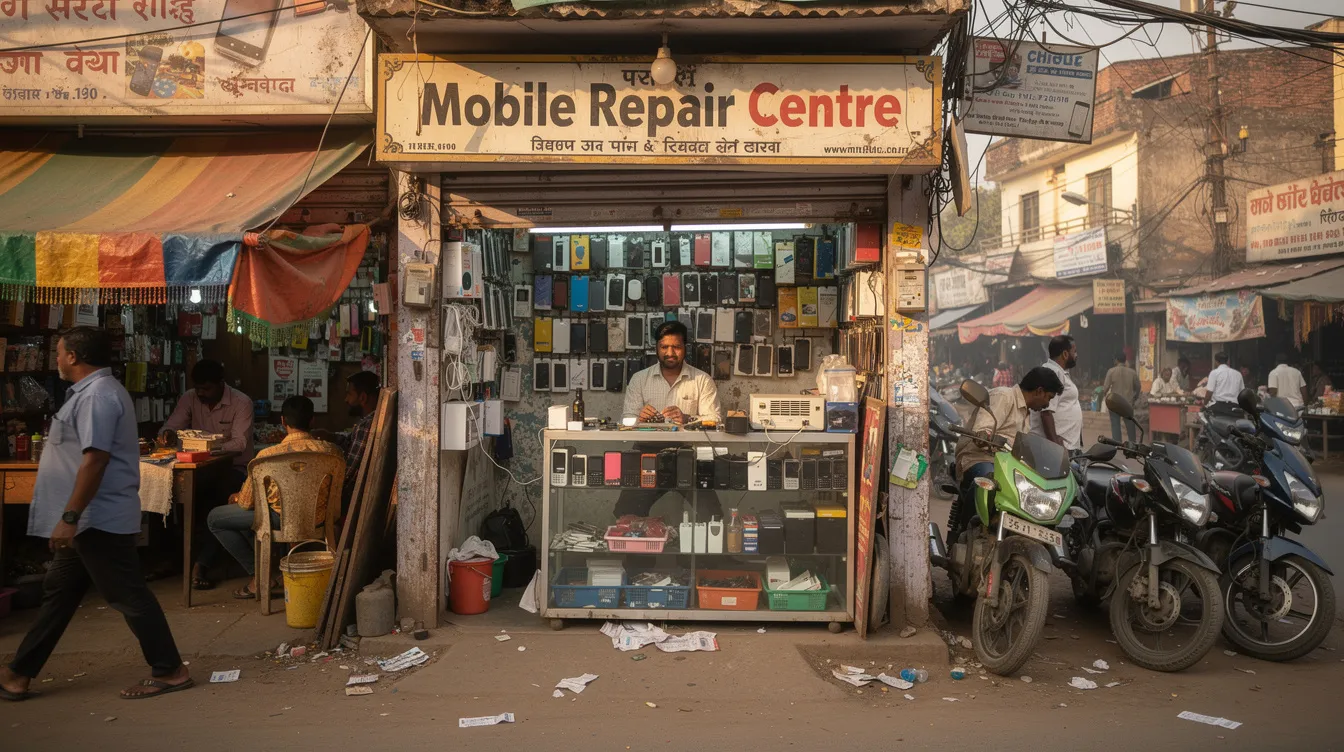
Consider Ramesh (name changed), a mobile repair shop owner in Bhopal, who applied for a ₹4 lakh Mudra Kishore loan in early 2024. His application was rejected. The reasons: only ₹50,000 of own capital, irregular bank deposits, no formal project report, and unclear repayment capacity. The bank cited low margin money and weak banking as the primary concerns.
What changed before reapplication:
Ramesh’s cousin Sunil – with 7 years of retail experience, a clean CIBIL score of 740, and ₹1.5 lakh in savings – agreed to become a genuine business partner. Together, they:
- Formed a registered partnership firm with 60:40 profit share and combined capital of ₹2 lakh
- Drafted a proper partnership deed and obtained a new firm PAN
- Updated Udyam Registration and GST in the firm’s name
- Prepared a realistic project report with proper working capital assessment
- Maintained improved banking for 6 months, showing better and more consistent turnover
On reapplying – Ramesh chose to reapply with the same bank after 6 months – the branch evaluated the entire proposal afresh. After field verification, the bank sanctioned ₹3 lakh (slightly reduced from the sought ₹4 lakh). The application process generated an application number, and Ramesh could track the status. Applications for loans up to ₹5 lakh should ideally be processed within 2 weeks, though actual timelines can vary.
You can apply for a Mudra loan online or offline depending on bank availability. This case study is illustrative – each bank evaluates applications independently, and individual borrowers may experience different outcomes.
Expert Tips from CA Manish Gugliya Before You Reapply with a New Partner
Based on over 20 years of consulting with small enterprises and beneficiary micro unit owners, here is what I recommend before Mudra Loan reapplication with a new partner:
- Identify the real rejection reason first. Obtain it from the bank in writing if possible – was it CIBIL, banking, documents, project viability, or business type? Without knowing this, any change you make is guesswork.
- Add only genuine partners. They should actually work in the business and bring visible value – capital, experience, or income. Avoid name-lenders availed solely for loan formalities.
- Clean up CIBIL issues. Close overdue cards, settle small overdue amounts, correct errors in your credit report. Then wait 3–6 months for score improvement before reapplying, especially for Kishore and Tarun categories.
- Prepare a fresh, realistic project report. Match it with bank statements, GST returns, and income-tax filings. Inconsistencies between your project report and actual accounts are a top reason for rejection during appraisal.
- Organise complete documentation. KYC, address proof, business proof, bank statements, quotations, licences – the file should look professional. Missing papers cause avoidable delays.
- Consider which bank to approach. Some rejections are due to a branch’s internal lending preference or risk appetite, not just the borrower’s weakness. A different bank or financial institution may view the same proposal differently.
- Remember eligible businesses include shop owners and service providers across many non-corporate, non-farm sectors. Make sure your proposed activity clearly falls within PMMY eligibility.
Frequently Asked Questions on Mudra Loan Reapplication with New Partner
Below are common questions I receive from entrepreneurs planning to reapply. Answers reflect banking practice under Pradhan Mantri Mudra Yojana as of 2025–26, but individual bank policies may differ.
Can I add a partner after my Mudra Loan application is rejected?
Yes, you can form a partnership or LLP after rejection and reapply. However, you must update all business registrations, KYC, and the project report to reflect the new structure. The bank will treat it as a fresh case and review earlier rejection reasons during appraisal.
Does adding a new partner or co‑applicant guarantee Mudra Loan approval?
No structure or partner can guarantee approval. Sanction depends on overall eligibility – business viability, cash flow, promoter profile, CIBIL, and documentation quality as assessed based on the lending institution’s PMMY policy. Anyone promising guaranteed approval is misleading you.
Can my spouse become partner or co‑applicant in Mudra Loan reapplication?
Many banks accept a spouse as partner or co‑applicant, especially where the spouse has own income or a good CIBIL score. The arrangement must be genuine and properly documented through a partnership deed and complete KYC. A spouse with no income and no credit history adds little value to the application.
Is a new project report compulsory if I change from proprietorship to partnership?
Practically, yes. You should always submit a revised project report showing new ownership, capital contribution, revised financial projections, and updated repayment capacity. Using the old report significantly weakens your case and signals that the change is superficial.
Should I reapply for Mudra Loan with the same bank or choose another bank after adding a partner?
If the previous rejection was mainly due to internal exposure limits or branch-level risk appetite, another bank may be more suitable. If rejection was due to your own profile or documents, correct those deficiencies first. Sometimes the existing banker who already knows your business may be more receptive once they see real improvements.
Does the new partner’s CIBIL score matter for Mudra Loan?
Absolutely. The bank checks CIBIL and credit history for every applicant and co‑applicant. If your new partner has a low score or outstanding defaults, it can actually hurt rather than help your application.
Can a partnership firm directly apply under Mudra scheme?
Yes. Partnership firms are among the eligible legal forms under mantri mudra yojana pmmy. The firm itself becomes the borrower, and all partners typically sign as co‑applicants. The firm needs its own PAN, Udyam Registration, and bank accounts.
Is capital contribution by the new partner compulsory?
While there is no universal minimum set by PMMY, banks do evaluate promoter contribution – especially for Kishore and Tarun loans. A partner who brings zero capital is less convincing. Documented capital (bank entries, FDs) strengthens the funding proposal significantly.
Can I apply under Tarun Plus category with a new partner?
Tarun Plus (₹10 lakh to ₹20 lakh) is available through the micro units development and refinance agency framework, but only for those who have successfully repaid previous Tarun loans. If this is your first Mudra loan, Tarun Plus is not applicable. Processing charges for shishu loans are often waived by banks, but Tarun and Tarun Plus attract standard charges.
How long should I wait before reapplying with a new partner?
Most experienced bankers and consultants recommend waiting at least 3–6 months, especially if the rejection involved CIBIL issues or negative banking behaviour. Use this period to form the partnership properly, build better bank statement history, fill all documentation gaps, and prepare a realistic project report with proper assets and liabilities details.
Key Takeaways and Conclusion
Reapplication for a Mudra Loan with a new partner or co‑applicant is legally possible and sometimes genuinely helpful – but it is not a shortcut to guaranteed approval.
Banks under Pradhan Mantri Mudra Yojana assess the complete picture: business viability, project report quality, financial projections, CIBIL of all applicants, legal form, and actual capital invested. They look at the substance of the partnership, not just signatures on a deed. Whether you apply for shishu kishore or Tarun categories, the fundamentals remain the same.
My advice to every entrepreneur in India seeking Mudra loans: focus on building a strong, transparent, and well-documented proposal. A genuine new partner with real value is an asset. A name on paper is a liability.
Taking guidance from an experienced Chartered Accountant or MSME finance advisor can help you prepare better – but final approval always rests with the bank’s credit committee and their government-mandated risk assessment framework.
Author Bio – CA Manish Gugliya
CA Manish Gugliya (FCA, DISA ICAI) is a practising Chartered Accountant with over 20 years of experience in MSME finance, Mudra Loan consulting, term loans, and working capital advisory. He specialises in preparing Mudra Loan project reports, CMA Data, business valuation reports, and financial diagnostics for small businesses across multiple states in India. He has advised hundreds of micro and small enterprises on Pradhan Mantri Mudra Yojana, helping them understand reasons for rejection and improve their loan proposals ethically. All guidance in this article is for educational purposes, based on practical experience and prevailing guidelines, and does not constitute a guarantee of loan approval or a substitute for personalised professional advice.
- Can Bank Reduce Mudra Loan Amount Without Your Consent? Complete Practical Guide (2026)


- What to Do If You Cannot Pay Your Mudra Loan EMI (2026 Guide)

- Can a Bank Refuse a Mudra Loan Because the Target Is Completed? Complete Guide (2026)

- Bank Refused My Mudra Loan Application – What Are My Rights?

- Mudra Loan for Used Vehicles (2026): Eligibility, Documents, Bank Rules & Complete Guide

- Rejected Mudra Loan – What to Do Next? Appeal Process Explained (2026)

- Mudra Loan Project Report Madhya Pradesh – Bank-Ready DPR & CMA Guide

- Project Report for Mudra Loan Maharashtra: Complete Guide for MSMEs, Startups and Small Businesses (2026)

- Mudra Loan Uttar Pradesh: Complete Guide for MSMEs, Startups and Small Businesses (2026)