Key Takeaways
- A maida and suji plant must be evaluated across technical, commercial and financial feasibility before committing capital; machinery availability or wheat supply alone does not establish viability.
- Wheat price volatility, extraction rates, capacity utilisation and working capital cycle are the four biggest drivers of profitability and cash flow in a flour mill business.
- A structured feasibility study combines market research, a detailed project report, financial projections, NPV/IRR, DSCR and sensitivity analysis to judge whether the project can sustain itself through realistic operating conditions.
- Even a technically sound wheat plant can fail without proper budgeting of capital structure, operating costs, break-even and liquidity across its initial ramp-up years.
- Project Report Bank, led by CA Manish Gugliya (FCA, DISA, 20+ years experience), prepares customised maida–suji DPRs, CMA data and feasibility studies for bank loans and investment decisions.
Introduction – Why a Maida & Suji Plant Feasibility Study Matters Before Investment
The flour mill industry in India is rapidly expanding, driven by growing demand from bakeries, biscuit manufacturers, packaged food companies and the HORECA sector. Maida and suji serve as key raw materials for over 55,000 units across the country, and the demand for flour products is driven by households and bakeries alike. Flour mill products are also essential for various food distribution programs managed through channels including the civil supplies department.
Yet starting a flour mill business is not the same as building a profitable manufacturing business. Land, advanced machinery and a bank loan do not automatically create a financially sustainable enterprise. The real question every promoter must answer is this:
Can the proposed maida and suji manufacturing plant generate sufficient operating margins, sustainable cash flows and investment returns to cover term loan instalments, working capital obligations and equity expectations?
A professional maida and suji plant feasibility study provides the structured basis for answering this question. It covers market demand, wheat procurement economics, extraction rates, the manufacturing process, project cost, means of finance, working capital, profitability, DSCR, break-even and risk analysis. It converts business ideas into defensible financial projections rather than aspirational numbers.
Understanding Technical, Commercial and Financial Feasibility
A complete atta maida suji plant feasibility study rests on three pillars: technical feasibility, commercial feasibility and financial feasibility. Ignoring any one pillar-focusing only on machinery requirements or only on market demand-leads to flawed investment decisions.
Technical Feasibility
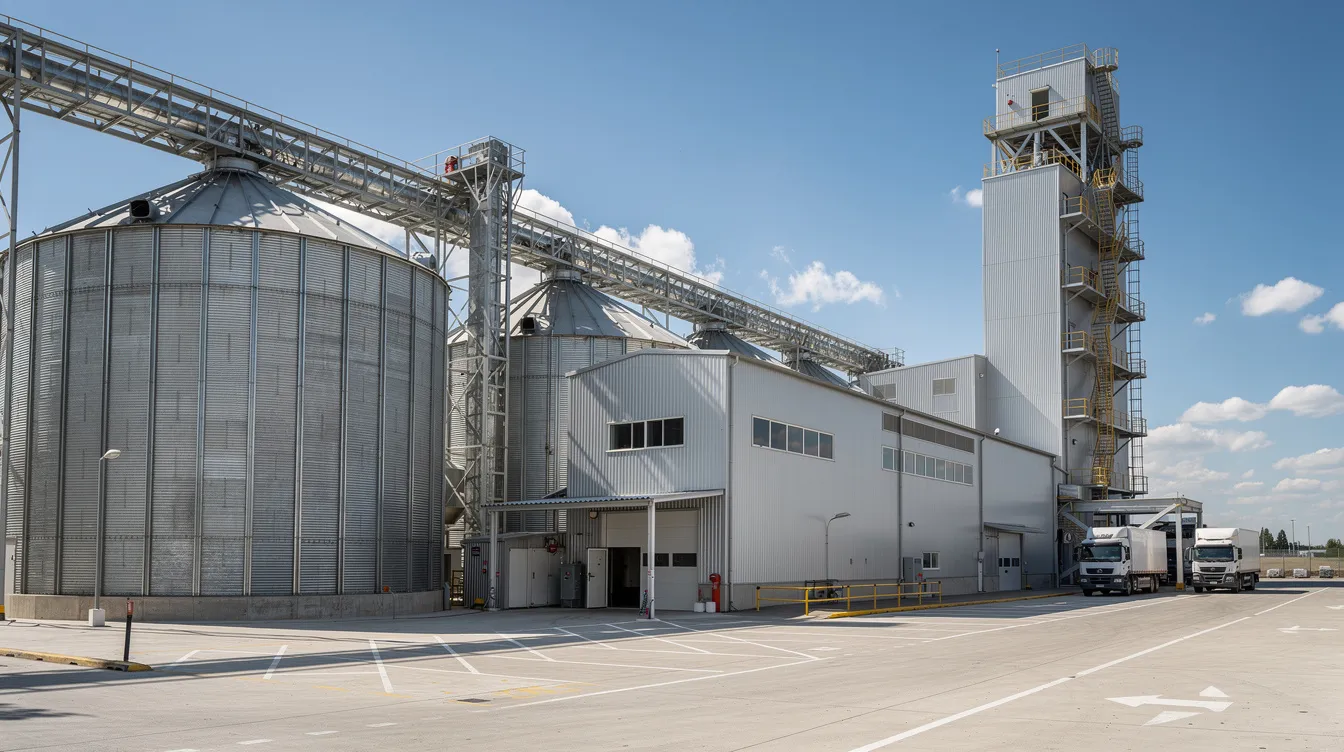
Technical feasibility includes defining daily processing capacity and manufacturing processes for optimal flour extraction. It covers the entire sequence: cleaning machines remove dust and impurities from grains, followed by conditioning, then processing wheat through roller mills commonly used for fine grinding of wheat. Milling separates wheat into bran, germ and endosperm. Sifters separate flour into different textures like atta and maida, while sifting equipment grades flour at each stage. Dust control systems maintain cleanliness in flour milling operations, and storage silos hold raw grains and finished flour efficiently. Automated packing machines weigh and seal flour accurately through dedicated packaging units.
Typical capacity options range from 30 TPD for a small scale flour mill to 60 TPD and 100 TPD for medium and large plants. Flour mills can produce 40 MT of flour per day at a common benchmark scale. Evaluate technical feasibility factors including plant capacity, cleaning, and milling processes-each choice directly impacts power consumption (connected loads of 150–600+ kW depending on plant size), extraction rates, and product quality.
Quality control requires laboratory equipments for ash content, moisture, granulation and gluten analysis, especially for servicing institutional B2B buyers. A technically feasible layout also considers material flow, hygiene, FSSAI norms, and scope for future expansion. The automation level selected influences both capital expenditure and long term profitability.
Commercial Feasibility
Commercial feasibility focuses on whether sufficient demand exists for the plant’s output. Conduct a market feasibility study to identify who will buy produced products and at what price. This means identifying target markets and competitors in the area through systematic market and demand analysis.
Estimate regional consumption trends for maida, suji, and byproducts like atta and bran. Demand segments include organised bakery brands, regional bakeries, namkeen and rusk manufacturers, hotels, wholesalers and retail consumers. Suji demand arises from traditional foods (upma, halwa, idli mixes) and ready-mix manufacturers, and it often follows different seasonality compared to maida.
A new plant must evaluate existing units-roller flour mills within a 150–250 km radius-and their capacity, product mix and pricing. Distribution channels matter: direct bulk institutional sales versus dealer networks versus own-brand retail packs each carry different margins and credit terms.
A practical market feasibility checklist should include: identification of 15–20 potential institutional buyers, their current suppliers, required specifications, expected credit period (typically 15–45 days), and likely annual offtake. Achievable selling prices must be validated through buyer discussions, not assumed from national averages.
Financial Feasibility
Financial feasibility converts all technical and commercial assumptions into projected financial statements and cash flows over 5–7 years. Conducting a feasibility study requires evaluation of market demand and financial viability together. Financial viability analysis should include capital and operational expenditures along with profitability projections.
Key questions include: total project cost, fixed assets investment, working capital requirement, expected EBITDA margin, payback period, IRR, NPV and DSCR for term loan servicing. A CA-led pre feasibility study checks whether the proposed debt–equity mix, interest rate and repayment schedule are sustainable under conservative assumptions.
The financial feasibility outcome drives the go / no-go / modify-scale decision for the plant.
| Assessment | Evaluates | Investment Impact |
|---|---|---|
| Technical | Machinery, extraction, utilities, quality | Can the plant produce efficiently? |
| Commercial | Demand, pricing, competition, distribution | Will the output sell at viable prices? |
| Financial | Cost, returns, cash flow, debt capacity | Does the investment generate adequate returns? |
Market Feasibility of Maida and Suji Manufacturing in India
India’s wheat-based food consumption-breads, biscuits, noodles, snacks-drives structural demand for maida and suji. Growth of QSRs, branded bakeries, packaged food companies and food service operators continues to expand consumption, reflecting broader industry trends. Detailed project reports should cover market surveys, customer segments, and competitor analysis to properly evaluate this opportunity.
The competitive landscape includes large integrated flour mill chains alongside regional standalone mills. A new entrant must identify its strategic positioning: bulk B2B supplier, contract miller, private-label producer, or own-brand player. Industries and commerce belong to highly competitive segments where freight cost, road connectivity, tolls and fuel prices directly influence the viable marketing radius for bulk flour supply.
Wheat grows across India setting widely differing climatic conditions, and this geographic spread of production means that sourcing and logistics economics vary significantly by region. The principle wheat varieties-belonging to botanical groups Triticum vulgane and Triticum drum among other botanical groups-produce flour with differing characteristics. Some varieties yield short fine grains better suited for suji, while other grains like maize and rice compete for processing infrastructure in certain regions.
Raw Material Feasibility – Wheat Availability, Quality and Price Risk
Wheat constitutes 70–80% of the variable cost in most atta maida suji plants, making procurement strategy central to feasibility. Assessing raw material sourcing requires evaluating proximity to wheat supply and price fluctuations across seasons.
Regional sourcing patterns matter: buying wheat grains directly from mandis in Uttar Pradesh, Madhya Pradesh, Rajasthan, Punjab or Haryana versus procuring through local traders affects both landed cost and quality consistency. Key quality parameters-protein content (11–13%), gluten strength, moisture content (below 12–13%) and test weight-directly influence extraction rates and finished-product quality. The cost depends significantly on these parameters.
Seasonal price variation is significant: immediately post-harvest prices are lower, while lean-month procurement can severely reduce margins. Storage capacity (silos, godowns) and the working capital implications of bulk stocking strategies must be planned.
Numerical sensitivity example: Consider a 60 TPD plant operating 300 days per year, consuming approximately 18,000 MT of wheat annually. If wheat purchase price increases by ₹200 per MT, the incremental annual cost is ₹200 × 18,000 = ₹36 lakh-a material impact on contribution and EBITDA. Other landed-cost components include mandi tax, transport, unloading, cleaning losses and moisture losses that must be built into the DPR. All assumptions in this example are illustrative.
Production Capacity, Extraction Rates and Product Mix – Impact on Viability
Installed capacity (say 60 TPD) is not the same as actual effective production capacity. During initial years, capacity utilisation typically starts at 50–65%. Determine project capacity based on expected utilization and firm output needs rather than theoretical maximum.
Wheat processing converts grains into maida, suji, and atta through the roller milling process. Consider multi-product yield economics when producing maida and suji from wheat-a standard roller mill typically yields approximately 30% maida, 20% suji, 40% atta, and 10% bran. In plants with purifiers and multiple milling passes, extraction ratios can shift to 45–50% maida, 20–25% suji, 7% atta, and 25–27% bran. Prepare a mass balance for milling to establish outputs and recoveries for each product.
| Product | Illustrative Yield (%) | Daily Output (50 TPD) | Indicative Price (₹/MT) |
|---|---|---|---|
| Maida | 30% | 15 MT | 32,000–36,000 |
| Suji | 20% | 10 MT | 30,000–35,000 |
| Atta | 40% | 20 MT | 26,000–30,000 |
| Bran | 10% | 5 MT | 12,000–16,000 |
Assumptions: hypothetical 50 TPD plant; prices are illustrative regional benchmarks. Actual yields depend on wheat quality, plant technology and product specifications.
The contribution of by-products like bran supports viability during low maida-price periods. Roller mills are commonly used for wheat flour production precisely because they allow this multi-product extraction. For detailed engineering-level yield analysis, separate technical content is available.
Total Project Investment and Capital Structure Assessment
Typical cost heads in a maida and suji plant detailed project report include: project land, site development, factory building and civil construction, plant and machinery, electricals, utilities, laboratory, furniture, vehicles, preliminary and pre-operative expenses, contingencies, and margin money for working capital.
Setting up a small flour mill costs ₹10 lakh to ₹25 lakh for machinery alone. A medium-scale flour mill costs around ₹35 lakh to ₹80 lakh, while large fully automated flour mills can exceed ₹2 crore. Overall machinery costs for a flour mill can range from ₹15 lakh to ₹2 crore depending on the plant size and automation. Land and building costs can reach ₹2.55 crore for 2000 sq.m of built-up area.
For a reference 40 MT/day mini flour mill, total capital investment is ₹5.38 crore, including fixed assets and working capital margin. For a 100 TPD plant, total project cost typically ranges ₹12–18 crore including working capital margin.
Higher fixed assets lead to higher depreciation charges and interest burden, increasing the break-even level. A CA-led feasibility study evaluates whether the capital structure-promoter equity, term loan, and working capital finance-is sustainable. For deeper numerical examples, refer to the project cost and means of finance analysis and plant setup cost guide.
Illustrative Means of Finance (Mid-Size Plant)
| Source | Amount (₹ Crore) | Share |
|---|---|---|
| Promoter Contribution | 4.00 | ~30% |
| Term Loan | 8.00 | ~60% |
| Working Capital Margin | 1.50 | ~10% |
| Total | 13.50 | 100% |
Figures are illustrative. Actual structure depends on project configuration and lender requirements.
Operating Cost and Manufacturing Economics
Operating costs fall into three categories:
- Variable costs: Wheat (the dominant raw material), packing material, power linked to production, transport outwards
- Fixed operating costs: Salaries, maintenance exp, administration, rent, minimum demand charges, insurance
- Financial costs: Interest on term loan and working capital
For a plant processing wheat at approximately ₹28,000/MT, with power, labour and packing adding ₹2,000–₹3,500/MT, total conversion cost comes to around ₹30,000–₹31,500 per MT of wheat milled. Manufacturing cost per MT, contribution margin per MT and EBITDA per MT can be derived from this detailed breakdown.
Freight and distribution expenses materially alter profitability when selling beyond a certain radius. Accurate cost build-up is essential for realistic break-even analysis and DSCR calculations in the feasibility study.
Financial Feasibility Analysis – Profitability, Cash Flow and Investment Returns
This section is where a chartered accountant converts technical-commercial assumptions into financial projections and viability indicators. Projections normally cover 5–7 years from commissioning, with phased capacity utilisation (55% in Year 1 ramping to 80–85% by Year 4).
Revenue and Profitability Assessment
Product-wise sales projections link production capacity, extraction percentages, operating days and selling prices to annual revenue. Cost of goods sold is deducted to determine gross contribution, fixed operating expenses yield EBITDA, and after depreciation charges, interest and tax, we arrive at profit after tax. Profitability ratios-EBITDA margin, PAT margin, ROCE-must be interpreted for an informed decision about investment.
Cash Flow Feasibility
A plant can show accounting profit yet face cash shortages if working capital absorption and debt repayment are not planned. Operating cash flows (EBITDA adjusted for working capital changes), investing cash flows and financing cash flows must be projected year-by-year. Cash flow feasibility is critical during initial ramp-up years when sales are still growing but full interest and principal repayment have already commenced.
Return on Investment (ROI)
ROI represents average annual profit divided by total capital employed. For the 40 MT/day reference plant, the expected rate of return is 40%-but this depends on favourable input costs and steady sales. ROI ignores timing of cash flows and should be used alongside other metrics.
Internal Rate of Return (IRR)
IRR is the discount rate at which NPV of project cash flows becomes zero. Project IRR (based on total free cash flows) differs from equity IRR (after debt servicing). Higher leverage can increase equity IRR while raising financial risk-a balanced feasibility study must highlight both.
Net Present Value (NPV)
NPV discounts projected cash flows at the weighted average cost of capital (WACC). A positive NPV indicates value creation; a negative NPV signals that assumptions or project configuration need revision.
Payback Period
Simple payback measures years needed for cumulative cash inflows to recover initial investment. Discounted payback accounts for time value. Both ignore cash flows after recovery and should be used with IRR and NPV, not in isolation.
DSCR and Debt Repayment Capacity
Debt Service Coverage Ratio measures cash available for debt service against total obligations (interest plus principal). Lenders examine year-wise DSCR, average DSCR and minimum DSCR when appraising flour mill loan proposals. Guidance issued by most banks typically expects DSCR of 1.4–1.5 or higher.
| Scenario | DSCR Range | Bankability |
|---|---|---|
| Strong | 1.5–2.0+ | Comfortable; good cushion for adverse conditions |
| Borderline | 1.1–1.3 | Risky; small adverse change creates servicing stress |
Break-Even Analysis – Minimum Production Needed for Sustainability
Break-even analysis separates fixed costs (salaries, administration, insurance, minimum utility charges, interest component) from variable costs (wheat, power proportion, packing, freight) for the wheat flour mill.
Worked example: Assume annual fixed costs of ₹4 crore and contribution margin of ₹2,000 per MT. Break-even volume = ₹4 crore ÷ ₹2,000 = 20,000 MT per year. For a 100 TPD plant operating 300 days (capacity = 30,000 MT), break-even capacity utilisation = 67%. The break-even point for a mini flour mill is 42% of capacity under different cost assumptions, as seen in smaller-scale DPRs. Cash break-even is lower because depreciation (a non-cash expense) is added back. Margin of safety-how projected sales exceed break-even-determines resilience against demand fluctuations.
Sensitivity Analysis – Testing Viability Under Adverse Conditions
Sensitivity analysis assesses potential risks like wheat price fluctuations and market demand changes. It is an essential tool in any maida and suji plant feasibility study to understand how changes in key assumptions influence profitability, DSCR and investment returns.
Major variables to test include wheat purchase price, finished-product selling prices, capacity utilisation, power tariff, interest rate, working capital cycle and extraction rates.
| Scenario | Wheat Price | Utilisation | EBITDA Impact | DSCR Direction |
|---|---|---|---|---|
| Base Case | ₹28,000/MT | 75% | Reference | ~1.5 |
| Optimistic | ₹26,500/MT | 85% | +25–30% | Higher |
| Conservative | ₹29,500/MT | 65% | –20–25% | Lower |
| Stress | ₹31,000/MT | 55% | –45–50% | Below 1.2 |
Figures are illustrative and internally consistent. Actual sensitivity depends on project-specific cost structures.
A robust project should remain viable even under conservative conditions, not only under best-case assumptions.
Working Capital Feasibility and Liquidity Risks
A maida suji plant typically carries significant wheat inventory, finished goods and trade receivables. Monthly working capital for a flour mill may require ₹2.14 crore at even a 40 MT/day scale. The operating cycle-raw wheat inventory days, finished goods days, receivable days minus supplier credit-determines total working capital locked in the business.
Many profitable flour mills face stress due to under-assessed working capital in their DPR. Delays in debtor collections or extended dealer credit stretch the cycle, forcing higher reliance on cash credit limits. A feasibility report must include realistic working capital assumptions and CMA data with a proper finance annexure.
Location and Infrastructure Feasibility
Site selection affects both operating economics and market access. Proximity to wheat-producing belts reduces inbound freight; proximity to consumption centres reduces outbound transport. Three-phase power reliability, water availability, industrial zoning, land and building suitability, and labour availability all influence the feasibility outcome. A pre feasibility study should compare at least 2–3 potential locations before finalising project land.
Machinery Selection and Technical Investment Risks
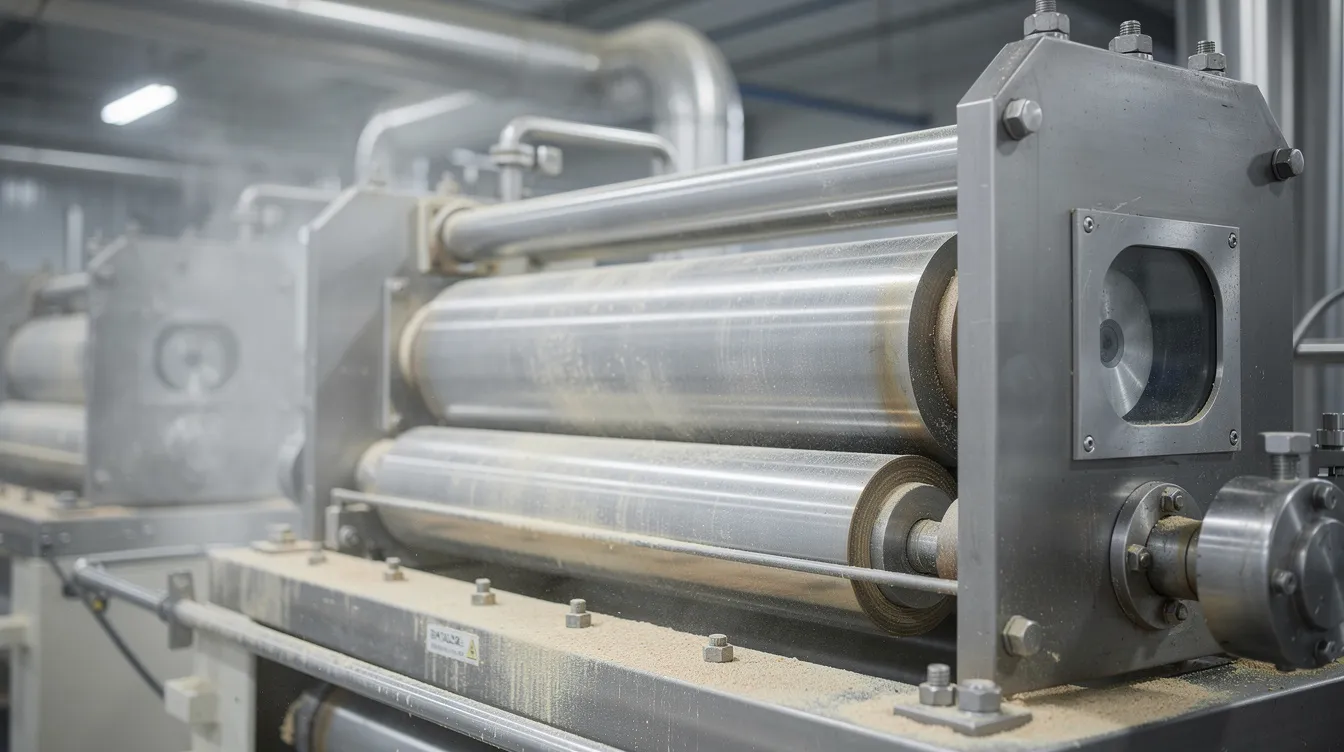
Underinvestment in machinery results in poor extraction rates, high power consumption and inconsistent product quality. Overinvestment inflates project cost and depresses returns. Cleaning machines remove impurities from raw wheat grains at the front end; roller mills handle the core milling; and sifting equipment, purifiers and packing lines must be sized and matched to avoid bottlenecks.
A fully automatic flour mill can exceed ₹2 crore in setup costs, while a medium-scale plant costs around ₹35 lakh to ₹80 lakh for machinery. The choice must align with scale, product mix and target market. Integration issues-ensuring cleaners, roller mills, plansifters and compressors work together-and commissioning risks must be addressed with realistic timelines and contingencies. Expert guidance from equipment specialists and independent technical consultants helps produce better investment outcomes.
Regulatory, Compliance and Environmental Feasibility
Regulatory compliance requires local licensing, safety regulations, and adherence to food safety standards. Key requirements include:
- FSSAI licence for food manufacturing
- GST registration
- Udyam / MSME registration (where eligible)
- Factory licence and labour law registrations (PF, ESI)
- State pollution control board consent for air emissions and dust control
- Fire NOC and safety equipment installation
Non-compliance can lead to penalties, shutdowns and reputational damage. A serious feasibility study factors in both compliance costs and timelines.
Role of a Professional DPR and CA-Led Advisory in Maida & Suji Plant Feasibility
At Project Report Bank, the approach is to combine practical business understanding with structured financial analysis. A bankable DPR for atta maida suji plants includes: project profile, market analysis, technical configuration, manufacturing process description, project cost estimation, means of finance, projected financial statements, ratio analysis, DSCR, break-even, NPV, IRR and sensitivity analysis. The business plan is built on customised assumptions aligned to the promoter’s chosen capacity, product mix, location and risk appetite.
CMA data, term loan and working capital assessment, and finance annexure documents are prepared to meet the requirements of Indian banks. For promoters looking for a comprehensive wheat flour mill project report, the feasibility study and DPR together serve as decision-support tools-both for the entrepreneur making an informed decision and for lenders evaluating the proposal.
CA Manish Gugliya FCA, DISA (ICAI) More than 20 years of professional experience in project reports, financial projections, CMA Data, project finance and business advisory.
FAQs – Maida & Suji Plant Feasibility and Investment
What minimum plant capacity is generally viable for a new Maida & Suji unit in India?
Many DPRs consider 30–40 TPD as a practical lower limit for integrated atta maida suji units targeting regional markets. The plant capacity of 40 MT per day is a common benchmark, though the final capacity choice depends on location, demand validation, promoter capital and competitive density. Smaller units face higher per-unit costs and difficulty competing on quality with larger existing units.
How long does it usually take for a Maida & Suji plant to reach stable capacity utilisation?
After construction, installation and trial production (typically l i 12–18 months combined), most plants begin commercial operations at 50–60% utilisation. Reaching 70–80% utilisation commonly takes 2–3 years as buyer relationships stabilise, distribution networks develop and production consistency improves. This ramp-up pattern must be reflected in financial projections.
Can a Maida & Suji plant be financed under MSME or other government schemes?
Depending on investment size, many flour mill projects qualify for MSME benefits, CGTMSE coverage for collateral-shortfall situations, interest subvention schemes or state-level food processing incentives. These should be evaluated during DPR preparation and factored into the means of finance. The profitability ratio for a mini flour mill is projected at 40% under favourable assumptions, and total capital investment is ₹5.38 crore, making many configurations MSME-eligible.
Is it necessary to have one’s own wheat procurement setup, or can we buy from traders?
Both approaches have trade-offs. Direct mandi purchases offer better price control and quality selection but require dedicated procurement staff, transport arrangements and higher working capital. Trader-based sourcing offers convenience and credit terms but reduces control over wheat quality and landed cost. Most feasibility reports assume a blended approach, and the DPR should model the cost implications of each.
When should I commission a detailed project report and feasibility study for my flour mill?
Before locking land deals, finalising machinery orders or submitting major bank loan applications. A professional feasibility study at the pre-investment stage can influence plant design, capacity selection, product mix, financing structure and risk mitigation-all of which are far more expensive to modify after commitments have been made. Manufacturing business ideas in the industrial world should always be validated through structured financial analysis before capital deployment.