Key Takeaways
Maida suji plant machinery is not a single machine. It is a complete, integrated roller flour mill line that converts cleaned wheat into multiple products – maida (refined flour), suji (semolina), atta (whole-wheat flour) and bran – through carefully sequenced cleaning, conditioning, milling, sifting, purification and packaging sections.
- A typical integrated plant includes wheat cleaning equipment, roller mills (break and reduction), plansifters, semolina purifiers, bran finishers, pneumatic conveying systems, dust collection, automatic packing machines and PLC-based process controls. The exact configuration depends on capacity and target product mix.
- Machinery selection directly affects extraction percentage, product quality (ash content, granulation, colour), electricity consumption per tonne, labour requirements, maintenance downtime and – ultimately – project profitability, ROI and debt-servicing capacity (DSCR).
- Maida suji plant machinery cost in India varies widely based on capacity (30–200+ TPD), automation level, choice of Indian versus imported equipment and site-specific requirements. Flour mill setup costs range from ₹10 lakh to ₹2 crore depending on scale, and investors must rely on updated supplier quotations rather than generic published prices. All figures in this guide are indicative only.
- Production capacity significantly influences flour mill project costs. Doubling capacity does not simply double the machinery budget, but it does require proportionally higher working capital, utilities and marketing capability.
- Project Report Bank, led by CA Manish Gugliya (FCA, DISA), helps entrepreneurs and industrial investors prepare Detailed Project Reports, financial projections, CMA Data and bank-finance documentation based on realistic machinery configurations, verified quotations and defensible operating assumptions.
Introduction – Understanding Maida & Suji Plant Machinery
When an entrepreneur considers establishing a commercial wheat processing facility in India, the single most consequential set of decisions involves machinery. The term maida suji plant machinery refers to an integrated wheat milling system – a complete production line that receives cleaned wheat at one end and delivers finished maida, suji, atta and bran at the other. It is not a single standalone machine but a carefully engineered combination of cleaning, conditioning, milling, classification, purification, handling and packaging equipment.
Roller flour mills consist of cleaning, conditioning, grinding, and sifting stages. Each stage depends on the preceding one. A commercial plant typically includes a wheat intake and cleaning section, a conditioning and tempering section, roller milling (break and reduction passages), plansifting, semolina purification, bran finishing, pneumatic and mechanical conveying, storage bins, dust collection and automatic packaging lines.
Machinery selection affects far more than production speed. It determines product quality – ash content, granulation and colour – which in turn determines the prices a mill can command. It determines extraction rate (the share of saleable products recovered from each tonne of wheat), power consumption per tonne, the number of operators needed per shift, maintenance frequency and contamination control. Product proportions – the approximate split between atta, maida, suji and bran – depend on wheat variety, cleaning quality, the milling diagram and machine settings. No responsible advisor should promise a fixed yield without test data and an agreed milling configuration.
As a Chartered Accountant with more than 20 years of experience in project reports and manufacturing project feasibility, my interest in machinery is not that of a vendor or engineer. At Project Report Bank, we evaluate machinery choices from the perspective of DPR preparation, financial projections, bank finance and return on investment. The question we consistently ask is: does this machinery configuration produce a financially viable project?
Complete Maida & Suji Manufacturing Plant Machinery List
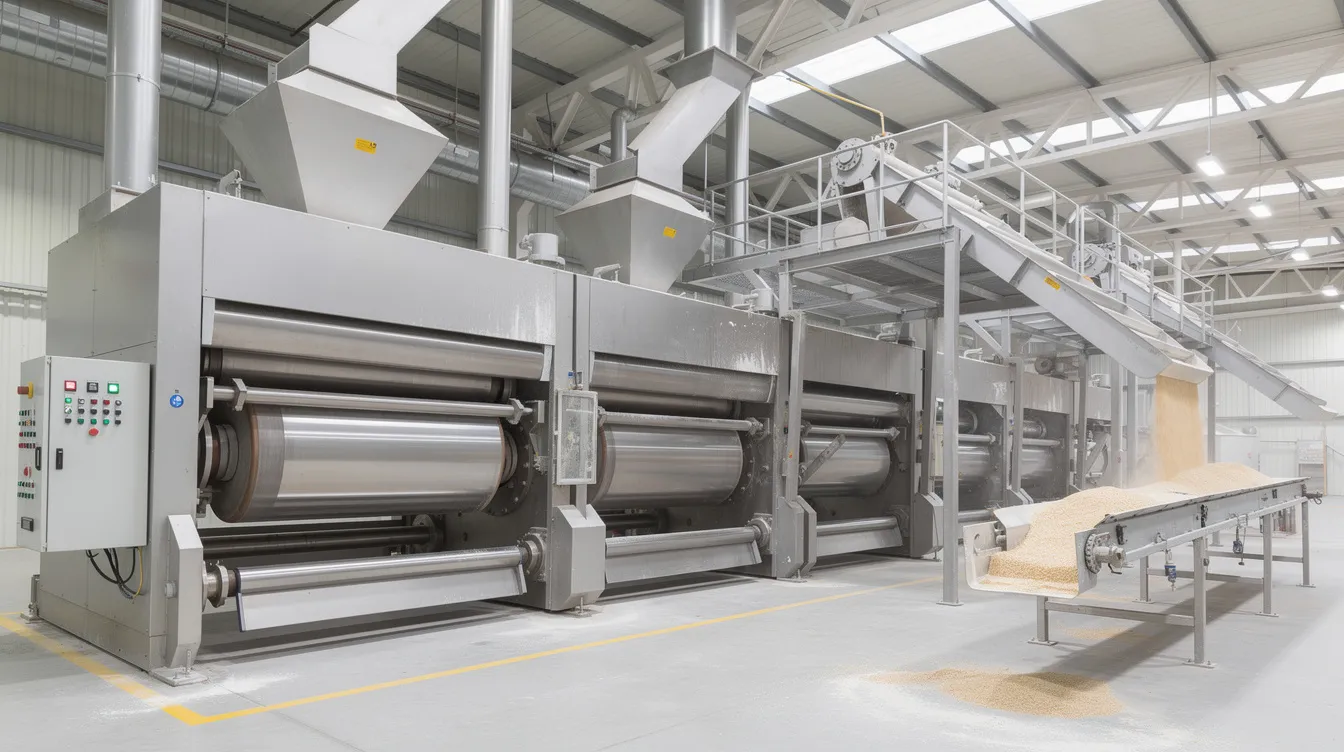
A modern maida suji processing plant is a combination of cleaning, milling, classification, handling and packaging machines. The exact configuration depends on the planned capacity (30, 50, 100 or 200 TPD), automation level, target products and the wheat varieties to be processed. Not every plant will include every machine listed below – very small mills may omit certain items, and highly specialised lines may add others.
The following table provides an indicative equipment list for a typical integrated wheat flour mill producing atta, maida and suji. Similar integrated plants are also used for related products like besan plant lines, though the milling process for chickpea flour differs substantially from wheat milling.
| Machinery / Equipment | Main Function | Processing Section | Important Selection Factors |
|---|---|---|---|
| Wheat intake hopper | Receives raw wheat from trucks or storage | Intake | Capacity (tonnes/hour), dust control |
| Pre-cleaner | Removes large impurities (straw, rope, stones) | Cleaning | Throughput, screen design |
| Vibratory separator | Grades wheat by size, removes oversized and undersized particles | Cleaning | Screen mesh sizes, vibration intensity |
| Magnetic separator | Removes ferrous metal particles | Cleaning | Magnetic strength, food-grade design |
| Destoner | Separates stones and heavy impurities | Cleaning | Capacity margin over design throughput |
| Wheat scourer | Rubs surface dirt and adhering husk from grain | Cleaning | Speed, abrasion level, maintenance access |
| Aspirator | Removes light impurities, dust, chaff using airflow | Cleaning | Air volume, fan power, energy efficiency |
| Cockle cylinder (if used) | Separates round seeds and broken grains | Cleaning | Cylinder size, pocket design |
| Wheat dampening machine | Adds controlled moisture to wheat | Conditioning | Moisture control precision, capacity |
| Conditioning/tempering bins | Stores dampened wheat for uniform moisture absorption | Conditioning | Volume for 12–24 hours of holding, insulation |
| Roller milling machines (break & reduction) | Gradually reduces particle size, separates endosperm from bran | Milling | Roll surface, differential speed, cooling, gap control |
| Semolina purifier | Separates pure suji from bran-dusted particles using sieves and air | Purification | Adjustable air volume, deck area, cleaning ease |
| Plansifter | Classifies particles into maida, suji, atta and bran fractions | Sifting | Deck area, mesh sizes, cloth material |
| Bran finisher | Recovers residual flour from bran to improve extraction | Finishing | Impact type, screen design |
| Impact detacher | Breaks agglomerated flour particles for better sifting | Finishing | Rotor speed, capacity |
| Pneumatic conveying equipment | Dust-free transfer of flour and suji between sections | Handling | Pipeline length, blower power, airlocks |
| Bucket elevators | Vertical transport of wheat, grits, flour | Handling | Load capacity, material of construction |
| Screw conveyors | Horizontal or inclined transport | Handling | Food-grade coating, cleaning access |
| Dust collection system | Captures airborne flour dust for safety and hygiene | Safety/Hygiene | Filter area, compliance with safety codes |
| Flour and suji storage bins | Holds finished products before packing | Storage | Capacity, food-grade lining, FIFO design |
| Automatic weighing system | Accurately doses product into bags | Packaging | Weighing accuracy, speed (bags/hour) |
| Bagging and stitching machines | Fills, seals and codes bags | Packaging | Pack sizes (1–50 kg), sealing type |
| PLC-based control system | Automates feed, monitoring and process control | Automation | Sensor integration, operator interface |
| Electrical panels and motors | Powers all equipment | Electrical | Power rating, efficiency, 440 V compatibility |
| Air compressors | Supplies compressed air for pneumatic valves and controls | Utilities | Capacity, energy efficiency |
| Quality-control laboratory | Tests ash content, moisture, granulation, gluten | QC | Basic vs advanced instruments |
Not every plant will need all these machines. High-end PLC automation or advanced dust collection may be optional in very small mills. However, omitting critical equipment – such as destoners or dust collectors – creates safety and quality risks that typically prove more expensive than the machinery itself. Project promoters should obtain a plant-specific machinery layout from their chosen suppliers before finalising the DPR budget.
Wheat Cleaning and Preparation Machinery
An efficient cleaning section is one of the most important – and frequently underestimated – parts of a wheat milling plant. Cleaning removes impurities such as stones, dust, and metal from wheat before it enters the conditioning and milling sections. The cleaning section typically represents 10–15% of total machinery cost, yet its performance directly protects expensive roller mills, improves flour colour and helps meet FSSAI and buyer quality requirements.
Cleaning capacity is generally designed 15–20% higher than milling capacity to handle peak intake rates and variable raw wheat quality across seasons and procurement sources.
Wheat Cleaning and Grading Equipment
The pre-cleaner receives raw wheat and removes large foreign matter – straw, sticks, twine and oversized particles. The vibratory separator then grades wheat by size using calibrated screens, removing both oversized and undersized impurities. The aspirator uses controlled airflow to lift and separate light materials – dust, chaff and broken husks – from the heavier grain stream.
Correct screen sizes and proper air-flow adjustment are essential. If screens are worn or air volume is insufficient, impurities pass through to downstream equipment, affecting both flour quality and machinery life. Regular sieve cleaning and motor maintenance keep the cleaning section operating efficiently.
For plants designed to handle 30–200 TPD in India, key design aspects include dust-tight construction suited to high ambient temperatures, easy access panels for cleaning and sieve changes, and energy-efficient motors sized for the required throughput.
Destoner, Magnetic Separator and Wheat Scourer
Each of these machines addresses a specific contamination risk. The destoner uses vibration and airflow across a gravity table to separate stones and heavy impurities – particles that could damage roller surfaces or create sparks. The magnetic separator captures ferrous metal fragments. The wheat scourer rubs the grain surface, removing adhering dirt and husk particles that would otherwise darken the flour.
Proper stone and metal removal protects expensive roller milling machinery and reduces the risk of sparks and mechanical damage. These machines are not optional even in small-capacity mills.
The wheat scourer and aspirator also play a hygienic role, lowering microbial load on the grain surface and improving flour safety. Their effectiveness depends on regular maintenance, timely replacement of screens and brushes, and adequate suction.
Wheat Dampening and Conditioning Equipment
Conditioning adds moisture to wheat to prevent bran from shattering during milling. The dampening machine adds a precisely controlled amount of water to the wheat surface. The grain is then stored in tempering bins for a designated period – typically 12 to 24 hours depending on wheat hardness – to allow moisture to penetrate uniformly.
Proper conditioning toughens the bran (making it easier to separate in large flakes rather than breaking into fine specks) and mellows the endosperm (making it easier to reduce into fine flour). This results in better separation, higher maida and suji recovery and lower ash content in the finished products.
Conditioning bins must be sized to match the plant’s daily capacity and the assumed tempering time. For a 100 TPD plant operating on 20-hour conditioning, the bin volume requirement is substantial. Bins should be constructed to prevent insect infestation, moisture variation and quality deterioration during holding.
Roller Milling Machinery for Maida Production
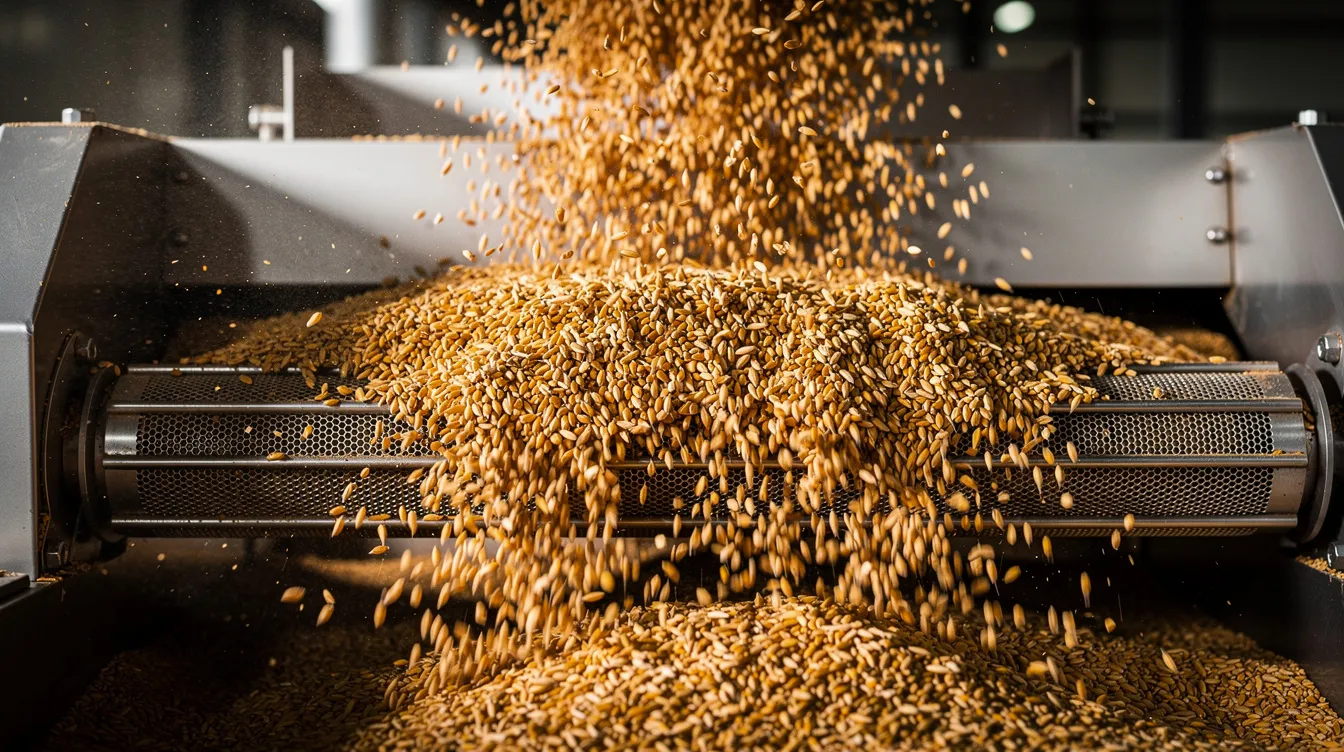
In commercial plants, maida is produced using roller flour mill machinery – not traditional stone chakkis. Roller mills break and reduce wheat into fine flour and coarse granules through a series of carefully controlled passages. Break rolls (with corrugated surfaces) open the wheat kernel and scrape the endosperm away from the bran. Reduction rolls (with smooth surfaces) then progressively reduce the endosperm particles into fine flour.
Advanced roller mills and purifiers are essential for maida production. The milling “diagram” – the specific number of break passages, reduction passages, purifiers and sifter sections – is a specialised engineering design supplied by the machinery manufacturer. This diagram determines the share of atta, maida, suji and bran that the plant produces from a given wheat input.
Key technical parameters include roll differential speed (the ratio of fast roll to slow roll speeds), feed rate control, roll gap setting and cooling. A 440 V Roller Flour Mill processes grains into maida and suji, with motor power and electrical configuration matched to the plant’s total connected load. For a detailed analysis of equipment costs across different milling configurations, readers may refer to our study on roller flour mill machinery and equipment cost.
A dedicated maida manufacturing plant project report and DPR converts the chosen milling diagram and machinery list into production volumes, revenue projections and profitability analysis.
Automatic Roller Mill Machines
Modern automatic roller mills feature automatic feed control, pneumatic or hydraulic roll gap adjustment, vibration and temperature monitoring, overload protection and integration with PLC or SCADA systems. These features improve consistency of product fineness, reduce operator dependency and provide safer operation.
Automatic mills typically carry a higher initial cost, but they may reduce labour requirements and product rejections. The relevant comparison is life-cycle cost – purchase price plus energy, maintenance, labour and downtime over the equipment’s productive life – rather than purchase price alone.
Roller Mill Capacity and Machine Configuration
The number and size of roller mills in a plant depends not only on daily capacity but also on the desired share of maida versus atta, suji specification, expected wheat hardness and product quality targets. For a 100 TPD integrated plant, multiple roller mills are arranged across several break and reduction passages with intermediate sifting at each stage.
Machinery suppliers should provide detailed mill flow sheets specifying the number of roller passages, the installed power for each mill and the expected throughput. These flow sheets then feed directly into DPR calculations, financial models and power-requirement estimates.
Suji Manufacturing and Purification Machinery
Suji (semolina) is a specific mid-sized fraction of ground wheat particles – coarser than maida but finer than cracked wheat. A successful milling process requires careful classification and purification to separate suji from both the fine flour below it and the coarse bran particles above it.
In an integrated plant, suji is collected from intermediate streams in the roller milling system – typically from the first and second break passages – and then sent to specialised purification and grading equipment. Plants can be configured either for higher suji recovery (useful for pasta, vermicelli or sweet manufacturers) or higher maida output, and this configuration affects the selection of purifiers and sifters.
Promoters planning suji-focused production and profitability should refer to a suji manufacturing plant project report for detailed financial analysis.
Semolina Purifier Machine
Purifiers separate bran from the endosperm during milling for suji production. A semolina purifier uses a combination of sieves and upward airflow to separate pure semolina granules from bran-dusted particles, fine flour and specks. Bran-containing particles are lighter and are lifted by the air current, while clean, dense semolina granules pass through the sieve.
Good purifiers are designed for smooth product distribution, adjustable air volume, easy cleaning and minimal cross-contamination. The number of purifiers and their deck area must align with the total suji flow in the milling diagram to avoid bottlenecks that reduce both quality and recovery.
Plansifter and Suji Grading Equipment
Plansifters separate milled flour by particle size into maida and suji. These multi-deck sifting machines classify the milled product into distinct streams – fine flour (maida), mid-sized granules (suji of various grades), atta-grade flour and bran-rich fractions.
Sieve cloth selection, mesh size and regular maintenance directly affect product uniformity and recovery. Plants intending to supply specialised segments – bakery-grade suji, vermicelli manufacturers or specific regional sweet-makers – may need additional grading sieves to meet narrow particle-size specifications.
Maida and Suji Production in an Integrated Plant
An integrated roller flour mill can flexibly produce different proportions of atta, maida and suji from the same wheat input by adjusting mill settings, roll gaps and flow-line routing. This flexibility is one of the primary commercial advantages of investing in a properly designed roller mill line rather than a simpler, single-product installation.
It is important to clarify that machines and flow configurations for durum wheat semolina or maize grits differ from a typical common-wheat maida and suji configuration. Project promoters must match machinery to their raw material and end-market requirements. Investors considering speciality bakery flours can refer to the bakery flour manufacturing plant project report for advanced product-mix planning.
Flour Separation, Sifting and Finishing Equipment
Efficient separation and finishing can add 1–2 percentage points to overall saleable yield – a difference that materially affects profitability when processing tens of thousands of tonnes per year. Final plansifters, bran finishers and impact detachers refine flour streams, remove adhering bran and ensure consistent particle size distribution for maida and atta.
Flour and suji bins, rotary sifters (where used) and gentle conveying systems minimise product damage and contamination risk before packing. In well-designed plants, all food-contact surfaces are made of food-grade materials, and equipment is installed to avoid dead corners where flour can accumulate and spoil.
By-products like bran and pollard are not waste. They can be monetised through wheat bran processing and value addition opportunities, improving overall project economics and reducing effective raw-material cost.
Material Handling and Pneumatic Conveying Systems
Continuous, hygienic transfer of wheat, intermediate grits and finished products through the plant is achieved using a combination of bucket elevators, screw conveyors and pneumatic conveying lines.
Bucket elevators handle vertical lifting of grain and flour between floors. Screw conveyors manage short horizontal or inclined movements. Both are mechanically simple but require regular lubrication, alignment checks and food-grade construction. Pneumatic systems – comprising airlocks, blowers, pipelines, cyclones and bag filters – provide dust-free transfer of flour and suji between sifters, purifiers and storage bins. Pneumatic conveying improves hygiene but requires more careful design and consumes more power than mechanical alternatives.
Dust collection systems prevent flour dust and ensure hygiene in milling. Flour dust is combustible in confined spaces, and proper dust management – using filters, earthing, avoiding leakage points and following local safety codes – is essential for both regulatory compliance and worker safety.
While conveying and dust collection may not appear as headline machinery in a quotation, under-sizing these systems leads to chronic bottlenecks, spillages, high housekeeping costs and potential safety violations.
Automatic Packaging and Storage Equipment
Packaging is the final step that converts bulk flour and suji into saleable products. Packaging machines automatically weigh and seal finished maida and suji into the required pack sizes. Machinery selection depends on whether the plant serves bulk buyers, retail brands or both.
For consumer packs (1 kg, 2 kg, 5 kg), automatic form-fill-seal machines with multi-head or screw dosing, heat sealing and date/batch coding are standard. For institutional and wholesale packs (10 kg, 25 kg, 50 kg), semi-automatic or fully automatic bagging lines with weighing hoppers, bag clamps, conveyors and stitching or sealing heads are used.
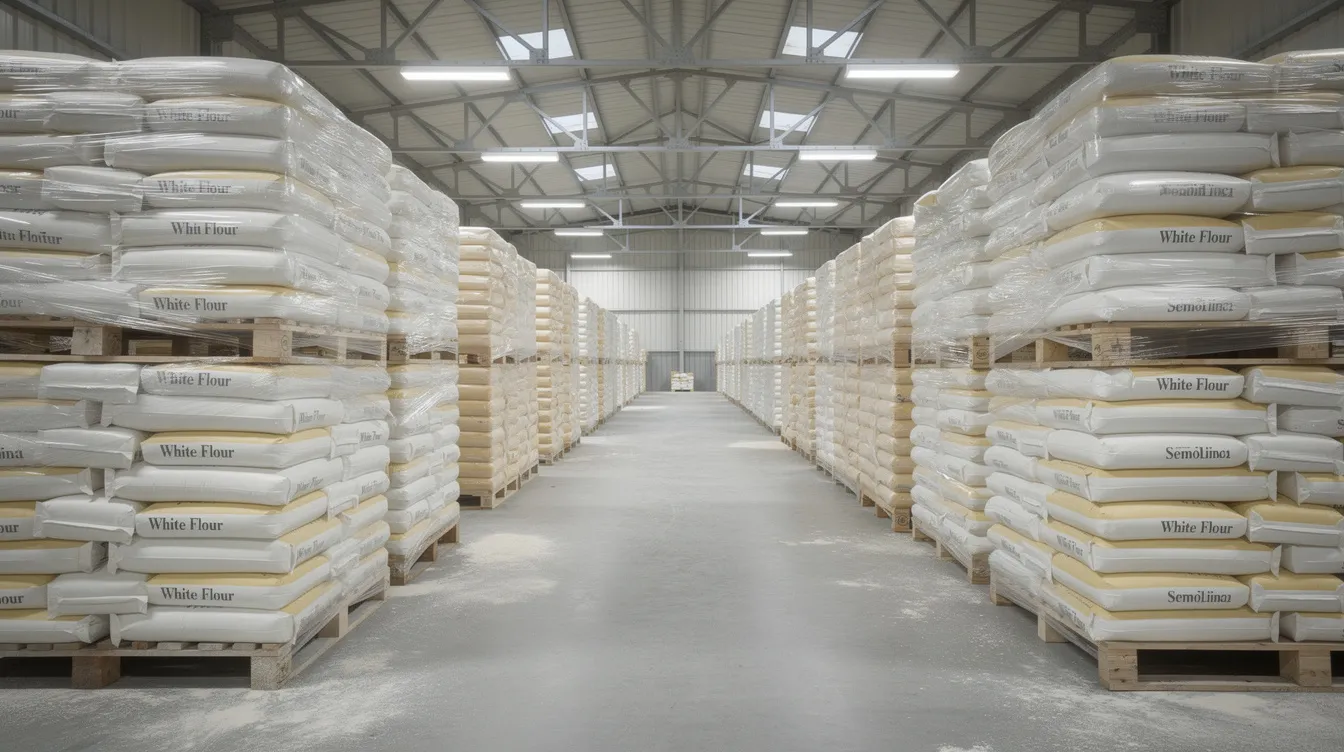
Finished-goods storage requires palletised stacking, humidity and pest control, FIFO systems and clear segregation between atta, maida and suji batches. Packaging lines must be matched to upstream plant capacity so that milling does not frequently stop due to slow packing.
Maida & Suji Plant Machinery Cost in India
Maida suji plant machinery cost is a subset of total project cost. It varies with capacity, brand, automation level, choice of Indian versus imported equipment and site-specific requirements. All costs discussed in this section are indicative ranges based on typical Indian market conditions around 2024–2025 and must not be treated as firm quotations. Final pricing should be obtained from current supplier quotations including GST, freight, erection and commissioning.
To provide a broad context: flour mill setup costs range from ₹10 lakh to ₹2 crore depending on scale and product scope. Small-scale mills of 5–10 TPD cost ₹10 lakh to ₹25 lakh. Medium-scale plants of 20–40 TPD cost around ₹35 lakh to ₹80 lakh. Large 80+ TPD flour mills may cost ₹1 crore to ₹2.5 crore for machinery alone. According to CFTRI’s published project profile, a 120 TPD plant’s machinery cost was estimated at approximately ₹3.45 crore.
| Machinery Section | Typical Equipment | Indicative Cost Range (₹) | Key Cost Drivers |
|---|---|---|---|
| Wheat cleaning section | Pre-cleaner, separator, destoner, magnetic separator, scourer, aspirator | ₹7–15 lakh | Number of cleaning stages, capacity margin |
| Conditioning system | Dampener, tempering bins | ₹5–12 lakh | Bin volume, insulation, construction material |
| Roller milling and plansifters | Break and reduction roller mills, plansifters | ₹25–80 lakh+ | Number of passages, roll size, automation |
| Semolina purifiers | Purifier decks with air system | ₹5–15 lakh | Deck area, number of purifiers |
| Bran finishers and impact detachers | Bran finisher, impact detacher | ₹3–8 lakh | Capacity, design type |
| Pneumatic conveying and dust collection | Blowers, pipelines, cyclones, filters | ₹8–20 lakh | Pipeline length, filter area, safety compliance |
| Mechanical conveying | Bucket elevators, screw conveyors | ₹5–12 lakh | Number of elevation points, material |
| Storage bins | Flour, suji, bran bins | ₹3–8 lakh | Capacity, food-grade lining |
| Automatic weighing and packing | Weighing, bagging, stitching/sealing | ₹5–20 lakh | Pack sizes, speed, automation level |
| Electrical panels and cabling | MCC panels, wiring, switchgear | ₹5–15 lakh | Connected load, cable routing |
| PLC/automation | PLC, SCADA, sensors | ₹3–15 lakh | Extent of automation, brand |
| Air compressor and utilities | Compressor, voltage stabiliser | ₹2–5 lakh | Capacity |
| Installation and commissioning | Erection, alignment, trial runs, training | ₹5–15 lakh | Plant size, supplier scope |
| Miscellaneous | Laboratory, spares, accessories | Supplier quotation required | Project-specific |
These ranges typically exclude land, building, external electrification, civil foundations, statutory approvals and initial working capital. For a broader capital expenditure view covering all project components, refer to our analysis of maida and suji manufacturing plant setup cost in India.
Entrepreneurs should obtain at least two or three competitive quotations with detailed breakdowns – machine-wise pricing, GST, packing, forwarding, freight, erection, commissioning – before finalising DPR budgets.
Capacity-Wise Maida & Suji Plant Machinery Investment
“TPD” means tonnes of wheat input milled per day, typically based on 16–20 operating hours. Understanding assumed shifts and uptime is essential when comparing machinery offers, because a “100 TPD” plant rated on 20 hours differs from one rated on 16 hours.
| Parameter | 30 TPD | 50 TPD | 100 TPD | 200 TPD |
|---|---|---|---|---|
| Typical product focus | Local atta, basic maida/suji | Atta and maida with suji | Balanced atta/maida/suji | Large-scale contract milling, multi-product |
| Broad machinery configuration | Basic cleaning, 2–4 roller mills, single plansifter, basic purifier | Enhanced cleaning, 4–6 roller mills, plansifter, purifiers | Full cleaning line, 6–10+ roller mills, multiple plansifters and purifiers, bran finishers | Extensive cleaning, 10+ roller mills, multiple plansifters, purifiers, advanced finishing |
| Likely automation level | Manual to semi-automatic | Semi-automatic | Semi-automatic to PLC-based | PLC/SCADA-based fully automatic |
| Indicative machinery budget | ~₹60–70 lakh | ~₹90 lakh–₹1.8 crore | ~₹2.0–3.5 crore (indigenous) | Supplier quotation required |
| Suitable business scale | Local/district market | Regional distribution | Regional brand, institutional supply | Large brand, contract milling, export |
| Key operating considerations | Limited product flexibility, lower extraction | Better product flexibility | Economies of scale begin, higher utility needs | Requires strong marketing, large working capital, robust power supply |
A small 10–20 TPD atta plant costs ₹15 lakh to ₹30 lakh for basic machinery, while large mills of 80–120 TPD may require ₹1 crore to ₹2 crore. According to a published DPR for a 20 TPD mini flour mill, machinery cost was ₹1.21 crore with total capital investment of ₹4.85 crore including land and building.
Doubling capacity does not always double machinery cost because of economies of scale, but it does require higher working capital, stronger marketing capability and more robust utilities. Capacity choice should be aligned with demand assessment, raw material availability, logistics and bank finance limits. For deeper guidance on this, refer to our article on roller flour mill capacity planning.
Automatic vs Semi-Automatic Maida & Suji Plant Machinery
The trade-off between higher initial investment in automatic maida suji plant machinery and potential long-term savings in labour, product consistency and waste reduction is one of the most common questions from project promoters.
| Factor | Semi-Automatic | Fully Automatic |
|---|---|---|
| Initial machinery investment | Lower | 10–20% higher than equivalent semi-automatic |
| Skilled operators per shift | Higher (manual feed, gap adjustment, monitoring) | Lower (PLC-managed, fewer manual interventions) |
| Product quality consistency | Operator-dependent | More uniform, sensor-monitored |
| Energy efficiency | Moderate | Potentially better with variable-speed drives |
| Monitoring and record-keeping | Manual logbooks | Automated data logging, SCADA dashboards |
| Maintenance complexity | Simpler but more frequent manual adjustments | More complex controls but fewer operator errors |
| Suitability | 30–50 TPD, local/regional markets | 100–200+ TPD, branded or institutional supply |
Fully automatic flour mill plants cost between ₹50 lakh to ₹2 crore depending on capacity, brand and the extent of automation. In many Indian MSME projects, a hybrid model – automatic cleaning and milling with semi-automatic packing – offers a practical balance of investment, control and product quality.
Automation should be evaluated using realistic financial projections over 7–10 years, not just headline machinery price. The payback on automation depends heavily on capacity utilisation, labour cost, product quality premium and downtime reduction.
Indian vs Imported Maida & Suji Manufacturing Machinery
Indian roller flour mill machinery manufacturers have significantly improved technology over the past decade and can meet most domestic maida and suji specifications. Some high-capacity or specialised lines may still consider imported components for specific sections – purifiers, precision roller mills or advanced control systems.
| Factor | Indian Machinery | Imported Machinery |
|---|---|---|
| Purchase price | Lower | Significantly higher |
| Spare-part availability in India | Readily available, shorter lead times | May require international procurement |
| After-sales support | Local presence, faster response | May depend on authorised dealers |
| Delivery time | Generally shorter | Longer (shipping, customs) |
| Technology level | Good for most domestic specs | Often more advanced control systems |
| Foreign exchange exposure | None | Currency risk on payments and spares |
| Import duty and logistics | Not applicable | Adds 15–25% to landed cost |
Imported plants may offer advanced automation and slightly higher energy efficiency, but the higher upfront cost, currency risk and service dependency must be weighed against domestic alternatives. Project Report Bank does not endorse specific brands. Instead, we encourage promoters to evaluate technical specifications, life-cycle cost and service network objectively before making a decision.
How to Select the Right Maida & Suji Plant Machinery Supplier
Machinery supplier selection is as important as equipment selection. The supplier’s ability to provide design support, erection supervision, commissioning and operator training strongly influences actual plant performance – often more than the equipment specifications alone.
Key evaluation points include years of experience in roller flour mills, the number and size of installed maida suji plants in India, references that can be visited or contacted, the ability to provide a detailed flow sheet and performance estimates, and clarity on service responsibility during and after the warranty period.
When issuing RFQs (Request for Quotations), promoters should specify:
- Planned capacity (TPD and hours per day)
- Target product mix (approximate atta, maida and suji share)
- Wheat varieties to be processed
- Packaging formats and pack sizes required
- Desired automation level
- Available electrical power and building dimensions
Each quotation should include detailed technical datasheets: installed power per machine, expected throughput, material of construction, control system specifications, foundation requirements and optional accessories.
Rather than selecting purely on lowest price, create a comparison matrix for shortlisted suppliers, scoring them on technology, total cost, energy consumption, installed references, delivery timeline and after-sales commitment.
Electricity Consumption, Maintenance and Operating Costs
The major machinery-related recurring costs in a maida suji processing plant are electricity, manpower, consumables and downtime. Among these, electricity is typically the largest single operating expense after raw material.
The highest power-consuming groups include roller mills, fans and blowers for pneumatic conveying and dust collection, bucket elevators, packing machines and air compressors. Suppliers usually specify expected specific power consumption (kWh per tonne of wheat processed), but actual consumption should be monitored against these benchmarks after commissioning.
Preventive maintenance is essential for sustained performance: scheduled roller inspection and re-grooving, timely replacement of sieve cloth, regular lubrication and alignment of elevators and conveyors, and cleaning of filters and magnetic separators. Promoters should budget a realistic annual maintenance provision in the DPR – typically 2–3% of machinery cost – rather than assuming negligible repair expenses.
Actual electricity consumption must be tracked against OEM benchmarks and corrective actions taken if deviations persist. Energy savings directly improve EBITDA and, consequently, debt-servicing capacity.
How Machinery Selection Affects Project Profitability
From a financial advisory perspective, machinery choice affects every line of the projected financial statements. It determines fixed capital cost (which drives depreciation and interest charges), variable costs (energy, labour, spares), extraction yield (which determines the volume of saleable output per tonne of wheat) and achievable selling prices (because better machinery produces higher-quality, higher-priced products).
Consider a simple hypothetical example. A plant processes 100 TPD of wheat for 300 operating days – that is 30,000 tonnes of wheat per year. If a better-configured milling line improves saleable flour and suji recovery by just 1 percentage point (say from 73% to 74%), the plant produces an additional 300 tonnes of saleable product annually. At an average realisation of ₹30 per kg, this adds approximately ₹90 lakh to annual revenue – with virtually no increase in wheat cost. This improvement flows almost directly into EBITDA and can materially strengthen the DSCR.
Conversely, higher-capacity or more automated machinery increases depreciation charges. A DPR must balance these effects to arrive at realistic ROI and IRR figures. Readers seeking deeper numerical modelling may refer to our article on roller flour mill financial projections and working capital.
By-product handling – monetising bran and pollard rather than treating them as waste – also contributes to profitability and must be integrated into the financial model.
Note: The above example is purely illustrative. Actual yields, prices and financial outcomes depend on wheat quality, machinery configuration, market conditions and operating efficiency.
Machinery Investment Planning for DPR and Bank Finance
At Project Report Bank, we typically use finalised machinery quotations as the foundation for building the Detailed Project Report. The process involves summarising machine-wise costs, then adding freight, packing, insurance, erection, commissioning, electrical cabling, DG sets (where grid power is unreliable) and contingency provisions.
The DPR distinguishes between fixed capital investment (machinery, civil works, utilities, pre-operative expenses) and working capital requirement (stock of wheat, finished goods inventory, trade receivables and day-to-day operating expenses). The machinery investment determines the term-loan requirement and influences the promoter contribution needed to maintain an acceptable debt-equity ratio.
Depreciation rates, interest costs, loan tenure and moratorium assumptions are all influenced by the scale and nature of machinery investment. These must be transparent in the DPR for bankers to assess creditworthiness. Accurate machinery specifications are equally essential for credible production capacity, utilisation ramp-up, sales volume and DSCR projections. Over-optimistic assumptions – inflated extraction rates or understated power consumption – reduce financing credibility rather than improving it.
For structuring bankable term-loan proposals, professional support is available through our bank finance DPR and loan proposal assistance services. Investors wanting an independent assessment before committing to large machinery orders can explore our project feasibility study and financial viability assessment services.
Common Mistakes When Purchasing Maida & Suji Plant Machinery
Several recurring errors can undermine an otherwise sound project:
- Selecting suppliers purely on lowest quotation. The cheapest machinery often means inferior materials, lower precision, weaker after-sales support and shorter equipment life. Compare total cost of ownership, not just the purchase price.
- Under-sizing cleaning and dust collection equipment. This leads to stones entering roller mills, contaminated flour, safety hazards and regulatory violations. These systems protect the entire downstream investment.
- Buying capacity far beyond realistic demand. Oversized plants leave expensive machines under-utilised and strain loan repayment. Capacity should match a realistic, defensible demand assessment.
- Not specifying product mix clearly in RFQs. If suppliers do not know whether you prioritise maida, suji or atta, they cannot design an appropriate milling diagram.
- Ignoring utility requirements. Inadequate power connections, under-sized transformers, insufficient compressed air and weak ventilation all compromise plant performance and add unplanned costs.
- Assuming very high extraction rates or unrealistically low power consumption in financial projections. These assumptions must be checked with machinery OEMs and supported by reference-plant data.
- Failing to define responsibility matrices. The quotation should clearly specify who is responsible for civil foundations, electrical wiring, erection, commissioning and operator training.
Practical counter-measures include cross-checking quotations with at least two or three suppliers, visiting reference plants of similar capacity, involving both technical and financial advisors in final selection, and insisting on written scope-of-supply documents.
Frequently Asked Questions
The following questions summarise common doubts from project promoters about maida suji plant machinery, cost and planning. Answers are general in nature and should not be treated as a substitute for project-specific advisory.
What basic machinery is required for a maida and suji manufacturing plant?
A typical plant requires a wheat intake and cleaning line (pre-cleaner, vibratory separator, destoner, magnetic separator, scourer, aspirator), a conditioning and dampening system with tempering bins, roller mills arranged in break and reduction passages, plansifters for particle classification, semolina purifiers, bran finishers, impact detachers, bucket elevators, screw conveyors, pneumatic conveying systems, dust collectors, flour and suji storage bins, automatic weighing and packing machines, electrical panels and PLC-based automation for process control. The exact configuration varies with capacity and product mix.
Can maida, suji and atta all be produced in the same plant?
Yes. A properly designed integrated wheat milling plant can produce maida, suji, atta and bran simultaneously by routing different particle-size fractions to separate collection bins. The exact proportions depend on the milling diagram, wheat quality, roller settings and customer requirements. This flexibility is one of the primary commercial advantages of a roller flour mill over simpler single-product installations.
How do I estimate maida suji plant machinery cost for my specific capacity?
Begin by fixing your tentative capacity (for example, 50 or 100 TPD) and target product mix. Then approach at least two or three credible machinery manufacturers with a detailed RFQ specifying your requirements. Use the quotations received – along with estimates for freight, installation, electrical work and contingencies – to prepare a DPR or feasibility study that converts these into section-wise budgets and financial projections. Published cost ranges are useful for preliminary planning but should never replace actual supplier quotations.
Is it necessary to use fully automatic machinery for a new maida suji plant?
Full automation is not mandatory. Many MSME units in India operate successfully with semi-automatic configurations where core milling is automated but packing and certain handling tasks remain manual. The decision should be based on labour availability, skill levels, quality requirements, long-term production targets and, importantly, whether the additional capital cost of automation can be justified through realistic financial projections over the project’s life.
How can Project Report Bank help with machinery-related decisions?
Project Report Bank, under CA Manish Gugliya, assists by translating machinery quotations and technical specifications into comprehensive Detailed Project Reports, financial projections, CMA Data and bankable loan proposals. We evaluate different machinery options in terms of total project cost, profitability, DSCR, cash flow and risk – helping promoters and lenders understand the financial implications of each configuration. We do not act as machinery dealers or endorse specific brands.
Conclusion – Selecting Machinery for a Financially Viable Maida & Suji Plant
Successful maida and suji projects depend on aligning plant capacity, machinery configuration, wheat quality, desired product mix, automation level and packaging with realistic market demand and available financial strength. Machinery decisions should be based not only on initial maida suji plant machinery cost but on life-cycle performance: extraction efficiency, energy consumption, downtime, maintenance expense and the ability to meet quality specifications consistently.
Professional Detailed Project Reports, feasibility studies and financial models help promoters and lenders understand how machinery investment translates into cash flows, ROI, IRR and DSCR – reducing the risk of under-investment or over-investment. The machinery investment is not merely a procurement decision. It is a project design decision that shapes every financial projection in the DPR.
Planning a Maida & Suji Manufacturing Plant?
CA Manish Gugliya assists entrepreneurs and industrial investors with Detailed Project Reports, financial projections, CMA Data, project feasibility analysis and bank finance proposal preparation. Connect through ProjectReportBank.com for customised, project-specific financial advisory and DPR preparation. Outcomes such as loan sanction, subsidy approval or investment returns depend on multiple project-specific and external factors and cannot be guaranteed.