
Key Takeaways
- Maida suji plant project cost typically includes land and site development, factory building, plant and machinery, electrical and utility infrastructure, preliminary and preoperative expenses, interest during construction, contingency provision and working capital margin. For a 100 TPD integrated roller flour mill, total project outlay usually falls in the range of ₹12–18 crore on an owned-land basis, though actual figures depend on location, automation, storage strategy and product mix.
- Cost of project defines what the manufacturing plant needs in terms of capital. Means of finance defines how that capital is funded – through promoter equity, bank term loan, unsecured loans or subsidies. The two must match exactly for a financially closed proposal.
- Lenders appraise maida suji manufacturing plant investment proposals by examining the debt-equity ratio, DSCR, working capital assessment, promoter contribution, collateral and realistic financial projections. A well-prepared detailed project report is the foundation of this appraisal.
- Sensitivity analysis covering cost overruns and lower-than-expected revenues is increasingly expected by banks and demonstrates promoter awareness of project risk.
- Project Report Bank, led by CA Manish Gugliya (FCA, DISA, 20+ years of experience), prepares customised DPRs, CMA Data and means-of-finance plans for bankable maida and suji plant projects across India.
Introduction – Understanding Maida & Suji Plant Project Cost and Means of Finance
Establishing a maida and suji processing facility requires committing significant capital over a multi-year horizon. Before locking machinery orders or approaching a bank, entrepreneurs must know exactly how much the project will cost and precisely how that cost will be funded. Inaccurate estimates lead to funding gaps, stalled construction or over-leveraged balance sheets that cannot support term loan repayments.
India has around 800 large flour mills, and the installed capacity of flour mills exceeds 21 million metric tons. Flour mills process 12–15% of total wheat consumed in India, and the flour milling industry is rapidly growing. Wheat is the most important crop by area planted globally, and flour milling is one of the most profitable industries in the world. These industry trends signal strong market potential, but the investment decision must rest on project-specific financial analysis, not sector-level optimism.
In a roller flour mill, wheat grains are milled through a grinding process to produce flour in the form of atta, maida, suji (semolina) and bran. Expected yield from wheat milling includes approximately 50–55% atta (whole wheat flour), 20–25% maida and 10–12% suji, with the balance as bran and losses. Most wheat consumed in India is processed through such facilities, and the products are mainly consumed as bread, baked goods, and other food preparations.
The cost of project is the total investment the plant needs – covering fixed assets, preoperative costs and promoter margin on working capital. The means of finance is the funding plan that matches this cost through equity, debt and other sources. Both must be prepared together for any serious bank finance proposal.
Key cost drivers include production capacity (50, 100, 150 or 200 TPD), degree of automation, land ownership versus lease, civil construction, utilities, wheat storage requirements and product mix. Accurate project cost depends on market research, a structured business plan and a thorough feasibility study – not only machinery quotations. For a complete overview of setup considerations, refer to Maida & Suji Plant Setup Cost in India.
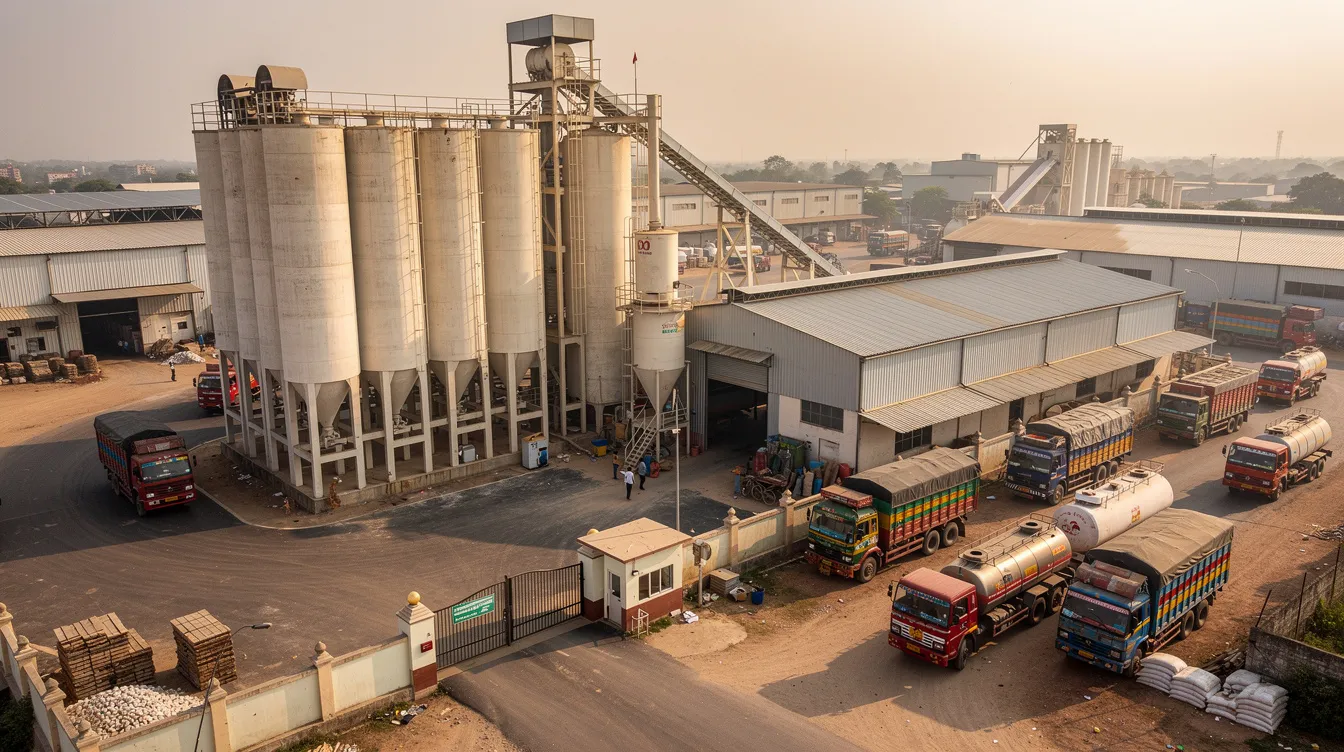
What Is Included in the Total Project Cost of a Maida & Suji Manufacturing Plant?
The total project cost of a maida and suji manufacturing plant is normally presented under defined cost heads inside a detailed project report. This project report for bank loan forms the basis of lender appraisal. It covers fixed capital investment, preliminary and preoperative expenses, interest during construction and working capital margin.
Setting up a maida and suji processing plant varies based on production capacity, machinery quality and infrastructure requirements. Initial capital requirements for small-to-medium flour mills typically range from ₹15 lakh to over ₹1 crore for basic units, scaling significantly for commercial roller flour mills. The figures discussed below are illustrative and must be refined through project-specific quotations and engineering design.
Land Acquisition and Site Development
Owning versus leasing land can significantly impact the total cost of setting up a flour mill. For a 100 TPD integrated plant, land requirement is typically 1.5–3 acres in an industrial belt. Cost varies vastly – from ₹50 lakh in a rural area to ₹1.50 crore or more near prime industrial estates.
Key cost components include the basic land price, stamp duty, registration charges, land conversion fees (where applicable), boundary wall construction, internal roads, levelling, drainage and weighbridge. Land and building cost for a mini flour mill (40 MT per day capacity) is approximately Rs. 2.55 Cr in published examples.
Banks typically expect higher promoter contribution for the land component, often requiring a 30% margin on building and land. Promoters must ensure clear title, non-encumbrance and compliance with industrial zoning norms before including land in cost of project.
Factory Building and Civil Construction
Infrastructure costs include building the milling floor and storage facilities for raw wheat and finished products. Typical structures for a maida suji plant include the main mill building, wheat cleaning and conditioning area, storage godowns or silos, finished-goods warehouse, packing hall, utility block and administrative offices.
Civil construction cost is usually estimated per square foot and verified by a civil engineer. For a 100 TPD flour mill, built-up area often ranges between 25,000–35,000 sq ft, with civil costs falling between ₹3–5 crore depending on materials, location and structural requirements. Underestimation of building cost is among the most common project planning errors.
Plant and Machinery Investment
Plant and machinery for maida suji manufacturing covers the complete manufacturing process: wheat cleaning, destoning, conditioning, roller flour mills, plansifters, purifiers, elevators, conveyors, bran finishers and packing equipment. The costs for setting up a commercial roller flour mill depend on the level of automation and machinery quality. For a detailed breakdown, refer to Maida & Suji Plant Machinery, Equipment & Cost.
Flour mill machinery can cost around 5 crore INR for larger automated lines, while plant and machinery cost for a mini flour mill (40 MT/day) is approximately Rs. 56.95 lacs. Machinery investment and operational costs vary based on the scale of flour production. This head must include the basic machinery price, GST (with possible input credit), transportation, erection, commissioning and minor tools. Higher automation through PLC and SCADA systems increases upfront investment but may reduce labour cost and improve consistency.
This head usually forms the single largest portion of fixed capital investment.
Electrical Installations and Utility Infrastructure
Electrical costs can become one of the largest recurring expenses after wheat procurement. Energy consumption in flour mills is significant due to the operation of heavy machinery. One-time investments include HT/LT panels, transformers, internal wiring, lighting, DG sets and compressors.
Dust collection and aspiration systems add to utility infrastructure cost but are critical for employee health, worker safety and environmental compliance. For a 100 TPD plant, electrical and utility investments typically amount to ₹25–60 lakh. This cost head is frequently underestimated in rough calculations and should be backed by vendor quotations.
Preliminary and Preoperative Expenses
Preliminary expenses cover company incorporation, registration, project report preparation, market research, technical consultancy and legal fees. Preoperative expenses include salaries of employees during construction, trial run costs, travel, survey expenses and administrative overheads before commercial operations start.
Typical examples include DPR preparation fees, feasibility study costs, statutory approval charges, environmental clearance expenses, architect and design fees, training costs, initial marketing expenses and insurance during construction. These costs are capitalised in the cost of project. A proportion may not attract GST input credit and must be carefully classified.
Interest During Construction
Interest during construction (IDC) arises on term loan drawdowns before the plant is commissioned and begins generating revenue. If implementation takes 12 months and the term loan (say ₹800 lakh) is drawn in phases, approximate IDC at 12% per annum could range from ₹50–80 lakh depending on the disbursement schedule.
Longer construction periods, delayed machinery delivery or cost overruns can significantly increase IDC and total project investment. Banks usually cap IDC based on approved timelines, so unrealistic implementation schedules invite queries during appraisal.
Contingency Provision
A contingency of 5–10% on major cost heads (civil works, machinery, utilities) covers exchange rate variation, design changes and minor scope additions. This is not a spare fund but a structured planning tool. Entrepreneurs should avoid eliminating contingency just to show a lower project cost – this often leads to funding gaps later.
Working Capital Margin
Working capital is needed for operational expenses such as wages, utilities, and inventory. While total working capital is funded partly by bank cash credit and partly by promoter margin money, only the margin portion is included in cost of project.
For example, if total working capital requirement is ₹300 lakh and the bank funds ₹225 lakh as cash credit, the margin money of ₹75 lakh becomes part of project cost. Working capital requirement for one month for a mini flour mill is approximately Rs. 2.14 Cr, illustrating the scale of funds needed. Double counting working capital and bank limits must be avoided.
Table 1: Components of Maida & Suji Plant Project Cost (Hypothetical 100 TPD)
| Cost Head | Estimate (₹ Lakh) | Remarks |
|---|---|---|
| Land & Site Development | 100–150 | 2 acres, levelling, boundary |
| Building & Civil Works | 350–500 | Mill hall, storage, admin, packing |
| Plant & Machinery | 200–350 | Cleaning to packing line |
| Electrical & Utilities | 25–60 | Transformer, wiring, dust collection |
| Preliminary & Preoperative | 50–100 | Consultancy, legal, trial run |
| Interest During Construction | 50–80 | Based on 12-month schedule |
| Contingency (5–10%) | ~60 | On civil, machinery, electrical |
| Working Capital Margin | 300–500 | Raw wheat, receivables, consumables |
| Total Project Cost | ~1,200–1,800 | Hypothetical, owned-land basis |
All figures are illustrative. GST input credit on machinery and some capital items may reduce effective cost where applicable.
Maida & Suji Plant Project Cost – Illustrative Capital Investment Analysis
Larger plants typically achieve lower per-TPD capital cost due to economies of scale, though civil construction, storage infrastructure and utilities scale non-linearly with capacity. Some machinery has production capacity of 150 tons per day, serving larger facilities.
Table 2: Indicative Project Cost by Capacity (Hypothetical)
| Capacity (TPD) | Fixed Capital (₹ Cr) | Working Capital Margin (₹ Cr) | Total Project Cost (₹ Cr) |
|---|---|---|---|
| 50 | 5–7 | 2–3 | 7–10 |
| 100 | 9–13 | 3–5 | 12–18 |
| 150 | 15–22 | 5–8 | 20–30 |
| 200 | 22–32 | 8–12 | 30–45 |
Assumes owned land, moderate automation, indigenous machinery. Figures are indicative planning ranges only.
The total capital investment for a mini flour mill (40 MT per day) is Rs. 5.38 Cr in published examples. For context, a few indian major players and indian major players in the organised sector operate at much larger scale, where the investment per TPD reduces but absolute capital requirements grow substantially. Understanding capacity planning, yield and product mix is essential before finalising the project scale.
The expected rate of return for well-planned flour milling projects can reach 40%, but actual profitability depends on capacity utilisation, wheat procurement prices, product realisation and operating efficiency. Investment opportunities in this sector are real but must be validated through project-specific financial modelling.
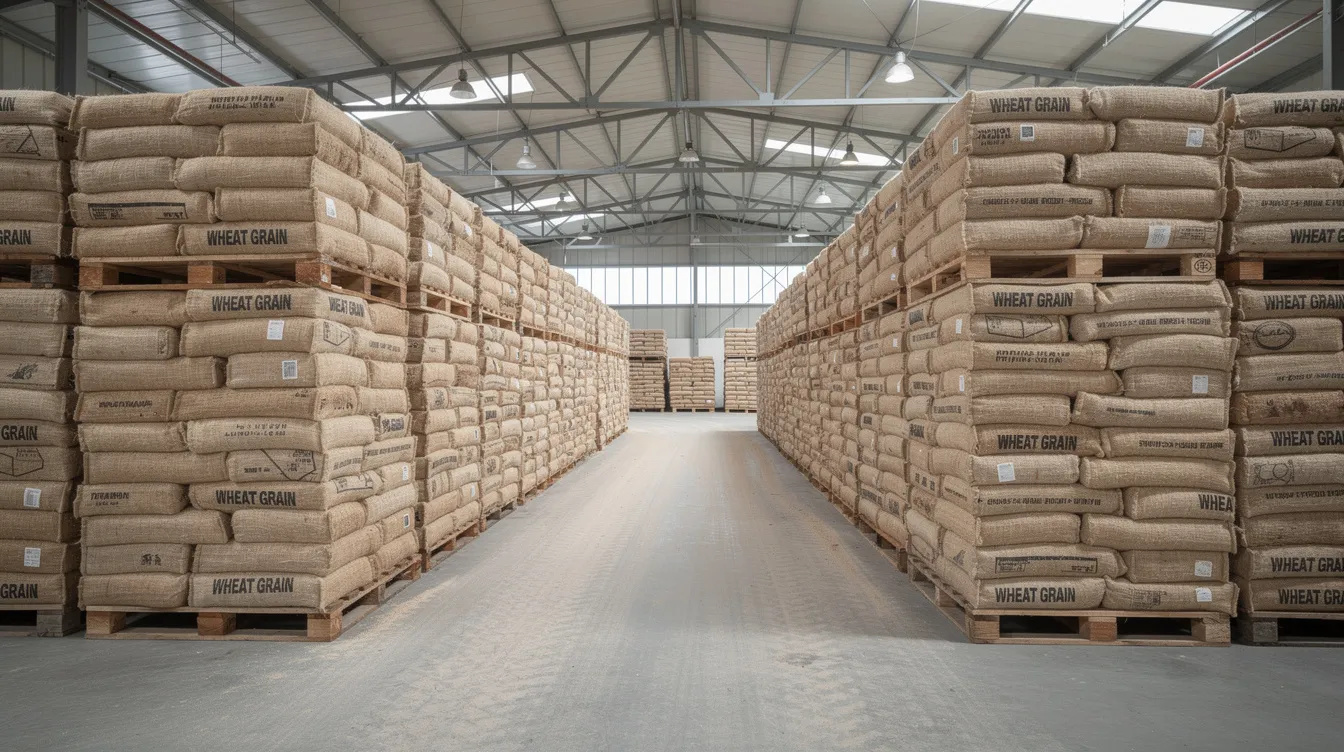
What Is the Means of Finance for a Maida & Suji Plant?
Means of finance is the funding structure that must exactly match the cost of project. It comprises promoter equity, bank term loan, unsecured loans and other eligible sources. A maida suji plant capital structure that is balanced and realistic strengthens the bank finance proposal.
Table 3: Illustrative Means of Finance for 100 TPD Plant (₹1,500 Lakh Project)
| Source | Amount (₹ Lakh) | Share (%) |
|---|---|---|
| Promoter Equity / Own Funds | 450 | 30% |
| Bank Term Loan | 900 | 60% |
| Unsecured Loans (Quasi-Equity) | 100 | 7% |
| Subsidy (if eligible) | 50 | 3% |
| Total | 1,500 | 100% |
Hypothetical illustration. Actual shares depend on lender norms and promoter profile.
Promoter Equity Contribution
Banks typically expect a minimum of 25–35% of total project cost as promoter contribution for a maida suji manufacturing plant investment. Equity should be documented own funds – share capital, internal accruals or acceptable subordinated loans – not short-term borrowings disguised as equity.
Higher genuine promoter contribution improves lender comfort, allows a better debt-equity ratio and strengthens the overall capital structure.
Bank Term Loan
The bank term loan is the primary long-term debt component funding eligible fixed capital investment and working capital margin. Typical wheat milling plant term loans have 6–10 year repayment tenures with a moratorium period of 6–12 months during construction and trial runs.
Term loan assessment is supported by a detailed project report, financial projections, CMA Data and a project feasibility study – not just machinery quotations. Licenses and regulatory approvals are also essential for lender comfort.
Unsecured Loans and Subordinated Funding
Unsecured loans from promoters or group entities can support the equity base when properly documented and subordinated to bank debt. Banks may treat such loans as quasi-equity while calculating the debt-equity ratio, but high-cost unsecured loans increase finance charges and can depress DSCR.
Practical Insight from CA Manish Gugliya: Lenders focus heavily on the stability and non-withdrawal of subordinated funds throughout the loan tenure. A clear subordination agreement and non-withdrawal clause are non-negotiable requirements.
Other Eligible Sources of Project Funding
Government support programs provide subsidies for capital costs when setting up food processing units. State-level agro-processing incentives and interest subvention schemes may also be available. However, subsidies are typically reimbursed after commissioning and cannot fully replace promoter equity at project inception. By-products like bran can serve as feed stock for compound feedstuffs or even ethanol production, creating additional revenue sources that improve project viability.
Eligibility and terms change over time and must be verified against current government notifications.
Capital Structure Planning for a Maida & Suji Manufacturing Plant
A balanced maida suji plant capital structure directly affects risk, loan eligibility, interest burden and long-term viability. The core elements are equity (promoter capital), long-term borrowings (term loan and acceptable unsecured loans) and their combined effect on project funding.
Table 4: Capital Structure Comparison (₹1,500 Lakh Project)
| Parameter | Scenario A (Conservative) | Scenario B (Aggressive) |
|---|---|---|
| Promoter Equity | ₹525 lakh (35%) | ₹300 lakh (20%) |
| Term Loan | ₹900 lakh | ₹1,125 lakh |
| Unsecured Loans | ₹75 lakh | ₹75 lakh |
| Debt-Equity Ratio | 1.5:1 | 3.2:1 |
| Annual Interest (est. @ 12%) | ₹108 lakh | ₹135 lakh |
Scenario A provides greater repayment comfort. Scenario B maximises leverage but increases annual interest burden by ₹27 lakh and raises debt-equity beyond levels many banks accept.
Practical Insight from CA Manish Gugliya: Promoters should think beyond the maximum loan amount and focus on sustainable repayment capacity. A project that survives wheat price shocks and demand slowdowns is more valuable than one structured for maximum short-term leverage.
Debt-Equity Ratio and Promoter Margin – Practical Calculation
Debt-Equity Ratio = Relevant Debt / Relevant Equity
Banks typically include term loan and long-term unsecured borrowings under “debt” and promoter equity plus acceptable quasi-equity under “equity.” Acceptable ranges for food processing projects are often 1.5:1 to 2:1, with some banks permitting up to 3:1 under favourable conditions.
Promoter Contribution = Total Project Cost − (Term Loan + Subsidy + Other Accepted Sources)
Example: If total project cost is ₹2,500 lakh, bank term loan is ₹1,600 lakh, and expected subsidy is ₹100 lakh, then promoter contribution = ₹800 lakh (32%). The resulting debt-equity ratio = ₹1,600 / ₹800 = 2:1.
Banks may have their own internal norms. The project report must align with bank-specific definitions.
Working Capital Requirements and Financing Structure
Maida suji processing requires substantial working capital because wheat procurement constitutes the largest recurring operational expense for flour production. Understanding the manufacturing process and flow helps estimate process-wise inventory holding and conversion cycles.
Raw Wheat Inventory Financing
Many mills procure wheat in bulk during harvest, holding 20–30 days of stock. At 100 TPD capacity running 25 days per month, daily wheat consumption is approximately 100 tonnes. At ₹22,000 per tonne, 25 days of raw wheat stock is valued at approximately ₹5.50 crore. This is typically the largest working capital component.
Finished-Goods Inventory
Finished stock includes maida, suji, atta and bran. Packaging and distribution costs are vital considerations. Assuming 7–15 days of finished goods, this adds ₹1–2 crore to inventory funding. Branded or packaged products may require higher stock levels. Better sales planning and faster dispatch reduce holding days. For strategies on bran monetisation, refer to Wheat Bran Processing & Value Addition Project Report.
Trade Receivables
Credit terms to wholesalers and bakeries typically range from 15–45 days. At projected monthly sales of ₹4–5 crore, receivables can easily reach ₹2–4 crore. Aggressive credit policies increase demand but also increase funding needs and consumer preferences shape credit terms in the market.
Trade Credit and Operating Liabilities
Suppliers of wheat and packing material may offer 7–15 days of credit, partially offsetting gross working capital needs. Other liabilities like wages payable and statutory dues further reduce the net requirement. Optimistic assumptions on creditor days should be avoided.
Cash Credit and Working Capital Facilities
Cash credit is a revolving bank facility financing the bank-funded portion of working capital. Only the promoter’s margin goes into cost of project; the bank CC limit is shown separately. Project Report Bank can assist with CMA Data preparation to reconcile these numbers properly.
Table 5: Working Capital Requirement (Hypothetical 100 TPD)
| Component | Days | Value (₹ Lakh) |
|---|---|---|
| Raw Wheat Stock | 25 | 550 |
| Finished Goods (maida, suji, atta, bran) | 10 | 150 |
| Packing Materials & Consumables | 15 | 30 |
| Trade Receivables | 30 | 400 |
| Gross Working Capital | 1,130 | |
| Less: Trade Payables | 10 | (180) |
| Net Working Capital Requirement | 950 | |
| Bank CC Funding (~75%) | 712 | |
| Promoter Margin (~25%) | 238 |
Promoter margin of ₹238 lakh is included in Cost of Project. CC limit of ₹712 lakh is separate.
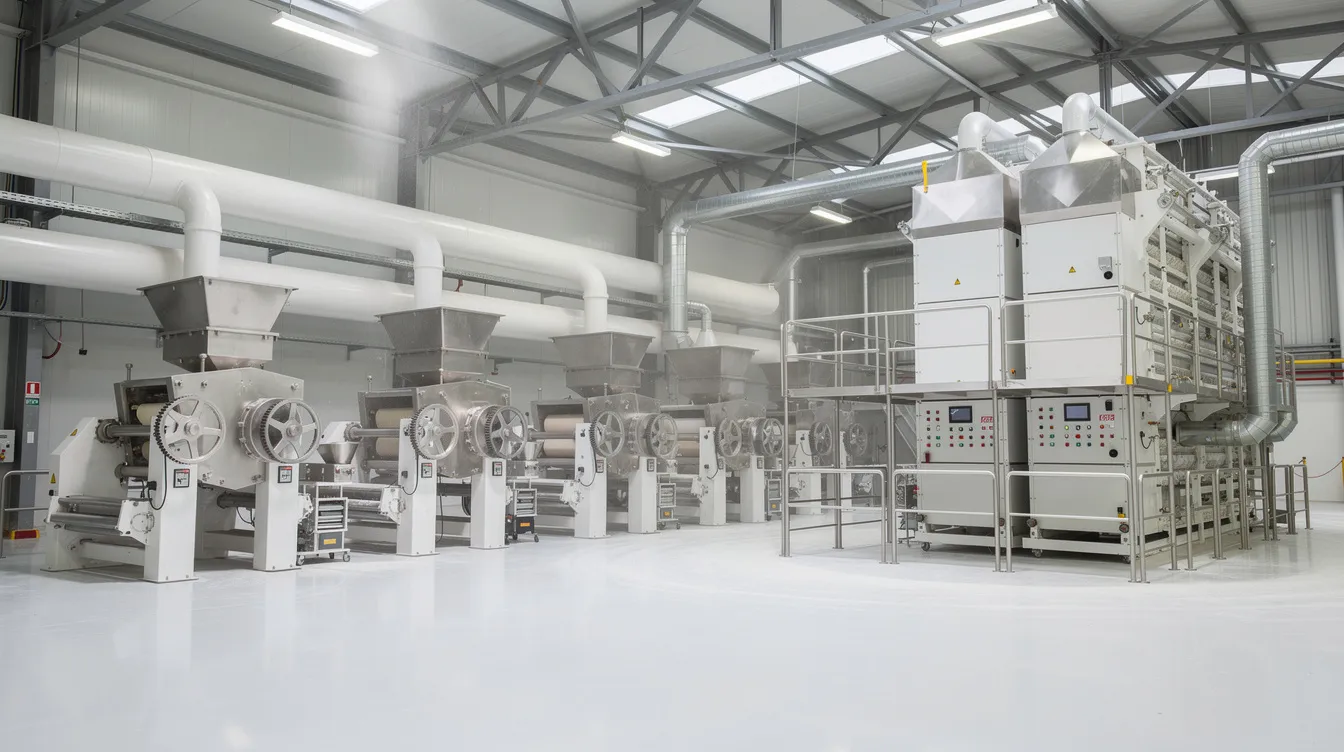
Bank Loan Financing for a Maida & Suji Manufacturing Plant in India
Banks appraise new maida suji plant bank loan financing proposals by examining multiple dimensions:
- Promoter background, net worth and financial contribution
- Industry experience and technical capability
- Land documentation, legal clearances and zoning compliance
- Machinery quotations and civil construction estimates
- Market demand, sales strategy and competitive positioning
- Projected profitability, cash flow and DSCR
- Security and collateral coverage
- Credit history and existing banking relationships
Financial models assess project feasibility and profitability for flour manufacturing initiatives. A well-prepared DPR and loan proposal – developed through bank finance DPR services – can streamline appraisal, though sanction decisions remain lender-specific.
MSME-specific financing mechanisms or credit guarantee coverage may be available depending on plant size and eligibility, but must be independently verified.
Financial Projections Required for Project Financing
Any serious maida suji plant project report for bank loan must include integrated financial projections: projected P&L (7–10 years), balance sheet, cash flow statement, term loan repayment schedule, working capital assessment, DSCR calculation, break-even analysis and capacity utilisation assumptions.
Assumptions on production, wheat cost, selling prices and power consumption must be consistent across all statements. CMA Data format is widely required by Indian banks. Professional financial projections and modelling bring rigour to these calculations and ensure financial closure readiness.
DSCR and Loan Repayment Capacity of a Maida & Suji Plant
DSCR = Cash Available for Debt Service / Total Debt Service (Interest + Principal)
Table 6: DSCR Illustration (Hypothetical Year 3 of 100 TPD Plant)
| Parameter | Amount (₹ Lakh) |
|---|---|
| EBITDA | 350 |
| Less: Tax Provision | 70 |
| Cash Available for Debt Service | 280 |
| Term Loan Interest | 96 |
| Term Loan Principal Repayment | 130 |
| Total Debt Service | 226 |
| DSCR | 1.24 |
Factors that reduce DSCR include lower capacity utilisation, higher wheat procurement prices, lower extraction yield, increased borrowing costs and longer customer credit periods. Lenders generally prefer DSCR above 1.25–1.50 on average, but thresholds vary by bank and collateral support. Starch production and protein content can affect product value and hence revenue per tonne.
Sensitivity of Project Cost and Capital Structure
Table 7: Financing Sensitivity Analysis
| Parameter | Base Case | Cost Overrun (+15%) | Low Cash Flow (−20%) |
|---|---|---|---|
| Total Project Cost (₹ Lakh) | 1,500 | 1,725 | 1,500 |
| Additional Funding Needed | – | 225 | – |
| Revised Debt-Equity Ratio | 2.0:1 | 2.6:1 | 2.0:1 |
| Average DSCR | 1.35 | 1.15 | 1.08 |
Cost overruns require additional equity or standby term loan. Lower cash flows stress repayment capacity. Conservative assumptions – slightly lower capacity utilisation, moderately higher raw materials cost – reduce the risk of future surprises.
Practical Insight from CA Manish Gugliya: Sensitivity analysis is viewed positively by lenders as it demonstrates the promoter’s awareness of risk and willingness to plan for adversity rather than present only best-case numbers.
Common Mistakes in Planning Maida & Suji Plant Finance
- Underestimating civil and electrical cost – leads to mid-project funding gaps. Corrective: obtain independent civil and electrical estimates.
- Ignoring working capital margin – creates severe liquidity stress post-commissioning. Corrective: calculate margin realistically using industry cycle days.
- Assuming bank will finance 100% of project – banks require promoter contribution of 25–35%. Corrective: arrange documented equity before applying.
- Using overly optimistic capacity utilisation – inflates profitability and DSCR. Corrective: assume gradual ramp-up (60–70% in year one).
- Ignoring wheat price volatility – disrupts margins and cash flow. Corrective: build price sensitivity into projections.
- Not providing for IDC – understates total project cost. Corrective: calculate IDC based on realistic disbursement schedule.
- Double counting working capital and CC limit – inflates both project cost and means of finance. Corrective: include only margin money in cost of project.
- Presenting unsupported financial projections – reduces banker confidence. Corrective: prepare a professional detailed project report with supported assumptions.
- Confusing term loan with working capital finance – distorts capital structure. Corrective: clearly segregate long-term and short-term funding in the business plan.
- Neglecting wheat storage and quality loss – affects inventory value and revenue. Corrective: invest in proper godowns or silos and factor storage costs into the project.
Documents Required for Maida & Suji Plant Bank Finance
- Promoter KYC (PAN, Aadhaar, photographs)
- Business constitution documents (Partnership Deed, MOA/AOA, LLP Agreement)
- Existing financial statements and ITRs (for ongoing businesses)
- Detailed project report with cost of project and means of finance
- CMA Data and financial projections
- Machinery quotations and civil construction estimates
- Land ownership or lease documents with clear title certificate
- Net worth statements of promoters
- Bank statements (12–24 months)
- GST registration, FSSAI licence, pollution control consent (as applicable)
- Credit bureau reports
- Any additional documents specified by the lender
Documentation checklists differ by bank and branch. Promoters should maintain organised physical and digital files for smoother appraisal.
Role of a Detailed Project Report in Maida & Suji Plant Financing
A detailed project report integrates technical feasibility, manufacturing capacity, production assumptions, cost of project, means of finance, working capital planning, financial projections, DSCR and sensitivity analysis into a single document. It helps the promoter start with a clear understanding of the investment purpose and shape the funding proposal logically.
Project Report Bank prepares customised, CA-reviewed DPRs – distinct from generic template documents. Product-specific requirements are addressed through dedicated reports like the Maida Manufacturing Plant Project Report & DPR and Suji Manufacturing Plant Project Report & DPR.
When combined with a project feasibility study and project finance advisory, a DPR helps promoters align project scale, investment and finance structure with realistic market potential and sustainable growth.
Frequently Asked Questions
Below are practical queries entrepreneurs often raise about maida suji plant project cost, means of finance and bank loan planning.
What is a realistic timeline to implement a new maida & suji plant from planning to commissioning?
Typical phases include 2–4 months for market research, DPR preparation and finance tie-up; 3–6 months for land acquisition, civil construction and statutory approvals; and 4–8 months for machinery supply, installation and trial runs. The total window is broadly 9–18 months depending on capacity and complexity. Delays in any phase extend IDC and increase total project investment.
Can used or second-hand flour mill machinery be financed by banks for a maida suji project?
Some lenders accept quality second-hand equipment subject to independent valuation, residual technical life assessment and proper documentation. However, policies vary widely by bank. Used machinery can reduce initial cost but may affect production efficiency, maintenance expenditure and loan tenure. A careful cost-benefit study is recommended before making this decision.
How often should financial projections be revised during project implementation?
Projections should be revised at key milestones: after financial closure, upon final machinery ordering, when major cost changes occur, and just before commissioning. Updated numbers help in renegotiating repayment schedules or adjusting capital structure before problems become acute.
Is it necessary to include bran and by-product value addition in the financial model?
Yes. Bran, pollard and other by-products contribute meaningfully to revenue and working capital flows, influencing DSCR and overall profitability. Bran can be used as an ingredient in compound feedstuffs or other value-added applications. Excluding by-product revenue understates project viability, while overestimating it creates risk. Realistic realisation values based on survey data and current demand should be reflected.
Can one DPR be used for multiple banks while applying for finance?
A professionally prepared DPR can generally be shared with multiple banks, but each lender may require format adjustments, additional annexures or updated data such as latest quotations and financials. Promoters should maintain a base DPR and adapt it per each bank’s checklist, with guidance from a Chartered Accountant or project finance advisor as needed.
Conclusion – Structuring a Financially Viable Maida & Suji Plant
Successful maida suji manufacturing plant investment depends on realistic cost of project estimation, well-structured means of finance, balanced capital structure, adequate working capital margin and sustainable DSCR. Manufacturers who invest time in proper planning – rather than rushing to produce flour prior to completing financial due diligence – position their projects for healthier long-term outcomes.
Professional DPR preparation, CMA Data, financial modelling and feasibility analysis reduce surprises, support informed investment decisions and improve the quality of bank interactions. They do not guarantee loan approval, but they create a structured foundation from which promoters and lenders can evaluate the project on its merits. A well-planned unit with realistic consumption assumptions, documented machinery costs and supported revenue projections stands on stronger ground.
For customised maida and suji plant DPR, CMA Data, financial projections, project finance advisory and loan structuring tailored to your capacity, location and market plans, reach out to CA Manish Gugliya through ProjectReportBank.com – preferably via WhatsApp for faster response, or by phone.
The end goal is responsible borrowing – aligning project scale and term loan amount with realistic promoter contribution and repayment capability, so that the project grows sustainably rather than under the weight of unsustainable debt.
CA Manish Gugliya FCA, DISA (ICAI) Practising Chartered Accountant since 2006 Specialising in Industrial DPR, CMA Data, Project Finance and Financial Advisory www.projectreportbank.com