Key Takeaways
- HNI investment syndicates in India are coordinated groups of high net worth investors pooling equity commitments-often ₹5 crore to ₹50 crore-into viable manufacturing companies, typically alongside bank term loans and promoter capital.
- Before approaching any syndicate, promoters must prepare professionally documented Detailed Project Reports (DPRs) with realistic financial projections, commercial feasibility studies, valuation analysis and clear means-of-finance planning.
- Syndicate structures vary significantly: direct equity into the company via private placement, SPV-based pooling of multiple HNIs, lead-investor syndication, or co-investment alongside institutional private equity funds-each carrying distinct legal, governance and dilution implications.
- Manufacturing sectors such as specialty chemicals, food processing, engineering components, pharmaceuticals and technical textiles attract syndicated HNI investment due to tangible asset bases, capacity-driven revenue models and eligibility for bank term loans.
- Project Report Bank, led by CA Manish Gugliya, provides investor-ready DPR preparation, financial modelling, business valuation and project finance advisory for manufacturing promoters but does not guarantee investor access or funding commitments.
Introduction: HNI Syndicates & Manufacturing Equity Funding in India
Medium-to-large manufacturing projects in India-those involving ₹5 crore to ₹100 crore in total capital expenditure-require more than bank term loans. Banks typically expect promoters to bring in 25–35% of total project cost as equity before sanctioning debt. Without adequate equity, loan terms deteriorate or financing becomes unavailable altogether.
This gap between promoter resources and bank expectations is driving manufacturing companies to consider external equity sources. HNI investment syndicates in India have emerged as a practical mechanism for raising project equity without ceding majority control to a single institutional investor. These syndicates are coordinated groups of high net worth individuals and family offices that jointly invest in a manufacturing company’s equity, allowing the promoter to meet funding requirements while distributing dilution across multiple investors.
High net worth individuals typically invest in equities, real estate, and alternative investment funds as part of their broader asset allocation. HNIs may allocate 10–25% of portfolios to alternative investments, including direct equity in private companies and manufacturing ventures. A typical HNI portfolio may include 30–40% in Indian equities, with the balance spread across multiple asset classes. For promoters, this means a growing pool of capital available from investors seeking diversified investment opportunities beyond public markets and traditional financial products.
However, HNI syndicates are not a shortcut. Serious investors expect professional documentation: a detailed project report covering technical feasibility, market analysis, project cost, financial projections with DSCR analysis, and realistic valuation. The quality of this preparation directly determines the quality of investor conversations.

What Are HNI Investment Syndicates in India?
An HNI investment syndicate is a small, coordinated group of high net worth individuals who jointly evaluate and invest equity into an unlisted manufacturing company, usually through a negotiated private placement under the Companies Act. Unlike mutual funds or SEBI-registered alternative investment funds, these syndicates are typically deal-specific arrangements rather than permanently pooled vehicles.
The distinction between a single HNI Direct Equity Investment in India and a syndicated transaction is important. In direct equity investment, one HNI negotiates independently with the promoter. In syndication, a lead investor conducts primary due diligence, negotiates core terms, and then invites co-investors to participate on identical pricing and rights. Several angel syndicates in India focus on structured investment opportunities across sectors, including manufacturing.
HNIs in India typically invest ₹5 crore or more in investable assets, with ultra-high net worth individuals deploying substantially larger sums. Their investment approach differs fundamentally from retail investing-net worth individuals (HNIs) evaluate business holdings, promoter credibility, and project-specific risks before committing capital. Angel networks and syndicates pool capital for investments that individual investors might find too large or too risky to undertake alone, enabling investment diversification across opportunities.
Most syndicates operate within Companies Act private placement rules. The offer can be made to identified persons-up to 200 persons per kind of security in a financial year-with proper documentation including offer letters, board resolutions, shareholder approvals, and valuation disclosures. Syndicates provide legal structure through special purpose vehicles (SPVs) or, in some cases, SEBI-registered funds where applicable.
Practical illustration: A specialty chemicals manufacturer needs ₹8 crore equity for plant expansion. A lead HNI invests ₹3 crore after reviewing the DPR and negotiating terms. Five co-investors each contribute ₹1 crore on identical terms-same share class, same rights, same valuation. The company issues shares via private placement under Section 42, and the promoter retains majority control while fully funding the equity requirement.
How HNI Co-Investment Works for Manufacturing Projects
The co-investment lifecycle for manufacturing projects follows a structured sequence. Understanding each stage helps promoters prepare adequately and helps investors evaluate whether a project merits their capital.
Steps 1–3: Project identification and feasibility. A promoter identifies a greenfield or expansion manufacturing opportunity. Technical feasibility covers plant design, machinery specifications, capacity, raw material sourcing and regulatory approvals. Market feasibility examines demand, competition, import substitution and export potential. Total project cost is then estimated across specific heads: land, civil works, plant and machinery, utilities, pre-operative expenses, contingency and working capital margin.
Steps 4–5: Funding gap identification. With banks expecting 25–35% promoter equity, the promoter assesses available resources. For a ₹30 crore project, the promoter may contribute ₹8 crore, seek ₹7 crore from HNI investors, and obtain ₹15 crore as a bank term loan. Working capital assessment is necessary for understanding operating cash requirements beyond fixed assets.
Steps 6–7: Lead investor engagement. A lead HNI or family office reviews the DPR, assesses promoter track record, and negotiates preliminary terms-proposed valuation, share class, board rights, exit timeline. Lead investor quality affects the credibility and attractiveness of the syndicate to co-investors. Co-investors are then invited, typically relying substantially on the lead investor’s assessment and the professional advisory documentation.
Steps 8–9: Due diligence and documentation. Investors review historical financials, tax returns, existing liabilities, customer contracts and order book. Legal documentation includes private placement offer letters (Form PAS-4), valuation reports, shareholder agreements, and compliance filings. This process mirrors Private Equity Due Diligence for Manufacturing Companies, though scaled to deal size.
Step 10: Capital deployment. Equity commitment may be disbursed in tranches-some upfront, others upon achieving milestones such as machinery procurement or plant commissioning. The distinction between investment committed by HNIs and capital actually received by the company is critical for project planning. Institutional investors may follow a formal Private Equity Investment Committee Approval Process, whereas HNI syndicates typically use simpler approval mechanisms.
Professionally prepared DPRs with sensitivity analysis and clear means-of-finance planning help both promoters and co-investors make informed decisions throughout this lifecycle.
Types of HNI Investment Syndicate Structures
HNI syndicates adopt various transaction structures depending on deal size, investor count and governance preferences.
Direct HNI equity co-investment: Each HNI appears directly on the company’s cap table, receiving shares via private placement. This works well for small groups of fewer than ten investors and raises of ₹5–₹20 crore.
Lead-investor syndication: One experienced HNI or family office negotiates terms, and smaller investors follow on identical pricing. This reduces negotiation complexity and leverages the lead’s reputation and due diligence capability.
SPV or LLP pooling: Multiple HNIs invest into a single SPV (private limited company or LLP), which then invests as one entity into the manufacturing company. This simplifies the cap table but requires internal governance agreements among SPV investors.
Strategic and financial investor combinations: An industry player may lead the round for supply chain or commercial synergy, with allied HNIs co-investing. Different investors may negotiate distinct rights or board representation based on contribution size, reflecting the difference between Minority vs Controlling Private Equity Investment.
Convertible instruments: Compulsorily convertible debentures (CCDs) or preference shares may be used for downside protection and flexible conversion. Legal structuring is mandatory.
Co-investment alongside institutional PE: HNIs invest directly or through an SPV parallel to a private equity fund, accessing larger deals with institutional credibility.
| Structure | Typical Use Case | Key Advantages | Key Risks / Complexity | Compliance Considerations |
|---|---|---|---|---|
| Direct equity co-investment | Small groups, ₹5–₹20 crore raises | Transparent ownership, direct rights | Cap table complexity with many investors | Private placement rules, allottee limits |
| Lead-investor syndication | Speed-sensitive transactions | Efficient negotiation, leveraged reputation | Dependence on lead’s assessment | Equal terms documentation required |
| SPV / LLP pooling | Many small HNIs, simplified governance | Single cap table entry, pooled decisions | Internal SPV governance, return allocation | Separate shareholder and SPV agreements |
| Convertible instruments | Risk mitigation, structured downside | Dividend/liquidation preference, flexibility | Complex negotiation, conversion disputes | Valuation of CCD/CCPS, FEMA if foreign |
| PE co-investment | Institutional-led growth rounds | Credibility, larger deal access | Institutional terms may dominate | AIF regulation if via fund, harmonised terms |
Manufacturing Industries Suitable for HNI Syndicated Investment
Manufacturing attracts HNI co-investment because it offers tangible assets, capacity-based revenue models and eligibility for bank term loans that amplify equity capital. HNI investment strategies in manufacturing focus on projects where asset quality, promoter experience and market demand create identifiable paths to cash flow generation and eventual exits.
- Agro and food processing: Projects involving value addition (grading, packaging, freezing) with typical sizes of ₹15–₹40 crore. Demand driven by domestic consumption and cold chain gaps. Margins moderate; perishability and quality compliance are key risks.
- Industrial packaging: Automated packaging units for FMCG and e-commerce with project sizes of ₹20–₹50 crore. Reliable cash flows but raw material price volatility creates margin pressure.
- Specialty chemicals: Asset-intensive with stringent environmental approvals. Project scales of ₹30–₹100 crore. High margins possible but subject to global price cycles. Investors prefer strong technical promoters with identifiable export orders.
- Engineering and auto components: Attractive where distinctive technology or dedicated offtake exists. Project costs ₹25–₹70 crore. OEM certification timelines can extend gestation periods.
- Pharmaceuticals: API and formulation manufacturing requiring high regulatory compliance. Capex often exceeds ₹50 crore. Stable demand but significant quality and regulatory risk.
- Textiles and technical textiles: Vertically integrated units with ₹20–₹60 crore project sizes. Strong export potential. Labour compliance and supply chain consistency are critical.
- Export-oriented units: Across sectors, units focused on export benefit from government incentives and foreign currency pricing, though they face currency risk and demand volatility.
- Renewable energy equipment: Module and storage system manufacturing with ₹30–₹80 crore capex. Rising demand from policy push but technology obsolescence risk exists.
Across all sectors, HNIs invest based on promoter track record, technology maturity, raw material availability, regulatory requirements and potential for future private equity or strategic exits.
HNI Syndicate Investment – Illustrative ₹20 Crore Manufacturing Project
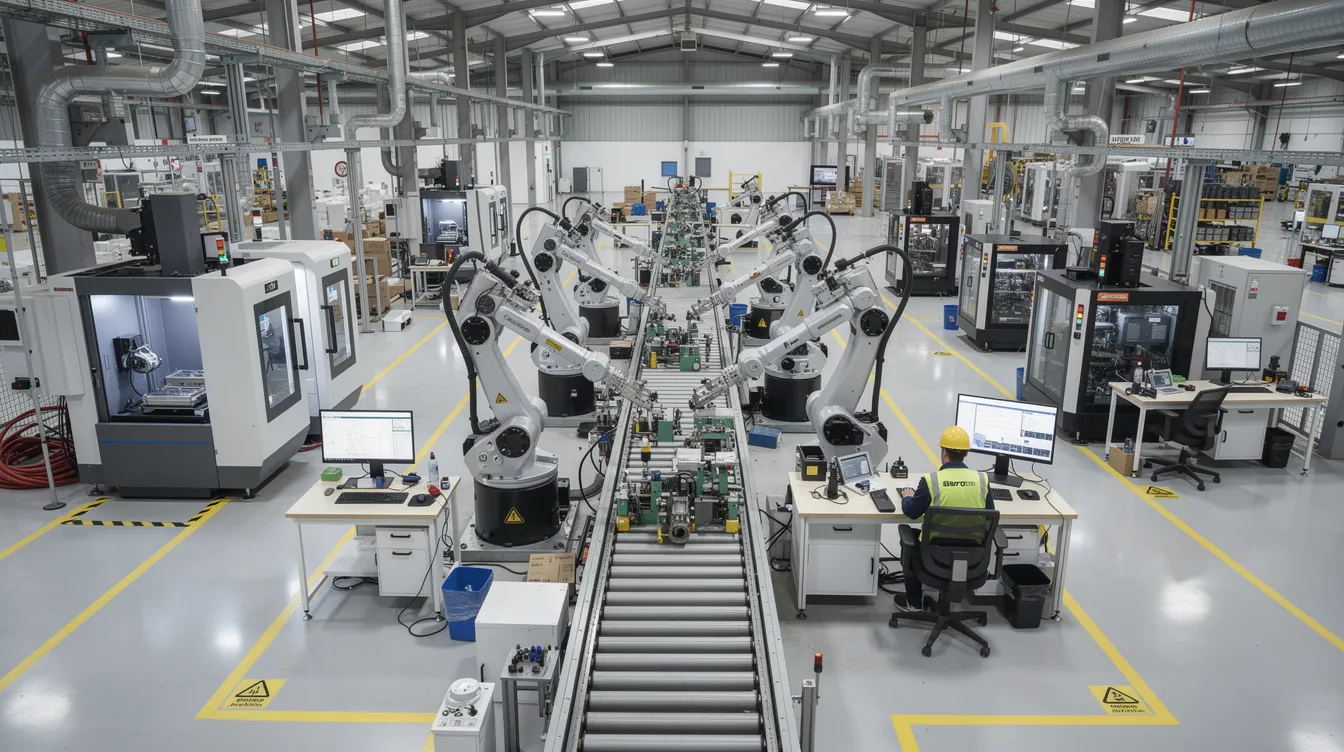
Consider an entirely illustrative example of an engineering components plant in an industrial area in Gujarat with a total project cost of ₹20 crore.
Illustrative Project Cost Breakdown
| Component | Amount (₹ Crore) |
|---|---|
| Land development / lease premium | 1.50 |
| Factory building and civil works | 3.50 |
| Plant and machinery | 10.00 |
| Utilities (power, water, pollution control) | 1.50 |
| Pre-operative expenses and contingency | 1.50 |
| Working capital margin | 2.00 |
| Total Project Cost | 20.00 |
Illustrative Means of Finance
| Source | Amount (₹ Crore) | Proportion |
|---|---|---|
| Promoter equity | 6.00 | 30% |
| HNI syndicate equity | 4.00 | 20% |
| Bank term loan | 10.00 | 50% |
| Total | 20.00 | 100% |
Illustrative Valuation and Ownership
Suppose the promoters value the existing business at ₹16 crore pre-money. The HNI syndicate invests ₹4 crore in primary equity, resulting in a post-money valuation of ₹20 crore. The resulting capitalisation:
| Shareholder | Pre-Investment | Post-Investment | Ownership |
|---|---|---|---|
| Promoters | ₹16 crore (100%) | ₹16 crore | 80% |
| HNI syndicate | – | ₹4 crore | 20% |
| Total | ₹16 crore | ₹20 crore | 100% |
This is a Primary vs Secondary Share Sale in Private Equity transaction-the ₹4 crore goes into the company for project implementation, not to promoters.
Illustrative financial indicators (assumptions only): Revenue ramp-up from 50% capacity in Year 1 to 80% by Year 3. EBITDA margin range of 16–20%. DSCR band of 1.4x–1.8x on the term loan. Payback period of approximately 5–6 years.
Key risks: Cost overruns on machinery and civil works, delayed commissioning, lower-than-expected capacity utilisation, and working capital shortages during ramp-up. Sensitivity analysis in a professionally prepared DPR evaluates how these stress scenarios impact cash flows, DSCR and returns for both banks and investors.
Benefits of HNI Co-Investment for Manufacturing Promoters
HNI co-investment is not a substitute for project feasibility or bank finance. It is a complementary source of risk capital that can strengthen the balance sheet and support growth equity requirements.
Key benefits include access to multiple equity investors, enabling raises of ₹3–₹20 crore without necessarily diluting majority control. Private equity investments can yield higher returns than traditional assets, which motivates HNIs to participate in manufacturing ventures where tangible asset backing and capacity-driven cash flows exist. Diversification helps mitigate risks associated with concentrated investments, and for investors, manufacturing co-investment offers a different risk-return profile compared to listed equities or real estate.
A well-structured syndicate can help meet equity requirements for large term loans, improving the company’s gearing and DSCR profile. A well-diversified portfolio balances growth and stability-this principle applies equally to the manufacturing company’s capital structure and to the HNI investor’s overall HNI portfolio and asset allocation across investment options.
Softer benefits include board-level advisory support, introductions to customers or export markets, and credibility in subsequent fundraising rounds. Diversification is crucial for long term wealth creation and wealth preservation, giving HNIs motivation to participate across manufacturing sectors.
However, promoters should recognise the challenges: more shareholders to manage, higher expectations on governance and reporting, structured MIS requirements, and potential differences of opinion. Co-investment does not automatically reduce cost of capital or guarantee higher valuations-outcomes depend on project performance and market cycles.
Financial Due Diligence and Investor Readiness
Serious HNI syndicates review historical financials, GST returns, income-tax returns, loan statements and past project execution track records before committing capital. Cash flow analysis is essential for assessing a company’s financial stability and future capacity. Risk profiles combine risk tolerance, capacity, and perception-investors assess not just financial metrics but also their own comfort with manufacturing execution risk.
Key financial due diligence areas include revenue stability, customer concentration, gross margin trends, EBITDA quality, existing bank borrowings, security offered and contingent liabilities. Quantitative methods include volatility analysis and Value at Risk applied to projected financial scenarios. Professional assessments enhance risk profile accuracy for high net worth investors evaluating manufacturing opportunities.
Project-specific feasibility covers machinery quotations, plant layout, implementation schedule, statutory approvals, environmental clearances and assumptions behind capacity utilisation and selling prices. Self-assessment questions help investors gauge personal risk comfort with specific manufacturing sectors and project timelines.
Projected financial statements should cover at least 7–10 years with DSCR, IRR and NPV analysis under base, optimistic and conservative scenarios. Sensitivity analysis tests how different values of an input-such as capacity utilisation, raw material prices or interest rates-will impact a project’s outcome. Profitability analysis helps evaluate the potential success of a project alongside cash flow sustainability.
An investor-ready DPR from Project Report Bank typically consolidates technical study, market analysis, cost estimates, means of finance, sensitivity analysis and risk assessment into a single professional document. Promoters should understand How to Get Investors and Raise Equity Funding in India and prepare accordingly.
Manufacturing Company Valuation and Equity Dilution
Business valuation is important for determining the worth of a manufacturing company before investment. Pre-money valuation represents the company’s agreed value before new capital enters. Post-money valuation equals pre-money plus the investment amount.
HNI investors typically consider earnings multiples based on normalised EBITDA, discounted cash flow analysis using projected free cash flows, and sometimes asset-based valuation where capacity utilisation is uncertain. The investment amount, valuation methodology and negotiated terms determine ownership percentages.
Example: Promoters own 100% of a company valued at ₹40 crore pre-money. An HNI syndicate invests ₹10 crore in primary equity at that valuation. Post-money valuation becomes ₹50 crore. The syndicate receives 20% ownership (₹10 crore / ₹50 crore), and promoters retain 80%.
As investor shareholding increases, so do governance expectations-board seats, veto rights on reserved matters, and information rights. Shareholders’ agreements typically address anti-dilution, tag-along and drag-along rights, dividend policy and exit mechanisms. Promoters should obtain specialised legal advice before executing any such agreement.
Indian Legal and Regulatory Framework
HNI investment syndicates dealing with unlisted manufacturing private companies primarily operate within the Companies Act, 2013, FEMA (where non-residents are involved) and income-tax law. In specific cases, SEBI regulations apply.
Key Companies Act provisions govern private placement and preferential allotment: board and shareholder approvals, private placement offer letters, caps on the number of allottees per offer, and mandatory filing requirements. Non-compliance can lead to the issue being treated as a public offer, penalties, and mandatory refund with interest. Regulatory compliance under SEBI is crucial for angel funds and syndicates in India where pooled investment structures are involved.
SEBI regulations apply mainly where pooled vehicles are involved. Portfolio management services cater to high net worth individuals and are regulated by the Securities and Exchange Board of India (SEBI). PMS allows diversification across asset classes and sectors and provides tailored investment solutions managed by professional fund managers. HNIs often prefer portfolio management services for customized HNI investment strategies, though PMS is distinct from direct manufacturing co-investment.
Alternative investment funds require a minimum investment of ₹1 crore for participation. AIFs provide access to exclusive investment opportunities beyond traditional markets and public markets, can invest in diverse asset classes including private equity and real estate, and are regulated by SEBI to ensure compliance and investor protection. AIFs are SEBI registered entities with defined investment mandates. Informal HNI clubs must avoid operating like unregistered collective investment schemes.
For non institutional investors who are NRIs or foreign entities, FEMA rules on non-debt instruments apply-sectoral caps, pricing guidelines, KYC and reporting norms must be followed. Cross-border syndicates require case-specific legal review.
At a conceptual level, capital gains tax on unlisted shares, dividend taxation at shareholder level, and tax implications of buyback or secondary transfers all affect investor returns and tax efficiency. Investors should review all the related documents carefully and consult qualified tax and legal professionals. Succession planning considerations may also apply for family office investors with long time horizon commitments.
Regulations change, and every HNI syndicate or SPV structure should be reviewed by qualified legal advisors before execution.
Risks and Challenges in HNI Investment Syndication
While syndication unlocks capital, it introduces complexity. Risk tolerance reflects emotional responses to market volatility, and manufacturing investments test investor patience during project implementation. Risk capacity measures liquidity needs and financial obligations-investors must ensure that capital committed to illiquid manufacturing equity does not compromise their liquidity risk management.
Deal-level risks include failure to reach final valuation agreement, partial commitments leaving funding gaps, and delays in documentation impacting project timelines. Early-stage investments in private businesses are typically illiquid with long horizons before returns, and manufacturing ventures particularly so given commissioning timelines.
Project execution risks specific to manufacturing include cost overruns, technology issues, regulatory delays, raw material price volatility and weaker-than-expected demand affecting DSCR and returns. Market risks in specific sectors can be amplified by global exposure to commodity cycles or currency fluctuations. Angel investing is characterised by a power-law distribution of returns-manufacturing syndication, while more asset-backed, still involves higher risk than fixed income or capital preservation strategies.
Governance risks include differences between lead and co-investors, challenges in decision-making for major corporate actions, and conflicts between promoter objectives and investor return timelines. Regulatory risk arises from non-compliance with private placement rules or securities market regulations.
Liquidity risk and exit risk remain significant-absence of active secondary markets for unlisted manufacturing equity, dependence on strategic buyers for exits, and potentially longer holding period than initially expected.
Mitigation strategies: Robust DPR with sensitivity analysis, conservative assumptions, clear shareholder agreements, periodic MIS and board oversight, risk management frameworks, and realistic exit discussions at the time of investment.
Exit Strategies for HNI Syndicate Investors
Exit planning should begin at the time of structuring the investment, even though actual exit may occur 5–8 years later. Private equity investments often have longer holding periods than stocks, and manufacturing ventures typically require extended periods to stabilise and create exit value. Detailed considerations are discussed in Private Equity Exit Strategies in India.
Strategic sale: A larger industry player acquires a majority stake and buys out HNI investors at negotiated valuations. This is often the preferred route for manufacturing businesses with established customer bases and tangible assets.
Secondary share sale: An incoming private equity fund takes over part or all of the syndicate’s stake in a growth round, providing liquidity to early investors while enabling continued business expansion.
Promoter buyback: Where legally permissible and financially viable under Companies Act and income-tax rules, promoters may repurchase investor shares. This depends on company cash flows and liquid assets availability.
IPO: Sufficiently scaled and profitable manufacturing companies may consider public listing. However, IPOs require rigorous eligibility assessment, merchant banking support and SEBI processes. They are not assured outcomes.
Shareholder agreements may include contractually negotiated put/call options, tag-along and drag-along rights, but enforceability must be guided by experienced legal counsel. Wealth management and wealth creation objectives should align with realistic exit timelines rather than optimistic assumptions about venture capital-style returns.
Importance of an Investor-Ready DPR for HNI Co-Investment
Serious HNI syndicates insist on professionally prepared DPRs rather than informal spreadsheets, especially for projects above ₹10–₹15 crore. Preparation of Detailed Project Reports is essential for bank financing and investments alike. Financial modelling is a critical service in project finance and feasibility analysis, supporting both bank appraisals and investor evaluations.
Core components of an investor-ready manufacturing DPR include technical feasibility, plant layout and machinery selection, market and demand analysis, project cost estimation, implementation schedule and risk assessment. Project feasibility studies evaluate the viability of investment decisions by examining whether projected revenues, margins and cash flows justify the proposed investment amount.
The DPR should present a clear means-of-finance plan-promoter equity, proposed HNI syndicate equity, bank term loan, working capital limits and any government incentive envisaged. Financial projections should cover at least 7–10 years with revenue forecasts, operating costs, depreciation, interest, tax and resulting profitability. DSCR, project IRR and equity IRR calculations are standard requirements.
Investor pitch decks are vital for attracting funding alongside the detailed DPR, presenting a concise investment avenue narrative with key financial goals, risks and return expectations.
How ProjectReportBank.com Supports Manufacturing Equity Funding
Project Report Bank provides professional advisory services for manufacturing companies planning to raise ₹5–₹100 crore through bank term loans and equity, including HNI syndicates. The practice focuses on helping promoters explore Growth Equity Funding for Manufacturing Companies with professionally prepared documentation.
Key offerings include investor-ready DPR preparation with 10-year financial projections, DSCR analysis, IRR analysis, CMA data for bank loans and comprehensive project feasibility studies. Each engagement is customised to the specific manufacturing project rather than based on generic templates.
Business valuation services help manufacturing promoters establish realistic valuation ranges for negotiations with HNIs, family offices and private equity funds. Business plans and investor pitch decks are prepared specifically for manufacturing funding discussions, including co-investment and syndicate scenarios, supporting informed decisions by all parties.
Project Report Bank acts as a professional advisor and documentation partner. The practice does not promise capital mobilisation, guaranteed introductions to HNI syndicates or assured investment approvals. The information published is for educational and informational purposes, and all investor profiles, financial assumptions and investment products should be evaluated independently.
Planning to Raise Equity Funding for a Manufacturing Project?
Manufacturing promoters planning greenfield plants or major capacity expansion requiring ₹5 crore to ₹100 crore in combined bank finance and equity should consider engaging professional advisory support early. Proper DPR preparation, financial modelling, project cost assessment and capital-structure planning improve the quality of discussions with both banks and potential HNI or private equity co-investors.
If you are evaluating a manufacturing project and need investor-ready documentation, financial projections, CMA data or business valuation, you may explore Project Report Bank’s advisory services. Initial discussion can be initiated through the website’s WhatsApp contact option. This conversation is advisory in nature-not a funding guarantee or solicitation.
CA Manish Gugliya, FCA, DISA (ICAI) Chartered Accountant www.projectreportbank.com

Frequently Asked Questions
The following questions address additional practical matters about HNI investment syndicates and co-investment in Indian manufacturing that may not be fully covered in the preceding sections.
What minimum project size is suitable for HNI investment syndicates in manufacturing?
Syndicates typically look at combined equity cheques of at least ₹3–₹5 crore, corresponding to total manufacturing project sizes of approximately ₹15–₹25 crore and above. Minimum ticket sizes for syndicate investments range significantly between platforms and investor groups. Smaller projects may attract one or two HNIs through direct equity rather than syndication, while larger projects above ₹50 crore often combine bank loans, HNI syndicates and possibly institutional private equity. The minimum investment threshold varies based on investor risk appetite, sector preferences and project characteristics.
How long do HNI syndicate investors usually stay invested in a manufacturing company?
Typical holding periods are medium to long term, often 5–8 years, because manufacturing projects need time to stabilise operations, ramp up capacity utilisation and create meaningful exit opportunities. Actual timelines depend on project performance, industry market cycles and availability of strategic buyers or private equity entry. Unlike investments in the securities market or international equities, manufacturing co-investments do not offer daily liquidity. Investors should plan for global investments across their portfolio to maintain adequate liquidity needs management and maintaining diversification alongside illiquid manufacturing holdings.
Can HNI syndicate equity be combined with bank term loans and working capital limits?
Most manufacturing capital structures in India combine promoter equity, HNI or private equity capital and bank term loans, with additional working capital limits for inventory and receivables. Banks generally view adequately capitalised projects with diversified equity sources positively, provided DSCR and collateral coverage are satisfactory. The combination allows promoters to diversify portfolios of funding sources while managing overall financial assets efficiently through appropriate capital structuring.
How is an HNI syndicate different from an Alternative Investment Fund (AIF)?
An HNI syndicate is usually a deal-specific group investing directly or through an SPV into one company under Companies Act provisions. An AIF is a SEBI-registered pooled investment vehicle with a defined investment strategy, tenure and regulatory oversight. AIFs raise commitments upfront and deploy across multiple deals under a fund mandate managed by professional fund managers, while HNI syndicates are often assembled deal-by-deal. Each model has different governance, fee and compliance frameworks. The exchange board regulates AIFs under specific alternative investment regulations, whereas HNI syndicates operate under general corporate law within defined compliance boundaries.
Do manufacturing companies need audited historical financials before approaching HNI syndicates?
For expansion projects, at least three years of audited financial statements, tax filings and bank statements are normally expected by serious HNI investors, as these support due diligence and valuation. Investor profiles vary, but high net worth investors with significant financial goals and global diversification objectives tend to demand rigorous documentation. For new greenfield projects without operating history, investors focus more on promoter track record, business plan quality, DPR preparation and net worth evidence. In both cases, related documents carefully prepared by professional advisors significantly improve credibility and support investment decisions based on demonstrated project viability rather than promotional narratives.