
Key Takeaways
HNI investor return expectations in India are shaped by a combination of expected IRR, dividend income, capital appreciation, perceived business risk, and the credibility of the exit strategy. For manufacturing and industrial projects, these expectations are anchored in real cash flows rather than promotional projections.
- Promoters must align equity valuation, dividend policy, and exit rights with realistic project economics. An investment proposal built around what a promoter “needs to raise” rather than what the business can deliver will not survive serious investor scrutiny.
- HNI investors in Indian private companies typically focus more on long-term capital appreciation combined with a credible, well planned exit strategy than on high early dividends. Periodic dividends serve as a comfort factor, not the primary return driver.
- A professionally prepared investor-ready DPR, integrated financial model, and exit planning framework significantly improve the quality of funding discussions and strengthen investor confidence. Project Report Bank, led by CA Manish Gugliya, FCA, DISA (ICAI), specialises in this advisory work for manufacturing and industrial projects.
- All IRR, ROI, and MOIC figures discussed in this article are purely illustrative. Promoters must not promise fixed or guaranteed returns on equity investments.
Introduction – Understanding What HNI Investors Expect
When a manufacturing promoter approaches a high net worth individual for equity funding, the conversation quickly moves beyond simple profit-sharing percentages. Sophisticated HNI investors evaluate an investment through several simultaneous lenses: what is the expected IRR over the holding period, what dividends might be paid during that period, what capital appreciation can the business create, and – critically – how and when can the investor convert that value back into money through a realistic exit.
High net worth individuals in the Indian context generally refer to investors with deployable capital of ₹5 crore or more, capable of making direct equity commitments in private companies. These investors are fundamentally different from banks, which evaluate repayment capacity and security, and from small angel investors, who often accept higher risk for potentially transformative returns. HNI investors seek exclusive investment opportunities that balance risk with meaningful returns and a degree of capital protection. A well-structured portfolio for such investors typically balances risk across asset classes including equities, bonds, real estate, and alternative investments like private equity.
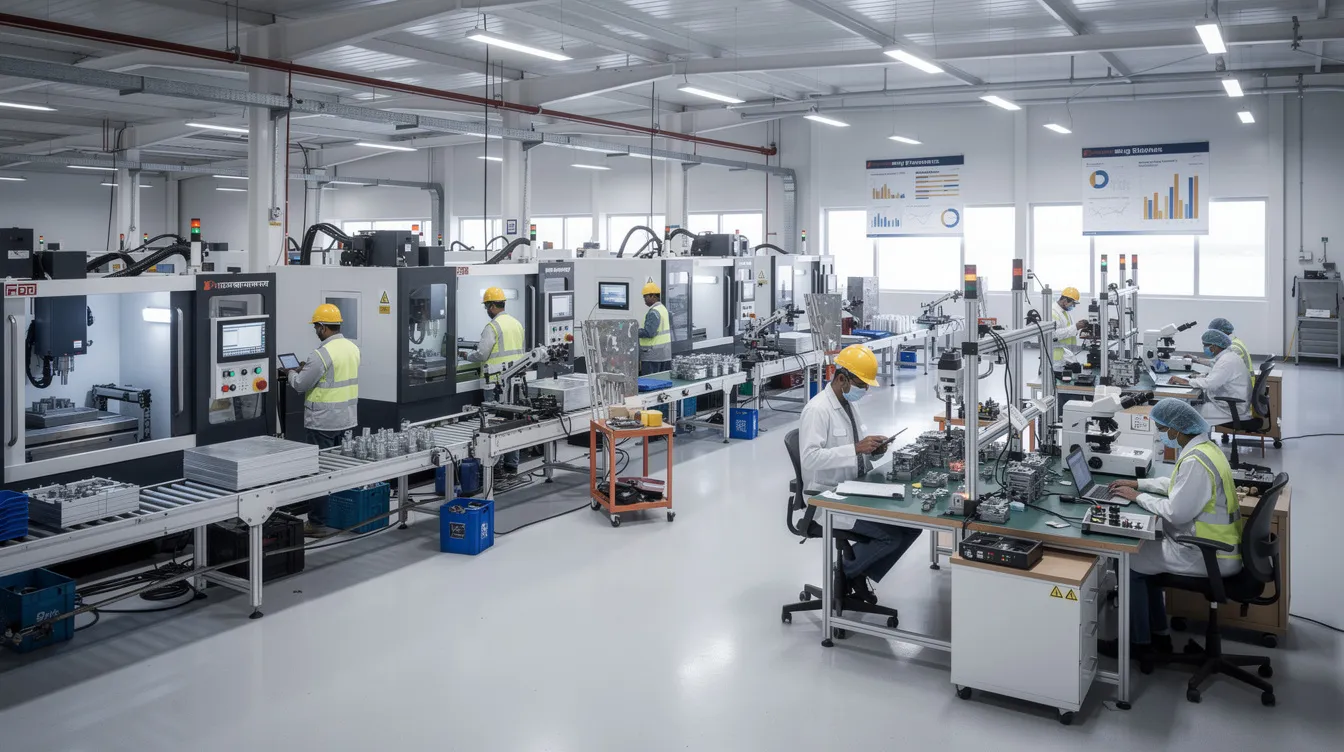
Manufacturing and capital-intensive industrial projects – steel fabrication units, food processing plants, engineering component manufacturers – require patient capital. Unlike technology startups where value creation can sometimes be rapid, manufacturing businesses build value through sustained operational performance, capacity utilisation, and market development over several years. This makes clarity on holding periods, dividend capacity, and exit mechanisms particularly important.
This article examines three core pillars: return expectations (IRR, ROI, MOIC), dividend policy (income versus reinvestment), and exit planning (practical exit strategies in Indian private limited companies). It is written from the professional perspective of CA Manish Gugliya, project finance and investment advisory specialist, aimed at promoters planning to raise equity funding in India in the range of ₹5 crore to ₹100 crore or more.
HNI Investor Return Expectations in Indian Businesses
There is no single “standard” return number for HNI investment returns in India. Expectations vary based on the industry, business stage, promoter quality, financial leverage, and the liquidity of the investment. What can be said is that private equity investments typically have longer holding periods than public equity, and private equity offers higher return potential due to illiquidity premiums. HNIs may allocate 10% to 25% of their portfolio to private equity, treating it as a distinct asset class from public markets that helps reduce over-exposure to market sentiment.
Before examining ranges, it helps to understand the metrics that sophisticated investors use when evaluating returns.
| Metric | Basic Formula / Idea | What It Tells HNI Investors | Typical Use in HNI Investment Evaluation |
|---|---|---|---|
| Annualised Return | (Total cash received / capital invested)^(1/holding period) − 1 | Simplified per-year percentage return including dividends and exit proceeds | Comparing opportunities with different time horizons |
| Internal Rate of Return (IRR) | Discount rate that equates NPV of all cash flows to zero | Captures time-value of money across investment, dividends, and exit | Building conservative and base-case scenarios |
| Return on Investment (ROI) | (Proceeds − investment) / investment | Simple profit measure; ignores timing | Quick comparison of pure profit potential |
| Multiple on Invested Capital (MOIC) | (Dividends + exit proceeds) / initial investment | How many times capital is returned | Understanding cash multiple regardless of time |
| Dividend Yield | Annual dividends / cost of equity investment | Ongoing cash income versus capital deployed | Important for income-oriented HNI investors |
| Capital Appreciation | Increase in company valuation over holding period | Value built up for realisation at exit | Critical for growth plays with low early dividends |
Holding period expectations vary. Many growth-oriented HNI investments in manufacturing are structured around indicative horizons of 5–7 years. For heavy capital-intensive or greenfield industrial projects, 8–10 years is not uncommon. The expected holding period for seed investments is typically 5 to 8 years, though manufacturing rarely falls into that category. Private equity investments are often locked for a fixed tenure, and HNI investors understand this going in.
Risk-adjusted returns work on a clear principle: higher perceived risk demands higher target returns. High-Net-Worth Individuals typically target an overall portfolio IRR of 25% to 30% or higher across their full portfolio including startup bets, where HNIs expect 10X to 100X returns on startup investments over 8 to 10 years, though typical target returns for seed-stage startups range from 10X to 30X. In contrast, manufacturing investments carry different risk-return profiles. According to AIF performance data, Category-II PE/growth funds have delivered a median net IRR of about 14.6% over five years, with top-quartile funds achieving approximately 22–25%. AIFs can target net IRRs of 14% to 20% depending on strategy.
For context, real estate debt through AIFs typically targets 14% to 18% IRR, and investment return expectations for HNIs in real estate vary significantly depending on the asset type – commercial properties usually deliver rental yields of 6% to 8%, while residential real estate generally yields rental returns of 2% to 4% annually. HNIs prefer structured institutional vehicles for real estate investment over direct ownership.
In manufacturing specifically, historical data from Unithos Business Advisors shows that PE manufacturing deals averaged approximately 19% IRR among realised exits – lower than the technology sector but reflecting the capital intensity and longer gestation of industrial businesses.
Illustrative positioning (these are not guarantees or benchmarks):
- An established, consistently profitable manufacturer with stable EBITDA margins and strong order books may see HNIs accept a comparatively moderate expected IRR due to lower risk and better exit visibility.
- A brownfield expansion project – say, doubling plant capacity in auto-components – carries implementation and market risk, leading to somewhat higher IRR expectations.
- A greenfield industrial project with no operating track record may require HNI investors to model significantly higher IRR to compensate for execution and demand uncertainty.
- A high-growth niche or export-oriented manufacturer may see expectations tilt towards capital appreciation at exit rather than early dividends.
Private equity deals often provide access to exclusive investment opportunities not available in the securities market, which partly explains why investors accept the illiquidity.
Factors Influencing HNI Investment Return Expectations
HNI investors systematically evaluate a combination of business, financial, and promoter-related factors before forming a view on acceptable return expectations. Investment risk profiles combine risk tolerance, risk capacity, and perception, and investment decisions are influenced by personal comfort with risk as well as emotional tolerance for volatility and uncertainty.
Industry and business model matter considerably. Cyclical sectors such as steel, textiles, and raw materials carry higher market risks and demand uncertainty, leading to elevated return requirements. Relatively stable sectors like packaging, food processing, and specialty chemicals offer more predictable demand and cash flows, which can moderate expectations.
Whether the investment targets a greenfield project or an existing operating business changes the risk profile fundamentally. New plants with no track record – no audited financials, no proven customer base, no demonstrated production consistency – require higher expected IRR and more conservative financial structuring. Brownfield expansions benefit from an existing platform, reducing but not eliminating implementation risk.
Historical profitability matters. Three to five years of audited profits and EBITDA stability reduce perceived risk for HNI investors. A company that can demonstrate consistent margins through at least one demand cycle provides stronger grounds for investment than one relying entirely on future projections.
EBITDA margin and cash-flow generation directly influence confidence. Strong operating margins and robust cash flows improve the ability to service debt, fund working capital, and eventually pay dividends. Weak cash conversion – even with high reported profits – raises questions about the durability of returns.
Debt-equity ratio and financial leverage affect risk exposure materially. A highly leveraged balance sheet demands higher equity returns because equity absorbs all downside risk. If the company’s DSCR is marginal, dividend payments become questionable and the business is vulnerable to market downturns, which can quickly reduce the value of investments and equity alike.
Promoter experience and governance influence trust. A promoter’s track record of successful execution, transparent accounting discipline, and internal controls directly affect how investors price risk. Poor governance increases the risk premium – or kills the deal entirely.
Project implementation risk – delays in commissioning, cost overruns, regulatory approvals – is a persistent concern in manufacturing DPRs and feasibility reports. Risk assessment involves self-reflection, technical analysis, and professional guidance; promoters who dismiss these risks appear naive rather than confident.
Customer concentration and market demand are critical. Heavy dependence on one or two large customers, or on tender-based orders, increases vulnerability. Investment goals dictate the level of risk HNIs can afford to take, and concentrated demand risk makes their allocation decision harder.
Business valuation and entry price directly determine risk-adjusted returns. Even in a growing business, overpaying at entry destroys MOIC and IRR.
Exit feasibility and investment liquidity shape the entire return equation. Clarity on potential exit strategies – strategic sale, secondary share sale, management buyout – allows investors to model realistic exit multiples and timelines. Without this, even attractive projections remain theoretical.
Consider two illustrative examples. A ₹50 crore auto-components expansion with a proven promoter, existing customer relationships, stable margins, and moderate leverage might reasonably attract HNI investment at target IRR expectations in the 18–22% range over 5–6 years. A ₹20 crore new agri-processing plant in a semi-urban cluster with uncertain supply chains, no operating track record, and heavy infrastructure needs would likely require target IRR assumptions of 25–30% over 8–10 years before an HNI would engage seriously.
Dividend Policy for HNI Investors
In Indian private limited companies, dividend policy must respect the Companies Act, 2013. Dividends can be paid only out of distributable profits – meaning retained earnings or current profits after providing for depreciation, accumulated losses, and other statutory obligations. Dividends cannot be paid out of capital. Board and shareholder approvals are required, and the company must have genuine cash – not just accounting profits – available for distribution.
The fundamental tension in manufacturing businesses is between paying dividends and retaining earnings for growth. Capital-intensive projects require ongoing reinvestment in plant, machinery, and working capital. Term loan repayments consume cash for several years after project commissioning. Banking covenants may explicitly restrict dividend outflows if leverage is high or DSCR is tight. A promoter who promises 30% dividend payout from Year 1 in a DPR that simultaneously shows heavy bank repayments and rising working capital needs will face immediate credibility questions.
Dividend payout ratio – the share of post-tax profit distributed as dividends – is typically modest in early years for manufacturing firms, often 10–20% of PAT, rising as debt is repaid and cash generation stabilises. Dividend yield (dividend per share divided by investment entry price) can still be meaningful if the entry valuation is reasonable; even a ₹50 lakh annual dividend on a ₹10 crore investment represents a 5% yield, which provides partial income while the investor waits for capital appreciation.
Cash profits and accounting profits are not the same. Depreciation is a non-cash charge that inflates profit relative to cash, but loan repayments and working capital increases consume cash that does not appear in the profit and loss statement. A company reporting ₹5 crore PAT but paying ₹4 crore in term loan instalments and absorbing ₹2 crore in working capital growth has limited real capacity for dividends.
On tax considerations, dividend income is now taxable in the hands of the shareholder under prevailing Income-tax provisions, following the abolition of Dividend Distribution Tax from 1 April 2020. TDS obligations apply on dividends above specified thresholds. High net worth individuals often prioritise tax-efficient investment strategies, and the tax implications of dividend income versus capital gains at exit should be evaluated with professional tax advice, as rules change periodically.
A well-drafted shareholder agreement and board-approved dividend policy can balance HNI investor expectations for periodic income with the company’s long term goals and reinvestment requirements. The key is transparency – stating conditions under which dividends will be considered, linking payout capacity to free cash flow projections, and ensuring that both parties understand the constraints.
Dividend Income vs Capital Appreciation – Which Matters More?
HNI investment returns in private limited companies come from two sources: recurring dividend income during the holding period and capital appreciation realised at exit. The relative importance of each depends on the investor’s financial goals, time horizon, and risk tolerance.
Income-oriented HNIs – retired promoters, family offices needing predictable cash flows, or investors using dividends to fund other commitments – value regular distributions and view dividend yield as a core component. High-net-worth individuals consider capital protection and predictable cash flows important, and for them, even moderate dividends provide comfort and reduce perceived risk. Growth-oriented HNIs – entrepreneurs and active investors comfortable with illiquidity – may accept low or zero dividends during the growth phase if the business can demonstrate a path to substantially higher valuation at exit.
| Dimension | Dividend-Focused Approach | Capital Appreciation-Focused Approach |
|---|---|---|
| Cash-flow pattern | Regular periodic income | Lump sum at exit |
| Tax considerations | Dividend taxed at slab rates annually | Capital gains tax at exit; potentially more efficient |
| Risk sensitivity | Lower; partial returns received early | Higher; entire return depends on exit |
| Dependency on exit strategy | Moderate | Very high |
| Impact on business reinvestment | Reduces cash available for growth | Maximises reinvestment and compounding |
| Suitable for | Investors needing ongoing income | Investors seeking wealth multiplication |
Rental yield discrepancies exist between various real estate asset types, impacting total returns – and similarly in private equity manufacturing deals, the balance between current income and growth varies by business type and stage. In many Indian manufacturing HNI deals, capital appreciation and a clear exit strategy drive the bulk of returns, while dividends serve as a partial risk mitigant and comfort factor.
Promoters should avoid over-committing on high dividend payout ratios in early years if the project DPR and cash-flow analysis show heavy capex, working capital build-up, and bank term loan obligations. Promising dividends that the business cannot sustain is worse than promising none at all.
HNI Investor Exit Planning in Private Limited Companies
The liquidity challenge of unlisted shares is the single most important structural issue in HNI investment. There is no ready securities market for private company shares – no stock exchange where an investor can sell on any given day. This means HNI investors must rely on predefined exit strategies, contractual rights, and future transaction opportunities to realise their returns. Liquidity risk can cause stress if urgent funds are needed, and liquidity needs significantly impact high net worth individuals’ investment capacity and willingness to commit.
Exit strategies maximise returns on investment, and a clear exit plan ensures profitable liquidity events. Common exit strategies include IPOs and acquisitions, but for private manufacturing companies, the practical routes are broader:
- Promoter buyback or purchase of investor shares after a defined period, subject to pricing rules and cash availability.
- Strategic sale of the company or business division to a larger industrial player, with HNI investors exiting alongside promoters – transferring ownership to a buyer with deeper resources.
- Secondary sales – sale of shares to a new incoming investor such as a private equity firm or family office at a later growth stage.
- Company share buyback in compliance with Companies Act provisions and other regulatory requirements.
- Acquisition or merger where the acquiring company purchases the HNI’s stake as part of the transaction.
- Initial public offering (IPO) or SME IPO, where commercially and regulatory feasible, allowing partial or full exit through public markets over time.
- Long-term holding with periodic dividends if no clear exit event materialises within originally envisaged timelines.
Timing is crucial for successful exit strategies. Investors can mitigate risks with a well planned exit strategy that accounts for multiple scenarios. The right exit strategy depends on market conditions, business performance, and the availability of buyers.
Exit rights must be documented via shareholder agreements and Articles of Association. Put options, call options, and price formulae must respect Indian securities laws and regulatory views. For non-resident HNIs, FEMA provisions impose pricing and reporting obligations on share transfers. Project financing structures should mitigate risks and consider friction costs like stamp duty and fees that can erode net exit proceeds.
HNI investor exit planning deals with individual or family capital, which differs from institutional private equity exit strategies in scale and flexibility. Institutional exits often involve larger transaction sizes and more structured processes, but the underlying commercial logic is similar.
How to Structure HNI Investment Terms
Once return expectations, dividend policy, and exit strategies are conceptually understood, promoters and HNI investors must translate them into negotiated investment terms and shareholder agreements. These documents are where commercial understanding becomes legally binding.
Key components include equity ownership percentage and share class – whether ordinary equity or optionally convertible instruments. Entry valuation and the methodology behind it (EBITDA multiple, DCF based on the DPR and financial model) should be explicitly agreed and documented. Promoters evaluating minority versus controlling equity structures should understand how ownership percentage affects governance rights and exit dynamics.
Dividend policy wording should specify indicative payout ratios, conditions for distribution, and board discretion. Expected investment holding period – whether “soft” indicative timelines or “hard” contractual deadlines – must be discussed upfront. Exit mechanisms including put/call options, drag-along and tag-along rights, and provisions in case of strategic sale or IPO need careful legal drafting.
Transfer restrictions, including lock-in periods, rights of first refusal, and pre-emptive rights, protect both parties. Information and reporting rights – quarterly management reports, audited annual accounts, capex updates, and covenants on additional borrowing – give investors visibility into performance. Minority investor protections may include reserved matters requiring HNI consent for large capex, related party transactions, or changes in dividend policy. Valuation methodology at exit should reference agreed formula ranges or independent registered valuer assessments, subject to regulatory acceptability.
Promoters should never offer fixed or guaranteed equity returns. Such commitments may blur the distinction between equity and debt, creating legal and regulatory complications. Similarly, promising assured buyback dates irrespective of future cash flows or approvals is commercially dangerous. Both parties should seek independent legal and tax advice before signing binding agreements. Disclosure requirements and regulatory requirements must be respected throughout.
Professionally built financial projections and integrated models are typically used as the analytical base for negotiating these terms, especially in manufacturing and MSME projects where cash-flow dynamics are complex.
Practical Financial Illustration – ₹10 Crore HNI Equity Investment
Consider an Indian private limited company manufacturing precision engineering components, raising ₹10 crore equity from an HNI investor or small HNI investment syndicate.
Illustrative assumptions:
The company has a pre-money valuation of ₹30 crore. After the ₹10 crore investment, post-money valuation is ₹40 crore, giving the HNI investor a 25% equity stake. Year 1 revenue is ₹40 crore with 15% EBITDA margin, growing to ₹80–90 crore by Year 7 with improving margins. The company carries moderate term loan and working capital limits consistent with a mid-sized manufacturer. Dividend payouts begin at 10% of PAT in early years, rising to 20% as debt is repaid.

Three scenarios at Year 7 exit:
| Parameter | Conservative | Base Case | High Growth |
|---|---|---|---|
| Year 7 Revenue (₹ crore) | 65 | 80 | 95 |
| Year 7 EBITDA Margin | 14% | 17% | 20% |
| Year 7 EBITDA (₹ crore) | 9.1 | 13.6 | 19.0 |
| Exit EBITDA Multiple | 6× | 7× | 8× |
| Enterprise Value at Exit (₹ crore) | 54.6 | 95.2 | 152.0 |
| Net Equity Value (after debt, approx.) | 40 | 75 | 130 |
| HNI’s 25% Share – Exit Proceeds (₹ crore) | 10.0 | 18.75 | 32.5 |
| Total Dividends Received (₹ crore, approx.) | 1.2 | 2.0 | 2.5 |
| Total Cash Return (₹ crore) | 11.2 | 20.75 | 35.0 |
| MOIC | 1.12× | 2.08× | 3.50× |
| Approximate Annualised IRR | ~2% | ~11–12% | ~20–22% |
These calculations use simplified, rounded numbers for conceptual understanding. Real-life projections require full financial modelling, tax effects, working capital modelling, and sensitivity analysis. The conservative scenario illustrates that modest performance barely returns capital – highlighting why HNI investors demand realistic but ambitious business plans. The base case shows a respectable return combining moderate dividends with meaningful capital appreciation. The high-growth case demonstrates how strong operational execution and favourable exit multiples can deliver attractive IRR and MOIC.
Market downturns can quickly reduce the value of investments, and delays in exit or weaker-than-projected performance sharply compress IRR. This is precisely why diversification across investment products and careful asset allocation matter for HNI portfolios.
Why HNI Investors Reject Otherwise Profitable Investment Proposals
Many manufacturing and industrial promoters approach HNI investors with projects that look profitable on paper yet get rejected. The disconnect usually lies in the gap between what the promoter projects and what the investor perceives as realistic after accounting for risk.
Unrealistic projections are the most common problem. Revenue growth assumptions of 50–100% year-on-year without credible order books, overstated EBITDA margins relative to industry norms, and compressed implementation timelines raise immediate flags. Experienced investors compare projections against real sector benchmarks before engaging further.
Excessive valuations destroy deals. Promoters who demand high valuations based on future potential without accepting appropriate risk discounts are effectively asking HNIs to take all the downside risk while the promoter retains most of the upside. This is the opposite of how growth potential and risk should be shared.
Weak dividend capacity undermines confidence. If the DPR and cash-flow statements show limited free cash after debt servicing, working capital, and maintenance capex, then any promised dividend policy looks unviable. Similarly, unclear exit arrangements – or over-reliance on vague “future IPO” statements without a credible feasibility analysis – leave investors without a liquidity path.
High leverage and weak DSCR signal financial fragility. Poor governance, incomplete statutory compliances, or reluctance to provide reasonable minority rights and information access suggest that the promoter views the investor as a source of money rather than a partner. Insufficient investor protections – no veto on related documents carefully defining critical matters, no transparent reporting framework – complete the picture of a proposal that cannot attract serious capital.
Promoters would benefit from reviewing their own proposals from an HNI’s perspective: does the risk-adjusted return look fair? Are dividends, capital appreciation, and exit strategy clearly linked to defensible financials?
How an Investor-Ready DPR Improves HNI Investment Decisions
Project Report Bank, led by CA Manish Gugliya, FCA, DISA (ICAI), provides professional DPR, financial modelling, and project finance advisory focused on manufacturing and industrial projects across India.
A well-prepared Detailed Project Report and integrated financial model serve both promoters and investors. Comprehensive project feasibility analysis – technical, market, and financial – builds confidence in projections. Clear project cost estimates, means of finance, promoter contribution, and realistic debt-equity mix allow investors to evaluate the stability of the capital structure. Detailed financial projections for at least 5–7 years, covering P&L, balance sheet, and cash flow, provide the analytical foundation for return calculations.
HNI projects often require specialised documentation like Detailed Project Reports and financial models. Specific analytical components that directly support HNI investor return expectations include DSCR analysis and loan repayment schedules to judge dividend-paying capacity; ROI, IRR, payback period, and sensitivity analysis to assess risk-adjusted returns; equity valuation and scenario-based MOIC modelling; and dividend sustainability assessment showing when surplus cash becomes available after covering all the related documents and obligations.
Professional financial projections and modelling services help promoters prepare investor-ready documentation that goes beyond bank loan requirements. While such documentation significantly improves the quality of discussions, it does not and cannot guarantee funding or investment returns.
Practical Checklist Before Accepting HNI Equity Funding
Before signing binding term sheets or shareholders’ agreements, promoters should systematically evaluate their readiness. This checklist helps ensure that the equity proposal is defensible.
- Have you prepared realistic, professionally reviewed financial projections for at least 5–7 years, including sensitivity analysis on sales, margins, and capex?
- Does your asset allocation between debt and equity keep the debt-equity ratio and DSCR at conservative levels acceptable to both banks and HNIs?
- Are you clear about how much promoter dilution is commercially acceptable today and in potential future funding rounds?
- Is your proposed dividend policy consistent with projected free cash flow after bank repayments and reinvestment needs?
- Have you discussed and documented provisional exit strategy options such as strategic sale, management buyout, secondary share sale, or IPO?
- Are you prepared to share timely financial information and allow reasonable minority protections to HNI investors?
- Have you aligned HNI investor return expectations with your own long term goals for the business – including family control, legacy, and expansion plans?
- Have you taken independent legal and tax advice on shareholder agreements, exit clauses, and any put/call options you intend to offer?
Revisit this checklist periodically as the project progresses, especially before accepting binding commitments.
Planning to Raise Equity Funding from HNI Investors?
A well-structured investment proposal should explain not only the profitability of your project but also its financial risks, dividend capacity, expected investor returns, and potential exit outcomes. ProjectReportBank.com provides professional investor-ready DPRs, feasibility studies, and financial projections for manufacturing businesses and substantial industrial investment projects.
Contact CA Manish Gugliya, FCA, DISA (ICAI), through ProjectReportBank.com to discuss your investment documentation requirements.
Frequently Asked Questions
These FAQs address common practical questions from Indian manufacturing promoters about HNI investor return expectations, dividend policy, and exit planning.
What is a reasonable holding period for HNI investments in Indian manufacturing companies?
Many HNI investments in private manufacturing enterprises are structured with an indicative holding period of around 5–7 years, though 8–10 years is not uncommon for large, capital-intensive projects. The actual exit timing depends on business performance, market conditions, promoter plans, and available exit strategies – there is no legal requirement forcing exit at a specific year. Holding period expectations should be discussed upfront and reflected in shareholder agreements while allowing reasonable flexibility.
Can HNI investors demand fixed annual returns from equity in a private limited company?
Genuine equity carries both risk and upside. Promising fixed or guaranteed returns can be legally problematic, potentially blurring the line between equity and debt instruments. While promoters and HNIs may model target IRRs, dividend yields, or preferred return structures, these must be subject to actual profits, cash availability, and applicable law. Both parties should seek professional legal and tax advice before agreeing to any return-linked clauses.
How should promoters think about liquidity needs of HNI investors while planning their project?
Many HNIs allocate a portion of their wealth to illiquid alternative assets, but they still expect a credible liquidity path via an exit strategy. Promoters should avoid assuming HNIs will remain permanently locked in. Building tentative timelines and exit options into financial models and shareholder agreements is essential. Mismatched expectations on liquidity – where the promoter thinks “permanent capital” while the investor expects exit in 5–6 years – are among the most common sources of conflict and should be aligned before funds are committed.
Does a strong dividend track record always reduce HNI return expectations?
A consistent dividend history increases investor comfort and may allow some HNIs to accept a slightly lower target IRR due to reduced perceived risk, but this is not universal. In high-growth or expansion phases, many investors prefer reinvestment of profits over high dividends if it leads to materially higher capital appreciation at exit. Dividend policy must be viewed alongside growth prospects, leverage, and exit feasibility rather than in isolation.
How can Project Report Bank support promoters preparing for HNI investment discussions?
Project Report Bank, under the leadership of CA Manish Gugliya, assists promoters with investor-ready DPRs, financial projections, cash-flow analysis, and investment return modelling tailored to manufacturing and industrial projects in India. The firm builds integrated financial models showing different performance scenarios, dividend capacities, and exit outcomes, helping both promoters and HNIs evaluate risk and return more transparently. While such professional support enhances the quality of proposals and negotiations, it does not guarantee that funding will be raised or that any particular level of investment returns will be achieved.
Conclusion – Balancing Investor Returns, Business Growth & Exit Planning
Successful HNI investment arrangements in Indian manufacturing and industrial businesses are built on three foundations: realistic return expectations grounded in actual business economics, sustainable dividend policies that respect cash-flow realities, and commercially feasible exit strategies documented in enforceable agreements.
Promoters who invest the effort to understand how HNI investors think about risk, returns, and liquidity – and who prepare their proposals accordingly – are in a fundamentally stronger position. The best proposals are those where both the promoter and the investor can see the same financial reality, stress-test it through sensitivity analysis, and agree on a framework for sharing both the upside and the risks.
Wealth management and capital deployment are not about finding investors who will accept any terms. They are about building investment structures where strategies for growth, stability, and exit are aligned across all parties. A professionally prepared DPR and financial model do not guarantee success, but they create the analytical foundation without which serious HNI investment discussions rarely begin.
CA Manish Gugliya FCA, DISA (ICAI) More than 20 years of professional experience in project reports, financial projections, CMA Data, project finance, business valuation, and investment advisory.