Key Takeaways
- Investor selection matters as much as the money itself. The wrong equity partner can compromise promoter control, disrupt bank finance, and derail project timelines for Indian start ups and industrial promoters alike.
- Venture capital and private equity investors evaluate promoter quality, project feasibility, realistic financial projections, and bank–equity linkage before committing capital to manufacturing and processing projects.
- Early stage and growth-stage projects in India struggle more with documentation quality (DPR, financial model, valuation) and governance expectations than with the business idea itself.
- A structured approach to analysing investor rejection feedback and revising project proposals can convert a “no” into a fundable opportunity.
- Project Report Bank, led by CA Manish Gugliya, FCA, DISA (ICAI), supports promoters with investor-ready DPRs, financial modelling, business valuation, and fundraising advisory across manufacturing and industrial sectors.
Introduction: Equity Investors, Not Just Capital, Decide Project Outcomes
For Indian industrial and manufacturing projects, investor selection and funding challenges in India are now central to project success – not an afterthought. The process of selecting who to raise capital from, negotiating investment terms, and managing the bank–equity funding chain determines whether a project moves from paper to production or stalls indefinitely.
India’s startup ecosystem features significant growth potential driven by digital infrastructure, and investable assets in India reached nearly US$5.2 trillion in FY25. Digital Public Infrastructure has transformed financial access across the country, with 480–500 million active UPI users and 55 million people investing in mutual funds. Yet for capital-intensive businesses – a rice milling plant in Uttar Pradesh, a dairy processing unit in Gujarat, a food processing factory in Maharashtra – raising equity of ₹5–15 crore and above remains fundamentally different from raising seed money for an app.
A bad investor fit or a restrictive term sheet can delay bank finance, erode promoter control, and force unworkable project timelines.
What you will learn in this guide:
- How to select the right equity investor for your project
- Term sheet risks and governance traps to watch for
- Why investors reject manufacturing proposals – and how to fix it
- A practical corrective-action framework and funding readiness roadmap
Understanding Investor Selection and Funding Challenges in India
Equity investors – whether venture capital funds, private equity firms, HNIs, or family offices – evaluate Indian manufacturing and industrial projects very differently from asset-light startup funding. Aggregate capital inflows in India remain significant despite systemic bottlenecks, but most of that capital flows toward scalable, de-risked opportunities with clear exit paths.
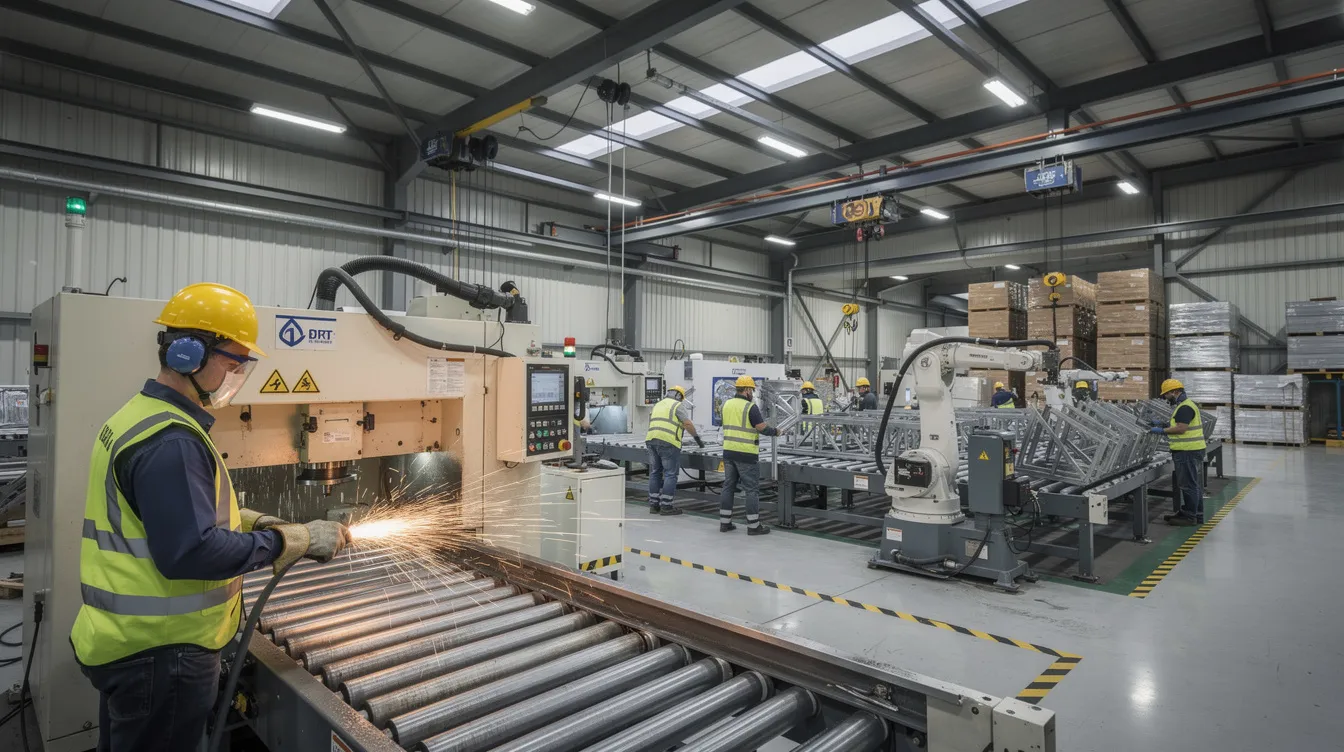
For a capex-heavy project, investor expectations typically include:
- Promoter contribution of 25–35% of total project cost. In real estate and infra, institutional capital now demands promoter equity of 25–30%, up from 10–15% a decade ago.
- Realistic IRR – both project IRR (return on total capital) and equity IRR (return on equity alone) – that reflect conservative capacity ramp-up.
- DSCR of at least 1.25–1.5 in early years for term-loan-linked projects.
- Exit timelines of 5–7 years for PE and VC firms, with defined routes (trade sale, IPO, secondary).
- Governance rights including board representation, financial controls, and information access.
India’s funding landscape also reflects broader participation trends: individual investors hold 18.7% of the Indian equity market, investors under 30 account for 40% of registered investors, and debt financing allows startups to retain more control – though it typically requires regular repayments. These dynamics shape how investors evaluate risk, control, and return across private markets.
What compounds these challenges further is the dependency on bank term loans, state-level approvals, land and licence delays, and weak DPRs that don’t address industrial risk factors.
Strategic vs Financial Investors and Choosing the Right Partner
Not all investors invest for the same reasons. Investors navigate a complex competitive landscape when funding startups and industrial projects in India, and promoters must understand who sits across the table.
A strategic investor – say, a large food brand acquiring a minority stake in a biscuit manufacturing unit – brings sector know-how, distribution channels, procurement synergies, and a usually longer investment horizon. A financial investor – a PE fund or AIF – invests purely for returns, expects structured exits, and manages a diversified portfolio where each investment must meet defined IRR targets.
Venture capitalists in India often grapple with unpredictable exit pathways and timelines, making them particularly rigorous about governance, documentation, and exit protections.
| Feature | Strategic Investor | Financial Investor |
|---|---|---|
| Horizon | Longer; may accommodate slower ROI | 4–7 years; exit is critical |
| Value beyond capital | Sector expertise, supply chain synergies | Governance discipline, mentorship |
| Typical cheque size | Flexible for strategic positioning | ₹5–15 crore minimum (fund-dependent) |
| Control expectations | Operational integration | Board seats, vetoes, exit protections |
Promoters must align investor type with project stage – greenfield, expansion, or diversification – and risk profile. A detailed comparison of strategic investors versus financial investors helps clarify which partner suits manufacturing and agro-processing ventures.
How to Select the Right Equity Investor for Your Business
Investor–promoter fit matters more than who offers the highest valuation. A cheque from the wrong partner can cost more in lost control, misaligned timelines, and governance friction than the money is worth.
Criteria to evaluate:
- Sector experience in manufacturing, food processing, or agro-processing
- Average ticket size (₹5–15 crore vs ₹15–50 crore)
- Geographic comfort (willingness to invest in Tier-2/3 locations)
- Decision-making speed and internal approval processes
- Track record of supporting capex-heavy, long-gestation projects
- Follow-on investment capacity for future rounds
Rather than cold-emailing hundreds of VC firms, promoters should shortlist 10–15 serious prospects and score them systematically.
Illustrative Weighted Investor Selection Matrix (all scores are assumptions for illustration)
| Criterion (Weight) | Investor A (PE Fund) | Investor B (Strategic Corp) | Investor C (Family Office) |
|---|---|---|---|
| Sector fit (25%) | 8 | 9 | 6 |
| Cheque size match (20%) | 9 | 7 | 8 |
| Control terms (20%) | 6 | 7 | 9 |
| Post-investment support (15%) | 5 | 9 | 4 |
| Funding certainty (10%) | 8 | 6 | 7 |
| Follow-on capacity (10%) | 7 | 8 | 5 |
| Weighted Score | 7.15 | 7.70 | 6.55 |
This type of structured scoring helps founders make informed decisions rather than chasing the first available offer.
Comparing Equity Investment Offers Beyond Valuation
Two term sheets offering the same headline valuation can be radically different in equity dilution, control, and risk. Many founders – and especially many early stage Indian promoters – focus only on the valuation number and overlook the structural terms that determine actual outcomes.
High competition for investment opportunities drives valuations and alters investment terms in India. Persistent valuation bid-ask spreads complicate deal deployment, and equity financing dilutes founder ownership with each funding round.
Elements to compare carefully:
- Percentage equity dilution and post-money ownership
- Liquidation preference multiples (1x vs 2x; participating vs non-participating)
- Anti-dilution clauses (full ratchet vs weighted average)
- Board composition and reserved matters
- Drag-along and tag-along rights
- Non-compete and restrictive covenants
- Tranche or milestone-linked capital release conditions
Hypothetical Offer Comparison (all values are illustrative assumptions)
| Term | Offer A (VC Fund) | Offer B (Strategic Corporate) |
|---|---|---|
| Investment amount | ₹10 crore | ₹12 crore |
| Equity dilution | 26% | 30% |
| Liquidation preference | 1x non-participating | 2x participating |
| Board seats | 2 of 5 | 3 of 6 |
| Anti-dilution | Weighted average | Full ratchet |
| Non-compete | 2 years post-exit | 5 years, broad scope |
| Capital release | 100% upfront | 3 tranches, milestone-linked |
Offer B looks larger but carries significantly higher control risk and an aggressive liquidation preference. Promoters should compare multiple equity investment offers beyond valuation before signing. Professional Business Valuation Services can help establish a defensible valuation range that reduces friction during these negotiations.
Equity Investment Term Sheet Risks and Promoter Control
The term sheet is usually non-binding but shapes every subsequent legal document. Many founders underestimate how deeply these commercial terms affect day-to-day operations and long-term ownership.
Key risk areas:
- Broad veto rights on routine decisions (capex above a small threshold, hiring, borrowing limits)
- Aggressive anti-dilution clauses that penalise promoters if valuation dips in future rounds
- Cumulative liquidation preferences that ensure investors recover multiples before promoters see any return
- Drag-along provisions that force a sale on investor conditions
Weak corporate governance can create significant risks for investors – but equally, excessive governance demands can paralyse MSME-scale operations. Equity investors often influence business decisions more than debt holders, so the governance framework must balance accountability with operational freedom.
Understanding equity investment term sheet red flags and how investor board seats and veto rights affect promoter management control is essential before entering any binding agreement.
Major Equity Funding Challenges for Industrial Projects in India
Indian manufacturing and industrial projects face more execution and regulatory challenges than most digital startups. Economic uncertainty in India affects funding availability and investment returns. Macroeconomic shifts impact foreign capital flows, and changing domestic tax frameworks introduce additional compliance challenges. Certain sectors operate under evolving regulatory frameworks subject to high policy risk.
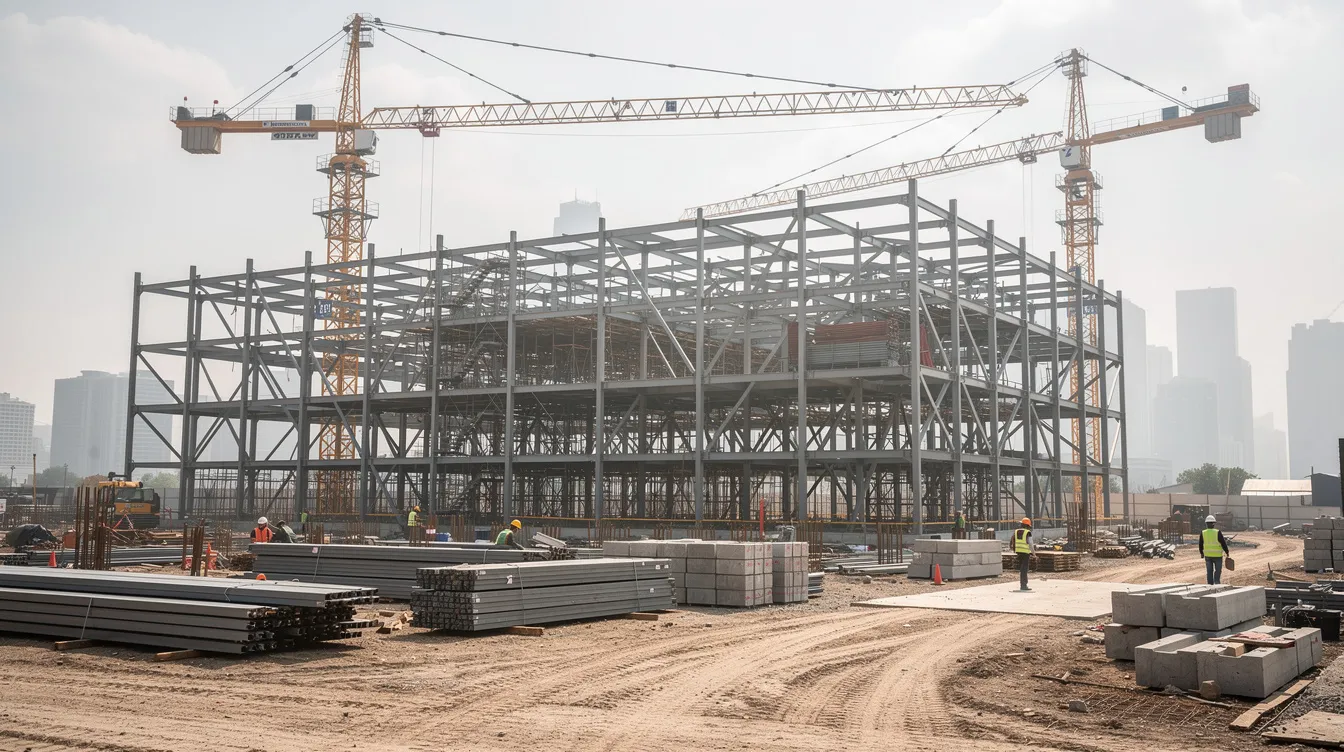
Core challenges that erode investor confidence:
- Land acquisition delays varying by state
- Environmental and FSSAI approvals taking 6–24+ months
- Power connection and utility infrastructure gaps
- Machinery import lead times and foreign exchange risk
- Cost overruns from the 2022–2025 commodity price cycles
- Working capital underestimation relative to actual operating cycles
These factors create circular funding dependencies: investors release capital only after bank sanction and key licences, while banks wait for confirmed equity. Understanding why investors hesitate to fund greenfield manufacturing projects and how land, licence, and execution risks delay equity funding helps promoters prepare documentation that breaks this cycle.
Project Risk and Mitigation Table
| Risk | Investor Perception | Mitigation Documentation |
|---|---|---|
| Land acquisition delay | High; stalls bank disbursement | Title documents, possession certificate, encumbrance report |
| Environmental clearance pending | Regulatory uncertainty | Application status, buffer in timeline, alternative site |
| Raw material supply risk | Input cost and continuity | MoUs with suppliers, local sourcing plan |
| Machinery import delays | Cost overrun, forex risk | Binding quotations, domestic alternatives, escalation clauses |
| Capacity under-utilisation | Lower revenue, higher fixed-cost burden | Conservative ramp-up assumptions, early order commitments |
Projects linked to conditional equity funding and bank loan dependencies require particularly careful structuring of the means of finance.
Financial Model, Project Feasibility and Investor Concerns
Investors scrutinise financial models of manufacturing and processing projects more closely than pitch narratives. High customer acquisition costs complicate the path to sustainable earnings for startups, and for industrial projects, the equivalent challenge is achieving breakeven under realistic utilisation assumptions. Debt financing can be cheaper due to tax benefits on interest, which should be accurately reflected in the model.
Common red flags investors watch for:
- Capacity utilisation of 80%+ from Year 1 without supporting order book
- Under-stated repair, maintenance, and insurance costs
- Ignoring working capital cycles and seasonal cash flow variations
- “Hockey-stick” revenue growth without a credible sales strategy
- Confusing project IRR (return on total capital) with equity IRR (return accruing to equity holders)
A base-case DSCR of 1.42 in Year 1 may look acceptable, but if a 15% drop in selling prices pushes it below 1.0, the project is risky from a lender’s perspective. Detailed guidance on financial model red flags and manufacturing project risks for investors can help promoters avoid the most common pitfalls. Professional Financial Projections and Financial Modelling Services ensure that models meet both bank and investor standards.
Why Equity Investors Reject Manufacturing Project Proposals
Many rejections are not about the idea but about the risk–return balance, execution capability, and documentation quality. Investors encounter difficulties identifying genuine growth potential in India’s expanding startup ecosystem, and for industrial projects, the bar for proof is even higher. Investors face challenges related to valuation mismatches in India’s selective funding environment.
Key rejection reasons:
- Weak feasibility analysis without validated demand
- Overestimated margins versus industry benchmarks
- Low promoter capital commitment (insufficient skin in the game)
- Unstructured governance and unclear decision-making
- Unrealistic pre-money valuations disconnected from cash flow
- Dependence on a single buyer without long-term contracts
- Startup valuation mistakes
In FY26, approximately 80% of distressed industrial projects were attributed to factors beyond land and regulation – including financing gaps, demand problems, and operational execution.
Analysing Funding Rejection and Improving Investor Readiness
A “no” from an investor is a diagnostic tool, not a dead end. Promoters should systematically classify rejection feedback rather than taking it personally.
Categories for analysis:
- Commercial – market size, demand validation, competition
- Technical – plant specifications, process, power, site readiness
- Financial – DSCR, leverage, working capital, cost inflation
- Governance – board structure, promoter disclosures, controls
- Valuation – bid–ask mismatch, comparable benchmarks
- Documentation – missing approvals, inconsistencies, information gaps
Corrective-Action Matrix
| Issue Category | Investor Concern | Corrective Action | Supporting Evidence |
|---|---|---|---|
| Commercial | No buyer validation | Obtain buyer LOIs/MoUs | Signed purchase intent letters |
| Financial | DSCR below 1.25 | Revise capacity ramp-up; reduce leverage | Updated financial model with sensitivity |
| Governance | No independent oversight | Propose independent director | Board composition plan |
| Documentation | Incomplete DPR | Professional DPR revision | Revised feasibility report |
A detailed framework for analysing investor rejection feedback and identifying funding gaps can guide this process. Professional Project Feasibility Study Services in India help address the technical and commercial gaps that surface during investor due diligence.
Revising Investor-Ready DPR and Documentation After Rejection
After one or two serious rejections, it is usually necessary to rework the Detailed Project Report, assumptions, and risk analysis – not just adjust the valuation figure.
Areas to revise:
- Capacity planning and phased commissioning schedule
- Implementation timeline with realistic regulatory buffers
- Means of finance (equity vs term loan vs subsidy proportions)
- Working capital assessment linked to actual operating cycles
- Sensitivity analysis around raw material prices, selling prices, and interest rates
- Investor returns under multiple scenarios
For context, a rice mill project in Madhya Pradesh was rejected twice due to inflated machine capacity and missing market documentation. After validated machinery specs, export LOIs, and conservative capacity ramp-up, DSCR improved from inadequate levels to 1.42 in Year 1, 1.78 in Year 2, and 2.20 in Year 3.
Guidance on revising an investor-ready DPR after funding rejection and understanding what to do when investors reject your business valuation provides structured approaches for this revision process.
What to Do When Investors Withdraw or Negotiations Fail
Investor withdrawal after due diligence, term sheet delays, or reduced cheque size can trigger cascading problems – bank loan delays, vendor uncertainty, and loss of credibility. Sharp contractions in early seed-stage allocations create refinancing risks for portfolio companies, and the same logic applies when a committed equity source pulls back.
Key steps:
- Understand the specific withdrawal reasons without assumptions
- Review internal documentation and compliance gaps
- Check exclusivity clauses and their expiry
- Maintain transparent communication with bankers and machinery suppliers
- Consider alternative funding structures: slightly higher term loan, phased capex, or a smaller bridge equity round
Indian startups attracted $154 million in venture debt funding, and the venture debt financing market potential in India is estimated at $500 million annually. Venture debt can provide growth capital with less dilution than pure equity.
Detailed guidance on what to do when an equity investor withdraws after a term sheet and whether to approach the same investor again after rejection helps promoters navigate these situations professionally. For projects facing multiple rejections, alternative funding strategies for industrial projects are worth exploring.
Practical Equity Funding Readiness Roadmap for Indian Promoters
Funding readiness is a staged process, not an event. Equity, debt, and internal accruals must be aligned around a realistic implementation schedule.
10-Step Roadmap
| Step | Activity | Key Output | Typical Timeframe |
|---|---|---|---|
| 1 | Idea validation and pre-feasibility | Market assessment memo | 2–4 weeks |
| 2 | Detailed feasibility study | Technical and commercial feasibility report | 4–6 weeks |
| 3 | DPR and financial modelling | Complete DPR with projections | 4–8 weeks |
| 4 | Business valuation | Valuation memo (DCF, comparables) | 2–3 weeks |
| 5 | Investor targeting and shortlisting | Weighted investor matrix | 2–4 weeks |
| 6 | Pitch preparation | Investor Pitch Deck and data room | 2–3 weeks |
| 7 | Investor outreach and meetings | Indicative interest / term sheet | 4–12 weeks |
| 8 | Term sheet negotiation | Agreed commercial terms | 2–6 weeks |
| 9 | Due diligence | Legal, financial, technical DD reports | 4–8 weeks |
| 10 | Funding closure and post-investment setup | SHA, SSA, funds disbursement | 2–4 weeks |
Working with professional advisors typically de-risks multiple steps in this roadmap and improves efficiency, even though no advisor can guarantee funding.

When Should a Promoter Reject an Investor Offer?
Saying “no” to an investor can sometimes protect long-term project health. This is particularly true when terms endanger promoter control or project viability.
Red-flag situations where rejection may be justified:
- Excessive dilution at early stage that leaves the promoter as a minority holder prematurely
- Investor insisting on disproportionate board seats and veto rights for a minority stake
- Unrealistic exit timeline that pressures a capex-heavy project to sell shares or list before achieving scale
- Restrictive non-compete clauses that block legitimate business expansion
- Terms that would violate existing banking covenants or create regulatory complications
Consider a family-run MSME being asked to cede 51% equity: the promoter effectively loses operational control, and the investor’s growth expectations may not align with the business’s natural trajectory over the next decade.
A structured decision framework – scoring upside versus loss of control versus financial risk – helps objectively decide whether to participate in or walk away from an offer. This is explored further in when to reject an equity investor offer.
Role of Professional DPR, Valuation and Advisory in Overcoming Funding Challenges
In my experience preparing DPRs and financial models for manufacturing, food processing, and agro-processing projects, the most common pattern I observe is this: promoters with viable projects fail to raise money not because the business is weak, but because the documentation does not communicate the project’s economics in a language investors and bankers understand.
A robust investor-ready DPR should include:
- Technical details of plant setup, machinery specifications, and validated cost quotations
- Land and building plan with clear title documentation
- Production capacity, realistic utilisation ramp-up, and product-mix planning
- Project cost and means of finance with defined promoter contribution
- Profitability projections, cash flow statements, DSCR, IRR, payback period, and sensitivity analysis
- Risk identification and mitigation measures
- Governance framework and proposed board structure
Professional business valuation and financial planning help align promoter expectations with market-based methods (DCF, comparable multiples), reducing valuation discussions that stall negotiations.
Project Report Bank’s core services – Investor-Ready DPR and Fundraising Assistance, Financial Projections and Financial Modelling, Business Valuation, and Investor Pitch Deck preparation – are designed to help promoters convert rejection feedback into a stronger, more credible funding case.
Frequently Asked Questions
How long does equity funding typically take compared to bank loans for industrial projects in India?
Bank term loans, assuming complete documentation and adequate securities, may take 3–6 months from application to disbursement. Equity funding involves investor targeting, negotiation, due diligence, and legal documentation – typically 6–12 months or longer for cheque sizes of ₹5 crore and above. The processes often need to run in parallel because of bank–equity linkage requirements.
What is the difference between venture capital and private equity for manufacturing projects?
Venture capital firms generally invest in early stage companies with high growth potential and accept higher risk in exchange for larger equity stakes. Private equity funds typically invest in more established businesses with proven revenue, focusing on scale, operational improvement, and exit within 5–7 years. For capital-intensive manufacturing, PE funds and strategic investors are often more relevant than traditional VC firms. Angel investors and individual investors may participate at smaller ticket sizes.
How many investors should a promoter approach simultaneously?
A targeted list of 10–15 well-researched investors is usually more effective than mass outreach. Each investor should match the project’s sector, stage, cheque size, and geography. Sending generic startup pitches to hundreds of investors dilutes credibility and wastes time.
How do global macro factors affect investor appetite for Indian manufacturing?
Market volatility, interest rate cycles (post-2024 elevated rates), commodity price inflation, and currency movements all influence the investment thesis of both domestic and international investors. Women’s mutual fund folio sizes increased by 23% from FY19 to FY24, and cities beyond the top 110 now contribute 19% of mutual fund assets – suggesting broadening participation. Yet 55 million households remain financially connected but not investing, partly because many households view investing as complex and volatile. The advice gap hinders many potential investors in India, though AI can reduce the cost of financial advice over time.
For manufacturing projects, promoters should reflect current interest rate assumptions, commodity cost sensitivity, and demand scenarios in their financial models. Convertible notes – which convert debt into equity during future financing rounds – and iSAFE notes that allow early-stage funding without upfront valuation are emerging instruments. Crowdfunding raises small amounts from many investors online, though its applicability to large industrial projects remains limited. Securities regulations governing these instruments continue to evolve.
What if a project receives multiple rejections – is the idea itself the problem?
Not necessarily. In many cases, the underlying business opportunity has merit, but the documentation, financial model, or governance structure does not meet investor standards. A corrective-action approach – categorising feedback, revising the DPR, improving sensitivity analysis, and adjusting valuation expectations – can gain exposure to a wider and more suitable set of investors. Success in fundraising often requires iteration, not abandonment.
Next Steps
Investors generally require credible project economics, realistic assumptions, clear documentation, acceptable investment terms, and a practical implementation strategy before considering a commitment. There is no shortcut around this. A properly structured DPR, feasibility study, and financial model can help promoters prepare for meaningful investor discussions – and withstand the scrutiny that follows.
If you are planning a manufacturing, processing, or industrial project and need professional support with investor-ready documentation, financial modelling, or fundraising preparation, share the following details for a preliminary assessment:
- Project or business name
- Industry and location
- New project or expansion
- Estimated total project cost
- Proposed equity funding requirement
- Promoter contribution and proposed bank finance
- Current project stage
- Main financing challenges
Reach out via WhatsApp through the contact facility on our website.
CA Manish Gugliya, FCA, DISA (ICAI) Project Finance, DPR, Feasibility & Financial Advisory ProjectReportBank.com