Key Takeaways
- Equity financing and debt financing must be planned together as part of a structured capital planning process – deciding equity funding amount in isolation leads to either underfunding or unnecessary dilution of ownership stake.
- The correct equity funding requirement is calculated from total project cost (CAPEX, pre-operative expenses, working capital, contingency) minus realistic promoter contribution and feasible bank loans – not chosen as a round figure for negotiation convenience.
- Underestimating capital can cause cash flow crises and stall projects mid-implementation, while over-raising equity gives away more of the company than necessary.
- Capital planning enhances productivity and profitability through long-term investments and reduces financial risk when combined with proactive risk management.
- Project Report Bank, led by CA Manish Gugliya (FCA, DISA, ICAI), helps Indian entrepreneurs and MSMEs plan project cost, means of finance, financial projections and investor-ready documentation through customised professional advisory.
Introduction – Why Equity Funding Amount & Capital Planning Matter in India
Before approaching angel investors, a venture capital firm, private equity funds or banks, every promoter must answer one fundamental question: how much capital does the business truly require, and when?
The equity funding landscape in India is undergoing a structural shift. Total startup equity funding in India reached approximately $10.9 billion in 2026, with the average startup funding round size increasing to around $8.7 million. Selectivity in funding is leading to fewer deals with larger average ticket sizes – and the top 10 fundraisers account for roughly 36% of total tech startup equity funding. For manufacturing and industrial project promoters, this means investors are more demanding than ever about capital planning rigour.
For a ₹10–₹50 crore manufacturing or processing project in India, mis-calculating capital can lead to implementation delays, cost overruns, and emergency high-cost funding. Bootstrapping is common for early-stage Indian businesses, but most entrepreneurs planning capital projects of meaningful scale need a structured approach combining promoter funds, bank finance and external equity.
This article, written from the perspective of a practising Chartered Accountant advising MSMEs, manufacturers and project promoters, walks through total project cost, means of finance, debt-equity structuring, equity funding calculation and timing – so promoters can make informed decisions before committing their own money or approaching an outside investor.
What Is Equity Funding Amount and Capital Planning?
Equity funding amount refers to the specific rupee amount of external equity investments – from angel investors, venture capitalists, high net worth individuals, family offices or a private investment firm – that a business needs to raise. It is not the total project cost. Equity financing involves selling a stake in your business in exchange for capital, and unlike a business loan, equity financing does not require repayment like loans do.
Types of equity financing include venture capital and crowdfunding, where crowdfunding allows raising small amounts from many individuals through an online platform. Venture capital funding is often categorised into seed, startup, and expansion stages, each suited to different business maturity levels.
Capital planning in an Indian business context means building a detailed, time-bound plan for funding total project cost through promoter contribution, debt financing (bank term loans, working capital limits) and investor equity. It covers the capital deployment schedule – which month or quarter each rupee of CAPEX, working capital and pre-operative expense will be paid – and this timing directly determines how much money the company needs from investors and when.
Why Accurate Capital Planning Is Critical Before Raising Equity in India
Effective capital planning reduces financial risk and increases operational efficiency. Without it, promoters face two categories of problems.
Under-funding creates project delays, supplier defaults, inability to draw down bank loans due to margin shortfalls, and cash flow gaps during ramp-up. A food processing plant that runs out of working capital three months before reaching breakeven may be forced to accept emergency funding at unfavourable terms. Over-funding with equity means idle cash, poor return on invested capital, and giving away a higher ownership stake than necessary to early stage investors.
The factors affecting capital allocation include regulatory frameworks, economic indicators, and investor sentiment – all of which shift over time. Late-stage funding in India is characterised by larger investments, often exceeding $50 million, but even moderate projects need disciplined planning. Financial performance and fundamental metrics greatly influence the funding amount in the equity market, so a credible capital planning process increases investor confidence by demonstrating that the promoter understands project cost, working capital cycles, DSCR, and realistic bank loan capacity.
How to Calculate Total Capital Requirement for a Manufacturing Project in India
A systematic eight-step method helps promoters calculate capital requirements:
Step 1: Identify project scope and capacity. Fix location, product mix, installed capacity (tonnes per annum), technology and implementation period before calculating figures.
Step 2: Estimate fixed capital expenditure. Compile land cost, site development, factory building, plant and machinery, utilities and infrastructure using vendor quotations and current market rates. Detailed capital expenditure planning for manufacturing projects is essential at this stage.
Step 3: Add pre-operative expenses and interest during construction. Include company incorporation, approvals, consulting fees, salaries during implementation, trial runs and IDC. See the dedicated guide on pre-operative expenses and interest during construction for detailed classification.
Step 4: Estimate initial working capital requirement. Use operating cycle logic – raw materials holding, WIP, finished goods, receivables minus creditors. For manufacturing MSMEs in India, working capital cycles typically run 75–110 days. Detailed working capital planning before equity funding guidance is available separately.
Step 5: Provide contingency. A realistic buffer covering price escalation, design changes and delays – typically 5–10% of project cost, justified rather than arbitrary.
Step 6: Identify promoter contribution. Tally cash, land or building brought in, and other contributions. Indian banks generally expect promoter contribution of at least 20% of project cost.
Step 7: Estimate feasible debt financing. Banks internally expect average DSCR of 1.50–2.00 over the loan tenure. Project finance advisory and loan structuring can help optimise the debt-equity structure.
Step 8: Calculate external equity funding requirement.
External Equity = Total Project Funding Requirement − Promoter Contribution − Realistic Debt − Other Confirmed Funding
Only committed or highly probable bank loans should be deducted. For a ₹12 crore project, this might translate to ₹3 crore promoter funds, ₹7 crore bank term loan and ₹2 crore external equity.
Capital Expenditure Planning for Equity-Funded Manufacturing Projects
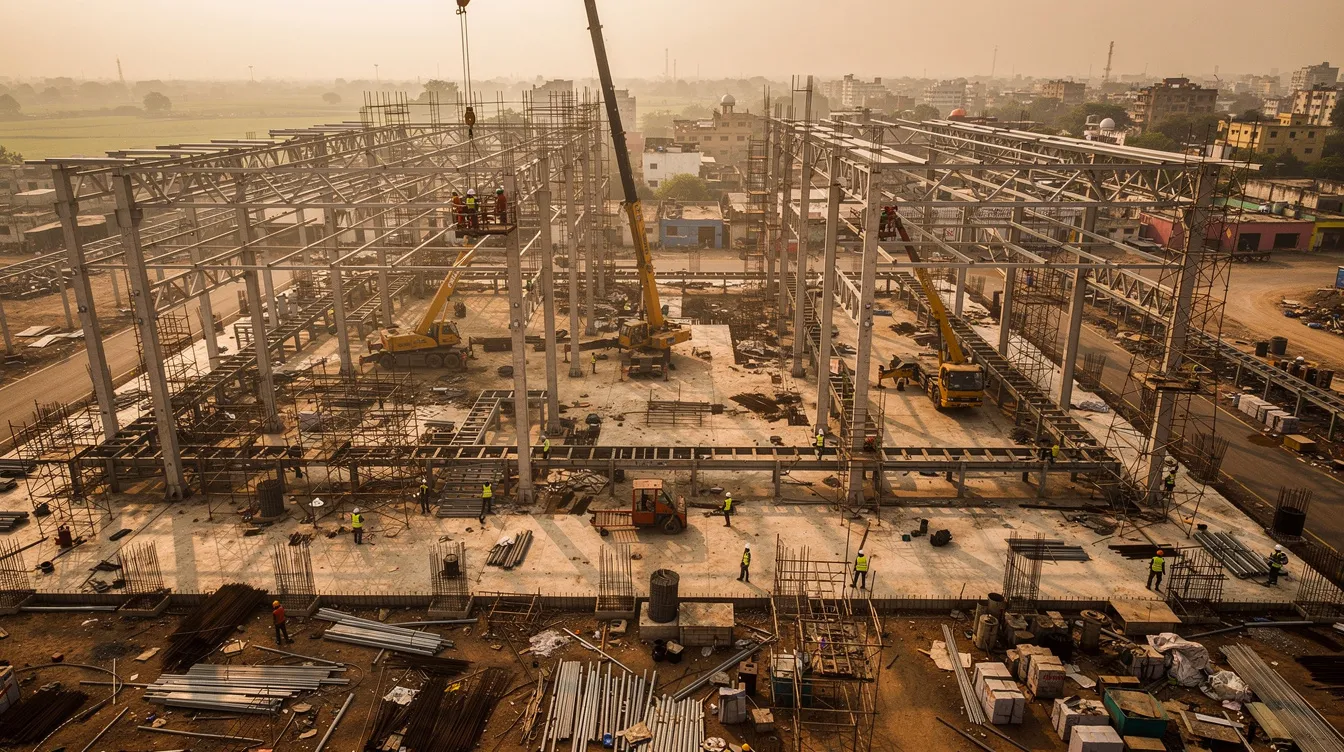
CAPEX is usually the largest component of project cost in Indian manufacturing and the primary driver of equity funding amount. Typical components include land and site development, factory building, plant and machinery (domestic and imported), installation, utilities (power, boilers, compressors, effluent treatment), storage and office infrastructure. These are tangible assets that form the basis for bank collateral assessment.
CAPEX should be verified with vendor quotations and budgetary offers – not guesswork. Good CAPEX planning phases machinery payments and construction milestones so that the equity funding drawdown schedule and capital deployment stays aligned with actual expenditure.
Over-sizing plant capacity on day one significantly increases equity requirement, while too-small capacity can make unit economics unviable. Capital planning should match realistic sales volume projections, not aspirational targets.
Working Capital Requirement Before Raising Equity Funding
Working capital is the operating oxygen of any manufacturing business. Many Indian MSMEs underestimate this requirement when planning equity financing.
Gross working capital covers total investment in current assets – raw materials stock, work-in-progress, finished goods and receivables. Net working capital margin is the portion that must be funded through long-term capital. A typical cycle might be: 30 days raw material holding + 10 days WIP + 20 days finished goods + 45 days receivables − 30 days creditors = 75 days. For a company with ₹5 crore turnover, this can mean ₹1–1.5 crore locked in the cycle at any time.
Bank cash credit facilities finance part of this requirement, but borrowers must bring margin money from long-term sources. This margin is included in total project cost. Supply chain disruptions or delayed receivables from large OEMs can push actual requirements significantly higher than projections.
Pre-Operative Expenses and Interest During Construction (IDC)
Pre-operative expenses and IDC are frequently ignored or under-provided in amateur business plans, distorting both project cost and equity funding requirement.
Typical pre-operative heads include company formation, government approvals, technical consultancy, architect fees, salaries of key staff during implementation, travel, trial run losses and training costs. These also include intangible assets like licences and certifications.
IDC – interest accrued on term loans during construction – is capitalised into project cost under RBI’s Project Finance Directions. These items must not be double-counted in both CAPEX and P&L projections; they should be timed month-wise so that cash flow requirements and equity drawdown align with bank disbursement schedules.
How Much Equity Funding Does a Business Actually Need?
The correct equity funding amount results from careful capital planning, not an arbitrary round figure.
External Equity = Total Funding Requirement (CAPEX + Pre-operative + IDC + Working Capital Margin + Contingency) − Confirmed Promoter Contribution − Achievable Bank Debt − Grants or Subsidies
This is a planning framework, not a legal formula. Only committed amounts should reduce the equity gap – not wishful bank sanctions or speculative subsidy approvals. Promoter contribution in kind (land or existing building) may reduce cash equity needed but must be properly valued and documented. And while profitability projections may look strong, they do not automatically guarantee sufficient cash flow to fund capital expenses internally.
Promoter Contribution, Bank Loans and Investor Equity – Structuring the Capital Mix
Means of finance describes how total project cost is split among promoter contribution, bank loans and external equity. This mix determines both risk and return.
Promoter contribution includes cash invested and non-cash assets such as land – personal savings and own money that demonstrate promoter commitment. Banks treat unsecured loans from promoters differently from equity, and norms for TOL/TNW ratios generally cap total outside liabilities to tangible net worth at around 3x.
Bank term loans finance fixed assets, while working capital finance covers operating needs. Equity financing does not require fixed repayment but investors expect ownership, governance rights and an exit at an acceptable equity IRR. Venture capital investments typically have a 10-year horizon, and venture capital funds usually charge a 2% management fee alongside carried interest. Venture debt deployment surged to $1.3 billion in 2025, particularly in fintech, showing that debt financing options are expanding.
No universal ideal debt-equity ratio exists. The suitable structure depends on industry volatility, asset life, cash flow stability, collateral strength and promoter risk appetite. Private equity investments and venture capital both bring strategic value beyond money – including industry connections and portfolio companies expertise – but at different cost to the promoter.
When Should a Business Raise Equity Funding in Its Capital Planning Timeline?
Timing of equity funding must factor in project implementation schedule, regulatory approvals, machinery delivery and ramp-up period. Cash runway – how many months current funds cover projected expenses – determines urgency.
Venture capital typically targets high-growth potential startups, while venture capital funds often invest in high-risk, high-return startups. For manufacturing projects, early stage equity may be needed upfront to secure bank sanctions and meet margin requirements. Subsequent rounds can fund market expansion or working capital strengthening once financial performance is demonstrated.
Promoters should explore when to raise equity funding and plan cash runway to understand bridging options and staged funding strategies.
Single-Round vs Phased Equity Funding
Both single-round versus phased equity funding approaches are common. Single-round funding provides certainty and a stronger balance sheet for bank negotiations, but creates higher early dilution with risk of idle cash. Phased funding reduces initial dilution and allows for better valuations in later rounds, but creates dependency on future investor appetite.
Many institutional investors and limited partners prefer milestone-based drawdown conditions even when committing a total amount. This should be reflected in the capital planning process and cash flow model.
Equity Funding Drawdown Schedule and Capital Deployment Planning
Once total equity amount is decided, promoters must plan when funds arrive and how they deploy alongside bank disbursements. A quarterly drawdown schedule should align with land payments, civil work stages, machinery advances and commissioning milestones.
Private investors may commit capital but release it in tranches. Capital planning should avoid assuming full availability on day one. The schedule must reconcile with bank term loan disbursement conditions – margin money requirements, utilisation certificates – or cash flow crunches arise despite apparent sanctions.
Phased Capital Investment vs Full Project Investment
Promoters sometimes consider developing a project in phases to reduce initial equity requirement. Phased capital investment versus full project investment analysis should examine whether uncertain market demand, technology risk or tight promoter resources justify a smaller initial scope.
Full project investment may be better when strong confirmed demand exists, economies of scale are significant, or expanding later would require duplicate infrastructure. These decisions require realistic financial modelling including IRR, NPV and working capital impact – not just headline CAPEX comparison.
Project Cost Overruns, Contingency and Additional Equity Requirements
Many manufacturing and infrastructure capital projects in India experience cost overruns. WPI inflation for manufactured products was running at 8–9% YoY in recent periods, while specific inputs like aluminium and copper saw 10–44% increases. Proactive risk management is essential for successful capital planning.
Under RBI’s Project Finance Directions, cost overruns are permitted in resolution plans up to 10% of original project cost under specific conditions. Contingency should be part of the original capital plan, not an afterthought. The guide on project cost overruns and contingency planning provides structured methods to stress-test equity requirements.
Investor Capital Deployment, Monitoring and Fund Utilisation Controls
Professional investors – whether accredited investors, pension funds backing a VC firm, or a venture capitalist making a private investment – expect robust governance around how equity funding is used. Investors in equity financing often seek control over business decisions, particularly around capital deployment.
Key elements include board-approved capital budgets, delegated spending authority, mandatory purchase procedures for large items, budget-versus-actual reporting and utilisation certificates. Using real-time data improves decision-making in capital planning. Strong investor capital deployment and fund utilisation controls increase confidence and help in future funding rounds or initial public offering plans.
Practical Example – Equity Funding Planning for a ₹25 Crore Manufacturing Project
The following is a purely illustrative example showing how total project cost and means of finance determine external equity requirement.
Illustrative Project Cost:
| Component | Amount (₹ Crore) |
|---|---|
| Land and site development | 3.00 |
| Factory building | 5.00 |
| Plant and machinery | 9.00 |
| Utilities and infrastructure | 2.00 |
| Pre-operative expenses and IDC | 1.00 |
| Contingency | 1.00 |
| Initial working capital margin | 4.00 |
| Total funding requirement | 25.00 |
Illustrative Means of Finance:
| Source | Amount (₹ Crore) |
|---|---|
| Promoter contribution | 5.00 |
| Bank term loan | 13.00 |
| External investor equity | 7.00 |
| Total | 25.00 |
The gross working capital requirement of ₹6 crore comprises ₹4 crore margin (included above) plus ₹2 crore revolving bank working capital facility shown separately to avoid double counting. The ₹2 crore facility is subject to bank appraisal.
Sensitivity: If plant and machinery cost rises by ₹1 crore, total requirement becomes ₹26 crore. Unless promoters bring additional funds or contingency absorbs the overrun, extra equity may be needed – directly increasing dilution.
Dilution Illustration:
| Parameter | Value |
|---|---|
| Pre-money equity valuation | ₹28 crore |
| New investor equity | ₹7 crore |
| Post-money valuation | ₹35 crore |
| New investor ownership | 20% |
| Promoter retention | 80% |
These are illustrative figures. Actual equity dilution depends on detailed business valuation and equity dilution analysis negotiated between parties.

Financial Projections and Sensitivity Analysis Before Equity Fundraising
Investors require detailed financial projections for funding evaluations. Financial projections guide business planning and funding decisions, help identify funding needs and timelines, and allow businesses to assess growth opportunities and manage risk effectively.
An investor-oriented model should include realistic sales volume based on historical data and market studies, capacity utilisation ramp-up (50%, 65%, 75%, 85% over initial years), gross margins, operating costs, depreciation, interest, tax and projected net profit. Investors are increasingly focusing on profitability and unit economics rather than revenue growth alone. Venture capitalists typically seek a 30% gross internal rate of return, making accurate financial projections critical for securing their participation.
The projected cash flow statement must reconcile with term loan repayment, working capital movements and equity infusions, enabling DSCR analysis. Sensitivity analysis – changing selling price, raw materials cost, or capacity utilisation – reveals how the balance sheet and funding requirement respond to adverse scenarios. Accurate financial projections can improve investor confidence and distinguish a successful business proposition from speculative projections. Professional financial projections and financial modelling services help build investor-grade models.
Documents Investors Expect Before Committing Capital
Capital providers do not decide equity funding amount from a brief pitch alone. Traditional bank loans require a detailed project report, and Indian startups are currently seeking funding via detailed project reports and financial modelling – equity investors are no different.
Core documents include: a Detailed Project Report explaining business model, technical details and project cost; a bankable business plan; multi-year financial statements and cash flow model; means of finance statement; promoter profiles; and compliance documentation. Investors also expect clear articulation of use of funds, deployment timeline and exit roadmap consistent with SEBI and MCA norms.
An Investor-Ready DPR and Fundraising Assistance package integrates capital planning, valuation thinking and documentation so that equity investors can evaluate the proposal efficiently.
Common Mistakes in Equity Funding Amount and Capital Planning
Many promoters repeat avoidable mistakes when estimating equity needs. Common errors include:
- Underestimating working capital requirements, particularly receivable cycles from large OEMs
- Ignoring pre-operative expenses and IDC entirely
- Assuming full debt financing without testing DSCR against realistic cash flow
- Omitting contingency or treating it as optional
- Using unrealistic implementation timelines that compress IDC and ramp-up costs
- Double-counting promoter assets in both CAPEX and contribution
- Not aligning equity drawdown with project schedule milestones
- Deciding equity amount based only on valuation targets rather than the actual financing gap
- Mixing personal and business cash flows, creating confusion about genuine promoter contribution
Having a Chartered Accountant review the DPR and capital planning model helps identify these gaps before approaching investors or banks. Successful entrepreneurs in capital-intensive sectors avoid these pitfalls through disciplined business strategy and professional advice.
Equity Funding and Capital Planning Checklist for Indian Businesses
Prioritising investment needs is crucial in capital planning processes. Before initiating investor conversations:
- [ ] Finalise project scope, capacity, location and implementation timeline
- [ ] Prepare realistic project cost estimates covering CAPEX, pre-operative, IDC and working capital
- [ ] Map means of finance: promoter contribution, bank loans and required equity
- [ ] Build 5–7 year financial projections including cash flow and balance sheet
- [ ] Assess DSCR, project IRR and equity IRR under base and downside scenarios
- [ ] Determine equity funding amount and phasing based on deployment schedule
- [ ] Stress-test for 10–15% cost overruns and slower-than-expected sales
- [ ] Compile DPR, investor business plan and valuation analysis
- [ ] Ensure contingency and backup funding options exist
Promoters who complete this checklist are better positioned to raise capital effectively and conduct professional discussions with banks and private investors.
How CA Manish Gugliya and Project Report Bank Help in Equity Funding & Capital Planning
Project Report Bank is a Chartered Accountant-led project finance and advisory platform focused on customised DPRs, CMA Data, financial modelling and fundraising support for Indian entrepreneurs, MSMEs, manufacturers and project promoters.
CA Manish Gugliya’s team assists promoters in estimating realistic project cost and means of finance, performing funding gap analysis, designing debt-equity structures, and preparing investor-ready financial projections reflecting sector-specific realities. Services include project feasibility and viability assessment, investor-ready DPR preparation, financial modelling, project finance advisory and loan structuring, and business valuation.
The firm cannot guarantee funding, bank sanction or investor participation – but it helps promoters build technically sound documentation and capital planning frameworks that meet expectations of banks, angel investors and institutional investors in India, supporting long term growth and sustainable growth objectives.
Planning to Raise Equity Funding for Your Manufacturing or Business Project?
Deciding how much equity funding to raise requires integrated analysis of CAPEX, pre-operative expenses, IDC, working capital, bank finance capacity, valuation and dilution expectations. A rough project cost estimate is not sufficient – you need a receive funding-ready capital plan.
Project Report Bank can support your next steps: preparing customised Investor-Ready DPR and Fundraising Assistance documents, designing means of finance, building cash flow models, and providing business valuation analysis. Share your project details – business model, proposed capacity, estimated cost, location, promoter contribution and tentative equity requirement – via WhatsApp or the contact options on ProjectReportBank.com. Successful capital planning starts with the right professional advice.
Frequently Asked Questions
How is equity funding requirement different for a small service business compared to a manufacturing project?
Manufacturing is CAPEX-heavy with high fixed investment in total assets like plant, machinery and building. Many service businesses have lower fixed capital but higher working capital for salaries and marketing. Capital planning for services focuses more on covering negative cash flow until breakeven – essentially funding the rapid growth phase – rather than large machinery investments. The equity funding amount calculation follows the same logic, but the composition shifts heavily toward operating expenses and market entry costs rather than tangible assets.
Can I rely only on angel investors and avoid bank loans completely?
While some early stage companies or high-risk ventures may use mostly equity funding, most established or asset-heavy businesses in India benefit from a balanced mix of debt financing and equity financing. Bank loans are cheaper than equity in the long run because equity investors – whether from a venture capital firm or private equity – expect a significant return on their equity stake. Government schemes also offer collateral-free loans for MSMEs, further reducing the need to raise money entirely through selling stock or equity. Optimising the mix reduces cost of capital and protects promoter ownership.
How frequently should I update my capital planning model once the project starts?
Revisit the capital planning process at least quarterly during implementation, updating actual project cost, cash flow, bank drawdowns and equity infusion against plan. Using real-time data and predictive analytics improves decision-making significantly. Adjustments to funding needs and timelines should be documented and communicated to all stakeholders – banks, investors and the promoter team.
Do government subsidies and incentives reduce my equity funding requirement?
Subsidies, capital incentives and interest subvention schemes can reduce net project cost or effective interest burden. However, many are received after commissioning or on a reimbursement basis. Promoters should not fully rely on them to meet upfront cash obligations. The capital planning process should treat subsidies as a potential benefit rather than a confirmed source until sanctioned, while maintaining the regulatory requirement standards applicable to each scheme.
Is a formal DPR mandatory before talking to investors about equity funding amount?
While not legally mandatory in all cases, an investor-ready Detailed Project Report and structured business plan significantly improve credibility. They help quantify equity funding requirement precisely, demonstrate that the promoter understands the stock market expectations for financial discipline, and speed up due diligence for most serious investors – whether they are venture capitalists evaluating innovative ideas for long term investments, family offices or angel groups. Investors and lenders who review financial statements and projections in a structured format are more likely to engage seriously with the proposal and make informed decisions about potential risks and returns.
About the Author – CA Manish Gugliya
CA Manish Gugliya, FCA, DISA (ICAI), is a practising Chartered Accountant since 2006 and the founder of Project Report Bank. His professional work focuses on Detailed Project Reports, project finance advisory, CMA Data, financial modelling, feasibility studies, business valuation and investor-ready financial documentation. Through ProjectReportBank.com, he provides professional advisory services to entrepreneurs, industrial project promoters and growing businesses across India.
Website: https://projectreportbank.com/