
Key Takeaways
- Besan quality parameters such as fineness, moisture content, colour, aroma and absence of food adulteration directly affect taste, frying behaviour, shelf life and repeat orders for snacks, sweets and other food products.
- Quality control starts from chana and raw material selection and continues through milling, sieving, packaging, storage conditions and periodic besan quality testing.
- Different buyers – bulk industrial users versus branded retail customers – may need different specifications for besan fineness, moisture content and packaging presentation.
- Regulatory frameworks like FSSAI dictate strict standards for gram flour quality; all limit values and test methods must be verified from the latest official sources before finalising product specifications.
- Project Report Bank, led by CA Manish Gugliya, FCA, DISA (ICAI), helps entrepreneurs plan besan plants with realistic quality systems, project cost, working capital and bankable DPRs – without claiming to provide laboratory or certification services.
Introduction: Why Besan Quality Parameters Matter for Your Project
Consistent besan quality is critical for anyone producing snacks, namkeen, sweets or other foods where gram flour determines batter flow, oil absorption, colour and taste. Gram flour is naturally gluten-free, suited for gluten-sensitive individuals, and widely used across Indian kitchens and food processing units. Quality parameters for gram flour include moisture content, granularity, protein levels, colour and aroma – and each of these influences customer acceptance, brand reputation, shelf life and profitability.
For an entrepreneur planning a besan manufacturing unit, these parameters are not just laboratory concerns. They connect directly to machinery selection, process flow, plant layout, quality lab provision and operating costs. Poor-quality besan can lead to customer complaints, rejection by bulk buyers, stock write-offs and cash flow pressure – all of which affect project feasibility and bank finance proposals.
It is important to note that food safety specifications and shelf life determination require product-specific validation. Regulatory standards such as FSSAI in India define minimum safety and quality requirements, and these must be verified from official sources before finalising any specification.
What Determines Besan Quality? From Raw Material to Packed Flour
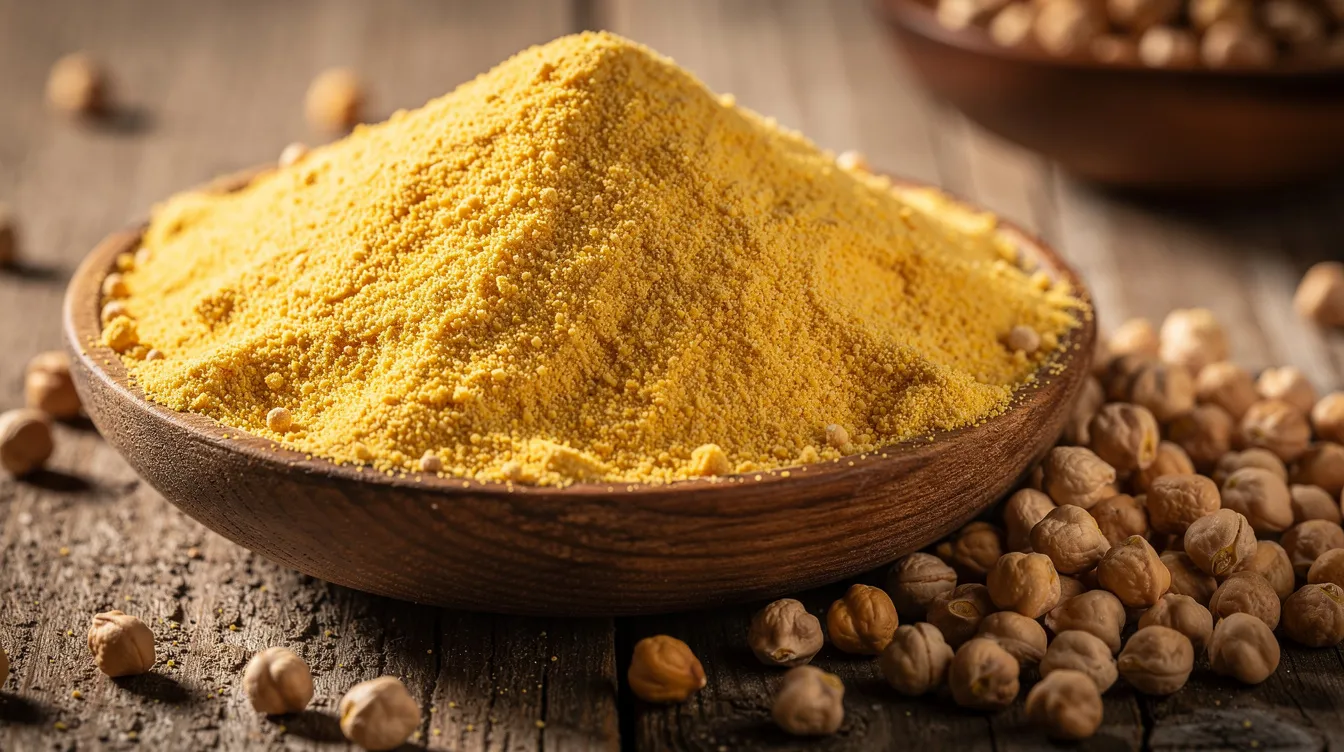
Gram flour quality standards depend on the complete production chain: raw gram or chana, cleaning, dehusking, splitting, grinding, sieving, hygiene, packaging and storage. The quality of gram flour is influenced by its milling technique and raw material selection at every stage.
Raw material factors include the choice between chana dal and whole gram, variety (Desi vs Kabuli), moisture level of the grain, maturity, and the proportion of damaged or shrivelled kernels. High-quality gram flour is characterized by a bright natural hue from pure chickpeas, and raw material variation directly affects the final colour, aroma and protein content. Gram flour should have a rich, nutty aroma without sour smells – and this begins with good chana.
Pre-cleaning and de-stoning remove stones, dust, husk, ferrous particles and other foreign matter that can later appear as physical defects or signs of potential adulteration. Inadequate cleaning is a common cause of elevated acid-insoluble ash levels.
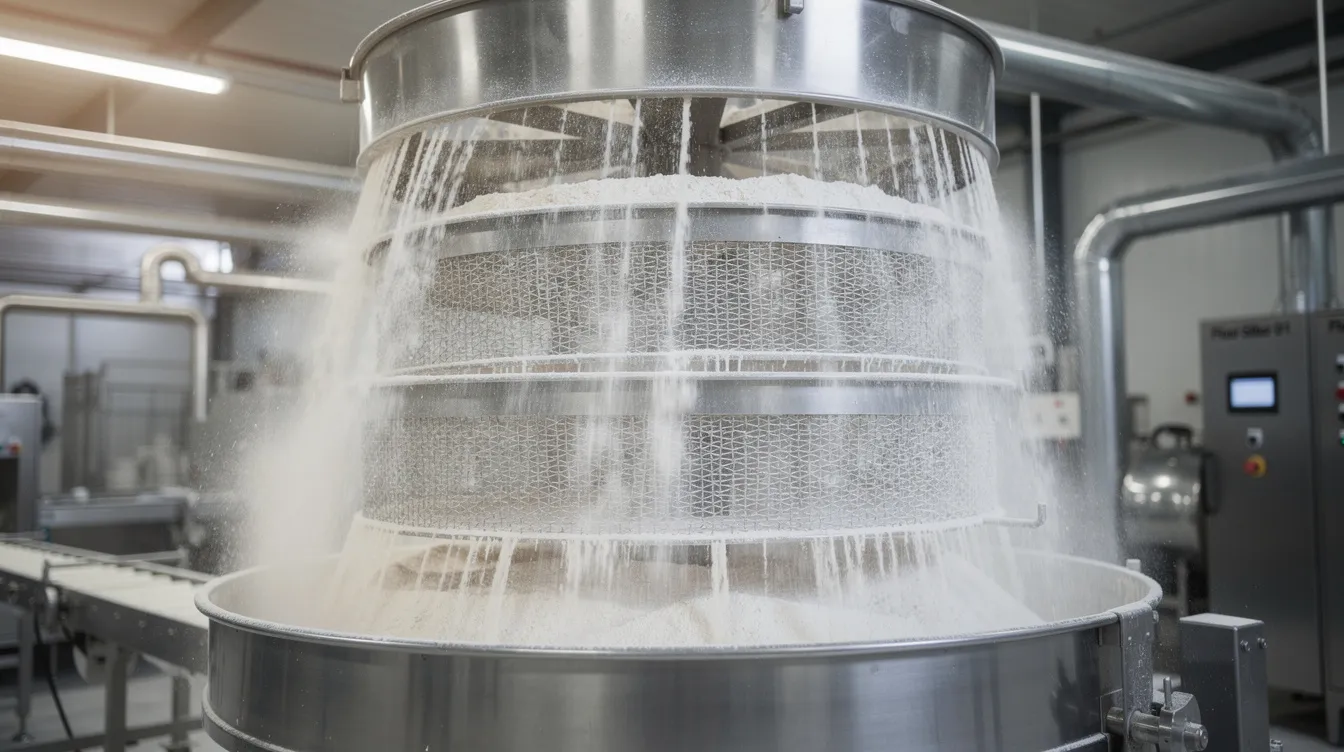
The besan manufacturing process – cleaning, conditioning, milling, sieving and recycling oversize particles – shapes homogeneity, besan particle size and temperature management during grinding. Mill type, grinding clearance, air flow and sieve selection all affect fineness, starch damage, heat generation and flavour. Excessive grinding and high temperature can lead to quality loss.
Hygiene, dust control and pest prevention supported by an efficient factory layout help avoid cross-contamination and support good manufacturing practice. Packaging materials and storage conditions (temperature, humidity, protection from light) influence moisture pick-up, caking, rancidity and microbiological stability over the product’s shelf life.
Different markets have different expectations. A bulk namkeen manufacturer may prioritise consistency and price, while a branded retail buyer demands colour uniformity, odour control and attractive packaging – a distinction explored further in the discussion on bulk supply versus branded retail besan.
Besan Fineness, Mesh Size and Particle Size Distribution
Besan fineness refers to how fine or coarse the gram flour particles are. It is usually expressed in terms of mesh size and the percentage passing through standard sieves, not by a vague label like “fine besan.”
Mesh size is the number of openings per linear inch in a sieve. A higher mesh number means finer openings and therefore finer flour. However, different sieve standards (ASTM, IS) give slightly different actual dimensions for the same mesh designation, so any specification should clearly identify the standard being used. A proper fineness specification should state both the reference sieve standard and the percentage of material passing or retained – for example, “not less than 98% passing through a 500 µm sieve.”
Under the earlier Besan Grading and Marking Rules, 1975, “Fine” grade besan required 99.3% to pass through a 500 µm sieve, while “Coarse” grade required 98% through a 1000 µm sieve. Gram flour should pass 98% or more through a 500 µm sieve for optimal texture in most common applications.
Particle size distribution – not just a single sieve cut – matters for performance. A well-milled gram flour product shows consistent particle size for smoother batters. Very fine particles reduce batter viscosity and oil uptake in frying, while a proportion of coarser particles may be desirable for certain snacks or traditional recipes such as laddoo. Each buyer may specify their own besan fineness range.
Excessive grinding creates problems. Excessive heat during milling can affect the color and flavor of gram flour – leading to a slightly burnt aroma, darkened colour and partial starch gelatinisation. Traditional stone grinding preserves heat-sensitive nutrients in gram flour, but modern hammer mills or impact pulverisers require careful temperature control. Proper besan plant capacity planning helps balance throughput against quality by avoiding overloading mills and sifters.
The role of sieving equipment – vibro sifters, plansifters – and their maintenance is equally important. Screen integrity, regular cleaning and avoidance of blinding are essential for maintaining a stable besan particle size profile. These are discussed further in the guide on besan manufacturing machinery.
Finer is not automatically better. Overly fine besan can increase dusting, energy consumption, wastage and may not suit every culinary or industrial application.
Besan Moisture Content and Water Activity
Besan moisture content is the percentage of water in the flour by weight. Water activity is a separate measure of how freely water is available for microbial growth. They are related but not identical – a sample may have moderate moisture but low water activity if the water is tightly bound.
High moisture in gram flour can lead to clumping and rancidity. It also promotes mould formation, microbial growth and shortens shelf life. Conversely, over-dried flour can be brittle, dusty and difficult to handle. Ideal moisture content for gram flour is generally maintained at or below 12.0% to 14.0%, with FSSAI prescribing a maximum of 12.0% by mass under current regulations. Many manufacturers set internal factory control targets at 10.5–11.5% to create a safety margin below the statutory limit.
Practical moisture problems arise from humidity absorption during storage, leaky packaging, condensation and poor warehouse conditions. Even if flour leaves the mill within target limits, inadequate storage can push moisture above acceptable levels.
It is important to distinguish between:
- Legally prescribed upper limits (such as the FSSAI maximum of 12.0%)
- Buyer-specific specifications that may be tighter for particular applications
- Internal factory control targets set below regulatory limits as a buffer
Common moisture testing methods include conventional oven-drying, moisture balances and portable moisture meters. Factory meters need proper calibration and periodic correlation with reference laboratory methods to remain reliable.
Water activity measurement requires specialised meters. Low water activity generally supports better microbiological stability, but it does not replace the need for microbiological testing. Moisture and water activity control must be validated alongside packaging material selection, sealing quality and storage conditions as part of shelf life studies.
Physical, Chemical and Microbiological Quality Parameters
Besan quality parameters can be grouped into physical, chemical and microbiological characteristics. Some are prescribed by law; others are commercial or risk-based controls agreed between manufacturer and buyer.
Key Besan Quality Parameters
| Parameter | Why It Matters | Test or Assessment | Control Action |
|---|---|---|---|
| Appearance and colour | First impression; signals freshness or processing defects. Adulterated gram flour may have an artificial bright color or dull appearance. | Visual comparison with standard sample; colorimeter in larger plants | Adjust milling temperature; select consistent raw material; reject off-colour batches |
| Odour and flavour | Off-odour (musty, rancid, sour) indicates spoilage or poor storage | Sensory panel; sniff test on each batch | Improve raw material freshness; control moisture; ensure airtight packaging |
| Foreign matter and contaminants | Safety risk; regulatory failure; customer complaints. High-quality gram flour should be free from foreign matter and contaminants. | Sieving, visual inspection, magnetic separation | Pre-cleaning, de-stoning, supplier quality checks |
| Insect infestation | Food safety violation; spoilage | Visual check, sieving, microscopic examination | Pest control programme, sealed packaging, warehouse hygiene |
| Fineness / sieve analysis | Affects batter behaviour, texture and suitability for different uses | Standard sieve analysis (% passing specified mesh) | Maintain screen condition; recycle oversize; calibrate sifters |
| Moisture content | Spoilage, caking, lumps, microbial growth risk | Oven-drying method; moisture balance; portable meter | Condition raw material; control packaging barrier; monitor storage humidity |
| Protein (N×6.25) | Nutritional value; buyer requirement. High-grade gram flour typically contains 20 to 22 grams of protein per 100 grams. | Kjeldahl method per FSSAI manual | Select high-protein chana varieties; avoid excessive heat damage |
| Total ash and acid-insoluble ash | Indicates mineral impurities, grit or silica from stones | Gravimetric incineration; acid treatment per FSSAI methods | Better cleaning and de-stoning; monitor wear on equipment |
| Alcoholic acidity | Signals hydrolysis, fermentation or degradation | Titration with 90% alcohol per FSSAI method | Use fresh raw material; limit moisture; proper drying |
| Rancidity indicators (peroxide value / FFA) | Fat in besan can oxidise; impacts flavour and shelf life | Laboratory extraction and analysis | Barrier packaging; low moisture; fresh stock rotation |
| Adulteration and purity | Ensures product authenticity. Common adulterants in besan include yellow pea flour and corn flour. | Laboratory tests; polarized light microscopy detects adulteration in besan samples at magnifications of 50X to 1000X. Gram flour must have zero added synthetic dyes for purity. | Strict supplier checks; regular lab testing; traceability; zero-tolerance policy |
| Microbiological (TPC, yeast, mould, coliforms, pathogens) | Food safety; regulatory and export requirements | Accredited external lab methods; periodic sampling | Clean environment; low moisture; proper packaging; HACCP |
Not every listed parameter or test is legally mandatory for every batch. Manufacturers should design a risk-based, product-appropriate testing plan that meets statutory requirements and buyer expectations. Actual limit values, methods and sampling procedures must be confirmed from the latest FSSAI regulations and IS standards.
Practical Besan Quality Testing Programme
A practical besan quality testing programme combines quick in-house checks with periodic external laboratory testing, tailored to plant size, customer profile and risk assessment.
Incoming raw material inspection involves sampling each lot of chana or chana dal, checking moisture, visual cleanliness, infestation, damaged kernels and foreign matter. Records should be linked to supplier performance for traceability.
Representative sampling matters. Samples should be drawn from different positions in bags or silos, combined to form a composite, so that test results actually represent the full batch rather than just the top layer.
In-process checks include monitoring grinding temperature, periodic fineness and sieve tests during the shift, and keeping log sheets to detect trends before quality drifts out of control.
Finished-product checks cover routine moisture measurement, visual examination for colour and odour, sieve analysis for besan particle size, packaging integrity and weight accuracy before dispatch.
For complex analyses – microbiological counts, detailed chemical profiles, sophisticated adulteration detection – external accredited laboratories should be used. Research has shown that five out of ten besan samples tested in studies were found to be adulterated, underscoring the importance of laboratory verification. Home appearance tests cannot reliably verify every adulterant in gram flour; factory-level screening (rapid moisture readings, basic visual checks) is preliminary and does not replace validated laboratory testing.
Retained samples from each production batch, stored in properly labelled sealed packs with batch records, enable traceability for any customer complaint or food safety concern.
Example Internal Besan Quality Testing Plan
| Stage | Parameter | Typical Frequency | Type of Test |
|---|---|---|---|
| Raw chana receipt | Moisture, foreign matter, insect damage | Every lot / daily | In-house (moisture meter + visual) |
| Milling start and during shift | Fineness (% passing target sieve), outlet temperature | Hourly or per tonne | In-house |
| Post-grinding | Moisture, odour, colour | Every batch / shift | In-house + periodic lab |
| Finished product | Ash, protein, alcoholic acidity, adulteration checks | Daily to weekly (volume-dependent) | External lab |
| Packaging and sealing | Seal quality, weight accuracy, labelling | Each production run | In-house |
| Storage monitoring | Moisture, sensory, mould checks | Weekly or monthly | In-house + lab |
This table is an illustrative internal quality plan, not a statutory schedule. Actual testing frequency should reflect production volume, customer requirements and risk assessment.
FSSAI Standards and Applicable Regulatory Requirements
In India, besan must comply with FSSAI standards under the Food Safety and Standards Act. These standards define the identity, purity and certain contaminant limits for food products including gram flour.
Manufacturers should refer to the latest versions of the Food Safety and Standards (Food Products Standards and Food Additives) Regulations, specifically the besan standard (clause 2.4.4, as amended). These typically prescribe:
- Maximum moisture content
- Limits for total ash and acid-insoluble ash
- Maximum alcoholic acidity
- Minimum protein content on dry basis
- Maximum uric acid (to guard against Kesari dal contamination)
- Prohibition of added colouring matter
- Freedom from living insects, abnormal flavours and foreign filth
Statutory requirements set minimum legal thresholds. Many institutional buyers maintain stricter specifications – particularly for microbiological limits, pesticide residues and heavy metal levels – especially for export-oriented supply chains.
Testing should use FSSAI-notified methods or internationally recognised methods, conducted by laboratories with appropriate accreditation (such as NABL) and, where required, FSSAI recognition.
This article does not reproduce or replace official regulations. Entrepreneurs should verify each numerical requirement directly from the most recent FSSAI notifications before commissioning a plant or finalising specifications. Apart from product standards, besan units must also comply with licensing, hygiene, labelling and other applicable food processing regulations.
Packaging and Storage Conditions for Maintaining Besan Quality
Correct packaging and storage conditions are as important as the milling process in protecting besan from moisture ingress, oxidation, infestation and off-odour pick-up.
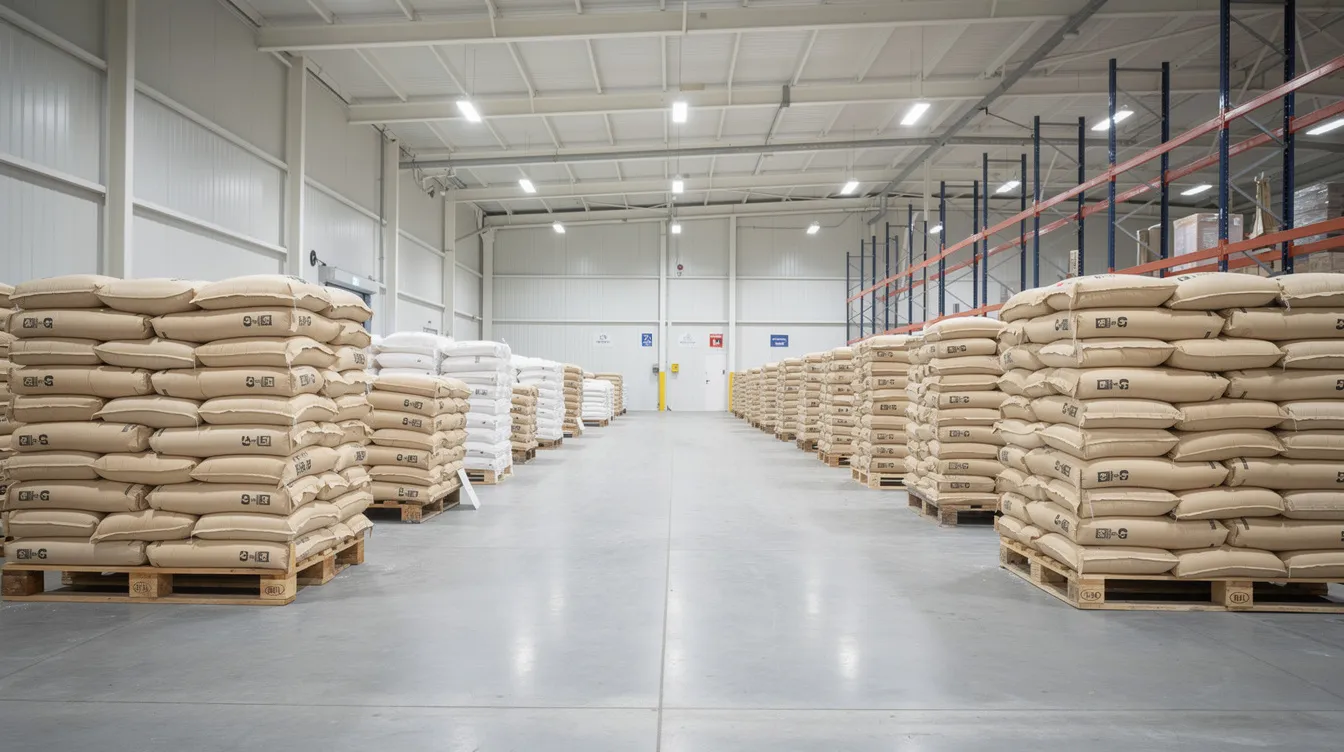
Packaging material should be food-grade with adequate moisture and oxygen barrier properties. Retail pouches (500 g, 1 kg) typically use multi-layer laminated films, while bulk bags (25 kg) may use lined polypropylene sacks. Seal integrity – correct temperature, pressure, leak testing and checks for pinholes – is essential, especially for products distributed in humid climates.
Storage best practices include:
- Clean, dry, well-ventilated warehouses
- Use of pallets to keep bags off the floor
- Clearance from walls and ceilings for cleaning and inspection
- Regular pest control and monitoring for insects and rodents
- Protection from direct sunlight, roof leaks and heat sources
- Avoiding storage near strong-smelling chemicals
Store gram flour in an airtight container wherever possible. Ensure the container is moisture-free before storing flour. Store gram flour in a dark place to prevent spoilage. Adding 2 to 3 bay leaves to storage containers can help deter insects – a practice used both at household and small-unit levels. For smaller quantities or short-term storage at home, you can refrigerate gram flour to maintain its texture, though this is not practical at production scale. These household practices share the same underlying principles as industrial-scale storage: controlling moisture, temperature, light and pest access.
Temperature and relative humidity should be monitored based on local climate and validated shelf life studies. Rather than prescribing rigid universal limits, each manufacturer should validate operating ranges suitable for their product and packaging.
Follow FIFO (First In, First Out) and FEFO (First Expired, First Out) stock rotation. Label every batch with production date, batch code and best-before date. Damaged, returned or nonconforming stock must be segregated with clear SOPs for evaluation, rework (if appropriate) or safe disposal. Potentially unsafe material should not be blended back into good stock merely to avoid losses.
How to Establish Besan Shelf Life
Shelf life is the period during which besan, stored in recommended conditions, remains fit for consumption and continues to meet both safety and quality specifications agreed with buyers.
Shelf life depends on raw material quality, residual fat content, fineness, moisture content, packaging material, sealing quality and actual storage and distribution conditions. It cannot be assumed from another plant’s experience.
Real-time shelf life studies involve storing finished product in the proposed packaging under controlled, realistic conditions and testing at defined intervals (for example, monthly) for sensory attributes, moisture, rancidity markers and microbiological quality.
Accelerated shelf life studies – where samples are stored at elevated temperature or humidity – can provide early signals but should be used with caution and supported by real-time data before establishing a printed best-before date.
Parameters monitored during shelf life testing typically include:
- Appearance, colour, freedom from caking and lumps
- Odour and taste
- Moisture content and water activity
- Rancidity indicators (peroxide value of extracted fat)
- Key microbiological counts (yeast, mould, total plate count)
The best-before date printed on the pack is a quality indicator and should be backed by documented validation data. Labelling rules for best-before and use-by dates must follow current FSSAI guidelines.
Project Report Bank does not conduct lab testing but can help project promoters understand cost and infrastructure implications of shelf life studies as part of feasibility and DPR preparation.
Common Besan Quality Problems and Corrective Actions
Even well-designed plants occasionally face quality issues. A structured approach to identifying problems, causes and actions helps prevent repetition and supports a formal quality management system.
Common Besan Quality Issues and Corrective Actions
| Problem | Possible Cause | Corrective or Preventive Action |
|---|---|---|
| Coarse texture / fails sieve target | Worn or torn screens; improper mill clearance; insufficient recycling of oversize | Replace screens; adjust clearance; verify recycling line function |
| Inconsistent fineness between batches | Variable feed rate; screen blinding; worn hammers | Standardise feed rate; schedule screen cleaning; maintain mill components |
| Visible black specks or foreign matter | Inadequate pre-cleaning; worn de-stoner; contamination in transit | Improve cleaning line; maintain de-stoners; inspect raw material on receipt |
| Off-odour (stale or rancid) | Fat oxidation; old stock; high moisture; microbial growth | Use fresh raw material; rotate stock; improve packaging barrier; control moisture |
| Excessive caking or lump formation | High moisture; poor packaging; high ambient humidity | Lower moisture before packing; upgrade packaging; control warehouse humidity |
| Insect infestation | Poor warehouse hygiene; compromised packaging; warm storage | Implement pest control programme; sealed packaging; regular inspection |
| Colour variation between batches | Mixed chana varieties; inconsistent roasting or conditioning; overheating | Standardise raw material; control conditioning; monitor milling temperature |
| Packaging failure (leaking seals) | Incorrect sealing temperature; jaw wear; packaging defects | Calibrate sealing machine; replace jaws; inspect packaging on receipt |
Reprocessing has limits. Material suspected to be unsafe due to microbial contamination, serious infestation or chemical contamination should not be blended or reworked merely to avoid financial loss.
Maintaining a log of quality incidents, root cause analysis and corrective actions demonstrates control to buyers, auditors and lenders.
Quality Control Costs and Project Viability
From a financial advisory perspective, investing in quality control – lab equipment, trained staff, sieving systems, dust control and suitable packaging – adds to project cost but usually protects margins, brand value and working capital over the long run.
Quality-related capital expenditure includes grinders, sifters, aspiration systems, storage infrastructure, packing machines, basic lab instruments (moisture meters, sieves, balances), and possibly metal detectors. These form part of the broader project cost discussed in the guide on besan manufacturing plant setup cost in India.
Operating cost impacts include routine testing expenses, packaging material costs, electricity for climate control, staff training and pest control. These must be factored into financial projections and unit cost calculations within the DPR.
Weak quality control creates hidden costs that are easy to underestimate:
- Rejected batches and rework losses
- Customer complaints and returns
- Price discounts to clear inconsistent stock
- Higher stockholding due to slower movement
- Damage to brand ratings and repeat orders
Illustrative example (based on assumed numbers, not industry benchmarks): Suppose a plant produces 100 tonnes of besan per month at an approximate cost of ₹20,000 per tonne. If 5% of output is rejected or discounted due to excess moisture or foreign matter, the monthly loss is approximately ₹1,00,000 – or ₹12,00,000 per year. If incremental quality control investment (better screens, moisture-barrier packaging, periodic lab testing) costs approximately ₹7,00,000 per year in amortised capex and operating expense, the net benefit from reducing rejections is positive. Such analysis helps lenders and investors understand the return on quality investment.
Careful capacity planning helps balance throughput and quality by avoiding overloading of mills and sifters. Detailed Project Reports, CMA data and cash flow projections should present realistic quality-related capex and opex. Financial projections are prepared from assumptions and sensitivity analysis rather than guaranteed outcomes.
Practical Checklist Before Starting a Besan Plant
This checklist helps entrepreneurs integrate besan quality parameters into plant design and project planning:
- Define clear product specifications (fineness range, moisture target, colour expectations, packaging options) based on chosen market segment and buyer feedback
- Conduct small-scale milling and sieving trials with shortlisted machinery suppliers to verify that required quality can be consistently achieved at intended capacities
- Identify quality testing arrangements: basic in-house equipment for routine checks and tie-ups with accredited external laboratories for microbiological and adulteration testing
- Plan factory layout and zoning with allocated spaces for raw material storage, processing, packing, finished goods and a QC room
- Select and validate packaging formats and materials for likely storage and transport conditions
- Develop written SOPs for raw material receipt, cleaning, milling, sieve maintenance, in-process checks, packaging, pest control and handling of nonconforming product
- Train staff on hygiene, safe handling of food products, use of test equipment, sample collection, record keeping and awareness of food adulteration risks
- Establish traceability systems (batch coding, supplier records), insurance coverage, contingency planning for equipment downtime, and include quality-related costs in the DPR and CMA data
Frequently Asked Questions
How is besan quality typically checked in a small or medium plant?
In a small or medium plant, quality checking follows a practical sequence: visual inspection of raw chana for damaged kernels and foreign matter, basic moisture checks using a calibrated portable meter, simple sieve analysis for besan fineness, and regular smell and colour checks on each production batch. Composite samples should be sent periodically to an accredited lab for microbiology, chemical analysis and adulteration screening. Small plants can start with essential in-house tools – a moisture meter, standard test sieves and a weighing balance – rather than attempting to build a full-scale laboratory from day one.
When does it make sense to invest in more advanced quality equipment?
Investment in advanced equipment such as water activity meters, automatic sieve shakers or on-line metal detectors becomes commercially sensible when production volumes grow, branded retail operations expand, or major institutional buyers demand documented and frequent testing. Such investments should be evaluated through project feasibility analysis and payback calculations as part of a DPR, rather than purchased on impulse.
How do besan quality parameters affect bank loan proposals and investor discussions?
Clear quality specifications and realistic testing plans strengthen project credibility. They help justify machinery choices and support assumptions used in financial projections and CMA data. Lenders and investors may look for evidence that the promoter understands quality risks – food adulteration concerns, moisture-related spoilage, product returns – and has budgeted for appropriate controls within project cost and working capital planning.
Can one besan plant supply both bulk industrial buyers and branded retail simultaneously?
It is possible if the plant is designed with flexible sieving, packaging and quality control arrangements, and if separate product specifications and labelling requirements for each segment are clearly defined. Strict batch segregation, traceability and appropriate packaging and storage conditions for each market type are essential to avoid confusion and protect brand reputation. Read more about this distinction in the guide on bulk supply versus branded retail besan.
Does finer grinding always improve besan quality?
Not necessarily. While finer besan produces smoother batters and is ready for applications like boondi and kadhi, excessively fine grinding increases energy consumption, dust generation and heat build-up – which can degrade colour and flavour. Some products, such as certain namkeen or laddoo formulations, may actually perform better with a slightly coarser share of particles. The fineness specification should follow buyer requirements and intended use rather than a universal assumption.
Conclusion and Advisory Note
Besan quality parameters – fineness, moisture content, physical purity, chemical composition, microbiological safety and appropriate storage conditions – must be built into plant design, SOPs and financial planning from the initial project stage. Quality is not only a technical concept but also a commercial and financial one: it influences rejection rates, brand image, working capital needs and the overall viability of the investment.
All food safety specifications, regulatory requirements and shelf life claims must be confirmed and validated for each specific product, packaging and process, using recognised laboratories and current FSSAI regulations. Financial projections in any DPR are based on assumptions and should not be treated as guaranteed outcomes.
Serious entrepreneurs, MSME owners and investors planning a besan manufacturing unit are welcome to contact CA Manish Gugliya, FCA, DISA (ICAI) through the WhatsApp enquiry option on ProjectReportBank.com for professional assistance with DPR preparation, feasibility studies, financial projections and bank loan proposal support.