Setting up a multi-speciality hospital in India is among the most capital-intensive healthcare projects a promoter can undertake. From land and civil construction to operation theaters, ICU infrastructure, advanced medical equipment and technology systems, the investment runs into several crores even for a modest 50-bed facility. This guide, written from my professional experience as CA Manish Gugliya, explains how bank loan for multi-speciality hospital works, what documentation banks expect, and how to structure a project finance proposal that lenders can evaluate with confidence.
Key Takeaways
- A multi-speciality hospital project finance structure typically combines a term loan for building, equipment and fixed assets with separate working capital limits for day-to-day operating requirements. Healthcare financing often involves a combination of different loan types tailored to specific needs, and promoters must plan for both components from the outset.
- Most banks require a detailed project report before approving hospital loans. A hospital DPR is required for bank loan approval because it presents the complete financial and operational story of the project – from project cost and means of finance to revenue assumptions, profitability, cash flow and DSCR analysis.
- Loan quantum, interest rates, collateral required and eligibility criteria differ significantly across lenders. There is no universal formula; sanction depends on promoter profile, project viability, security structure, credit history, regulatory compliance and the bank’s internal lending policy.
- A well-prepared DPR helps validate the hospital project idea and should cover financial projections for five to seven years, including realistic occupancy ramp-up, operating expenses, cash accrual and debt servicing capacity rather than optimistic assumptions disconnected from ground reality.
- Through ProjectReportBank.com, my focus is on preparing hospital DPRs, CMA Data and documentation that align with how Indian banks actually appraise healthcare projects – helping promoters present financially coherent, data-backed proposals.
Explore Multi-Speciality Hospital DPR Guides
Explore our complete series on Multi-Speciality Hospital project planning, financial analysis and bank finance.
Bank Loan for Multi-Speciality Hospital: An Overview
A bank loan for multi-speciality hospital is not a standard personal or business loan. It falls under project finance, where the total project cost typically includes construction and equipment costs, pre-operative expenses, technology systems and initial working capital – each evaluated differently during appraisal. Banks offer specialized credit facilities for healthcare infrastructure, but the complexity of hospital projects demands a structured approach to financing.
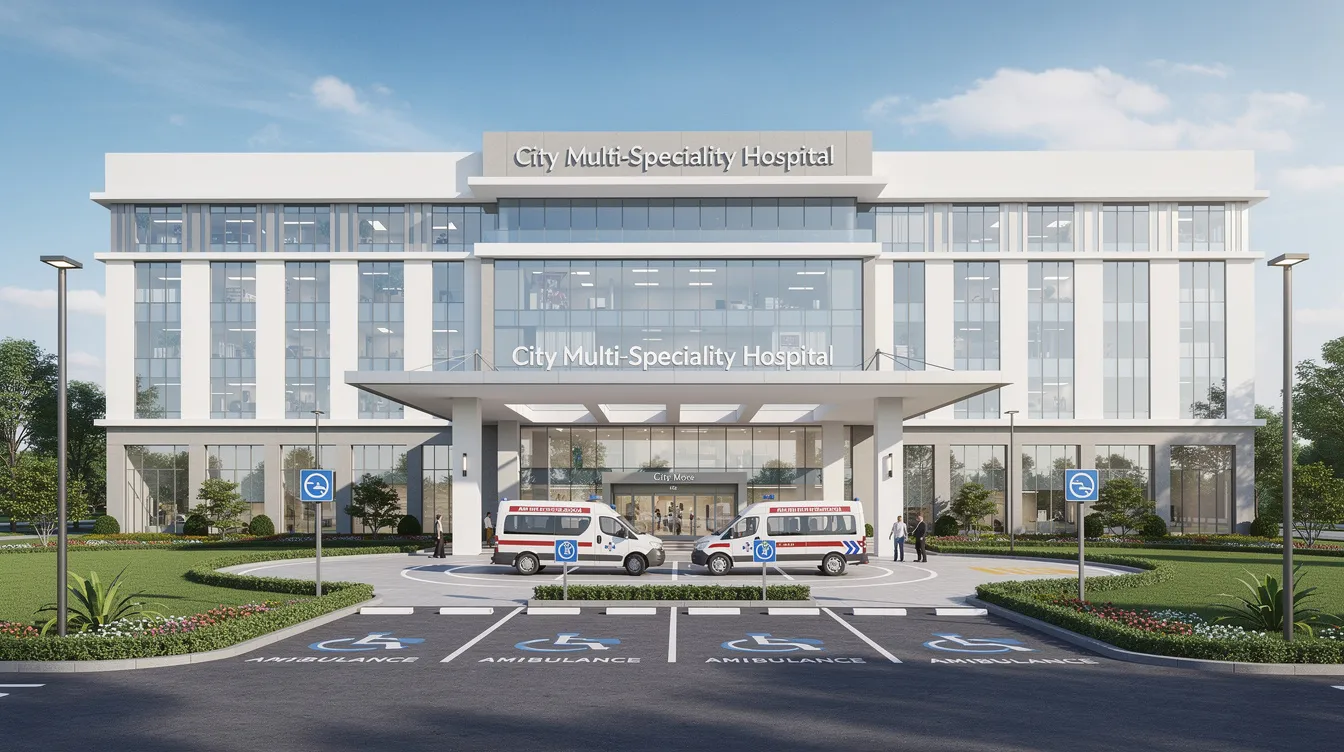
The typical hospital project cost covers land (where purchased), building and civil construction, renovation, interiors, electricals, HVAC, medical gas pipeline, fire-fighting systems, lifts, STP, external development and parking. On the clinical side, investments include operation theaters, ICU/NICU/PICU, emergency and trauma areas, diagnostic zones, CSSD, pharmacy, dialysis centres, maternity suites and potentially cath labs or higher-end facilities.
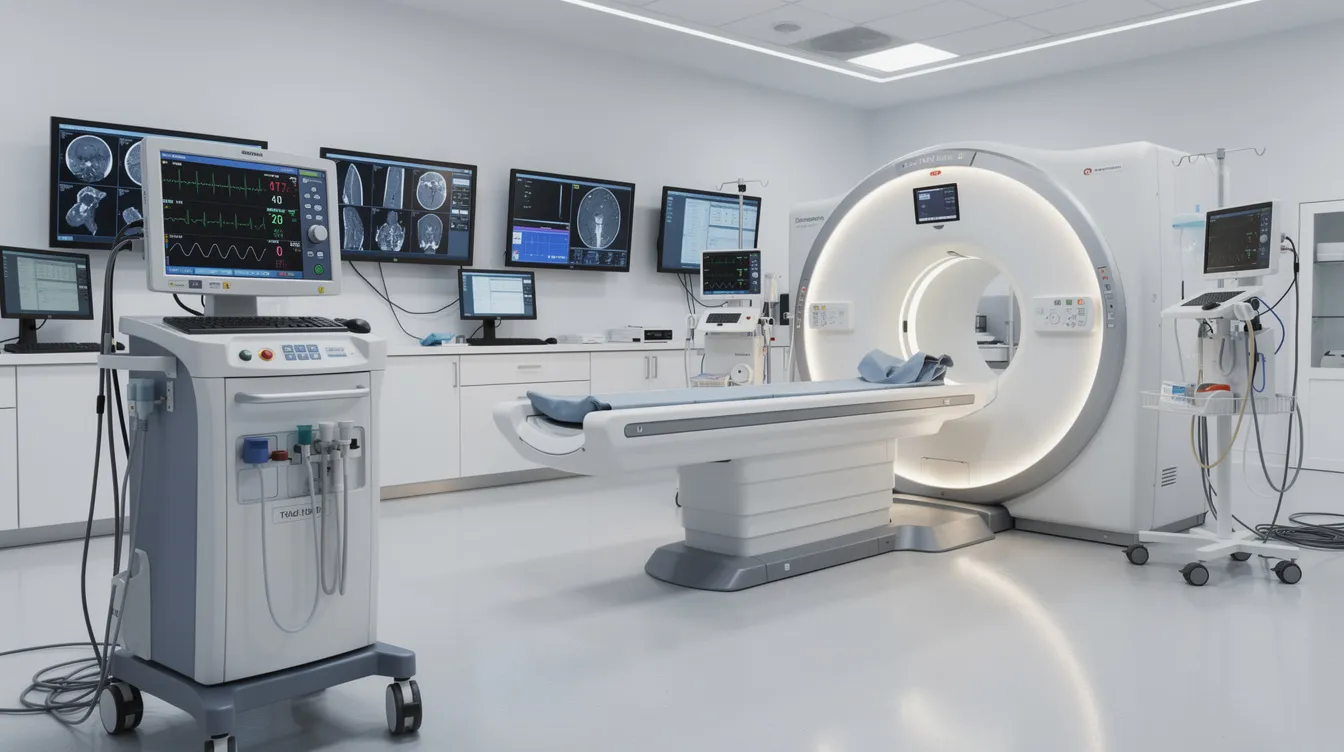
Key equipment driving project cost includes radiology infrastructure (X-ray, USG, CT, MRI where relevant), pathology analysers, blood storage, ICU monitors, ventilators, OT tables and lights, anaesthesia workstations, patient monitoring systems, ambulances, furniture, fixtures and signage. Non-clinical but essential systems – HMIS/EMR, PACS, billing software, LAN/Wi-Fi, security and CCTV, nurse-call systems – are increasingly expected in the project cost along with pre operative expenses, interest during construction and contingency provisions.
The financing structure depends on bed capacity (50-bed vs 100-bed), location, land ownership, specialities offered and the revenue model (cash, TPA, insurance mix). Promoters should first understand their Multi-Speciality Hospital Project Cost in India before designing the financing plan.
What Can a Bank Loan for a Multi-Speciality Hospital Finance?
A multi-speciality hospital loan can finance a wide range of capital expenditures and, in certain schemes, a portion of initial working capital. Hospital loans can cover construction costs for new facilities as well as equipment procurement. However, banks differentiate sharply between term assets and operating requirements. Hospital loans are usually structured as a combination of hospital term loan, medical equipment finance and separate working capital facilities.
Hospital Building and Civil Construction
Bank finance for hospital construction typically covers civil work, structural construction, finishing, interiors and MEP services. Treatment of land cost varies – some banks include it under the term loan with higher margin requirements, while others insist that promoters fund land from own sources. Construction costs for new greenfield hospitals, expansion of existing buildings and conversion of commercial premises into hospitals are all potentially financeable.
Disbursement of hospital construction loan is generally linked to project progress with stage-wise release against bills, photographs and architect certificates. Banks expect approved building plans, structural safety certificates, architect’s cost estimates and contractor quotations as part of documents required for the loan.
Medical Equipment Finance
Hospital loans can be used for medical equipment financing across all departments – ICU equipment, OT tables and lights, anaesthesia machines, ventilators, patient monitors, radiology systems (X-ray, CT, MRI), ultrasound, C-arm, endoscopy, pathology and biochemistry analysers, blood bank equipment, dialysis machines, CSSD autoclaves and sterilizers, and department-specific machines. Interest rates for new healthcare equipment loans range from approximately 9.20% to 13.50% depending on customer profile and equipment type.
Equipment can be financed by the same bank as the project term loan or through a separate hospital equipment loan. Equipment choice directly impacts project cost, depreciation, clinical capabilities and revenue potential. For a detailed department-wise breakdown, refer to Multi-Speciality Hospital Equipment List & Cost. Phasing higher-end radiology (e.g., CT installation in Year 2) can help manage cash flows and support a sustainable DSCR during early operations.
Furniture, Fixtures and Hospital Infrastructure
Typical financed items include hospital beds and mattresses, bedside lockers, trolleys, stretchers, waiting-area seating, nursing stations, modular OT furniture, storage racks, medical gas outlets, signage and cafeteria furniture. Although individually smaller, these costs together form a significant part of hospital project loan requirements and should be properly budgeted with detailed quotations to avoid underestimation and cost overruns.
Technology and Hospital Management Systems
IT investments – HMIS, EMR, LIS, RIS/PACS, queue management, appointment systems, billing and inventory software, server/backup, networking hardware, telemedicine setups and security systems – are often underestimated by promoters. Lenders expect these in the hospital project report for bank loan since they affect operating efficiency and revenue cycle management. Software licence fees, implementation charges and training costs are usually treated as part of project cost.
Working Capital
There is a critical distinction between initial working capital margin (often included in total project cost) and ongoing hospital working capital finance (cash credit, overdraft, working capital term loan). Typical working capital elements include inventory of drugs and consumables, implants, disposables, oxygen and gases, linen, salaries and wages, utilities, marketing, maintenance and the credit period extended to TPAs and corporates.
Some lenders allow a portion of initial working capital requirements to be capitalised into the term loan, while ongoing working capital is sanctioned separately after operations commence with yearly renewal. Underestimation of working capital requirements is one of the most frequent reasons for cash flow stress in the initial 12–24 months of hospital operations.
Term Loan vs Working Capital for a Hospital
| Parameter | Term Loan | Working Capital |
|---|---|---|
| Purpose | Fixed assets – building, equipment, furniture | Day-to-day operations – consumables, salaries, receivables |
| Tenure | Typically 5–15 years including moratorium | Revolving, reviewed annually |
| Repayment | EMI or structured instalments | Interest servicing; limits renewed |
| Forms | Term loan, equipment finance | Cash credit, overdraft, bill discounting |
| Linked to | Project implementation schedule | Projected inventory and receivables |
Healthcare project finance can have a tenure of 5 to 15 years for term loans, while working capital facilities are assessed based on projected inventory and receivables cycles. Promoters should break project outlay into fixed assets, pre-operative expenses, contingency and initial working capital margin, then separately quantify ongoing working capital requirements. Even if a ₹20 crore hospital term loan is fully sanctioned, absence of adequate working capital can disrupt operations and timely loan repayment.
Project Cost and Means of Finance
In hospital project appraisal, “project cost” represents the total investment required, while “means of finance” represents how that cost is funded. Project finance involves multiple participants in funding – promoter equity, institutional term loans, equipment finance lines, unsecured promoter loans (subject to lender comfort) and potentially investor capital.
Most banks prefer a debt-to-equity ratio of 70:30 for healthcare projects, though this is not a rigid rule. Marginal contributions from promoters typically range from 20% to 30% for hospital financing, with some schemes requiring 15–25% margin depending on asset type and location. Key structuring parameters include repayment tenure, maximum moratorium period during construction and stabilisation, realistic interest rate assumptions and amortisation profile. An internally consistent means-of-finance plan is a core part of any hospital project report for bank loan and is scrutinised closely during appraisal.
How Much Bank Loan Can a Multi-Speciality Hospital Get?
There is no universal percentage for bank finance for hospital projects. Lenders finance 70% to 85% of the project cost for hospital funding depending on scheme, promoter profile and project risk. Loan quantum depends on total eligible project cost, proposed debt-equity ratio, net worth, credit history (a healthy personal and business credit score is usually required for financing), DPR strength, projected occupancy, bed capacity, speciality mix and collateral coverage.
Hypothetical Illustration: Consider a ₹10 crore hospital project where the promoter contributes ₹3.5 crore (own funds and unsecured loans) and a bank term loan of ₹6.5 crore is proposed. If projected cash accruals in stabilised years reach ₹1.8–2.0 crore annually against total debt servicing of approximately ₹1.2 crore, the resulting DSCR would be in the range of 1.50–1.67, which many lenders may find acceptable.
This illustration is for understanding only. It is not a standard lending ratio, commitment or sanction assurance. Actual terms, loan amount, interest rates and collateral required are determined solely by the lender based on detailed appraisal.
Documents Required for Multi-Speciality Hospital Project Finance
In hospital loans, documentation is not just a checklist – well-organised, complete and consistent documents significantly influence credit officers’ comfort levels. Documentation for hospital financing includes promoter identification and legal structure along with financial, project and regulatory documents. Exact requirements differ between lenders and between new hospitals, brownfield expansion and acquisition scenarios.
Promoter / KYC Documents
PAN, Aadhaar card, passport or voter ID, recent photographs, address proofs, income proof and personal net-worth statements. Educational and professional qualifications – especially MBBS, MD, MS, DM, MCh – support eligibility criteria in healthcare project finance schemes. Promoters generally need 3 to 5 years of documented experience in managing a healthcare practice, with concise professional profiles included in the DPR annexure.
Entity Documents
Depending on constitution – proprietorship, partnership firm, LLP, private limited company – lenders require the application form along with constitution documents: partnership deed, certificate of incorporation, MOA/AOA, GST registration, PAN of entity. Board or partner resolutions authorising borrowing and creation of security are standard. Banks also collect shareholding pattern, list of directors/partners with KYC, and details of group concerns.
Financial Documents
Last 3 years’ income tax returns of promoters and entities, audited financial statements (P&L, balance sheet), provisional financials where latest audit is pending, and bank statements (6–12 months) for main banking accounts. Details of existing loans and liabilities help assess leverage and repayment behaviour. For expansion of an existing hospital, historical occupancy, revenue, profitability, cash flow and past DSCR are critically important.
Project Documents
The detailed project report (DPR) or hospital project report for bank loan must include project concept, location details, bed capacity, speciality mix, detailed project cost, means of finance and implementation schedule. A hospital DPR should include a market and demand analysis alongside department-wise hospital revenue projections, realistic occupancy ramp-up, operating cost estimates, projected profitability, projected cash flow, loan repayment schedule and DSCR. Banks scrutinize realistic financial models with detailed revenue projections during evaluations.
Required documents also include architect’s estimates and BOQs for civil work, quotations and proforma invoices for major medical equipment, and sensitivity analysis covering lower occupancy or higher cost scenarios. A well-prepared DPR reduces costly mistakes in hospital projects by forcing promoters to validate every assumption before approaching lenders.
Property and Security Documents
Banks require title deeds, sale deeds, allotment letters, mutation entries, tax receipts, encumbrance certificates, approved building plans and completion certificates where applicable. Collateral security is mandatory for large multi-speciality hospital projects. Security structure varies – hospital assets may serve as primary security with additional collateral depending on scheme and risk profile. Legal and valuation reports are arranged through empanelled professionals, but promoters must ensure title chains are clean.
Regulatory and Hospital-Related Documents
Statutory approvals such as building safety and pollution control are necessary for hospitals. Key licences include land-use/zoning approvals, Fire NOC, Clinical Establishment registration, Bio-medical Waste Management authorisation, PNDT registration for radiology, blood bank licence and other state-specific permissions from government bodies. At DPR stage, banks look for a clear status note with timelines for pending regulatory approvals rather than insisting all be completed upfront.
Why a DPR / Project Report Is Important for Hospital Finance
A hospital Detailed Project Report (DPR) is essential for funding. It serves as the storyboard explaining what is being built, why it is viable, how much it will cost, how it will be financed and how the loan will be repaid. Most banks require a DPR before approving hospital loans, and a generic copy-paste document weakens the proposal because it ignores local demand, realistic occupancy and actual cost structure.
Core DPR sections include executive summary, promoter background, project concept, location and catchment analysis, bed plan, department-wise configuration, infrastructure and equipment plan, staffing plan, project cost, means of finance, implementation schedule, detailed revenue model, operating-expense analysis, projected financial statements, cash-flow and DSCR analysis, and risk mitigation. Consistency across assumptions is critical – planned OT complex, ICU beds and radiology setup must logically connect with projected surgeries, ICU occupancy and diagnostic revenue.
Revenue Model Banks May Examine
Hospital project appraisal is driven heavily by revenue model quality. Main revenue streams include OPD consultation, IPD bed charges, ICU and HDU, surgery packages, OT charges, diagnostics (pathology and radiology), emergency services, day-care procedures, dialysis, maternity and neonatal care, physiotherapy, health-check packages and pharmacy. For a deeper exploration of how different revenue streams interact, refer to the Multi-Speciality Hospital Revenue Model.
Banks review operational beds versus licensed beds, average occupancy by ward category, average revenue per occupied bed, OPD footfall, speciality-wise procedure volumes and pricing. Lenders pay close attention to ramp-up patterns – a 100-bed hospital might realistically assume 30–35% average occupancy in Year 1, 45–55% in Year 2 and 60–65% in Year 3 rather than immediate high utilisation. Even a small change in assumed occupancy directly alters revenue projections, profitability and DSCR.
Financial Projections Required for Hospital Project Finance
Hospital financial projections convert qualitative plans into quantitative evidence of viability. Banks typically require projected P&L, balance sheet, cash-flow statement, loan amortisation schedule, interest calculations and DSCR computation. A hospital DPR should cover financial projections for five to seven years at minimum, with larger projects extending to 10 years.
The logical chain runs: bed capacity and specialities → OPD/IPD volumes and procedures → revenue from each service line → direct and indirect operating costs → EBITDA and cash accrual → ability to service debt → DSCR. Projections must reflect realistic occupancy ramp-up with clear linkage between capacity, patient volumes and tariff structure. Project finance relies on future cash flow for funding, and projections are estimates based on assumptions – they cannot be “certified” as future performance but are evaluated for reasonableness and internal consistency.

DSCR and Loan Repayment Capacity
DSCR (Debt Service Coverage Ratio) measures cash available for debt servicing divided by total annual debt obligations (principal plus interest). A Debt Service Coverage Ratio of 1.25 is acceptable for hospital loans as a minimum threshold, while some bank schemes expect an average DSCR of 1.75 with year-wise floors around 1.25. A project’s cash flow is crucial for securing loan repayment schedules.
Example: A year with ₹2 crore cash accrual and ₹1.3 crore total debt servicing produces a DSCR of approximately 1.54. Structuring appropriate tenure and moratorium can improve early-year DSCR when occupancy is still ramping up.
Even a profitable hospital can face repayment stress if occupancy is overestimated, commissioning is delayed, working capital is under-budgeted, moratorium is too short or interest burden is disproportionate. No single DSCR benchmark guarantees loan approval – it is evaluated alongside promoter strength, security, market conditions and risk assessment factors.
How Banks Assess a Multi-Speciality Hospital Project
Hospital project appraisal is multi-dimensional. Banks evaluate promoters, technical merits, market feasibility, financial viability, security and compliance together through a structured risk assessment process.
Promoter Assessment
Banks review qualifications of qualified medical practitioners leading the project, years of practice (promoters generally need 3 to 5 years of documented experience), track record in running clinics or nursing homes, management capability, net worth, liquidity, ability to bring promoter contribution on time, existing leverage and personal credit history.
Technical Assessment
Location suitability, connectivity, catchment population, land and building adequacy, planned bed strength, speciality mix, OT and ICU capacity, diagnostic infrastructure, equipment plan, hospital layout compliance with building codes, availability of nursing and paramedical staff, and realistic implementation schedule.
Market Assessment
A feasibility study covering catchment demographics, income levels, disease profile, existing healthcare facilities, bed density, occupancy trends in nearby hospitals, target patient segments (cash, insurance, government schemes, corporate tie ups) and pricing positioning.
Financial Assessment
Lenders review project cost estimates, means-of-finance structure, projected revenue and occupancy, operating margin, net profitability, cash accrual, DSCR and break-even timeline. Banks perform their own sensitivity checks – reducing projected revenue or increasing costs – to test robustness of hospital repayment capacity under stress scenarios.
Security and Compliance Assessment
Banks assess value and marketability of primary security (hospital land/building, movable assets) and additional collateral where applicable. Legal, technical and compliance risk – clear land title, building approvals, environmental and fire compliance, clinical establishment norms – are examined. Each bank’s risk appetite and policy framework influences the final decision on hospital loan approval.
Common Mistakes While Applying for Hospital Project Finance
From handling multiple hospital project loan proposals, these errors materially weaken cases even when the clinical concept is sound:
- Underestimating total hospital project cost by ignoring contingency, pre operative expenses and interest during construction
- Neglecting working capital requirements and assuming operations will self-fund from day one
- Over-optimistic bed occupancy in Year 1, exaggerated OPD footfall and unrealistic ARPOB compared to local market
- Very thin promoter contribution or expecting lenders to finance the entire cost
- Incomplete financial statements, missing quotations, generic financial models that do not reflect actual hospital configuration
- DPR sections contradicting each other – for instance, equipment list showing basic radiology while revenue projections assume CT/MRI-level diagnostic income
Systematic planning with professional financial support on DPR, financial projections and documentation significantly reduces these avoidable risks.
New Hospital vs Expansion of Existing Hospital
From a bank’s perspective, risk profiles differ. For a new hospital, banks rely heavily on promoter background, feasibility study, DPR quality and projected revenue model – there is no historical data to fall back on. For a hospital expansion, lenders examine historical utilisation, OPD/IPD volumes, occupancy, revenue growth, profitability, existing DSCR, repayment track record and existing debt burden.
Consider the difference: adding a 20-bed ICU block to an already full 80-bed hospital presents a fundamentally different risk profile than setting up a completely new 100-bed hospital in an untested market. Expansion project cost may focus on additional beds, incremental equipment and building extensions, with the loan structure potentially including fresh term loan alongside existing facilities.
50-Bed vs 100-Bed Multi-Speciality Hospital Finance
While promoters often search by bed count, actual project cost and required hospital loans depend on speciality mix (basic medicine and general surgery vs cardiology, oncology, neurosurgery), ICU proportion, OT configuration, presence of high-end radiology, dialysis centre capacity, NICU, quality of finishes and whether land and building are owned or leased. Owning land raises initial outlay but strengthens collateral profile. A 50-bed hospital finance proposal may focus on ensuring right scale for local demand, while 100-bed hospital finance generally involves deeper scrutiny on technical design, management depth and financial projections.
Step-by-Step Process for Hospital Project Finance
- Define hospital concept, bed capacity and target specialities
- Conduct feasibility study and preliminary market analysis
- Finalise location and infrastructure plan with architect
- Prepare detailed project cost estimates with quotations
- Determine means-of-finance structure and promoter contribution
- Assess initial and ongoing working capital requirements
- Prepare realistic departmental revenue assumptions
- Create detailed financial projections including DSCR
- Compile professional DPR / hospital project report for bank loan
- Collect promoter, financial, property and regulatory documents
- Identify appropriate bank/NBFC and submit proposal
- Respond to appraisal queries and provide clarifications
- Undergo property valuation and legal scrutiny
- Receive sanction letter, negotiate terms where possible
- Execute loan and security documents; start operations aligned with disbursement schedule
Actual lender processes may vary. Early engagement with a project finance professional simplifies this application process and avoids last-minute changes affecting timelines.
Role of a Chartered Accountant / Project Finance Professional
While promoters – especially doctors – understand clinical aspects best, specialised financial expertise is required to convert a hospital vision into a bankable proposal. A CA or project finance advisor typically assists with structuring project cost and means of finance, preparing hospital financial projections and cash-flow statements, assessing working capital needs and DSCR, ensuring numbers remain internally consistent, compiling necessary documents, and presenting data in formats banks expect (including CMA Data).
A CA does not and cannot guarantee loan approval. Lender sanction depends on internal policy, risk appetite, promoter profile, security, compliance status and independent appraisal. However, engaging a professional early saves significant time and rework, particularly on complex items like DSCR calculations, repayment structuring and sensitivity analysis.
About CA Manish Gugliya
CA Manish Gugliya, FCA, DISA (ICAI) is a practising Chartered Accountant with specific experience in project finance, MSME and healthcare-sector funding assignments. Areas of expertise include preparation of detailed project reports and hospital project reports for bank loan, CMA Data compilation, hospital financial projections, DSCR analysis, and advisory on project cost and means-of-finance structuring.
Through ProjectReportBank.com, the focus is on helping hospital promoters, doctors and healthcare entrepreneurs prepare coherent, data-backed proposals that align with how Indian banks appraise multi-speciality hospital projects. All guidance is general and educational – each hospital project is unique and requires case-specific advice.
Expert Note
Expert Note from CA Manish Gugliya
“A hospital loan proposal should not begin with the question, ‘How much loan can I get?’ It should begin with a realistic assessment of project cost, promoter contribution, operating assumptions, working capital and sustainable repayment capacity. Use this principle as a filter while reviewing your own DPR, financial projections and bank-loan documentation before approaching lenders.”
- CA Manish Gugliya, Chartered Accountant | ProjectReportBank
Frequently Asked Questions
Below are concise answers to practical queries hospital promoters commonly raise about multi-speciality hospital project finance and documentation.
Can I get a bank loan to start a new Multi-Speciality Hospital?
Yes, banks and financial institutions do provide term loans and project finance for new multi-speciality hospitals. Eligibility depends on promoter profile, viable DPR, adequate promoter contribution, security/collateral where applicable, regulatory compliance and acceptable DSCR. However, no sanction can be guaranteed in advance – each lender conducts independent appraisal based on its credit policy and the specific facts of the project.
How much promoter contribution is generally expected for a hospital project?
There is no single fixed percentage. Hospital projects typically require a debt-to-equity ratio of 70:30, with marginal contributions from promoters typically ranging from 20% to 30%. Stronger own contribution and realistic project sizing improve repayment comfort and may support better loan terms including lower processing fees and more favourable repayment flexibility.
Is working capital included in a hospital term loan or sanctioned separately?
A portion of initial working capital margin may sometimes be included in overall project cost and financed through the term loan. However, ongoing working capital facilities – cash credit, overdraft, WCTL – are usually sanctioned separately after assessing projected inventory and receivables. Both components must be planned in the DPR to ensure the hospital can access funds needed to start operations and sustain them through ramp-up.
Can medical equipment be financed separately from the main hospital term loan?
Many banks and NBFCs offer dedicated medical equipment finance products to buy medical equipment, which can be part of the main project finance package or standalone facilities. Terms, repayment tenure and interest rates may differ based on asset type, whether equipment is new or refurbished, and lender policy. Promoters should compare options and factor equipment finance structure into overall DSCR calculations.
How can ProjectReportBank and CA Manish Gugliya assist with my hospital loan proposal?
ProjectReportBank assists with preparation of hospital DPRs and project reports for bank loan, CMA Data, detailed financial projections, DSCR and repayment analysis, and overall structuring of project cost and means of finance. The objective is to help promoters present quality medical services proposals backed by realistic financial modelling. Final loan sanction depends entirely on the lender’s independent appraisal, policies and the specific medical infrastructure being proposed.
Explore All Multi-Speciality Hospital DPR Guides
Continue exploring our complete series on Multi-Speciality Hospital project planning, project cost, equipment, financial projections, repayment capacity and bank finance.