Many Mudra loan applicants are surprised when a bank asks them to provide property papers, guarantors, or additional security. This often creates confusion because PMMY is widely promoted as a collateral free loan scheme. So, can banks legally demand collateral? The answer depends on understanding both RBI regulations and PMMY guidelines.
In this guide, I am going to walk you through the actual mudra loan collateral rules – what the law says, what banks can and cannot do, how to tell apart legitimate documentation from wrongful collateral demands, and exactly what steps to take if your rights are being ignored. This is based on my 20+ years of experience as a Chartered Accountant advising MSME borrowers, preparing project reports, and handling Mudra loan consultancy across India.
Key Takeaways
Loans under Pradhan Mantri Mudra Yojana (PMMY) are designed to be collateral free for micro and small businesses. MUDRA loans are collateral-free for amounts up to ₹10 lakh, as per both RBI and Government of India guidelines.
- Banks cannot normally insist on property collateral for genuine PMMY mudra loans up to ₹10 lakh extended to eligible micro units.
- No property or asset is needed for MUDRA loan approval within the scheme limits – the bank relies on business cash flows and the Credit Guarantee Fund for Micro Units (CGFMU) instead.
- Hypothecation of assets purchased with the loan and standard KYC documents are part of normal processing, not collateral.
- If a bank demands property papers for a Mudra loan, you have the right to ask for written clarification and escalate the matter.
- This article covers: legal rules, practical banking realities, what to do if a bank demands collateral, and how to protect your rights as a borrower.
Table of Contents
What Is Collateral in a Business Loan? (Basic Concepts for Mudra Applicants)
Collateral is simply an asset you pledge to a bank as a guarantee that you will repay the loan. If you default, the bank can seize and sell that asset to recover its money.
For a Mudra applicant – whether you run a small shop, a manufacturing unit, or a service business – understanding two terms is critical:
- Primary security: This is the hypothecation of stock, machinery, receivables, or equipment created or purchased from the loan itself. The bank has a charge over these business assets but does not take physical possession.
- Collateral security: This is an additional asset – completely separate from what the loan finances. Think of your house, a commercial property, a fixed deposit, gold, or a third-party guarantee.
Common forms of collateral in Indian business loan products include:
- Mortgage of residential or commercial property
- Lien on fixed deposits or government securities
- Pledge of gold or jewellery
- Third-party guarantee backed by property
For many normal MSME business loans above ₹10 lakh, banks usually insist on some form of collateral security as part of their board-approved policies. This is standard practice across the msme sector.
The problem? Collateral becomes a massive barrier for first-time entrepreneurs and micro units who do not own property in their own name.
Here is the practical difference:
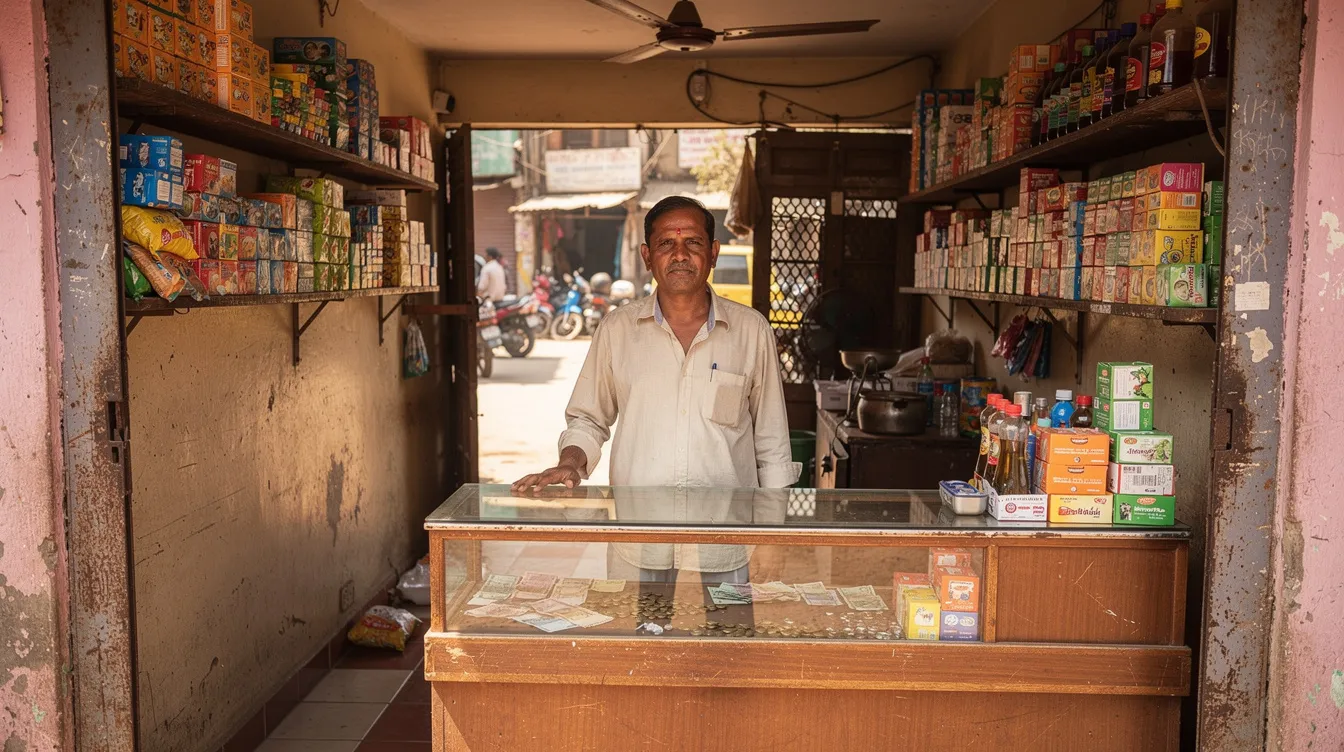
- A ₹7 lakh Mudra working capital loan to a small trader is secured only by hypothecation of the stock and receivables the loan finances. No house papers required.
- A ₹30 lakh regular MSME term loan to expand a workshop would typically require mortgage of residential or commercial property as collateral security.
This distinction is exactly why the mudra scheme exists – to help micro businesses access funding without the property barrier.
Are Mudra Loans Really Collateral‑Free Under PMMY?
Yes. The official Pradhan Mantri Mudra Yojana (PMMY), launched on 8 April 2015 by the government, is explicitly meant to provide collateral free institutional credit to micro enterprises. This is stated clearly by the Department of Financial Services.
Mudra loans are part of the wider PMMY framework. They are offered by banks, non banking financial companies, micro finance institutions, small finance banks, regional rural banks, and other Member Lending Institutions to non-farm micro and small businesses – including traders, manufacturers, and service providers. MUDRA Yojana offers collateral-free loans to small businesses, and this is the core design of the scheme.
What “collateral free” actually means in practice:
- No mortgage of house, shop, or agricultural land.
- No fixed deposit or gold kept as security exclusively for the loan.
- The bank instead relies on business cash flow, project viability, and a government guarantee mechanism (CGFMU).
What collateral free does not mean:
- You still need to submit identity proof, address proof, business registration, quotations, and a project report – these are documents required for processing, not collateral.
- Hypothecation of assets created from the loan (stock, machinery, equipment) is part of standard primary security, not separate collateral property.

Mudra loans are categorized into Shishu, Kishore, Tarun, and Tarun Plus, and each category has specific rules:
- Shishu loans offer up to ₹50,000 for startups and are typically completely collateral free micro credit.
- Kishore loans range from ₹50,000 to ₹5 lakh for growing businesses – still collateral free under PMMY, with hypothecation of business assets and sometimes a personal guarantee.
- Tarun loans provide ₹5 lakh to ₹10 lakh for established businesses – collateral free as per scheme guidelines.
- Tarun Plus loans range from ₹10 lakh to ₹20 lakh, introduced from October 2024 for borrowers who have availed and successfully repaid a previous Tarun loan. Under Tarun Plus, loans under MUDRA Yojana can reach up to ₹20 lakh.
Each loan category under Mudra has specific upper limits and does not require collateral. The Reserve Bank of India mandates no collateral for loans up to ₹10 lakh to Micro and Small Enterprise units, and PMMY uses this framework specifically for micro borrowers.
MUDRA Yojana supports various business types, excluding agriculture. Eligible businesses include shop owners, vendors, and service providers. Agriculture-related businesses are not eligible for MUDRA loans – the scheme covers non-farm businesses only.
The core purpose is to help small businesses, women entrepreneurs, street vendors, and first-time borrowers who do not own property – people who require funds but lack traditional collateral.
Mudra stands for Micro Units Development and Refinance Agency, functioning as a refinance agency that channels financial assistance through lenders to micro units across India.
RBI & PMMY Guidelines on Mudra Loan Collateral
RBI issues the broad MSME lending norms that all banks must follow, while the PMMY guidelines from the Department of Financial Services define the specific mudra yojana framework. Both work together to protect borrowers.
What RBI Says
The Reserve Bank has advised banks not to insist on collateral security for loans up to ₹10 lakh extended to units in the MSE sector. This is laid out in the RBI Master Direction on Lending to MSME Sector (2017, updated periodically).
Key points from RBI norms:
- The mandate applies to both term loans and working capital facilities for qualifying micro and small enterprises.
- Banks implement this through board-approved lending policies.
- Banks may, based on a good track record and financial strength, raise the collateral free threshold up to ₹25 lakh – but this is discretionary and requires proper internal authority.
How PMMY Is Structured
Member Lending Institutions (MLIs) – including public sector banks, private banks, regional rural banks, small finance banks, non banking financial companies, and micro finance institutions – extend mudra loans under three main categories (Shishu, Kishore, Tarun) plus Tarun Plus, with sanction limits up to ₹20 lakh.
The CGFMU Guarantee Mechanism
The Credit Guarantee Fund for Micro Units (CGFMU) backs Mudra loans. Instead of taking property collateral from the borrower, the bank obtains risk cover from this guarantee scheme. As of December 2024, the CGFMU covered approximately ₹4.16 lakh crore in live guarantee amount across financial institutions.
This is the critical difference:
- Loan security requirement under PMMY = hypothecation of business assets + personal guarantee of proprietor + CGFMU cover.
- Collateral = separate valuable asset pledged, like house or land – which is specifically not required under the mudra scheme for eligible loans.
Under PMMY, the expectation is clear: no collateral for loans up to ₹10 lakh to eligible micro units. Lending institutions may still collect standard documents required for KYC, address proof, business proof, quotations, and project reports, and may create a charge on business assets – but they should not demand property collateral.
For a deeper understanding of how banks should follow these rules, you can read about whether banks can ignore RBI & PMMY guidelines for Mudra loans.
Can Banks Ask for Collateral in a Mudra Loan?
For genuine PMMY mudra loans up to ₹10 lakh to eligible micro enterprises, banks should not normally demand collateral security such as property mortgage. Doing so would go against the scheme’s collateral free objective and the RBI’s directions.
But here is where confusion arises in practice:
When Confusion Happens
- The bank processes your request as a normal MSME business loan instead of a Mudra loan. This means different rules apply, and collateral may be legitimately required.
- Your loan amount is above ₹10 lakh, and only part falls under PMMY. The bank may treat the excess under its standard MSME policy.
- Your documentation does not match PMMY criteria – for example, the business is not clearly micro or non-farm – so the branch routes it to another product.
- The applicant has poor credit history or existing overdue accounts, and the bank offers a different, secured scheme instead.
What Banks May Still Ask For
Even in a genuine Mudra loan, banks may request:
- Third-party or personal guarantees (though the scheme does not require third-party guarantees for loan approval in most cases).
- Hypothecation of stock, receivables, or equipment purchased from the loan.
- Standard KYC, a bank statement, aadhaar card, passport size photos, and business proof.
These are not the same as property collateral. But they must be transparently explained to the borrower.
Cases Where a Bank’s Demand May Be Valid
- The loan is not sanctioned under PMMY but under a standard business loan product.
- The borrower has existing NPA history, and the bank offers a different, secured scheme.
- Part of the loan is for personal use or non-eligible activity, so PMMY guidelines do not apply.
Applicants must be aged between 18 to 65 years to be eligible. MUDRA loans are available for non-farm businesses only.
If the bank insists on property security while still using the Mudra or PMMY name, you should politely ask for written clarification and a copy of the scheme details. If the response appears contrary to published guidelines, consider escalation. You also have the right to fair treatment during Mudra loan processing.
PMMY Mudra Loan vs Normal Business Loan: Collateral & Documentation
Many applicants confuse mudra yojana loans with regular MSME business loans, leading to misunderstandings about collateral, other documents needed, and how the loan is processed. Here is a clear comparison:
| Feature | PMMY Mudra Loan | Normal Business Loan |
|---|---|---|
| Collateral requirement | No collateral up to ₹10 lakh | Collateral normally expected above certain limits |
| Security structure | Hypothecation + CGFMU guarantee | Hypothecation + property collateral |
| Documentation | KYC, address proof, business proof, simple project report | KYC, detailed financials, property documents, ITR |
| Processing & charges | No or minimal processing fee (especially Shishu); PMMY loans are approved quickly due to no collateral requirement | Standard processing charges applicable |
| Interest rate | Interest rates for MUDRA loans are generally lower than traditional loans | Market-linked rates, often higher for unsecured |
| Purpose & eligibility | Micro non-farm enterprises, eligible traders, manufacturers, service providers | Wider MSME range, sometimes non-business purposes |
MUDRA loans are processed quickly with minimal documentation. Applications are processed within a few days if documents are complete. You can apply for MUDRA loans through banks and NBFCs, and MUDRA loans can be applied online or offline. You can also apply for MUDRA loans online via participating banks’ websites.
Address proof and identity requirements are the same across both products – aadhaar card, PAN, utility bills, rent agreement, passport, etc. But Mudra may allow slightly simpler financial documentation for tiny enterprises that lack formal balance sheets. A bank statement of the past 6–12 months, details of income and ownership of the business, and a simple project report are usually sufficient for Shishu and Kishore categories.
If a bank is insisting on collateral, the first thing you should check is whether your application has been tagged in the system as “PMMY / Mudra” or as some other business loan product. This single step resolves many disputes. For more on what banks can and cannot ask for, see this guide on extra documents for Mudra loans.

Collateral vs Hypothecation: What Mudra Borrowers Must Understand
Many Mudra applicants assume that “hypothecation” mentioned in sanction letters means collateral. This is incorrect and leads to unnecessary fear. Understanding this difference is essential for protecting your rights.
What Is Hypothecation?
Hypothecation means the bank takes a legal charge over movable assets – stock, raw material, finished goods, machinery, receivables – without taking physical possession. This is common for Mudra working capital limits and term loans used to buy small machines, vehicles, or equipment. Loans are secured through hypothecation of assets purchased with the loan.
What Is Collateral Security?
Collateral security involves fixed assets like a house, shop, plot, or FD that are not directly created from the Mudra loan. It requires a separate mortgage, pledge, or lien – completely distinct from business assets funded by the loan.
Practical Examples
- Shishu loan of ₹40,000 to a street vendor: Only hypothecation of cart and stock. No property collateral.
- Kishore loan of ₹3 lakh to a tailoring unit: Hypothecation of sewing machines and inventory, personal guarantee of proprietor. Still no house mortgage.
- Tarun loan of ₹8 lakh to a small manufacturer: Hypothecation of machinery and stock funded by the loan. CGFMU guarantee covers the bank’s risk. No property papers.
In sanction letters for mantri mudra yojana pmmy loans, you will commonly see phrases like “primary security: hypothecation of assets created out of bank finance.” This is standard and completely different from collateral.
Understanding this distinction helps protect your legal rights as a Mudra loan applicant and prevents lenders from misleading you into thinking the loan is not collateral free.
What to Do If the Bank Demands Property Papers for a Mudra Loan
It is a common and stressful scenario: a branch asks for house papers despite the loan being described as “Mudra / PMMY.” If this happens to you, do not panic – but do not comply blindly either.
Step-by-Step Action Guide
Confirm the loan scheme name in writing. Ask the bank officer to clearly state whether your application is under PMMY / Mudra or a general MSME loan. Get this in writing or via email.
Ask for your loan category. Request confirmation of whether your application is tagged as Shishu, Kishore, Tarun, or Tarun Plus in the bank’s system. This determines the applicable rules.
Request a written explanation. Politely ask the branch to provide a written note or email stating why collateral is being demanded and under which internal policy. You have the right to receive information about your Mudra loan application.
Refer to official guidelines. Point to the official PMMY and RBI guidance stating that loans up to ₹10 lakh to micro units are to be collateral free. You can also reference common myths about RBI & PMMY guidelines.
Escalation Path
If the disagreement persists:
- Approach the Branch Manager first.
- Escalate to the Regional Office or Zonal Office of the bank.
- Use the bank’s online grievance portal or email to lodge a formal complaint, attaching copies of all communication.
- After exhausting the internal complaint process, consider the Reserve Bank’s Integrated Ombudsman mechanism if appropriate.
Real-Life Resolution Examples
- Case 1: A small trader in Rajasthan was asked for property papers for a ₹4 lakh Kishore loan. On inquiry, it turned out the branch had processed the application under a regular MSME product instead of PMMY. Once corrected, no collateral was required.
- Case 2: A woman entrepreneur running a beauty parlour was told she needed a guarantor with property. She asked for written clarification, referenced PMMY norms, and the branch manager approved her loan under the mudra scheme without property collateral.
Never submit original property documents without fully understanding whether the loan is truly a PMMY Mudra loan or a different secured business loan. You also have the right to apply to another bank if your Mudra loan application faces issues.
Common Myths, Mistakes & Practical Tips from a CA’s Perspective
Myths That Refuse to Die
- “Mudra always requires property security.” This is flat-out wrong. The entire purpose of the mudra yojana is to provide collateral free credit to small enterprises. No property or asset is needed for MUDRA loan approval within the scheme limits.
- “Every bank can fix its own collateral rule even under PMMY.” Banks have internal policies, but they cannot override scheme guidelines when processing a loan specifically under PMMY. If the loan is tagged as Mudra, scheme rules apply.
- “Hypothecation means my house is at risk.” Hypothecation applies to business assets only – your stock, machinery, equipment. Your house or personal property is not touched unless you have signed a separate mortgage document.
- “You need a subsidy to get a Mudra loan.” Mudra is not a subsidy scheme. It is a credit facility. There is no government grant or subsidy component – it is a loan with applicable interest rate that you must repay.
- “Only government banks offer Mudra loans.” Private banks, small finance banks, non banking financial companies, and micro finance institutions are all eligible lenders under PMMY.
Common Borrower Mistakes
- Signing sanction letters and documents without reading collateral and security clauses carefully.
- Confusing personal guarantee with property collateral – a guarantee is a promise to pay, not an automatic mortgage.
- Not asking whether the loan is actually processed under PMMY or some other product.
- Relying on verbal statements from bank staff without obtaining written confirmation.
- Applying under the wrong loan product because the form was not filled correctly or the branch officer did not explain the options.
Expert Recommendations
As a practicing Chartered Accountant, here are my practical tips for every Mudra applicant:
- Prepare a simple project report and basic CMA data even for small Mudra loans. It strengthens your application and speeds up approval.
- Keep identity and address proof updated – aadhaar card, PAN, utility bills, rent agreement, shop licence, Udyam registration or business registration certificate.
- Clearly state the usage of funds (stock, equipment, working capital) so the loan amount clearly qualifies as a business loan under the mudra scheme.
- Ask the bank whether CGFMU cover will be taken instead of collateral.
- Maintain repayment discipline to later qualify for higher category loans like Tarun or Tarun Plus and expand your eligibility.
- Get an acknowledgement receipt when you submit your application – this is your right as an applicant. Learn more about Mudra loan application acknowledgement rights.
- If the bank asks you to fill additional forms related to property mortgage, stop and ask for written clarification before signing anything.
- Keep copies of all documents you submit to the bank.
- If the branch is uncooperative, remember that MUDRA loans can be applied through multiple financial institutions – you are not restricted to one bank.
- Seek professional help from qualified advisors when the loan structure or security conditions are unclear, especially for Kishore and Tarun category amounts close to ₹10 lakh.

FAQs on Mudra Loan Collateral Rules
The following FAQs cover additional clarification points on collateral, security, and borrower rights that are commonly raised by mudra loan applicants.
Can my bank change my Mudra loan request into a normal secured business loan?
Banks may offer an alternative secured product if they believe your proposal does not qualify under PMMY – for example, if the business is not clearly a micro or small enterprise, or if the loan purpose does not meet the eligibility criteria. However, they must clearly inform you about the change and obtain your consent. A bank cannot misuse the Mudra name while simultaneously taking collateral. If this happens, ask for a written explanation. You should also know that banks should explain the reason if a Mudra loan is rejected.
Does giving a guarantor mean my Mudra loan has collateral?
No. A personal or third-party guarantee is different from property collateral. A guarantor promises to repay the loan if the borrower defaults, but their property is not automatically mortgaged. Their house or assets only become liable if a separate mortgage or pledge document is executed. Always read every document before you sign – if a form mentions “mortgage” or “equitable mortgage,” that is collateral, not just a guarantee.
Will my existing home loan stop me from taking a collateral‑free Mudra loan?
Having a home loan generally does not bar you from availed credit under PMMY. What matters for eligibility is business viability, credit history, and your status as a micro or small business – not whether your house is already mortgaged for another purpose. Banks assess your income, cash flow, and repayment capacity, not your existing property obligations, when processing a collateral free Mudra application.
How can I confirm that my Mudra loan is actually under PMMY and covered without collateral?
Check these three things: (1) Your sanction letter should mention “PMMY” or “Pradhan Mantri Mudra Yojana” and specify the category – Shishu, Kishore, Tarun, or Tarun Plus. (2) The account classification in bank records should show it as a Mudra loan. (3) Ask the branch in writing whether your loan is covered under PMMY with CGFMU guarantee and without property collateral. If the bank cannot confirm these details in writing, treat it as a red flag.
Can I move my Mudra loan to another bank if property collateral was wrongly taken?
Refinancing is sometimes possible if another lender is willing to take over the loan under proper PMMY terms. Start by raising a formal written complaint with your existing bank, citing the applicable mudra loan collateral rules and RBI guidelines. If the issue remains unresolved, explore other financial institutions. The government has made it clear that eligible borrowers should not be denied the collateral free benefit of the pradhan mantri mudra yojana, and the growth of the scheme – with over 52 crore accounts sanctioned and ₹33.19 lakh crore in total sanctions as of February 2025 – shows that the system is designed to work in your favour when you know your rights.
- RBI & PMMY Guidelines for Mudra Loans – Complete Guide to Bank Rules, Applicant Rights & Compliance

- RBI & PMMY Guidelines for Women Entrepreneurs Applying for Mudra Loans
- Common Misinterpretations of RBI & PMMY Guidelines That Lead to Mudra Loan Problems
- What Happens If a Bank Violates RBI or PMMY Guidelines?
- RBI & PMMY Guidelines on Mudra Loan Complaint and Grievance Redressal (2026)

- RBI Guidelines for Mudra Loan Applicants: Documentation, Eligibility & Bank Duties


- Are RBI Circulars Legally Binding for Mudra Loans? Complete Legal Guide for Borrowers
- Mandatory RBI & PMMY Guidelines for Mudra Loans: Practical Compliance Guide for Applicants and Banks
- Mudra Loan Collateral Rules: RBI & PMMY Guidelines (Practical Outline)