Many first-time entrepreneurs assume that banks can ask for any document they want when you apply for a Mudra Loan. Others believe the opposite-that the bank must accept only Aadhaar and PAN and nothing else. Both assumptions are wrong.
The reality sits somewhere in the middle. PMMY guidelines lay down a broad framework, but every bank retains some discretion in how it appraises your business loan proposal. In this guide, I will walk you through what banks are actually allowed to ask, where the limits lie, and what you can do if documentation demands become excessive or unrelated to your application.
This is practical advice drawn from over 20 years of working with project reports, CMA data, MSME finance, and Mudra Loan consultancy across dozens of financial institutions in India.
Key Takeaways
- Banks can ask for additional documents in a Mudra Loan if those documents are reasonably linked to credit appraisal and risk assessment.
- There are core mandatory documents under PMMY (Aadhaar, PAN, address proof, business proof, basic financials) and then case-based additional documents like income tax returns, GST details, rent agreement, quotations, and trade references.
- Applicants have clear rights: you can ask for written reasons behind any document request, refuse clearly irrelevant demands, and use formal grievance mechanisms if a bank keeps asking for unnecessary documents.
- Kishore and Tarun loans require more detailed financial documentation than Shishu loans, so expect proportionally heavier paperwork as the loan amount increases.
- A well-prepared, consistent file almost always results in smoother and faster processing.
Table of Contents
What Does PMMY Really Say About Mudra Loan Document Requirements?
Pradhan Mantri Mudra Yojana (PMMY) was launched on 8 April 2015 to provide collateral-free institutional credit to micro enterprises. As of February 2025, the scheme has facilitated over 52.07 crore loan accounts with ₹33.19 lakh crore sanctioned.
The Mudra scheme categorises loans into three main types based on the loan amount:
- Shishu: up to ₹50,000
- Kishore: above ₹50,000 and up to ₹5 lakh
- Tarun: above ₹5 lakh up to ₹10 lakh
A fourth category, Tarun Plus (up to ₹20 lakh for successful Tarun repayers), was introduced in October 2024.
Here is something many applicants don’t realise: PMMY does not publish a single, universal document checklist that every bank must follow word for word. The PMMY FAQ mentions “statutory return and others as may be required,” which means banks retain flexibility. Different banks may have specific document requirements based on their internal credit policies.
The broad buckets of documents required under the government framework include identity proof (aadhaar card, pan card), address proof, business proof (registration, Udyam, GST where applicable), basic financials (bank statements, simple projections), and passport-sized photographs.
For micro enterprises and first-time borrowers, PMMY clearly encourages simplified procedures. It does not insist on full-fledged audited accounts or complex reports in every case.
Some banks publish their own “documents required for Mudra Loan approval” list on their website. Before visiting a branch, always check that page and compare it with what the officer is asking.
Only non-farm businesses are eligible for Mudra loans. Agriculture-related businesses are not eligible. MUDRA loans are available for small producers and service providers across trading, manufacturing, and services sectors. Applicants must be aged between 18 to 65 years, and students above 18 years can also apply. You can submit your application form online or offline, depending on the lender.
For a detailed, bank-wise checklist of every document you might need, refer to our guide on Mudra loan documents required.

Core Documents Normally Required for a Mudra Loan (Shishu, Kishore, Tarun)
Before any bank considers asking you for extra papers, there is a base set of documents that almost every financial institution will expect. Think of these as the starting point of any Mudra Loan application process.
KYC / Identity Proof
MUDRA loan applicants must provide identity verification documents. The standard combination is aadhaar card plus pan card. Other accepted identity documents include voter ID, driving licence, and passport. Most banks today treat Aadhaar + PAN as the default pair.
Address Proof
Address proof is also required for MUDRA loan applicants. Accepted documents include Aadhaar (if address is current), utility bills (electricity or water), rent agreement with the owner’s ID, or a bank passbook showing your address.
Business Proof / Ownership
Business ownership proof is necessary for MUDRA loan applications. Depending on your business type, this could be:
- Shop & Establishment registration or trade licence
- Udyam registration certificate (free and online)
- GST registration, if applicable
- Partnership deed, MOA/AOA for firms or companies
Income and Financial Proof
Income verification may require bank statements, tax returns, or financial statements. Banks typically ask for 6 to 12 months of bank statements. Income Tax Returns for the last two years are required in many cases, especially for Kishore and Tarun categories. Banks often verify existing loan details to assess financial obligations you already carry.
Commonly requested documents include proof of business viability and continuity-things like sales records, customer lists, or photographs of your premises.
Project Details and Quotations
Lenders may require a detailed project report for certain loan amounts. For Shishu, a simple cost estimate on the loan application form is often enough. For Kishore and Tarun, a short project report covering cost, sales estimate, cash flow, and repayment plan is practically expected. Banks may request specific quotations for equipment purchases to confirm loan appropriateness, especially for a business installment loan or vehicle loan.
Caste certificates may be required for applicants seeking benefits under reserved categories.
How Requirements Vary by Category
| Aspect | Shishu (up to ₹50,000) | Kishore (₹50,001–₹5 lakh) | Tarun (₹5,00,001–₹10 lakh) |
|---|---|---|---|
| KYC | Aadhaar + PAN | Aadhaar + PAN | Aadhaar + PAN |
| Business Proof | Simple (even panchayat letter) | Shop registration, Udyam, GST if applicable | Detailed registration, GST returns |
| Income Proof | Usually not mandatory | ITR (1–2 years), bank statements | ITR (2–3 years), balance sheet if available |
| Project Report | Basic cost estimate | Short structured report | Detailed project report / CMA data |
| Quotations | Simple estimate | Quotations for machinery/stock | Detailed quotations with GST |
Banks still have discretion to relax some items for very small or first-time borrowers if they are otherwise satisfied about your identity, address, and genuine business need.
Can Banks Ask for Additional Documents in Mudra Loan? When It Is Reasonable
Yes. Under standard banking practice, banks are allowed to ask for additional documents beyond the core PMMY list when they need to properly assess your repayment capacity and the viability of your proposal.
RBI’s Master Direction on MSME Lending requires banks to perform due diligence and credit appraisal even for small loans. The branch manager is personally accountable for loan quality and NPAs. Documentation requests may include verification of eligibility and repayment capacity. This is not harassment-it is how lending works.
Banks often request additional documents during the Mudra loan application process. Here are common examples of reasonable requests:
- Income tax returns for the last 2–3 years when the business is already running and you are applying for a Kishore or Tarun loan.
- GST registration and recent returns when your turnover crosses statutory thresholds or you operate a registered trading or manufacturing unit.
- Rent agreement and owner’s NOC when your business runs from rented premises and the bank wants to verify address and business use.
- Trade references or supplier details where the bank wants to verify the nature of your business and purchase cycles.
- Machinery or vehicle quotations with GST details and supplier information, especially for term loans.
- Stock statement, debtor/creditor list, or sales register in case of traders applying for higher Mudra limits to assess creditworthiness.
These items fall into the category of “supporting” or “case-based” documents. They are not written line by line in Mudra Yojana brochures, but they are fully aligned with normal credit appraisal standards. An RTI response in Mukesh Kumar vs Bank of India confirmed that banks may ask for “others as per business nature” beyond the standard list.
Don’t panic when the bank asks for one or two such extra papers. Instead, politely ask the official to explain how the document helps in assessing your Mudra Loan application.

When Does Asking for Extra Documents Become Unreasonable or Unnecessary?
While some extra documents are legitimate, there is a clear line beyond which requests become excessive, unrelated to the business, or are used merely to delay or discourage applications. In my experience, small businesses and first-time entrepreneurs are most vulnerable to this.
Here are practical red flags to watch for:
- Repeatedly asking for the same document even after attested copies are already on file and verified.
- Demanding property papers or collateral documents for a standard Mudra Loan up to ₹10 lakh, when the scheme is explicitly collateral-free. In UCO Bank vs Rakesh Kumar, the bank tried to hypothecate an e-Rickshaw purchased under a Mudra Loan-directly conflicting with the scheme’s principles. If this happens, you should understand your rights regarding security demands.
- Asking for unrelated family documents like parents’ property papers or distant relatives’ income proof when they are not co-borrowers or guarantors.
- Insisting on audited balance sheets or complex CMA data from tiny, home-based Shishu units that do not maintain formal books.
- Asking for old documents that simply don’t exist. For example, demanding 5 years of financials from a street-food vendor who started in 2023.
- Demanding insurance purchase as a condition for loan processing, which is a separate issue of cross-selling.
Excessive or unjustified documentation can indirectly violate the spirit of Pradhan Mantri Mudra Yojana, which exists to provide easier access to funding for micro and small enterprises with simplified procedures.
Before reacting, distinguish between “difficult but relevant” documents (like ITR that you could file) and “clearly irrelevant” ones (like collateral papers for a collateral-free loan).
Can a Bank Reject Your Mudra Loan for Not Giving Extra Documents?
Even Mudra Loans are subject to the bank’s assessment of viability, repayment capacity, and KYC compliance. Incomplete or inconsistent information can absolutely lead to rejection.
Here is the important distinction:
| Document Type | Example | Effect of Non-Submission |
|---|---|---|
| Mandatory | KYC, address proof, business proof, loan application form, photos | Application cannot proceed without these |
| Case-based supporting | ITR, GST returns, quotations, rent agreement, trade references, extended bank statements | Refusal may lead to rejection if genuinely relevant |
| Unrelated / excessive | Collateral papers, family property documents, forced insurance | Applicant can challenge; should not be grounds for rejection |
If a requested document is clearly relevant-for example, last 12 months’ bank statements for a Kishore loan-your refusal to provide it gives the bank a legitimate basis to decline.
On the other hand, if the document appears unrelated, you have the right to:
- Ask for written reasons for the requirement.
- Request the bank to show the applicable Mudra or internal circular.
- Seek a written decision if the loan is being declined solely due to non-submission of that document.
Always keep copies of all letters, emails, and acknowledgements. These records become critical if you later escalate the matter to the branch manager, regional office, or banking ombudsman.
Rights of Mudra Loan Applicants When Banks Ask for Additional Documents
If you are a first-time entrepreneur and feel overwhelmed when the bank keeps asking for more papers, you should know your rights clearly.
Right to clear information. You can ask the officer to explain in simple terms why a particular document is needed and how it will be used in credit appraisal. No borrower should have to guess.
Right to written communication. You may request a written note or email listing all required documents at one time, instead of getting piecemeal requests at every visit.
Right to privacy and data protection. Banks must not ask for information unrelated to your loan and must protect your personal and financial data. To understand these protections, see our guide on privacy rights of Mudra Loan applicants.
Right to fair and non-discriminatory treatment. Document requests cannot be unfairly tightened because of your community, gender, or location.
Right to know application status and reasons for delay. RBI’s customer services norms require banks to communicate decisions within a reasonable time. You can politely ask for status and reasons in writing. Learn more about your right to timely communication.
Right to complain and escalate. If you believe the bank is asking for unnecessary documents or using documentation to delay your approval, you can:
- Approach the branch manager in writing.
- Escalate to the regional or zonal office or nodal officer.
- Use the bank’s grievance redressal system.
- If still unsatisfied, approach the RBI Integrated Ombudsman Scheme with copies of all correspondence.
For a deeper understanding of what information you can demand from the bank, explore our dedicated applicant rights guide.
Practical Examples: When Extra Documents Are Justified and When They Are Not
Many doubts clear when you see real-life scenarios. Here are examples showing how document requests play out in practice for small businesses across different Mudra categories.
1. Home-based tailoring business (Shishu, ₹40,000) Bank asks for Aadhaar, address proof, simple business proof (even a letter from local panchayat), and a basic cost estimate. This is standard. Insisting on 3 years’ ITR from someone who just started would be excessive.
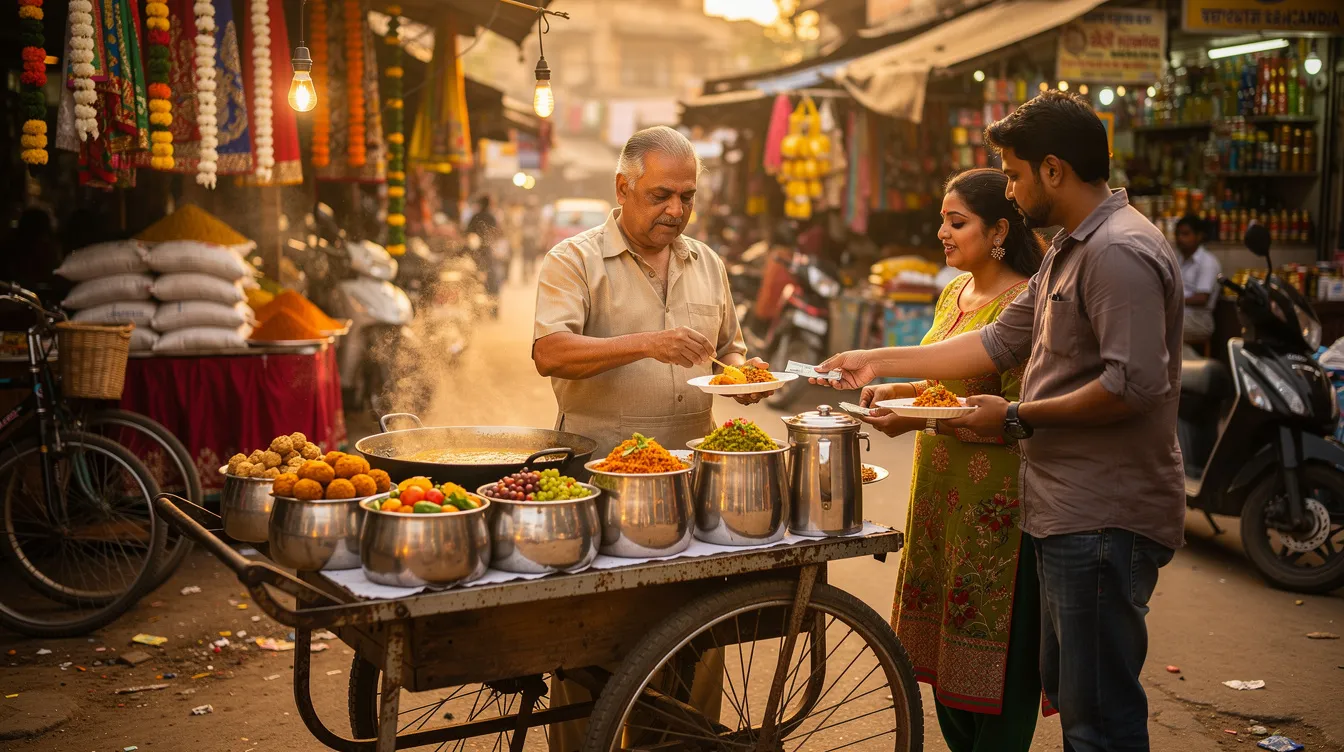
2. Street food cart (Shishu, ₹50,000) Reasonable to ask for KYC, local authority permission, or a hawker licence if available. Demanding GST registration at this level is generally unnecessary since the turnover won’t qualify for mandatory GST.
3. Small grocery shop (Kishore, ₹3 lakh) Bank requesting shop registration, rent agreement, last 12 months’ bank statements, and one year’s ITR is typically justified. Asking for the shop owner’s ancestral land papers? Not justified.
4. Mobile repair shop (Kishore, ₹2 lakh) A machinery quotation and proof of technical skills (course certificate or training proof) may be reasonably requested, especially if the owner has no prior track record to verify creditworthiness.
5. Existing small manufacturer (Tarun, ₹8 lakh) Bank asking for last 2–3 years’ ITR, GST returns, balance sheet if maintained, machinery quotations, and electricity bills for the industrial shed is standard practice for this loan amount.
6. New service startup (Tarun, ₹6 lakh) with no past ITR Bank may rely on projected income, promoters’ bank statements, educational qualifications, and previous employment proof. Insisting on past business ITRs that don’t exist is unreasonable.
7. Home tuition centre or coaching class (Kishore, ₹1.5 lakh) Basic municipal or panchayat permission, rent agreement, proof of activity (flyers, photos, student fee receipts) may be sought. Heavy factory-style documentation is not appropriate.
8. Auto-rickshaw purchase (Shishu, ₹50,000) Vehicle quotation with dealer details and a valid driving licence are standard. But demanding a property guarantee on top of this defeats the purpose of the collateral-free scheme.
What Should You Do If the Bank Keeps Asking for More and More Documents?
If you find yourself trapped in a loop of ever-expanding document requests, here is a practical step-by-step process.
Step 1 – Get the full list. Request the bank to provide a complete written list of all documents required for your Mudra Loan in one go. Ask for this via email or a written note. This prevents drip-by-drip demands.
Step 2 – Check relevance. Mark each requested item as “standard” (KYC, address proof, business registration) or “additional” (ITR, GST, quotations, trade references). Think about whether each item genuinely relates to your business and loan amount.
Step 3 – Collect and submit systematically. Organise documents in a file. Attach a covering letter listing all enclosures. Ask for a stamped acknowledgement from the bank when you submit. This creates a paper trail.
Step 4 – Ask for reasons for doubtful items. For any document that seems excessive, politely ask: “Could you please explain how this document will be used in my Mudra Loan assessment?” Most officers will clarify or drop the request.
Step 5 – Escalate politely if needed. If the branch keeps adding new, irrelevant requirements, send a simple letter or email to the branch manager and then the regional office, attaching copies of your earlier submission receipts. Read more about what to do when a bank keeps asking for new documents.
Step 6 – Consider alternatives. If delays continue despite your best efforts, explore applying with another bank, non banking financial companies, or micro finance institutions participating in PMMY. MUDRA, which stands for micro units development and refinance agency, works through multiple lenders-there is no rule tying you to one institution. You can apply to another bank while keeping your complete file ready from the first experience.
Always retain photocopies and scans of your entire file. These records protect you if you later use formal grievance mechanisms.
Common Document-Related Mistakes Made by Mudra Loan Applicants
Sometimes the problem is not only the bank’s extra demands. Mistakes on your side invite more queries and document calls. Here are the most common ones I see in my practice.
Incomplete forms and signatures. Leaving fields blank or not signing in all required places forces the bank to call you back. Fill every field carefully before submission.
Mismatched KYC details. Different spellings of your name or different addresses on Aadhaar, PAN, and bank records create doubts and trigger additional document requests. Get these corrected before you apply.
Weak or no business proof. Running a business informally without any registration, bills, or evidence makes it harder for the bank to trust your projections. Even a simple Udyam registration (free and online) signals that you are a serious micro or small enterprise.
Irregular bank transactions. A purely cash-based business with almost no banking trail will lead the bank to ask for more proofs of sales and income. Maintain at least one dedicated account for your business.
Inconsistent information. Telling one story verbally and presenting different numbers in the project report, or changing your loan purpose mid-process, makes bankers nervous and increases documentation demands.
Last-minute document changes. Frequently replacing quotations, business plans, or co-borrowers after submission causes re-appraisal and more paperwork.
A clean, consistent file from day one minimises extra document demands and helps you qualify for faster processing.
Expert Tips from CA Manish Gugliya for Smoother Mudra Loan Documentation
These tips come from two decades of hands-on work with project reports, CMA data, and MSME finance across public sector banks, private banks, and NBFCs.
- Prepare a simple project report even for Shishu and Kishore loans-covering business idea, cost, sales estimate, and repayment plan. It shows the bank you are serious and reduces questions.
- Maintain one dedicated bank account for business transactions for at least 6–12 months before applying. This becomes your strongest income proof when formal books are missing.
- Get Udyam registration early. It is free, online, and often improves your perception as a legitimate small enterprise eligible for Mudra benefits.
- Keep scanned copies (PDFs) of all key documents-Aadhaar, PAN, photographs, licence, GST certificate, bank statements-ready on your phone or email so you can respond quickly to requests.
- Collect final quotations on letterhead with GST details before visiting the bank for any machinery, equipment, or vehicle loan. This reduces back-and-forth dramatically.
- File an honest ITR for at least the latest year, even if your business is small. A single ITR sometimes adds enough confidence for Kishore and Tarun category loans.
- Ask for the circular or policy reference when something seems unusual-like a demand for collateral papers or forced insurance. This often leads to a more reasonable conversation.
- Avoid arguing emotionally at the counter. Use written communication and escalation channels when you disagree about documentation.
- If your file is complex, consider professional help for preparing project reports or CMA data so that banks have fewer questions to carry forward.
- Never submit fake bills, manipulated statements, or fabricated income proof. Short-term gains lead to long-term legal and banking problems that can permanently damage your creditworthiness.
- Understand that banks have different cultures. If one branch seems rigid, the same bank’s another branch might process your file faster. Explore options before giving up.
- Track processing charges carefully. Banks should not charge excessive or hidden fees during the application process. Know the rules around Mudra Loan processing charges.
A well-organised, honest file gets faster attention even in the busiest branches. Your goal is not just to expand your business but to build a banking relationship that helps you grow over time.

Frequently Asked Questions (Mudra Loan Extra Documents)
These FAQs address grey areas around additional documentation and borrower choices that the sections above may not have fully covered.
Can a bank insist on GST registration before sanctioning a Mudra Loan?
GST registration is mandatory only when your business crosses statutory turnover limits (currently ₹40 lakh for goods, ₹20 lakh for services in most states) or operates in sectors where GST is compulsory. A bank cannot create a new legal obligation through loan conditions.
For very small, local services and Shishu-type enterprises, insisting on GST solely for loan processing is usually unreasonable. However, for higher-ticket Kishore or Tarun loans where your projected turnover is high, requesting GST details is justified because it helps verify your turnover claims and assess your eligibility for the requested loan amount.
Is a detailed project report compulsory for every Mudra Loan?
For Shishu loans up to ₹50,000, many banks accept a very simple cost and income estimate on the application form itself-not a long project report.
For Kishore and especially Tarun loans, a short, structured project report covering costs, expected revenue, and repayment capacity is practically expected by most lenders. Having one prepared in advance improves your approval chances and significantly reduces follow-up documentation queries. If you require funds in the Tarun range, investing time in a proper report is well worth it.
Can banks ask for property documents even though Mudra Loans are collateral-free?
Banks cannot demand collateral or security for standard Mudra Loans up to ₹10 lakh. However, they may ask for address proof of owned premises (like a property tax receipt) if the business runs from there-this is for verification, not mortgage.
If officials are clearly linking your loan sanction to mortgage of your property or insisting on equitable mortgage documents, you should seek written clarification and, if needed, lodge a formal complaint through the bank’s grievance mechanism or the RBI Ombudsman. You can also read our detailed guide on whether a bank can ask for security in Mudra Loan.
What if I genuinely cannot provide an ITR or formal income proof?
Many micro-entrepreneurs, especially under Shishu and lower Kishore, do not have old ITRs, and banks are aware of this reality. It does not automatically disqualify you.
Practical alternatives include: consistent bank statements showing regular business transactions, proof of existing business activity (bills, photographs, licences), customer or supplier references, and a realistic repayment plan. Final acceptance is at the bank’s discretion, but a well-documented application file with other documents that support your income claims can often substitute for formal ITRs.
If documentation demands become unreasonable, can I apply to another bank?
Yes. Mudra Loans can be availed from many banks, non banking financial companies, and micro finance institutions participating in PMMY. There is no rule tying you to one bank simply because you started an application there.
I recommend first trying to resolve issues through the branch and the bank’s internal grievance channels. But if the behaviour remains rigid or arbitrary despite your best efforts, shifting to another lender with a complete, well-prepared file is an entirely practical and legitimate option.
Conclusion
Banks can-and often do-request additional documents during the Mudra Loan process. Not every such request is against Mudra Loan guidelines. When a request is connected to verifying your business, assessing your repayment capacity, or completing credit appraisal, it is part of normal banking.
What is not acceptable is demanding collateral for a collateral-free scheme, asking for impossible records from a new micro business, or using documentation as a tool to endlessly delay or discourage your application.
As an applicant, understand the purpose behind each request. Maintain complete, consistent records. Use written communication. And if demands cross the line, use the grievance mechanisms available to you-from the branch manager to the RBI Ombudsman.
A well-prepared application with accurate, honest documents almost always results in smoother processing and faster approval.
Ready to understand more about your rights as a Mudra Loan borrower? Explore our complete series of Mudra Loan applicant rights guides on ProjectReportBank.com-practical knowledge that helps you deal with banks from a position of confidence.
- Mudra Loan Applicant Rights: Complete Guide to Your Rights During the Loan Application Process


- Does the Bank Have to Explain Why Your Mudra Loan Was Rejected?
- Right to Receive an Acknowledgement After Submitting a Mudra Loan Application
- Your Right to Fair and Non-Discriminatory Treatment in Mudra Loan Processing
- Can Bank Ask for Extra Documents in Mudra Loan? (Practical Guide by a CA)

- Mudra Loan Processing Charges: Your Right to Transparent Fees Under PMMY

- Can a Bank Force You to Buy Insurance with a Mudra Loan?

- Right to Timely Communication During Mudra Loan Processing

- Mudra Loan Privacy Rights: How Banks Should Handle Your Information